- Published on
Neuracore Opens Its "Data Foundation" to Academics for Free, Backed by $3M Pre-Seed
One tap, and our reporting appears more often in your Google Top Stories. It makes a real difference to a small newsroom.


Your guide
Rich Robinson
Jee Chee Ren · Executive tour
See China’s AI and robotics ecosystem first-hand.
Six days exploring AI, robotics and advanced manufacturing.
With Rich Robinson, Clinical Professor of Entrepreneurship at Peking University
Beijing · Guangzhou · Shenzhen
29 November–4 December 2026
Referral partnership · We earn a commission on referred bookings.
London – The race to build general-purpose robots is often framed as a battle of algorithms—who has the smartest model or the best policy. But for researchers on the ground, the bottleneck is often far more mundane: managing terabytes of messy sensor data, synchronizing timestamps, and maintaining the infrastructure to store it all.
Neuracore, a London-based startup founded by a team with roots at Imperial College London, Google DeepMind, and Meta, is betting it can solve that plumbing problem.
Today, the company announced it is opening its platform to the academic community for free. The launch coincides with the announcement of a $3M pre-seed funding round led by Earlybird Venture Capital.
The move positions Neuracore as the latest entrant in a rapidly growing "horizontal" stack of robotics tools, aiming to standardize how robots learn from the real world so researchers can stop building custom data pipelines and start training models.
The weekly humanoid robotics briefing
One email a week: the launches, funding and research that mattered, with context from Humanoids Daily.
Read recent issues"The Plumbing is the Bottleneck"
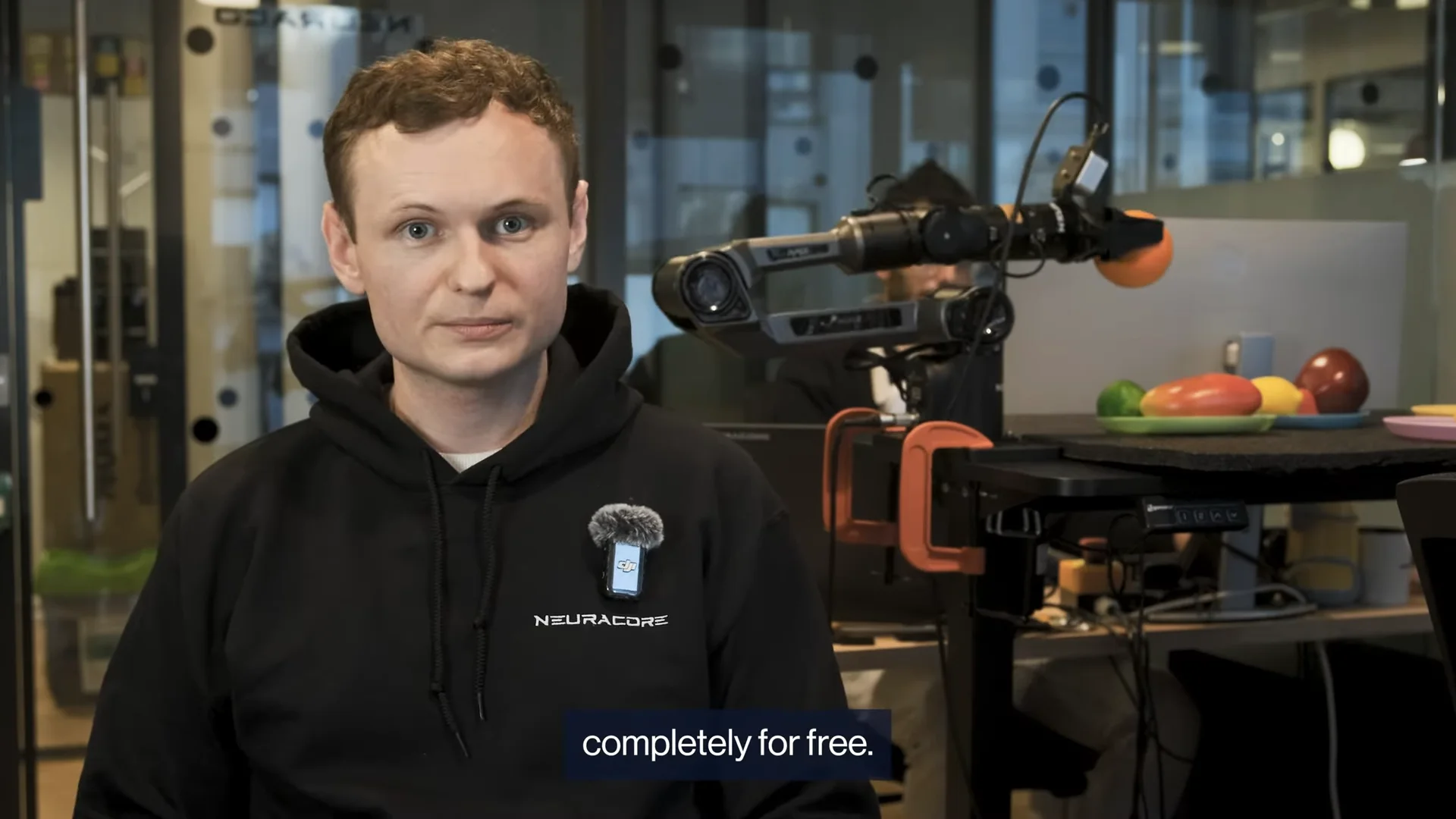
In a video accompanying the announcement, founder Stephen James, assistant professor at Imperial College London, described the friction that currently plagues robotic research.
"The frustration that we see in industry, we also see in academia," he noted. "Too often [researchers] are held back by months of infrastructure setup before they can even begin innovating."
Neuracore’s proposition is a cloud-native "data foundation." Rather than dealing with local ROS (Robot Operating System) bags or manually syncing video streams with joint states, Neuracore provides a Python client that streams asynchronous data directly to the cloud. The platform claims to handle:
- Multimodal Ingestion: Capturing RGB video, joint positions, and custom sensor data at native rates without complex time-alignment code.
- Web-Based Visualization: A dashboard to view robot telemetry and video streams from anywhere, replacing clunky local visualization tools.
- Training Infrastructure: Open-source code (utilizing Hydra configurations) to train models locally or in the cloud using the captured data.
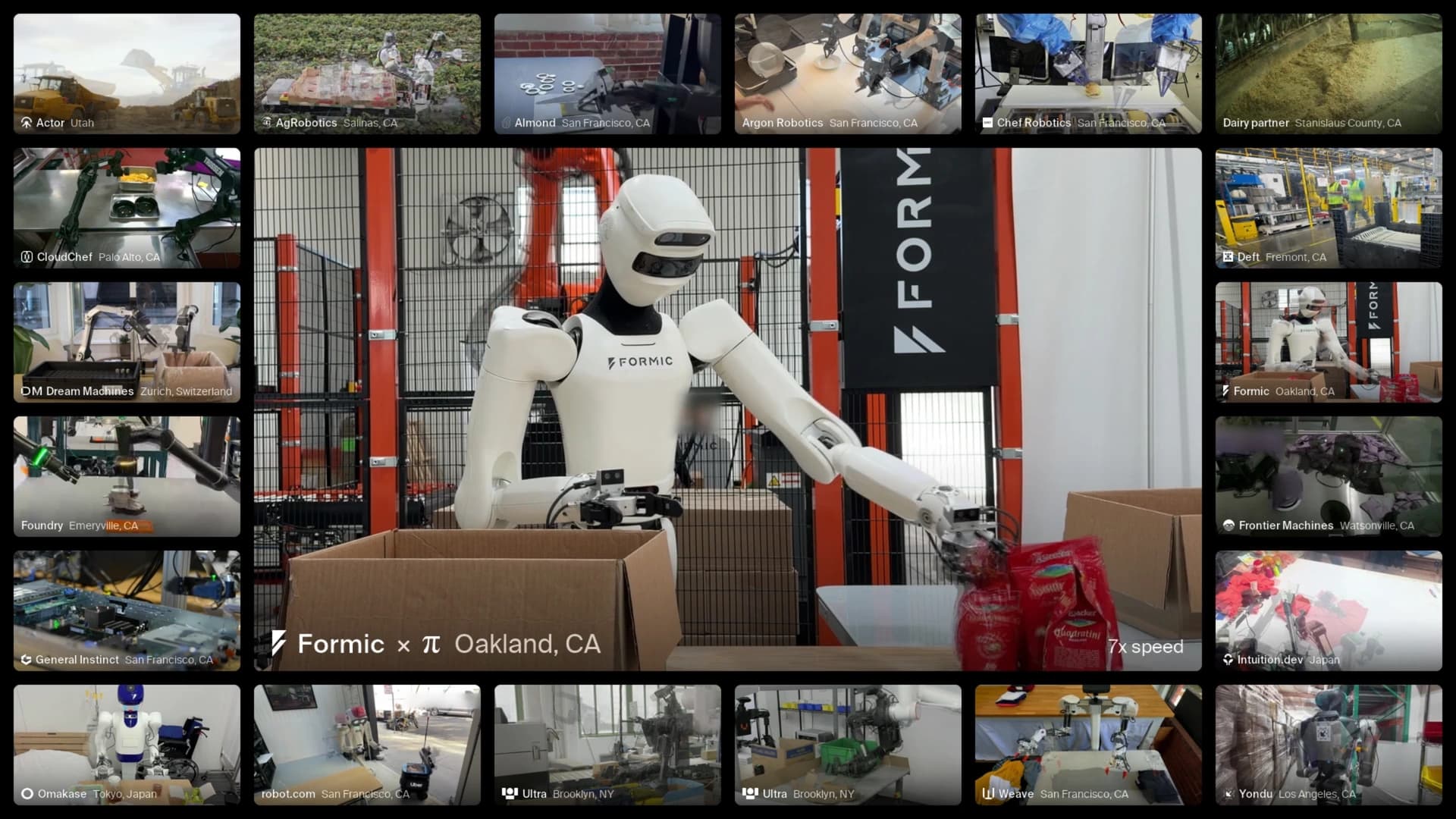
This approach targets the exact "physical AI bottleneck" that major players are currently spending millions to solve. While companies like Generalist AI are building massive proprietary datasets in-house, Neuracore is offering the tools for everyone else to manage their own data at scale.
The Battle for the "Middle Layer"
Neuracore’s launch highlights a shifting dynamic in the robotics industry. As hardware becomes more standardized—thanks to platforms like the Unitree G1—software companies are rushing to fill the gap between the metal and the mind.
We are seeing a divergence in strategies. On one side, companies like Flexion are attempting to build the entire "autonomy stack"—effectively the operating system and the brain. Other companies are solely focusing on simulation and synthetic data generation to train those brains.
Neuracore sits somewhere in between, acting as the neutral utility company. It doesn't want to be the brain; it wants to be the nervous system that transmits the signals. By offering support for standard formats (URDF and MuJoCo MJCF) and providing open-source training infrastructure, they are betting that ease of use will win over proprietary walled gardens.
Pre-Seed and Academic Strategy
The $3M pre-seed led by Earlybird provides the runway, but the strategy of targeting academia is a classic "bottom-up" adoption play. By getting PhD students and university labs hooked on their workflow, Neuracore likely hopes to become the industry standard as those students graduate and move into commercial robotics roles.
The platform is rolling out access to select institutions first, with a waitlist for others.
However, the shift to the cloud for robotics is not without skeptics. Real-time control often requires low-latency, on-device compute, and some researchers may be wary of streaming sensitive lab data to a third-party cloud. Neuracore’s documentation emphasizes that while data management is cloud-based, they support local model deployment and training, attempting to bridge the gap between cloud convenience and edge performance.
With this launch, Neuracore is trying to turn the "messy reality" of physical AI into a clean, API-accessible service. If they succeed, they could become the GitHub of the physical world. If they fail, they will join a long list of cloud robotics platforms that couldn't quite overcome the latency of physics.
Watch the announcement below:
Share this article
Read next
- Published on
- Reading time
- 3 min read
Tesla Looks to Berlin Factory Workers to Help Train Optimus
- Published on
- Reading time
- 4 min read
South Korea Plans Robot AI Push in 2027, Starting With Logistics
- Published on
- Reading time
- 9 min read
The UMI Effect: Why Robotics Companies Are Building the Data Collector First
- Published on
- Reading time
- 4 min read
Figure AI Reports Rapid Growth for Index, Surpassing 69,000 Weekly Active Users
- Published on
- Reading time
- 5 min read
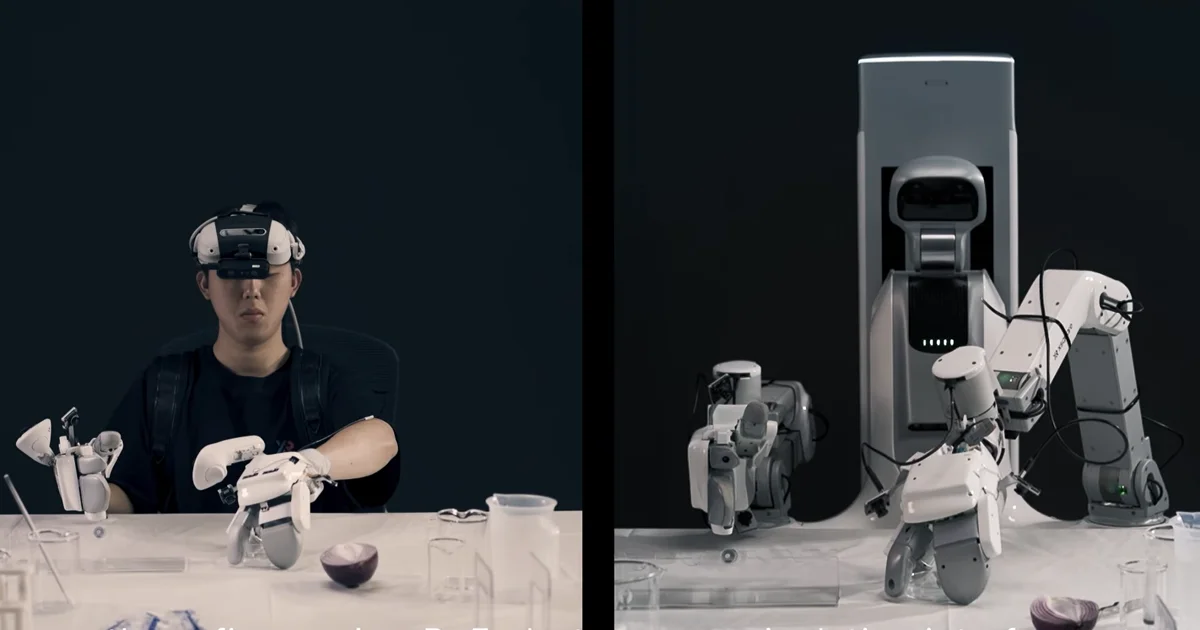
Isomorphism Over Imitation: X Square Unveils TwinDEX to Bridge the Robot-Free Data Gap
- Published on
- Reading time
- 4 min read
Kinetic Blocks Opens Marketplace for Humanoid Training Data
The weekly humanoid robotics briefing
One email a week: the launches, funding and research that mattered, with context from Humanoids Daily.
Read recent issues