- Published on
Kinetic Blocks Opens Marketplace for Humanoid Training Data
One tap, and our reporting appears more often in your Google Top Stories. It makes a real difference to a small newsroom.


Your guide
Rich Robinson
Jee Chee Ren · Executive tour
See China’s AI and robotics ecosystem first-hand.
Six days exploring AI, robotics and advanced manufacturing.
With Rich Robinson, Clinical Professor of Entrepreneurship at Peking University
Beijing · Guangzhou · Shenzhen
29 November–4 December 2026
Referral partnership · We earn a commission on referred bookings.
- Oslo-based startup Kinetic Blocks has launched a gated beta marketplace for humanoid training data, offering a two-sided commercial platform for dataset licensing and acquisition.
- Listings cover egocentric human video, teleoperation recordings, and robot execution data, supporting formats such as LeRobot v3.0 alongside custom pipelines.
- Datasets undergo a dual-track evaluation: an exact file verification process against dataset card claims and an independent KB Quality grade (A+ to F) assessing technical capture, temporal integrity, content usefulness, and completeness.
- Founded by CEO Lars-Fredrik Forberg alongside early 1X Technologies investors Erik Ålgård and Christian Rokseth, the company is preparing to open a Q4 2026 seed round.
- The platform addresses an emerging industry divide between freely available bulk egocentric video and costly, high-friction teleoperation and execution datasets.
As the embodied AI sector pivots from compute and hardware constraints toward the challenge of physical data acquisition, dataset procurement remains largely unstandardized. On 1 September, Oslo-based startup Kinetic Blocks launched a gated beta of a two-sided marketplace designed specifically for buying and selling humanoid training data.
The platform aims to replace slow, bilateral licensing deals with standardized commercial transactions. On Kinetic Blocks, data suppliers list datasets spanning egocentric human video, teleoperation recordings, and physical robot execution data, setting their own prices while commercial licenses settle automatically at the point of purchase.
Standardizing Provenance and Quality
Historically, procuring robot learning data has involved lengthy procurement cycles with opaque rights management and fragmented formats. Kinetic Blocks structures listings around chain-of-custody documentation and standardized formatting, supporting schemas like Hugging Face's open-source LeRobot format alongside bespoke proprietary structures.
To mitigate misrepresentation and establish clear pricing bands, the platform implements a dual-layer evaluation pipeline across every submission:
The weekly humanoid robotics briefing
One email a week: the launches, funding and research that mattered, with context from Humanoids Daily.
Read recent issues- Automated Verification: The mandatory dataset card—specifying frame rates, resolutions, duration, sensor modalities, tasks, and licensing terms—is checked directly against the raw files. Hard discrepancies result in immediate rejection, while ambiguous claims trigger human review.
- KB Quality Score (KBQS): Led by Boston-based data quality lead Leo Terry, the pipeline issues an independent grade from A+ to F based on four weighted pillars: Technical Quality (30%), Content Usefulness and action density (30%), Temporal Integrity (25%), and Completeness (15%).
Rather than modifying or truncating uploaded footage, the system identifies and timestamps idle spans or "dead time," factoring those pauses into the grade while preserving raw transitions as training signal.
Navigating the Physical Data Divide
The launch arrives during an aggressive escalation in the robotics data arms race. Foundational model developers are exploring divergent strategies to source real-world telemetry:
- Massive Human Video: Efforts like Build AI's Egocentric-100K collection and Figure AI's crowdsourced Index platform lean heavily on unannotated first-person video to drive cross-embodiment scaling laws.
- Direct Robot Teleoperation: Deploying hardware fleets to gather clean, joint-level trajectories—exemplified by open releases like BitRobot's HIW-500 dataset—remains operationally expensive and difficult to scale across varied environments.
By operating an open exchange rather than setting prices directly, Kinetic Blocks aims to establish clear market value across these modalities, where passive human video is increasingly commoditized while high-fidelity robot trajectories command premium rates.
Team and Expansion Plans
Kinetic Blocks was founded by CEO Lars-Fredrik Forberg alongside Erik Ålgård and Christian Rokseth. Both Ålgård and Rokseth were early investors in 1X Technologies—where Ålgård served on the board for a decade—bringing long-term visibility into commercial humanoid data demands. Rokseth also publishes the industry site Humanoid.guide, operated as an independent entity.
Operating out of Startuplab in Oslo, the team built its initial platform MVP with advisor Marcus Hølland Eikeland. The company plans to scale its engineering and commercial teams throughout the autumn while opening a seed funding round in the fourth quarter of 2026.
Access to the marketplace remains restricted during the soft-launch phase, with applications reviewed individually to verify supplier licensing rights and ensure prospective buyers are actively training physical AI models.
Share this article
Read next
- Published on
- Reading time
- 5 min read
BitRobot and Hugging Face Drop HIW-500: A Massive 10TB Real-Home Humanoid Dataset
- Published on
- Reading time
- 5 min read
The Data Bottleneck: Why AGIBOT is Open-Sourcing its Real-World Training Library
- Published on
- Reading time
- 4 min read
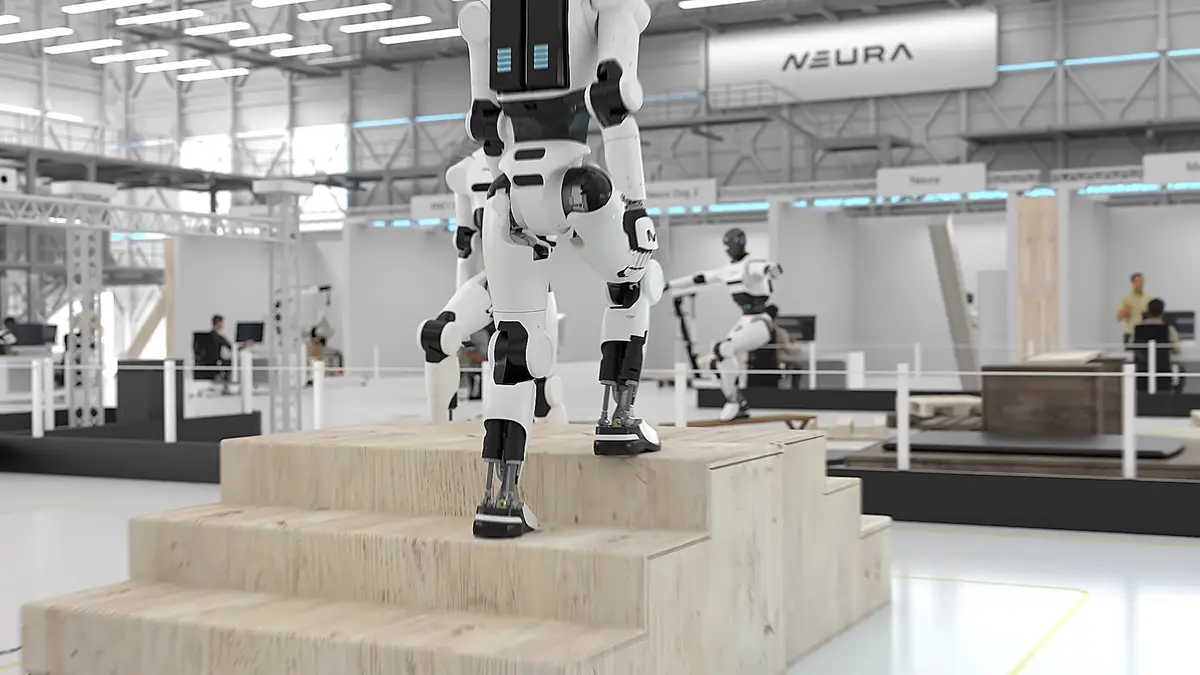
Neura Robotics Unveils ‘Neura Gym’ to Bridge AI’s Simulation-to-Reality Gap
- Published on
- Reading time
- 3 min read
Tesla Looks to Berlin Factory Workers to Help Train Optimus
- Published on
- Reading time
- 4 min read
South Korea Plans Robot AI Push in 2027, Starting With Logistics
- Published on
- Reading time
- 9 min read
The UMI Effect: Why Robotics Companies Are Building the Data Collector First




The weekly humanoid robotics briefing
One email a week: the launches, funding and research that mattered, with context from Humanoids Daily.
Read recent issues