- Published on
Foundation Robotics CEO Details Ukraine Pilot, "Super-Heavy" Phantom 2, and Rejection of Companion Bots
One tap, and our reporting appears more often in your Google Top Stories. It makes a real difference to a small newsroom.

Supported by RoboStrategySupport for Humanoids Daily comes from RoboStrategy
Sponsored
Investing involves risk, including possible loss of principal. Read the prospectus before investing.
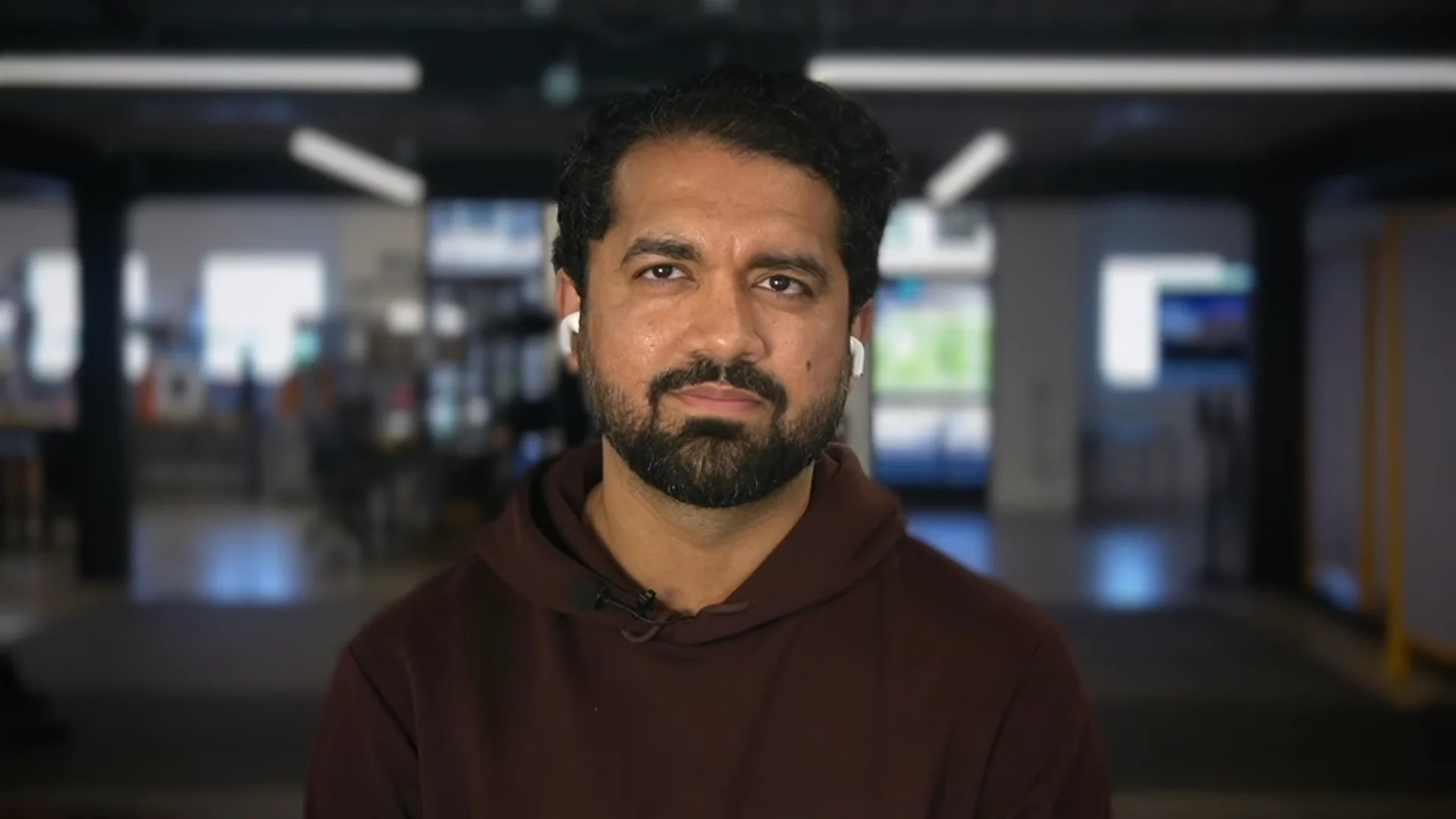
Foundation Robotics continues to separate itself from the mainstream humanoid industry, emphasizing defense applications, extreme payloads, and a distinctly utilitarian design philosophy. In a recent appearance on the Over The Horizon podcast, CEO Sankaet Pathak expanded on the company's dual-use strategy, revealing that Foundation's efforts are currently split evenly between commercial and defense applications.
The conversation provided new context for the company's operations, including a pilot program in Ukraine, the upcoming release of a heavily ruggedized "Phantom 2" robot, and Pathak's outright rejection of the "companion bot" trend popular among competitors.
Logistics on the Frontline
While Foundation has been highly vocal about its unapologetic military focus, its immediate field applications appear focused on keeping human soldiers out of the line of fire. Pathak confirmed that Foundation recently conducted a pilot program in Ukraine, an initiative heavily influenced by co-founder and ex-Marine Mike LeBlanc.
The pilot centered on supply pickup operations—a traditionally mundane task that has become highly lethal in the era of pervasive drone warfare. Pathak noted that soldiers are frequently targeted while attempting to retrieve basic supplies, making autonomous retrieval a critical, life-saving application. Beyond Ukraine, Pathak indicated the company is exploring defense use cases spanning drone inspection, base logistics, and building reconnaissance.
The weekly humanoid robotics briefing
One email a week: the launches, funding and research that mattered, with context from Humanoids Daily.
Read recent issuesPathak also addressed the economic asymmetry of modern warfare, noting that a swarm of cheap drones is currently often countered by $100,000 rockets. Deploying a fleet of humanoids for targeted, land-based operations, he argued, would provide a level of precision that blunt-force aerial bombing lacks, potentially reducing collateral damage.
Enter Phantom 2: The "Superhero" Bot
Foundation’s competitors have largely prioritized robots that are safe to operate in homes and warehouses, often leaning into friendly, anthropomorphic designs. Pathak dismissed this approach, stating Foundation is not interested in building an "intern" or a companion machine.
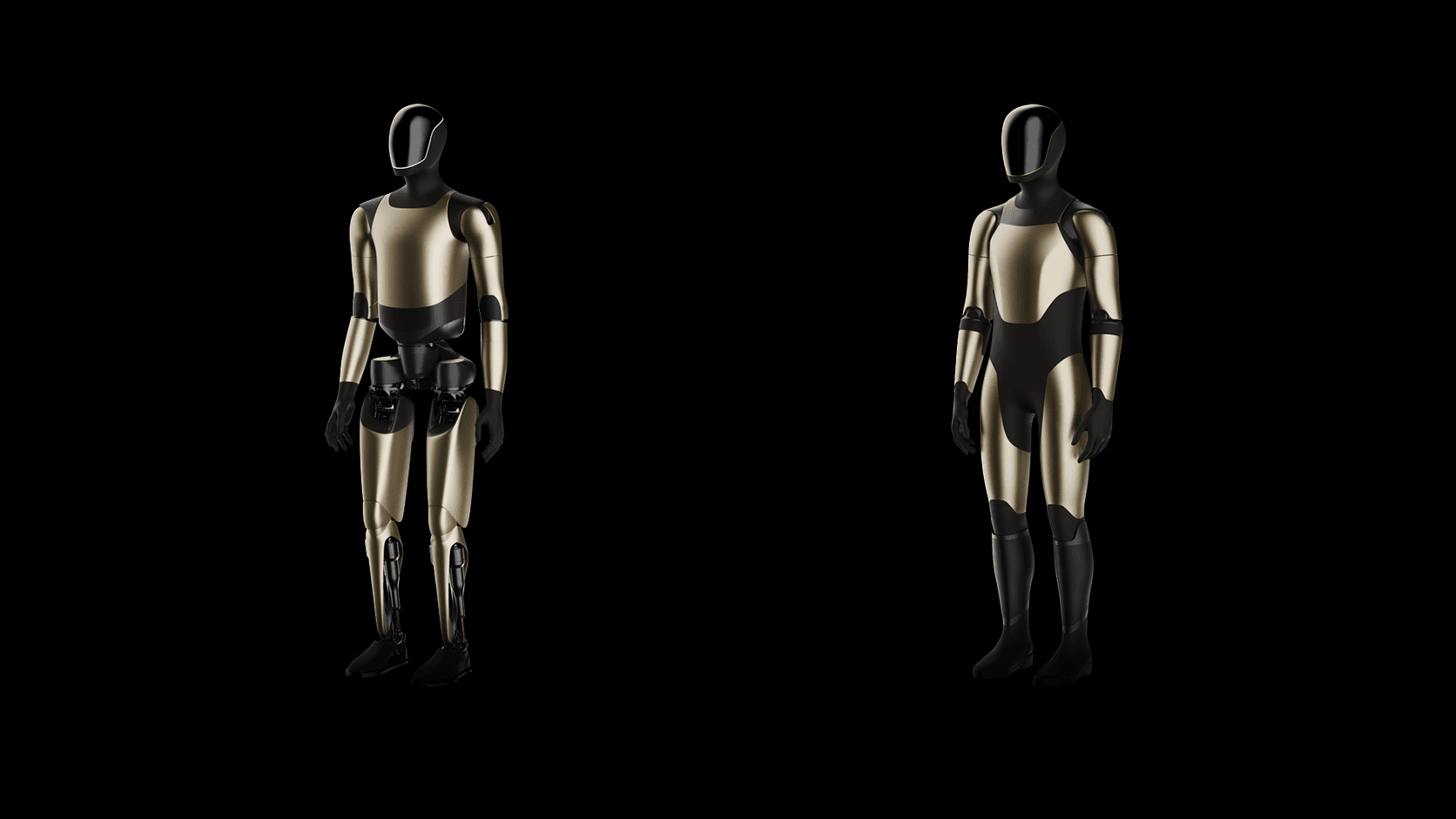
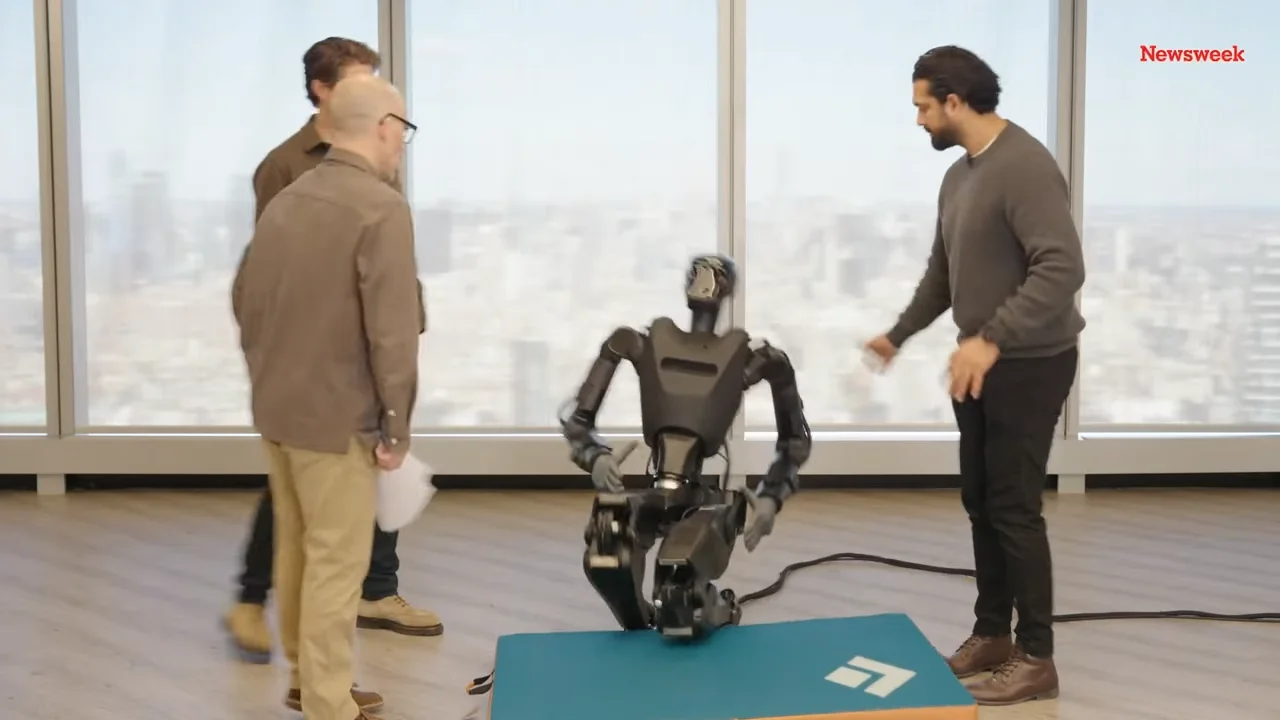
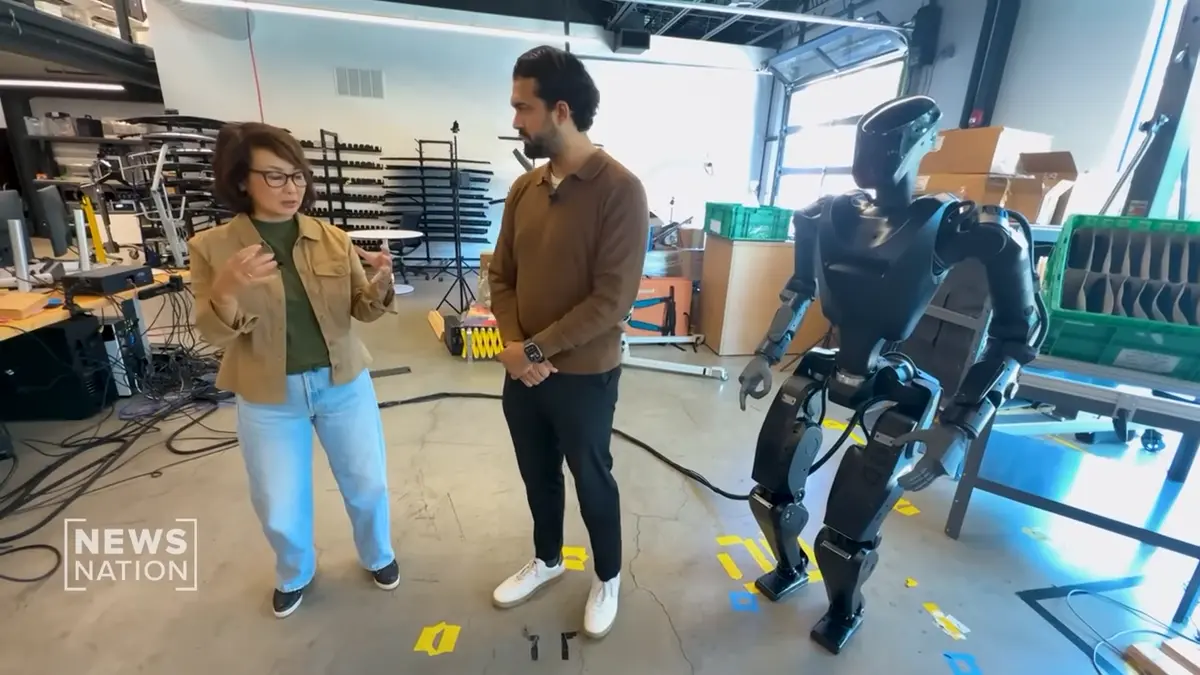
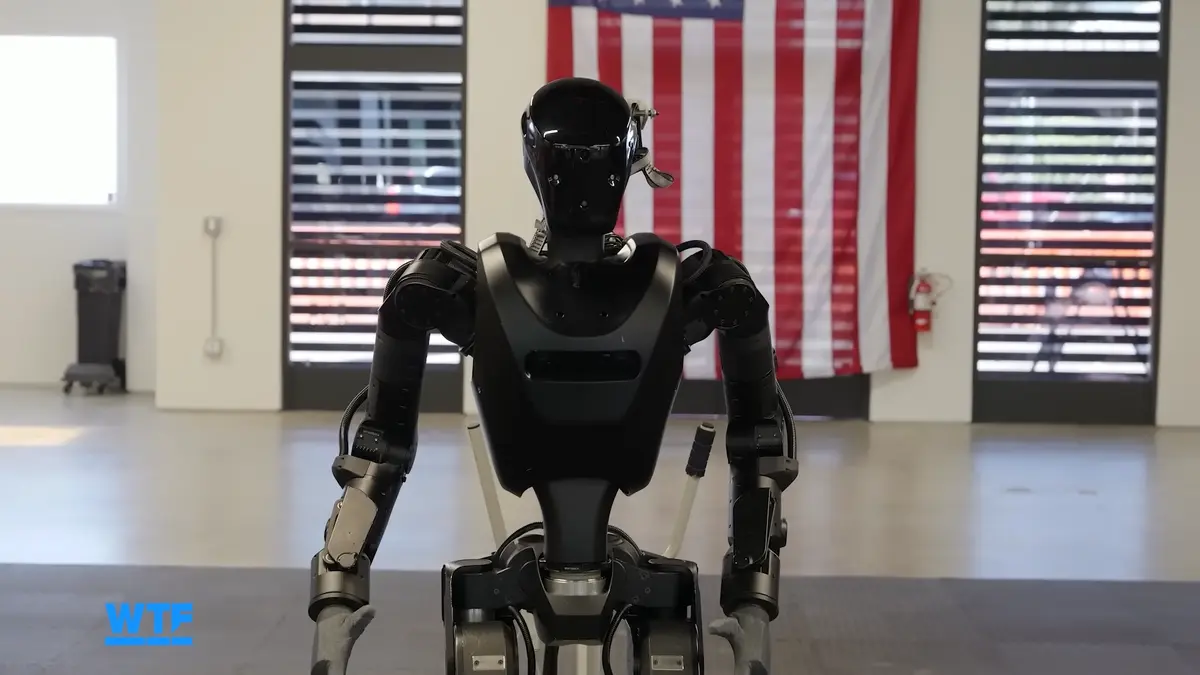
Instead, Pathak teased the impending reveal of the Phantom 2. Unlike the current 5-foot-9-inch Phantom MK1, the next generation stands roughly six feet tall and is designed for extreme durability. According to Pathak, the new platform boasts significant capability leaps:
- It can perform an 80 kg (176 lbs) bicep curl.
- It can maintain a 30 kg (66 lbs) static pose payload.
- It is engineered to survive 100 Gs of transient load, a massive leap from the 10-12 G tolerance of the Phantom MK1.
Pathak claimed this vibration tolerance is so high that the Phantom 2 could theoretically be sent to space, aligning with the company's broader Antarctica and Lunar master plan.
To reinforce the robot-as-tool philosophy, Pathak criticized the use of visual screens as interfaces. He argued that screens are an "artificial construct" designed historically for programmers, not a natural method of interaction. Foundation’s robots omit screens entirely, focusing on textual context and eventual high-level autonomy where the robot simply executes long-horizon tasks without requiring micromanagement.
Tendons and Anatomy
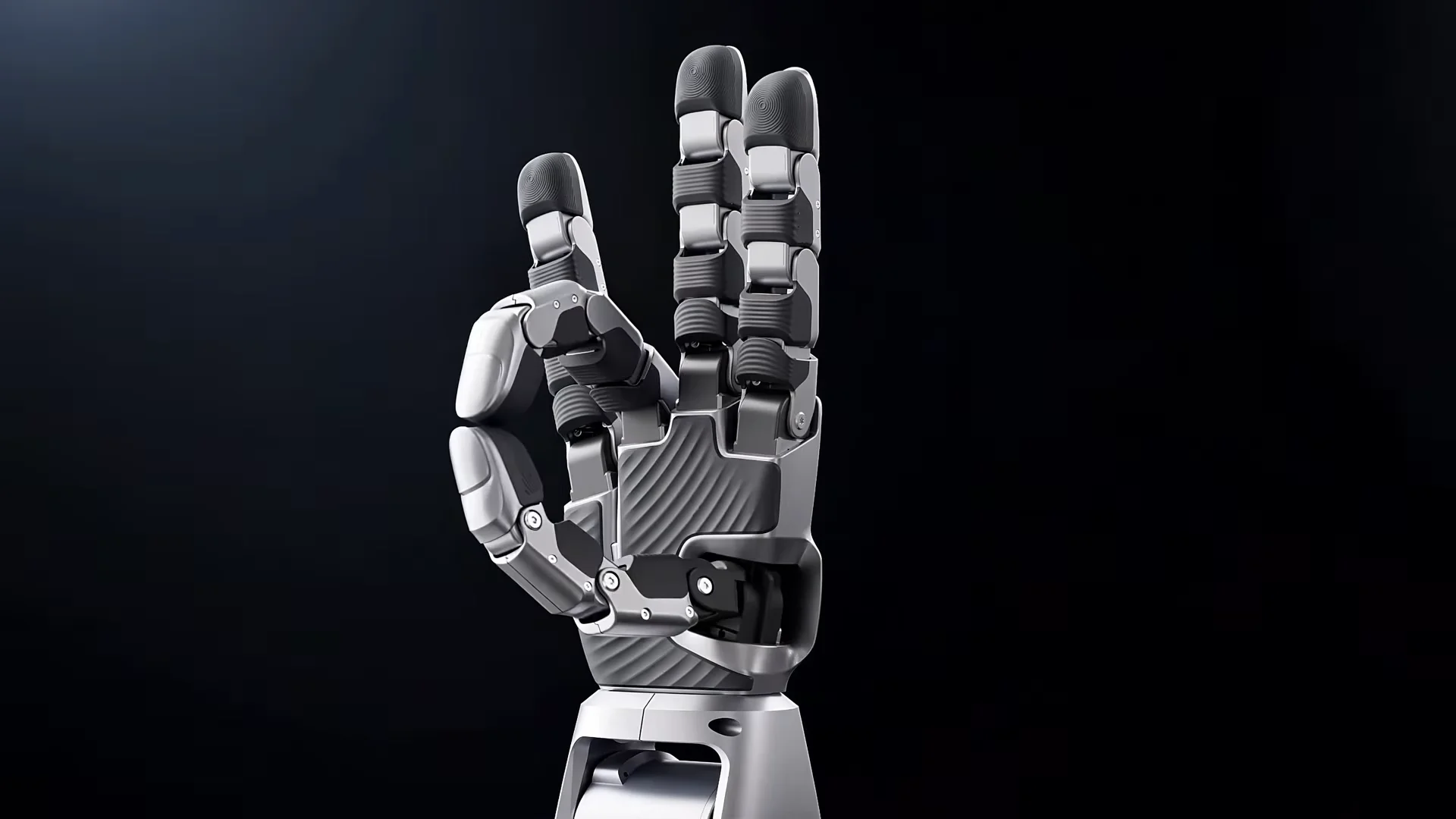
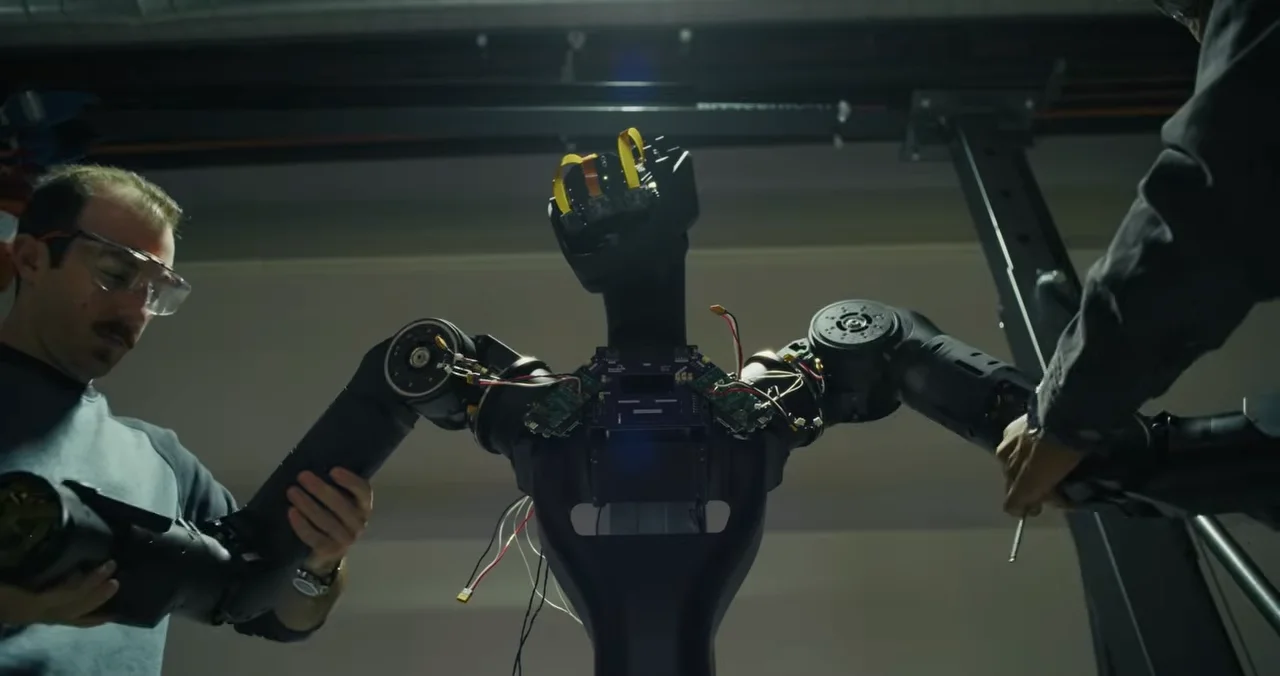
The podcast also delved into Foundation's mechanical strategy, particularly its recent shift toward a complex, tendon-driven hand. Pathak noted that current off-the-shelf robotic hands lack the torque and degrees of freedom necessary to manipulate the world without first modifying the human environment.
To achieve human-equivalent capability, Foundation is relocating the actuators into the forearm—packaging up to 24 motors in a bulky "Master Chief" or "Iron Man" style arm. This bio-mimicry strategy was informed directly by human cadaver dissections, aided by podcast co-host and hand surgeon Gustav Andersson, to better understand the biological routing of flexor and extensor tendons. Pathak noted that keeping this hardware development in-house, rather than purchasing a third-party hand, is crucial for tightly integrating the hardware with their proprietary software stack.
"City as a Service" and the Coming "Dark Age"
Pathak concluded the interview with a sweeping, somewhat ominous macroeconomic prediction. He views Foundation's ultimate product as "city as a service"—using swarms of autonomous humanoids to build and maintain massive, affordable urban centers from scratch.
However, he anticipates a highly disruptive transition period. Pathak predicted a massive labor disruption within the next 5 to 12 years, impacting both white-collar and blue-collar jobs. He warned of a civilizational "dark age" akin to historical collapses if society cannot rapidly adapt to a post-scarcity model. In his view, the future economy will shift entirely away from fiat currency (which he believes is trending toward zero value) and instead be driven by "wattage"—the pure energy required to perform work.
Whether Foundation can successfully execute this grand vision—especially given its history of publicized hardware failures and the challenge of scaling complex mechanical systems—remains to be seen. But the company’s trajectory is clear: they are building heavy-duty machines for harsh environments, and they are not waiting for ethical consensus to deploy them.
Watch the episode below:
Share this article
Read next
- Published on
- Reading time
- 4 min read
Decoupling the Brain: Inside Foundation’s Phantom Head Assembly
- Published on
- Reading time
- 4 min read
"Peace Through Strength": Foundation CEO Showcases Phantom Robot on Fox Business
- Published on
- Reading time
- 5 min read
Watch: Inside Foundation’s Humanoid Factory and the Anatomy of a "War Machine"
- Published on
- Reading time
- 5 min read
Foundation Robotics Leans Into the "Killer App" — Literally
- Published on
- Reading time
- 4 min read
Foundation CEO Details Path to Armed Robots, Aims for 10,000-Unit Production in 2026
- Published on
- Reading time
- 3 min read
CNET Goes Hands-On With Foundation's 'Phantom' Humanoid as CEO Discusses Arming Robots
The weekly humanoid robotics briefing
One email a week: the launches, funding and research that mattered, with context from Humanoids Daily.
Read recent issues