- Published on
Tangent Robotics Raises $4.5 Million to Give Robot Hands Fine Motor Skills
One tap, and our reporting appears more often in your Google Top Stories. It makes a real difference to a small newsroom.

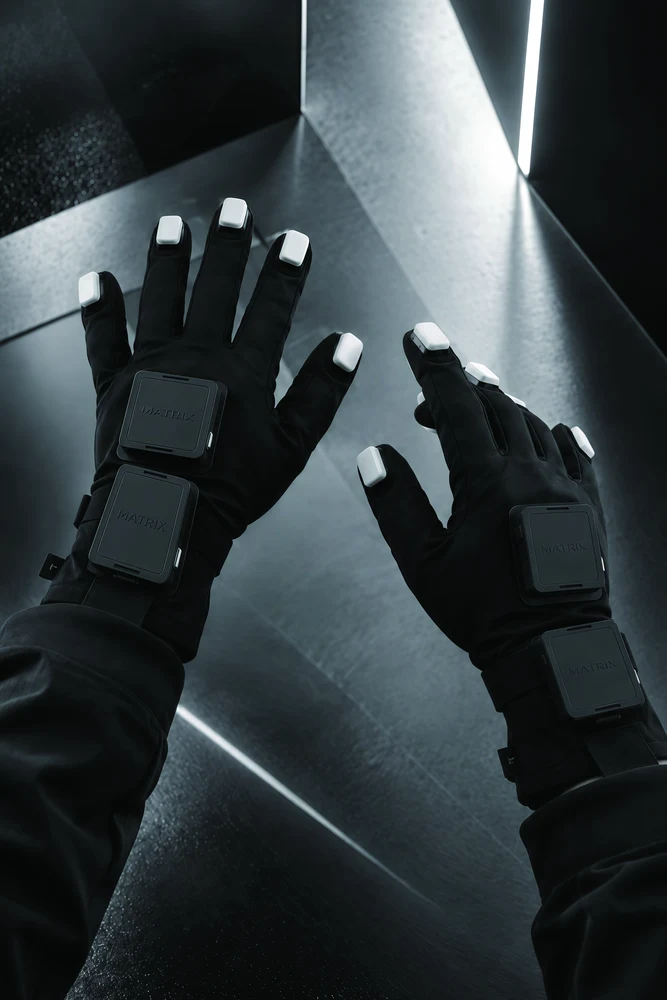

Tangent Robotics has raised $4.5 million in pre-seed funding to develop dexterous robot hands for manufacturing. Fly Ventures and Toyota Ventures co-led the round, with participation from Logos Fund and Sparked Ventures, the New York company announced on September 30.
- Tangent raised $4.5 million to develop and deploy fine manipulation capabilities in manufacturing.
- The Columbia University spinout combines hand hardware, touch sensing and learned motor skills.
- Its three-finger TR02 illustrates a focus on dexterity without reproducing human hand anatomy.
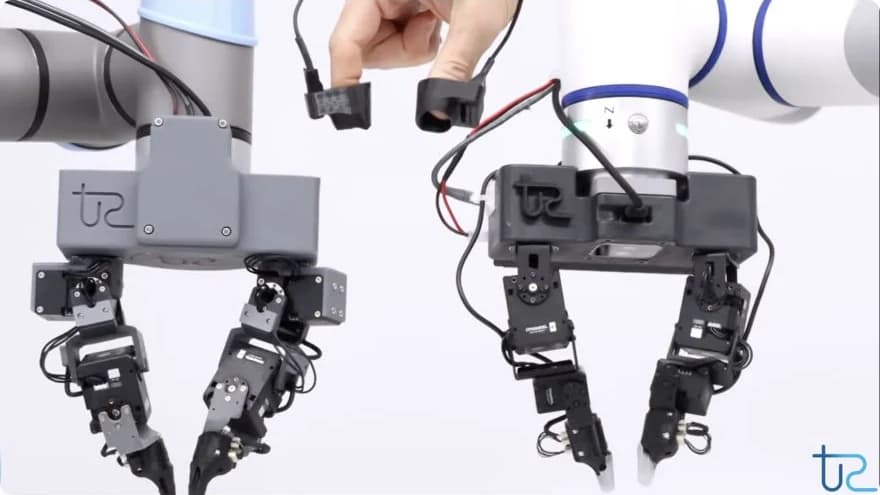
Spun out of Columbia Engineering’s Robotic Manipulation and Mobility Lab, Tangent was founded by Pedro Piacenza, Matei Ciocarlie and Ioannis Kymissis. Its target applications include fitting connectors, seating gaskets, threading and assembling gears.
Tangent describes its focus as a fine motor skill layer between vision-language-action models and low-level controllers: the learned movements needed to execute delicate work. It combines optical touch sensing with robot hands and training methods, aiming eventually to shorten the learning process to days and then hours.
Dexterity without five fingers
The company’s TR02 hand, introduced in June, has three fingers and 10 degrees of freedom. Each fingertip incorporates a Popcorn touch sensor, while an offset palm camera adds visual feedback.
Tangent says the third finger and palm expand on its two-finger TR01 design, allowing more stable grasps, movement of objects within the hand, and simultaneous holding and manipulation. Its examples include holding a jar while opening the lid and moving an object from a fingertip grasp into the palm. The design also tracks an operator’s fingertip movements for collecting training demonstrations.
For humanoid robotics, the relevance is the manipulation problem: reaching an object is only one part of completing an industrial task. Aligning, gripping and adjusting it through contact can determine whether a robot performs useful work. Tangent’s funding will support an attempt to turn those fine movements into deployable factory capabilities.
Share this article
Read next
- Published on
- Reading time
- 2 min read
REK Founder Shares California Cease-and-Desist After Human–Humanoid Fight
- Published on
- Reading time
- 3 min read
Flourish 1 Brings a $3,555 Wheeled Semi-Humanoid to Household Chores
- Published on
- Reading time
- 5 min read
Figure Melts Figure 02 With Arnold Schwarzenegger in a Terminator-Style Sendoff
- Published on
- Reading time
- 4 min read
Figure’s Multibillion-Dollar Compute Deal Meets Nscale’s Data-Center Buildout Challenge
- Published on
- Reading time
- 4 min read
Boston Dynamics Makes Its Case for Atlas and a Two-Year Payback Target
- Published on
- Reading time
- 4 min read
Matic Teases a Humanoid as It Looks Beyond Floor Cleaning


The weekly humanoid robotics briefing
One email a week: the launches, funding and research that mattered, with context from Humanoids Daily.
Read recent issues