- Published on
Sharpa Robotics Begins Shipping Its SharpaWave Hand, Targeting Human-Level Tactile Sensing
One tap, and our reporting appears more often in your Google Top Stories. It makes a real difference to a small newsroom.


Your guide
Rich Robinson
Jee Chee Ren · Executive tour
See China’s AI and robotics ecosystem first-hand.
Six days exploring AI, robotics and advanced manufacturing.
With Rich Robinson, Clinical Professor of Entrepreneurship at Peking University
Beijing · Guangzhou · Shenzhen
29 November–4 December 2026
Referral partnership · We earn a commission on referred bookings.
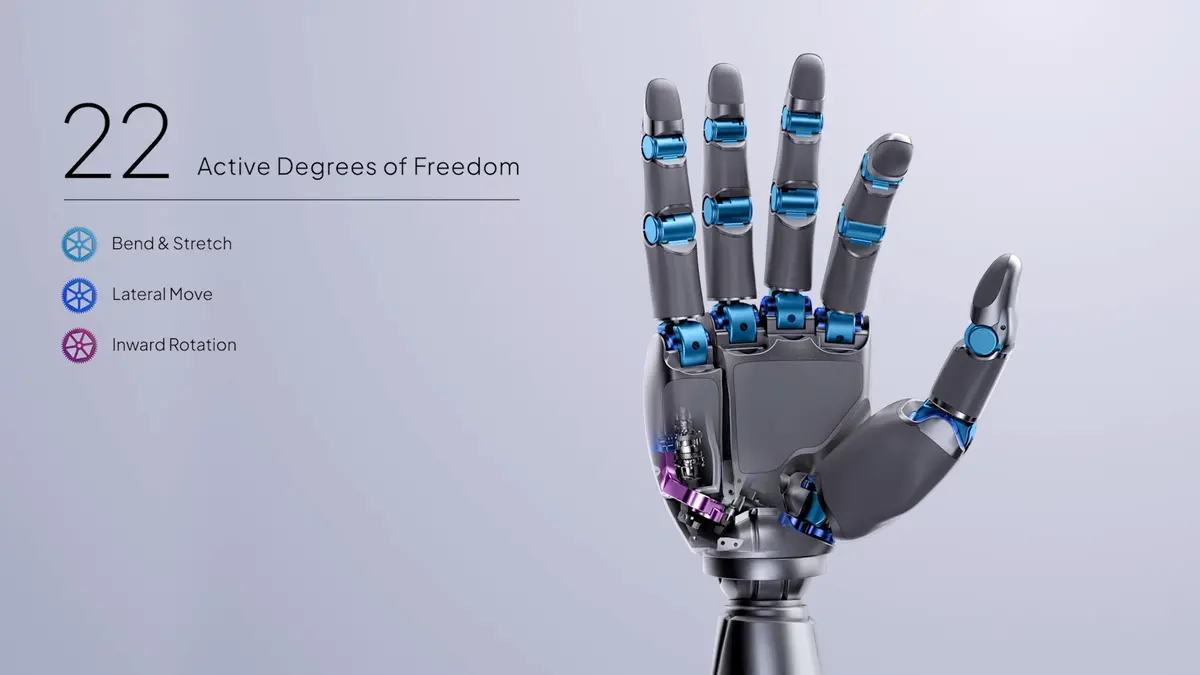
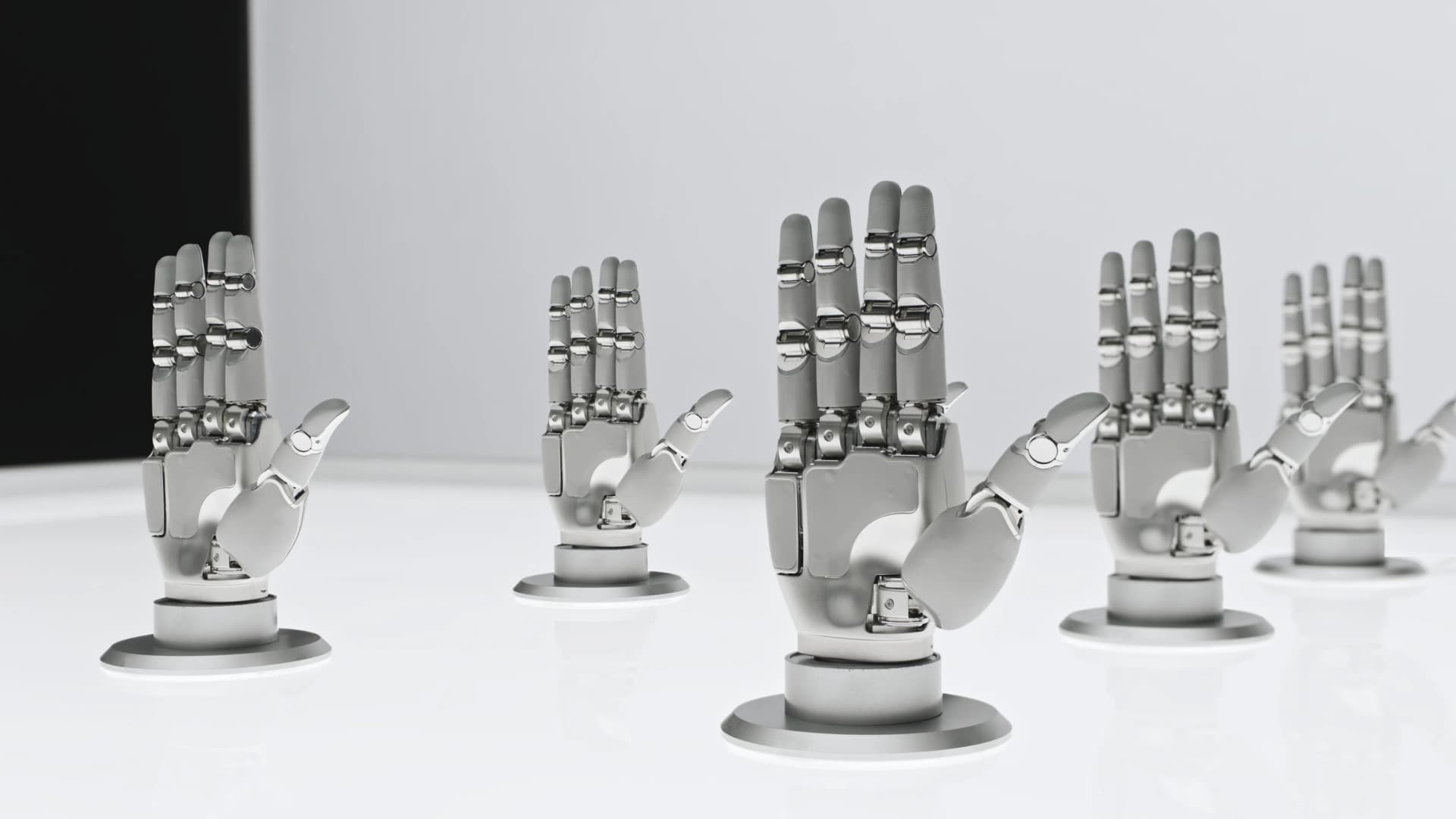
Sharpa Robotics announced on October 16 that its much-anticipated SharpaWave dexterous hand has entered mass production and is now shipping to customers. The announcement, made via the company's social media channels alongside a new promotional video, marks a significant milestone for a product that has generated considerable interest in the robotics community since its demonstrations at events like ICRA 2025.
The SharpaWave hand aims to set itself apart in a growing market by focusing on advanced, high-resolution tactile sensing. At the core of its technology is a proprietary "Dynamic Tactile Array" (DTA). According to the company's brochure, this system is powered by a neural network-based algorithm and provides a pressure sensitivity of 0.005 N across a 0-30 N range. With a data frame rate of 180 FPS and a spatial resolution under 1 mm, the DTA is designed to enable capabilities like real-time texture recognition and 6-dimensional force detection, moving robotic manipulation closer to human-level perception.
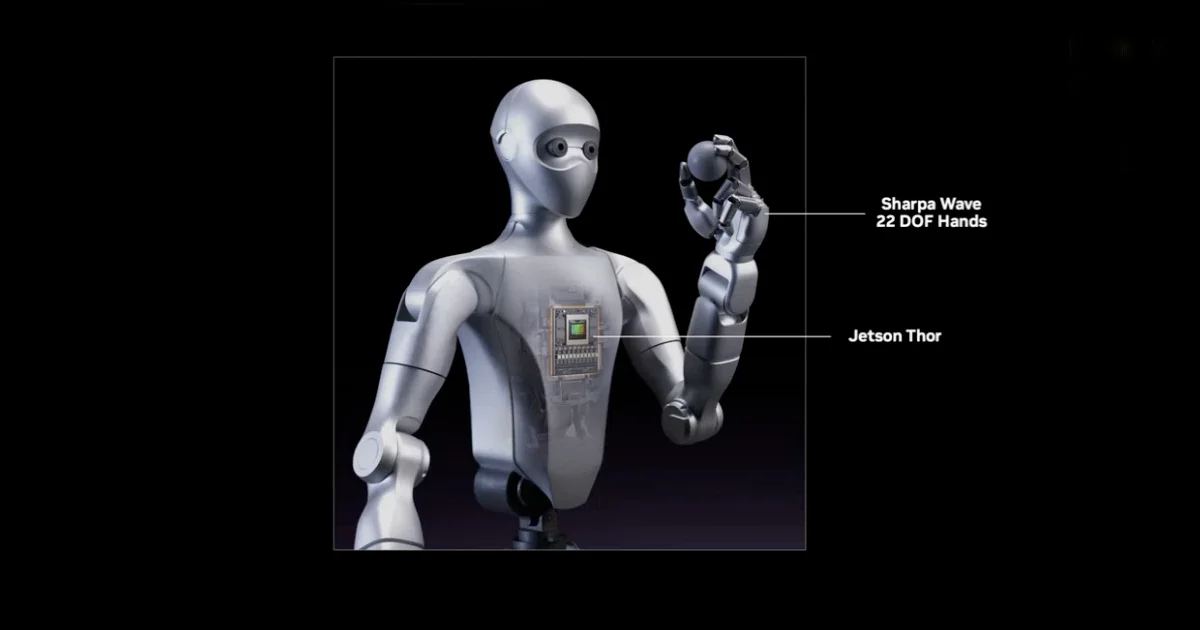
In terms of mechanical specifications, the SharpaWave is a 22-degree-of-freedom (DOF) hand built on what the company calls a "unique isomorphic architecture" that mirrors the human hand. It weighs 1200 g and measures . Sharpa also emphasizes the combination of strength and speed, claiming a fingertip force of over 20 N and an operating speed greater than 4 Hz for all gestures.
The launch of the SharpaWave comes as the market for sophisticated robotic end-effectors heats up. Its specifications present a different design philosophy compared to other recent entrants, such as the Wuji Hand. While the Wuji Hand prioritizes a lightweight design at under 600 g and a "dual breakthrough" in performance and cost, the heavier SharpaWave appears to be targeting the upper echelon of performance, particularly in sensory feedback. The Wuji Hand offers 20 DOFs and a 15 N fingertip force, highlighting the varied engineering trade-offs companies are making to meet the needs of the emerging humanoid robotics sector.
The weekly humanoid robotics briefing
One email a week: the launches, funding and research that mattered, with context from Humanoids Daily.
Read recent issuesTo facilitate adoption, Sharpa is offering a developer-friendly ecosystem. This includes a cross-platform development suite, a proprietary control application called SharpaPilot, and high-fidelity simulation models for platforms like MuJoCo and ROS. The hand uses a standard Ethernet interface for communication.
With the SharpaWave now officially shipping, the robotics community will have its first opportunity to validate the company's performance claims in real-world applications. While details on pricing have not yet been publicly released, the hand's advanced sensing features position it as a significant new option for researchers and developers working on the frontiers of robotic dexterity and intelligent manipulation.
For current Wave and Wave SE specifications, tactile sensing and software, see our Sharpa Wave hand guide.
Share this article
Read next
- Published on
- Reading time
- 4 min read
The Apple Peeling Milestone: How Sharpa’s "MoDE-VLA" Unlocks Bimanual Dexterity
- Published on
- Reading time
- 5 min read
Sharpa Launches D01 Robot, W02 Hand and AE01 Haptic Glove at IROS 2026
- Published on
- Reading time
- 7 min read
Google DeepMind Unveils Gemini Robotics 2, Bringing Whole-Body Intelligence and Multi-Robot Teams to Physical AI
- Published on
- Reading time
- 6 min read
NVIDIA GTC: NVIDIA and Sharpa Unveil Isaac GR00T Reference Humanoid Robot
- Published on
- Reading time
- 4 min read
The Human Scale: NVIDIA’s EgoScale Unlocks High-Dexterity Robotics via 20,000 Hours of Human Video
- Published on
- Reading time
- 3 min read
Sharpa Robotics Ramps Up Mass Production of "Vision-Based" Tactile Hand
The weekly humanoid robotics briefing
One email a week: the launches, funding and research that mattered, with context from Humanoids Daily.
Read recent issues