- Published on
AGIBOT Tops Medal Table at 2nd World Humanoid Robot Games as Beijing Showdown Concludes
One tap, and our reporting appears more often in your Google Top Stories. It makes a real difference to a small newsroom.

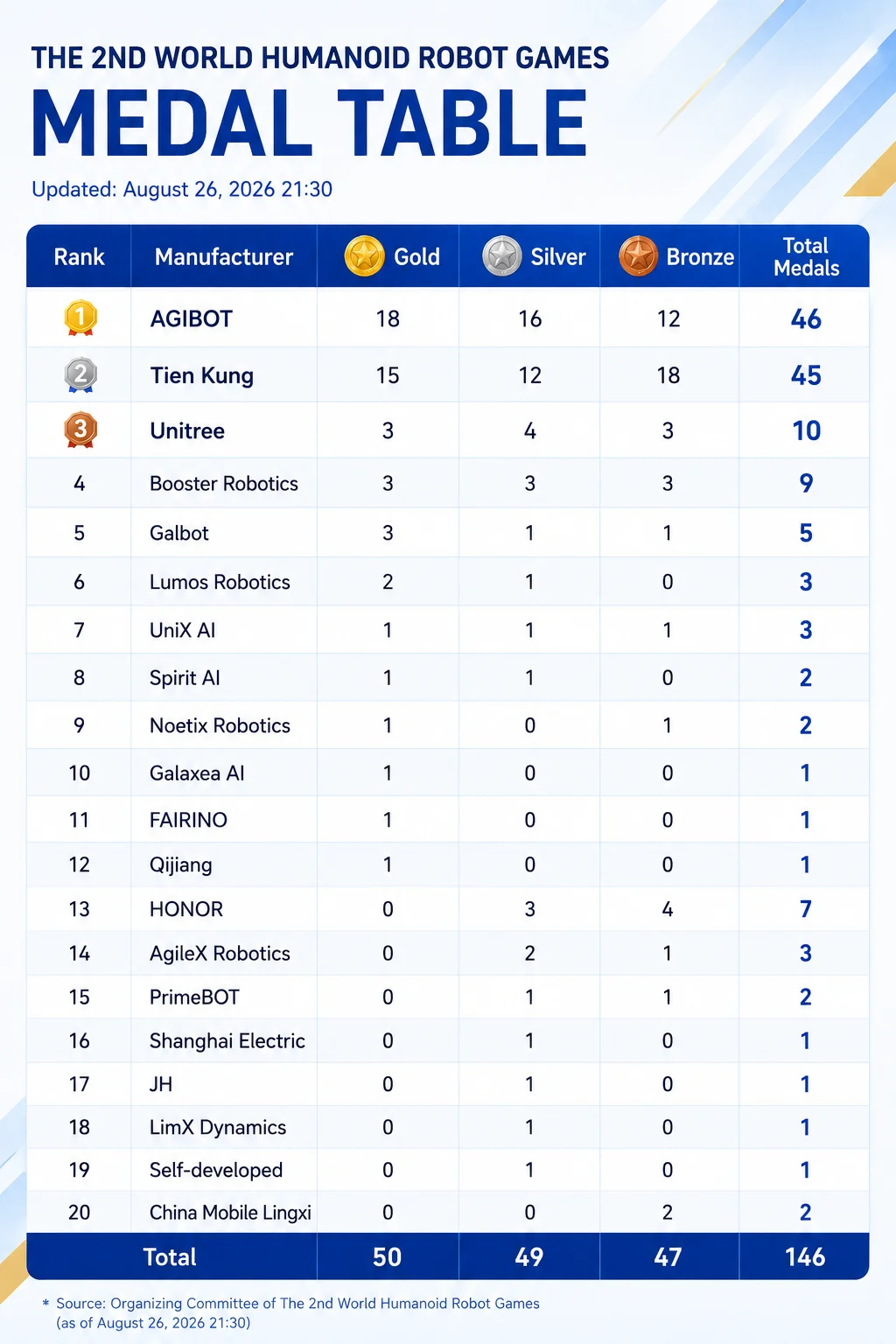
- AGIBOT claimed first place overall at the 2nd World Humanoid Robot Games in Beijing, securing 46 total medals, including 18 gold, 16 silver, and 12 bronze.
- TianGong Robotics (backed by UBTECH) finished a close second with 45 medals, dominating explosive track-and-field speed and jumping events.
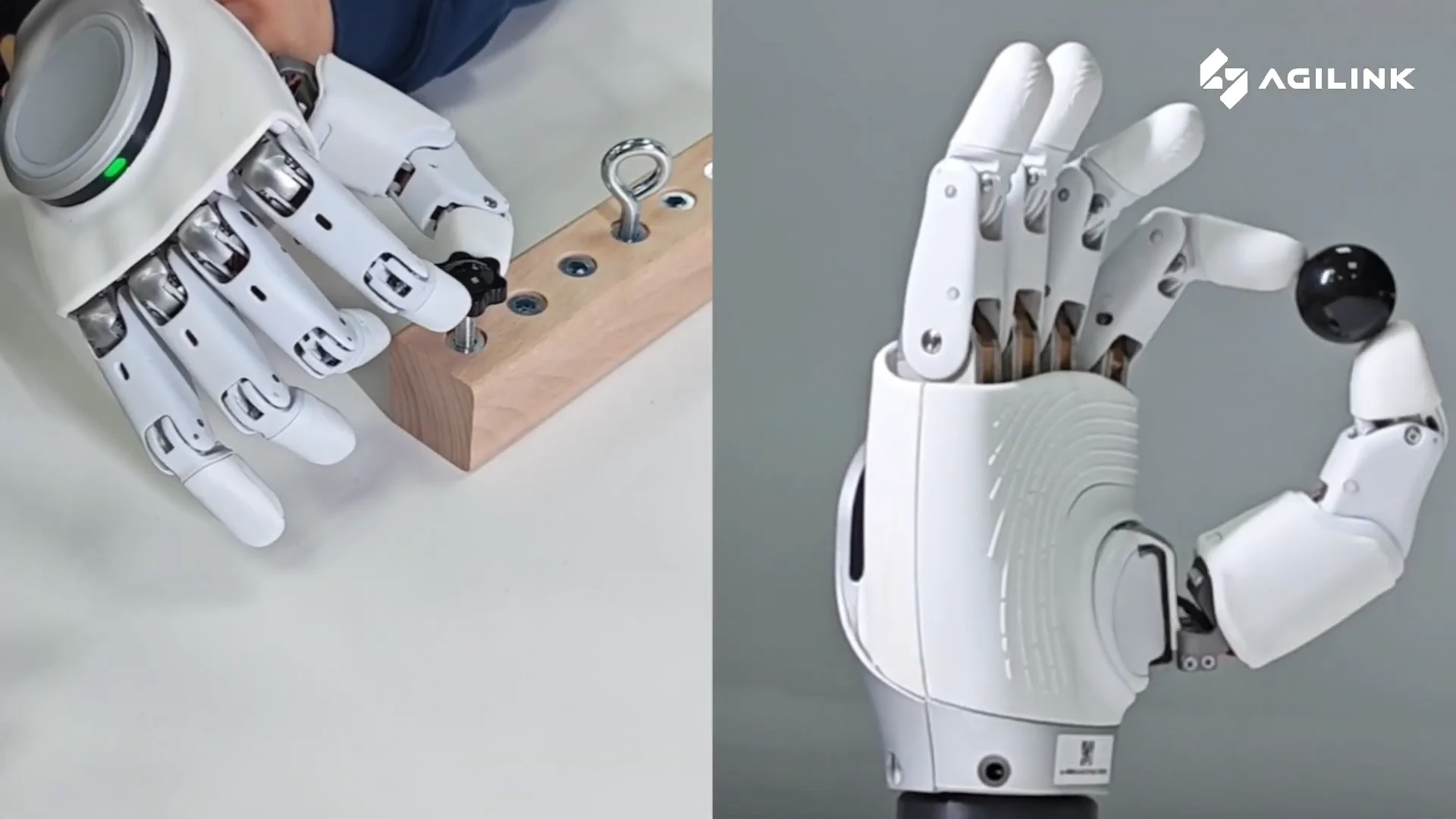
- AGIBOT's victory was anchored by exceptional performance in dexterous manipulation and scenario-based tasks, with its OmniHand securing seven gold medals in areas like cable connection, unboxing, and precision assembly using MANUS metagloves.
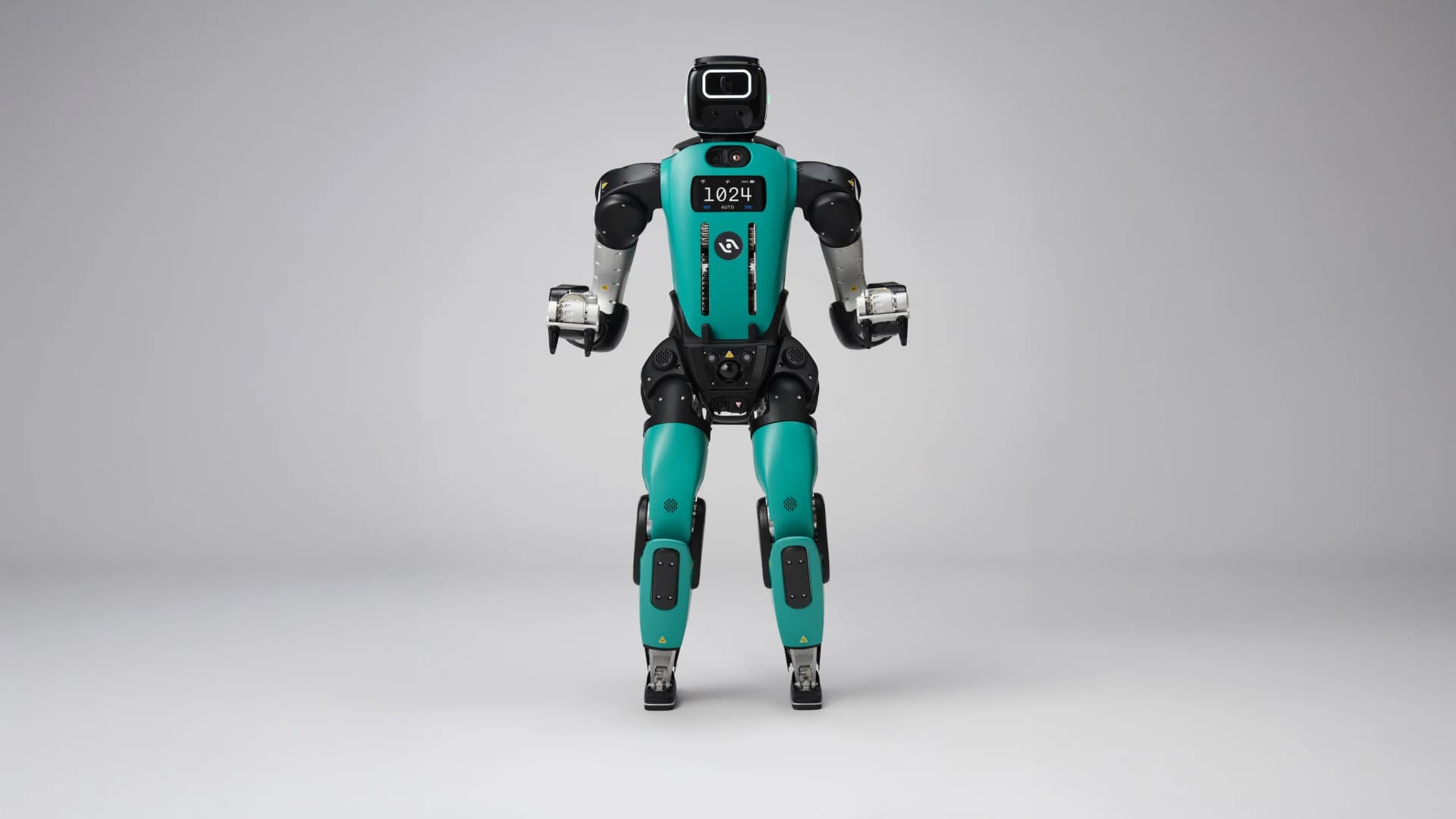
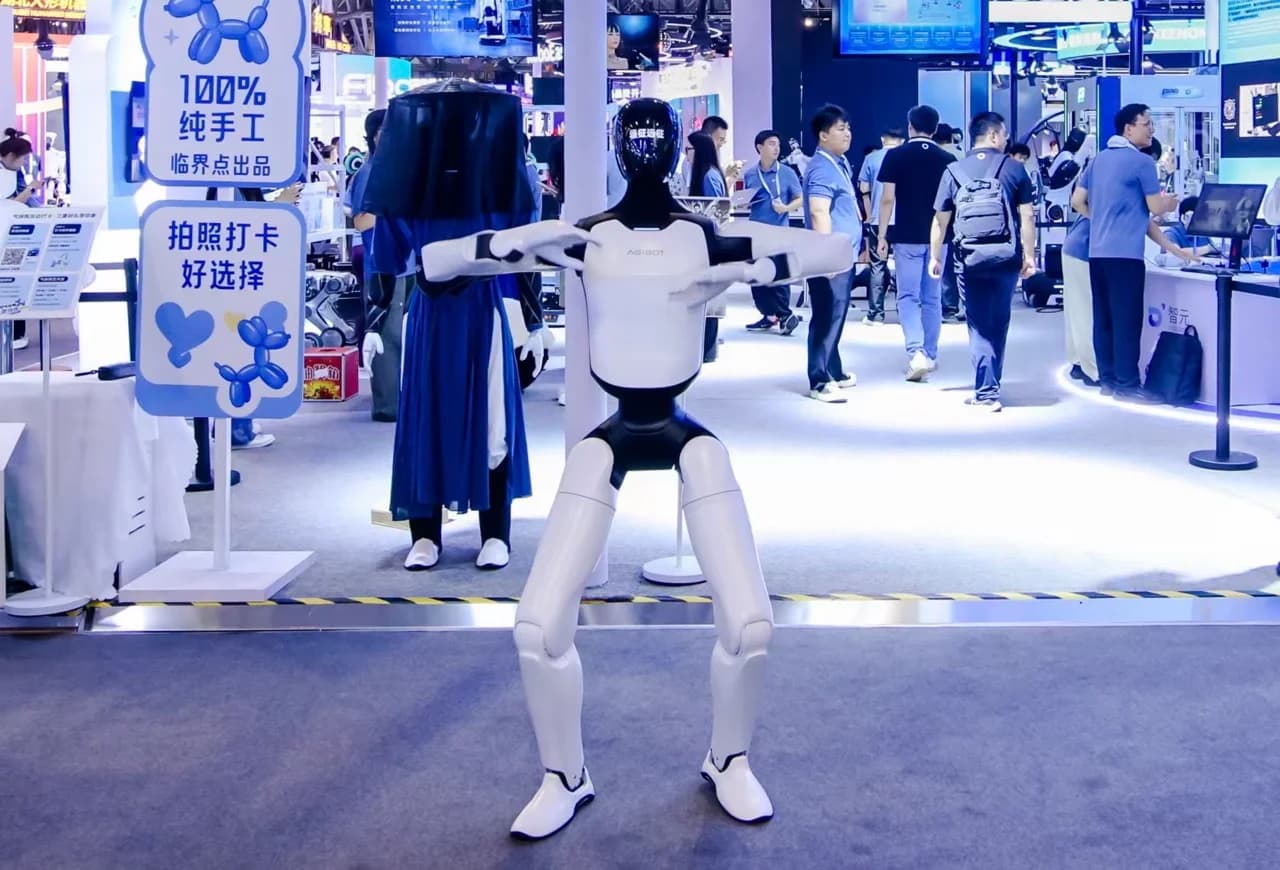
- Unlike specialized lab prototypes, AGIBOT competed using standard mass-produced hardware lines such as the G2, A3, and X2, aligning with the industry's broader pivot toward real-world utility and commercial deployment.
The dust has settled at Beijing's National Speed Skating Oval following the conclusion of the 2nd World Humanoid Robot Games. While initial public attention was heavily captivated by record-shattering track sprints and soaring vertical leaps, the official medal table reveals a different strategic victor: Shanghai-based AGIBOT.
Closing out the five-day international competition, AGIBOT secured the top spot on both the gold medal and overall leaderboards, capturing 46 total medals comprised of 18 gold, 16 silver, and 12 bronze. The performance narrowly edged out the Beijing Humanoid Center's TianGong Robotics, which finished a close second with 45 total medals (15 gold, 12 silver, and 18 bronze).
A Balanced Sweep Across Manipulation and Mobility
While TianGong and partner UBTECH dominated the athletic running and jumping tracks, AGIBOT's path to the top of the medal league relied on a diverse spread across dexterous manipulation, motion control, and scenario-based tasks.
In the highly competitive dexterous hand events—which tested fine-motor control, tool use, and precision handling—AGIBOT’s OmniHand reached the finals across all eight categories, walking away with seven gold medals. Events such as block building, powder weighing, and tweezer bean-picking highlighted the system's force feedback and compliance control. Many competing teams throughout the venue also leveraged MANUS metagloves for real-time teleoperation during intricate assembly tasks like cable connection, unboxing, and nail fixing, underlining a shared reliance on advanced human-input interfaces for high-precision manipulation.
The weekly humanoid robotics briefing
One email a week: the launches, funding and research that mattered, with context from Humanoids Daily.
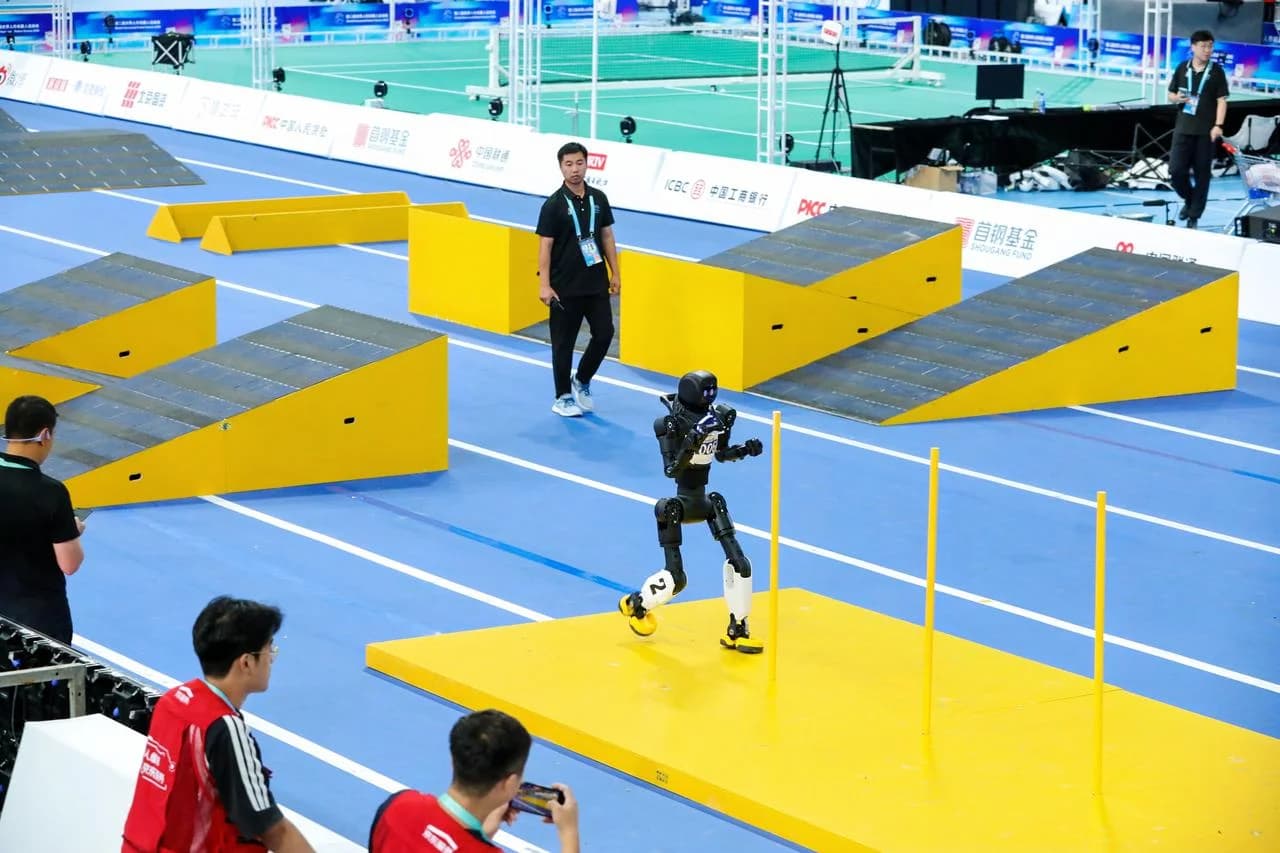
Read recent issuesBeyond manipulation, AGIBOT's motion-control lineup delivered solid results. The X2 platform captured gold in the 100-meter obstacle race alongside podium finishes in the 400-meter variant, while the A3 humanoid secured a gold medal in the Tai Chi competition. In scenario-based challenges simulating hotel operations, library logistics, and emergency response, the G2 platform earned five additional gold medals.
Mass-Produced Hardware Versus Custom Competitors
A central narrative of AGIBOT's debut performance is the hardware configuration deployed on the floor. Rather than building custom, one-off prototypes engineered strictly for competition parameters, AGIBOT utilized commercial units pulled directly from its active mass-production lines.
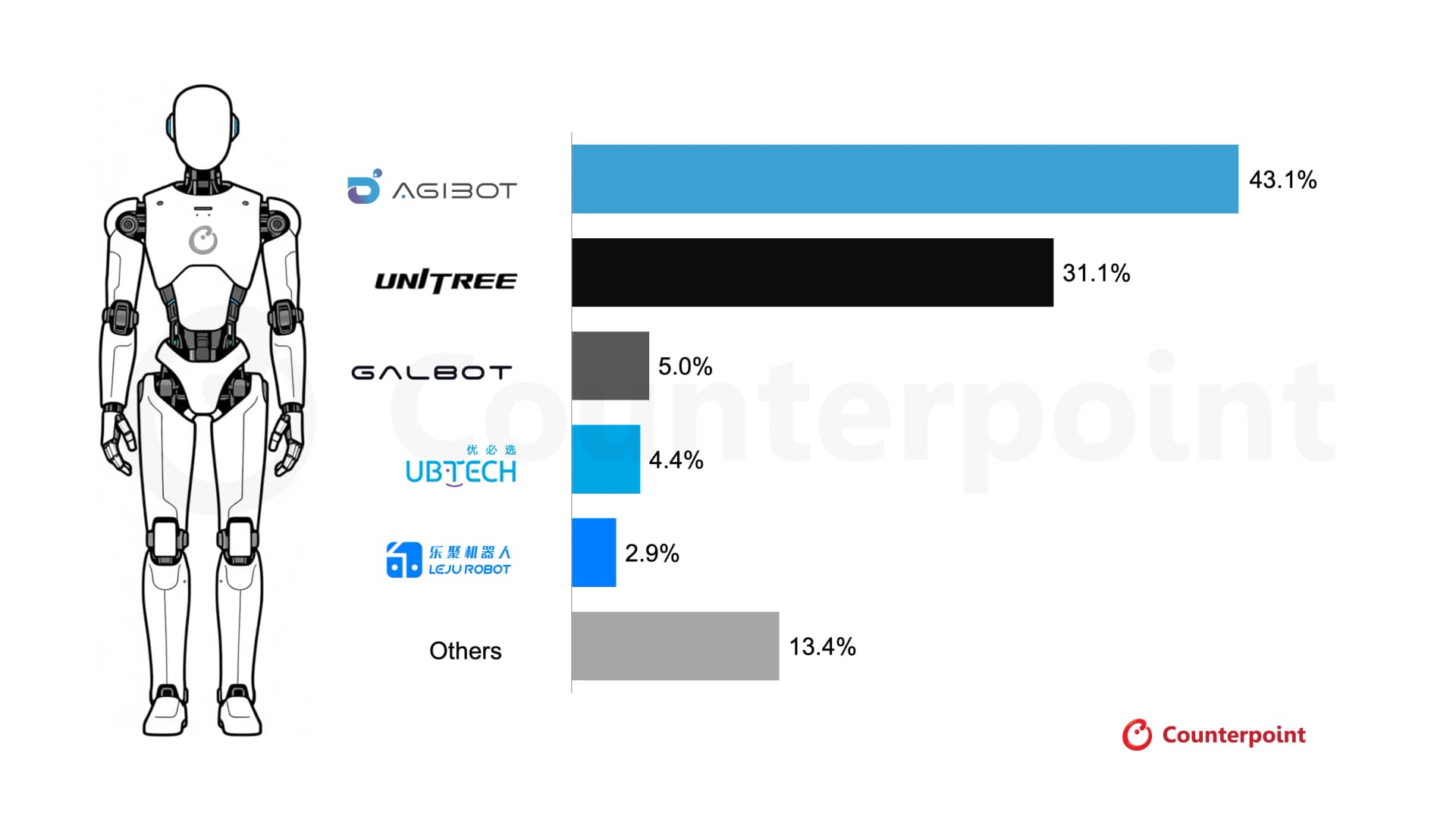
The strategy mirrors the company's broader push to scale volume, following recent milestones that saw cumulative production surpass 15,000 units and cement its standing among global humanoid shipment leaders. By fielding commercial platforms like the G2—which is already integrated into active manufacturing lines at facilities like Longcheer Technology—AGIBOT sought to validate the real-world robustness of its embodied intelligence architecture, which integrates its proprietary AGILE locomotion engine and ViLLA foundation models.
The Dual Track of Humanoid Development
The final medal standings underscore an evolving fork in the road for the humanoid robotics industry.
On one side, the phenomenal athletic records set by TianGong—including sub-10-second 100-meter dashes and multi-meter high jumps—demonstrate extraordinary advances in peak actuator power, thermal dissipation, and dynamic control, a success celebrated heavily by major stakeholder UBTECH. On the other side, AGIBOT’s triumph in the overall medal table highlights the rising importance of multi-domain competence, ranging from dexterous tool handling to structured industrial task execution.
As the industry transitions deeper into commercial deployments, the ultimate test for these platforms will not be whether they can top a podium in Beijing, but whether they can translate competition wins into sustained, autonomous productivity on the factory floor.
Share this article
Read next
- Published on
- Reading time
- 3 min read
Beijing Humanoid Robot Innovation Center Secures $100 Million to Scale Commercial Operations
- Published on
- Reading time
- 6 min read
Beyond the Showcase: AGIBOT Expands Embodied AI Portfolio at WAIC 2026
- Published on
- Reading time
- 5 min read
AGILINK Hits Unicorn Status: AGIBOT’s Dexterous Hand Spin-off Raises Hundreds of Millions
- Published on
- Reading time
- 6 min read
Global Humanoid Shipments Surpass 22,000 in H1 2026 as AGIBOT Leads and Form-Factor Debates Intensify
- Published on
- Reading time
- 4 min read
State Grid’s $995 Million Bet: 8,500 Robots to Spearhead "Deployment Year One" in Energy
- Published on
- Reading time
- 4 min read
OpenMind Launches Hardware-Agnostic App Store to Unify Humanoid "Skills"


The weekly humanoid robotics briefing
One email a week: the launches, funding and research that mattered, with context from Humanoids Daily.
Read recent issues