- Published on
Not Ready to Scale: Unitree CEO Wang Xingxing on Why Humanoids Still Aren’t Working in Factories
One tap, and our reporting appears more often in your Google Top Stories. It makes a real difference to a small newsroom.


- Wang Xingxing said Unitree has deliberately held back from large-scale factory rollout: its robots can handle simple assembly, but throughput remains below a human worker's and every new task requires retraining from scratch.
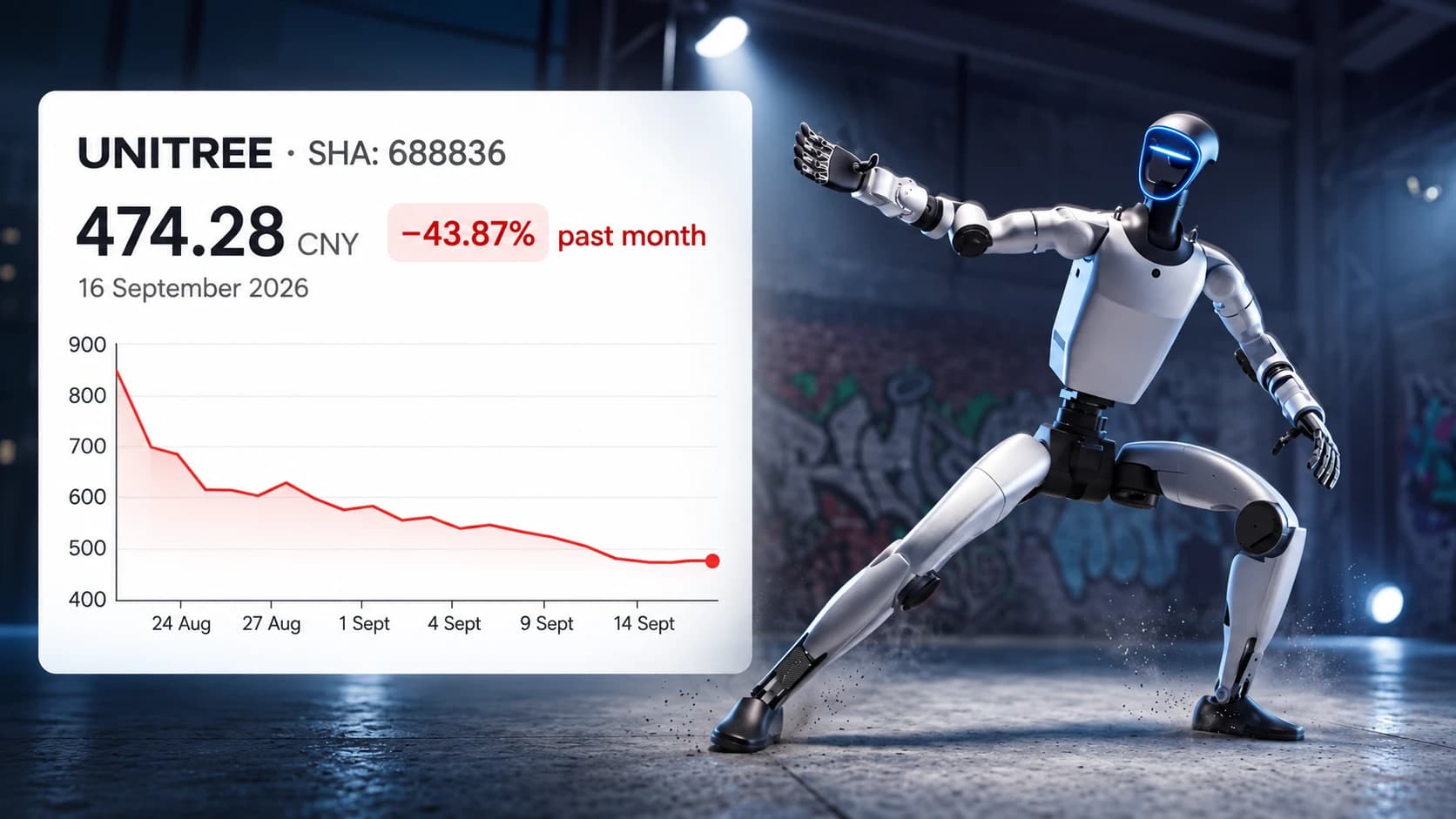
- He never mentioned the company's blockbuster STAR Market IPO, completed days earlier, spending his twenty minutes on unsolved technical problems instead.
- The core bottleneck is the "lossy" nature of physical robotics, where models cannot correct tiny deviations in the final millimeters of a task, unlike the strict, lossless vector spaces of large language models.
- To accelerate development, Unitree has begun pushing a closed-loop system in which frontier AI models write, simulate, and physically test robot control code, with results scored by both AI models and human reviewers.
- Wang defines the "ChatGPT moment" for embodied intelligence as a robot completing 80% of tasks via voice commands in an unfamiliar environment — two to three years away at the fast end, five to ten at the slow end.
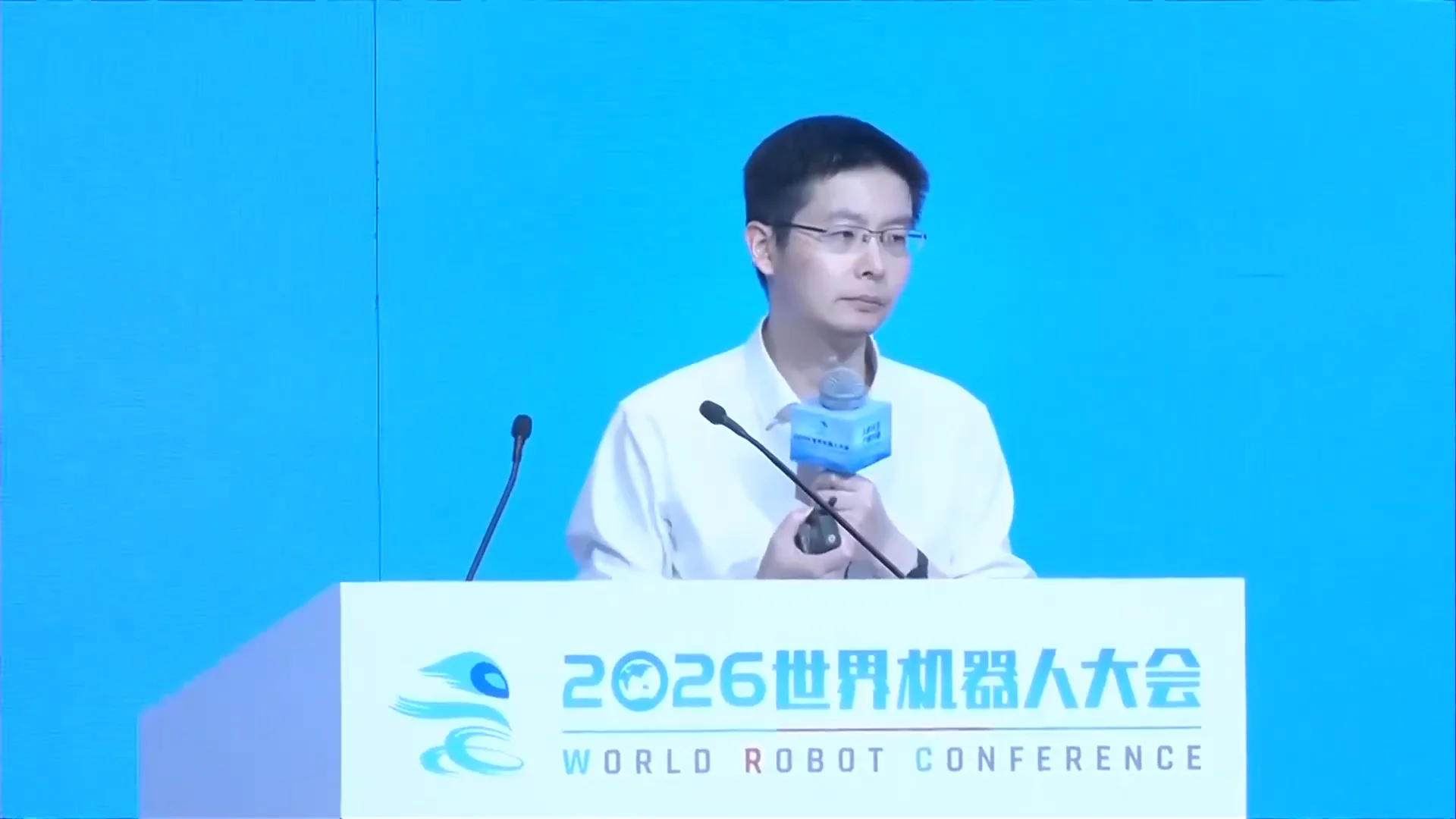
Ten years after founding Unitree Robotics, and days after taking it public in one of the year's largest listings, Wang Xingxing used his stage time at the 2026 World Robot Conference in Beijing to talk about what his robots still cannot do.
The founder and CEO did not once mention the blockbuster STAR Market IPO that had just made him one of China's wealthiest founders. Nor did he dwell on the high-profile mass demonstrations that have made Unitree's machines globally recognizable. Instead, he spent twenty minutes on the gap between those demonstrations and practical, generalized utility — beginning with an admission about what his company has chosen not to ship.
Wang spoke in Mandarin. Quotes below are translated from his remarks.
Why the Robots Aren't in the Factories Yet
Unitree has worked with automotive plants on deployed applications and has put robots on its own production lines for testing and real use. Wang said the large majority of the company's AI team is now working on robots doing genuine work in homes or factories.
The weekly humanoid robotics briefing
One email a week: the launches, funding and research that mattered, with context from Humanoids Daily.
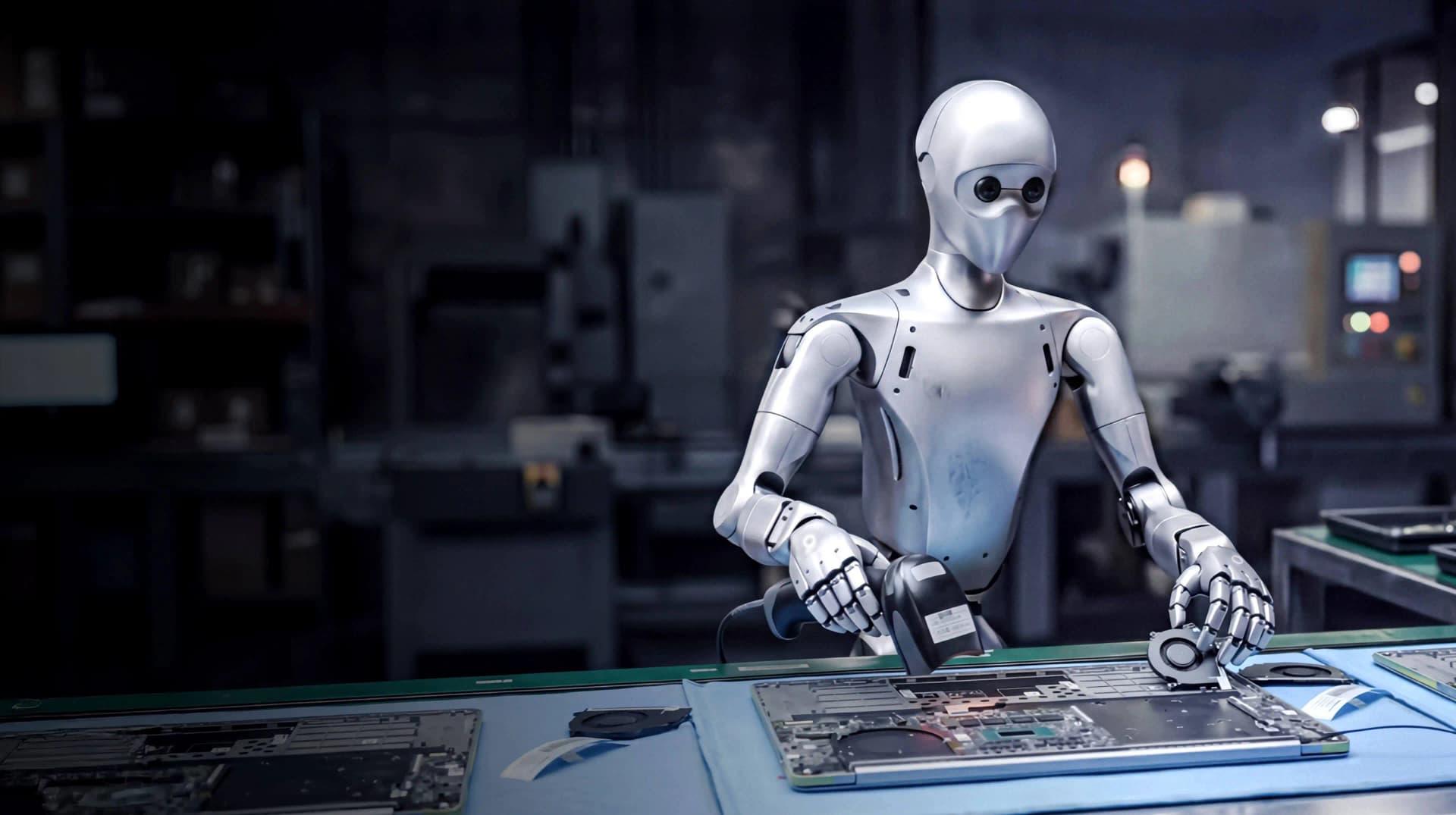
Read recent issuesSo why no rollout at scale? Because, by his own account, the machines aren't good enough yet. Unitree's robots can perform straightforward assembly, he said, but their throughput remains lower than a human worker's — and every time a new task arrives, the robot has to be retrained from scratch. That retraining requirement drags efficiency down further.
Rather than push the technology out commercially in that state, Wang said the company would rather wait until it is meaningfully more generalizable. He was careful to frame this as an industry-wide condition rather than a Unitree-specific shortfall, calling it the single biggest bottleneck facing everyone in the field.
It is an unusually candid position for a founder to take in the immediate aftermath of a major listing — and it frames the technical argument that occupied the rest of his presentation.
The Final Millimeter: Why Robotics Lags Behind LLMs
The technical core of Wang's presentation focused on the inherent mismatch between pure digital AI models and the physical world. He noted that while text-based language models operate within a strict vector space where inputs and outputs are completely "lossless," physical robots accumulate deviation and loss on every single input-output cycle.
Describing the failure from the robot's perspective, Wang said that when he reaches to take hold of an object, he can see it is nearly in his grasp — but that last fraction of tactile feedback, that final small margin of error, is what the model cannot correct for. Because these micro-errors go uncorrected, he said, the overall success rate for complex tasks collapses. The broad trajectory of a task is fine, in other words; it is the last few centimeters or millimeters that break it. This mismatch between what AI models take in and put out and the physical world is, in his assessment, the most significant constraint currently facing global embodied intelligence.
It also explains the retraining problem. A model that cannot reliably close the final millimeter in one setting has no way to carry that skill into another, which is why success rates that approach 100% in a fixed, heavily trained environment fall away sharply as soon as the object or the surroundings change.
Automating AI Evolution
To bypass the slow pace of manual data collection and human programming, Unitree has begun pushing a self-evolving software pipeline. Wang described it as something the company had put forward the day before, though no corresponding announcement is discoverable in Unitree's public channels or in Chinese coverage from that date; his conference remarks appear to be the approach's first detailed public airing. The approach uses frontier AI models as autonomous coding agents, operating within rules, constraints, and tooling that Unitree defines. These agents search the internet for the latest research and open-source solutions, generate robot control code, and test it within simulation environments.
Once simulated, the code is deployed to physical robots for real-world testing. Results are then evaluated and scored — partly by the AI model itself, and partly by human reviewers. Wang was explicit that the human role matters here, arguing that human experience is extremely important because a person can very easily judge whether a result is good or bad. That scoring feeds back to the coding agent, forming what he described as a positive loop.
Wang argues that this automated iteration allows the system to digest vast amounts of real-world and human data efficiently, theoretically compounding the robot's capabilities over time without discarding previously learned skills. He was measured about its current maturity, presenting the demonstration as the simplest possible illustration and noting that real deployments are more complex.
Extremes in Hardware: Superman to Mechas
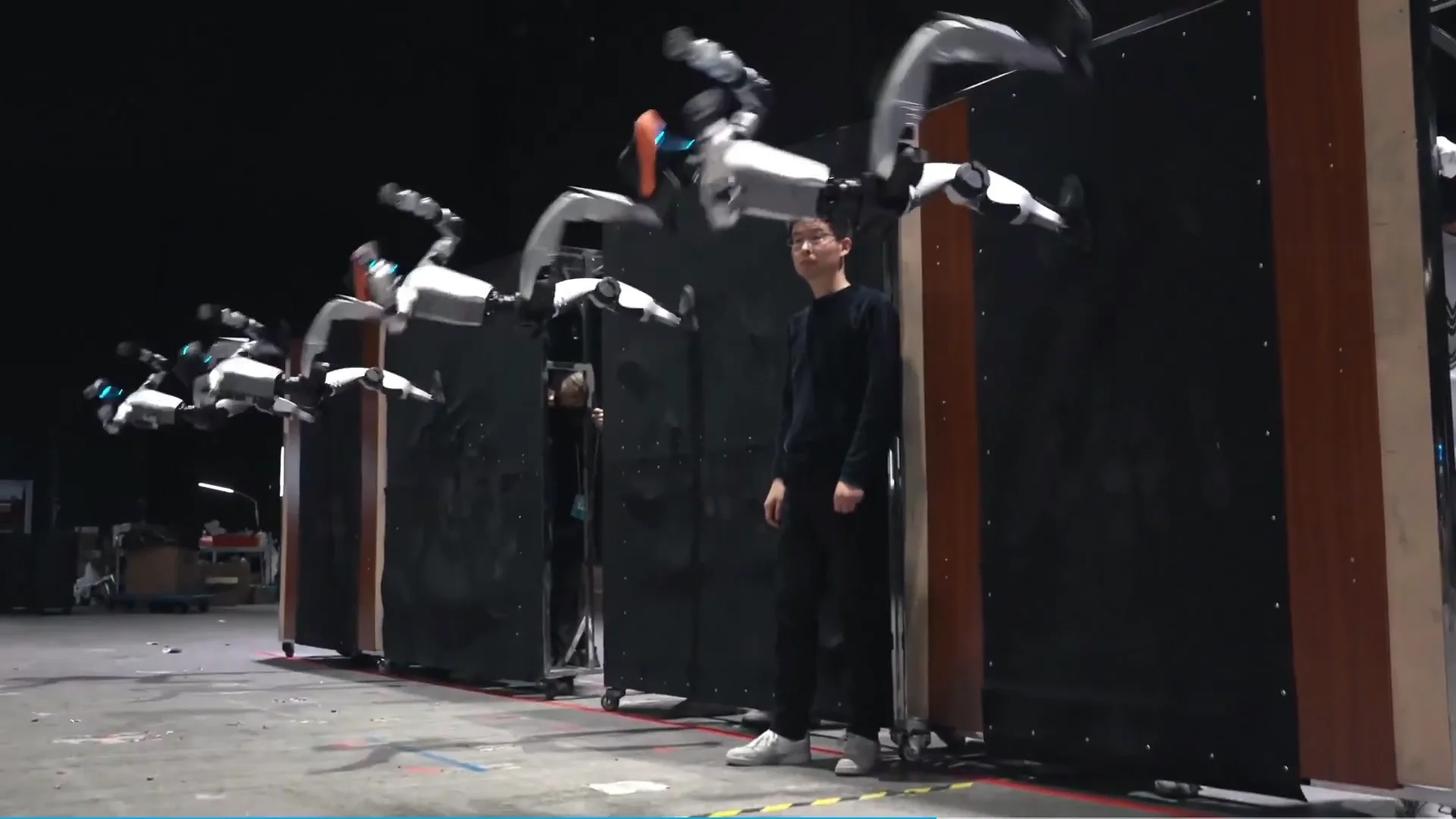
Despite the heavy emphasis on software, Wang also provided updates on Unitree's expanding and occasionally eccentric hardware catalog. He confirmed the specifications of the company's newly teased "Superman" robot, noting that the machine — developed in just over three months, and which he characterized as a preview rather than a formal launch — has reached a top speed of 12.65 meters per second, faster than the highest speed ever recorded by a human sprinter. He added that its jump height likewise surpasses the highest human jump on record.
Additionally, Wang addressed the company's massive rideable mecha, the GD01, initially launched in May 2026 and billed by Unitree as the world's first production-ready manned mecha. Standing over three meters tall and weighing around 500 kilograms with a rider aboard, the machine was described as the robotic equivalent of an off-road vehicle, designed for outdoor trekking and complex logistics rather than urban environments. To maximize stability, the bipedal mecha can mechanically transform into a four-legged configuration, which Wang said also improves its ability to clear obstacles. Unitree has listed it from $650,000.
The 80% Threshold and the "ChatGPT Moment"
Asked implicitly what would change all of this, Wang returned to the benchmark he has set out before: take a machine into an unfamiliar environment, such as a home, and have it execute around 80% of requested tasks through voice and language instructions. He then stated the metric more precisely: roughly 80% of tasks, across roughly 80% of unfamiliar environments. That, he said, is the "ChatGPT moment" for embodied intelligence, and the tipping point at which the industry becomes a genuine one.
He put it two to three years out on the fast end, five to ten on a slower trajectory — a range wide enough to acknowledge how much remains unsolved. Until then, by his own reasoning, the robots stay largely where they are: impressive on stage, and still not quite ready for the factory floor.
Share this article
Read next
- Published on
- Reading time
- 3 min read
Unitree CEO Predicts Humanoids Will Outrun Usain Bolt by Mid-2026
- Published on
- Reading time
- 4 min read
China Unveils National Standard System as Humanoid Leaders Pivot from "Kung Fu" to "Work Mode"
- Published on
- Reading time
- 2 min read
Watch: Unitree Previews "Cluster Cooperative" Tech with Mass Humanoid Performance
- Published on
- Reading time
- 3 min read
Unitree Unveils Human-Sized Robot Hand Starting at $6,500
- Published on
- Reading time
- 3 min read
Unitree Says It Won’t Become a Robot Integration Company
- Published on
- Reading time
- 5 min read
Unitree’s Stock Slump Puts China’s Robot IPOs Under Scrutiny
The weekly humanoid robotics briefing
One email a week: the launches, funding and research that mattered, with context from Humanoids Daily.
Read recent issues