- Published on
UBTECH’s 2025 Financials: Humanoids Leap to Center Stage as Losses Narrow
One tap, and our reporting appears more often in your Google Top Stories. It makes a real difference to a small newsroom.

Supported by RoboStrategySupport for Humanoids Daily comes from RoboStrategy
Sponsored
Investing involves risk, including possible loss of principal. Read the prospectus before investing.
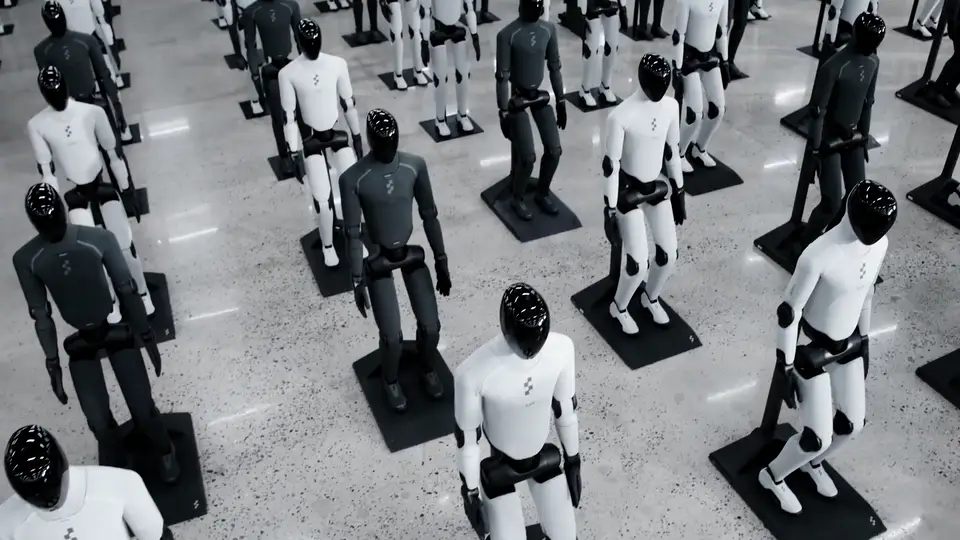
The 2025 fiscal year will likely be remembered as the moment the "utility gap" in robotics began to close for UBTECH Robotics. According to the company’s annual results announcement released on March 31, 2026, the Shenzhen-based firm has successfully transitioned from a diversified robotics manufacturer into a humanoid-first powerhouse.
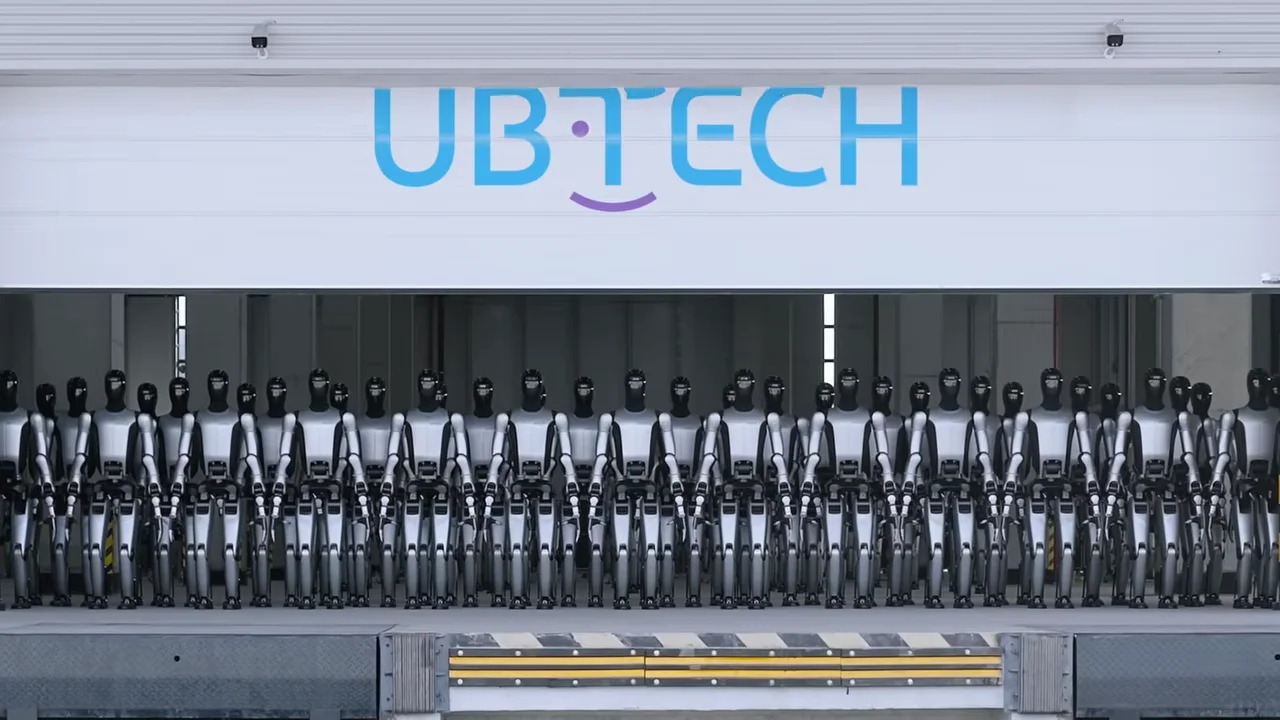
For the first time, full-size embodied intelligent humanoid robots have become UBTECH's largest source of income, accounting for 41.1% of total revenue. This "humanoid flip" highlights a broader industry trend where machines are moving out of the laboratory and into 24/7 industrial environments.
The Revenue Surge: A 2,203% Leap
UBTECH reported total revenue of RMB 2,001.0 million (approx. $276 million) for 2025, a 53.3% increase over the previous year. However, the most striking figure lies within the humanoid segment:
- Humanoid Revenue: Revenue from full-size humanoid products and services skyrocketed by 2,203.7%, jumping from RMB 35.6 million in 2024 to RMB 820.6 million in 2025.
- Shipment Volume: The company sold 1,079 humanoid units during the reporting period, representing a massive year-on-year increase of 35,866.7%.
- Efficiency Gains: Gross profit margin climbed to 37.7%, up from 28.7% in 2024, largely driven by these high-margin humanoid sales.
While the company remains in the red, its losses narrowed significantly. UBTECH reported a net loss of RMB 789.8 million for 2025, compared to RMB 1,159.9 million in 2024. This trajectory suggests that as the company scales toward its target of a 10-fold jump to 5,000 units in 2026, profitability may finally be within reach.
The weekly humanoid robotics briefing
One email a week: the launches, funding and research that mattered, with context from Humanoids Daily.
Read recent issuesIndustrial Validation: Beyond the "Showbiz" Phase
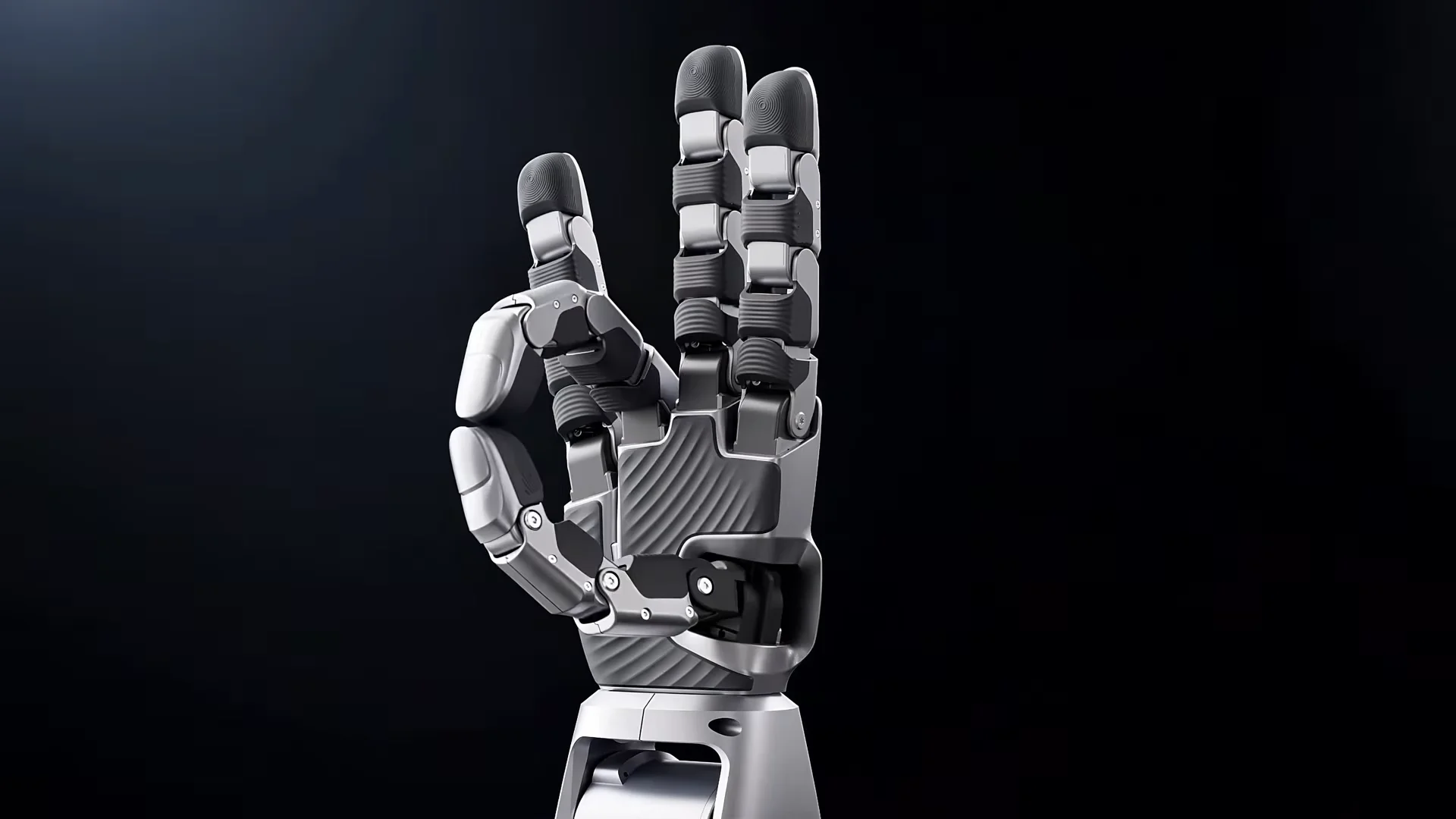
The financial report emphasizes a shift from "technical showboating" to "value realization". The primary catalyst for this growth has been the Walker S series, particularly the Walker S2, which entered official mass production and delivery in 2025.
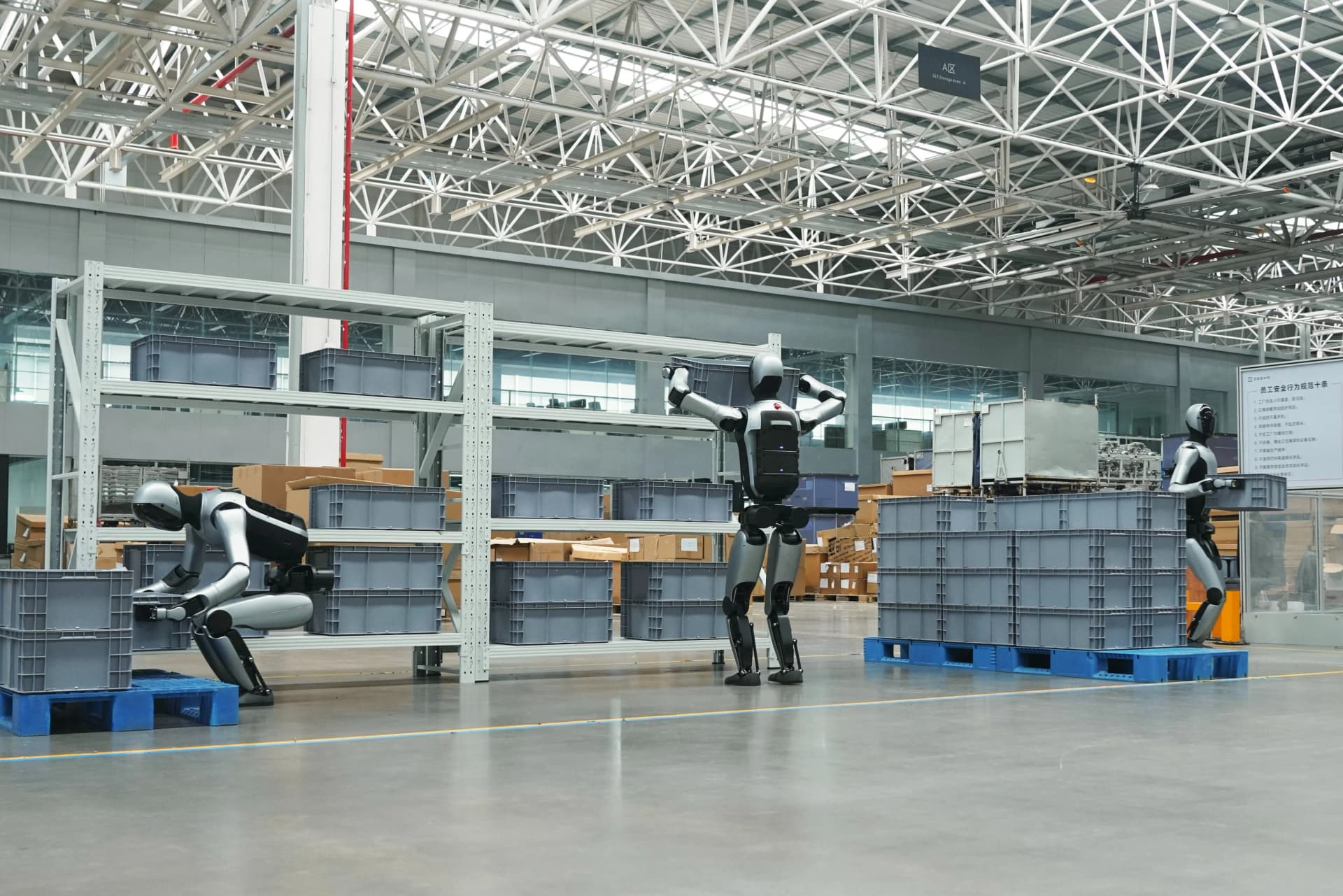
The Walker S2 is built for the factory floor, featuring an autonomous battery-swapping system that allows for 24-hour continuous operation. UBTECH has focused its deployment on three core industrial roles: handling, sorting, and quality inspection.
These robots are currently undergoing "on-the-job" training at major automotive and electronics firms, including BYD, Foxconn, and Geely. Furthermore, a partnership with Texas Instruments has seen these robots move into the highly sensitive environment of semiconductor manufacturing, a sector requiring sub-millimeter precision and strict clean-room standards.
The Software Brain: "Thinker" and the Data Loop
To support this hardware expansion, UBTECH has pivoted heavily into "Physical AI." The company independently developed Thinker, a foundation large model with hundreds of billions of parameters, and Thinker-WM, a specialized world model for spatiotemporal modeling.
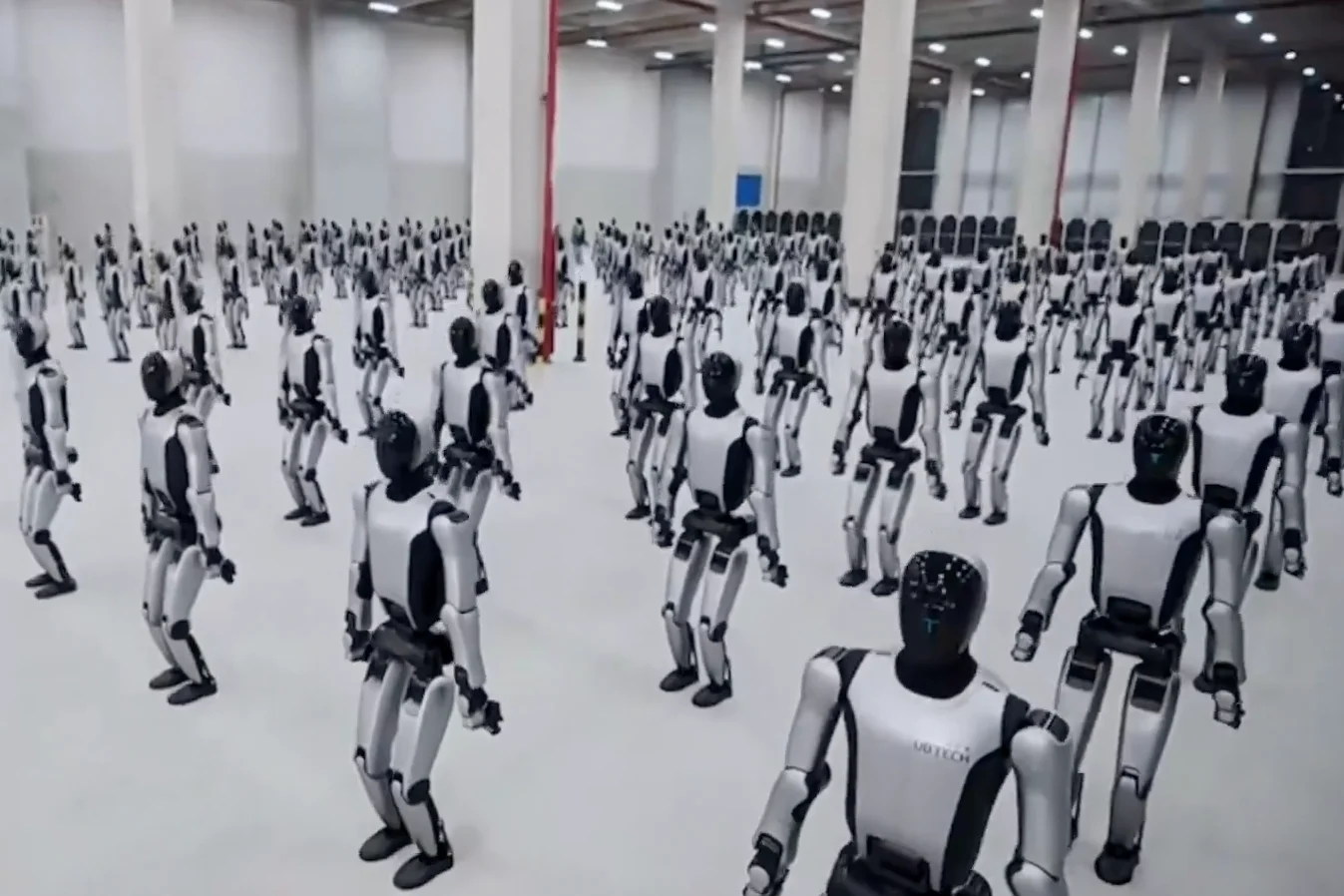
These models are fueled by what UBTECH calls a "data flywheel"—a loop where real-world data from deployments in automotive plants is fed back into simulations to refine robot autonomy. As of year-end 2025, UBTECH achieved an annualized production capacity of over 6,000 humanoid units.
Navigating the "Numbers War"
While UBTECH’s shipment of 1,079 units is a record for the company, it places them in the middle of a crowded and competitive field. Rivals such as Unitree Robotics have claimed even higher volumes, reporting 5,500 humanoid shipments in 2025 and eyeing a 20,000-unit year. Meanwhile AGIBOT have crossed the 10,000-unit production threshold as of March 2026.
UBTECH’s strategy to differentiate itself relies on its "full-stack" localized supply chain—claimed to be 90% Chinese-sourced—and its deep integration into national policy. The company’s executives are currently helping lead China’s Standardisation Technical Committee for Humanoid Robots, drafting the industry's technical "rulebook" for safety and hardware interfaces.
Future Outlook: The $20,000 Target
Looking ahead, UBTECH is betting on "scale economics" to drive down costs. The company aims to reduce manufacturing costs by 20% to 30% annually, targeting a unit production cost of under $20,000 by 2030.
This aggressive cost-cutting is essential as strategic manufacturing shifts in China accelerate. With capital expenditures rising 53.2% in 2025 to fund new headquarters and industrial parks in Shenzhen and Wuxi, UBTECH is clearly building the infrastructure for a future where humanoid workers are as common as the cars they help assemble.
Share this article
Read next
- Published on
- Reading time
- 4 min read
Rossmann Commences European Pilot of UBTECH Walker S2 Humanoid in Logistics
- Published on
- Reading time
- 4 min read
Supply Chain Synergy: UBTECH and Honda Trading to Pilot Humanoid Logistics
- Published on
- Reading time
- 4 min read
The $18 Million Brain: UBTECH Launches Aggressive Hunt for Embodied AI Chief
- Published on
- Reading time
- 5 min read
UBTECH Targets 10-Fold Output Jump to 5,000 Humanoids in 2026
- Published on
- Reading time
- 2 min read
UBTECH Claims "World's First" Mass Delivery of Humanoids as "Robot Army" Deploys
- Published on
- Reading time
- 2 min read
UBTECH Signals Walker S2 Mass Delivery with ''Robot Army'' Video
The weekly humanoid robotics briefing
One email a week: the launches, funding and research that mattered, with context from Humanoids Daily.
Read recent issues