- Published on
Volvo Cars Begins Training Hexagon’s AEON Humanoids at Ghent Plant Ahead of 2027 Production Target
One tap, and our reporting appears more often in your Google Top Stories. It makes a real difference to a small newsroom.

Supported by RoboStrategySupport for Humanoids Daily comes from RoboStrategy
Sponsored


Investing involves risk, including possible loss of principal. Read the prospectus before investing.
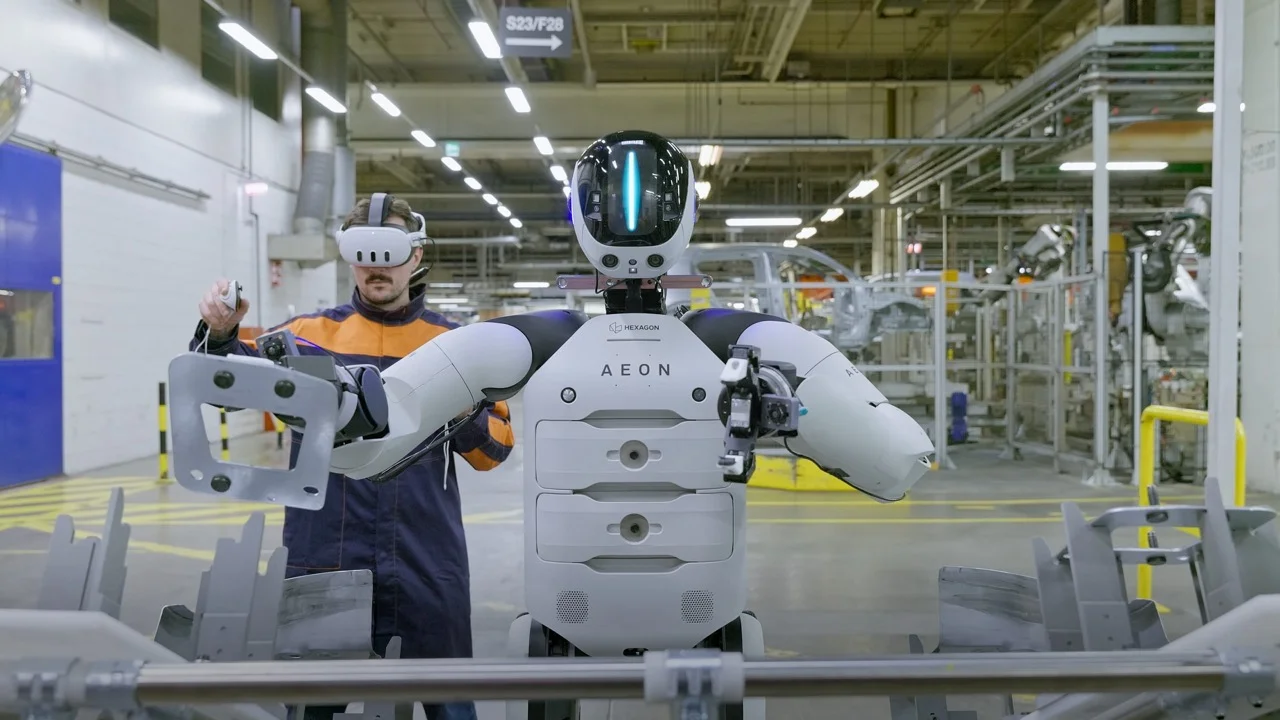
- Volvo Cars has introduced Hexagon Robotics’ AEON humanoid robots to its Ghent, Belgium factory for initial task training and validation.
- Robots are currently learning via imitation learning, starting with placing components into two fixtures before scaling to multi-part handling and facility navigation.
- A broader factory pilot with additional AEON units is scheduled for the first half of 2027, aiming for live production deployment by mid-2027.
- The move expands AEON’s automotive footprint following BMW’s Leipzig deployment and Schaeffler’s 1,000-unit commitment, though Volvo has not yet disclosed fleet size or throughput metrics.
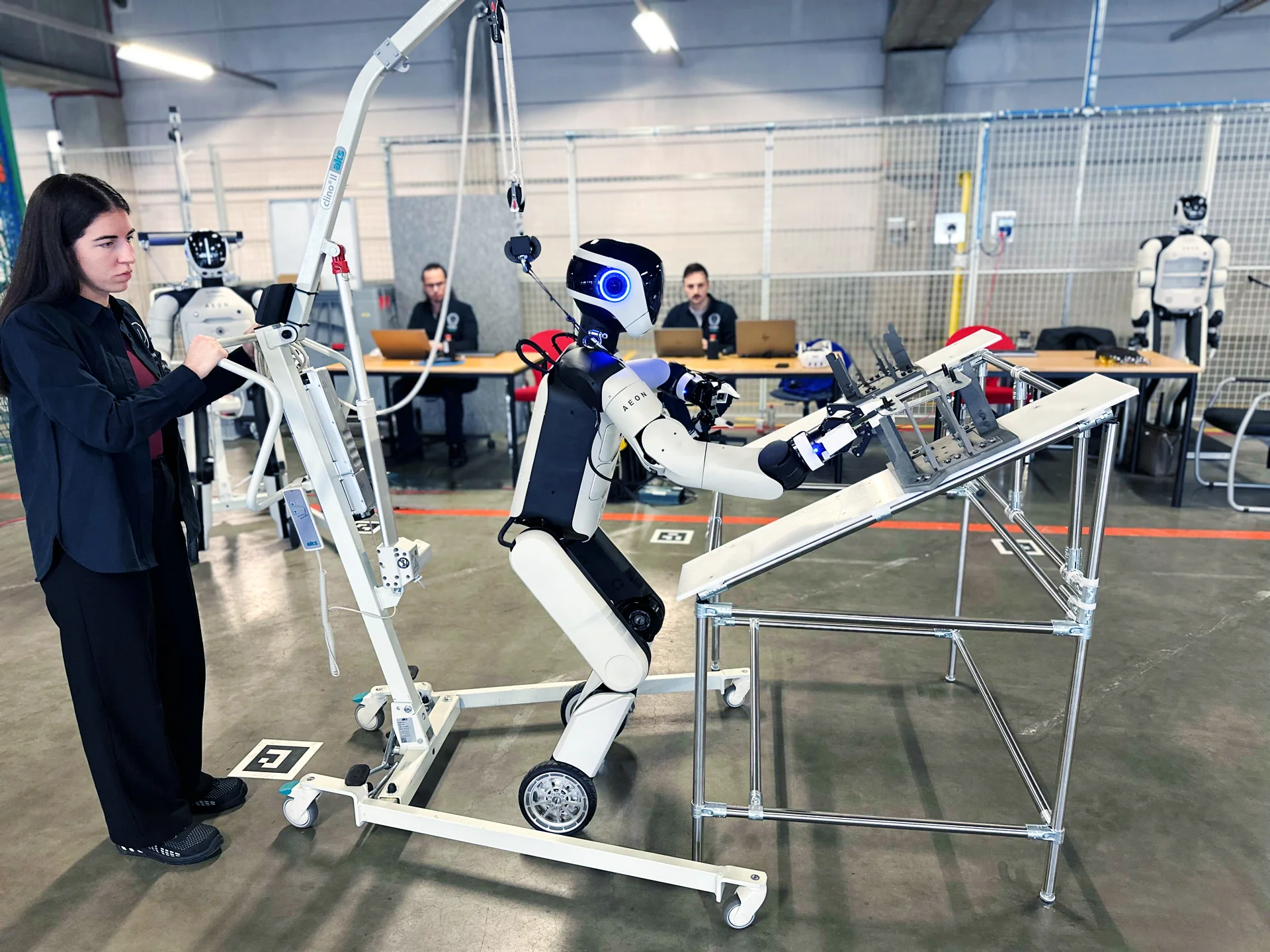
Volvo Cars is bringing humanoid robotics onto its European factory floor. The Swedish automaker announced that it has deployed AEON humanoid robots from Hexagon Robotics to its manufacturing plant in Ghent, Belgium—the first Volvo facility to test the form factor—with plans to transition the machines into active vehicle production by mid-2027.
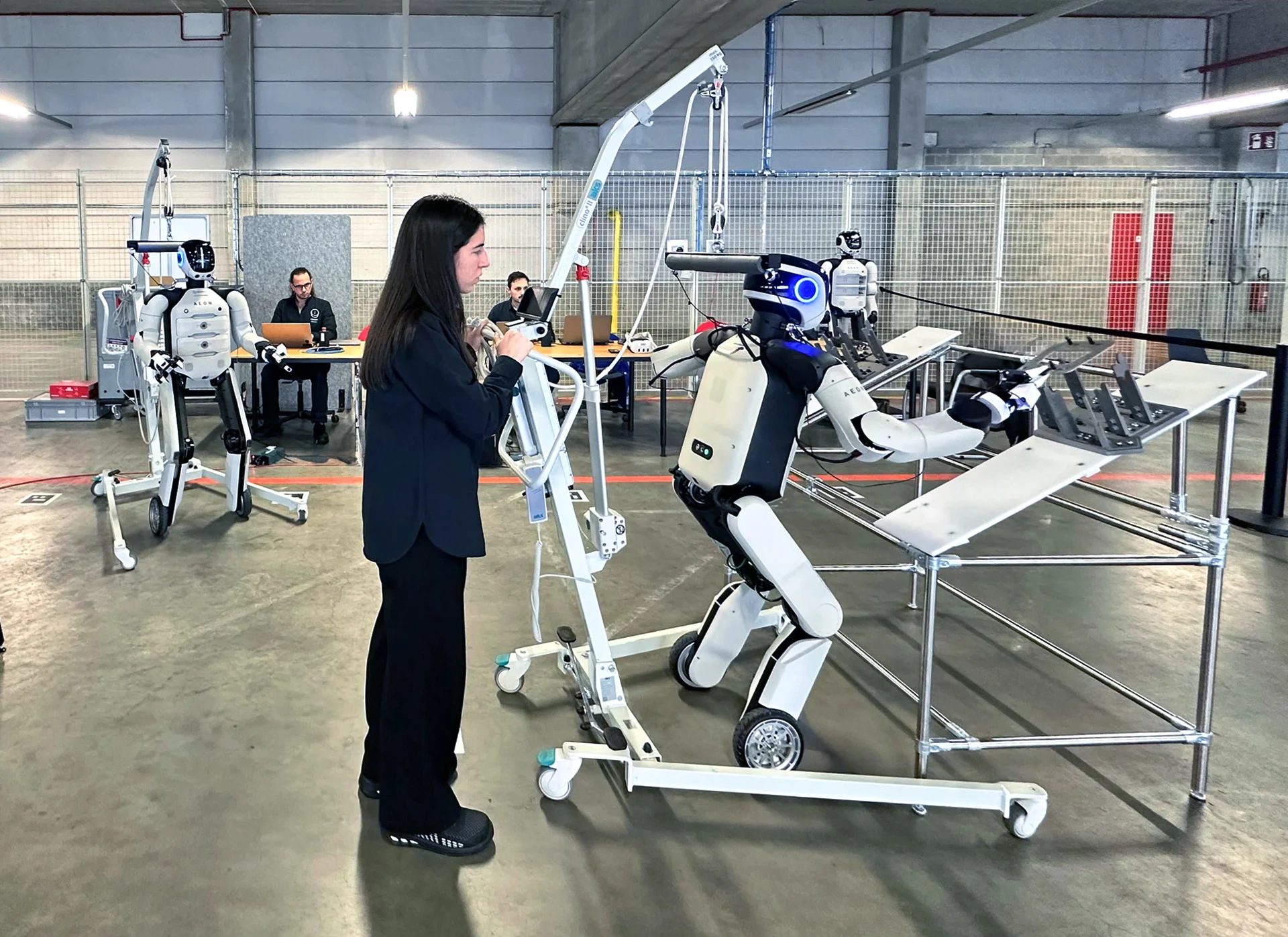
Rather than jumping directly into live assembly line duties, the robots are currently undergoing on-site training alongside human employees and legacy automation equipment. Volvo’s internal manufacturing team is collaborating directly with engineers from Hexagon Robotics to validate whether the machines can reliably handle repetitive and ergonomically taxing tasks without requiring major modifications to existing plant infrastructure.
From Imitation Learning to Factory Pilot
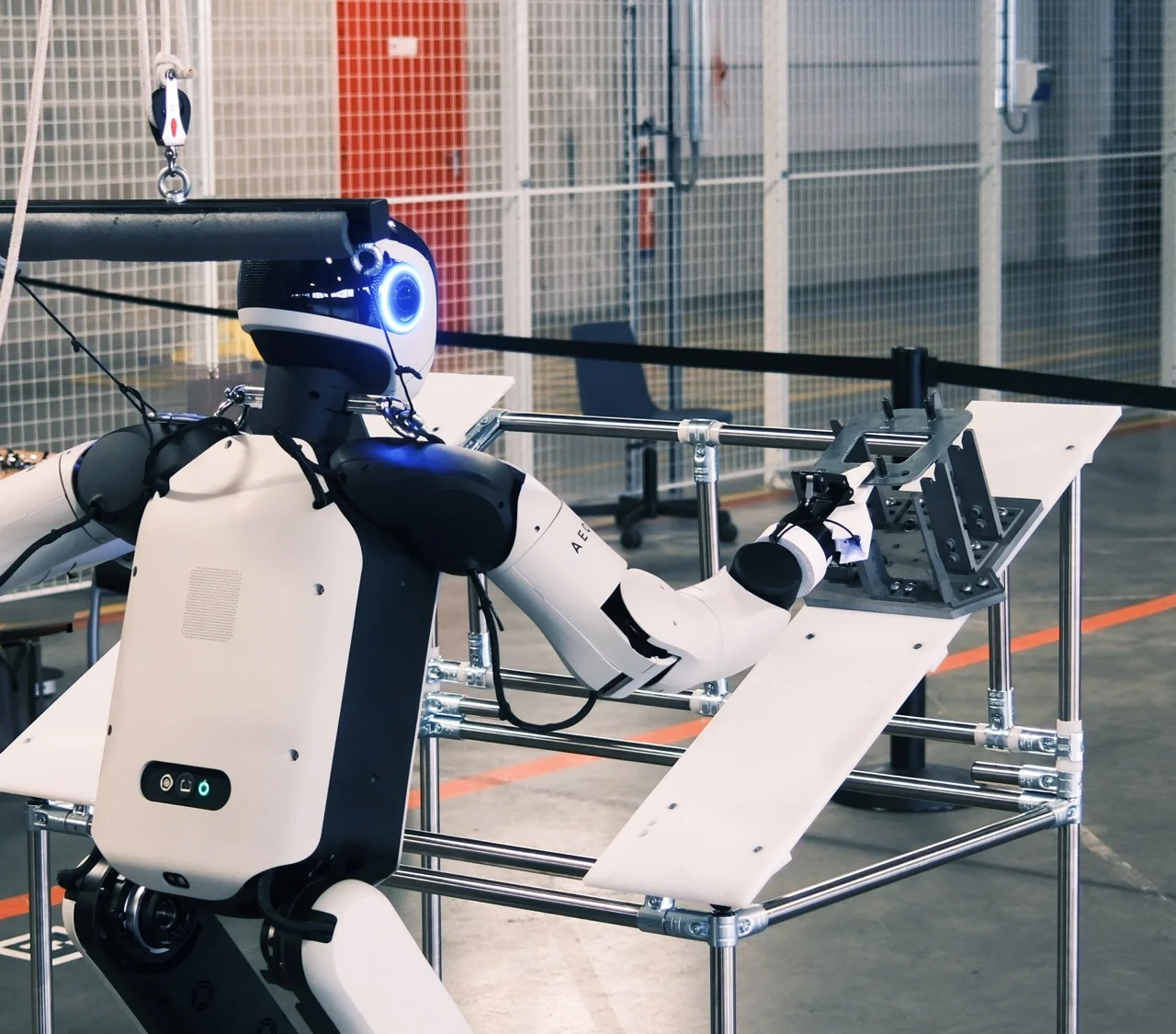
The Ghent deployment follows a staged progression designed to test reliability before scaling. Currently, Volvo’s team is training AEON using imitation learning, allowing the robot to acquire physical skills by observing and replicating human movements.
The initial training curriculum focuses on a single, high-precision benchmark: placing components accurately into two separate fixtures. Once the platform demonstrates consistent accuracy on that baseline task, engineers plan to gradually increase operational complexity:
Follow humanoid robotics without following every announcement.
Get the week’s most important launches, funding and research—and why they matter—in one email from Humanoids Daily.
Once a week. Unsubscribe anytime.
Read recent issues- Multi-part manipulation: Expanding beyond single-component placement to handle varied parts simultaneously.
- Autonomous navigation: Moving independently across active production zones.
- System integration: Communicating and coordinating directly with the Ghent plant’s existing automated machinery.
If these validation phases succeed, Volvo expects to bring additional AEON units to Ghent during the first half of 2027 for a formal factory pilot, paving the way for live production work starting in mid-2027.
Wheeled-Leg Locomotion
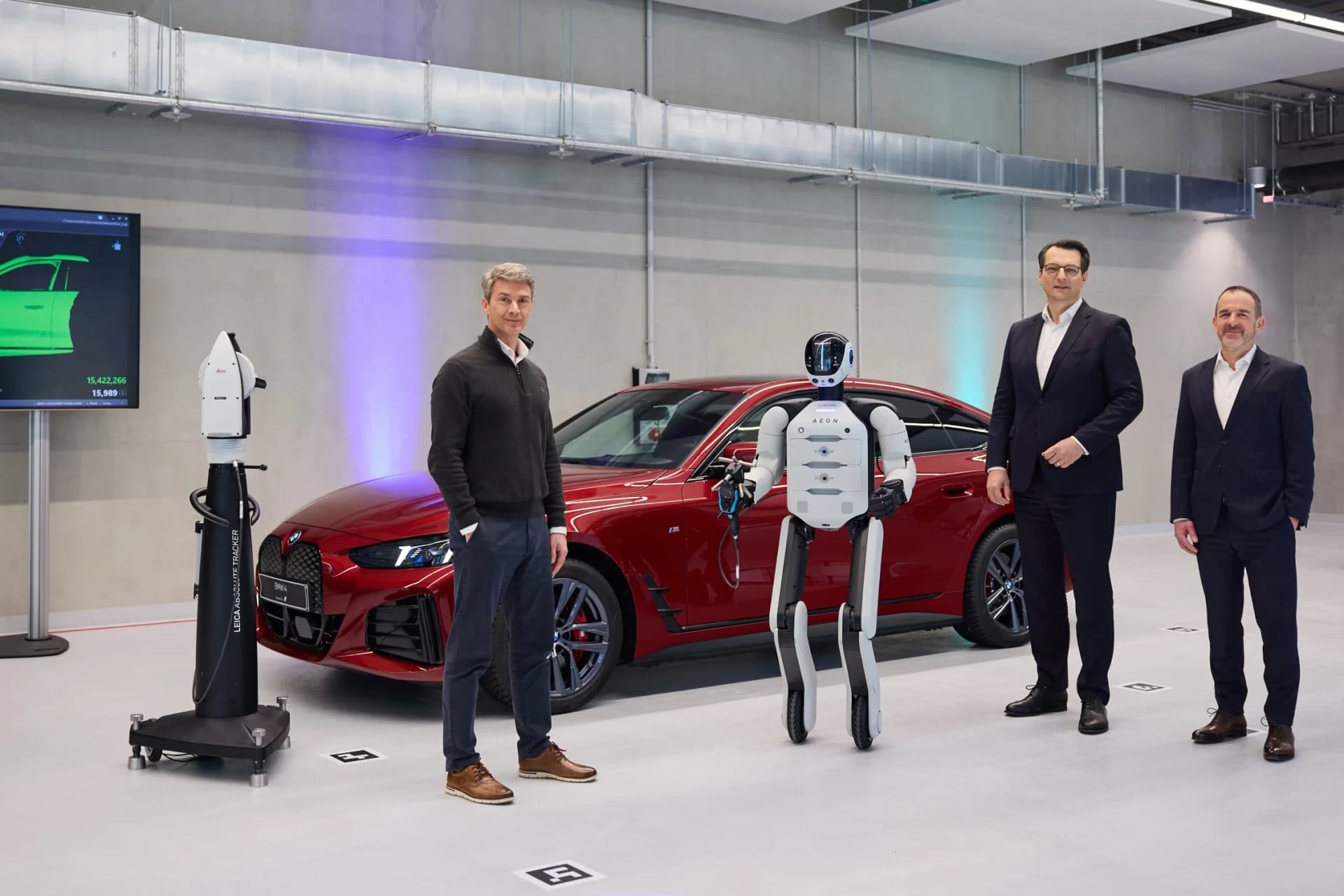
First unveiled by Hexagon in June 2025, AEON takes a hybrid approach to industrial locomotion. Standing 1.65 meters tall and weighing 60 kilograms, the robot features an anthropomorphic upper body paired with articulated bipedal legs that terminate in motorized wheels rather than feet.
That wheeled-leg architecture allows AEON to travel across smooth factory floors at speeds up to 2.4 meters per second—roughly the pace of a light jog—while carrying payloads of up to 10 kilograms. By combining rolling efficiency on flat surfaces with leg articulation to adjust height and posture at workstations built for people, the design avoids the mechanical complexity and energy overhead of dynamic bipedal stepping while retaining human-scale reach.
"AEON’s humanoid design means it can fit into our production as it is today, alongside our teams and existing automation," said Magnus Nilsson, Chief Manufacturing Officer at Volvo Cars. "Our aim is for humanoid robots to take on some of the most physically demanding tasks and help make work more ergonomic for our people."
Growing Momentum in European Automotive Manufacturing
The Ghent program adds significant momentum to Hexagon Robotics’ commercial traction in the industrial sector. Earlier this year, BMW Group deployed AEON at its Leipzig plant to explore multifunctional tasks including high-voltage battery assembly and component handling, while motion technology supplier Schaeffler committed to purchasing at least 1,000 AEON units alongside a reciprocal actuator supply deal.
Across the broader automotive industry, manufacturers are increasingly converging on general-purpose mobile manipulation to close automation gaps that traditional fixed robotic arms cannot economically address. Some recent examples:
- BMW and Figure AI: Following an initial body-shop trial, BMW deployed Figure 03 at its Spartanburg facility for logistics sequencing.
- Hyundai and Boston Dynamics: Hyundai opened a dedicated Atlas training center at its Georgia Metaplant to prepare for planned factory deployments starting in 2028.
- Audi and Agile Robots: Audi is testing mobile humanoids in Ingolstadt for container picking and parts sequencing.
- Xiaomi: The automaker recently demonstrated eight-hour autonomous parts sorting at its electric vehicle plant.
Open Questions on Scale and Economics
Despite the clear roadmap toward mid-2027, Volvo and Hexagon have left several operational details undisclosed. Neither company specified how many AEON units are currently on-site in Ghent, how many will arrive for the 2027 pilot, or which specific vehicle lines—such as the electric EX30 built at the Belgian plant—will incorporate the robots.
Share this article
Follow humanoid robotics without following every announcement.
Get the week’s most important launches, funding and research—and why they matter—in one email from Humanoids Daily.
Once a week. Unsubscribe anytime.
Read recent issuesRead next
- Published on
- Reading time
- 25 min read
The Humanoids of Europe: Built by Their Customers
- Published on
- Reading time
- 4 min read
The Tier 1 Play: Schaeffler Commits to 1,000 Hexagon AEON Humanoids in Deep Component Deal
- Published on
- Reading time
- 4 min read
Familiarity Breeds Trust: Hexagon Study Finds "Robot Anxiety" Spikes Where Visibility is Low
- Published on
- Reading time
- 5 min read
BMW Brings "Physical AI" to Germany with Hexagon’s AEON Humanoid
- Published on
- Reading time
- 4 min read
Hexagon Enters Humanoid Arena with AEON Robot for Industry
- Published on
- Reading time
- 3 min read
Wandercraft Expands Industrial Push, Inks Deal With Auto Supplier SAPA