- Published on
XPENG Details Mass-Production IRON Humanoid at AI Day 2026, Confirms Unisex Form Factor and VLA 3.0
One tap, and our reporting appears more often in your Google Top Stories. It makes a real difference to a small newsroom.

Supported by RoboStrategySupport for Humanoids Daily comes from RoboStrategy
Sponsored
Investing involves risk, including possible loss of principal. Read the prospectus before investing.
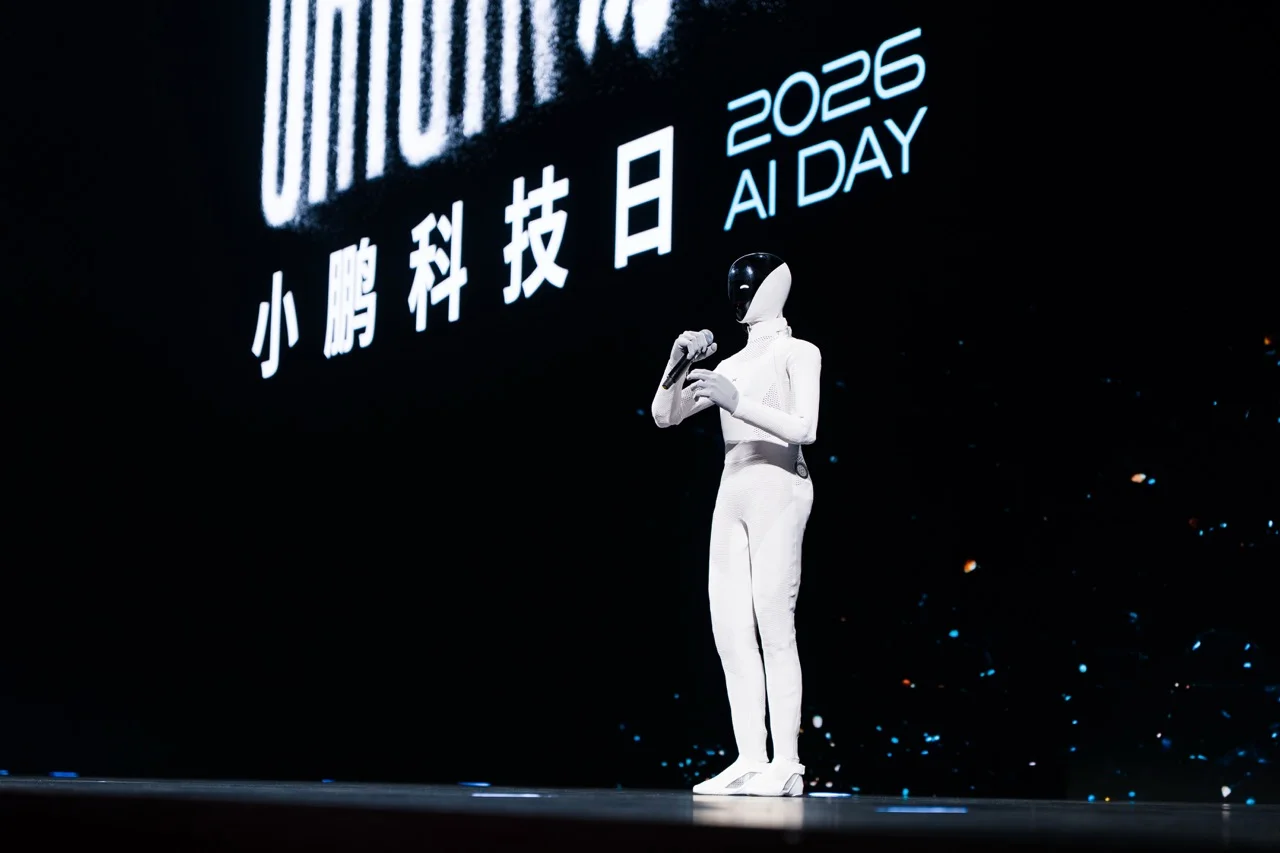
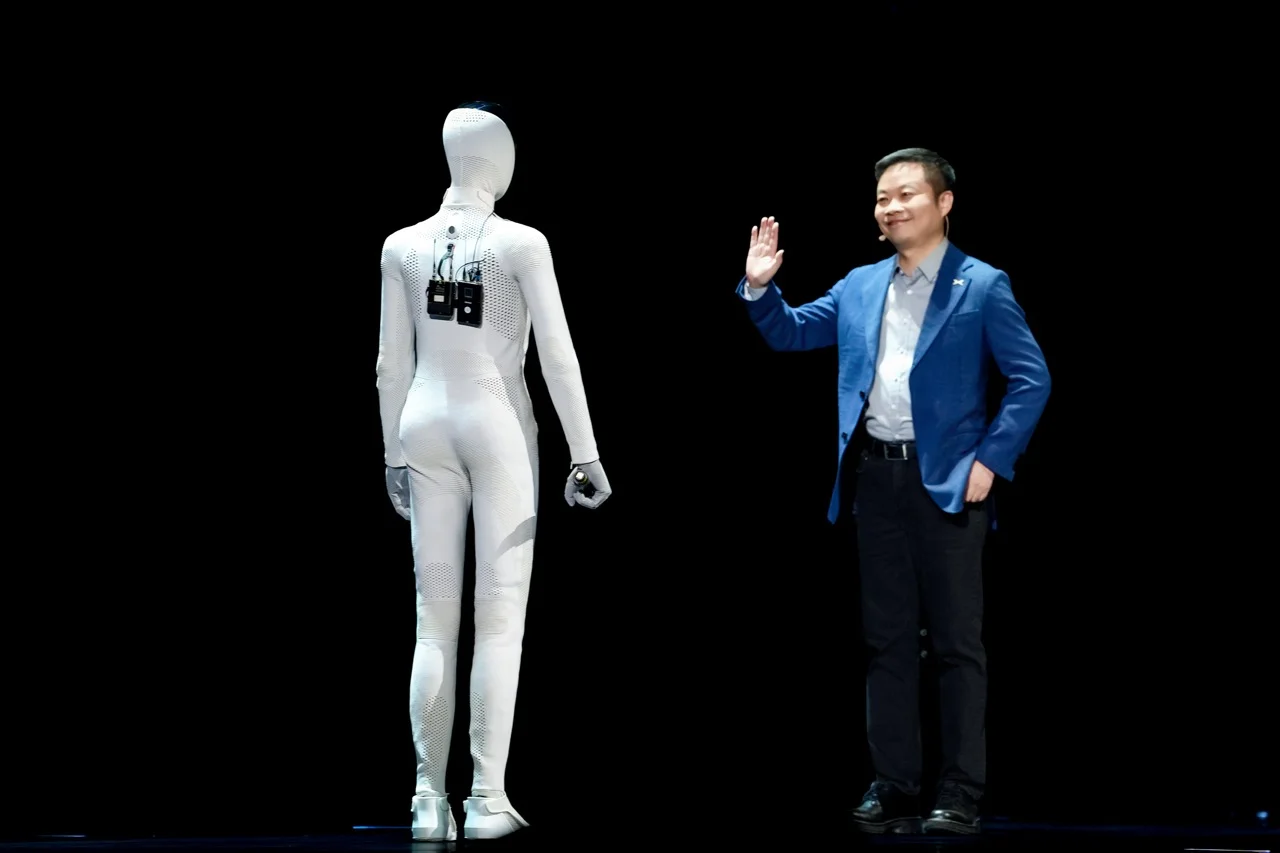
- Reporting on site in Guangzhou, Humanoids Daily attended XPENG's AI Day 2026 and post-keynote media briefing, where the mass-production iteration of the IRON humanoid robot made its live public debut.
- Chairman and CEO He Xiaopeng and president Brian Gu confirmed that last year's gendered body variants have been dropped in favor of the standardized unisex form factor previewed in recent factory footage.
- The robot runs on XPENG's new Turing Physical AI Architecture (VLA 3.0) across three proprietary Turing AI chips, pairing 76 degrees of freedom with more than 1,500 tactile sensing points.
- XPENG detailed specifications for IRON's solid-state battery, including 200-degree Celsius thermal tolerance and a 20-minute autonomous charge yielding 90 minutes of runtime, though exact electrolyte chemistry remains undisclosed.
- Hardware mass production is scheduled to begin in January 2027 on an automated line capable of producing one unit every 2.5 minutes, ahead of Q1 retail trials and a Q2 commercial launch.
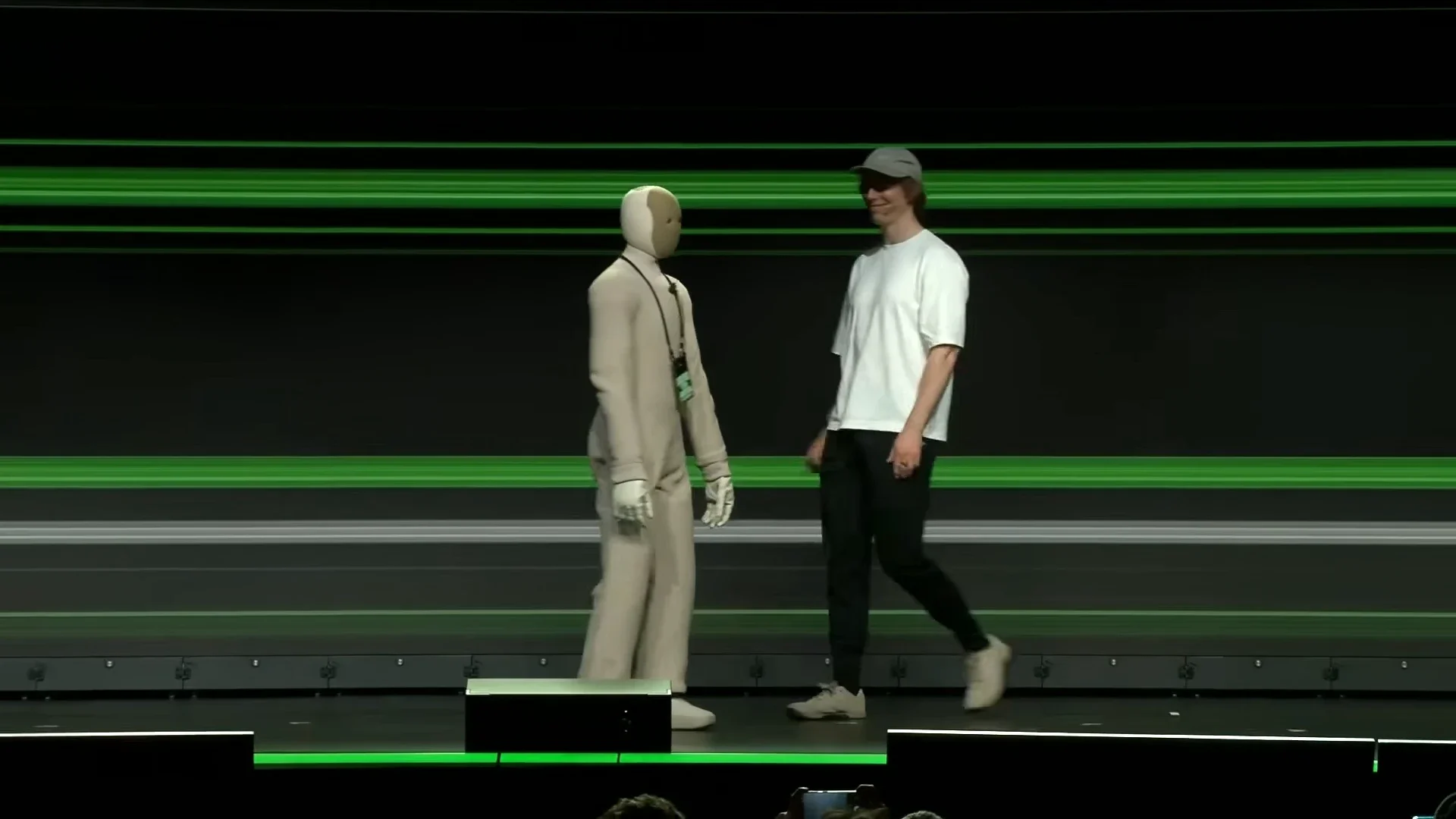
GUANGZHOU — Reporting on site at XPENG's eighth annual AI Day, held at chairman and CEO He Xiaopeng's alma mater, the South China University of Technology, Humanoids Daily observed the mass-production version of the IRON humanoid robot make its first public live appearance. Walking onto the main stage holding a microphone to introduce itself and field unscripted audience questions, the robot marks XPENG's formal transition from laboratory prototypes toward serial manufacturing scheduled to begin in January 2027.
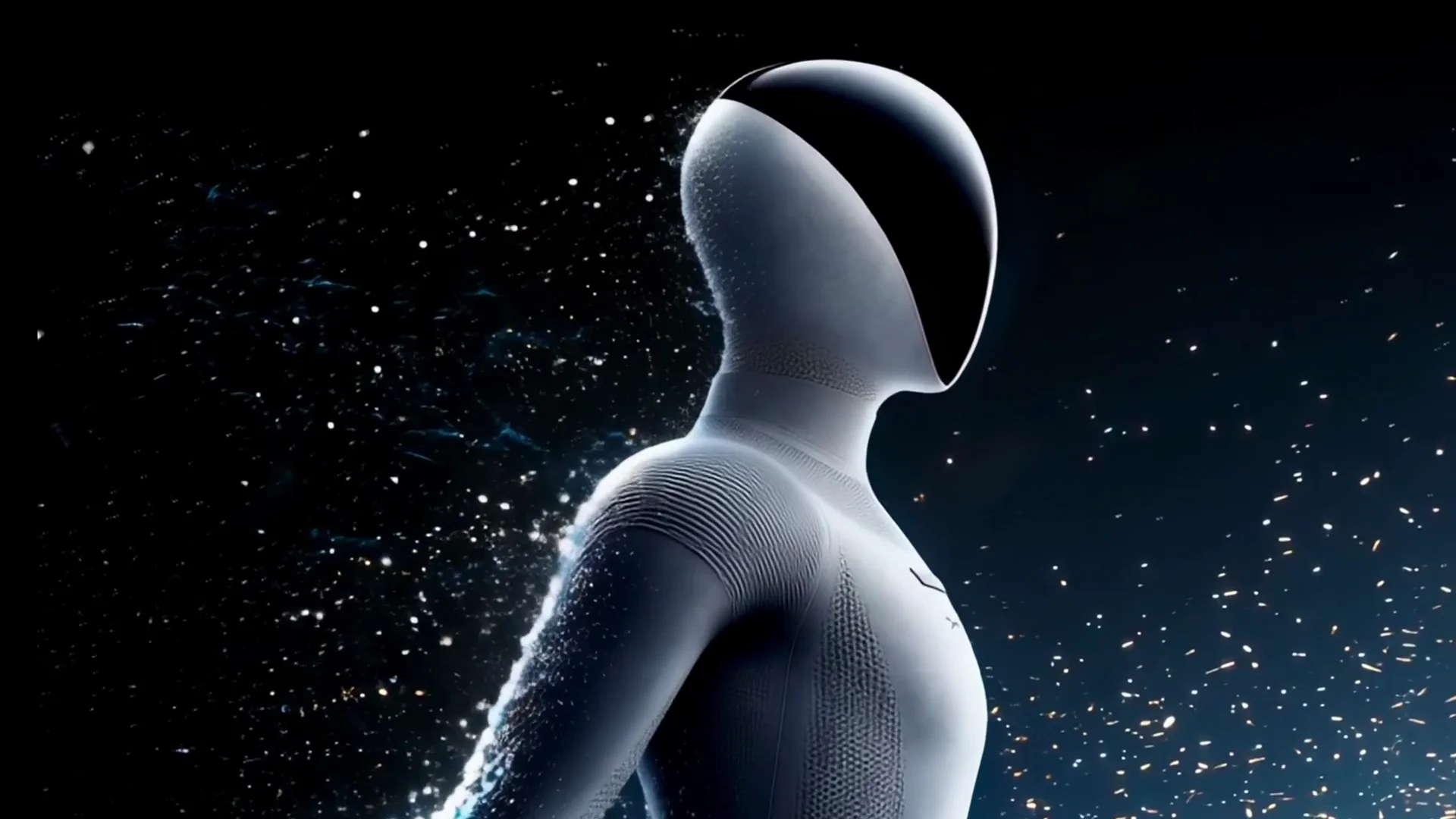
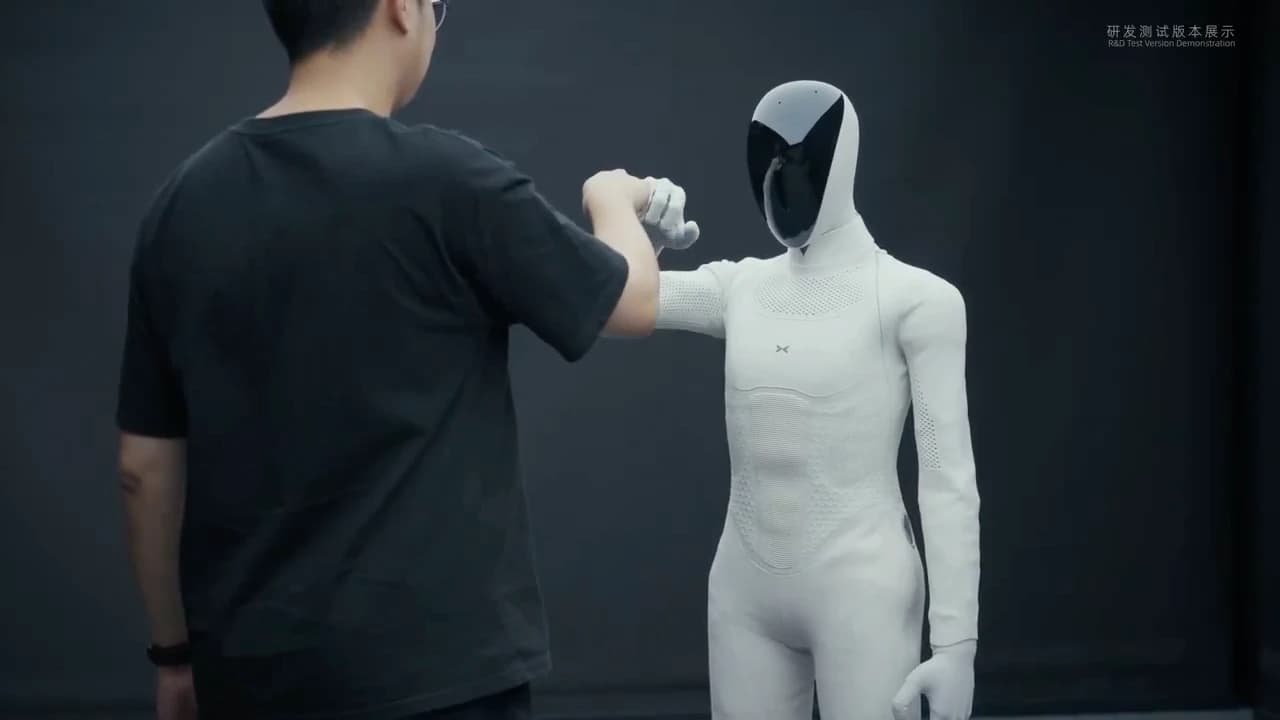
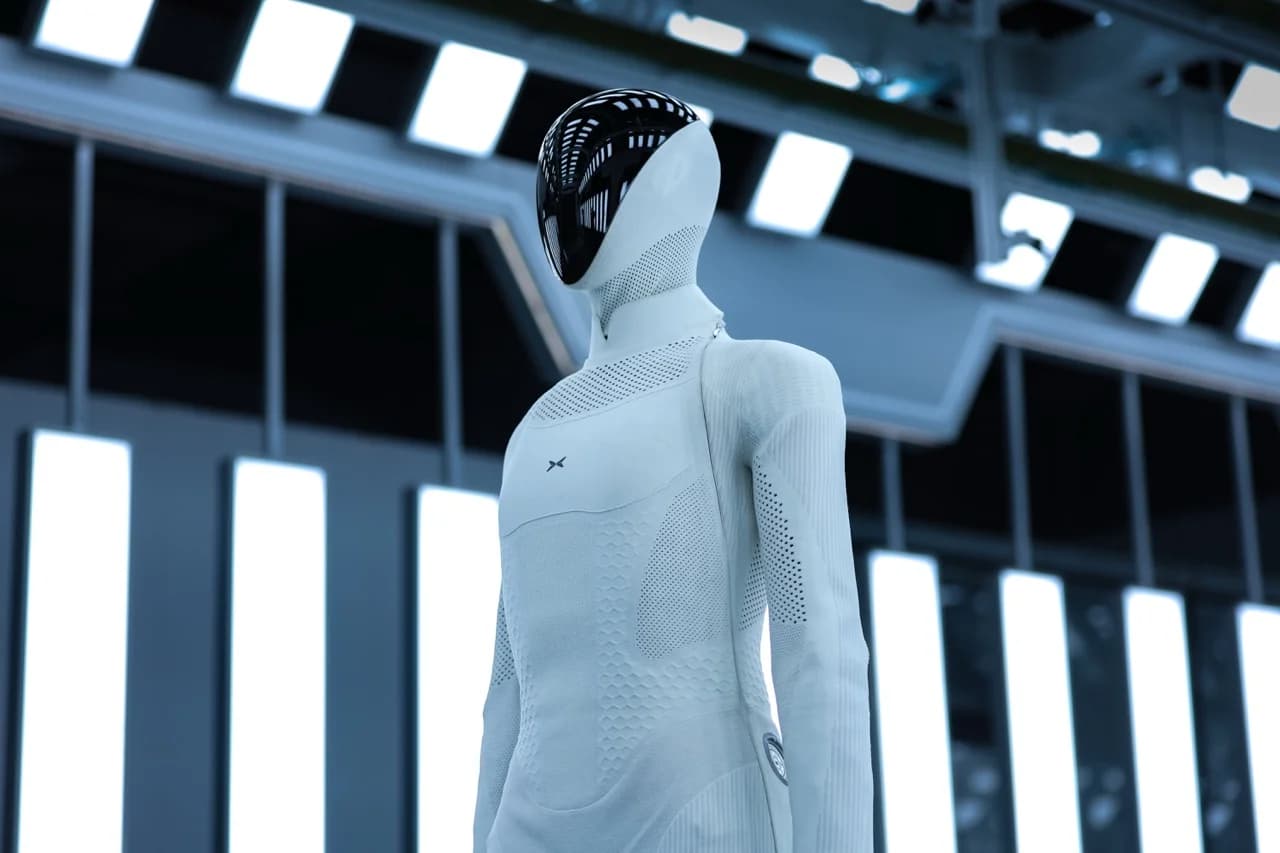
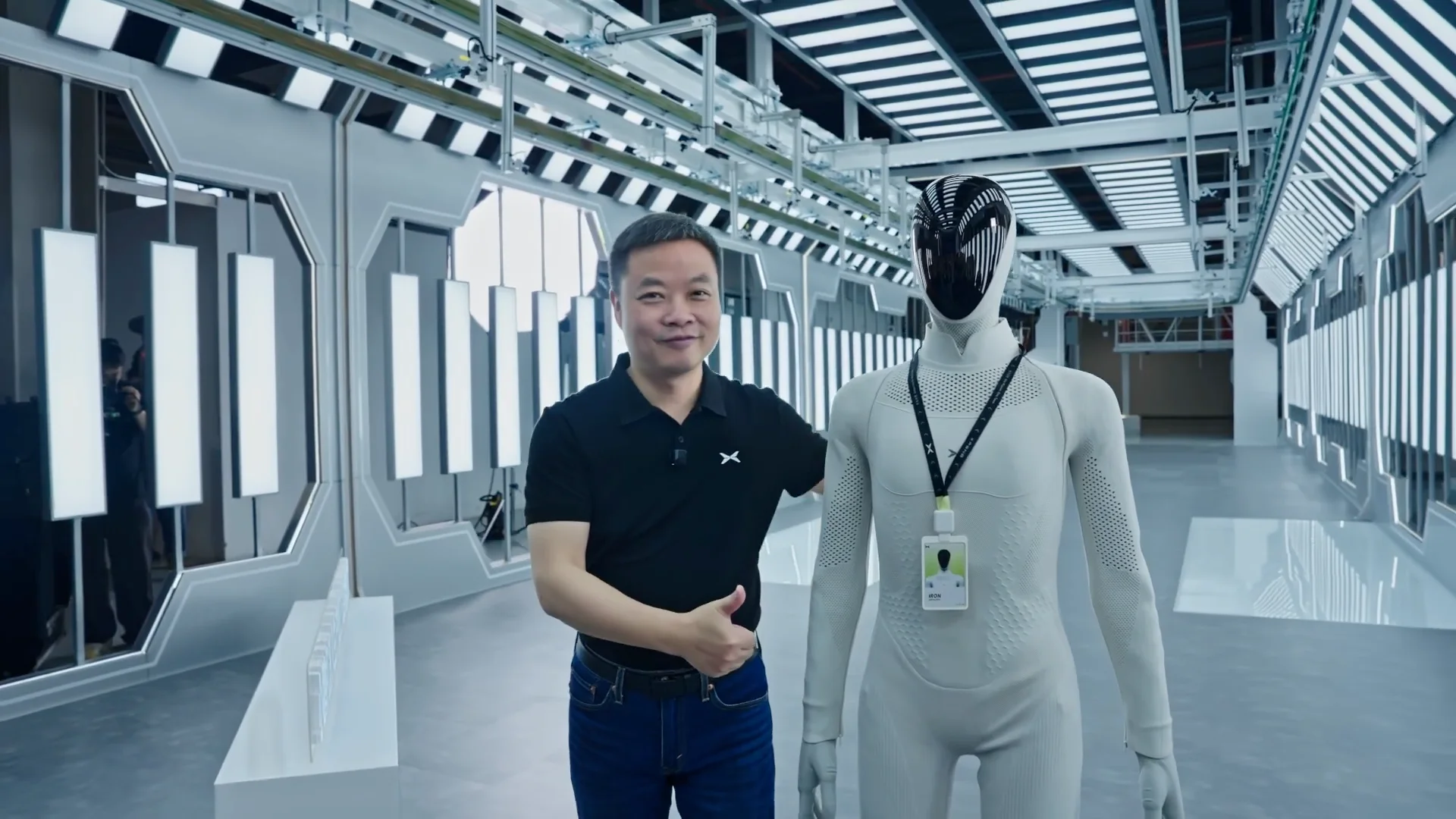
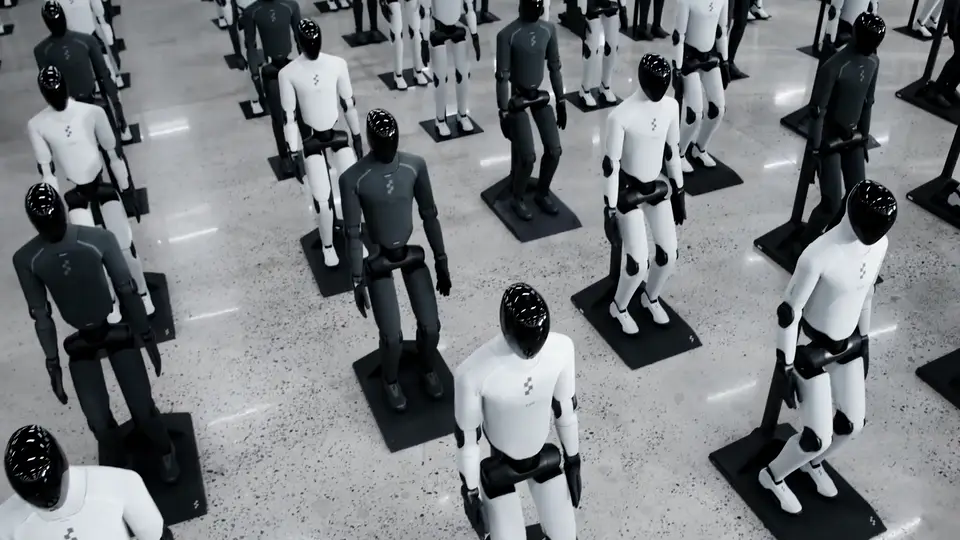
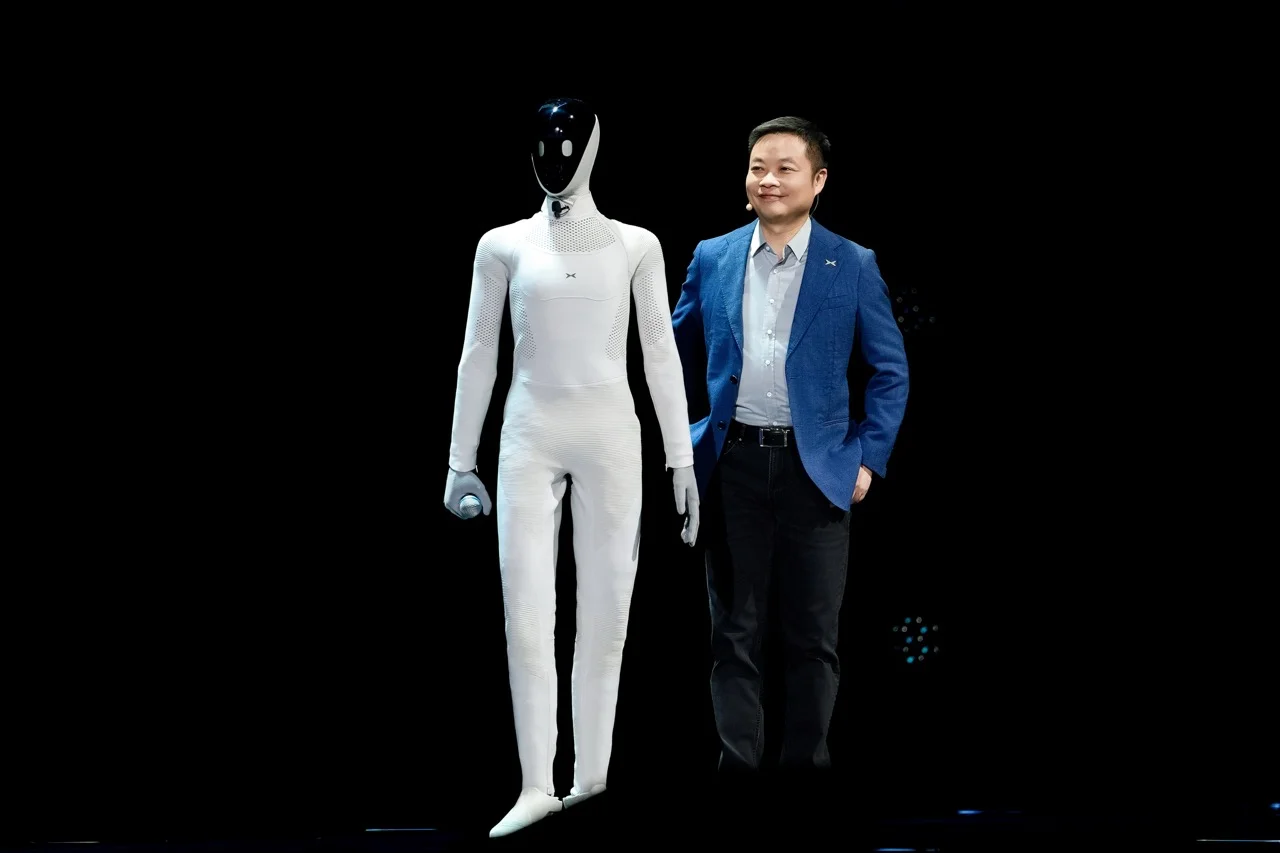
While this neutral-bodied silhouette had already appeared in recent company videos—including footage from the commissioning of IRON's automated assembly line in September—XPENG executives used the Guangzhou event and a subsequent media roundtable attended by Humanoids Daily to confirm that the gendered designs shown last year are officially off the table, locking in the unisex chassis alongside new architectural, safety, and battery details.
Confirming the Unisex Form Factor for Deployment
At AI Day 2025, XPENG stood out from competitors by showcasing distinct male and female body styles, including an articulated, feminine form that drew widespread scrutiny over how human-like its gait appeared. Although subsequent R&D demonstrations and production-line announcements had quietly transitioned to a single, gender-neutral silhouette, XPENG had not previously stated whether the customizable male and female variants were still part of the commercial lineup.
During the post-keynote press briefing in Guangzhou, He Xiaopeng and vice chairman and president Brian Gu confirmed to gathered journalists that the gendered versions have been dropped and that the unisex design shown on stage is the form factor moving into mass production. They framed the decision around manufacturing pragmatism and early deployment requirements, noting that a standardized, neutral appearance allows IRON to fit unobtrusively into a wider variety of workplaces—even as He reiterated that the company will continue iterating toward what it calls the "most human" humanoid.
Follow humanoid robotics without following every announcement.
Get the week’s most important launches, funding and research—and why they matter—in one email from Humanoids Daily.
Once a week. Unsubscribe anytime.
Read recent issuesAlongside the finalized 76-degree-of-freedom chassis, XPENG highlighted several physical updates designed for public-facing roles:
- Animated Eyes: The blank curved visor from earlier iterations now displays animated eyes to make face-to-face interactions more legible.
- Warm, Tactile Hands: The 1:1 human-proportioned arms and 21-degree-of-freedom hands feature 375 tactile sensors per hand—contributing to more than 1,500 tactile points covering over 80% of key body areas—and actively warm the palms to between 25 and 40 degrees Celsius to feel more natural during human contact.
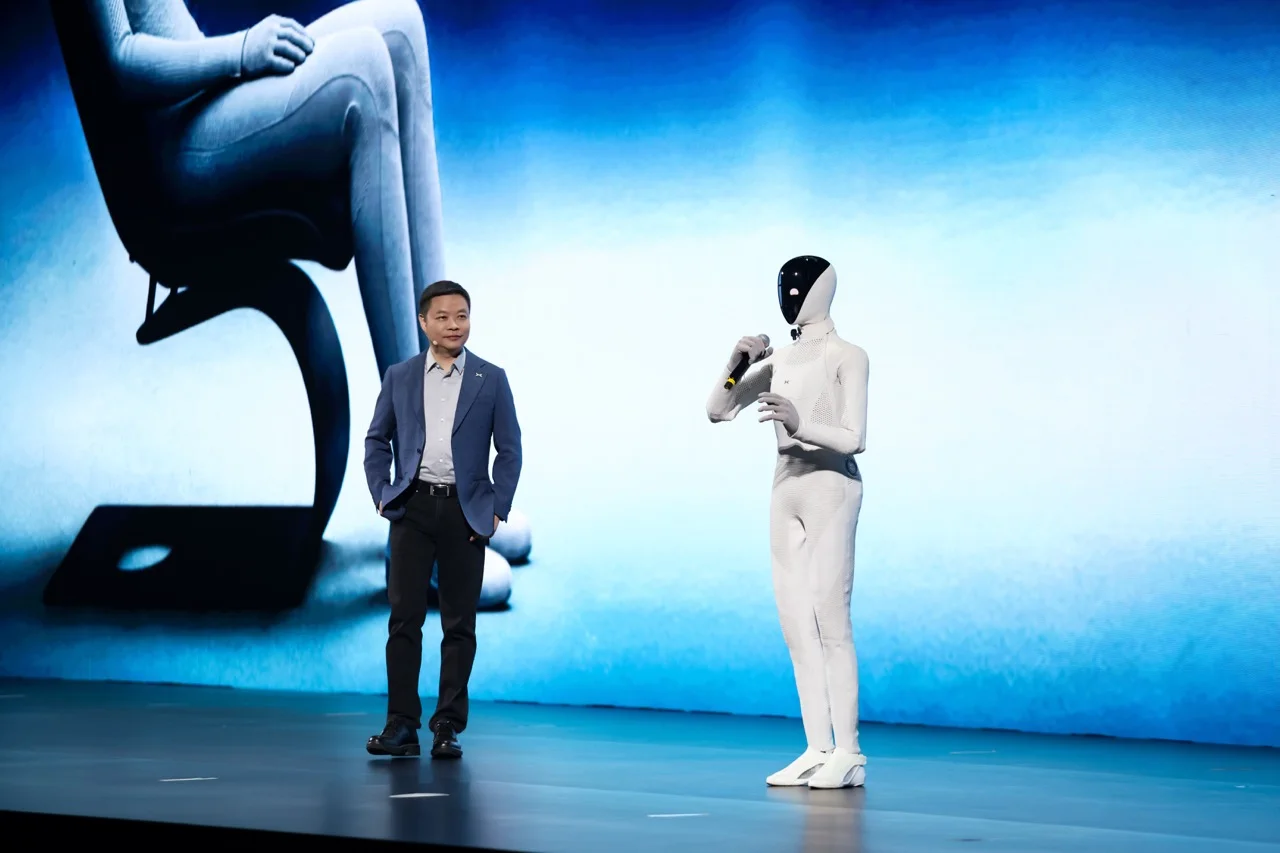
- Natural Locomotion and Posture: A combined 9 degrees of freedom across the hip and waist allows the pelvis to shift forward naturally with each step. Custom bionic shoes with wave-patterned rubber soles and embedded underfoot sensors help IRON adjust its gait across slopes, stairs, and varying floor surfaces, while 720-degree visual detection and a 3-DoF hip allow it to sit down in chairs without tipping.
VLA 3.0: Shared Brain for Cars and Robots
Under the event's "ORIGIN" theme, XPENG framed physical intelligence as a co-evolution of software and hardware, unveiling its Turing Physical AI Architecture (VLA 3.0) as a unified foundation spanning its electric vehicles, robotaxis, flying vehicles, and humanoid robots.
Powered locally on IRON by three proprietary Turing AI chips delivering 2,250 TOPS of compute, the architecture divides intelligence into three operating loops:
- System 2 (Higher-Level Cognition): Handles multi-step reasoning, memory, and task planning using XPENG's VLT model and an Agent Runtime state machine.
- System 1 (Real-Time Intelligence): Built on the VLA 2.0 model—which XPENG says now supports closed-loop training at 10 to 12 times previous speeds—to interpret surroundings and generate immediate actions.
- System 0 (Physical Execution): Manages ultra-fast motor control, power distribution, and real-time hardware feedback.
To feed this stack, XPENG highlighted a 50,000-square-meter Robot Data Factory covering more than 250 scenarios and 15 job categories, building on the simulation and video-training pipelines and visual grounding research the company has published in recent months. He stated that XPENG may be investing more in robotics R&D than any other company in the industry, arguing that mass production is essential to establishing a real-world data flywheel.
Five-Layer Safety and Solid-State Battery Specs
Because XPENG intends to place IRON in public spaces alongside shoppers and staff, safety dominated much of the technical presentation. The company detailed a five-layer physical safety architecture supported by redundant dual-channel communications and an independent backup balance controller designed to keep the robot upright if the primary compute system fails.
Physical and behavioral safeguards include:
- Collision and Pinch Mitigation: Full-body pinch protection, enclosed outer shells, and rear perception sensors that allow IRON to detect activity behind it and react to approaching pedestrians.
- Controlled Fall Response: If a fall becomes unavoidable, IRON is programmed to bend its knees to soften the impact, maintain its grip on held objects so they are not dropped onto bystanders, run an automated diagnostic self-check on the ground, and either stand back up autonomously or cut power immediately if a fault is detected.
- Thermal and Electrical Isolation: Whole-body thermal management and electrical insulation prevent surface overheating or current leakage during extended shifts, while a physical one-touch emergency stop button sits at the back of the neck.
XPENG also shared concrete specifications for what it calls the robotics industry's first mass-produced solid-state battery, following last month's announcement that the cells had entered small-batch production. According to the company, the pack withstands penetration from sharp objects up to 8 millimeters, tolerates temperatures up to 200 degrees Celsius, and offers 1,000-volt breakdown resistance. IRON can navigate to a dock and recharge itself autonomously, gaining 90 minutes of operating time from a 20-minute charge. However, XPENG still has not disclosed the exact electrolyte chemistry, leaving open earlier industry questions over whether the production cells are all-solid-state or a semi-solid hybrid.
From Automated Assembly to Store "Internships"
Following the commissioning of its automated production line in September and subsequent supplier designation agreements, XPENG confirmed that hardware mass production will formally begin in January 2027. At full capacity, the fully automated line—equipped with over 600 AI holographic inspection checkpoints and more than 1,000 vehicle-grade tests—is designed to assemble one IRON unit every 2.5 minutes.
Rather than sending early units into factories or private homes, XPENG is sticking to its phased commercial roadmap:
- Q1 2027 Internal Trials: The first batch of mass-produced robots will begin an "internship" as sales associates and tour guides inside XPENG retail stores, building on earlier showroom memory and multilingual interaction demos.
- Q2 2027 Commercial Launch: Official public release and external enterprise deliveries begin, targeting retail, hospitality, education, and front-desk reception, with a European rollout planned for the second half of 2027.
Alongside hardware sales and software subscriptions, XPENG revealed it is exploring token-powered subscription plans and an open skill ecosystem. Businesses and developers would be able to download "one-click skill packs" or customize workflows so IRON can acquire new job capabilities after delivery, positioning the machine as a configurable "work partner." Pricing for the hardware, software tiers, and token plans has not yet been announced.
Live Demo Shows Progress—and Rough Edges
Unlike tightly edited lab videos, the Guangzhou event put IRON in front of live audiences both on the main stage and during the smaller press Q&A session afterward, as well as briefly outdoors among attendees.
Seen up close across both sessions, the hardware handled walking, microphone holding, and crowd proximity without incident, demonstrating the stability XPENG has prioritized since acknowledging earlier hardware reliability bottlenecks. The conversational AI, however, showed that live, unscripted interaction still has rough edges. During the media briefing, IRON unexpectedly switched from English to Chinese between an initial answer and a follow-up question, and repeatedly ended its responses by asking questions back to reporters.
He Xiaopeng laughed off the habit in front of journalists, noting that XPENG did not intend for the robot to interview the press and joking that the team still has more model training to do before IRON clocks into its first retail shift early next year.
Share this article
Follow humanoid robotics without following every announcement.
Get the week’s most important launches, funding and research—and why they matter—in one email from Humanoids Daily.
Once a week. Unsubscribe anytime.
Read recent issuesRead next
- Published on
- Reading time
- 4 min read
XPENG Sets November 25 AI Day in Guangzhou, Promises New IRON Capabilities
- Published on
- Reading time
- 2 min read
XPENG Shows IRON Switching Between Handshakes, Fist Bumps and High-Fives
- Published on
- Reading time
- 6 min read
Inside XPENG’s Bet on IRON: He Xiaopeng on Why the Hardest Path in Humanoid Robotics Is Never Crowded
- Published on
- Reading time
- 6 min read
XPENG Launches Mass Production of IRON Humanoid
- Published on
- Reading time
- 4 min read
XPENG's Head of Robotics Admits Hardware is 'Bottleneck' as 2026 Production Goal Looms
- Published on
- Reading time
- 4 min read
Xpeng to Break Ground on "Full-Chain" Humanoid Factory to Meet 2026 Production Goal