- Published on
Inside XPENG’s Bet on IRON: He Xiaopeng on Why the Hardest Path in Humanoid Robotics Is Never Crowded
One tap, and our reporting appears more often in your Google Top Stories. It makes a real difference to a small newsroom.


Your guide
Rich Robinson
Jee Chee Ren · Executive tour
See China’s AI and robotics ecosystem first-hand.
Six days exploring AI, robotics and advanced manufacturing.
With Rich Robinson, Clinical Professor of Entrepreneurship at Peking University
Beijing · Guangzhou · Shenzhen
29 November–4 December 2026
Referral partnership · We earn a commission on referred bookings.
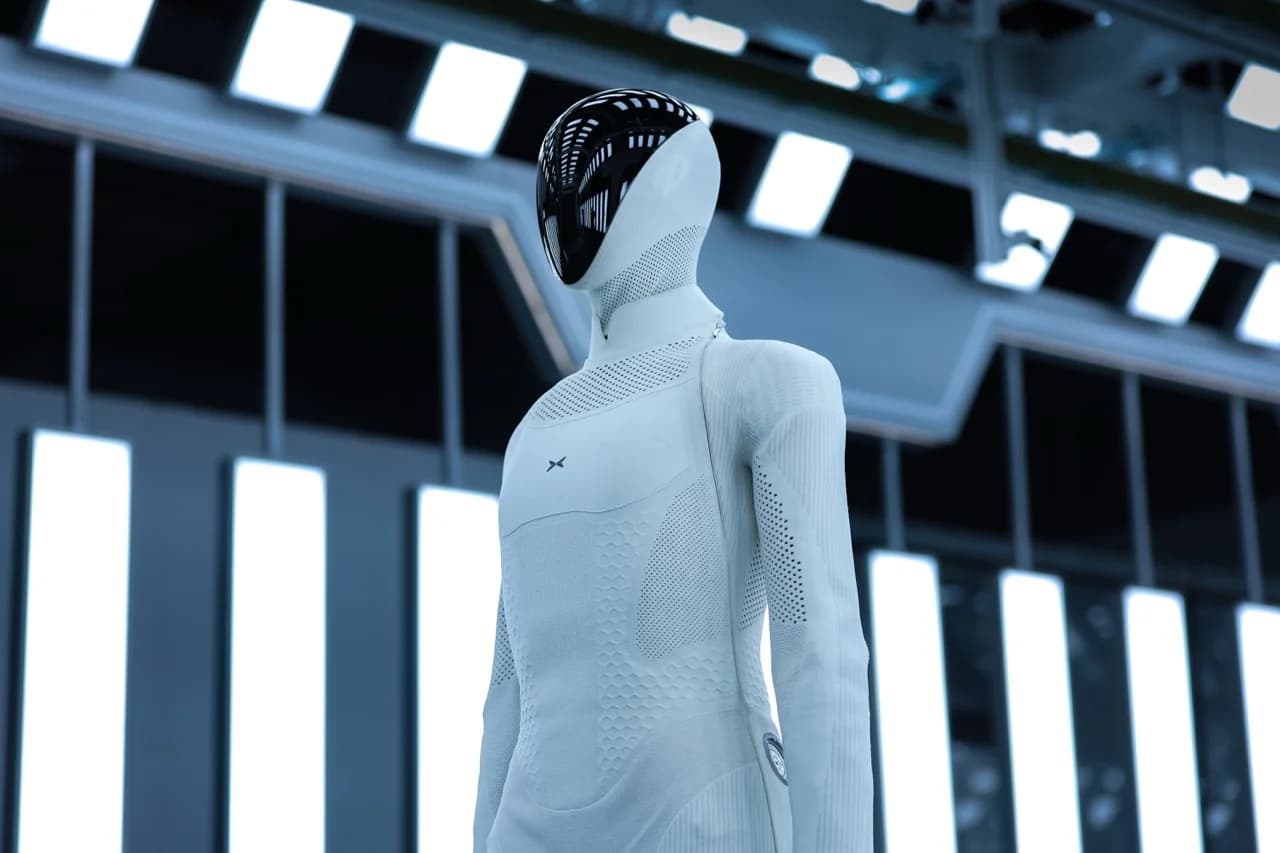
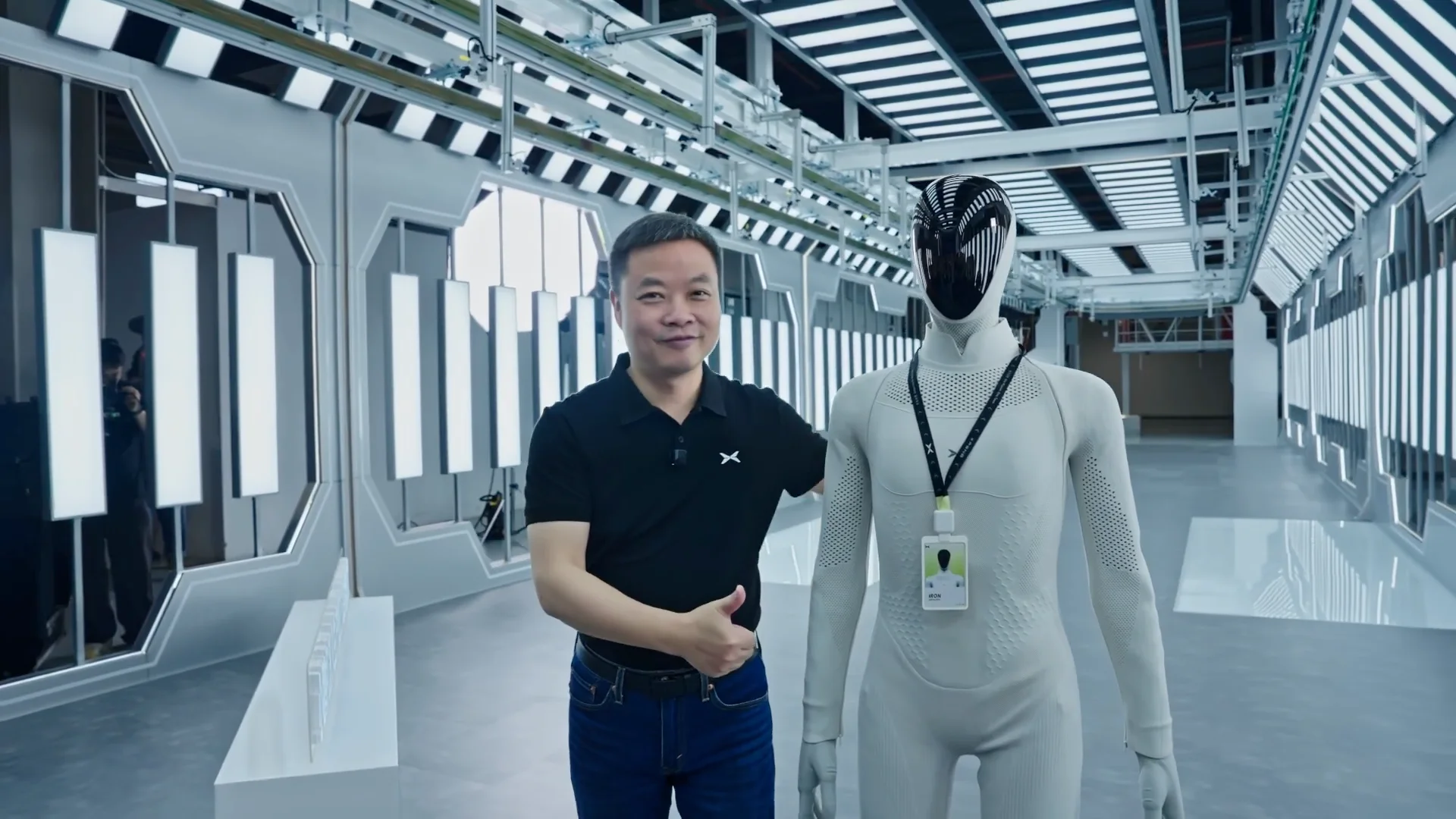
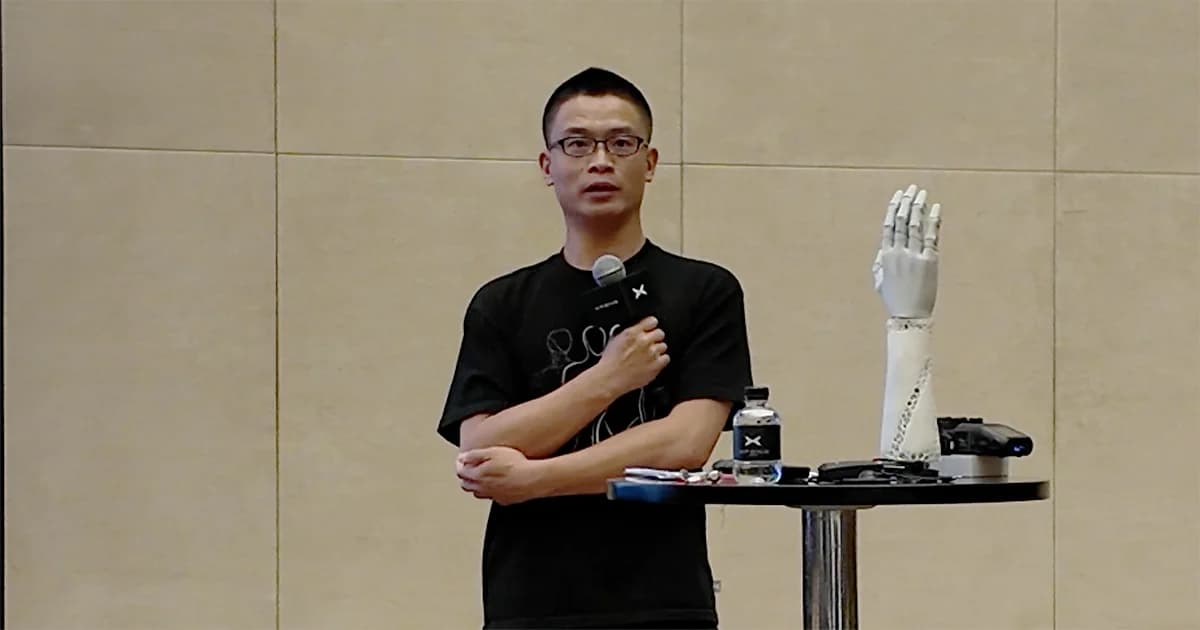
- Following the commissioning of its humanoid robot production line, XPENG released a candid, documentary-style personal essay from CEO He Xiaopeng reflecting on the six-year journey behind the IRON platform.
- Xiaopeng explicitly addresses early public embarrassments—including cutting open the robot's leg on stage to disprove human-in-a-suit accusations and enduring widespread mockery after a public fall in a shopping mall.
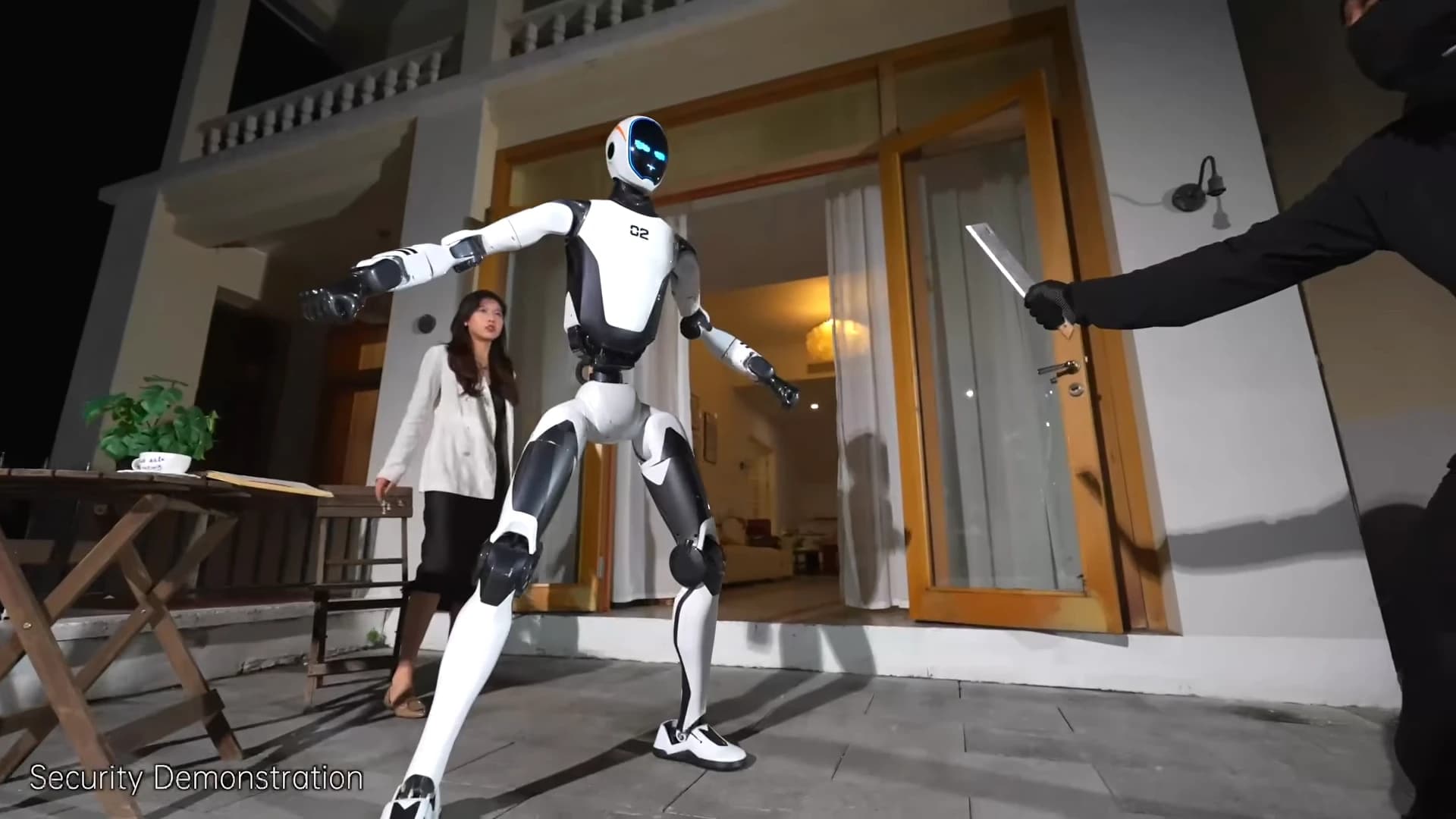
- The company is consciously distancing itself from scripted viral demonstrations and athletic spectacles, prioritizing end-to-end Vision-Language-Action (VLA) models and automotive-grade mass production over short-term marketing hype.
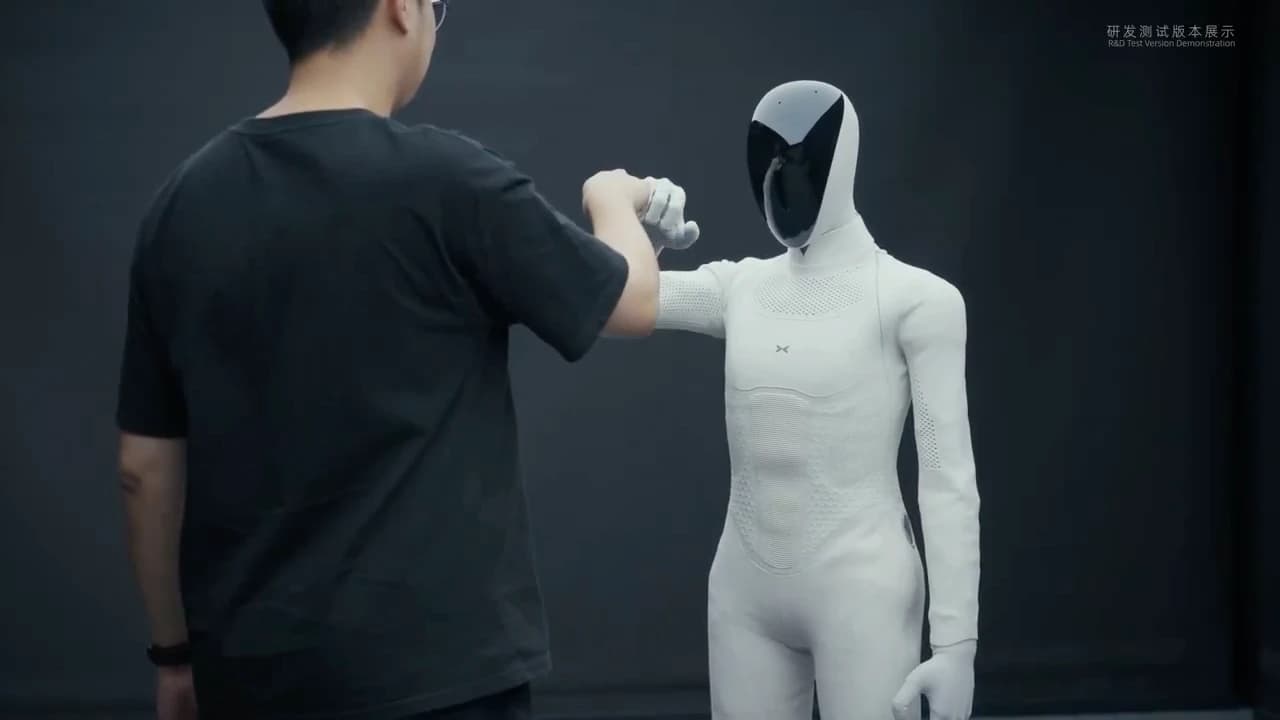
- Short technical cutaways in the video illustrate real-world perception and dialogue benchmarks, such as negative visual reasoning (confirming an object is absent) and conversational high-fives.
- While acknowledging that the first commercial production units "may not be perfect," XPENG maintains that autonomous learning, persistent memory, and lack of teleoperation will differentiate IRON as it heads toward 2027 external enterprise deliveries.
After announcing that its first production-intent humanoid robot walked off an automated assembly line, XPENG released a cinematic, reflective video (watch it at the end of this article) essay from CEO He Xiaopeng. Rather than delivering a polished promotional reel or another choreographed stage showcase, the six-minute release offers an unusually frank look at the engineering missteps, public skepticism, and philosophical bets underpinning the company’s bipedal platform, IRON.
The video provides critical context to the automaker's recent industrial milestone. XPENG Robotics, freshly bolstered by a $900 million funding round at a $6.3 billion valuation, is attempting to compress the timeline from laboratory research to serial production. But as Xiaopeng frames it, reaching initial line validation required six years of enduring public failure and deliberately rejecting industry tendencies toward viral parlor tricks.
Embracing Public Failure Over Scripted Demos
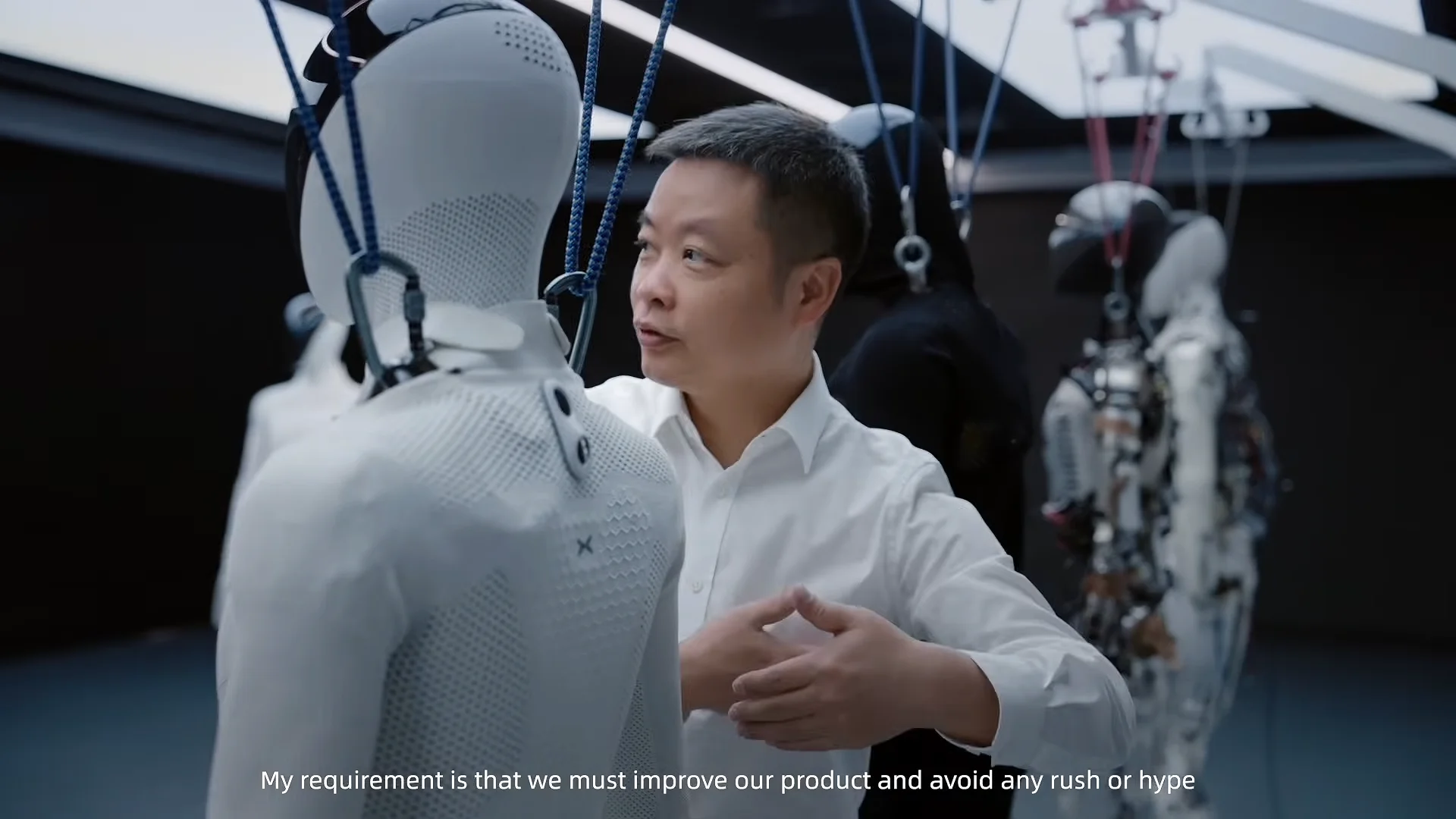
A central theme of Xiaopeng's narrative is the friction between public perception and physical engineering. Addressing the robot's early debuts, he recalls the dramatic step XPENG took during an early presentation—literally cutting open the robot’s leg on stage to prove to skeptical onlookers that there was no human concealed inside the suit.
He also directly revisits an early stumble in a public shopping mall that quickly went viral across Chinese social media. "Developing robots means getting used to failure," Xiaopeng notes, reflecting on the waves of mockery that followed the fall.
The weekly humanoid robotics briefing
One email a week: the launches, funding and research that mattered, with context from Humanoids Daily.
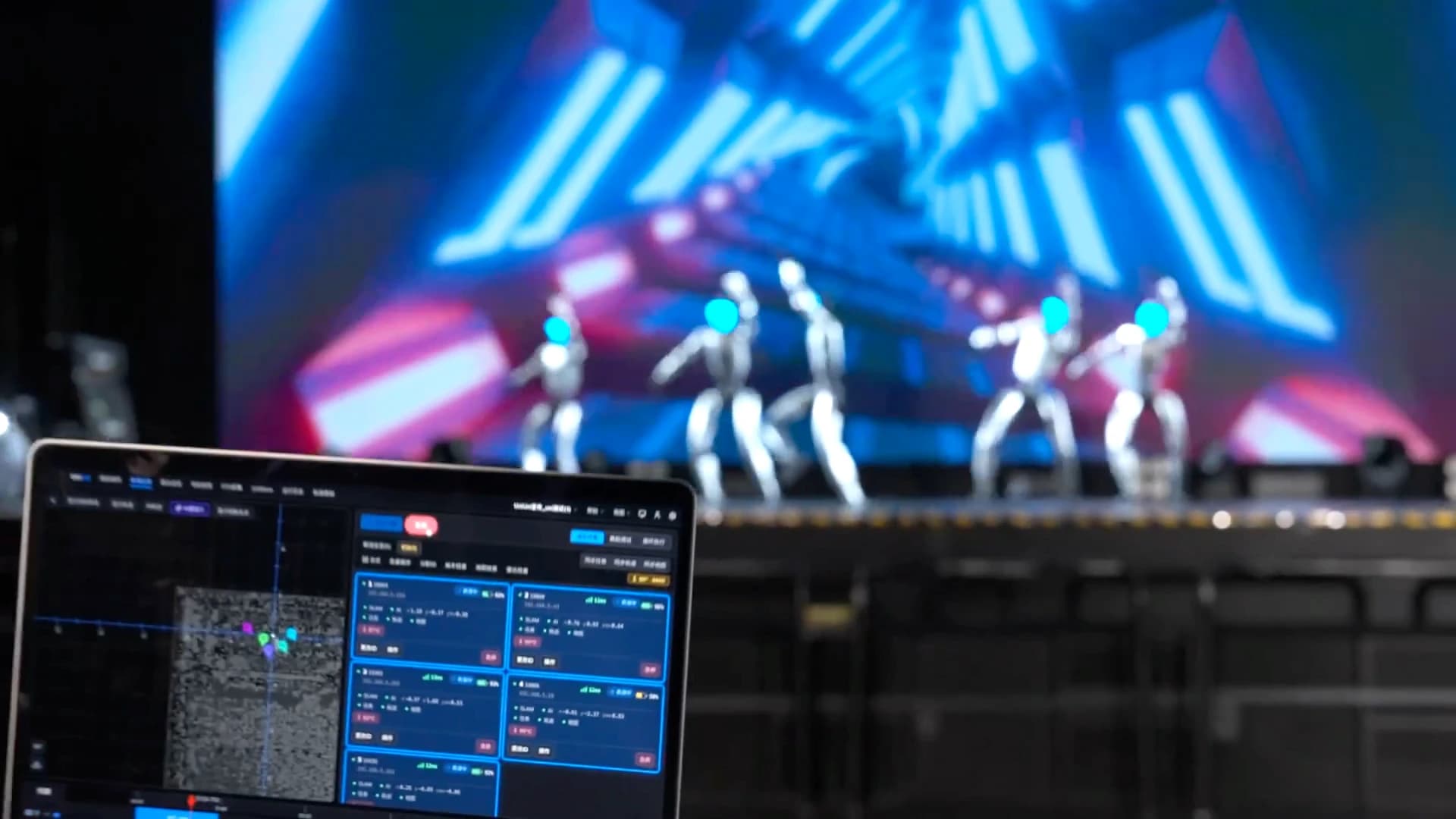
Read recent issuesThat experience appears to have hardened XPENG’s editorial stance against premature showmanship. While competitors have frequently leveraged humanoid platforms for choreographed dances, sprint records, or theatrical competitions at events like the World Humanoid Robot Games, Xiaopeng dismissed those paths as distractions from commercial utility:
“Some robots run fast; others focus on building AI brains. All are impressive. Take the recent robot games for example; it turned out really well. Yet that is not what we aim for. What we truly want to build is an advanced general-purpose humanoid robot that can work autonomously for us... The hardest path is never crowded.”
According to Xiaopeng, fielding continuous inquiries over why XPENG did not exhibit IRON more frequently led to a strict internal mandate: prioritize functional durability and avoid rushed demonstrations designed solely for marketing cycles.
The EV Playbook: From ADAS to Embodied Instincts
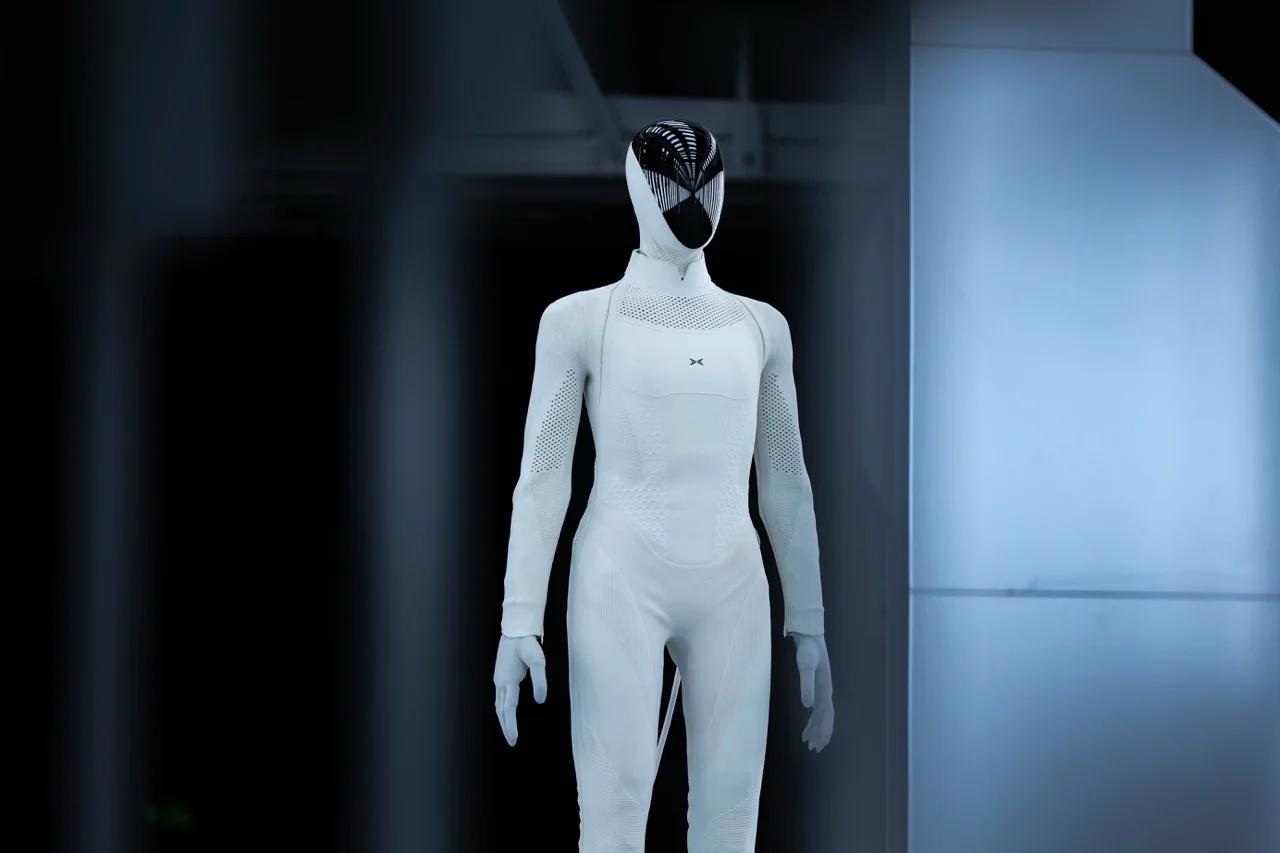
XPENG's core argument remains rooted in its automotive background. The company asserts that the perceptual and computational logic governing smart electric vehicles maps directly to bipedal autonomy. Both machines must parse unstructured environments, assess kinetic hazards, and execute real-time path planning without human handoffs.
Rather than relying on rigid, pre-programmed rule sets or low-level teleoperation—a persistent crutch across early humanoid pilots—XPENG is routing its efforts into unified large-language and Vision-Language-Action (VLA) models. Xiaopeng explains that the platform is engineered to develop its own behavioral instincts directly from real-world data feeds, drawing heavily on the infrastructure built for the automaker’s assisted driving systems.
The essay illustrates this transition through brief embedded cutaways:
- Negative Reasoning and Visual Perception: In one cutaway, a prototype is shown an image of an interior room and asked whether a green sofa is present. The system correctly identifies that no green sofa exists in the scene—a basic test of spatial perception designed to ensure the model reasons about visual reality rather than hallucinating expected objects.
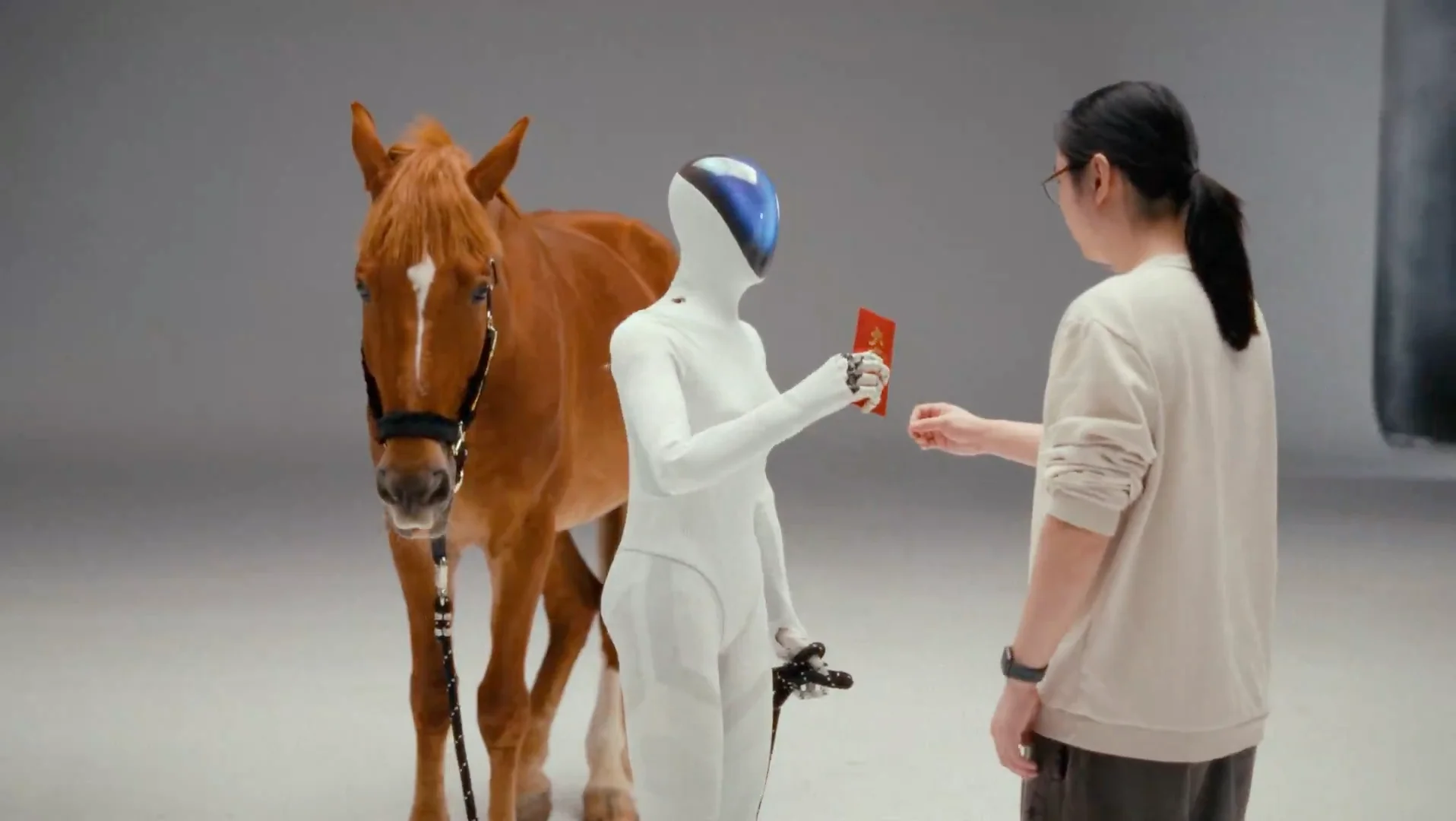
- Contextual Interaction: In another clip demonstrating natural communication, IRON completes a casual exchange with a human partner, closing out a conversational agreement with a high-five.
These clips, while brief, highlight the interactive profile XPENG envisions for IRON: a machine capable of natural language interaction, persistent identity memory across individuals, and situational awareness without tethered compute or off-stage joysticks.
The Long Runway to 2027
Despite the rhetoric surrounding line validation, Xiaopeng stops short of promising immediate, flawless deployment. Acknowledging the unpredictable edge cases of the physical world, he concedes that early commercial iterations rolling off the facility floor will remain works in progress.
"I believe our first version may not be perfect, but he will keep evolving," Xiaopeng says, asking observers for patience as the hardware transitions into sustained operation.
The operational reality aligns with the phased roadmap XPENG outlined during its factory commissioning. By keeping initial line-validated units confined to internal showrooms, retail spaces, and corporate offices through early 2027, the company is using its own physical footprint as an extended validation environment. These controlled deployments are tasked with closing the gap between factory assembly and dynamic human interaction before enterprise customer deliveries begin in earnest.
While Western competitors like Tesla continue refining their designs behind closed doors ahead of their own scaled assembly targets, XPENG’s retrospective makes one thing clear: the company sees automated, vehicle-grade manufacturing not as the final victory lap, but as the only viable mechanism to make embodied AI practical.
Share this article
Read next
- Published on
- Reading time
- 3 min read
XPENG CEO Targets Late 2026 for Massive IRON Deployment
- Published on
- Reading time
- 2 min read
XPENG Shows IRON Switching Between Handshakes, Fist Bumps and High-Fives
- Published on
- Reading time
- 6 min read
XPENG Launches Mass Production of IRON Humanoid
- Published on
- Reading time
- 4 min read
XPENG's Head of Robotics Admits Hardware is 'Bottleneck' as 2026 Production Goal Looms
- Published on
- Reading time
- 4 min read
Xpeng to Break Ground on "Full-Chain" Humanoid Factory to Meet 2026 Production Goal
- Published on
- Reading time
- 5 min read
Simulating the 'Masterpiece': XPENG Robotics Unveils Design Framework and Lattice Musculature for IRON

The weekly humanoid robotics briefing
One email a week: the launches, funding and research that mattered, with context from Humanoids Daily.
Read recent issues