- Published on
XPENG Launches Mass Production of IRON Humanoid
One tap, and our reporting appears more often in your Google Top Stories. It makes a real difference to a small newsroom.


Your guide
Rich Robinson
Jee Chee Ren · Executive tour
See China’s AI and robotics ecosystem first-hand.
Six days exploring AI, robotics and advanced manufacturing.
With Rich Robinson, Clinical Professor of Entrepreneurship at Peking University
Beijing · Guangzhou · Shenzhen
29 November–4 December 2026
Referral partnership · We earn a commission on referred bookings.
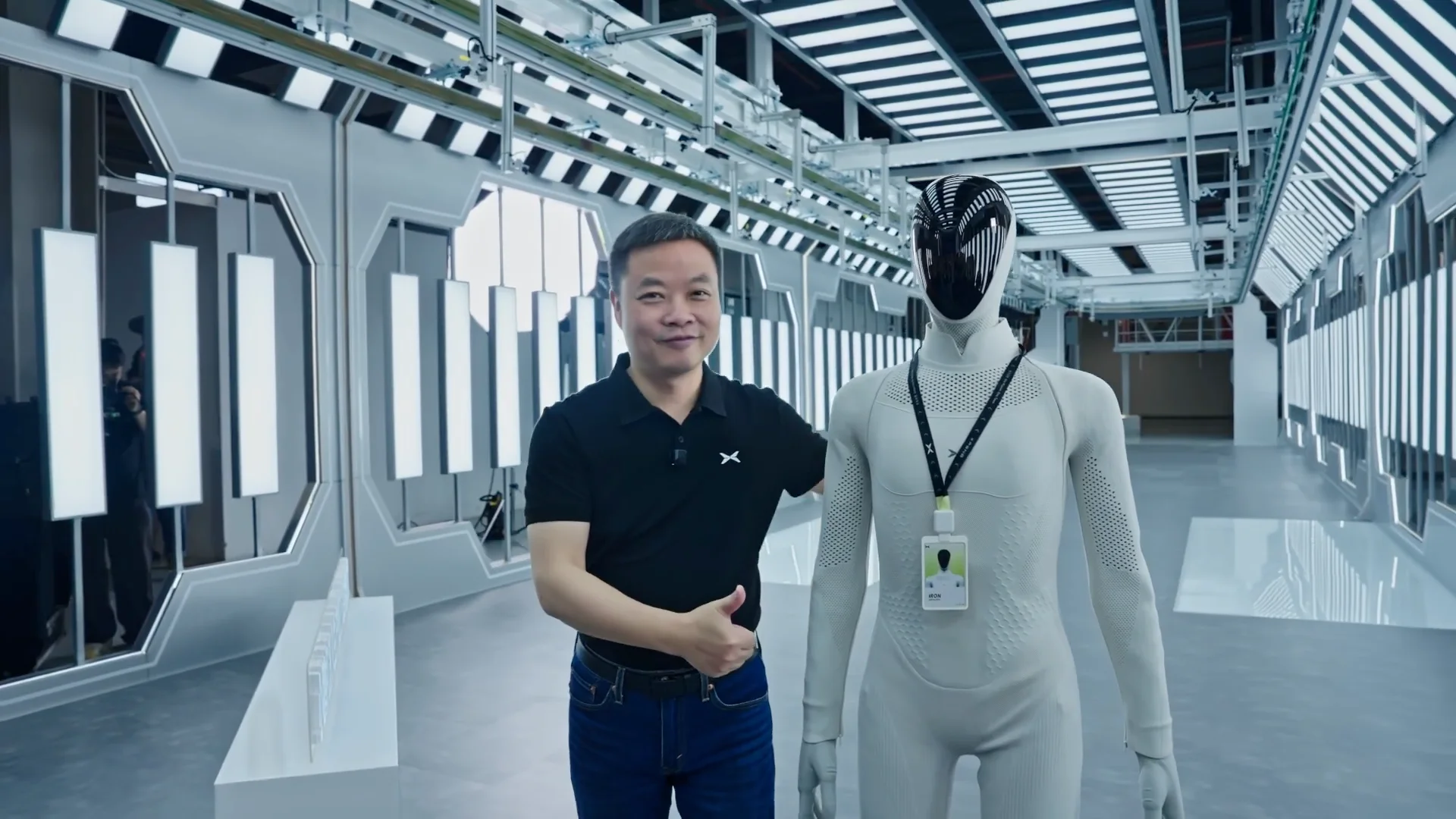
- XPENG has officially initiated mass production of its IRON humanoid robot, claiming a global first as production units assemble and walk off the line entirely under their own power without human assistance or teleoperation.
- The production line features automotive-grade quality control and exceeds 80% automation across key assembly steps, leveraging an 85% supply chain overlap with XPENG’s EV manufacturing infrastructure.
- The announcement sharpens an intensifying manufacturing contest with Tesla, which has missed its public Q1 reveal for Gen 3 but recently placed bulk orders for 5,000 component sets as it debugs its Fremont assembly line.
- Powered by three in-house Turing AI chips delivering 2,250 TOPS, the production-grade IRON introduces multi-modal bilingual dialogue, dynamic obstacle avoidance, and autonomous charging dock navigation.
- Initial IRON units are being deployed across XPENG showrooms and campuses for customer interaction and facility patrols, ahead of broader enterprise customer deliveries slated for 2027.
XPENG has officially initiated mass production of its flagship bipedal platform, IRON, marking what the Chinese automaker calls the world’s first high-level general-purpose humanoid robot to be manufactured on a commercial assembly line and walk off under its own power without human assistance or remote control.
The milestone follows XPENG Robotics securing an unprecedented $900 million private funding round at a $6.3 billion valuation. More crucially, it cements an aggressive schedule that directly challenges its chief automotive peer, Tesla, which has struggled to lock down a production-intent design ready for industrial-scale manufacturing while keeping its latest hardware behind closed doors.
Manufacturing Engineering Over Prototyping
While the wider humanoid robotics sector remains largely stalled in low-yield assembly and manual prototyping, XPENG is leveraging its automotive heritage to transform the discipline into scaled manufacturing engineering.
The production line—engineered to meet stringent vehicle-grade tolerances—achieves over 80% automation across key manufacturing stages, including dedicated automation equipment for the assembly of dexterous hands. According to the company, more than 85% of IRON’s physical supply chain overlaps directly with XPENG’s electric vehicle business, giving it immediate economies of scale in motors, structural alloys, wiring harnesses, and battery integration that pure-play robotics startups cannot match.
The weekly humanoid robotics briefing
One email a week: the launches, funding and research that mattered, with context from Humanoids Daily.
Read recent issues"The robot production lines were created from scratch with no precedent to follow," said XPENG CEO He Xiaopeng during the commissioning ceremony. "Today's step is small, but XPENG is building the production lines for an entirely new product category".
The announcement validates the automaker's strategy after breaking ground on its 110,000-square-meter full-chain humanoid manufacturing hub in Guangzhou earlier this year. By treating humanoid assembly with the same operational rigor as EV production, XPENG has beaten its own late-2026 mass production timeline to market.
A Converging Race on Divergent Timelines
XPENG's visible move to mass manufacturing sharpens the competitive dynamic with Tesla. Both automakers are applying identical macro playbooks to the humanoid challenge: leveraging automotive-grade supply chains, developing in-house silicon, and relying on end-to-end foundation models to make bipedal robotics commercially viable. Yet on the factory floor, XPENG appears to be moving at a faster operational cadence.
Tesla is undeniably building toward significant scale. Recent supply chain reports indicate the company has placed initial orders for roughly 5,000 component sets across core Chinese actuator and precision roller screw suppliers following summer line debugging at its Fremont plant, working toward an internal target of 10,000 to 20,000 units. However, after missing its promised Q1 2026 window to publicly unveil the production-intent Gen 3 prototype, Tesla's latest platform remains in the laboratory undergoing final adjustments.
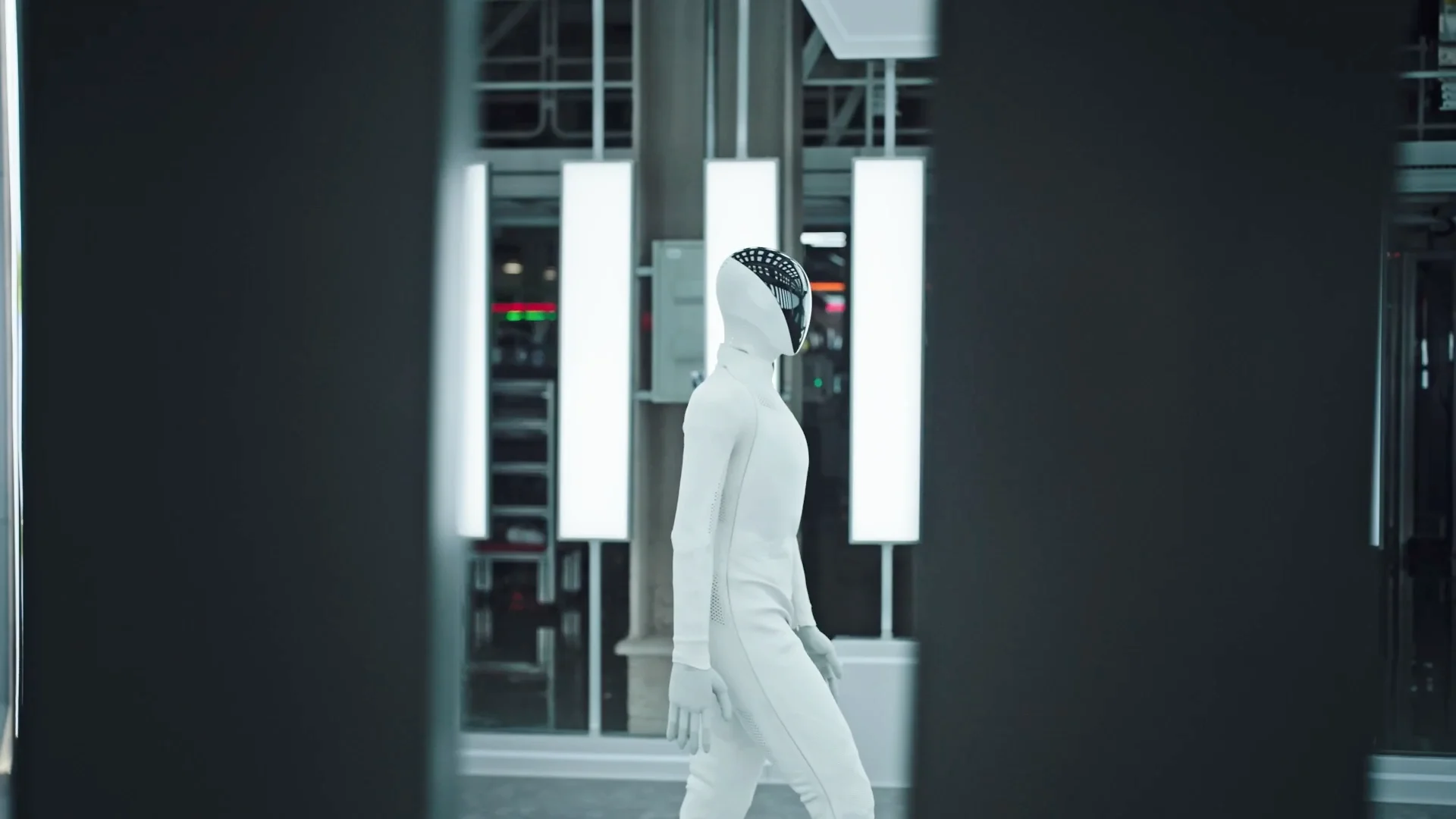
While Tesla continues fine-tuning its next-generation hardware before presenting it to the public, XPENG has accelerated past the prototyping bottleneck entirely. By moving its current design directly onto an automated assembly line, the Chinese automaker has turned the theoretical race for scaled production into an active operational reality.
Upgraded Autonomy and On-Device Compute
The production iteration of IRON brings significant upgrades to its intelligence and mechatronic stack:
- Triple-Turing Edge Compute: The robot carries three proprietary Turing AI chips delivering an aggregate 2,250 TOPS of compute, running physical foundation models locally to eliminate latency and cloud dependence.
- Unified Data Flywheel: In Q2 2026, XPENG merged its robotics and autonomous-driving data teams. The platform reuses the Vision-Language-Action (VLA) pipeline honed across millions of highway kilometers to accelerate real-world spatial reasoning.
- Multi-Modal Interaction: Equipped with an in-house multi-modal LLM, IRON supports persistent memory across 12 unique human faces and dynamic code-switching during Chinese-English bilingual dialogue.
- Full-Process Obstacle Avoidance: Navigates dynamic, unstructured spaces autonomously, planning paths and reacting to moving obstacles in real time.
- Autonomous Docking: Independently locates charging docks, manipulates power connectors to plug and unplug, and recovers from minor mechanical alignment faults without human intervention.
Commercial Deployment: Showrooms First, 2027 Deliveries
XPENG is maintaining a deliberate, phased commercial rollout. Rather than deploying immediately into high-risk heavy industrial tasks or unstructured private homes—where early trials previously revealed severe durability limitations in dexterous hands—the company is prioritizing structured commercial spaces.
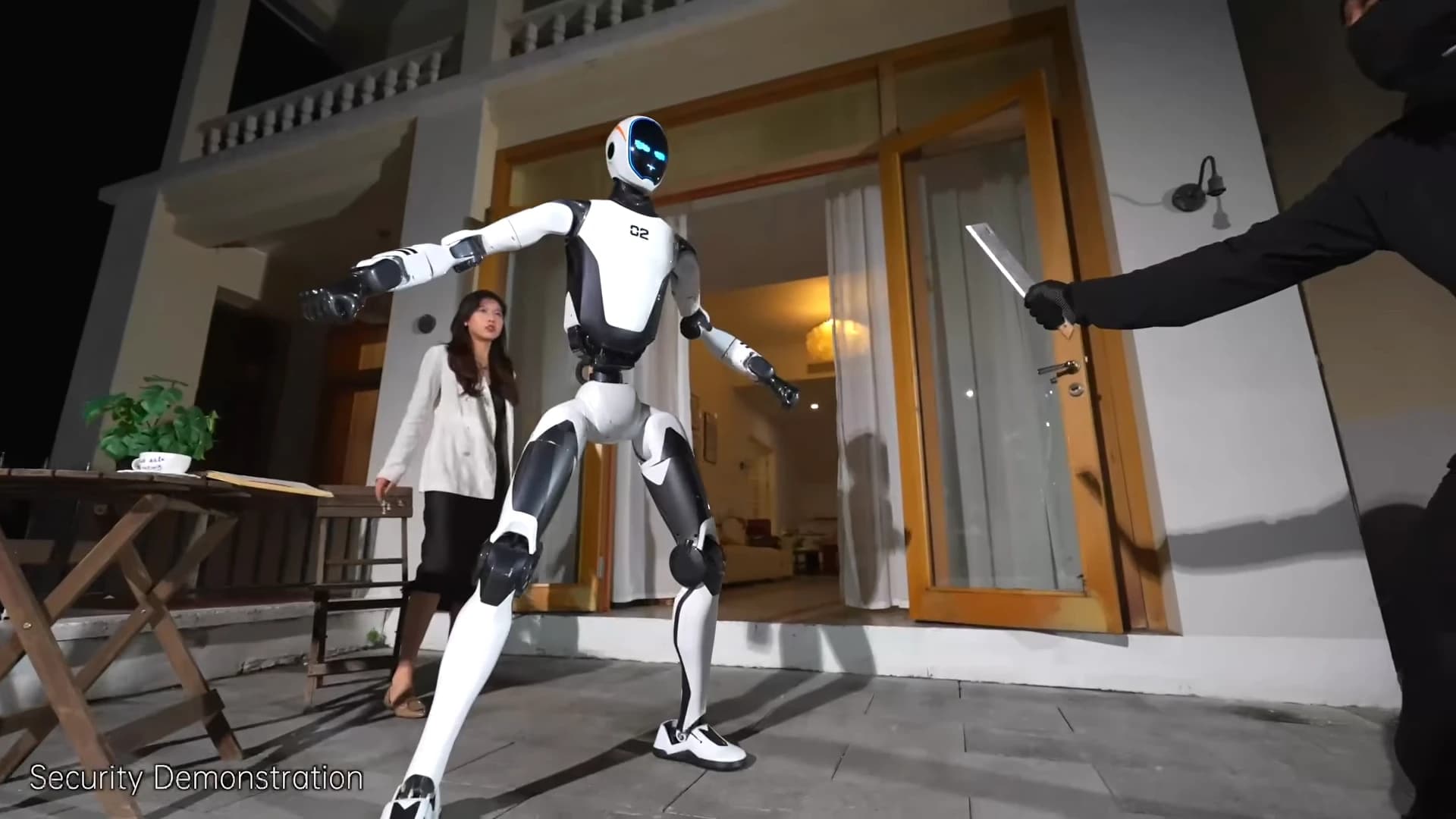
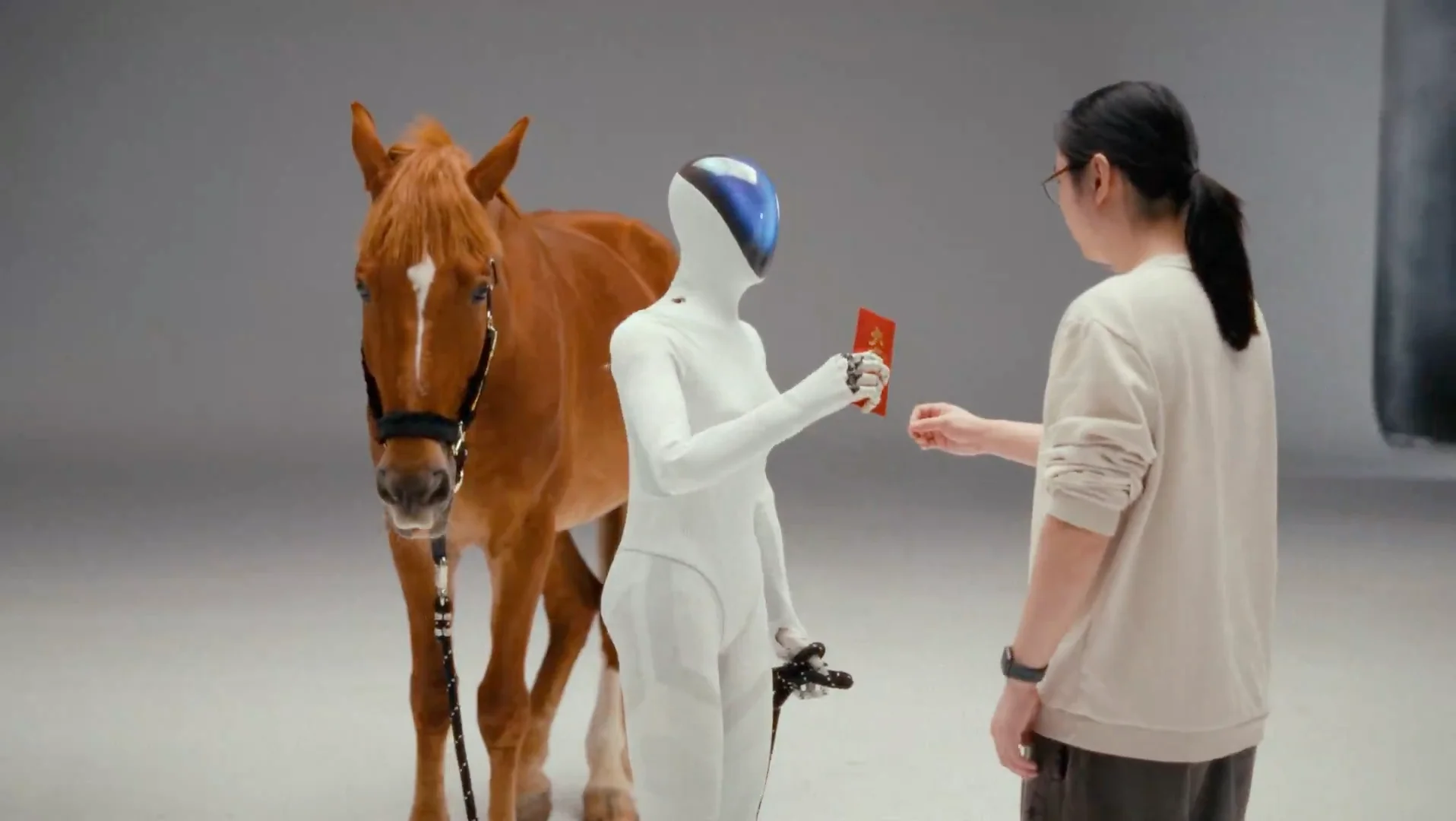
Production units rolling off the line are being deployed immediately across XPENG-owned retail showrooms and corporate campuses for guided customer tours, product demonstrations, and perimeter patrols. Throughout Q4 2026 and early 2027, these deployments will serve as high-density data collection hubs, validating edge cases and feeding the "data-model-application" flywheel. During the commissioning, He Xiaopeng symbolically placed an XPENG staff ID badge around IRON's neck to mark the robot officially joining the workforce as a frontline employee.
External customer deliveries are scheduled to begin in 2027, targeting enterprise clients across commercial retail, hospitality, and customer service across China and global markets. Financially, XPENG views robotics as its "second growth curve," noting that given high technical barriers and scarce high-tier supply, the gross margin per unit for humanoid robots is projected to significantly outpace that of new energy vehicles. While Tesla works behind closed doors to ramp component pipelines and fine-tune its production lines, XPENG has taken the first public step in transitioning the humanoid race from pilot-line promises to documented factory throughput.
Share this article
Read next
- Published on
- Reading time
- 2 min read
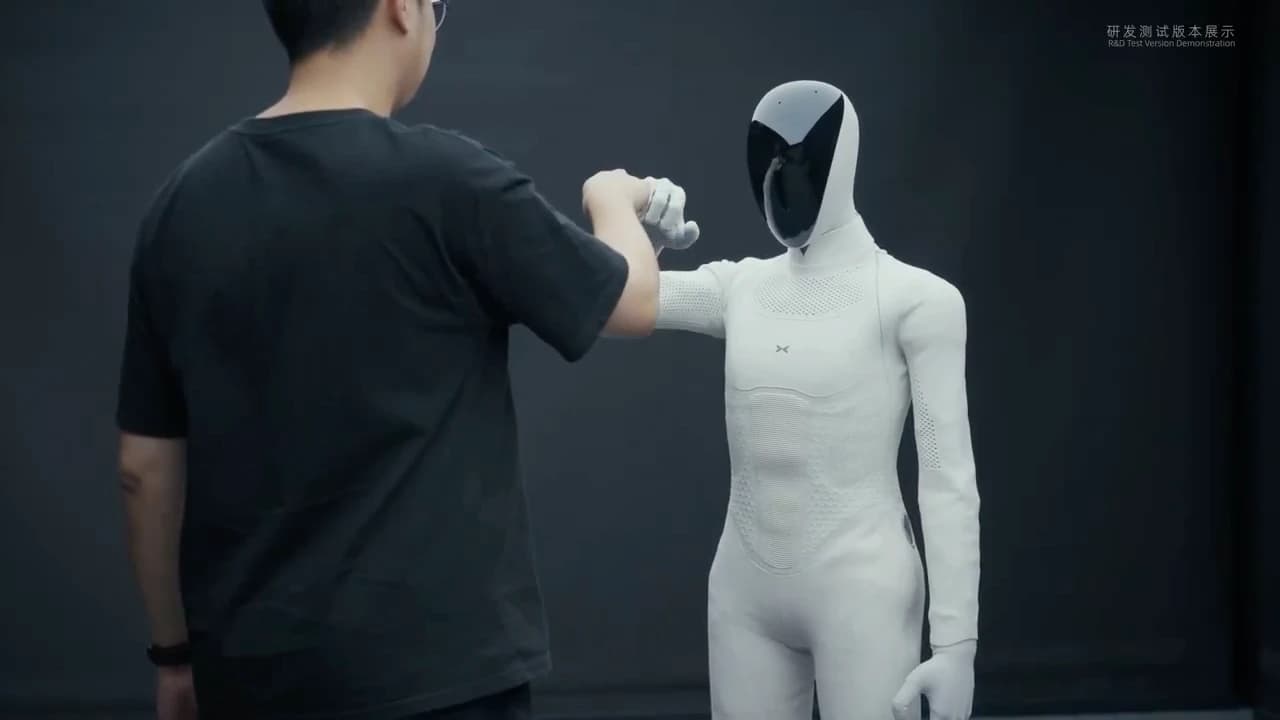
XPENG Shows IRON Switching Between Handshakes, Fist Bumps and High-Fives
- Published on
- Reading time
- 6 min read
Inside XPENG’s Bet on IRON: He Xiaopeng on Why the Hardest Path in Humanoid Robotics Is Never Crowded
- Published on
- Reading time
- 4 min read
XPENG's Head of Robotics Admits Hardware is 'Bottleneck' as 2026 Production Goal Looms
- Published on
- Reading time
- 4 min read
Xpeng to Break Ground on "Full-Chain" Humanoid Factory to Meet 2026 Production Goal
- Published on
- Reading time
- 3 min read
XPENG CEO Targets Late 2026 for Massive IRON Deployment
- Published on
- Reading time
- 5 min read
Simulating the 'Masterpiece': XPENG Robotics Unveils Design Framework and Lattice Musculature for IRON

The weekly humanoid robotics briefing
One email a week: the launches, funding and research that mattered, with context from Humanoids Daily.
Read recent issues