- Published on
LeCun Answers Musk's Superintelligence Claim: No Level-5 Driving, No Robot to Match an 8-Year-Old
One tap, and our reporting appears more often in your Google Top Stories. It makes a real difference to a small newsroom.

Supported by RoboStrategySupport for Humanoids Daily comes from RoboStrategy
Sponsored
Investing involves risk, including possible loss of principal. Read the prospectus before investing.
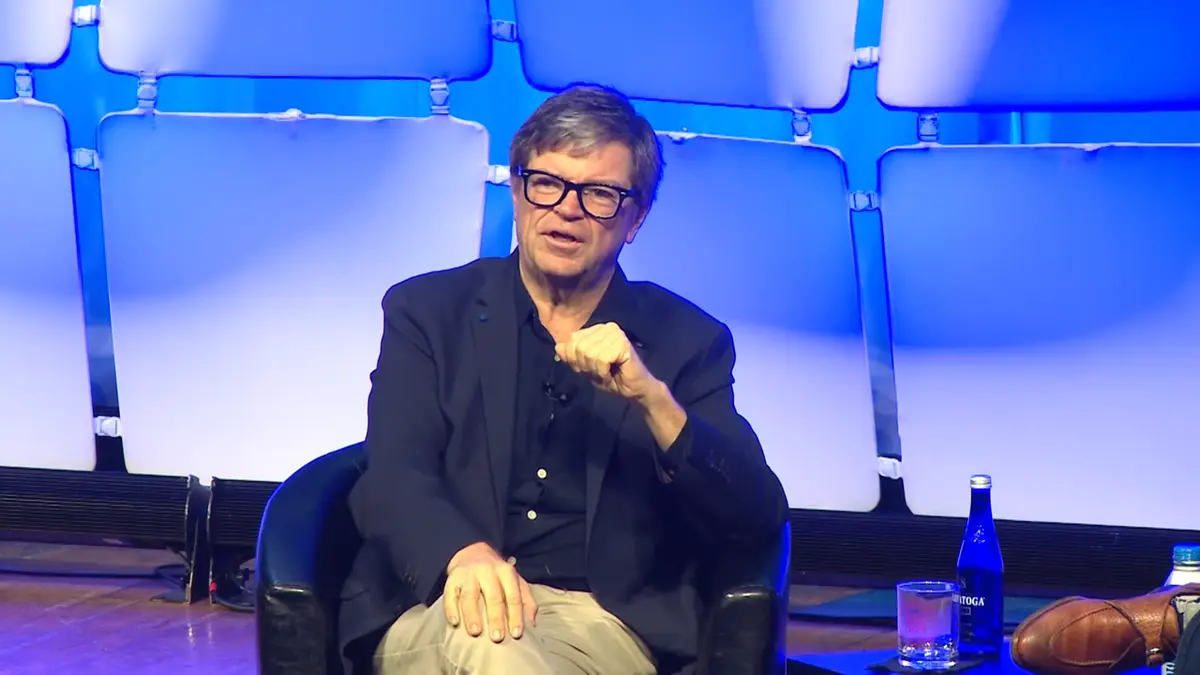
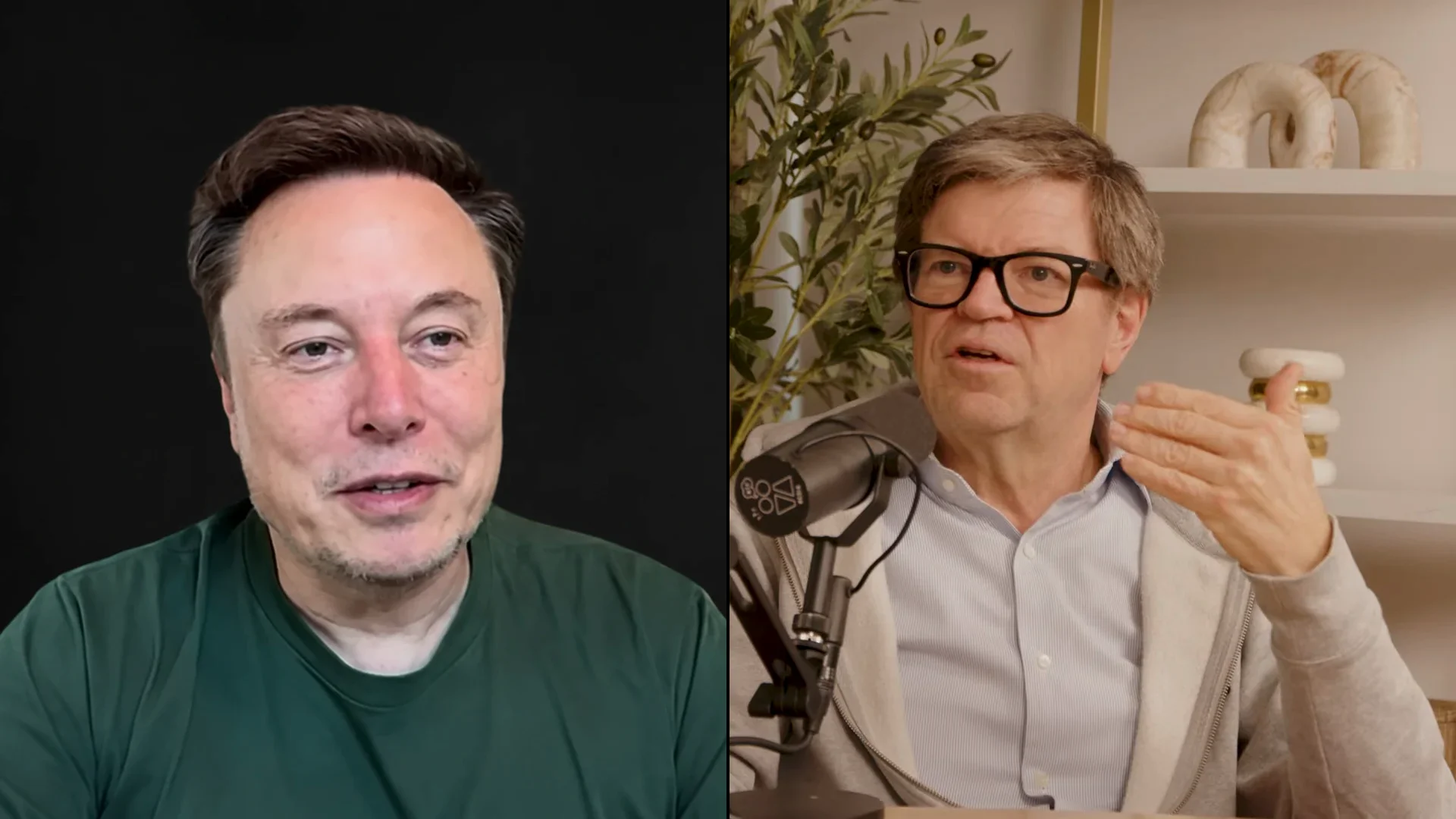
Yann LeCun, the Turing Award winner who founded the world-model startup AMI Labs after leaving Meta, has rejected Elon Musk's claim that superintelligence has arrived, pointing to the problems AI still has not solved in the physical world: fully autonomous driving, and robots with the abilities of a child.
"TIL: We have superintelligence but we still don't have level-5 autonomous driving," LeCun wrote on X on November 22. "A task that most 17 year olds can learn in 20 hours of practice. And we have (you have) billions of hours of training data."
- Elon Musk declared on X that "unequivocal super intelligence has arrived" after an Anthropic mathematician said he and Claude had proved the Riemann hypothesis. The proof has not yet been independently verified.
- Yann LeCun replied that AI still cannot drive at level 5, a task he said most 17-year-olds learn in 20 hours, despite Tesla's "billions of hours" of driving data.
- LeCun added that no robot comes close to what an 8-year-old can do without prior training, which is the gap his startup AMI Labs is betting world models can close.
- The same day, Musk said Tesla's cars will stay on the AI4 computer, which he called "enough to solve superhuman driving," while the more powerful AI5 goes to Optimus.
A math claim sets off the exchange
The argument started with mathematics. On November 20, Levent Alpöge, a mathematician at Anthropic, posted a four-page note saying he believed he had "discovered a proof of the Riemann hypothesis" together with Claude, Anthropic's AI model. The hypothesis, posed by Bernhard Riemann in 1859, concerns where the zeros of the zeta function lie, and it is one of the Clay Mathematics Institute's seven Millennium Prize Problems.
According to AFP's report, Alpöge has so far released only a version of the proof written in Lean, a language that lets a computer check a mathematical argument, saying a full written version would be extremely long and that he has not yet mastered all the mathematics involved. Outside mathematicians have not yet reviewed it. To win the Clay prize, a solution must appear in a peer-reviewed journal and hold up for two years.
Follow humanoid robotics without following every announcement.
Get the week’s most important launches, funding and research—and why they matter—in one email from Humanoids Daily.
Once a week. Unsubscribe anytime.
Read recent issuesThe claim drew a large response on X. Poker player and science communicator Liv Boeree joked that a question first explored by a 19th-century German mathematician now "influences the market cap of a trillion dollar AI company." Musk answered in her thread:
LeCun's reply: driving, children and cats
LeCun answered Musk directly. Beyond the driving comparison, he wrote: "We don't have robots that can come close to doing what an 8 year old can do with no prior training. And let's not talk about cats. That's a rather strange kind of superintelligence."
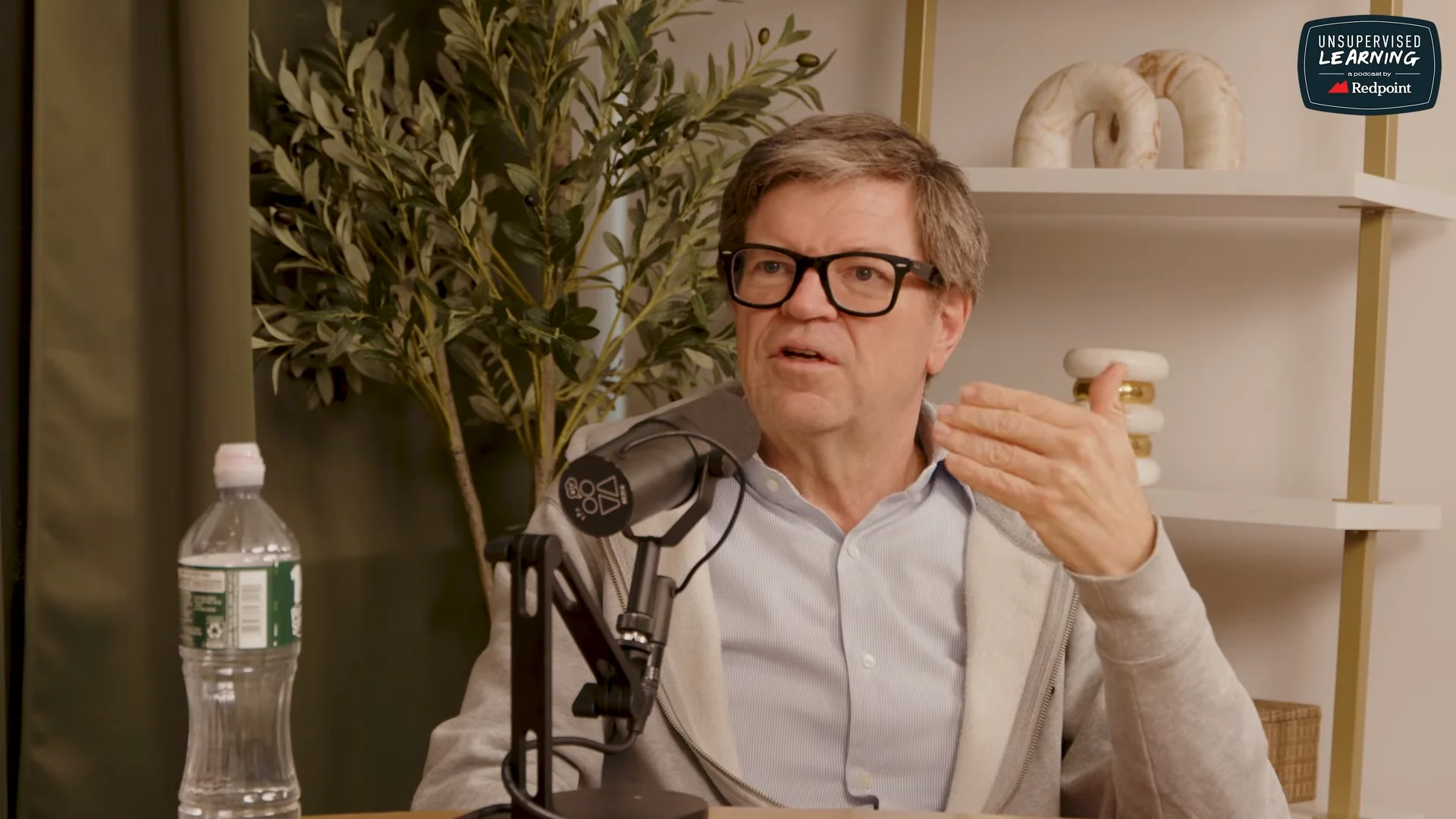
The driving example is one LeCun uses often. In a May interview on the Unsupervised Learning podcast, he asked how a teenager can learn to drive in a dozen hours while machines need far more data for narrow tasks. He predicted that the need for a new approach would become "completely obvious to people by early 2027." Cats are another regular reference: he has long said today's AI systems are not as smart as a house cat.
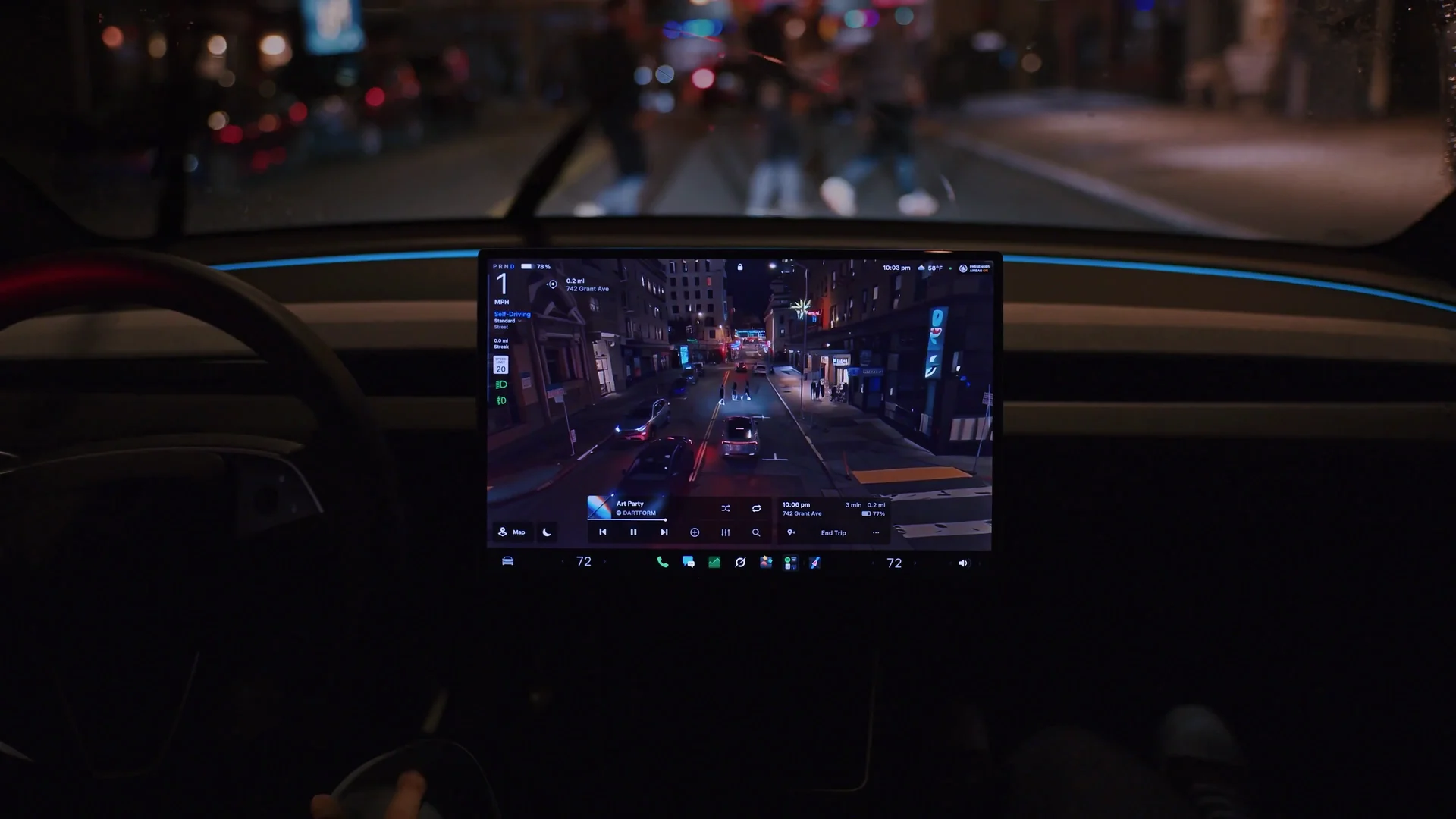
His reply also landed on a specific Tesla claim. In a separate thread the same day, Musk said Tesla's next computer, AI5, will go to Optimus, while the cars stay on AI4, adding: "That's enough to solve superhuman driving." FSD as sold to customers, now rolling out as v15, is still a supervised system. LeCun's "(you have)" pointed at the driving data Tesla collects from that fleet.
Two bets on how machines learn the physical world
The disagreement reflects a real technical split. Tesla trains its driving and robot systems end to end on large amounts of fleet and video data. As Tesla AI vice president Ashok Elluswamy has described, the company uses a generative world simulator, which renders video of the world in response to the network's actions, to train and evaluate both FSD and Optimus. Musk said this week that Tesla has had a "~pixel-perfect world model since last year" for synthetic data.
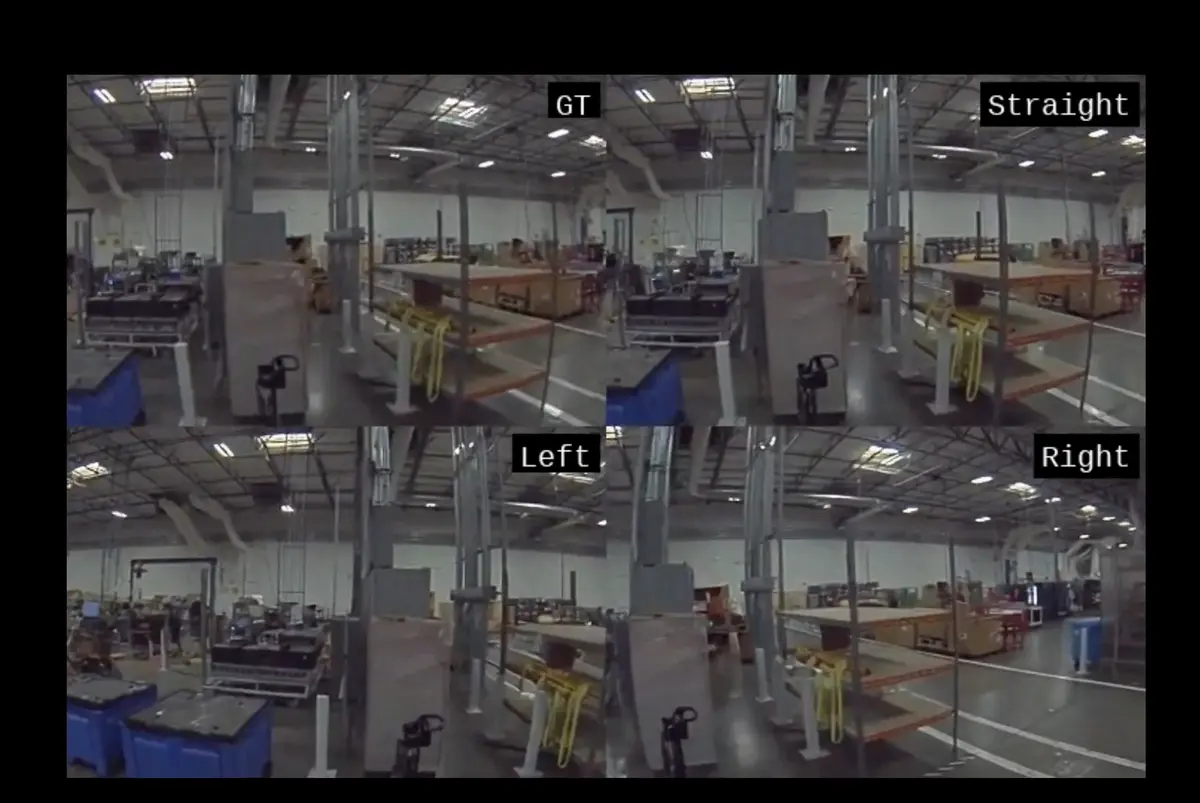
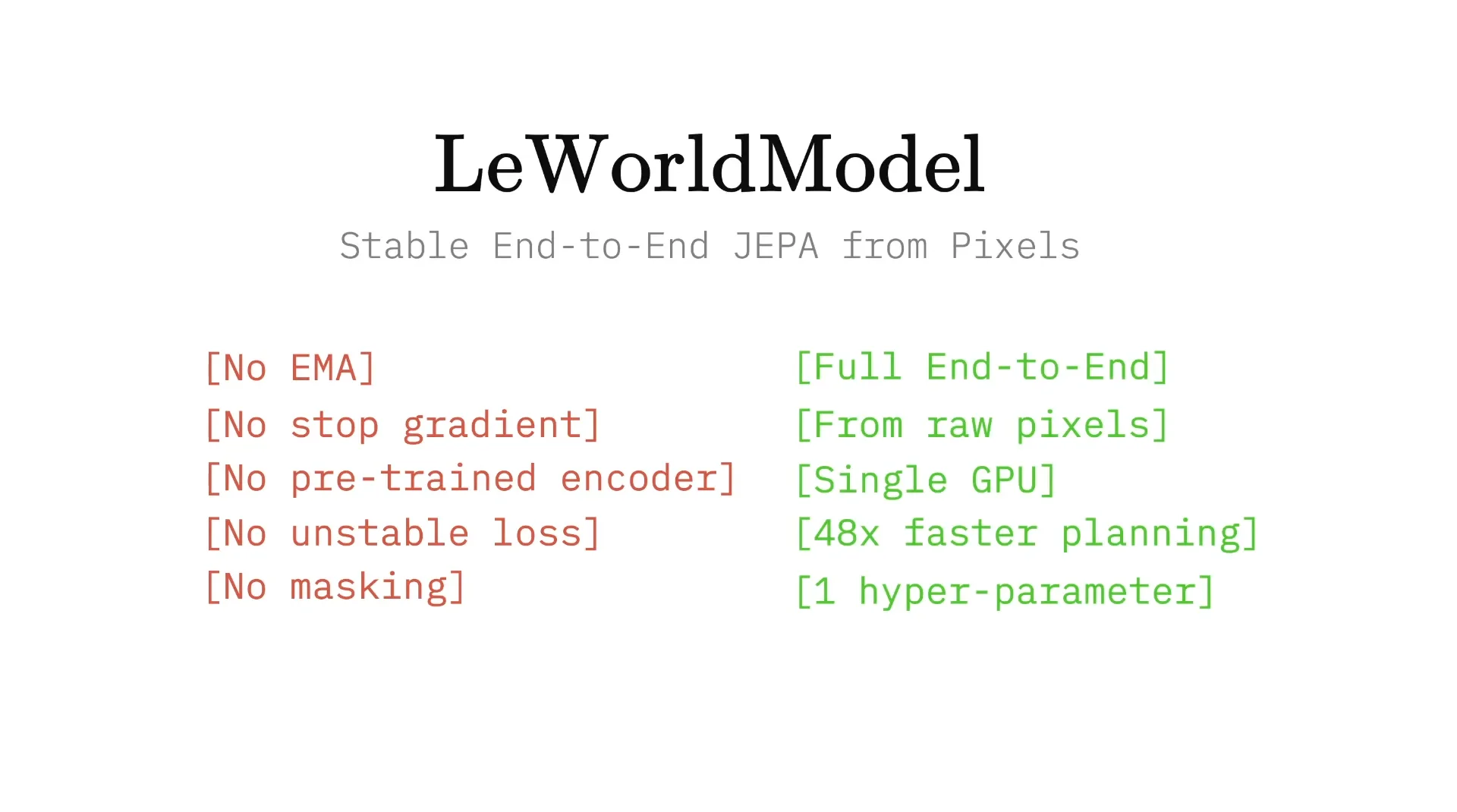
LeCun argues that predicting pixels is the wrong target. AMI Labs, which raised a $1.03 billion seed round in March at a $3.5 billion valuation, builds on his Joint Embedding Predictive Architecture (JEPA). The approach, which includes Meta's V-JEPA video models, predicts what happens next in an abstract representation space instead of generating every pixel, so the model can ignore details such as the texture of a carpet and focus on how objects move. In March, LeCun co-authored LeWorldModel, a 15-million-parameter JEPA model that trains on a single GPU.
His benchmark for success is data efficiency: a system that learns how the world works from observation, the way a child or an animal does, rather than from billions of hours of examples. In an October 2025 talk, he said humanoid companies "have no idea" how to make their robots smart enough to be generally useful.
Not the first round
Musk and LeCun have argued on X since at least May 2024, when LeCun mocked an xAI recruiting post and the two went on to dispute what counts as science. Musk has continued to say scaled-up models and data are close to superhuman AI, while LeCun has said current systems cannot match a child or a cat in the physical world.
Several of the claims in this week's exchange can be checked. Mathematicians will now review Alpöge's Lean proof. Musk says AI4 is enough for superhuman driving, and he has targeted the end of 2027 for the first customer deliveries of Optimus, with AI5 due in the robot around April 2027.
Share this article
Follow humanoid robotics without following every announcement.
Get the week’s most important launches, funding and research—and why they matter—in one email from Humanoids Daily.
Once a week. Unsubscribe anytime.
Read recent issuesRead next
- Published on
- Reading time
- 6 min read
Musk: AI5 Chip Goes to Optimus as Tesla Cars Stay on AI4
- Published on
- Reading time
- 5 min read
Tesla AI Chief Details Unified 'World Simulator' for FSD and Optimus
- Published on
- Reading time
- 6 min read
Meta AI Chief Yann LeCun Claims Humanoid Firms "Have No Idea" How to Build Generally Useful AI
- Published on
- Reading time
- 4 min read
Yann LeCun’s World Model Vision Gets a Leaner Engine: Introducing LeWorldModel
- Published on
- Reading time
- 4 min read
Yann LeCun Predicts "Paradigm Shift" in Robotics by 2027, Dismisses LLMs as "Intrinsically Unsafe"
- Published on
- Reading time
- 4 min read
NVIDIA Open-Sources DreamDojo: A 44,000-Hour "Dream" to Solve the Robotics Data Gap