- Published on
Sharpa Wave: the robotic hand used by NVIDIA and DeepMind
One tap, and our reporting appears more often in your Google Top Stories. It makes a real difference to a small newsroom.

Supported by RoboStrategySupport for Humanoids Daily comes from RoboStrategy
Sponsored
Investing involves risk, including possible loss of principal. Read the prospectus before investing.
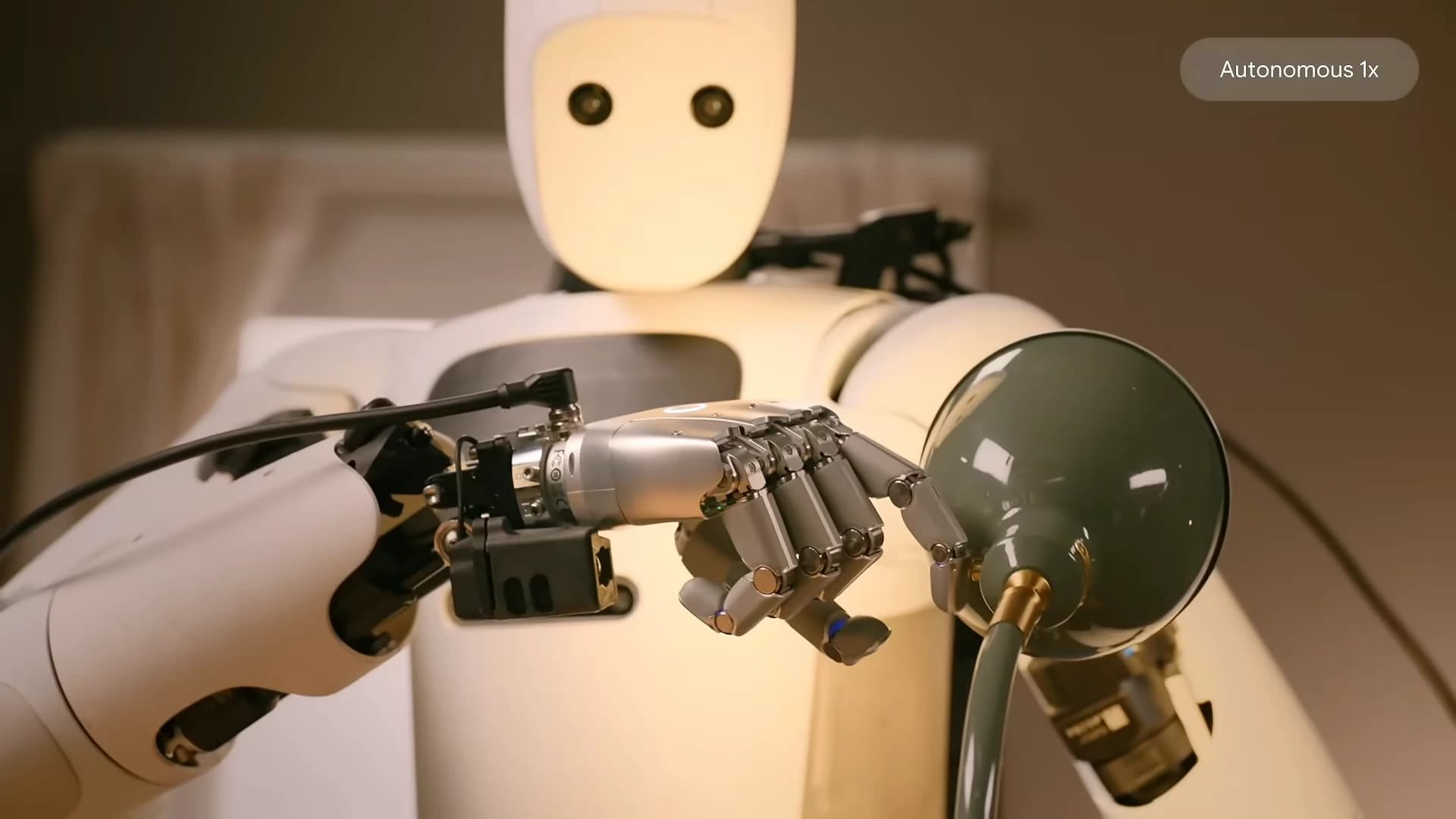
When Sharpa began showing its robotic hand in 2025, it was entering one of the hardest parts of humanoid robotics. A useful hand has to fit motors, transmission mechanisms and sensors into a small space, then survive repeated contact with a world that rarely lines up perfectly. Making one perform an impressive demonstration is a different manufacturing challenge from producing hands that other teams can use every day.
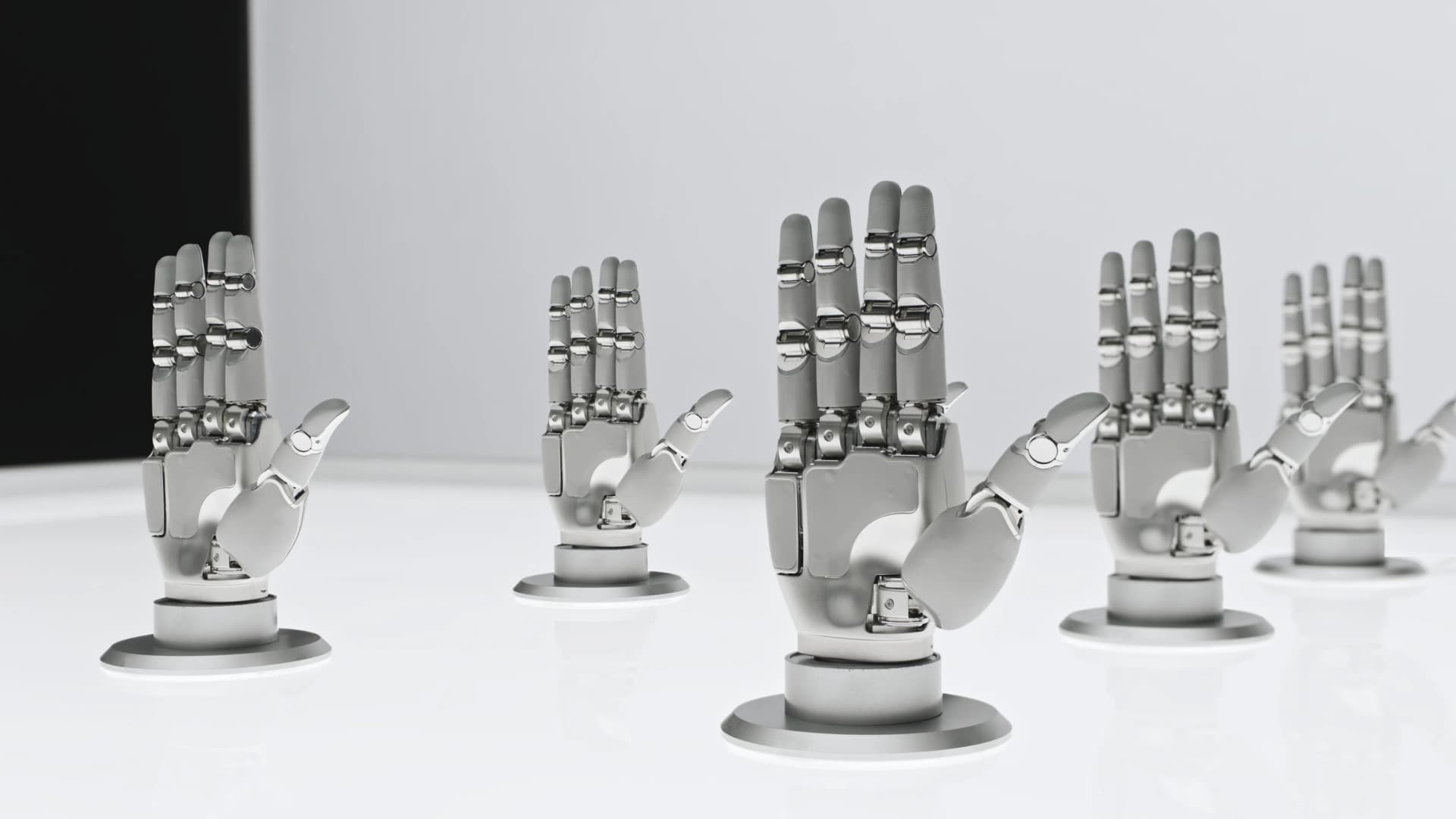
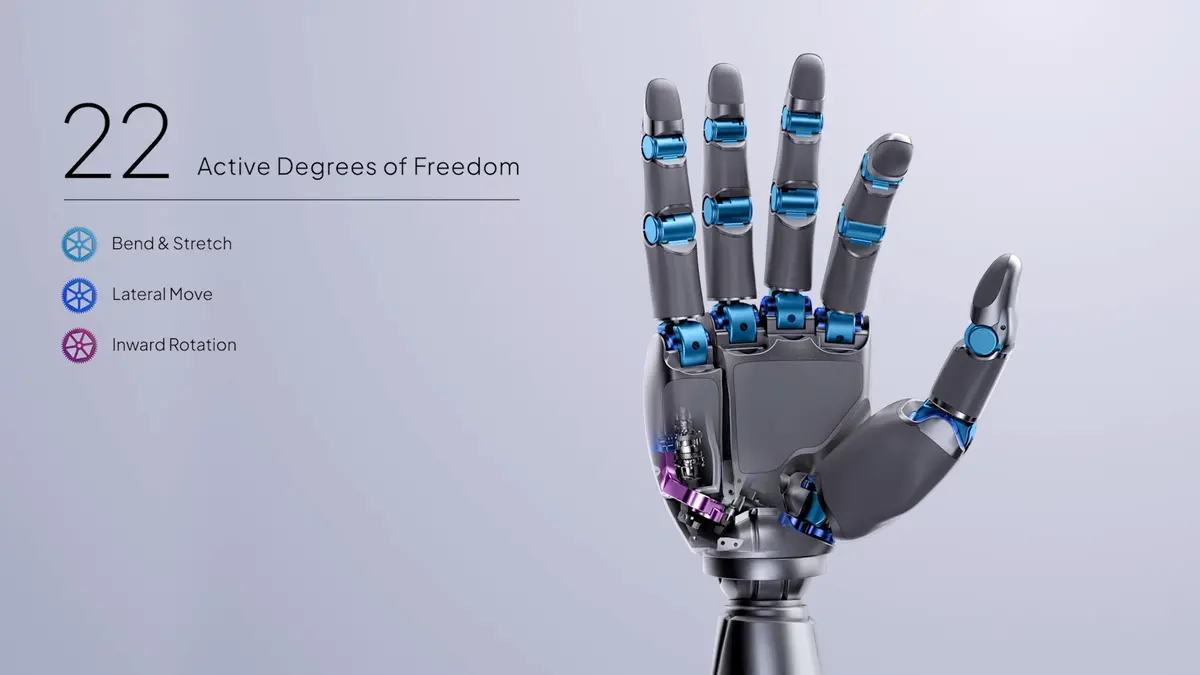
SharpaWave attracted attention at events including ICRA 2025 before initial shipments began that October. Its combination of 22 active degrees of freedom and camera-based tactile fingertips made it an interesting arrival in a field still struggling to reproduce the versatility of a human hand. By the run-up to CES 2026, Sharpa told Humanoids Daily that it had moved to rolling production, with automated testing and individually replaceable fingers.
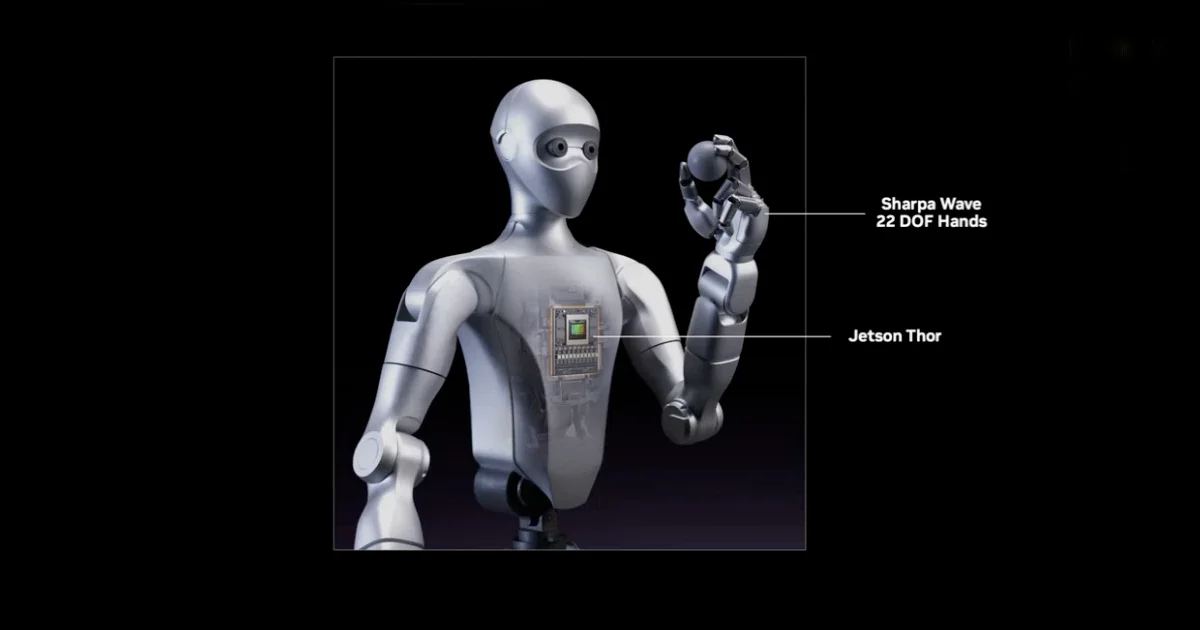
Within months, the hand had found a place in two of the most closely watched robotics programs. NVIDIA selected Sharpa Wave hands for its Isaac GR00T reference humanoid, combining them with a Unitree H2 Plus body and Jetson Thor compute. NVIDIA’s announcement positioned the platform as a way for researchers to spend less time getting hardware working and more time developing robot skills. We covered the reference humanoid’s announcement here.
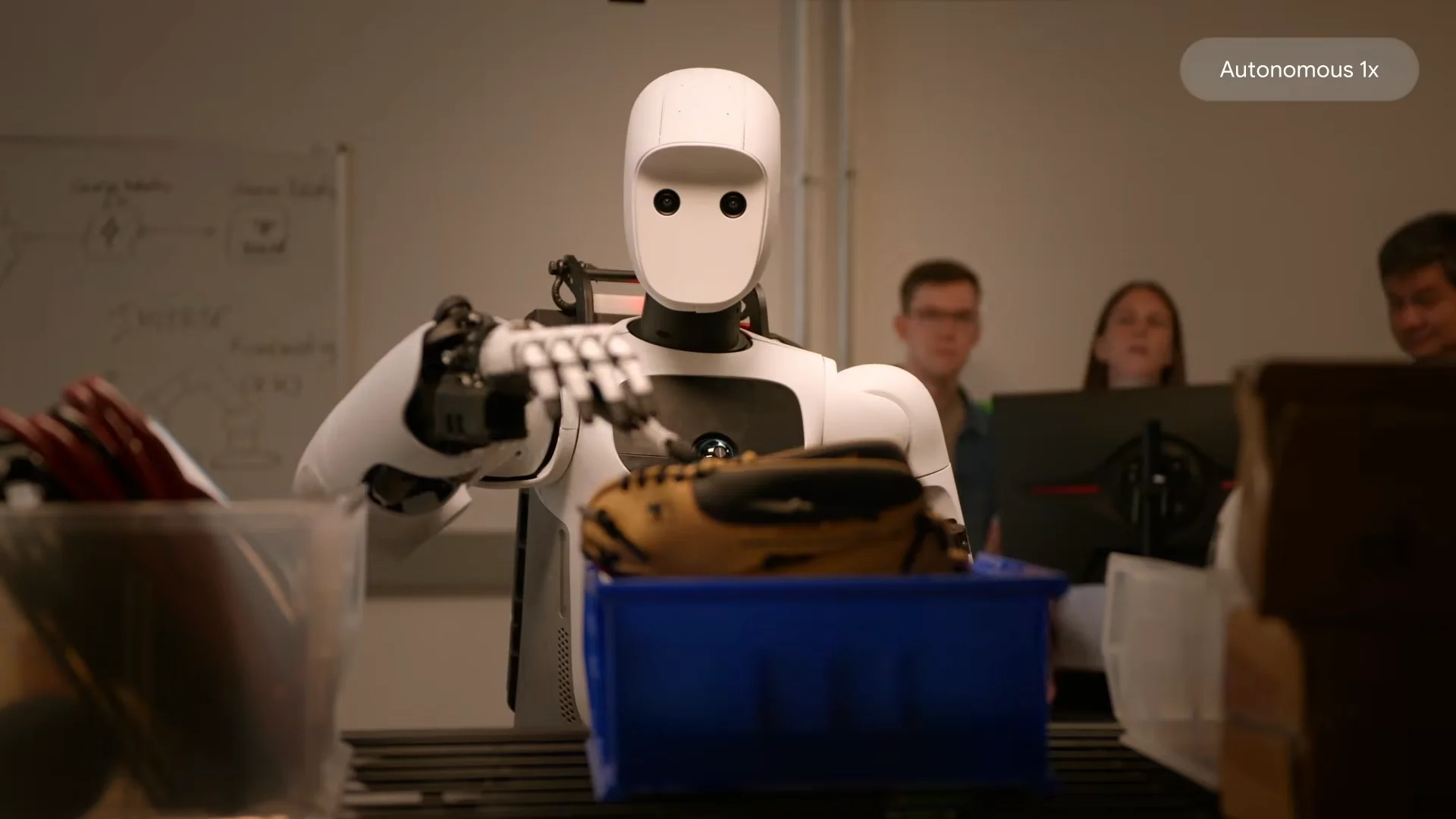
Google DeepMind also used SharpaWave hands on Apptronik’s Apollo 2 in its Gemini Robotics 2 demonstrations, including knot-tying and sealing a ziplock bag. DeepMind tested other hands and grippers too; Sharpa’s significance is that its hardware was being used to explore the difficult end of robot dexterity.
The weekly humanoid robotics briefing
One email a week: the launches, funding and research that mattered, with context from Humanoids Daily.
Read recent issuesThose choices are a meaningful sign of confidence in a young company’s hardware. They also explain why Sharpa deserves attention beyond its own promotional demonstrations: its hands are helping other teams develop and test their AI. The broader story is covered in our Sharpa Robotics company profile. Here, we look at the hand itself—now styled Sharpa Wave—and the mechanics, sensing and software behind it.
Sharpa Wave and Wave SE: key specifications
Sharpa’s current product page lists Wave and Wave SE. The differences extend to force, operating speed and tactile data.
| Specification | Wave | Wave SE |
|---|---|---|
| Active degrees of freedom | 22 | 22 |
| Listed weight | 1.3 kg | 1.3 kg |
| Dimensions | 208 × 90 × 50 mm | 208 × 90 × 50 mm |
| Grip force | 150 N | 90 N |
| Fingertip force | 20 N | 12 N |
| Operating speed | 4 Hz | 2 Hz |
| Tactile resolution | 240 × 240 | 60 × 60 |
| Tactile frame rate | 180 fps | 30 fps |
| Raw tactile image output | Supported | Not supported |
Manufacturer specifications, checked September 14, 2026. Source: Sharpa’s Wave comparison. Figures describe the listed configurations.
Our October 2025 shipping report described a 1.2 kg hand measuring 200 × 90 × 50 mm. Those are historical figures; the table above follows the current listing. A difference in published specifications does not, by itself, tell us precisely when a hardware change occurred.
Grip force, fingertip force and a complete robot’s lifting capacity also describe different things. A hand specification alone cannot tell a buyer what an arm can safely carry at full extension.
How does the hand sense touch?
Sharpa calls its sensing system the Dynamic Tactile Array, or DTA. In information supplied for our production report, the company described miniature cameras inside the fingertips that observe deformation at the contact surface. It called the approach “feeling by seeing.”
That camera has a different job from a robot’s head camera. The head camera observes the scene; the fingertip sensor provides information about contact once the hand touches something. For example, a robot picking up a cup needs to locate it, close its fingers and hold it securely without applying unnecessary force. Tactile information can help the control software respond during that last part of the task.
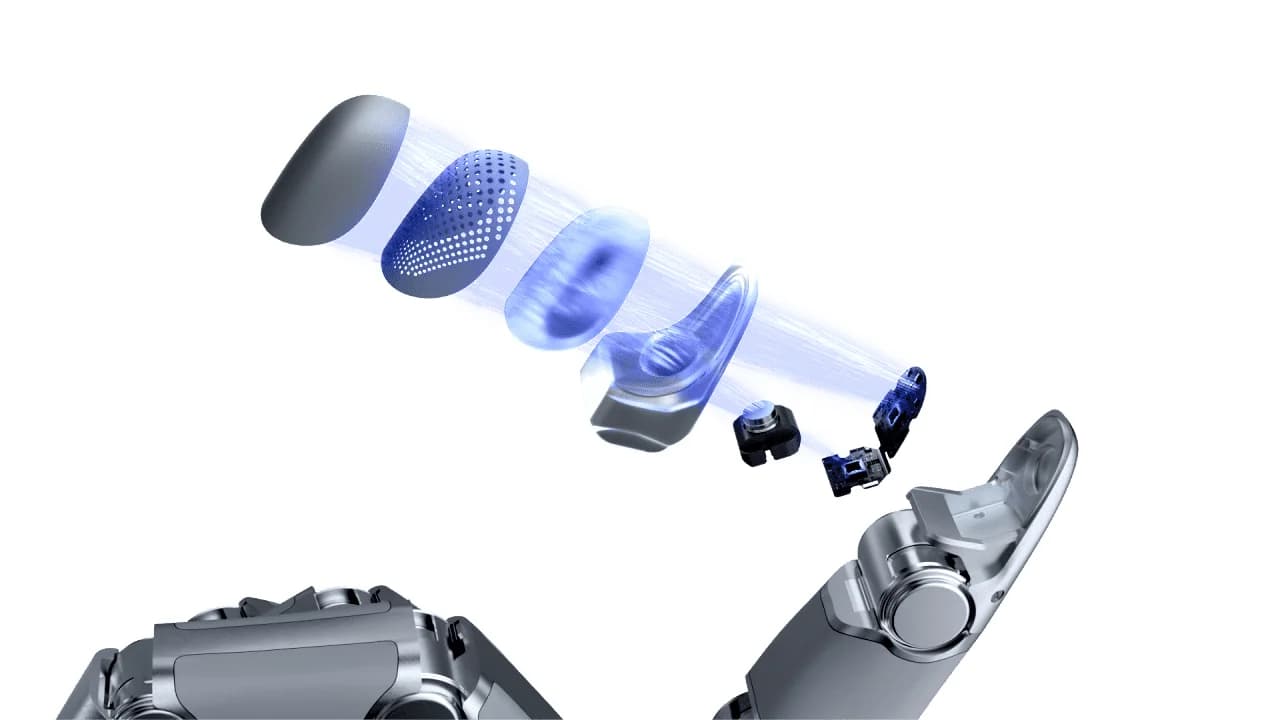
The distinction matters when comparing hands. A larger sensor output is not automatically better task performance. Its usefulness depends on how quickly and effectively the robot’s controller uses that information. Likewise, a hand with sophisticated sensing still needs software that decides what to do.
What do 22 active degrees of freedom mean?
An active degree of freedom is an independently driven movement. The count helps describe the hand’s mechanical flexibility, but it does not measure intelligence, reliability or skill at a particular task.
A fair comparison also considers finger geometry, contact sensing, force, weight and integration. A lighter hand might suit one robot arm better; another application might place greater value on fingertip feedback or the ability to reposition an object within the grasp.
For the wider design debate, read our feature on tendon-driven and direct-drive robotic hands. When discussing Wave specifically, our production reporting describes microscale gears and motors. “Direct drive” should not be taken to mean that its mechanism contains no gearing.
Watch Sharpa’s hand demonstration
Sharpa’s product video, also linked from its official Wave page. It illustrates the hand; the control method and software behind each demonstration should be considered separately from the hardware specifications.
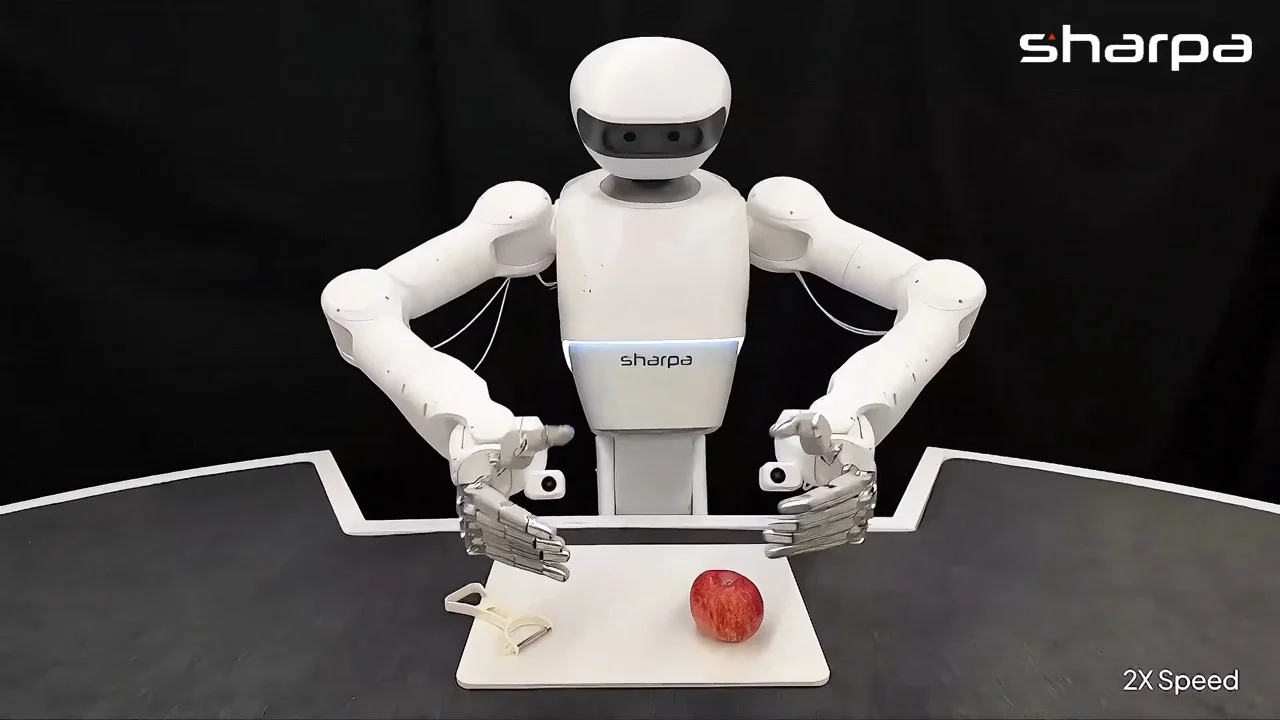
The hand is one part of a larger system. Our reporting on Sharpa’s apple-peeling demonstration examines the manipulation software behind a two-handed task. That is a different question from what is included when someone buys a Wave hand.
What software is available?
Sharpa provides several tools for different stages of integration:
- Sharpa Pilot: device configuration, monitoring and firmware management.
- Wave SDK: libraries and APIs for connecting the hand to a developer’s application.
- Simulation and mechanical assets: robot-description files, adapter CAD and Isaac Lab examples.
- Manus integration: tools for using gloves from Manus, a company that makes hand-tracking gloves, to capture a person’s finger movements and translate them into movements of the robotic hand.
These are listed in Sharpa’s developer downloads. Developers should check each package’s supported versions and license rather than assume every download has identical terms.
The Wave SDK documentation describes Linux packages for x86-64 and ARM64, with C++ and Python interfaces. This matters if the hand will run from an embedded computer rather than a desktop workstation. The available interfaces help determine how the hand fits into a research team’s existing control system.
The SDK connects the hardware to the rest of the robot. The manipulation policy—the software that coordinates a task—remains a separate part of the system.
Can the fingers be repaired or replaced?
Sharpa told Humanoids Daily that individual fingers can be replaced independently. That was part of the company’s explanation of its modular design in our mass-production report.
For a lab using a hand regularly, this can be as relevant as a headline force figure. Replacing one damaged finger offers a different maintenance path from replacing an entire hand. The practical benefit depends on the availability of replacement parts and how much work is needed to get a repaired hand back into service.
The same reporting covered Sharpa’s endurance-testing equipment. Those tests describe how the manufacturer evaluates its hardware; they are not a published measure of uptime across customer installations.
Production and pricing
Sharpa Wave is a commercial product, with initial shipments documented in October 2025. Sharpa’s current Wave page handles pricing through sales enquiries rather than a public price list.
Our Sharpa company profile discusses reporting that put the hand’s price at roughly US$50,000. That is a reported historical price, not a current official quote, and should not be assumed to apply to both models or every package.
Where to read more
For Sharpa’s founders, funding, North robot and wider business, visit the Sharpa Robotics company profile. For the product’s development, start with our shipping report and production and repairability follow-up.
Share this article
Read next
- Published on
- Reading time
- 7 min read
Google DeepMind Unveils Gemini Robotics 2, Bringing Whole-Body Intelligence and Multi-Robot Teams to Physical AI
- Published on
- Reading time
- 6 min read
NVIDIA GTC: NVIDIA and Sharpa Unveil Isaac GR00T Reference Humanoid Robot
- Published on
- Reading time
- 4 min read
The Apple Peeling Milestone: How Sharpa’s "MoDE-VLA" Unlocks Bimanual Dexterity
- Published on
- Reading time
- 4 min read
The Human Scale: NVIDIA’s EgoScale Unlocks High-Dexterity Robotics via 20,000 Hours of Human Video
- Published on
- Reading time
- 3 min read
Sharpa Robotics Ramps Up Mass Production of "Vision-Based" Tactile Hand
- Published on
- Reading time
- 3 min read
Sharpa Robotics Begins Shipping Its SharpaWave Hand, Targeting Human-Level Tactile Sensing
The weekly humanoid robotics briefing
One email a week: the launches, funding and research that mattered, with context from Humanoids Daily.
Read recent issues