- Published on
White House Eyes "Robotics Executive Order" as Trump Administration Pivots to Hardware
One tap, and our reporting appears more often in your Google Top Stories. It makes a real difference to a small newsroom.


Your guide
Rich Robinson
Jee Chee Ren · Executive tour
See China’s AI and robotics ecosystem first-hand.
Six days exploring AI, robotics and advanced manufacturing.
With Rich Robinson, Clinical Professor of Entrepreneurship at Peking University
Beijing · Guangzhou · Shenzhen
29 November–4 December 2026
Referral partnership · We earn a commission on referred bookings.
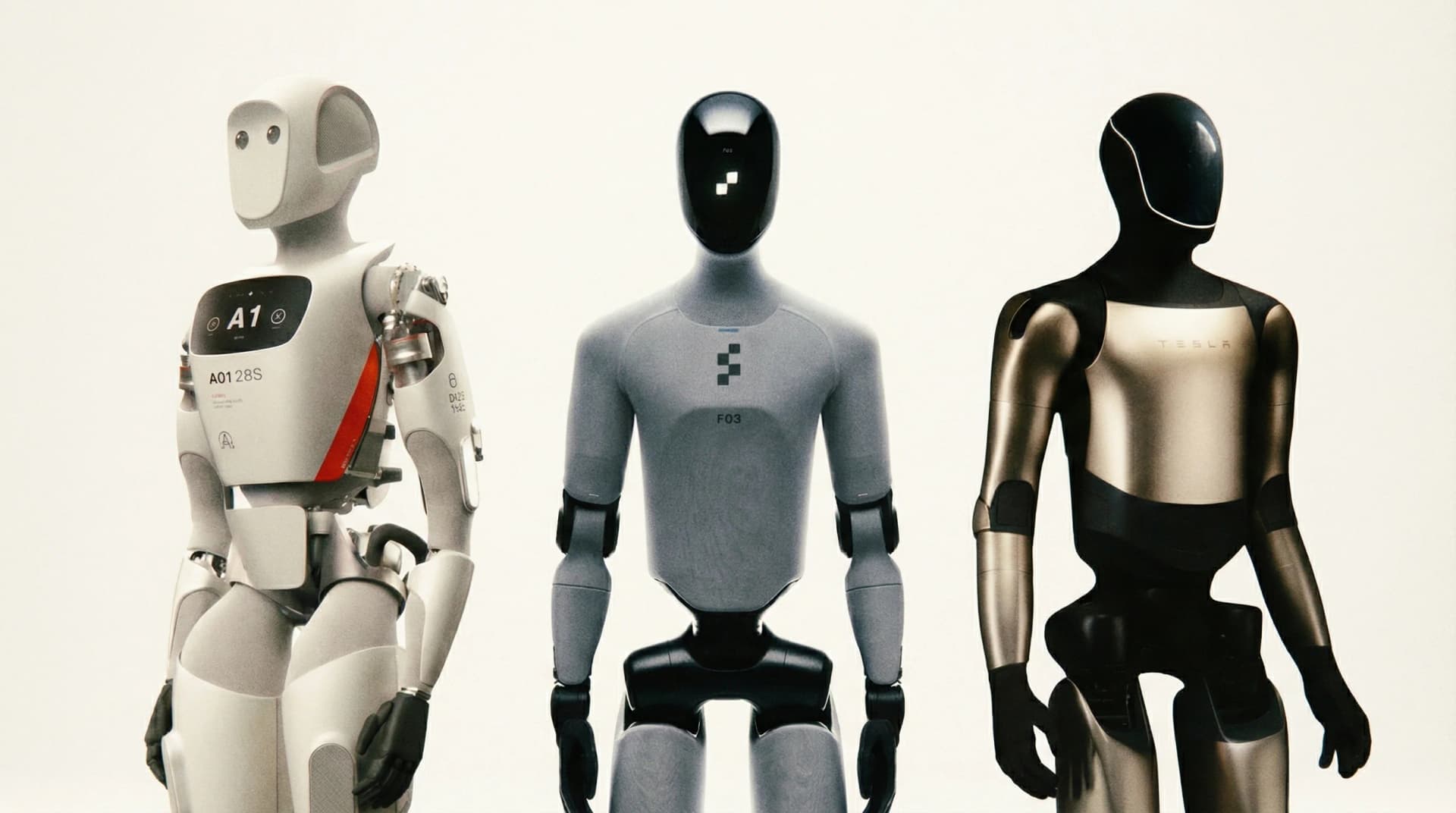
After months of intense focus on generative AI software, the Trump administration appears to be shifting its gaze toward the physical world.
According to a new report from Politico, the White House is actively exploring a national robotics strategy, potentially culminating in a "robotics executive order" next year. The initiative is being spearheaded by Commerce Secretary Howard Lutnick, who has reportedly been meeting with CEOs from major American robotics firms, including Apptronik, Boston Dynamics, and Tesla.
The pivot signals a growing recognition in Washington that "AI" cannot remain trapped in data centers. For the United States to maintain industrial competitiveness—particularly against a state-subsidized juggernaut in China—artificial intelligence must be given a physical body.
The "Physical AI" Push
Sources cited by Politico indicate that Lutnick views automation as the missing link in the administration’s goal to reshore American manufacturing. The logic is that while labor costs in the U.S. remain high, a workforce augmented by advanced robotics could make domestic factories economically viable against overseas competitors.
The weekly humanoid robotics briefing
One email a week: the launches, funding and research that mattered, with context from Humanoids Daily.
Read recent issuesIndustry leaders are seizing the moment to lobby for a coordinated industrial policy. They are calling for:
- Tax Incentives: To encourage factories to integrate humanoid and automated systems.
- R&D Funding: To bridge the gap between prototypes and mass production.
- Trade Barriers: To protect U.S. IP and counter Chinese subsidies.
"It’s important that we lean in, think about a national robotics strategy and support this burgeoning industry in the U.S. so that we can remain competitive," Apptronik CEO Jeff Cardenas told Politico.
Cardenas, who recently described the industry as the "Space Race of our time", has been a vocal advocate for government involvement. His company, an Austin-based startup backed by Google and valued at $5 billion, manufactures the general-purpose humanoid Apollo.
The "Man vs. Machine" Debate
While the industry frames robotics as a tool for economic growth, the administration faces a complex political paradox: How does a strategy based on automation square with a promise to bring back human jobs?
Skeptics point to research, such as a paper from the National Bureau of Economic Research, suggesting that aggressive automation can depress earnings and opportunities for workers in routine roles. The fear is that the U.S. might successfully reshore factories, only to fill them with machines rather than people.
However, the robotics lobby is pushing a counter-narrative based on "augmentation" rather than replacement.
Jeff Burnstein, president of the Association for Advancing Automation (A3), argues that historical data shows a correlation between rising robot sales and falling unemployment. "When companies are investing in robotics they’re also investing in more people because their company is doing better," Burnstein noted.
Cardenas echoed this sentiment, framing the technology as a productivity multiplier. "It’s not man versus machine, but it’s man and machine that will take us into the future," he said. "This is our view—robots that augment human capability."
Global Stakes: The Alliance Era
The urgency of a U.S. national strategy is underscored by the rapid consolidation of state-backed efforts abroad.
- China: Beijing has already mobilized its own "Dream Team," appointing the founders of Unitree and AgiBot to a government committee tasked with standardizing the industry for mass production.
- South Korea: The government has launched the M.AX Alliance and the K-Humanoid Alliance, uniting rivals like Samsung and LG to build foundational AI models.
- Japan: Just this week, the KyoHA alliance expanded to include industrial heavyweights like Sumitomo and Renesas to build an "All-Japan" supply chain.
Brendan Schulman, VP of Policy at Boston Dynamics, told Politico that Washington is finally waking up to this reality. "The investment that we’re seeing in the sector and the efforts in China to dominate the future of robotics are being noticed," Schulman said.
With an executive order potentially on the docket for 2026, the U.S. may soon move from a laissez-faire approach to a more hands-on industrial policy, officially entering the global arms race for embodied intelligence.
Share this article
Read next
- Published on
- Reading time
- 3 min read
Agility Robotics Lands Toyota as Commercial Partner, Aiming at Automotive Production
- Published on
- Reading time
- 3 min read
Texas Instruments Deploys UBTECH Humanoids in Strategic Semiconductor Push
- Published on
- Reading time
- 4 min read
1X Partners with EQT to Deploy Up to 10,000 Humanoid Robots Across Global Industry
- Published on
- Reading time
- 4 min read
Agility Robotics Partners with Mercado Libre, Eyeing Latin American Expansion
- Published on
- Reading time
- 5 min read
Boston Dynamics Teases "Automotive Volumes" of Atlas in January Update
- Published on
- Reading time
- 6 min read
New Survey Reveals What Americans Actually Want From Home Robots (And What They Fear)


The weekly humanoid robotics briefing
One email a week: the launches, funding and research that mattered, with context from Humanoids Daily.
Read recent issues