- Published on
1X Aims to Ship 50,000 Robots—But Keeping Them Working Is the Test
One tap, and our reporting appears more often in your Google Top Stories. It makes a real difference to a small newsroom.

Supported by RoboStrategySupport for Humanoids Daily comes from RoboStrategy
Sponsored

Investing involves risk, including possible loss of principal. Read the prospectus before investing.
- 1X CEO Bernt Børnich says the company aims to ship 50,000 robots next year, while expanding manufacturing in Hayward and San Carlos.
- He describes a mix of home, enterprise and developer deployments, with production increases tied to reliability and quality checks.
- Børnich expects specialized robot models to retain an advantage in 2026, but predicts a shift toward more general intelligence in 2027.
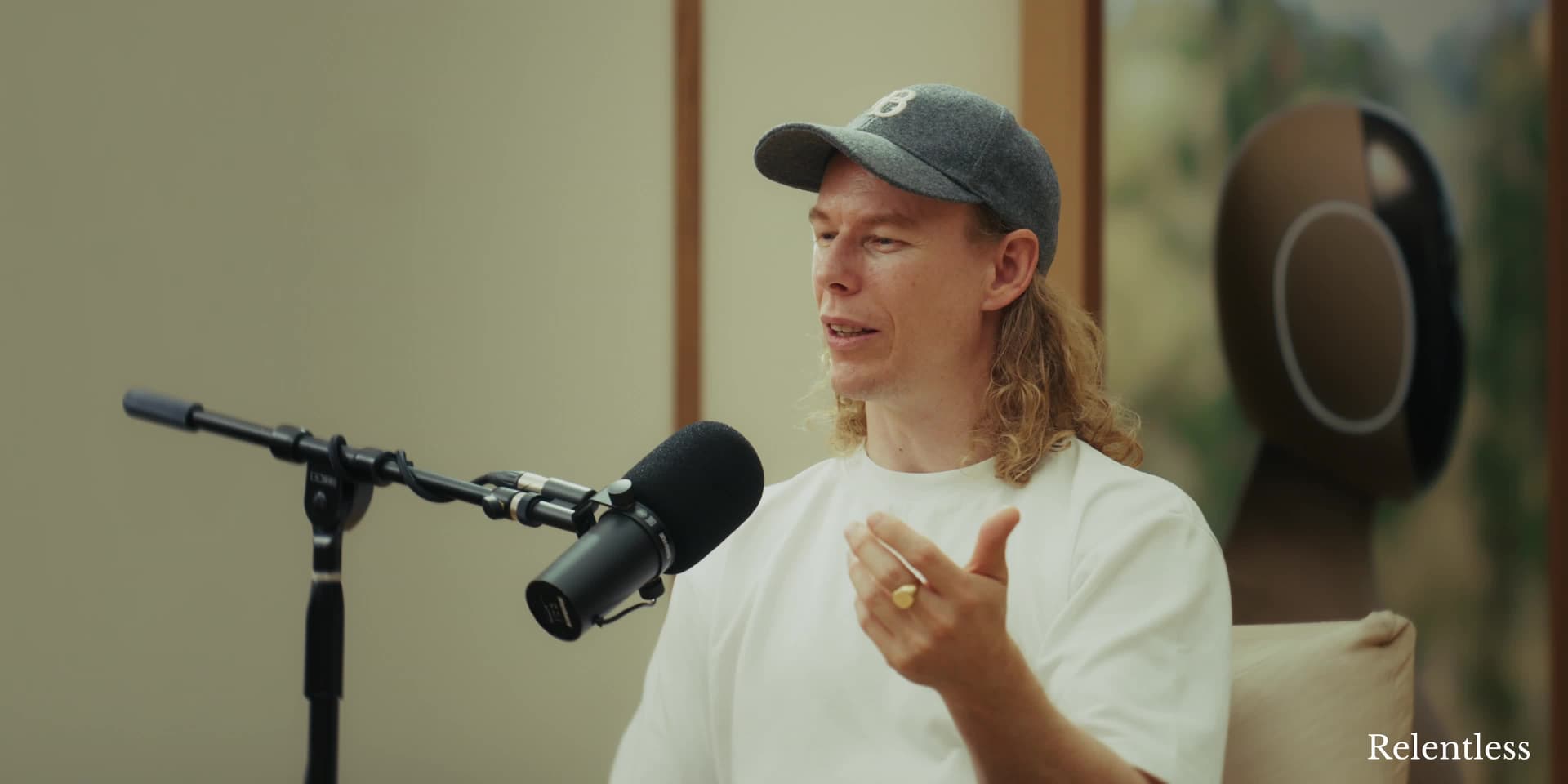
1X wants to ship 50,000 robots next year. Bernt Børnich says the harder task is making sure they do not come back.
In an interview with Ti Morse, posted on X on September 18, the 1X founder and CEO laid out how the company intends to expand production of its NEO humanoid while using deployments to improve its AI. The conversation connects two ambitions that are often discussed separately: building robots in volume and gathering the varied experience needed to make them useful.
“The real gating item here is really kind of like not just shipping 50,000 units, but ensuring that you don’t get them back,” Børnich said near the start of the interview.
Factory capacity is only the starting point
Børnich put the Hayward factory’s fully ramped annual capacity at about 10,000 units, while saying it would not produce that many this year because the line would reach full ramp late in the year. A second facility being built out in San Carlos would add 100,000 units of annual capacity, he said, with most of that volume coming online late next year.
The weekly humanoid robotics briefing
One email a week: the launches, funding and research that mattered, with context from Humanoids Daily.
Read recent issuesThat is his description of an eventual 110,000-unit annual capacity across the two sites, distinct from the 50,000-unit shipment goal. Neither figure represents current output.
The expansion builds on 1X’s previously disclosed manufacturing plans. In this interview, Børnich emphasized the quality checks that must govern the ramp: problems too rare to appear in a hundred robots can become significant in a fleet of thousands.
He also said early hardware improvements should reach existing customers, rather than only new production. That could involve remanufacturing or field service, depending on the issue.
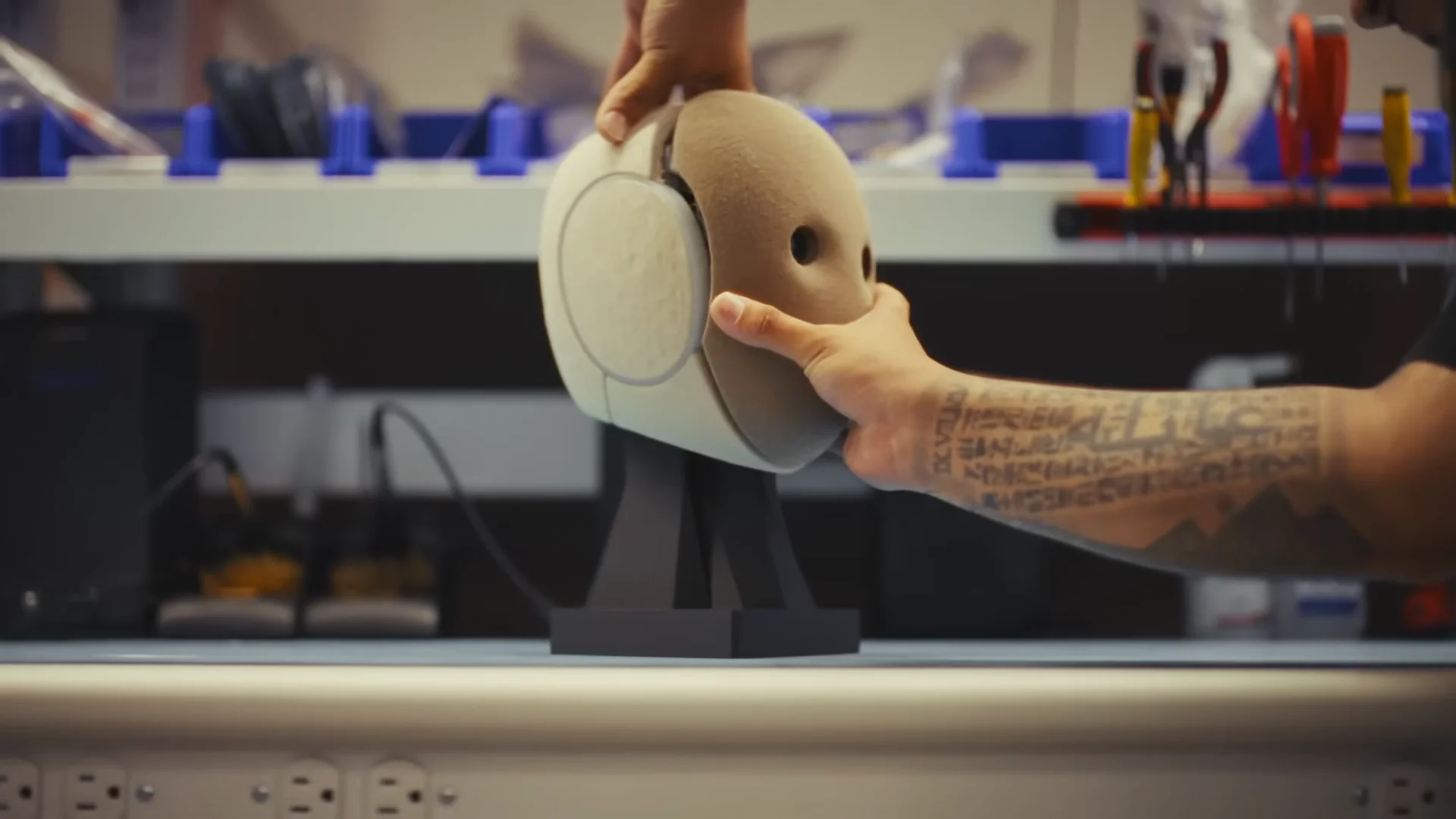
One claimed advantage is speed. Børnich said 1X can move from major changes to the robot’s computer-aided design to a new machine walking off the line in about four weeks. He attributes that turnaround to in-house manufacturing of its distinctive motors and tendon-driven mechanisms, allowing engineering changes to feed directly back into production.
Not 50,000 robots doing 50,000 different jobs
The shipment ambition should not be read as a promise to place 50,000 independently capable household assistants in homes.
Børnich described a mix of enterprise applications, home deployments and the NEO developer platform. Some volume would go into more structured settings with less variation, where a useful task and a return for the customer can be established. He did not name the enterprise customers or provide a numerical breakdown.
The developer element follows 1X’s earlier push to open NEO to outside builders. Børnich argued that outside developers would also expose robots to environments and applications that 1X could not cover alone.
He acknowledged that home deployment would be uneven and said safety remained an area of active work, with more formal evidence something the company hoped to share later in the year. The interview does not establish that broad household autonomy or a new safety certification has been achieved.
The data bottleneck is diversity
For Børnich, shipping robots serves a second purpose: creating a fleet that can learn from attempts, successes and failures in the physical world.
“In reality, you’re almost never data bound. You’re diversity bound,” he said at around 36:55. Repeating the same task generates hours, but does not necessarily supply the range of experience needed for a general-purpose model.
His proposed training mix includes internet video, simulation, synthetic data, human sensor recordings, teleoperation and robots learning through their own actions. This extends the strategy behind 1X’s World Model Lab: models intended to learn how the world changes, rather than only reproduce a narrowly demonstrated behavior.
That gives the manufacturing plan a demanding dependency. The robot needs enough capability to generate useful experience, enough safety to attempt unfamiliar actions, and enough deployed units to encounter diverse situations. The resulting data is then meant to improve the next model. Børnich presented this as the path forward, not a completed system.
Why he expects a change in 2027
Børnich also made a notable concession about the current state of the technology: collecting task-specific laundry data and training a vision-language-action model could today outperform 1X’s world model at folding.
His argument is that such specialization does not automatically extend to other activities. He expects specialized models to remain stronger in 2026, but sees 2027 bringing a shift toward more general intelligence. That is a forecast, rather than a benchmark result reported in the interview.
He was similarly dismissive of treating laundry demonstrations as proof of broad capability. While deformable clothing was historically difficult for robotics, he argued that folding has become comparatively straightforward with AI. He also said it would not be 1X’s main enterprise application.
The distinction matters for judging the rollout. A large shipment count, a convincing chore demonstration and a robot that reliably handles unfamiliar situations are different milestones. Børnich’s plan depends on progress across all three—and on early customers providing useful experience while receiving a product worth keeping.
Watch the interview:
Share this article
Read next
- Published on
- Reading time
- 6 min read
1X CEO Bernt Børnich Predicts "Hard Takeoff" in 3 Years, Details NEO Platform and Data Strategy
- Published on
- Reading time
- 4 min read
One Roof, Four Weeks: Inside 1X’s Vertical Speed Hack as NEO Ramps for 2026 Deliveries
- Published on
- Reading time
- 5 min read
1X Goes Vertical: Inside the Hayward Factory Aiming for 100,000 Humanoids
- Published on
- Reading time
- 4 min read
The Robot in the Box: 1X Teases NEO Delivery Logistics as Humanoid Production War Heats Up
- Published on
- Reading time
- 5 min read
1X Unveils 1XWM: The Video-to-Action "Brain" That Lets NEO Imagine Its Chores
- Published on
- Reading time
- 3 min read
Cozy Robotics: 1X Technologies Debuts Lifestyle "Home Collection"


The weekly humanoid robotics briefing
One email a week: the launches, funding and research that mattered, with context from Humanoids Daily.
Read recent issues