- Published on
AGIBOT Has Built 20,000 Robots—Twice Its March Total
One tap, and our reporting appears more often in your Google Top Stories. It makes a real difference to a small newsroom.

Supported by RoboStrategySupport for Humanoids Daily comes from RoboStrategy
Sponsored
Investing involves risk, including possible loss of principal. Read the prospectus before investing.
- AGIBOT says its 20,000th robot has rolled off the production line, doubling its reported cumulative output since March 2026.
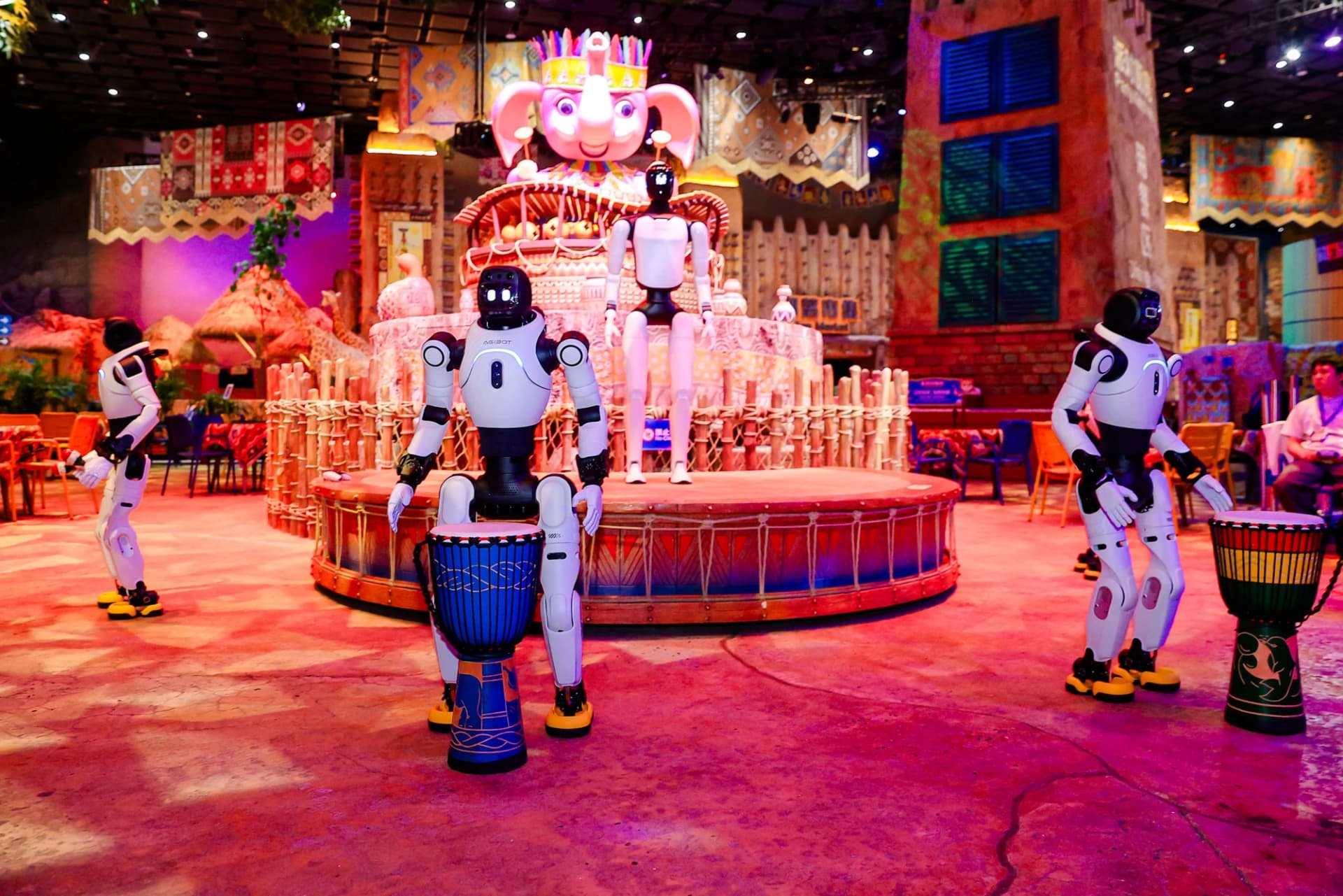
- The milestone machine, identified in Chinese reporting as an A3 Ultra, was delivered to Chimelong alongside the launch of a park deployment involving more than 300 robots.
- AGIBOT’s graphic lists 5,638 A-Series, 8,757 X-Series and 5,605 G-Series robots. These are cumulative production figures, not verified counts of sales or active deployments.
AGIBOT says it has manufactured 20,000 robots, doubling its cumulative total in roughly six months. The Shanghai company announced the milestone on September 24, adding another 5,000 units since its June production update.
In its announcement on X, AGIBOT presented the step from 15,000 to 20,000 as evidence of a shift from demonstrating robot capabilities toward deploying them at scale. The production count is company-reported; it does not by itself establish how many machines have been sold, commissioned or put into regular commercial service.
The 20,000th machine was delivered to Chimelong, according to AGIBOT’s announcement of the companies’ tourism partnership. Chinese reporting carried by Sina, citing Wenhui Daily, identifies it as an A3 Ultra.
From 5,000 to 20,000
The latest announcement extends a sequence of manufacturing checkpoints that we have followed since AGIBOT disclosed its first 5,000 units.
The weekly humanoid robotics briefing
One email a week: the launches, funding and research that mattered, with context from Humanoids Daily.
Read recent issues| Reported milestone | Announcement period |
|---|---|
| 5,000 robots | December 2025 |
| 10,000 robots | March 2026 |
| 15,000 robots | June 2026 |
| 20,000 robots | September 2026 |
AGIBOT’s March 30 announcement put cumulative production at 10,000 units. Its June 28 update raised that figure to 15,000 and identified the milestone machine as a G2 industrial task robot.
Taken together, those checkpoints indicate additions of roughly 5,000 robots per quarter through the latest three intervals. That is evidence of sustained output at a much larger scale than the company’s early production, rather than proof that its manufacturing rate is accelerating with every milestone.
The distinction is useful: doubling the cumulative total from 10,000 to 20,000 does not mean the factory’s production speed doubled. Nor does the interval average reveal daily output, factory capacity or the mix of models built during each period.
A mixed fleet, not 20,000 identical humanoids
The graphic accompanying AGIBOT’s announcement breaks the 20,000 units down by product series:
| Product series | Models listed | Cumulative units | Share of total |
|---|---|---|---|
| A-Series | A1 / A2 / A3 | 5,638 | 28.2% |
| X-Series | X1 / X2 | 8,757 | 43.8% |
| G-Series | G1 / G2 | 5,605 | 28.0% |
| Total | 20,000 | 100% |
Percentages are calculated from the company’s figures and rounded to one decimal place. The X-Series accounts for the largest share, while the G-Series represents more than a quarter of the total. The figures combine bipedal humanoids with wheeled task-oriented platforms; they are not 20,000 units of the A3 Ultra delivered at Chimelong.
At the earlier 5,000-unit milestone, AGIBOT reported 1,742 A-Series, 1,846 X-Series and 1,412 G-Series machines. Comparing the two disclosures, the X-Series accounts for 6,911 of the 15,000 additional units—about 46% of the increase, assuming consistent series classifications.
The graphic provides totals by series, rather than separate counts for each individual model. It also does not establish sales or active deployments. Comparisons with another manufacturer’s annual bipedal shipments still require matching both the scope and the reporting period.
Producing this range repeatedly requires component supply, assembly, testing and service support as well as robot design. The current breakdown makes AGIBOT’s approach clearer: its manufacturing scale comes from several product families serving different applications.
A named destination for robot number 20,000
The delivery to Chimelong gives the milestone a specific customer setting. As we reported in our coverage of the theme-park project, the partners announced more than 300 robots across entertainment, education, visitor services and hotel operations at Chimelong Spaceship Park in Zhuhai.
They also announced a joint research institute intended to develop further tourism applications. Those plans provide context for where part of AGIBOT’s output is going, although the park project represents only a fraction of the cumulative production total.
For the wider fleet, the next useful measures are customer acceptance, operating hours, maintenance costs and the amount of human assistance required. A production milestone cannot answer those questions, but it makes them more consequential: supporting thousands of machines is a different operational challenge from maintaining a small demonstration fleet.
AGIBOT’s latest number is therefore a manufacturing story in its own right. Its disclosed output has reached four times the 5,000-unit checkpoint announced in December, with the most recent milestones pointing to a sustained production pace. How much useful work that growing fleet delivers remains the next part of the story.
Share this article
Read next
- Published on
- Reading time
- 4 min read
AGIBOT Brings 300-Plus Robots to Chimelong Theme Park
- Published on
- Reading time
- 3 min read
AGIBOT Says A3 Ultra Is Going to Work in Hotels, Shops and Metro Inspection
- Published on
- Reading time
- 7 min read
AGIBOT Open-Sources GE-Act 2.0, Challenging Unitree in the Open Embodied AI Race
- Published on
- Reading time
- 5 min read
AGIBOT Deepens European Push at IFA 2026 with TÜV Rheinland Certification and Tekpoint Retail Alliance
- Published on
- Reading time
- 5 min read
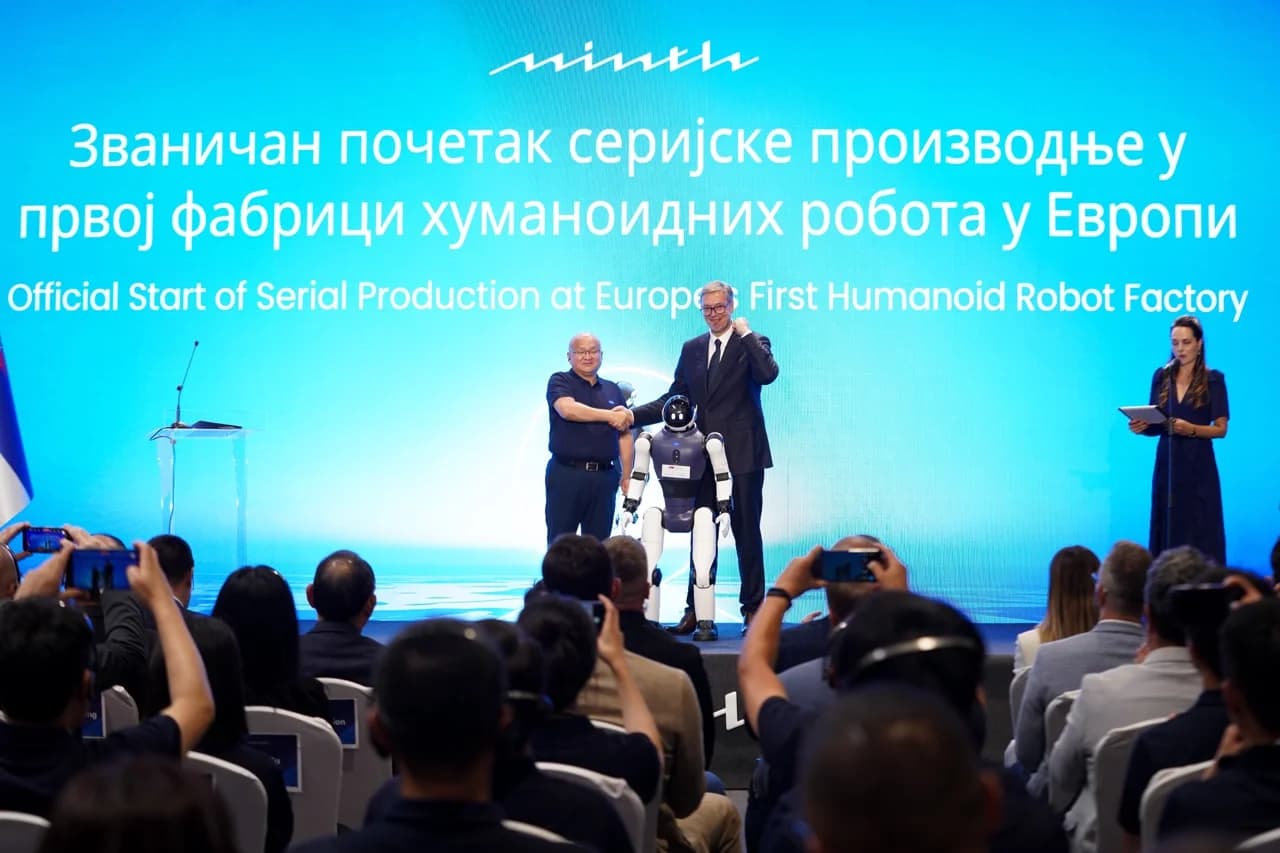
Minth Group and AGIBOT Launch Europe’s First Humanoid Mass Production Line in Serbia
- Published on
- Reading time
- 4 min read
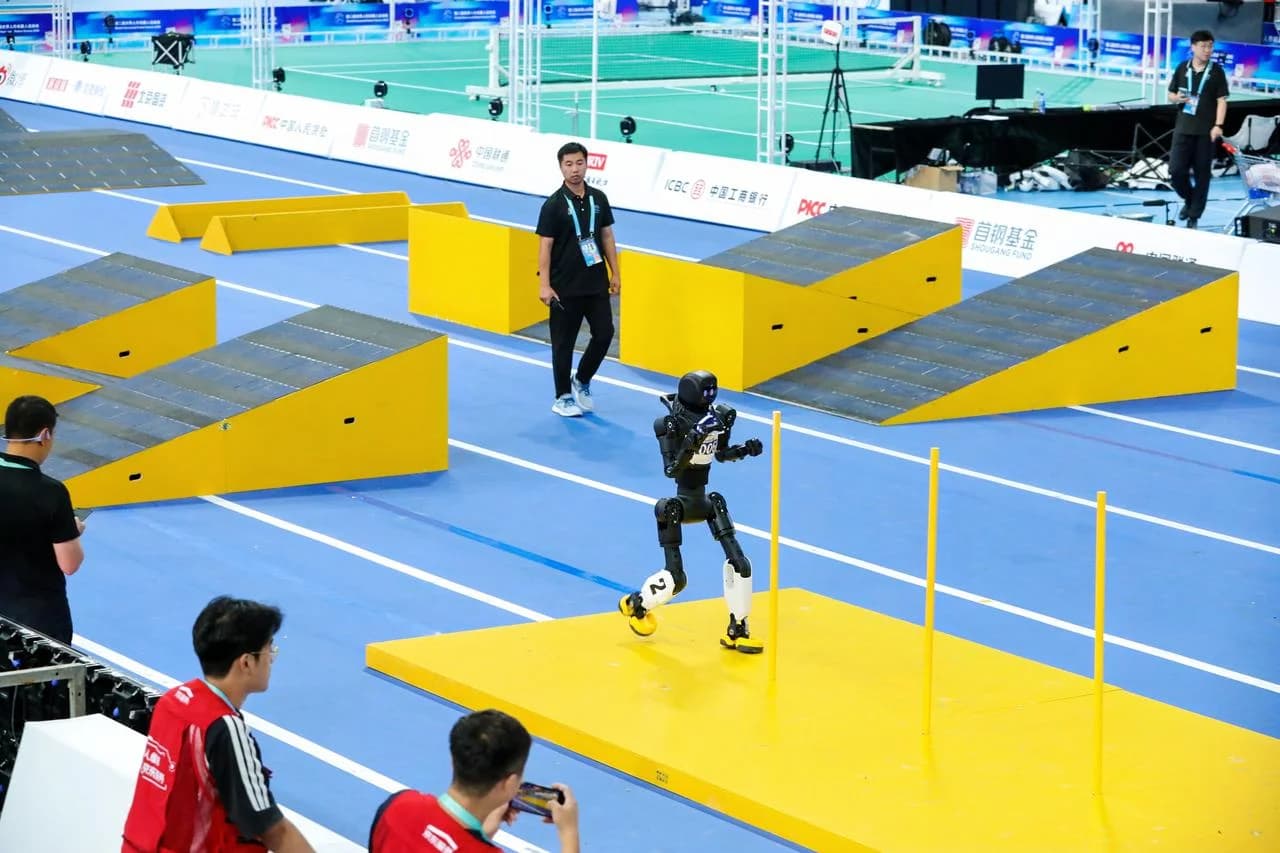
AGIBOT Tops Medal Table at 2nd World Humanoid Robot Games as Beijing Showdown Concludes

The weekly humanoid robotics briefing
One email a week: the launches, funding and research that mattered, with context from Humanoids Daily.
Read recent issues