- Published on
Asimov Releases Python SDK, Announces Open-Source Edge Control Layer
One tap, and our reporting appears more often in your Google Top Stories. It makes a real difference to a small newsroom.


Your guide
Rich Robinson
Jee Chee Ren · Executive tour
See China’s AI and robotics ecosystem first-hand.
Six days exploring AI, robotics and advanced manufacturing.
With Rich Robinson, Clinical Professor of Entrepreneurship at Peking University
Beijing · Guangzhou · Shenzhen
29 November–4 December 2026
Referral partnership · We earn a commission on referred bookings.
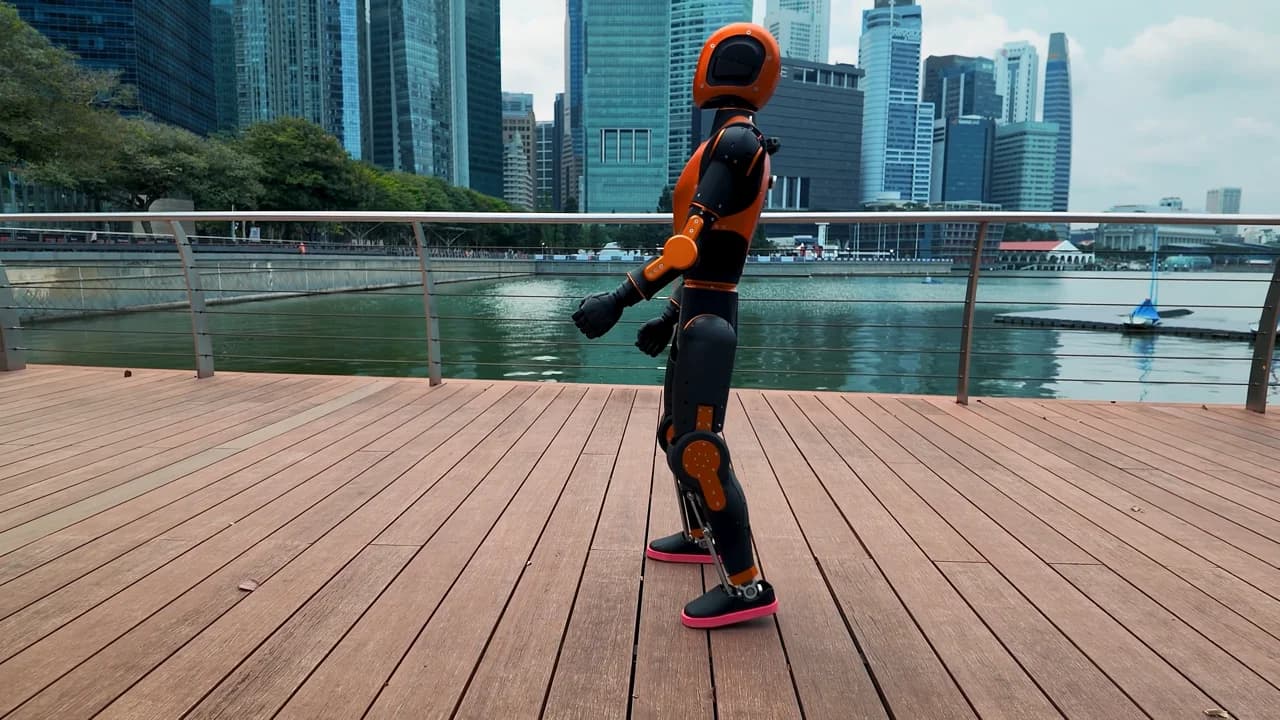
- Asimov has released a Python SDK for its Asimov 1 humanoid, supporting walking commands, direct joint control and access to the robot’s camera and audio.
- The team also announced it is open-sourcing Asimov Edge, the software that manages competing control sources and forwards commands to firmware.
- The SDK is publicly available under Apache 2.0. We could not locate the announced Edge source at the time of review.
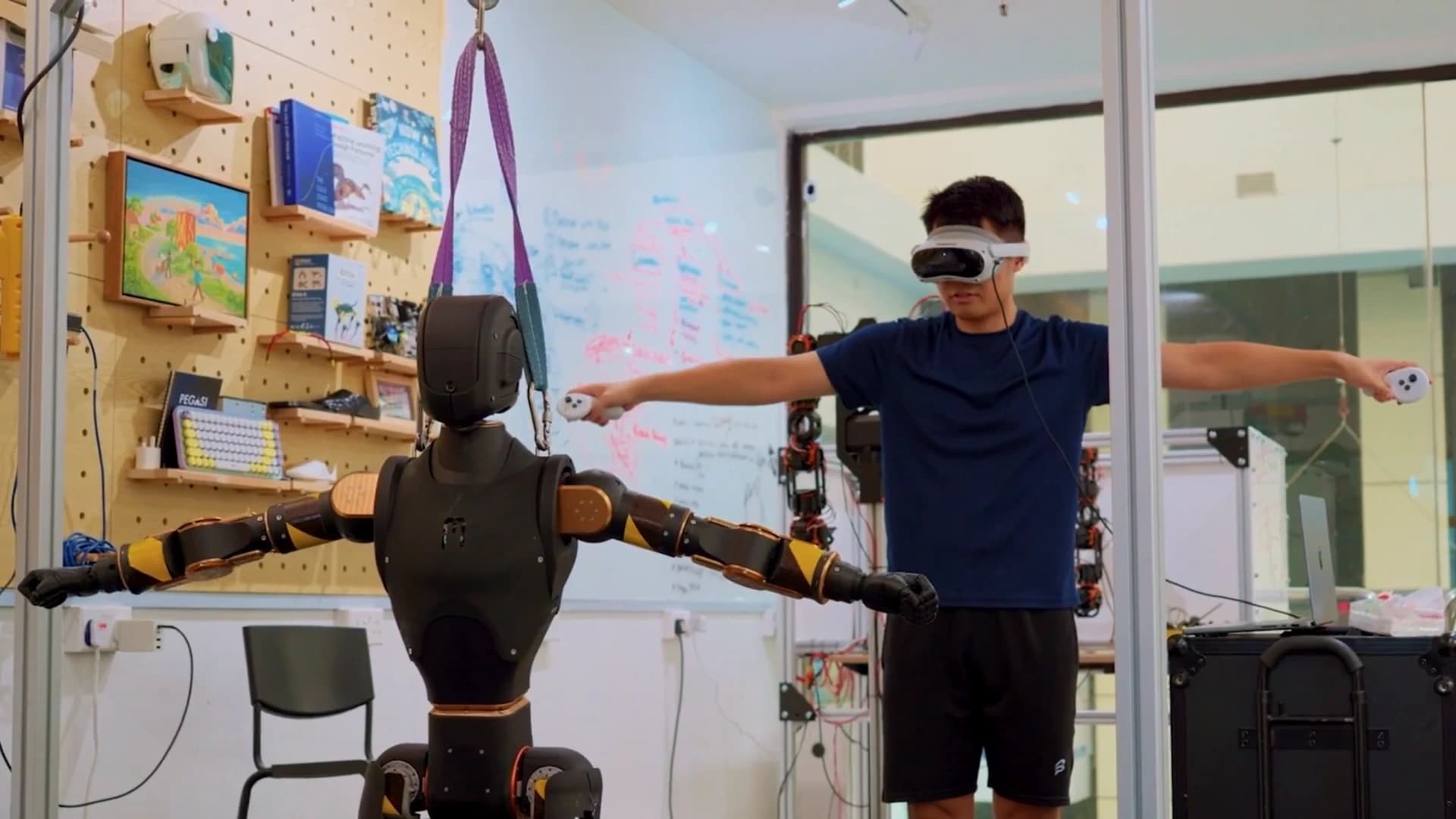
Asimov is opening another part of its humanoid development stack: the software developers use to command the robot, connect applications and switch between human and automated control.
In a new video announcement, the Menlo Research team introduced its open-source SDK for Asimov 1 and said it is also open-sourcing Asimov Edge. The update follows the project’s earlier hardware releases and the locomotion training code we covered in September.
From Python scripts to robot movement
Published as Menlo SDK, the Python package gives developers high-level walking commands alongside direct joint control and robot-state feedback. It also provides access to the camera, microphone and speaker. The repository requires Python 3.12 or newer and carries an Apache 2.0 license.
The team describes two communication paths: LiveKit for connecting over the internet, including remote teleoperation, and a native UDP interface recommended for local applications where avoiding extra network hops matters.
The weekly humanoid robotics briefing
One email a week: the launches, funding and research that mattered, with context from Humanoids Daily.
Read recent issuesThe accompanying video presents three examples: preprogrammed upper-body movements, upper-body teleoperation using a Pico VR headset, and running a locomotion policy through the SDK. In the latter workflow, robot-state information feeds the policy, whose output becomes joint commands sent back to the machine. The team says inference can run on a laptop or onboard the robot’s Pi.
The release also includes documentation for coding agents, intended to help them write scripts using the SDK, plus a documented wire protocol for developers who want to build their own clients.
Deciding who has control
Edge handles a different problem: several applications or operators may want to control the same robot.
In the video, team member Raghav Bhardwaj describes Edge as an arbiter between sources such as SDK applications and human teleoperation. It manages their connections and priorities before forwarding commands to firmware. One example is allowing a human operator to take over when an automated application is heading toward a collision; another is managing what happens when an application finishes its task.
Opening that software would let developers add control sources and modify how priority is assigned. The current documentation says the Cockpit and a paired gamepad outrank the SDK. It also explicitly notes that the SDK is not an emergency stop. The announced arbitration features should therefore be understood as part of the control architecture, rather than a guarantee of safe autonomous operation.
We verified the public SDK repository, but could not locate Edge’s source in Menlo Research’s public repository list or the main Asimov 1 repository at the time of review. Its open-source release remains an announcement we have not independently confirmed in code.
For builders following the project from DIY kit shipments through locomotion training, the SDK adds a practical way to connect those pieces: writing applications that read the robot’s state and direct its movements. Edge’s proposed release would extend that access to the rules governing which application gets to control it.
Share this article
Read next
- Published on
- Reading time
- 4 min read
Asimov Open-Sources the Training Code Behind Its Humanoid’s Walk
- Published on
- Reading time
- 4 min read
Asimov 1 DIY Humanoid Kits Begin Shipping as Team Details Final Costs
- Published on
- Reading time
- 4 min read
Menlo Research Open-Sources Asimov v1, Releasing CAD and Simulation Files for "The Rest of Us"
- Published on
- Reading time
- 4 min read
Beyond the Kit: Asimov Details the 100-Hour Path to a Walking Humanoid
- Published on
- Reading time
- 4 min read
Asimov Launches $15,000 "Here Be Dragons" DIY Humanoid Kit
- Published on
- Reading time
- 2 min read
RoboParty Unveils RP1 Humanoid at IROS, Plans Broader Open-Source Release in Q4


The weekly humanoid robotics briefing
One email a week: the launches, funding and research that mattered, with context from Humanoids Daily.
Read recent issues