- Published on
Asimov Open-Sources the Training Code Behind Its Humanoid’s Walk
One tap, and our reporting appears more often in your Google Top Stories. It makes a real difference to a small newsroom.

Supported by RoboStrategySupport for Humanoids Daily comes from RoboStrategy
Sponsored
Investing involves risk, including possible loss of principal. Read the prospectus before investing.
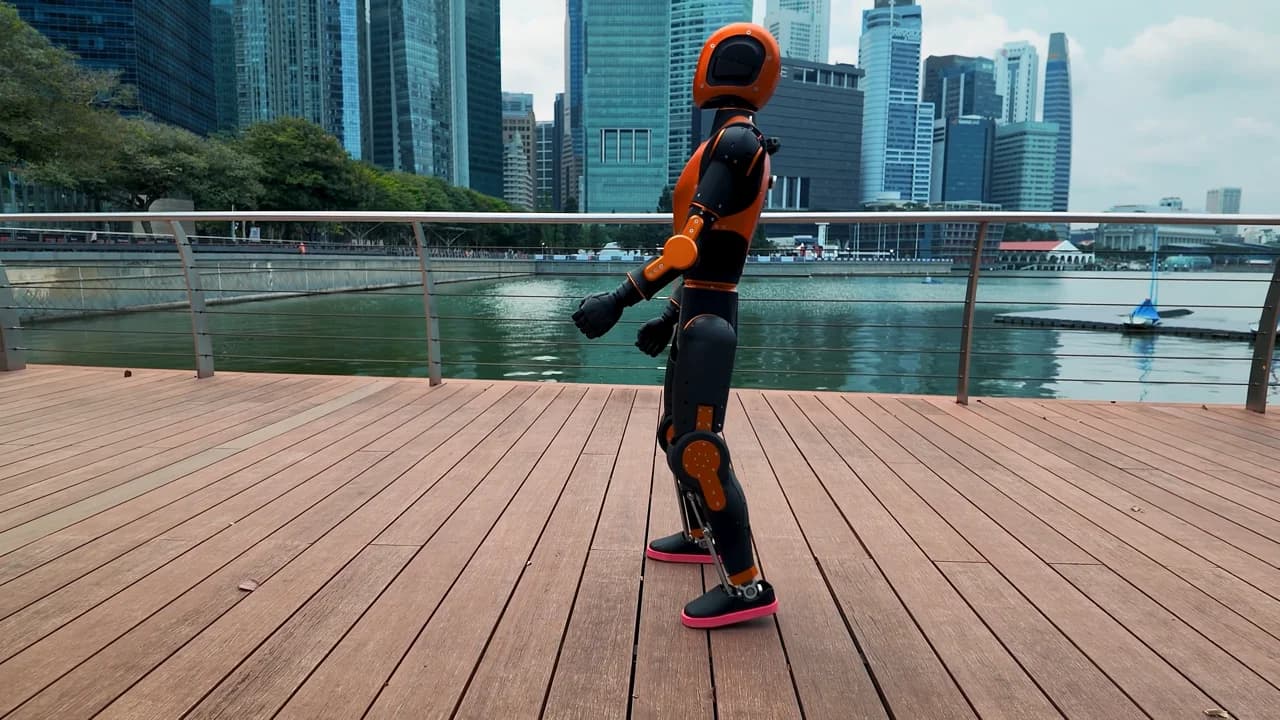
- Asimov has announced an open-source release of its Asimov 1 locomotion policy and training code, extending the project’s earlier hardware and simulation releases.
- The public repository contains an Isaac Lab training framework, reward definitions, actuator settings and simulated variations intended to help controllers cope with real hardware.
- The announcement also names a trained policy checkpoint, although we could not locate a downloadable checkpoint in the linked training repository or its GitHub releases at the time of review.
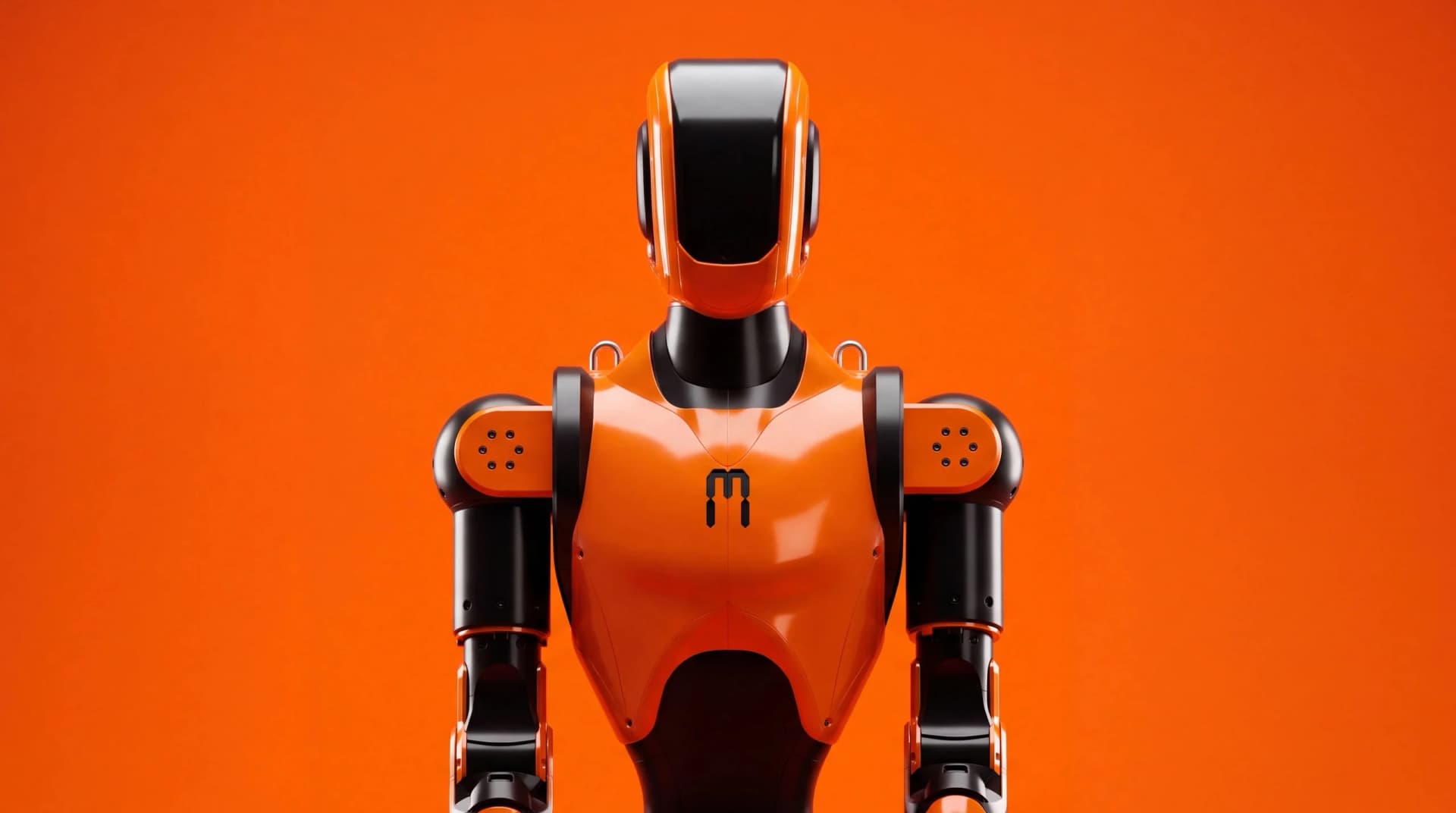
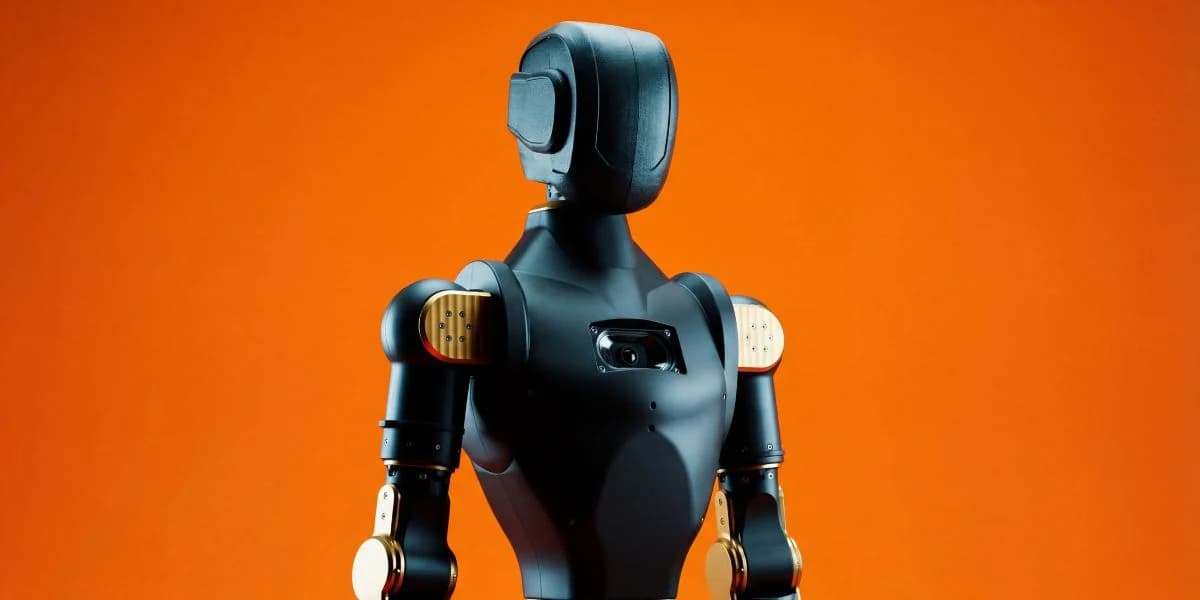
Asimov is opening up the software that teaches its humanoid to walk, giving developers a way to inspect and modify the training process behind the robot’s movements.
In a September 25 announcement, the Menlo Research project said it was releasing Asimov 1’s locomotion policy and the code used to train it. The team described the package as a starting point for adapting the controller to hardware changes, exploring different walking styles and developing further capabilities.
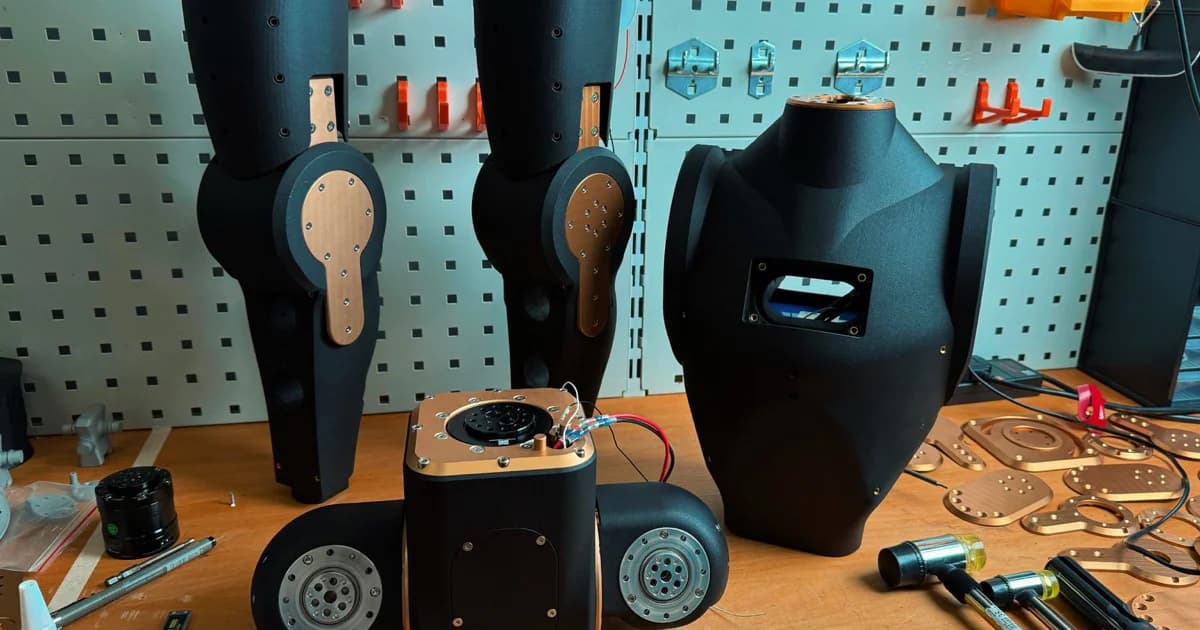
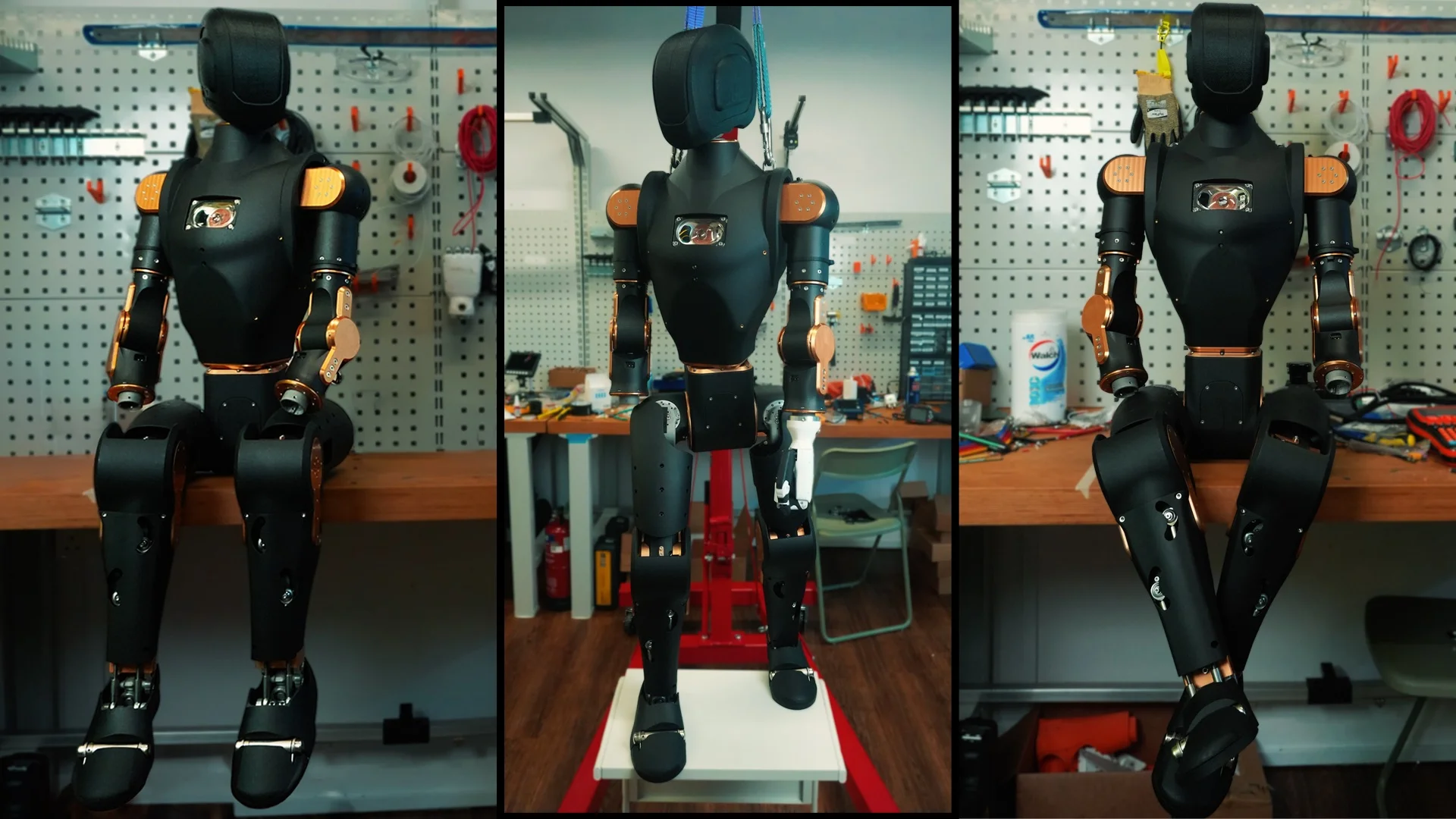
The release follows Asimov’s earlier publication of CAD and simulation files and the start of its DIY humanoid kit shipments. It adds a training framework to a project already inviting builders to assemble and modify the physical machine.
Opening the training process
The isaac_asimov repository provides training and evaluation code built on NVIDIA’s Isaac Lab simulation framework. It supports reinforcement learning with PPO, alongside a recommended configuration using adversarial motion priors, or AMP, to encourage movement resembling reference examples.
The weekly humanoid robotics briefing
One email a week: the launches, funding and research that mattered, with context from Humanoids Daily.
Read recent issuesIn plain terms, a locomotion policy translates information about the robot’s state and a requested movement into joint commands. Training that controller requires defining what good movement looks like, what mistakes to penalize and how closely the simulated machine resembles the real one.
The published environment configuration exposes those choices. Rewards encourage following commanded speeds and staying upright, while penalties address behaviors including foot slipping, abrupt changes in actions and self-collisions.
The simulation also varies foot friction, joint starting positions and actuator gains, and introduces disturbances and noisy observations. These settings are intended to make the learned behavior less dependent on a single idealized simulation. Their presence is useful for developers examining the simulation-to-hardware gap, although it does not itself measure real-world reliability.
Hardware details developers can change
The robot configuration sets joint-specific parameters including torque limits, stiffness, damping, friction and actuator delay. That gives builders a place to adjust the simulated response when the physical robot changes.
The AMP configuration also points to a bundled walking-motion reference file. That reference data helps shape training; it should not be confused with a trained controller ready to run on the robot.
Asimov’s announcement explicitly says a trained policy checkpoint is included in the release. However, our inspection of the linked repository and its GitHub releases did not locate a downloadable checkpoint. The README explains how to load a checkpoint generated by training and export a policy, but does not identify a download for the announced pretrained weights. Developers seeking an immediate baseline should check with the project for that asset.
A development platform, not a finished walking appliance
The documentation provides single- and multi-GPU training instructions and lists testing on NVIDIA A6000, RTX PRO 6000, RTX 4090 and RTX 3090 hardware. The repository carries a BSD-3-Clause license.
The team also plans community livestreams to test developer-contributed policies on a physical Asimov 1. Those are proposed sessions, rather than completed independent validation of the release.
For builders, this complements the mechanical work described in our coverage of Asimov’s estimated 50–100-hour assembly process. Assembling the robot, training a controller and validating it on hardware remain separate steps. We inspected the published code and documentation but did not run training or test a physical robot.
The practical value is the ability to change the ingredients of locomotion training instead of treating walking as an inaccessible vendor feature. How consistently that process transfers across independently built Asimov robots will be an important test as more developers use it.
Share this article
Read next
- Published on
- Reading time
- 4 min read
Asimov 1 DIY Humanoid Kits Begin Shipping as Team Details Final Costs
- Published on
- Reading time
- 4 min read
Menlo Research Open-Sources Asimov v1, Releasing CAD and Simulation Files for "The Rest of Us"
- Published on
- Reading time
- 4 min read
Beyond the Kit: Asimov Details the 100-Hour Path to a Walking Humanoid
- Published on
- Reading time
- 4 min read
Asimov Launches $15,000 "Here Be Dragons" DIY Humanoid Kit
- Published on
- Reading time
- 4 min read
1X Reveals the RL Core That Gives Its NEO Humanoid Fluid, Whole-Body Mobility
- Published on
- Reading time
- 7 min read
AGIBOT Open-Sources GE-Act 2.0, Challenging Unitree in the Open Embodied AI Race


The weekly humanoid robotics briefing
One email a week: the launches, funding and research that mattered, with context from Humanoids Daily.
Read recent issues