- Published on
Brawlers or Builders? EngineAI’s T800 Navigates the Split Between Factory Work and Combat Sports
One tap, and our reporting appears more often in your Google Top Stories. It makes a real difference to a small newsroom.


- EngineAI released a new, highly directed video showcasing its T800 humanoid robots performing tasks at a Luxshare-ICT factory in Suzhou.
- The polished manufacturing demonstration contrasts sharply with the T800's violent US debut this past weekend at REK2, a live-streamed humanoid fighting event in San Francisco.
- This dichotomy highlights EngineAI's dual-track strategy, utilizing extreme combat sports to stress-test hardware destined for industrial use.
- Despite the factory video's persistent "On-site shot" disclaimers—a likely response to past CGI controversies—the edited footage leaves questions about the robot's unscripted autonomy.
The humanoid robotics industry is currently navigating an identity crisis, and no company embodies this split more vividly than EngineAI. Over the past few days, the Shenzhen-based startup has presented two radically different visions of its flagship T800 robot: one as a meticulously controlled factory worker, and the other as a brawling gladiator in a San Francisco office.
On Tuesday, EngineAI released a new promotional video titled "EngineAI T800 Deployed at Luxshare-ICT Factory." The footage, set in a brightly lit manufacturing facility in Suzhou, depicts a fleet of T800 humanoids seamlessly performing industrial tasks. Text overlays emphasize a highly automated workflow, describing capabilities such as "Work Orders Issued by MES Autonomous Executed by Robots," "Vision Recognition for Identification of Material Type and Quantity," and "Dual-Arm Coordination Enables Precise Material Picking & Placing."
The choice of location is significant. Luxshare-ICT is a massive electronics manufacturer and Apple supplier that recently co-led EngineAI's $200 million Series B funding round. By showcasing the T800 in a Luxshare facility, EngineAI is signaling its intent to bridge the gap between viral prototyping and mass industrial deployment.
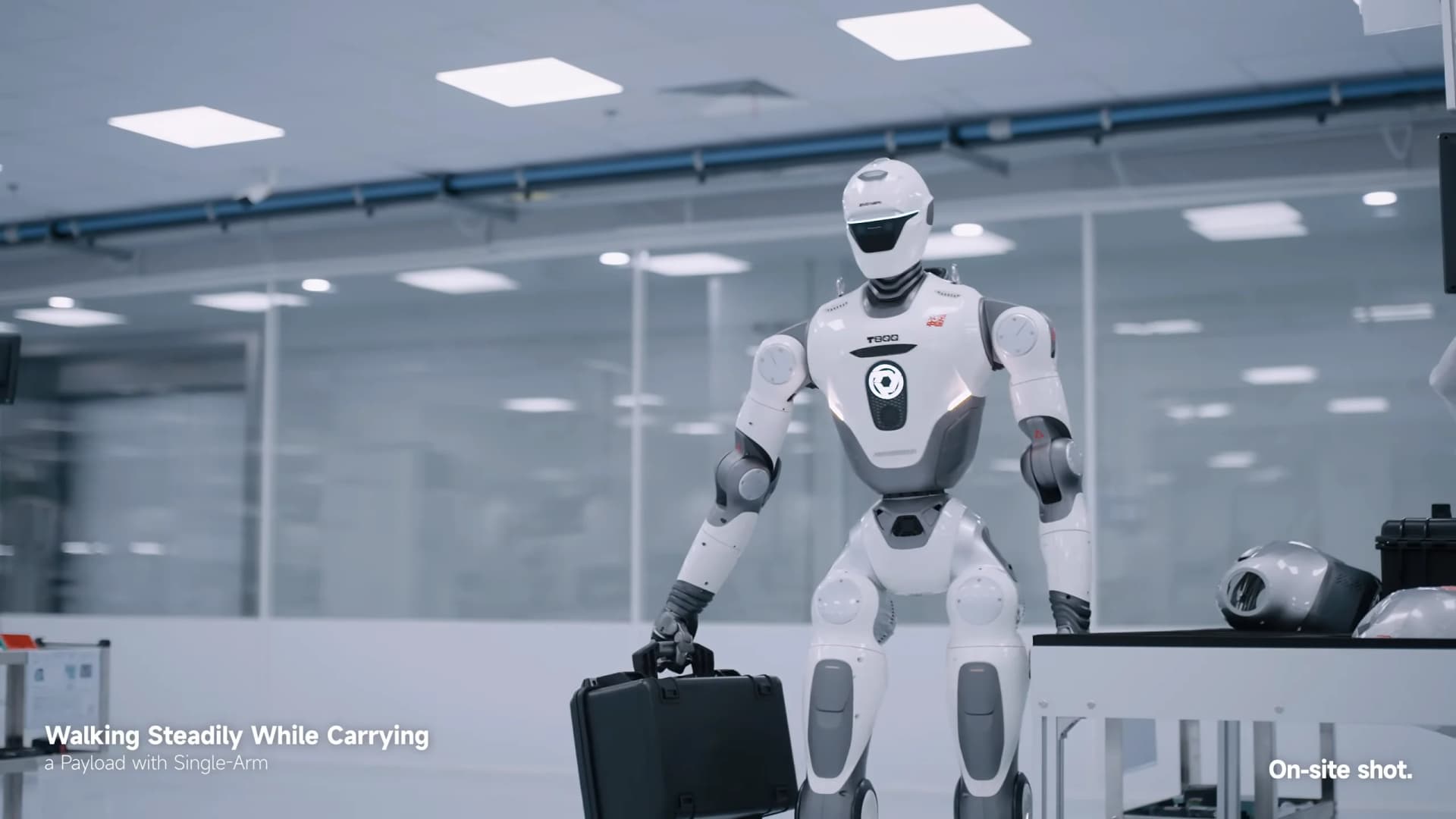
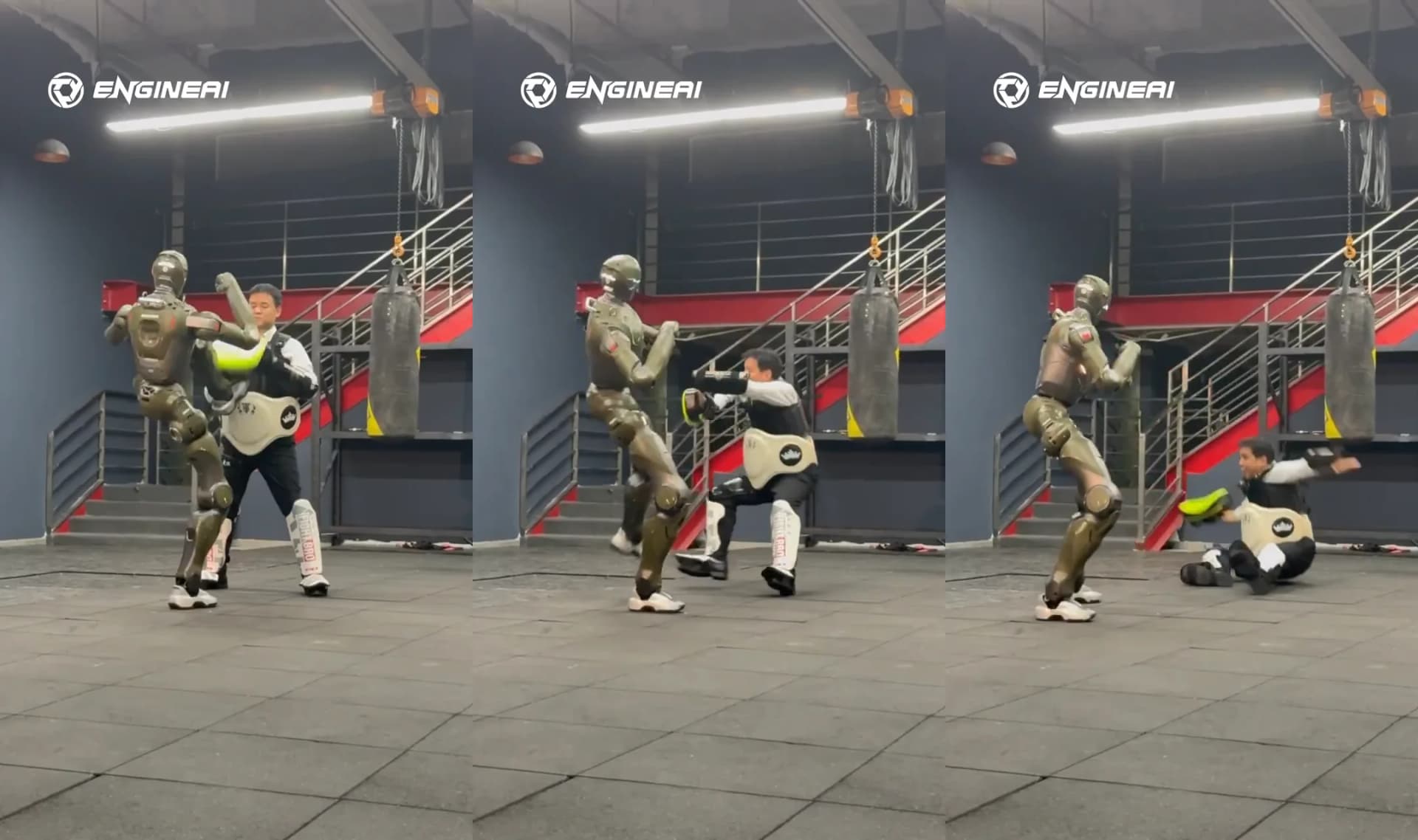
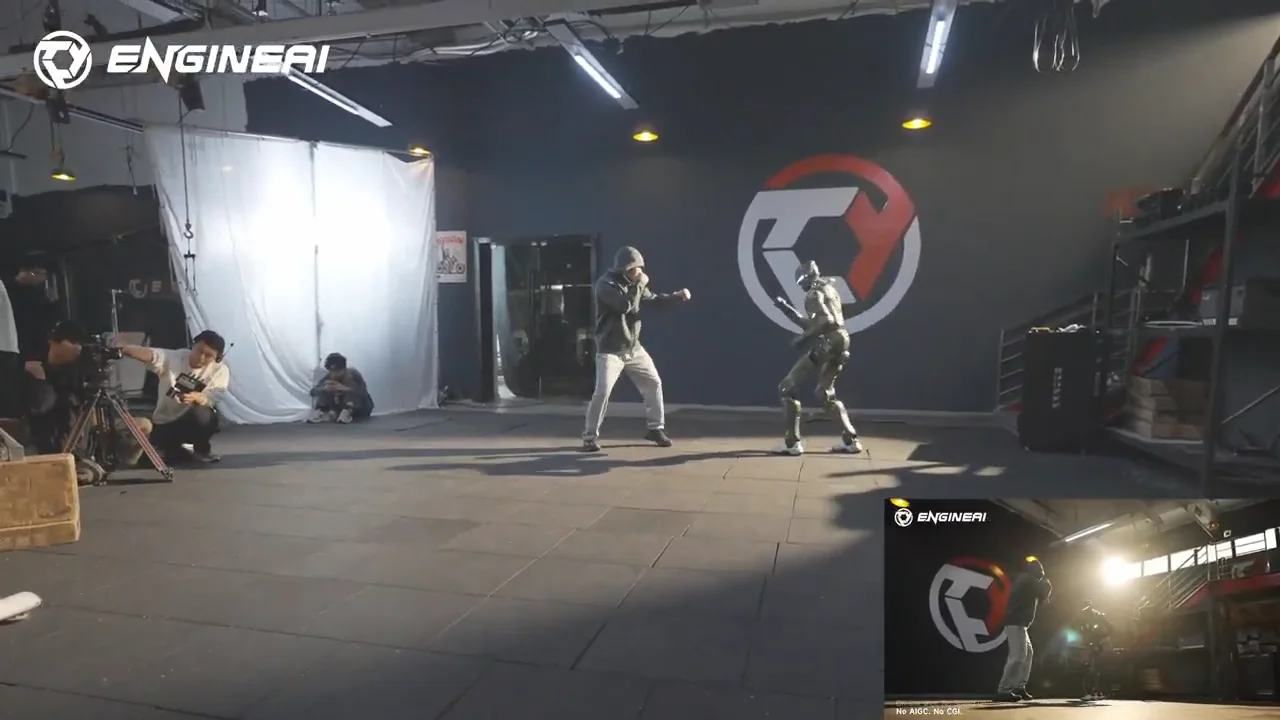
However, the video is visibly highly directed and stylized. Throughout the footage, a prominent "On-site shot" text overlay persists. This defensive posturing is familiar territory for EngineAI, which previously had to release behind-the-scenes footage to convince skeptics that its dynamic movement demonstrations were not the product of CGI. While the Luxshare video highlights impressive feats like "Dynamic Obstacle Avoidance for Safe Rerouting" and "Full-Body Motion Control for Stable Container Placement," its edited nature makes it difficult to assess the T800's true unscripted autonomy.
The weekly humanoid robotics briefing
One email a week: the launches, funding and research that mattered, with context from Humanoids Daily.
Read recent issuesThe San Francisco Brawl
The sterile, cooperative environment of the Luxshare factory stands in sharp contrast to where the T800 spent its weekend. On August 15, the T800 made its physical US debut not on a warehouse floor, but in a fighting ring.
The robot was the featured platform for REK2, a live-streamed combat event held in San Francisco by the Robot Embodied Kombat (REK) league. Billed by REK founder Cix Liv as "the first 6 foot tall Humanoid fight in the West," the event pitted human-piloted T800s against each other in a brawl streamed on X. The tournament was ultimately won by Japanese pilot @OsoneHiroyuki.
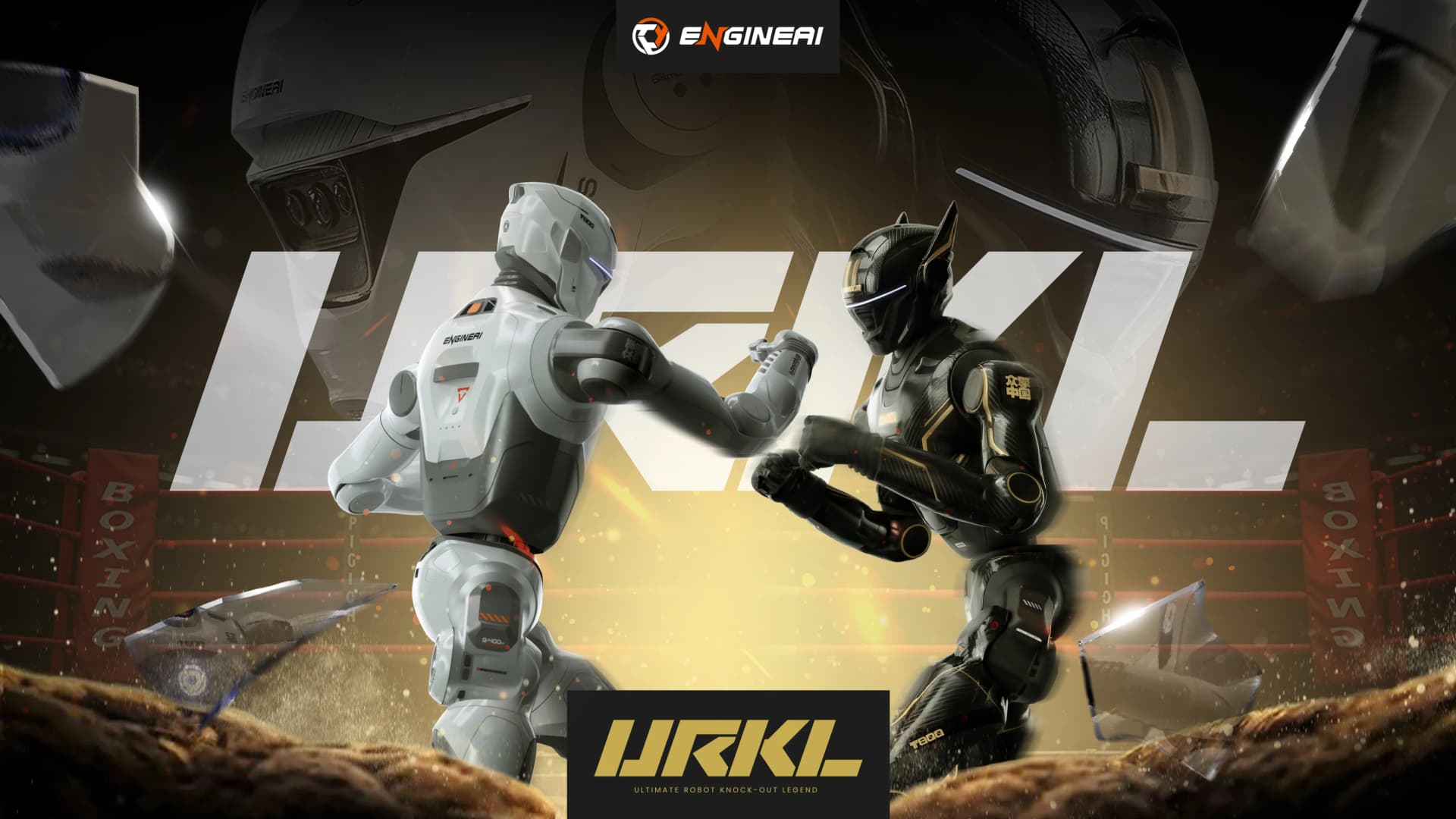
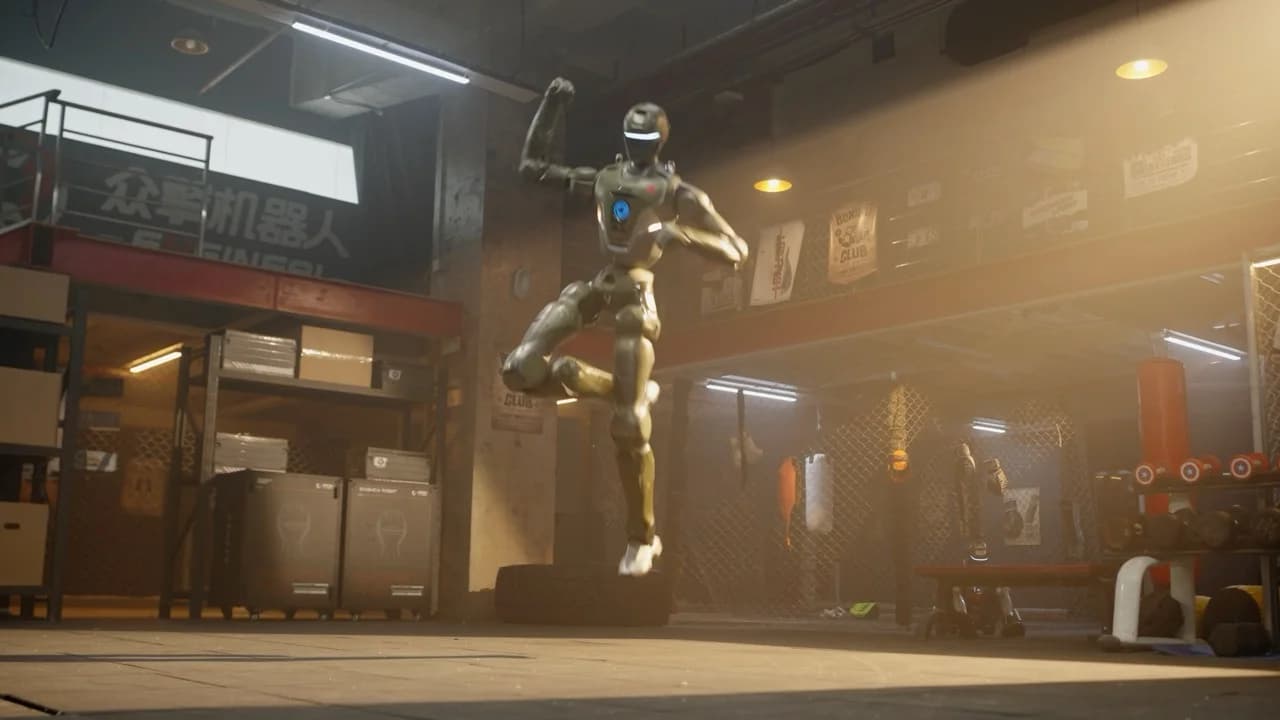
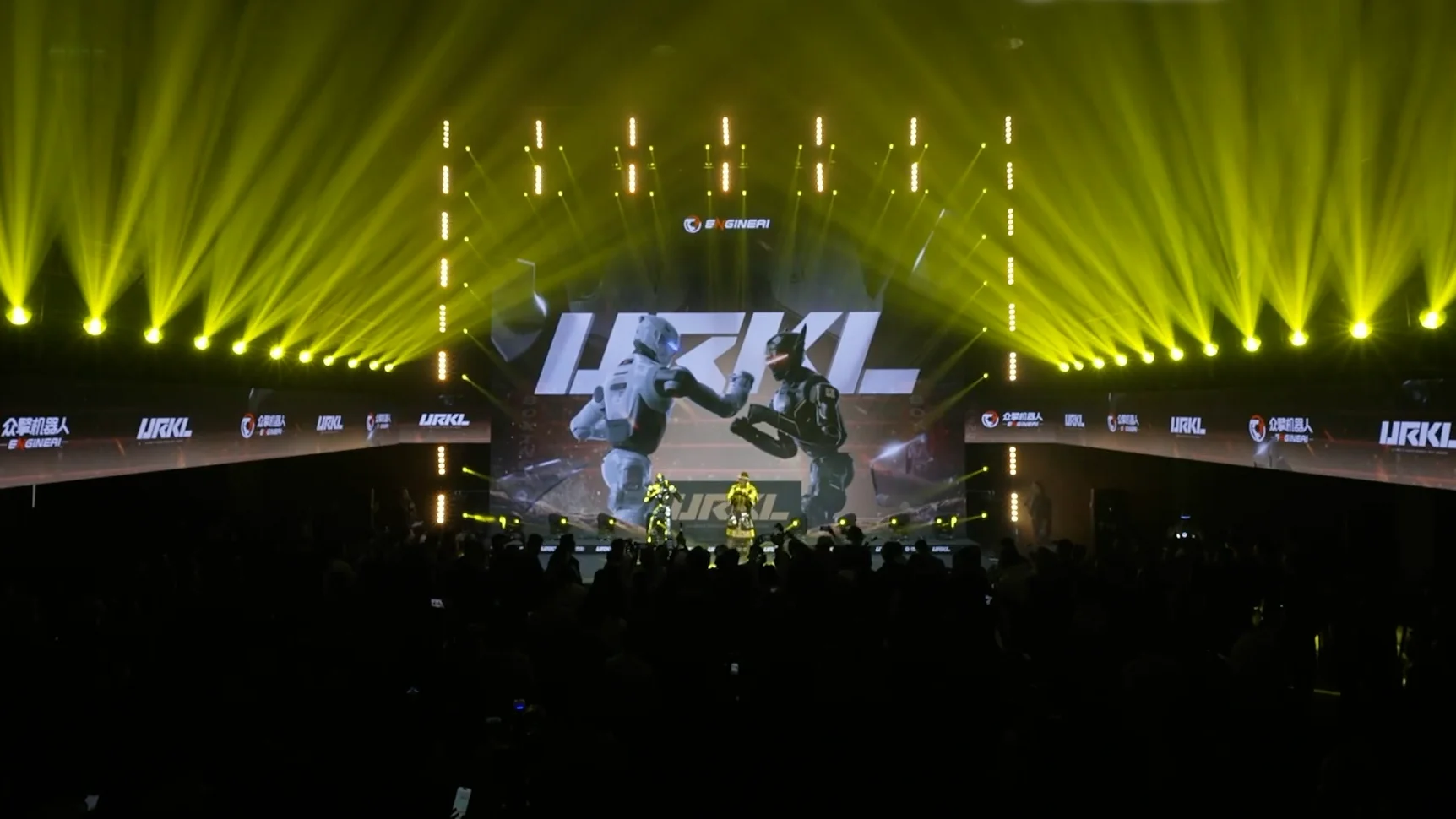
EngineAI’s participation in an underground-style fighting league aligns with the menacing, sci-fi aesthetic the company has cultivated since its inception. The startup has heavily leaned into the "action movie star" branding for the T800 and is even organizing its own global fighting league, URKL, which boasts a $1.45 million gold belt for the champion.
Two Sides of the Same Coin
While brawling and box-moving appear fundamentally opposed, they are two halves of EngineAI’s commercial strategy. The company has explicitly stated that the extreme physical demands of combat sports—which test the limits of joint torque, structural resilience, and dynamic balance—serve as a high-stakes proving ground. The 450 N·m joint torque required to deliver a flying kick is the same mechanical strength needed to steadily carry a heavy payload with a single arm, as demonstrated in the Luxshare video.
By undercutting the market with a $25,000 starting price for the T800, EngineAI is aggressively pushing for scale. The company claims to be scaling toward a "ten-thousand-level" delivery capacity. To get there, it is leveraging the viral spectacle of robotic violence to generate interest, while pointing to partnerships with manufacturing titans like Luxshare to assure investors that the machine can eventually do the work.
As the humanoid sector transitions from R&D to commercial reality, EngineAI's dual narrative will likely continue. The question remains whether the T800's underlying software can reliably pivot from the scripted sequences of a promotional video to the unscripted chaos of a real-world factory floor.
Share this article
Read next
- Published on
- Reading time
- 3 min read
Arena Ready: EngineAI Slates URKL Debut Following CES Launch and State Endorsement
- Published on
- Reading time
- 3 min read
EngineAI Secures $200 Million Series B as Manufacturing Giant Luxshare Joins the Cap Table
- Published on
- Reading time
- 4 min read
EngineAI Details URKL League: A $1.4 Million Gold Belt and the Future of Bipedal Brawling
- Published on
- Reading time
- 4 min read
EngineAI CEO Takes a Kick from T800 Robot to Settle CGI Debates
- Published on
- Reading time
- 4 min read
EngineAI T800 Pre-Orders Go Live at $25,000, Undercutting Competitors in a Heating Price War
- Published on
- Reading time
- 4 min read
EngineAI Releases Behind-the-Scenes Footage to Quell CGI Rumors

The weekly humanoid robotics briefing
One email a week: the launches, funding and research that mattered, with context from Humanoids Daily.
Read recent issues