- Published on
US Lawmakers Target Chinese Humanoids with Federal Procurement Ban
One tap, and our reporting appears more often in your Google Top Stories. It makes a real difference to a small newsroom.

Supported by RoboStrategySupport for Humanoids Daily comes from RoboStrategy
Sponsored


Investing involves risk, including possible loss of principal. Read the prospectus before investing.
The humanoid robotics sector is rapidly becoming the next major battleground in the ongoing US-China technology cold war. On Thursday, US lawmakers introduced a bipartisan bill aimed at effectively banning the federal government from purchasing or operating humanoid robots and other unmanned ground vehicles manufactured by Chinese companies.
The proposed legislation, titled the American Security Robotics Act, underscores growing anxieties in Washington over data privacy, surveillance, and the sheer volume of highly capable, low-cost Chinese hardware currently dominating the global market.
The American Security Robotics Act
Spearheaded in the Senate by Senator Tom Cotton (R-Ark.) and Senate Minority Leader Chuck Schumer (D-N.Y.), with a companion bill introduced in the House by Representative Elise Stefanik (R-N.Y.), the legislation targets "unmanned ground vehicle systems" produced by foreign adversaries.
The lawmakers argue that advanced Chinese robotics pose a severe national security risk. In a joint statement, the bill's sponsors cited concerns that internet-connected robots could contain hidden backdoors, allowing foreign entities to exfiltrate sensitive data or even remotely hijack the machines.
The weekly humanoid robotics briefing
One email a week: the launches, funding and research that mattered, with context from Humanoids Daily.
Read recent issues"The Chinese Communist Party has shown that they are willing to lie and cheat to get ahead at the expense of the American people and our national security," Schumer noted, arguing that Chinese firms are attempting to flood the US market with subsidized technology.
The bill does include a pragmatic carve-out: it provides exemptions for the US military and law enforcement agencies to purchase Chinese robots strictly for research and evaluation purposes, provided the machines cannot transmit data to or receive data from China.
A Response to Market Dominance
The legislative push is not happening in a vacuum; it is a direct response to the aggressive commercial scaling of Chinese robotics firms. While American companies generate significant headlines, Chinese manufacturers are currently dominating the actual deployment of humanoid platforms.
Unitree Robotics, for instance, has essentially become the supplier of the de facto research platform for American university labs. Both Unitree and Shanghai-based AgiBot are currently preparing to list shares in China to fund further massive expansion, with Unitree seeking to raise roughly $580 million USD and claiming the global shipment lead after shipping 5,500 humanoid units in 2025. Other Chinese firms, such as LimX Dynamics, are also becoming increasingly common sights, recently shifting toward high-end, performance-oriented applications.
The Domestic Counterweight
As Washington seeks to close the door on Chinese hardware in federal facilities, it is simultaneously attempting to boost domestic alternatives. The timing of the American Security Robotics Act coincides with a highly visible push to integrate American-made robots into government and defense contexts.
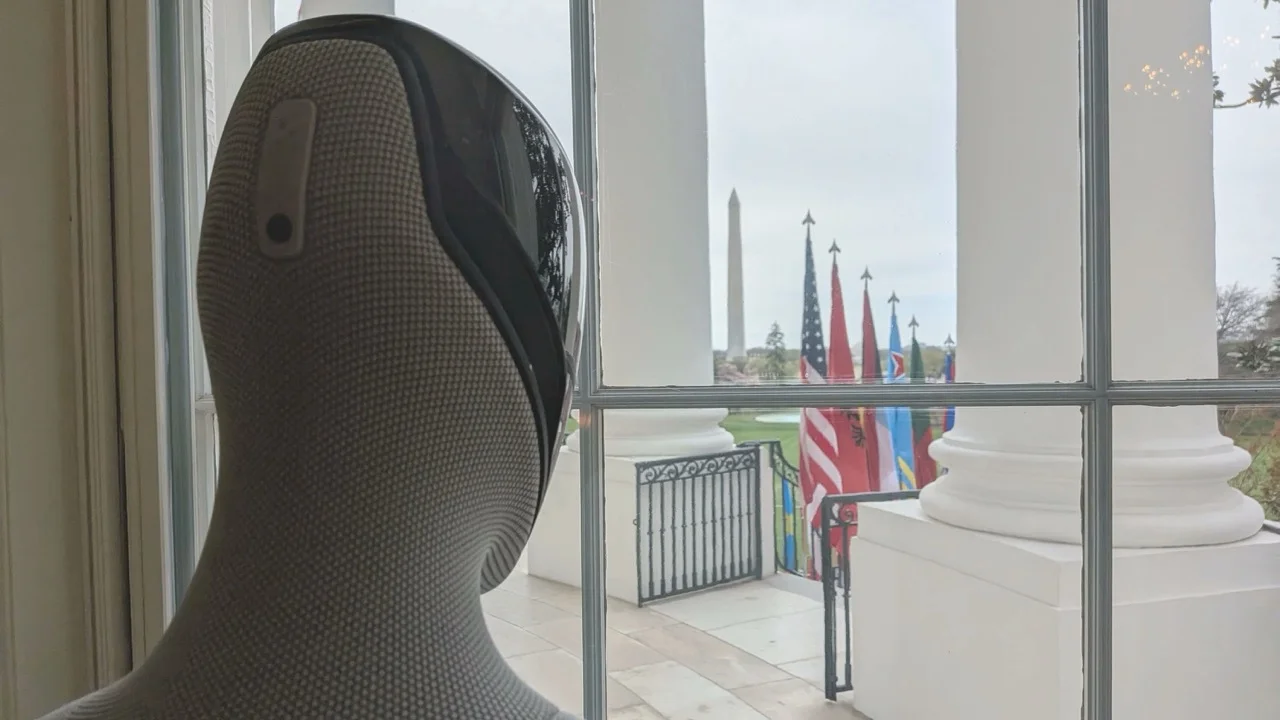
Just a day before the bill's introduction, the Figure 03 humanoid made a historic White House debut. Walking alongside First Lady Melania Trump at the "Fostering the Future Together" education summit, the robot served as a potent symbol of American engineering.
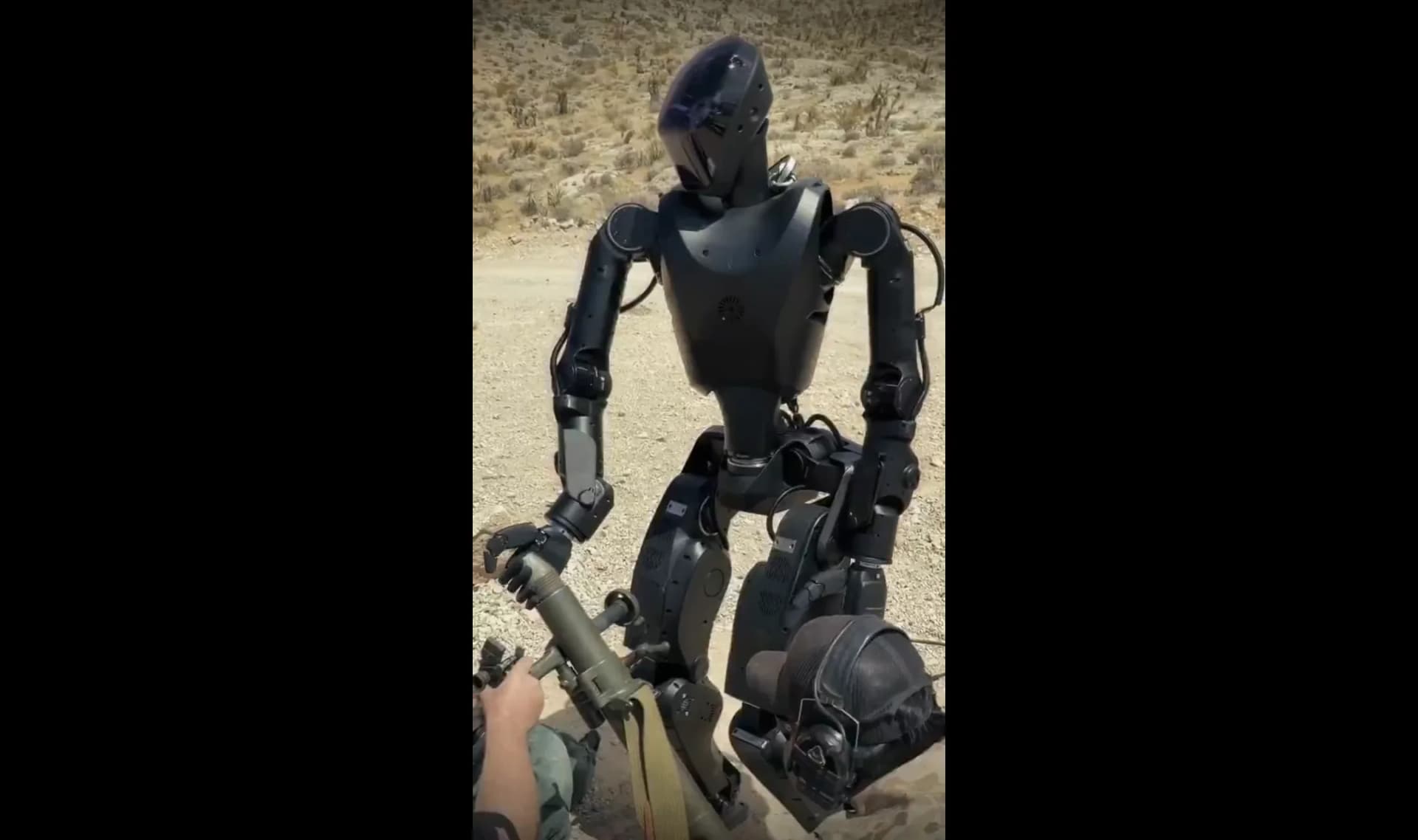
Meanwhile, other US startups are leaning heavily into the defense sector. Foundation Robotics has taken a distinctly utilitarian approach, rejecting the "companion bot" trend to focus on heavy-duty applications. The company recently conducted a pilot program in Ukraine for supply pickup operations—a task aimed at keeping soldiers out of the line of drone fire.
The Research Dilemma
If passed, the American Security Robotics Act will immediately lock Chinese firms out of federal contracts. However, the broader implication for the American research ecosystem remains murky. Because the bill also seeks to bar the use of federal funds in connection with these robots, it could effectively prohibit US universities relying on federal grants from purchasing popular, low-cost research platforms like the Unitree G1.
As the US attempts to decouple its physical infrastructure from Chinese supply chains, lawmakers will have to navigate a difficult balance: protecting national security without inadvertently hamstringing the American researchers who rely on affordable hardware to develop the next generation of artificial intelligence.
Share this article
Read next
- Published on
- Reading time
- 4 min read
The Imminent Embodied AI Ban: FCC to Target Chinese Humanoids
- Published on
- Reading time
- 6 min read
From Stadiums to the Front Line: How China and the US Are Preparing Humanoids for Combat
- Published on
- Reading time
- 4 min read
Supply Chain Rumors Hint at Massive Optimus Order as Fremont Production Line Ramps Up
- Published on
- Reading time
- 5 min read
The FCC Bans Foreign Humanoids: Unpacking the Sweeping New Restrictions on Robotic Devices
- Published on
- Reading time
- 6 min read
The Battle Over Chinese Humanoids: As Congress Debates the GUARD Act, Industry Divides Over National Security vs. Research Reality
- Published on
- Reading time
- 5 min read
1X Accelerates NEO Developer Release to Counter U.S. Bans on Chinese Humanoids



The weekly humanoid robotics briefing
One email a week: the launches, funding and research that mattered, with context from Humanoids Daily.
Read recent issues