- Published on
XPENG Robotics Raises Over $900 Million at $6.3 Billion Valuation to Industrialize IRON Humanoid
One tap, and our reporting appears more often in your Google Top Stories. It makes a real difference to a small newsroom.

- XPENG's robotics division has raised over $900 million in a private funding round led by IDG Capital, with participation from Gaorong Ventures and strategic backing from Alibaba and Tencent.
- The deal sets a post-money valuation exceeding $6.3 billion, establishing the largest single-round private equity raise in China's embodied AI sector to date.
- Parent company XPENG will retain majority control and continue consolidating the robotics subsidiary on its balance sheet.
- Fresh capital will fund hardware and AI R&D, model training, and the scale-up of mass manufacturing infrastructure ahead of a late-2026 production target.
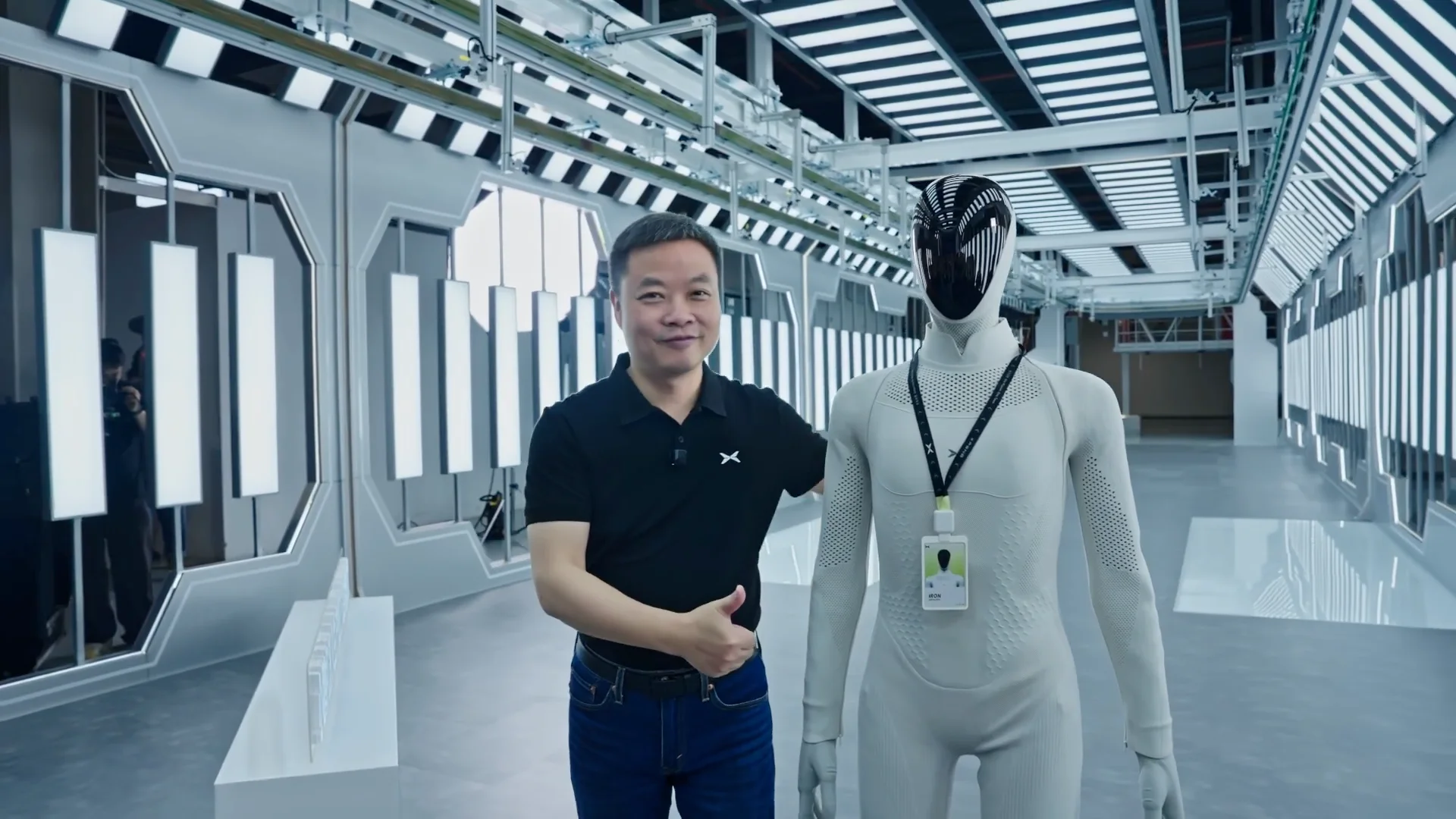
- The production-intent IRON platform features 76 degrees of freedom, 21-DoF hands, and 2,250 TOPS of on-device processing via three proprietary Turing AI chips.
Chinese automaker and physical AI developer XPENG has secured over $900 million in dedicated financing for its humanoid robotics unit, valuing the division at more than $6.3 billion post-money. Led by IDG Capital alongside Gaorong Ventures, with strategic backing from Chinese tech giants Alibaba and Tencent, the transaction marks the largest private funding round ever recorded within China's embodied AI landscape.
Following the transaction, XPENG Inc. will retain majority control of the robotics entity, keeping its operations consolidated within the group’s financial statements. The massive influx of capital is earmarked for full-stack hardware and software research, physical foundation model training, data generation infrastructure, and manufacturing buildout as the company races to transition its bipedal platform from trial lines to commercial volume.
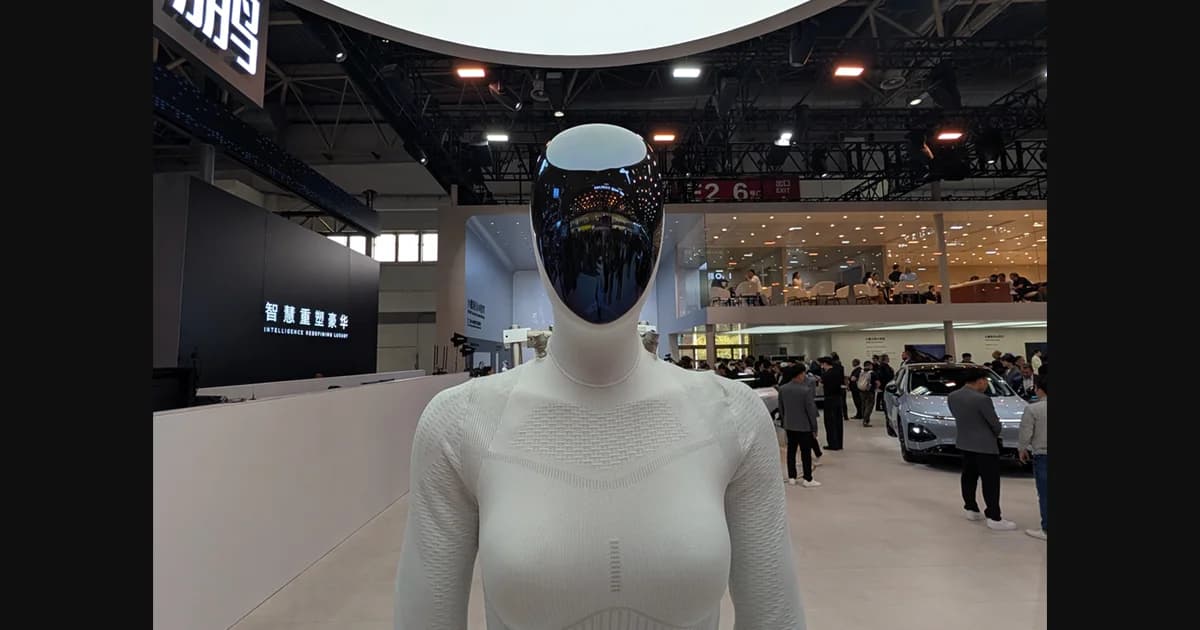
Capitalizing the Physical AI Blueprint
The mega-round establishes an independent market benchmark for XPENG's robotics enterprise while allowing the group to leverage the industrial momentum built across its smart electric vehicle ecosystem. Rather than operating as an isolated skunkworks project, the robotics arm shares core compute architecture, supply chains, and manufacturing facilities with XPENG's automotive lines.
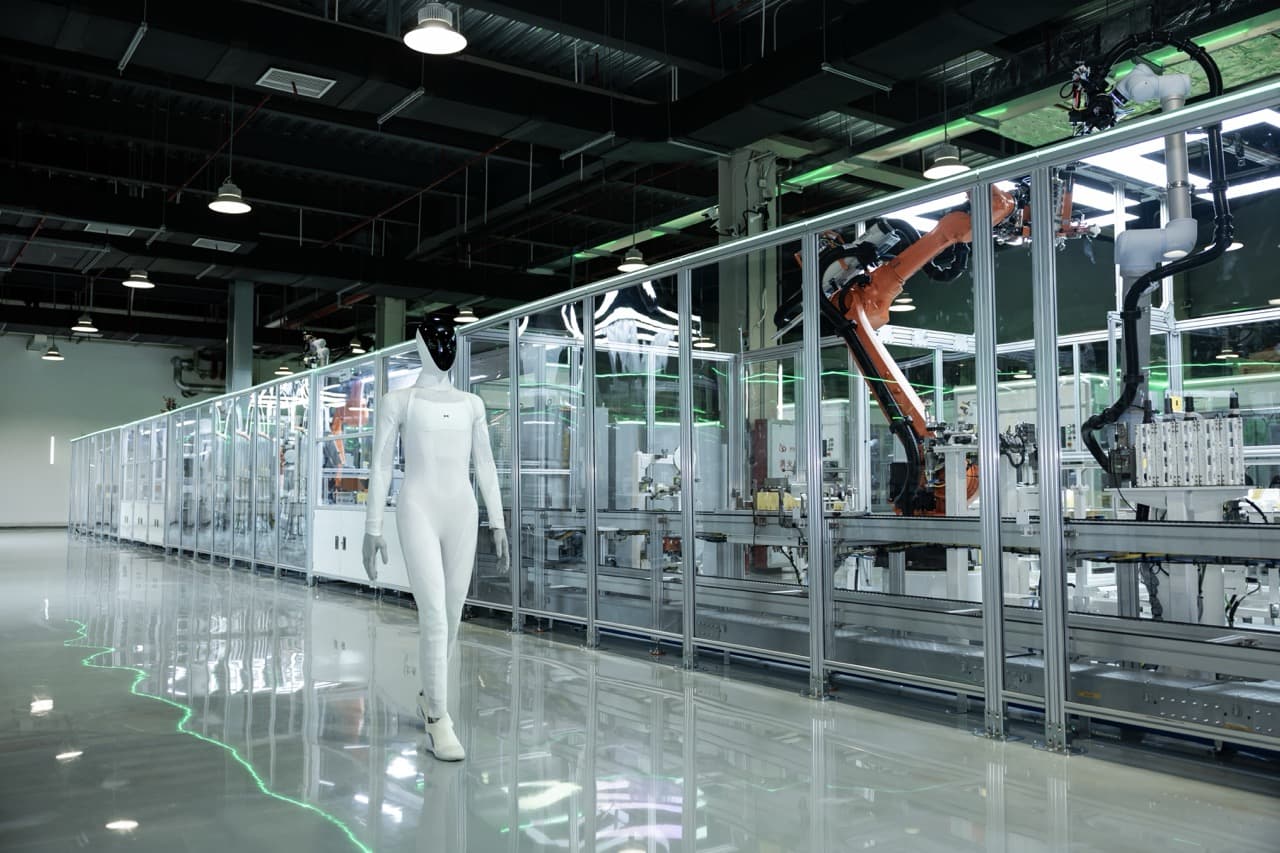
The company intends to channel the new funds into scaling end-to-end production facilities, supporting the dedicated humanoid manufacturing hub in Guangzhou. The facility is engineered to house the entire lifecycle of the robot platform—from data collection and mechanical validation to automated assembly lines.
The weekly humanoid robotics briefing
One email a week: the launches, funding and research that mattered, with context from Humanoids Daily.
Read recent issuesSpecifications of the Production-Intent IRON
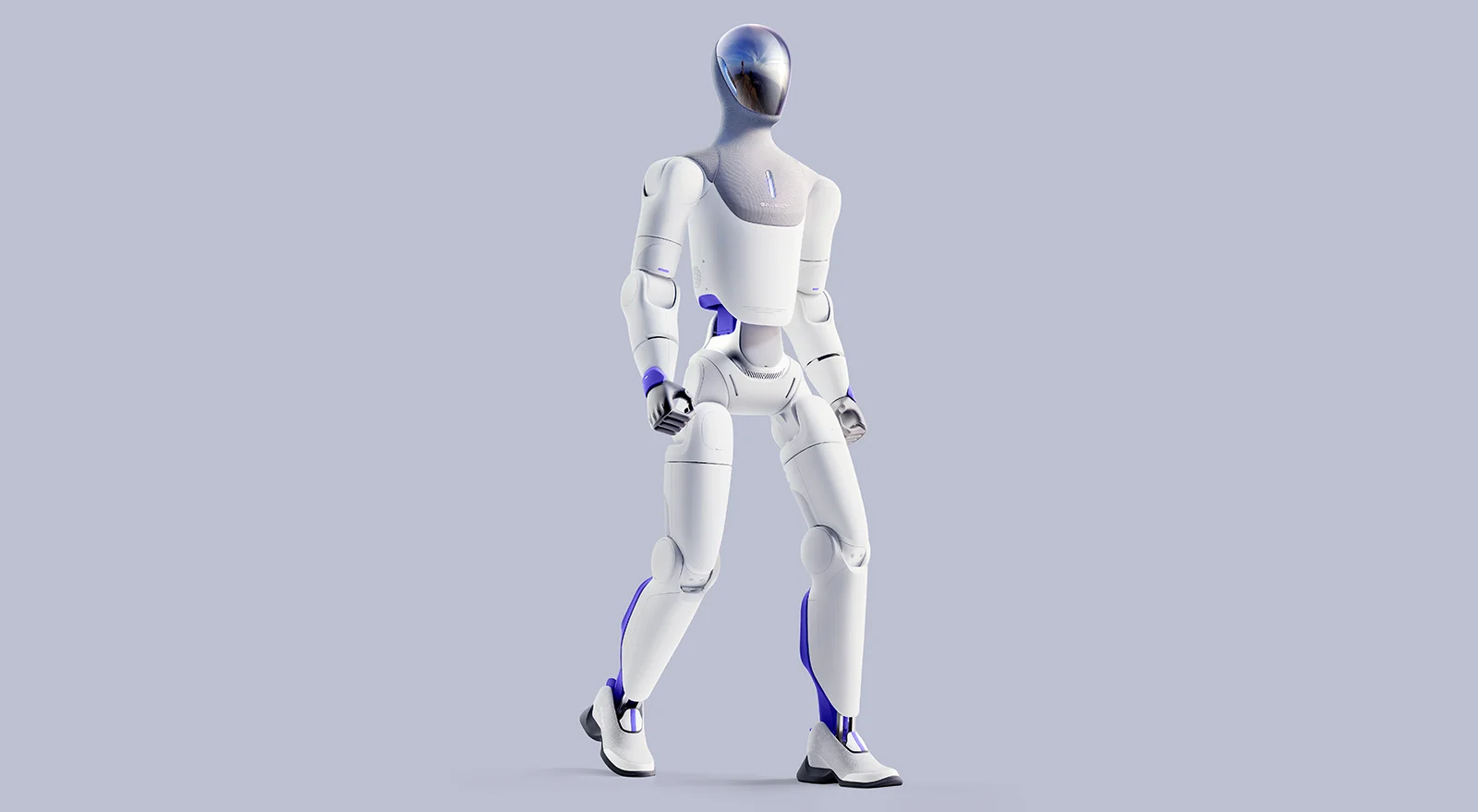
Alongside the financing announcement, XPENG revealed updated baseline specifications for the production-bound iteration of its flagship humanoid, IRON.
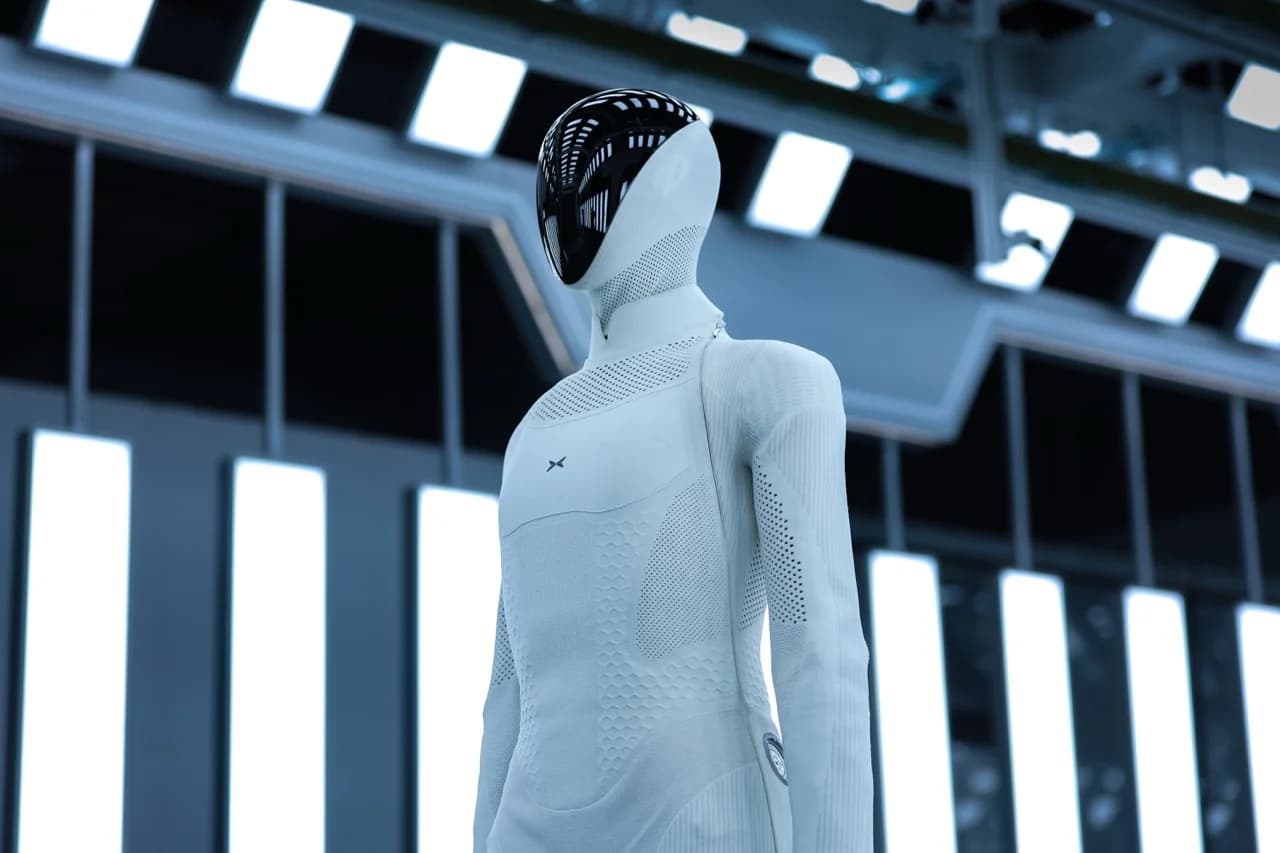
The platform features an AI-native hardware architecture with a total of 76 degrees of freedom (DoF) across the body. Crucially, the extremities incorporate 21 degrees of freedom per hand—a vital hardware revision after early engineering trials revealed that first-generation dexterous hands struggled with mechanical longevity. The mechanical chassis remains wrapped in XPENG's proprietary fully enclosed flexible lattice musculature, designed to absorb shock, dampen dynamic vibrations, and maintain compliance in human-centric workspaces.
On the intelligence layer, IRON is powered by three proprietary Turing AI chips providing an aggregate compute capacity of up to 2,250 TOPS. This edge-compute payload allows XPENG to run its multi-modal Physical AI foundation model directly on the machine, executing complex spatial tasks autonomously without constant teleoperation or offboard cloud dependency.
Deployment Timeline: From Showrooms to Global Markets
XPENG is adhering strictly to the industrial timeline mapped out earlier this year, setting late 2026 as the target to begin mass production.
The company plans a phased deployment strategy rather than rushing immediately into unstructured residential environments:
- Late 2026: Initiation of large-scale mass manufacturing lines.
- Early Commercial Phase: Initial commercial rollout within XPENG’s retail stores, corporate campuses, and showroom floors as greeters and product guides.
- 2027 Expansion: Official commercial sales, deliveries, and expansion into enterprise and industrial sectors across China and international markets.
While pure-play robotics startups continue to grapple with high unit costs and manufacturing bottlenecks, XPENG's ability to draw on automotive-grade assembly standards and institutional capital positions it as one of the few players capable of testing the viability of humanoid scale in the physical world.
Share this article
Read next
- Published on
- Reading time
- 4 min read
XPENG Lines Up Humanoid Suppliers Ahead of Year-End Production Target
- Published on
- Reading time
- 4 min read
XPENG’s IRON Remembers Car Buyers in New Interaction Demo
- Published on
- Reading time
- 6 min read
Inside XPENG’s Bet on IRON: He Xiaopeng on Why the Hardest Path in Humanoid Robotics Is Never Crowded
- Published on
- Reading time
- 6 min read
XPENG Launches Mass Production of IRON Humanoid
- Published on
- Reading time
- 4 min read
XPENG's Head of Robotics Admits Hardware is 'Bottleneck' as 2026 Production Goal Looms
- Published on
- Reading time
- 4 min read
Xpeng to Break Ground on "Full-Chain" Humanoid Factory to Meet 2026 Production Goal

The weekly humanoid robotics briefing
One email a week: the launches, funding and research that mattered, with context from Humanoids Daily.
Read recent issues