- Published on
Lumos Robotics Unveils MOS 2 Mobile Manipulator Backed by Mitsubishi Factory Deployment
One tap, and our reporting appears more often in your Google Top Stories. It makes a real difference to a small newsroom.


Your guide
Rich Robinson
Jee Chee Ren · Executive tour
See China’s AI and robotics ecosystem first-hand.
Six days exploring AI, robotics and advanced manufacturing.
With Rich Robinson, Clinical Professor of Entrepreneurship at Peking University
Beijing · Guangzhou · Shenzhen
29 November–4 December 2026
Referral partnership · We earn a commission on referred bookings.
- Lumos Robotics has officially launched the MOS 2, a wheeled dual-arm mobile manipulator designed as an "AI Worker" for high-mix factory workflows.
- The system features a 50 kg combined dual-arm payload capacity, rapid end-effector swapping, and a compact 0.5-square-meter footprint tailored for narrow industrial aisles.
- The launch follows extensive trials at Mitsubishi Electric’s Changshu facility, where first-generation units logged over 1,000 failure-free hours conducting six-sided PLC visual inspections, screwdriving, and material transport.
- Backed by Mitsubishi Electric Smart Manufacturing Technology (China) Group, Lumos raised over 1 billion yuan (~$140 million) across Series A1 and A2 rounds.
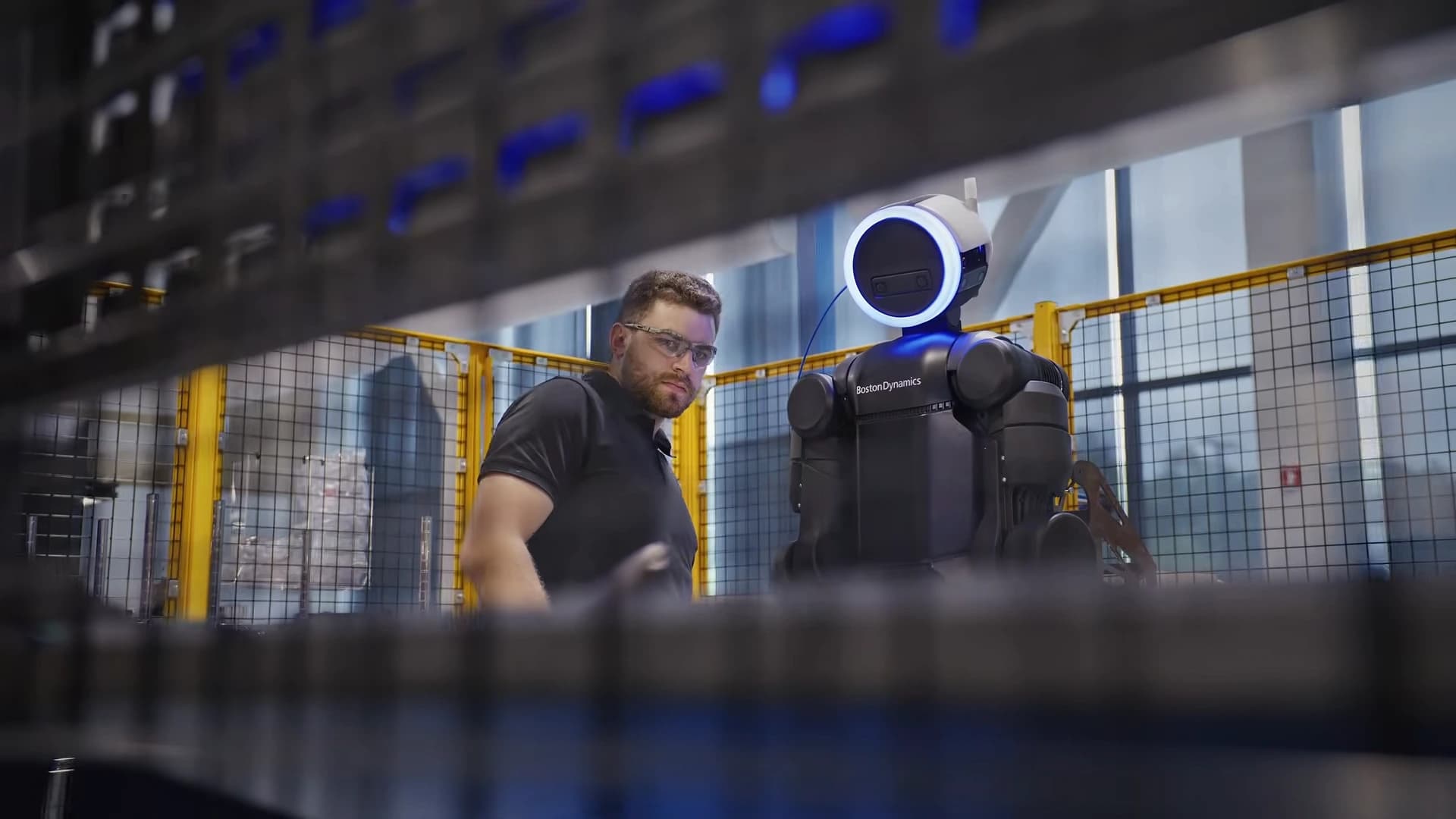
- The rollout reinforces a broader industry shift where industrial demand is gravitating toward pragmatic wheeled dual-arm platforms over complex bipedal humanoids.
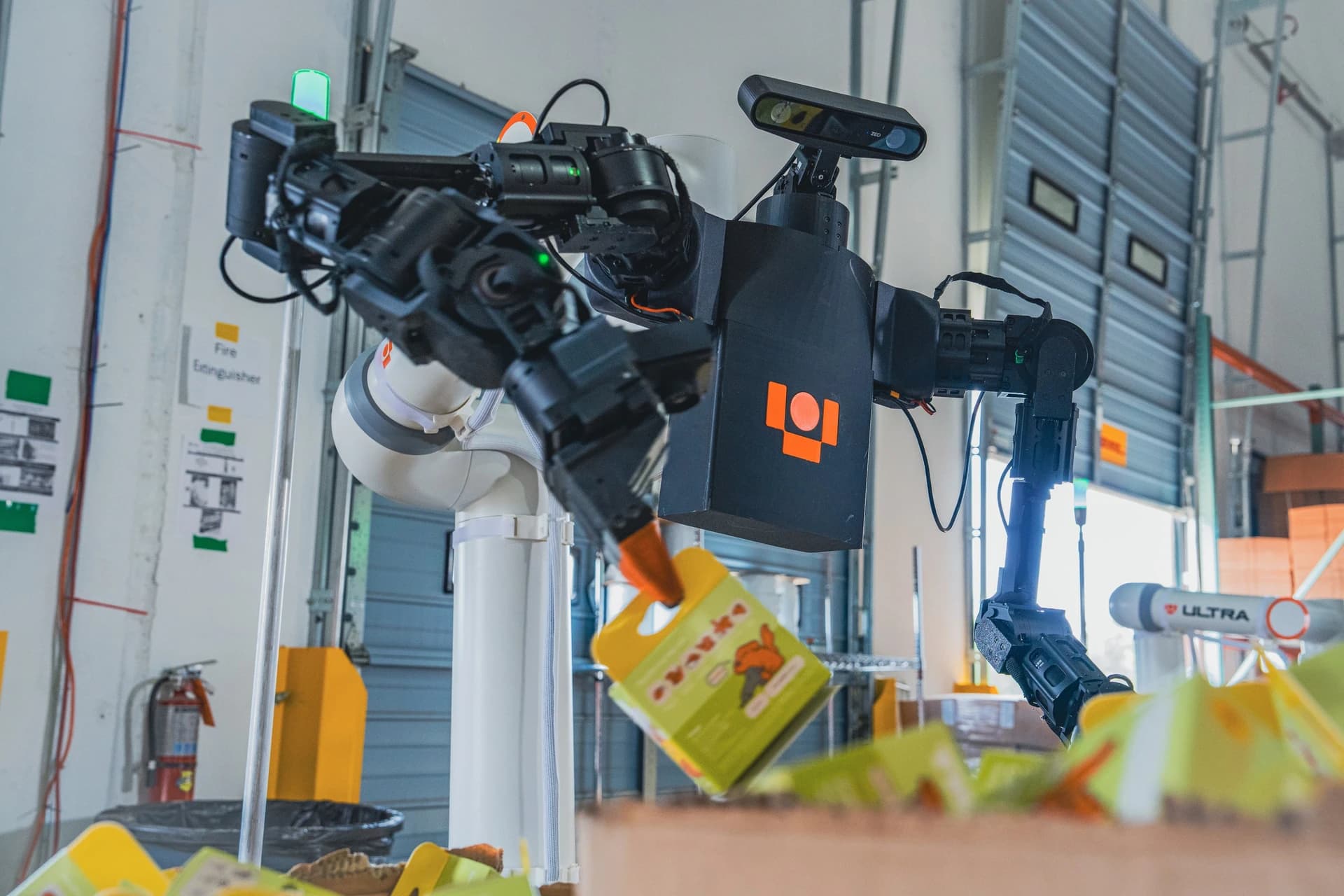
While public demonstrations of humanoid robotics frequently focus on dynamic acrobatics and bipedal agility, industrial buyers are increasingly prioritizing raw operational stability. Chinese developer Lumos Robotics has officially unveiled the MOS 2, its next-generation wheeled dual-arm mobile manipulator engineered specifically for mass-production environments.
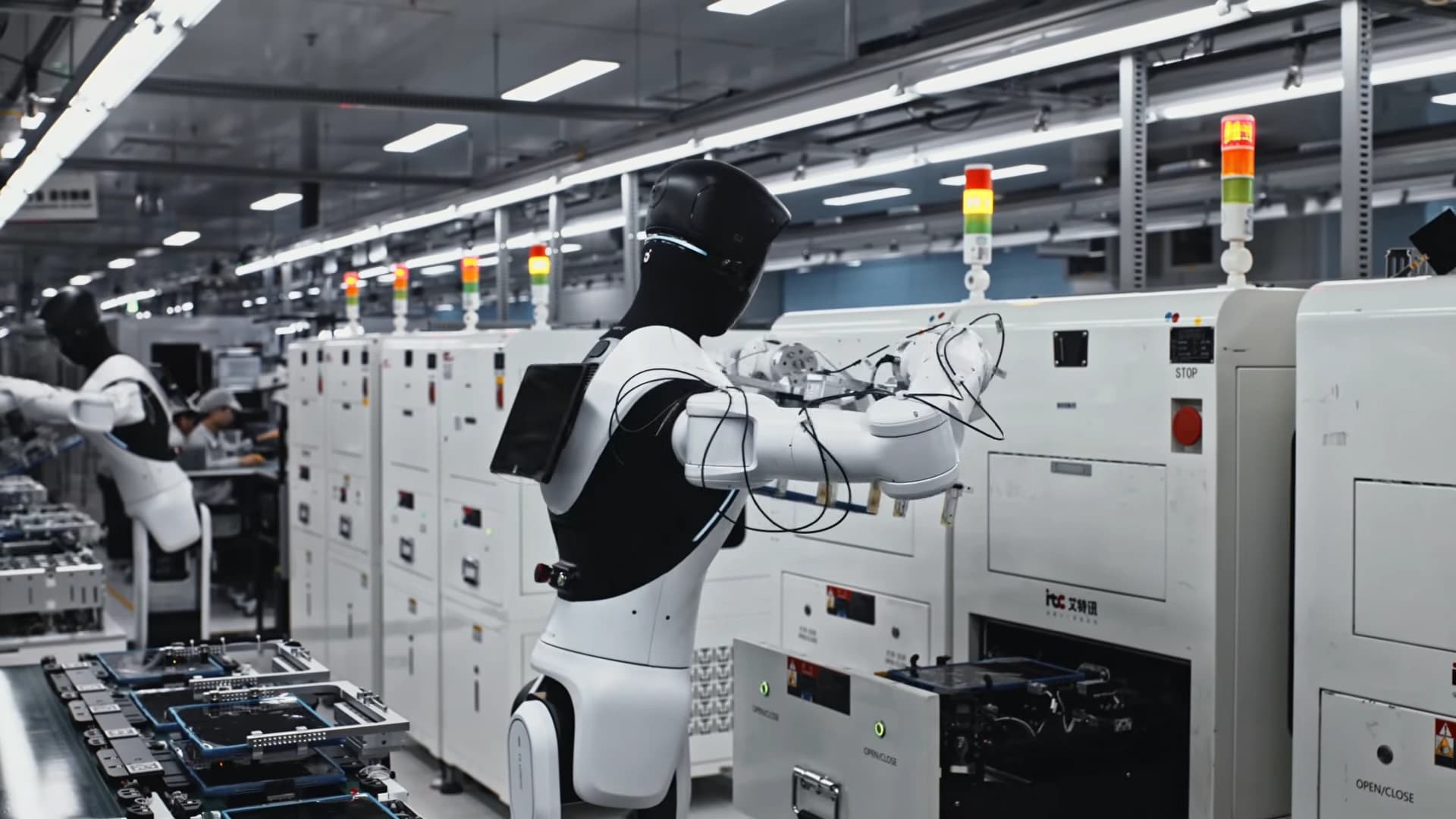
Rather than positioning the platform as an all-purpose humanoid surrogate, Lumos frames the MOS 2 as a pragmatic "AI Worker." The platform is already operating on live Programmable Logic Controller (PLC) manufacturing lines at Mitsubishi Electric, taking on repetitive tasks spanning surface defect inspection, screwdriving, box pushing, and intralogistics.
Heavy-Duty Manipulation on a Narrow Footprint
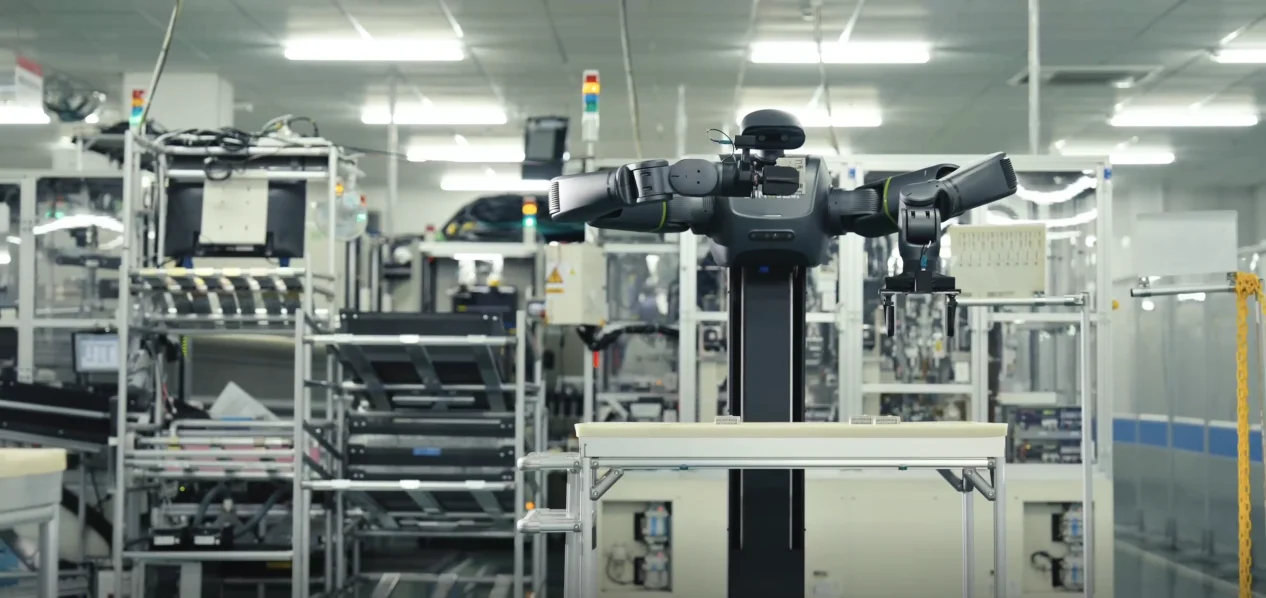
Standing approximately 1.65 meters tall, the MOS 2 is built around a compact mobile chassis occupying just 0.5 square meters of floor space, enabling it to navigate standard factory corridors and tight workstations without requiring structural plant overhauls.
Its core mechanical differentiator lies in its upper-body lifting capacity. The robot features a combined dual-arm payload of up to 50 kilograms, pairing high-torque manipulation with multimodal vision and force feedback. The platform also integrates rapid tool-changing end-effectors, allowing it to transition between dexterous grippers, precision screwdrivers, and specialized suction tools across different work cells.
The weekly humanoid robotics briefing
One email a week: the launches, funding and research that mattered, with context from Humanoids Daily.
Read recent issuesAccording to Lumos, the system's software architecture relies on embodied intelligence models that continuously close the loop between factory sensor data and operational execution. This setup reduces the extensive pre-calibration cycles traditionally required when retooling conventional automation for high-mix manufacturing.
| Specification | Lumos MOS 2 |
|---|---|
| Form Factor | Wheeled Dual-Arm Mobile Manipulator |
| Combined Payload | Up to 50 kg |
| Height / Footprint | ~1.65 m / 0.5 m² |
| Primary Perception | Multimodal Vision and Force Sensing |
| Key Workflows | Visual Quality Inspection, Intralogistics, Screwdriving, Assembly |
From 1,000-Hour Pilot to Lead Investor
The commercial debut of the MOS 2 builds on prolonged testing with Mitsubishi Electric. Strategic cooperation between the two companies began in 2025 with joint validation labs in Suzhou and Shanghai. First-generation MOS units subsequently completed more than 1,000 hours of continuous, failure-free operation at Mitsubishi’s Changshu plant.
In its primary quality inspection role, the robot uses coordinated dual-arm movements to reorient PLC units, executing a full six-sided visual inspection for surface defects before routing parts downstream or handling logistics carts.
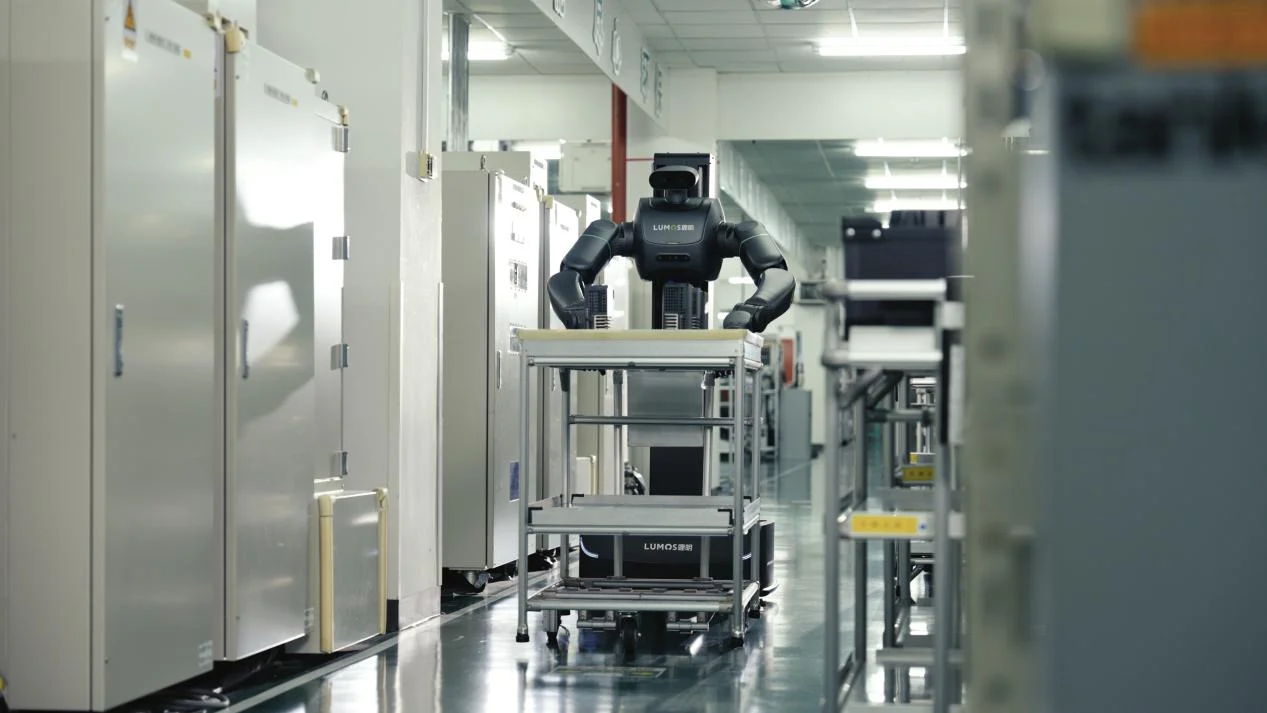
The successful operational trial led Mitsubishi Electric Smart Manufacturing Technology (China) Group to lead Lumos Robotics' Series A1 and A2 financing rounds in May 2026. Together with earlier funding, Lumos has secured more than 1 billion yuan (approx. $140 million) in cumulative capital to date.
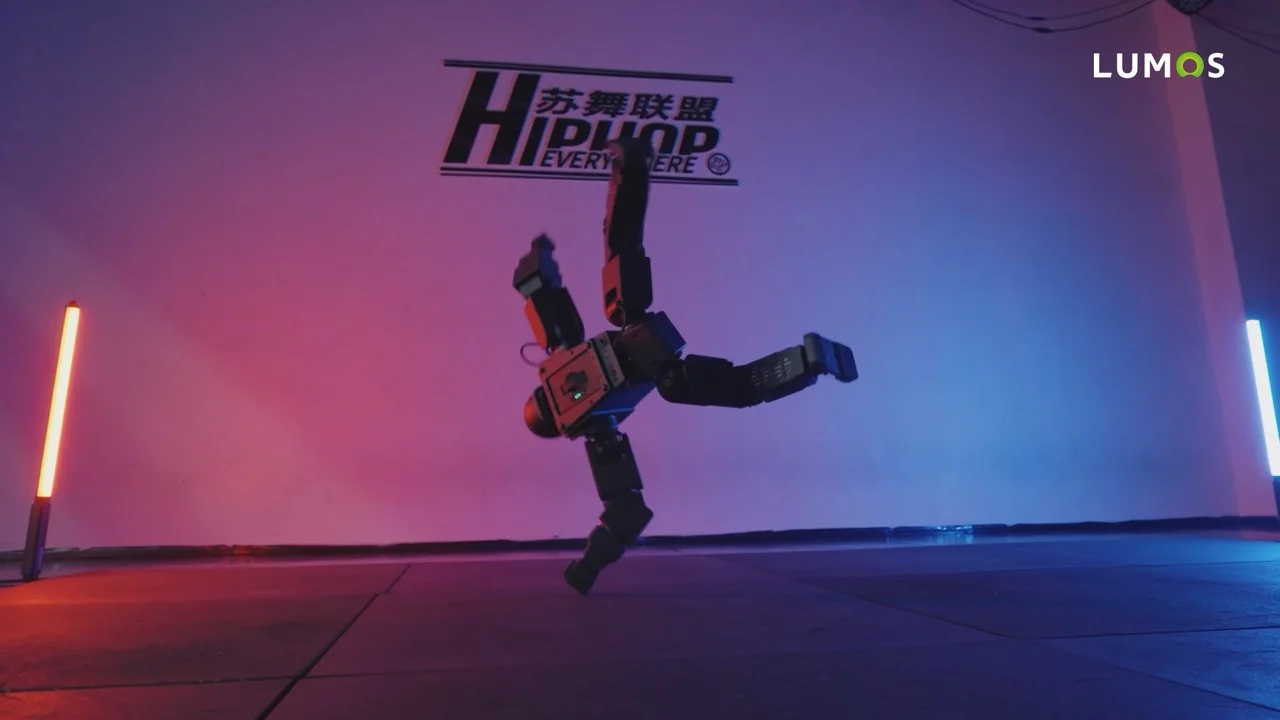
"Dancing, running and doing backflips may demonstrate a robot's physical capabilities, but they do not prove its industrial value," stated Lumos Robotics Founder and CEO Yu Chao. "What industrial customers ultimately care about is task success rate, production cycle time, deployment time and return on investment."
The Pragmatic Pivot to Wheeled Dual-Arm Systems
The deployment trajectory of the MOS 2 reflects a broader realignment taking place across the robotics sector. While long-term research continues to push bipedal morphology forward, practical factory floor economics are driving rapid adoption of wheeled and stationary dual-arm platforms.
Industry analysts note that factory floor managers are consistently prioritizing long battery endurance, thermal stability, and high payload capacities over complex bipedal locomotion. This dynamic was underscored by industrial AI and automation advisor Georg Stieler, who noted following site visits to leading Chinese manufacturers that major commercial demand over the next several years is consolidating around wheeled dual-arm robots.
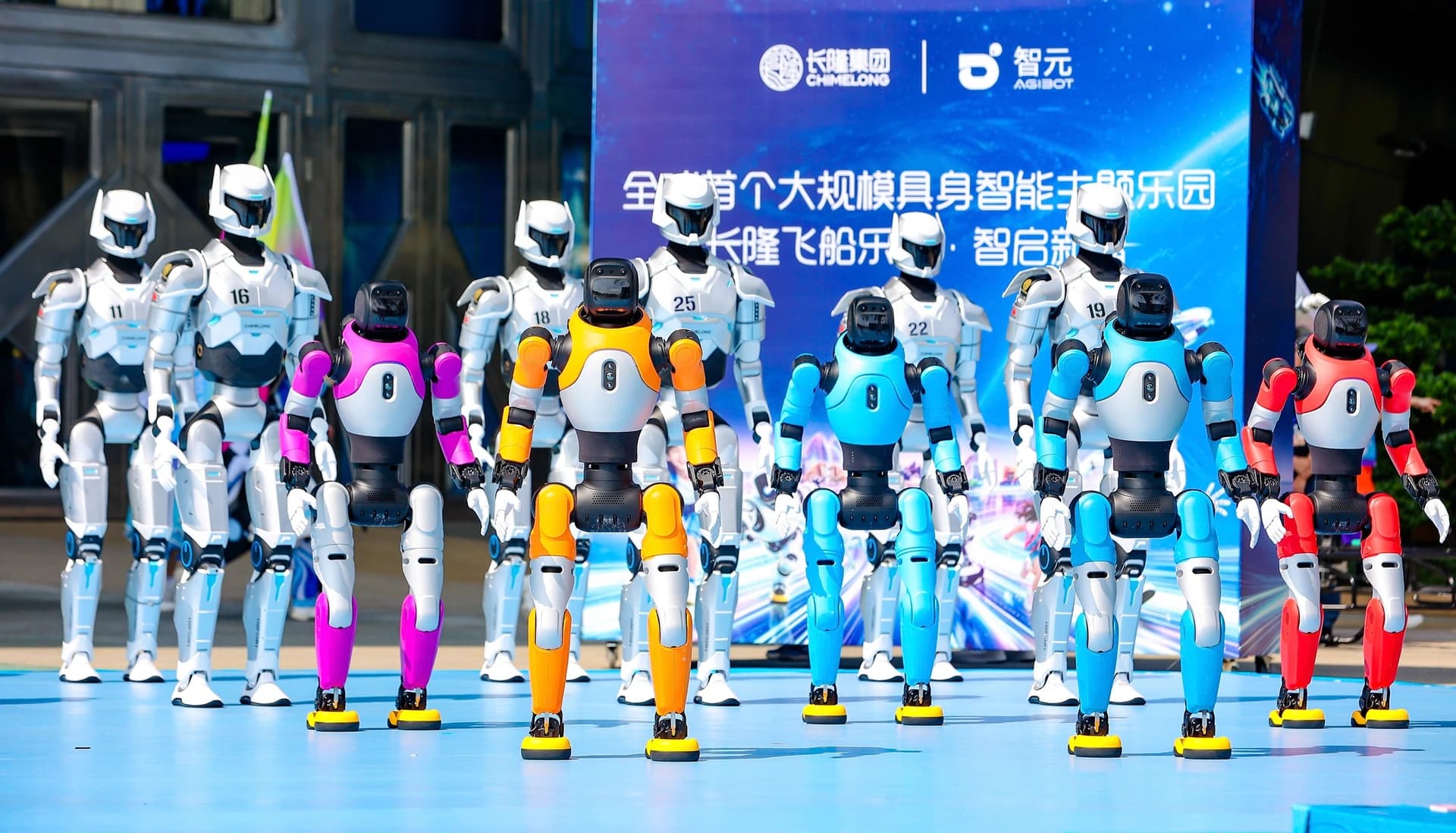
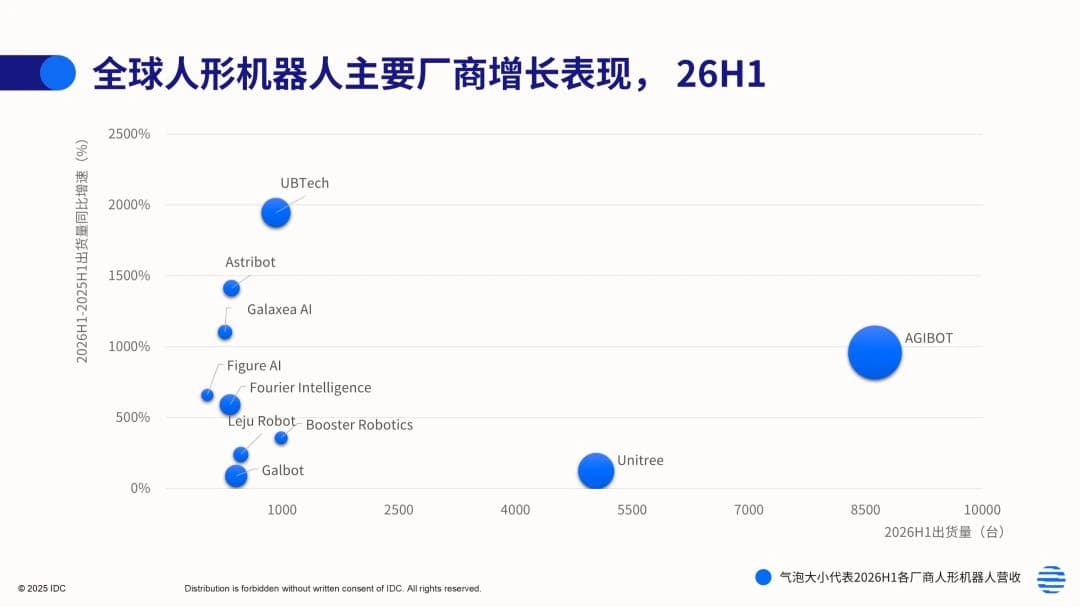
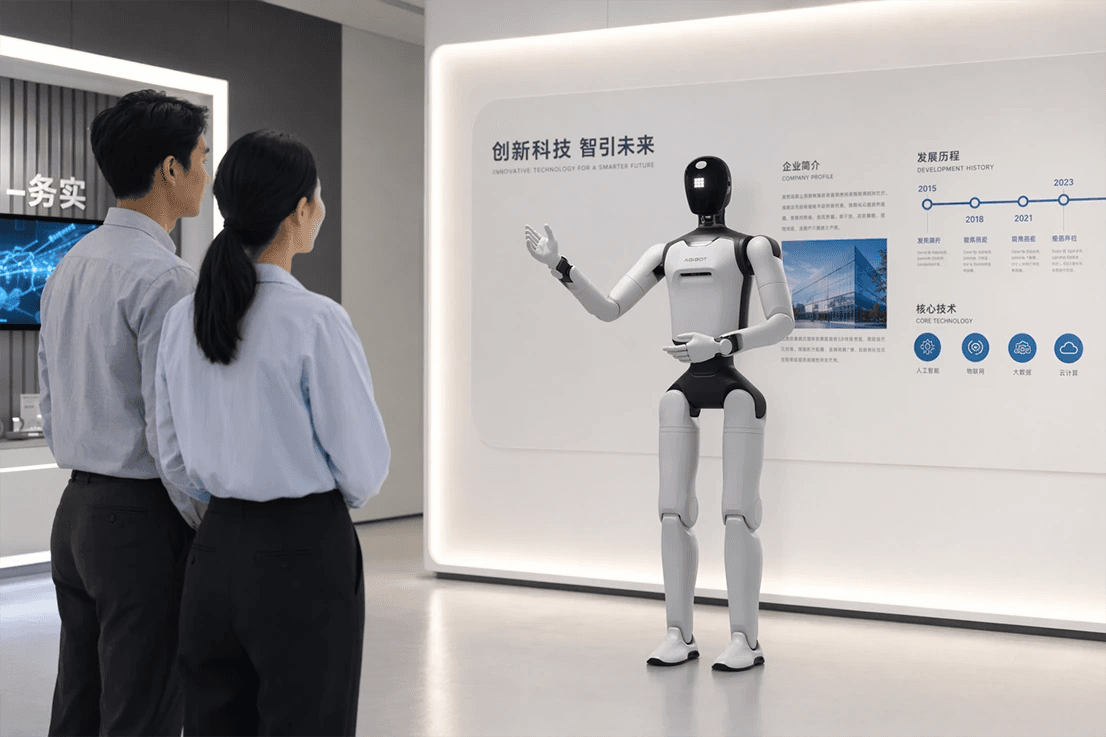
This trend is visible across recent shipment metrics. While pure legged systems dominate research environments, global humanoid shipments surpassed 22,000 units in H1 2026 largely on the strength of tiered hardware lineups. Market leader AGIBOT has driven industrial volume via its wheeled G-series, which recently demonstrated multi-day operations during a six-day factory livestream at Longcheer Technology. Similarly, Unitree expanded into modular automation with its wheeled and fixed dual-arm R1 lineup, while players like Ultra Robotics have focused on stationary dual-arm fulfillment and X Square Robot has prioritized high-speed dual-arm package sorting.
Operating from hubs in Suzhou and Nanjing, Lumos Robotics is positioning the MOS 2 to expand beyond PLC assembly into consumer electronics, automotive component lines, and semiconductor packaging across the Yangtze River Delta. By trading walking mechanics for a 50 kg payload and immediate floor compatibility, Lumos is betting that the quickest path to scaling embodied AI lies in mastering the unglamorous essentials of factory production.
Share this article
Read next
- Published on
- Reading time
- 3 min read
Lumos Says NexCore Can Teach Robots New Skills in Days
- Published on
- Reading time
- 4 min read
Lumos Robotics Launches Project EDGE, Offering 100 Free Humanoids to Developers
- Published on
- Reading time
- 2 min read
Shanghai Wants 8,000 Humanoid Robots in Factories by 2028
- Published on
- Reading time
- 3 min read
China’s Humanoid Robot Rental Prices Fall as Operators Face the Cost of Service
- Published on
- Reading time
- 3 min read
IDC Puts H1 Humanoid Shipments Near 25,000, With AGIBOT Leading
- Published on
- Reading time
- 3 min read
AGIBOT Says A3 Ultra Is Going to Work in Hotels, Shops and Metro Inspection
The weekly humanoid robotics briefing
One email a week: the launches, funding and research that mattered, with context from Humanoids Daily.
Read recent issues