- Published on
UBTECH Reports 104% Revenue Surge in H1 2026 as Full-Size Humanoids Drive Growth
One tap, and our reporting appears more often in your Google Top Stories. It makes a real difference to a small newsroom.


Your guide
Rich Robinson
Jee Chee Ren · Executive tour
See China’s AI and robotics ecosystem first-hand.
Six days exploring AI, robotics and advanced manufacturing.
With Rich Robinson, Clinical Professor of Entrepreneurship at Peking University
Beijing · Guangzhou · Shenzhen
29 November–4 December 2026
Referral partnership · We earn a commission on referred bookings.
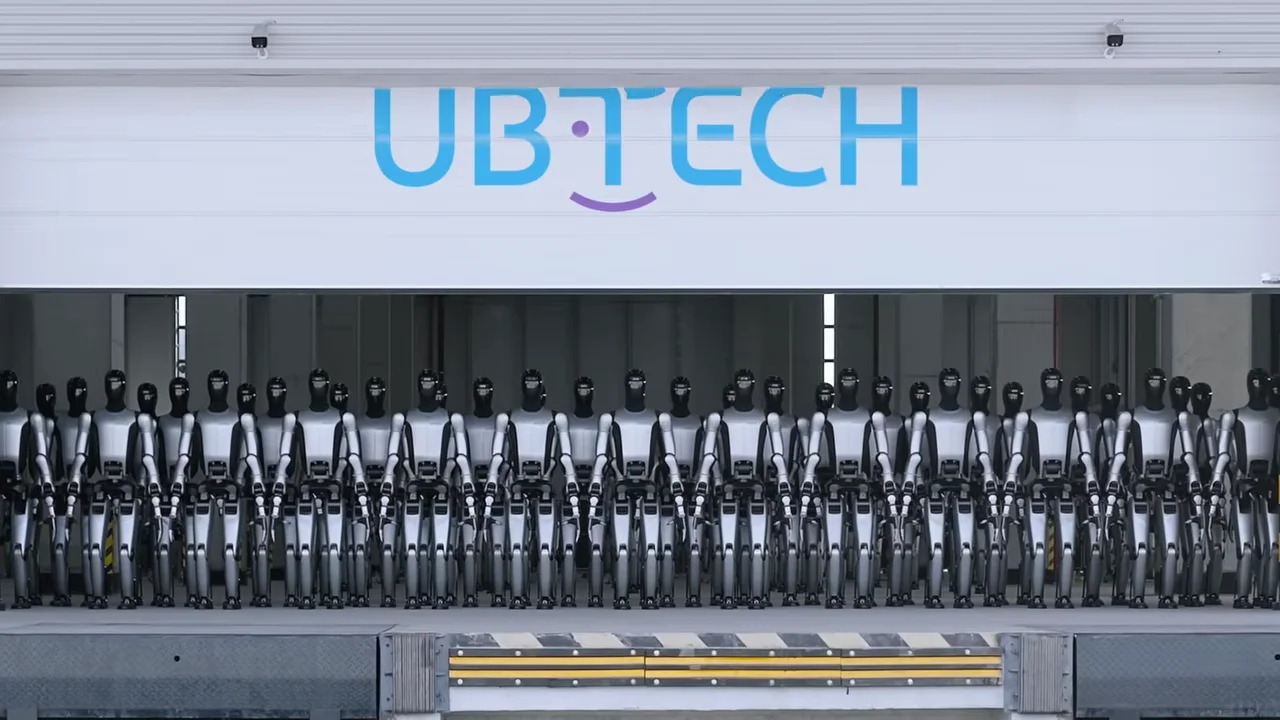
- UBTECH Robotics reported first-half 2026 revenue of RMB 1.27 billion (approximately $188.8 million), marking a 104.1% year-over-year increase.
- Revenue from full-size embodied AI humanoid robots surged 1,445% year-over-year to RMB 590 million ($87.8 million), representing 46.5% of total company revenue.
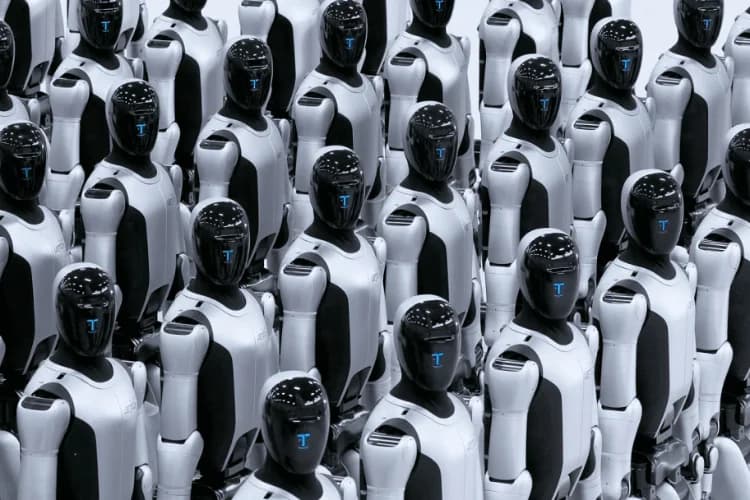
- The company delivered 921 full-size humanoid units and 15,202 non-full-size units in H1 2026, totaling 16,123 robots shipped across its portfolio.
- Net losses narrowed by over 20% to RMB 339 million ($50.4 million), supported by an overall gross margin improvement to 44.7% and a 66.8% gross margin in full-size humanoids.
- Growth was heavily weighted toward industrial customization, which accounted for over 96% of full-size humanoid revenue amid ongoing enterprise deployments.
Shenzhen-based UBTECH Robotics (09880.HK) posted strong top-line expansion for the first half of 2026, driven by accelerating enterprise adoption of its full-size humanoid platforms. According to the company’s interim financial report released on August 28, revenue doubled year-over-year to RMB 1.27 billion (approx. $188.8 million), while net losses narrowed by 23% to RMB 339 million ($50.4 million).
The performance cements a structural transformation that began taking shape during UBTECH's 2025 financial turnaround, in which bipedal and embodied systems overtook legacy educational and consumer toys to become the company’s primary financial engine.
The Full-Size Engine: Revenue Jumps 14-Fold
The primary catalyst behind UBTECH's H1 expansion was its full-size Embodied Intelligence humanoid robot segment—defined by the company as non-toy, autonomous systems standing 160 cm with onboard compute exceeding 200 TOPS.
Revenue from full-size humanoids jumped 1,445% year-over-year to RMB 590 million (approx. $87.8 million), up from just RMB 37.9 million during the same period in 2025. The division accounted for 46.5% of UBTECH's total consolidated revenue for the half.
The weekly humanoid robotics briefing
One email a week: the launches, funding and research that mattered, with context from Humanoids Daily.
Read recent issues| Metric | H1 2025 | H1 2026 | YoY Change |
|---|---|---|---|
| Total Revenue | RMB 621M (~$92.5M) | RMB 1.27B (~$188.8M) | +104.1% |
| Full-Size Humanoid Revenue | RMB 37.9M (~$5.6M) | RMB 590M (~$87.8M) | +1,445.0% |
| Full-Size Humanoids Shipped | 45 units | 921 units | +1,946.7% |
| Non-Full-Size Humanoids Shipped | 4,334 units | 15,202 units | +250.8% |
| Total Humanoid Volume | 4,379 units | 16,123 units | +268.3% |
| Consolidated Gross Margin | 35.0% | 44.7% | +9.7 pp |
| Full-Size Segment Margin | 47.3% | 66.8% | +19.5 pp |
| Net Loss | RMB 440M (~$65.5M) | RMB 339M (~$50.4M) | -23.0% |
Shipments of full-size machines grew nearly twentyfold, from 45 units in H1 2025 to 921 units in H1 2026. This volume puts UBTECH within striking distance of its 1,079 full-size shipments recorded during the entirety of fiscal 2025, and closely aligns with independent industry tallies from Counterpoint Research's H1 2026 tracking.
At the same time, UBTECH shipped 15,202 non-full-size humanoid units—encompassing sub-160 cm research kits, commercial units, and desktop models—bringing total humanoid device deliveries to 16,123 units across the six-month period.
Margins Expand, but Legacy Lines Soften
UBTECH's profitability metrics showed notable operational leverage. Overall gross profit climbed 160.9% to RMB 567–570 million, expanding gross margins by 9.7 percentage points to 44.7%. Within the full-size humanoid division specifically, gross margin reached 66.8%, generating RMB 390 million in gross profit.
Adjusted EBITDA losses dropped by 45.9% to negative RMB 170 million, reflecting tighter expense ratios even as research and development outlays rose 38.9% to RMB 303 million ($45.1 million). The company currently employs 1,103 R&D personnel and maintains a portfolio of 3,112 granted patents.
However, the rapid growth in embodied AI contrasts with ongoing declines in UBTECH’s legacy lines. Revenue from general intelligent robot products and services fell 18.8% year-over-year to RMB 246 million ($36.6 million), shrinking to 19.4% of total turnover. Traditional educational robotics (RMB 96.73 million) and standalone logistics AGV hardware (RMB 137 million) both saw softer demand as enterprise clients directed capital expenditures toward multimodal and humanoid automation.
Industrial Concentration and the "Three-Pronged" Strategy
A closer look at UBTECH's customer distribution reveals heavy reliance on large industrial accounts. Of the RMB 590 million generated by full-size humanoids, RMB 569 million (96.4%) derived from bespoke industrial and enterprise contracts, with education contributing just RMB 21.25 million.
The company has built its industrial presence through clustered pilot programs with key manufacturing and automotive partners, including Honda Trading, BYD, Geely Auto, Foxconn, and Airbus. In factory settings, the industrial-tier Walker S2 and Cruzr S2 platforms are tasked with material transfer, parts sorting, and visual inspection.
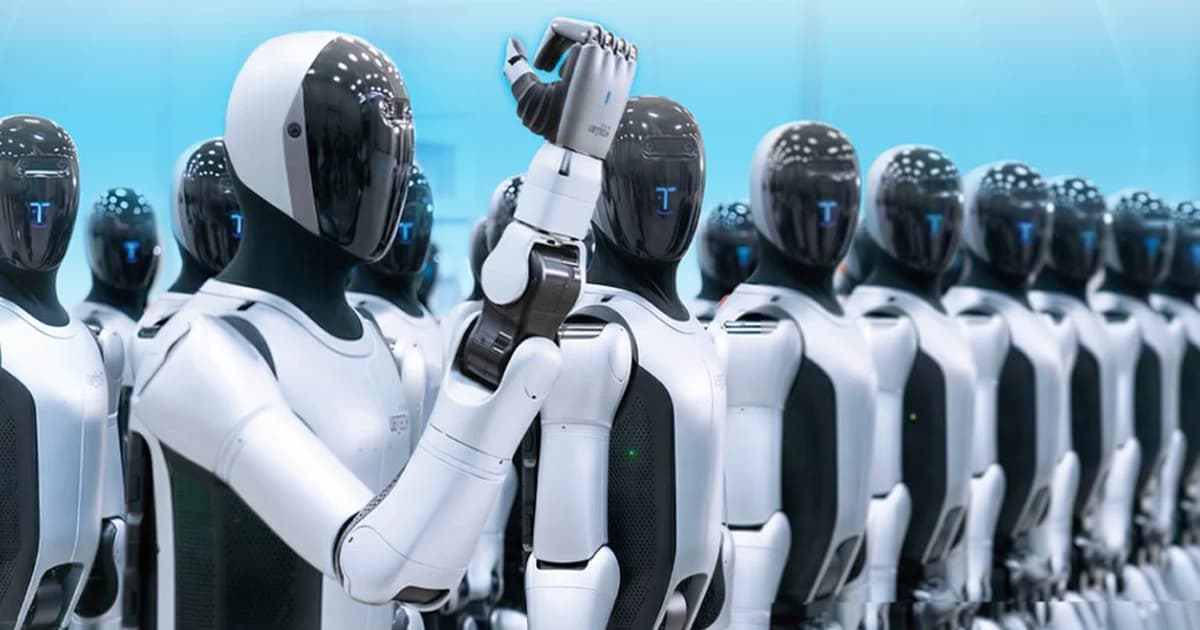
To diversify beyond heavy industry, UBTECH is outlining a "three-pronged" commercial roadmap covering industrial, commercial service, and home consumer domains:
- Industrial Manufacturing: Deploying Walker S2, Cruzr S2, and Cruzr Y1 for autonomous logistics, loading/unloading, and palletizing.
- Commercial Services: Fielding the Walker C1 platform across reception, education, hospitality, and public facility guidance.
- Home & Companion: Introducing the UWORLD U1 series of ultra-bionic companion humanoids, targeting senior care, emotional assistance, and psychological support.
On the software front, the company continues to iterate on its Thinker foundation model stack. UBTECH reported that its Thinker-WM world model took top honors on the LIBERO embodied intelligence benchmark, while its unified Thinker-VLA action model has achieved 99% task success rates across internal trial suites with 176% higher inference efficiency.
The Scaling Hurdle
UBTECH’s interim figures highlight the substantial revenue potential of commercial humanoids, but critical questions remain for the second half of 2026.
With net losses still hovering above RMB 300 million, the company must demonstrate that unit volume can continue scaling without compressing gross margins. Furthermore, with the vast majority of humanoid revenue tied to industrial customization, revenue remains vulnerable to capital expenditure cycles among a small cohort of tier-one manufacturing clients.
As domestic rivals like AGIBOT continue setting shipment records and Unitree expands its bipedal footprint, UBTECH’s ability to convert enterprise pilots into repeatable, unassisted assembly-line productivity will dictate whether its top-line doubling translates into durable profitability.
Share this article
Read next
- Published on
- Reading time
- 8 min read
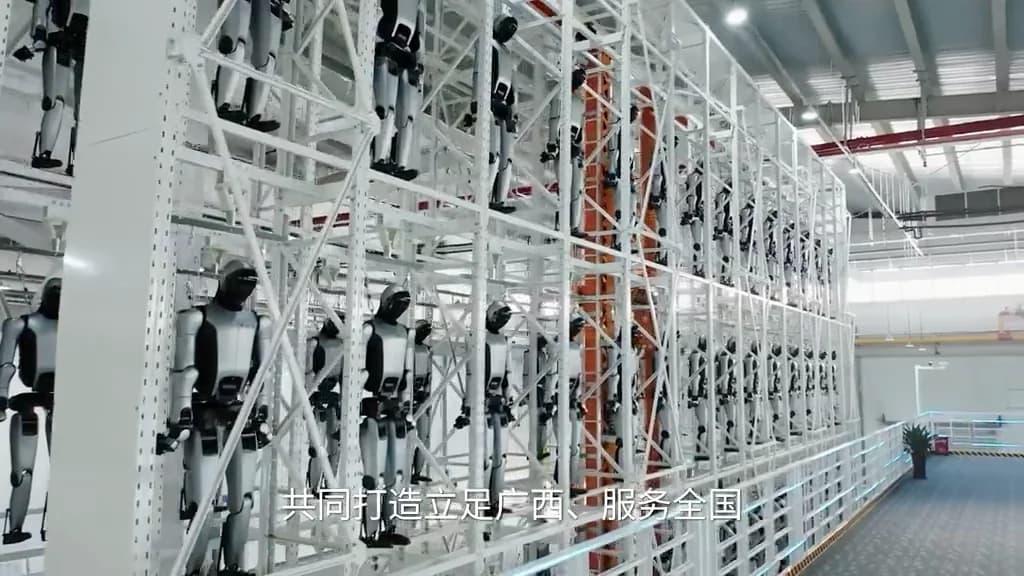
Inside UBTECH’s 10,000-Unit Super Factory: How Robots Are Building Humanoids in Liuzhou
- Published on
- Reading time
- 4 min read
State Grid’s $995 Million Bet: 8,500 Robots to Spearhead "Deployment Year One" in Energy
- Published on
- Reading time
- 4 min read
Rossmann Commences European Pilot of UBTECH Walker S2 Humanoid in Logistics
- Published on
- Reading time
- 4 min read
Supply Chain Synergy: UBTECH and Honda Trading to Pilot Humanoid Logistics
- Published on
- Reading time
- 4 min read
The $18 Million Brain: UBTECH Launches Aggressive Hunt for Embodied AI Chief
- Published on
- Reading time
- 4 min read
UBTECH’s 2025 Financials: Humanoids Leap to Center Stage as Losses Narrow

The weekly humanoid robotics briefing
One email a week: the launches, funding and research that mattered, with context from Humanoids Daily.
Read recent issues