- Published on
NEURA Gives Its Robot AI Touch, Sound and Memory Ahead of 11-Minute Laundry Demo
One tap, and our reporting appears more often in your Google Top Stories. It makes a real difference to a small newsroom.


Your guide
Rich Robinson
Jee Chee Ren · Executive tour
See China’s AI and robotics ecosystem first-hand.
Six days exploring AI, robotics and advanced manufacturing.
With Rich Robinson, Clinical Professor of Entrepreneurship at Peking University
Beijing · Guangzhou · Shenzhen
29 November–4 December 2026
Referral partnership · We earn a commission on referred bookings.
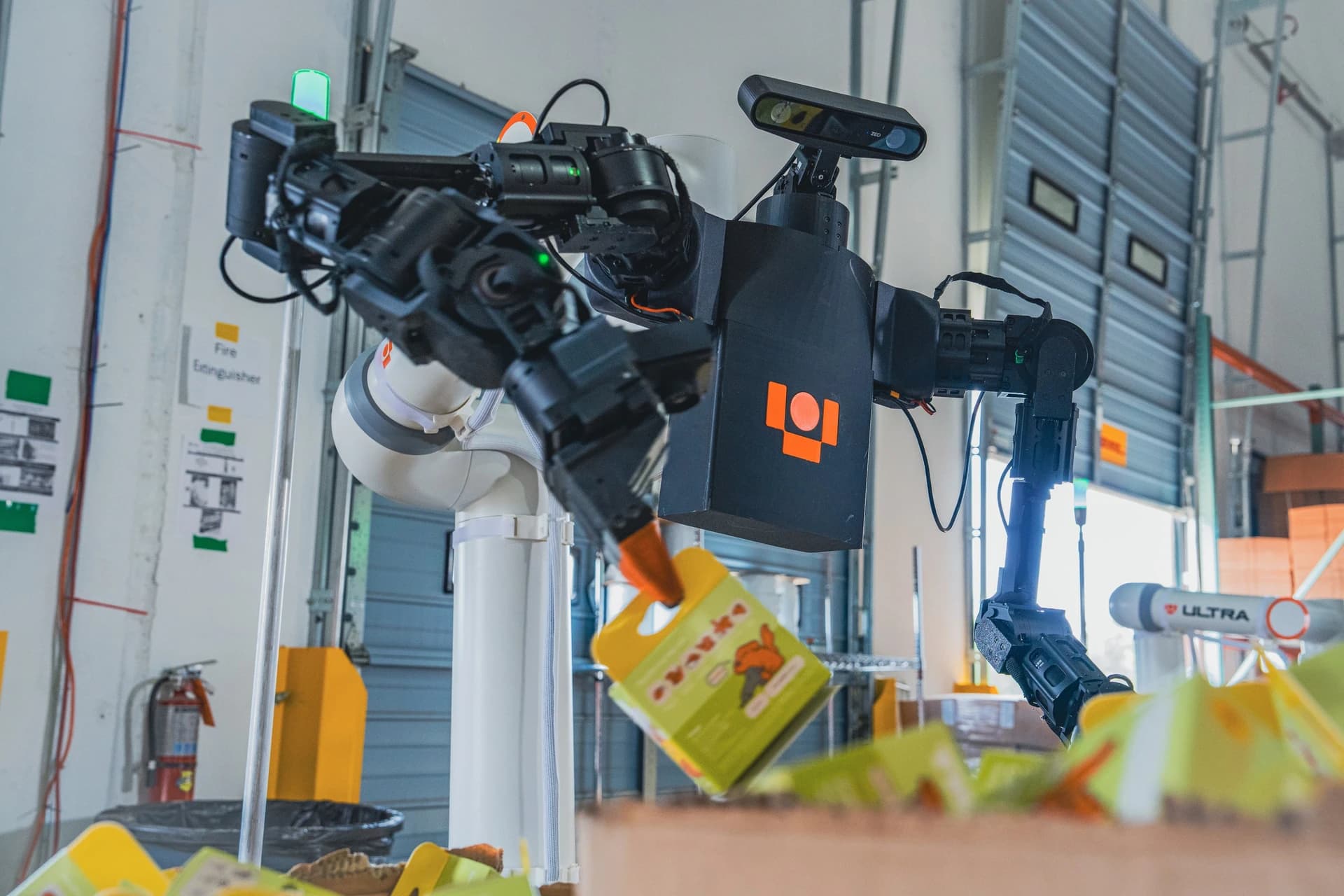
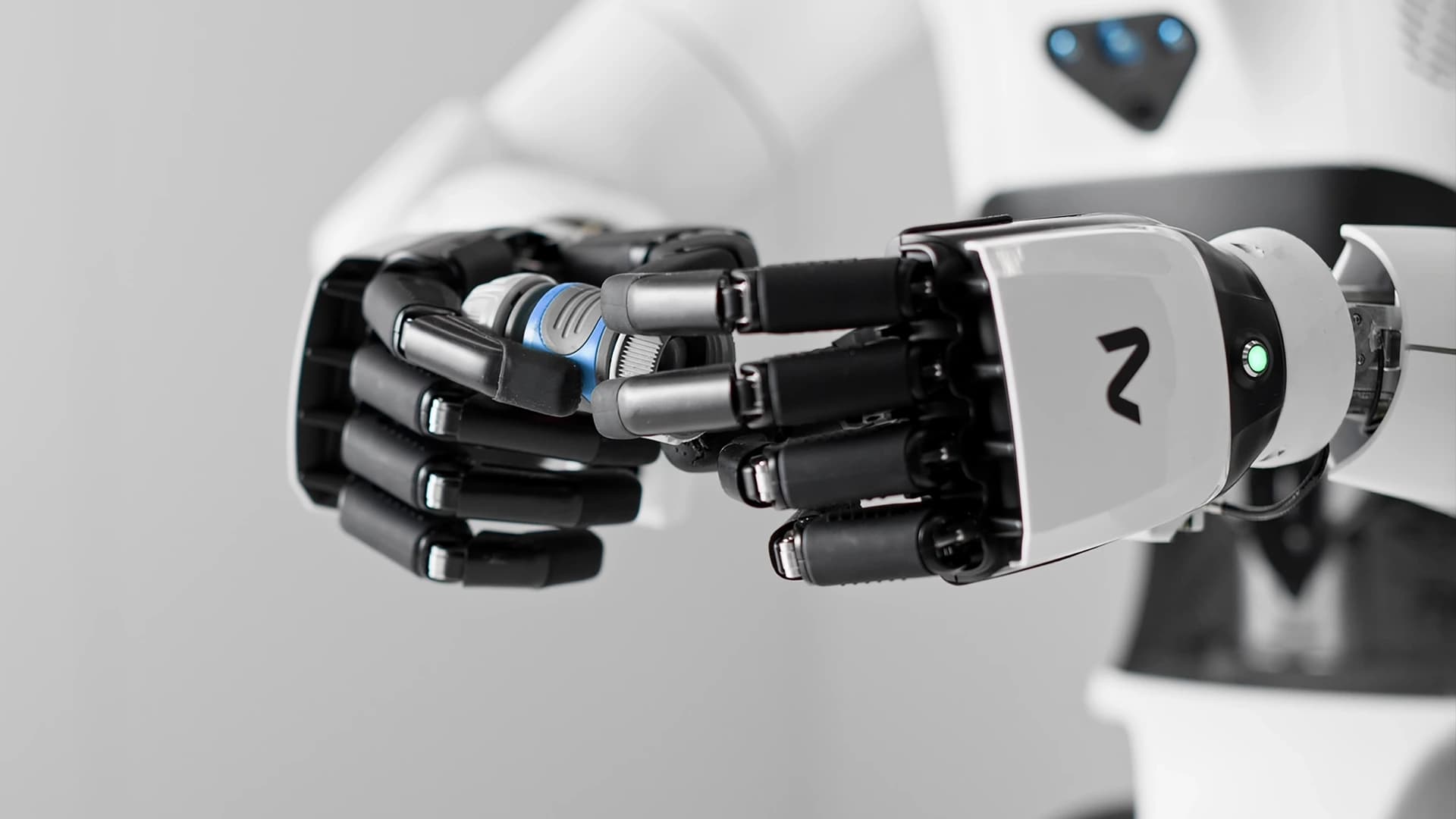
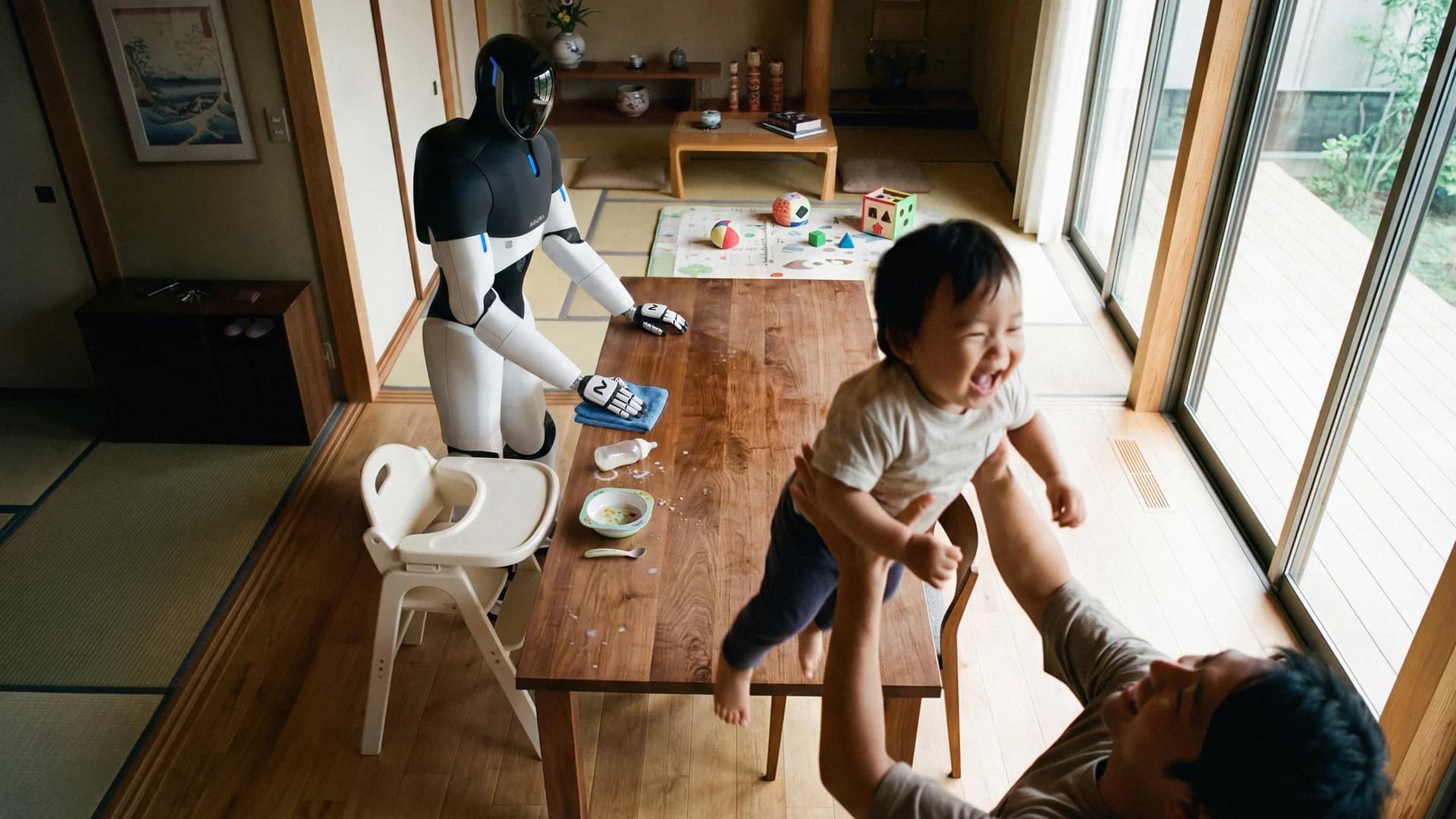
NEURA Robotics has introduced Neuron AI, a robot foundation model that combines vision with touch, sound and memory. The German company plans to demonstrate the system through an autonomous eleven-minute laundry-handling sequence by its 4NE1 humanoid at NVIDIA GTC Berlin on October 20–22.
The October 14 announcement sets out a broader ambition: one model trained across different NEURA robots, with customers able to adapt skills to their own tasks and deploy them through the Neuraverse platform.
- Neuron AI combines 3D vision, tactile and force data, audio, robot state and language with memory, according to NEURA.
- The company says the model runs across five robot embodiments, with inference performed locally on the robot.
- The eleven-minute laundry demonstration is scheduled for GTC Berlin. The announcement does not provide repeated-run success rates or intervention data.
Touch, sound and a memory of what happened
NEURA calls its architecture a Perception-Language-Action, or PLA, model. In its announcement, the company describes aligning sensory inputs over time and converting them into robot actions, while retaining context about earlier events and objects that have moved out of view.
The proposed benefits are practical: contact forces could help establish whether a screw has engaged, while sound could indicate that a latch has clicked into place. These are examples of the capabilities NEURA is targeting, rather than quantified performance results in the release.
The weekly humanoid robotics briefing
One email a week: the launches, funding and research that mattered, with context from Humanoids Daily.
Read recent issuesIts Neuron AI product page says inference runs on the robot without requiring a cloud connection. The page identifies five supported embodiments: 4NE1 Gen 3, Gen 4, a wheeled 4NE1 and two further bimanual platforms.
The emphasis on touch connects with Rhoda AI’s recent demonstration of a robot finding textured balls with its cameras blocked. Rhoda extends its Direct Video-Action model to predict tactile signals. NEURA is presenting a wider multisensory architecture, but the PLA label alone does not establish an advantage over other robot-learning approaches.
From training data to fleet deployment
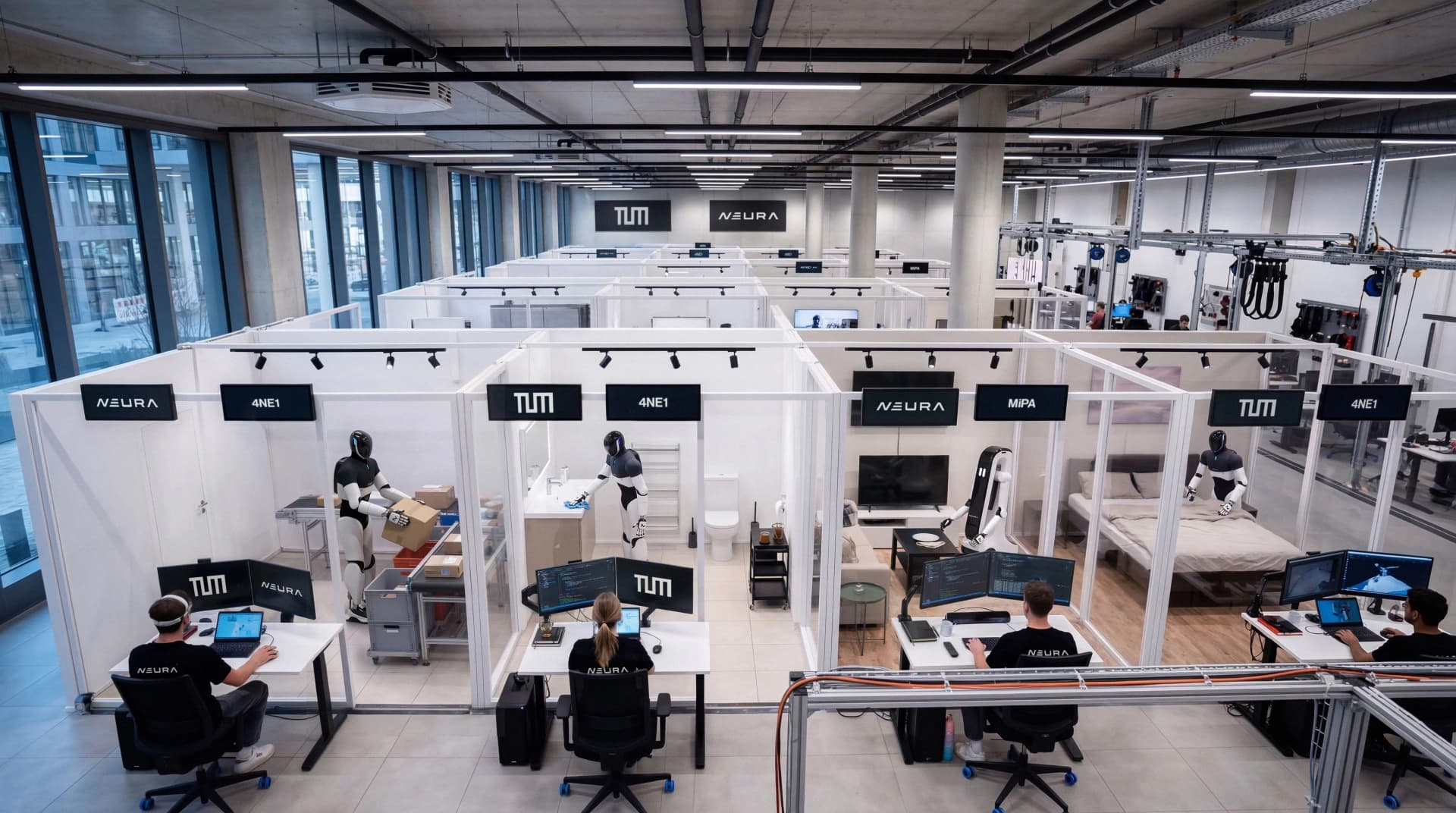
NEURA says training combines real robot experience, simulated variations and human demonstrations captured with sensor-equipped suits. Its NEURA Gyms provide infrastructure for collecting data, training skills and benchmarking, with industrial data partnerships including Schaeffler and Bosch.
Through Neuraverse, customers would fine-tune the model for their processes and distribute capabilities across fleets. The release says customers can keep their skills private, while choosing whether to share skills or deployment data with the wider ecosystem.
The company calls Time-to-Skill a central measure of progress: how long it takes to teach a task and reach reliable execution. It does not publish a measured Time-to-Skill result in this announcement.
An upcoming laundry test
NEURA says the planned GTC sequence will sort laundry, load a washing machine, close and reopen it, unload the clothes and transfer them to a dryer without human intervention. The eleven minutes refer to handling and coordination, not a complete wash-and-dry cycle.
As of October 15, the live demonstration remains ahead. NEURA lists Station-Berlin, Hall 3, Booth 3031 as the location for visitors to see it on October 20–22.
The sequence could offer a useful view of how the robot maintains context through successive steps. Assessing reliability will require more than a completed run: repeated trials, recovery from failures and comparisons showing what the additional senses and memory contribute would make the performance easier to judge.
Share this article
Read next
- Published on
- Reading time
- 3 min read
NEURA Launches HealthTech Unit, With MiPA on Its Healthcare Roadmap
- Published on
- Reading time
- 25 min read
The Humanoids of Europe: Built by Their Customers
- Published on
- Reading time
- 5 min read
NEURA Robotics and SECO Team Up to Scale European Physical AI Hardware
- Published on
- Reading time
- 6 min read
NEURA Robotics Secures Record $1.4 Billion Series C, Led by Tether, to Build the "Machine Economy"
- Published on
- Reading time
- 4 min read
NEURA Robotics and TUM Launch Europe’s Largest Physical AI Training Center
- Published on
- Reading time
- 3 min read
Neura Robotics and Qualcomm Partner to Standardize "Brain and Nervous System" for Physical AI
The weekly humanoid robotics briefing
One email a week: the launches, funding and research that mattered, with context from Humanoids Daily.
Read recent issues