- Published on
The Terafab Manifesto: Tesla and Intel Join Forces to Power Musk’s "Galactic" AI Ambitions
One tap, and our reporting appears more often in your Google Top Stories. It makes a real difference to a small newsroom.
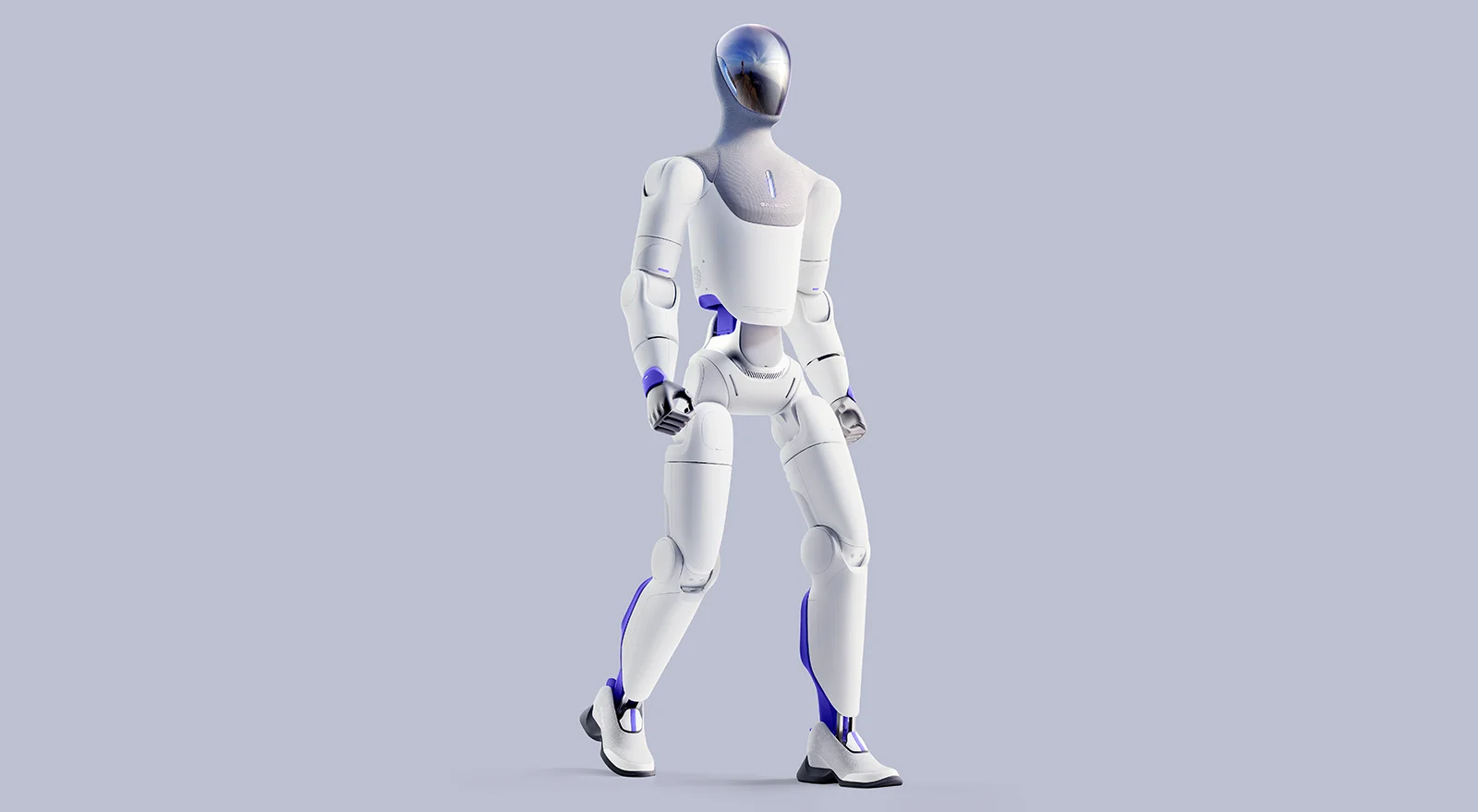
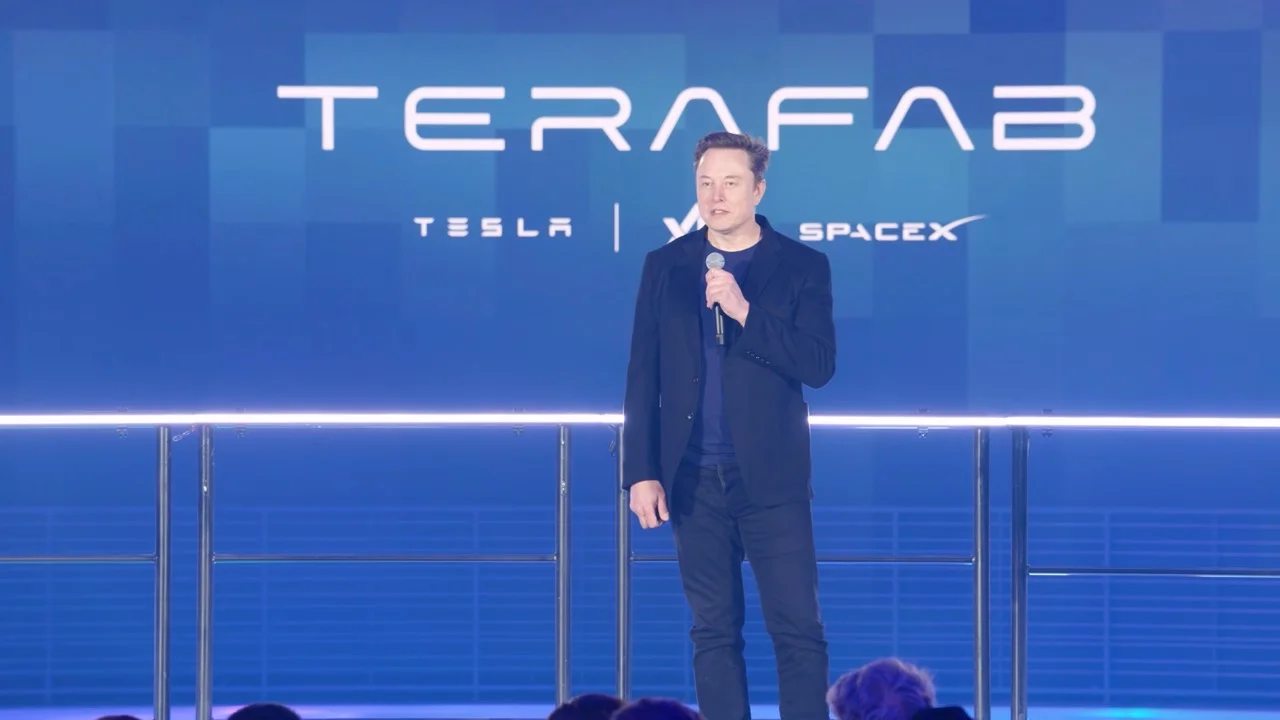
In a move that shifts Tesla’s focus from the assembly line to the silicon wafer, CEO Elon Musk has detailed the "Terafab"—a massive semiconductor complex in Austin, Texas, designed to produce a staggering 1 terawatt of compute per year. The project, which officially added Intel as a primary partner this week, represents a "step change" in manufacturing intended to solve a looming bottleneck in the hardware required for both the Optimus humanoid program and a new frontier of space-based data centers.
A Recursive Loop for Silicon
The Terafab is not merely a manufacturing plant; it is a bid for total vertical integration. Musk describes the facility as an "advanced technology fab" that houses the entire chip-making lifecycle under one roof. This includes logic and memory fabrication, packaging, testing, and—most critically—the production of lithography masks.
By producing masks internally, Musk claims Tesla can achieve a "recursive improvement loop" that is an order of magnitude faster than the industry standard. This allows engineers to design a chip, manufacture a prototype, test it, and refine the mask in a single building, bypassing the logistical delays inherent in the traditional global supply chain.
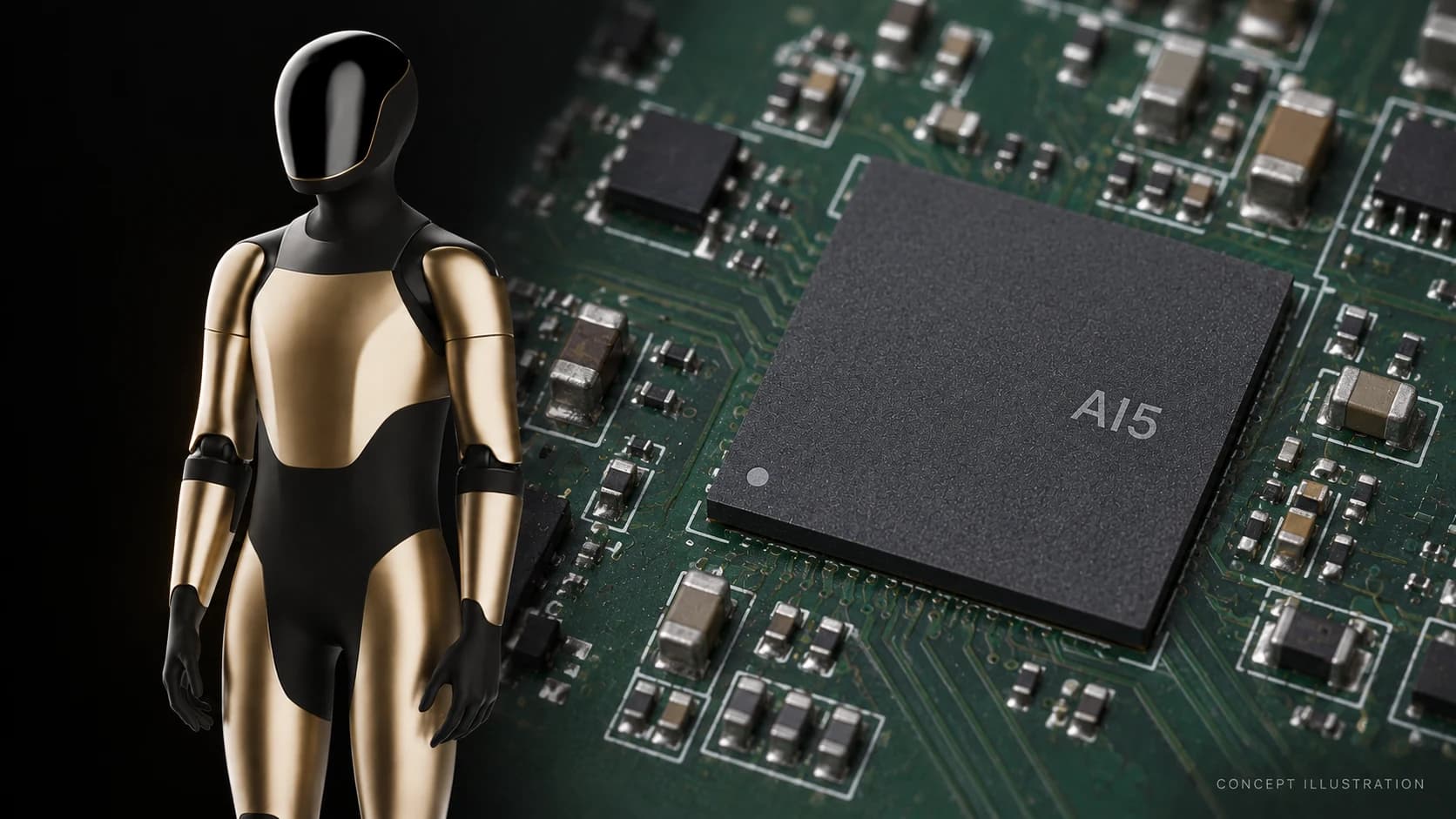
This infrastructure is essential for the rollout of Tesla’s next-generation silicon. While a small number of AI5 units are expected in 2026, high-volume production is slated for 2027. The subsequent AI6 chip is already being teased for 2028, promising twice the performance while utilizing the same Terafab architecture.
The weekly humanoid robotics briefing
One email a week: the launches, funding and research that mattered, with context from Humanoids Daily.
Read recent issuesThe Intel Alliance: A Turnaround Strategy
The partnership with Intel marks a significant geopolitical and corporate realignment. After months of public musing, Intel CEO Lip-Bu Tan confirmed the company will join the Terafab project to help Musk reach the 1-terawatt goal. For Intel, which recorded a $10.32 billion operating loss in its foundry business in 2025, the Tesla partnership serves as a high-profile validation of its 18A manufacturing technology.
Musk has been vocal about his gratitude to existing suppliers like TSMC, Samsung, and Micron, but he maintains that their current expansion rates are "much less" than what his long-term vision requires. "We either build the Terafab or we don’t have the chips," Musk stated during a recent keynote, emphasizing that current global fab output represents only 2% of the compute capacity he intends to build.
Two Paths for AI: Edge and Orbit
The Terafab will focus on two distinct classes of processors:
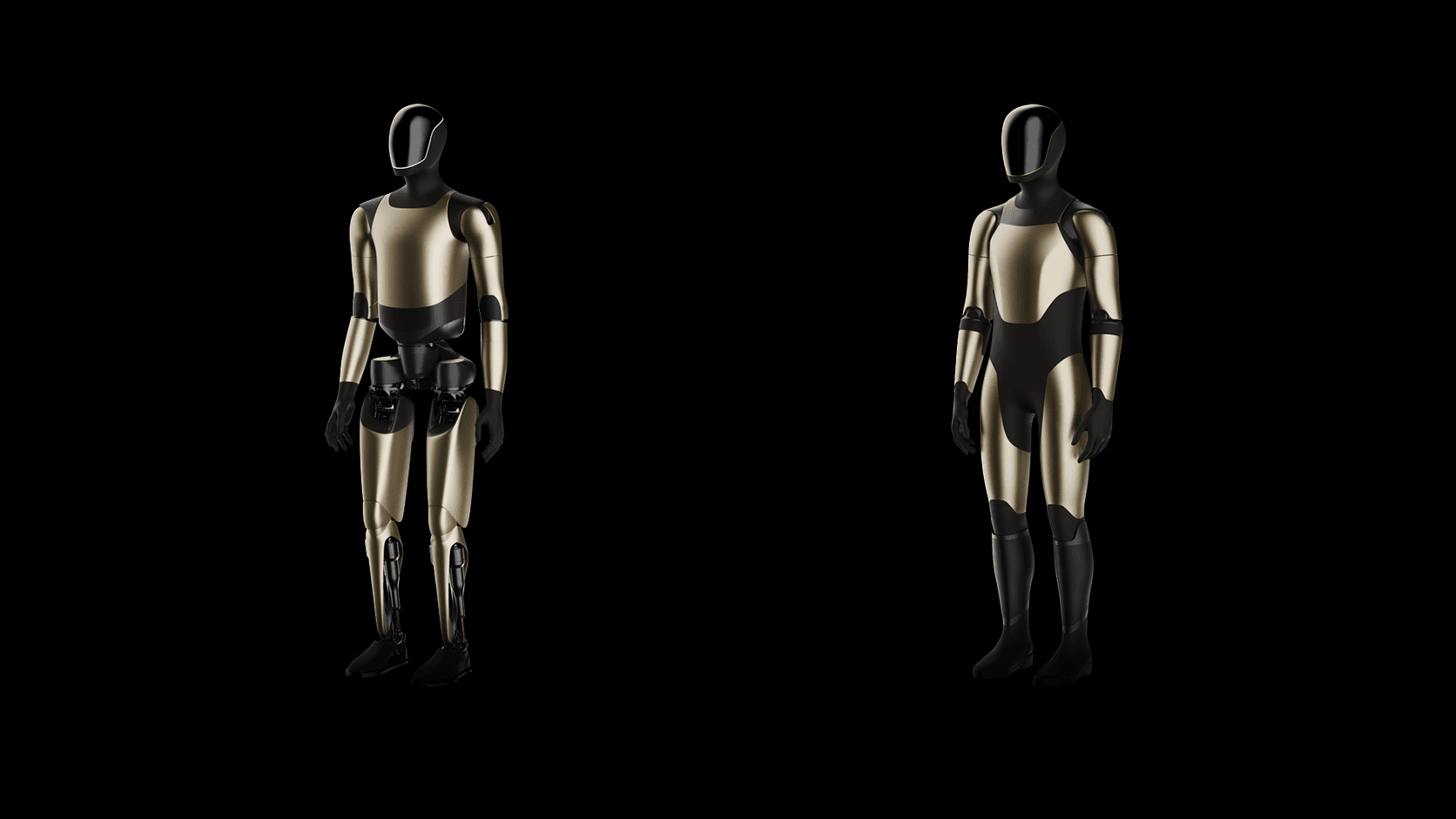
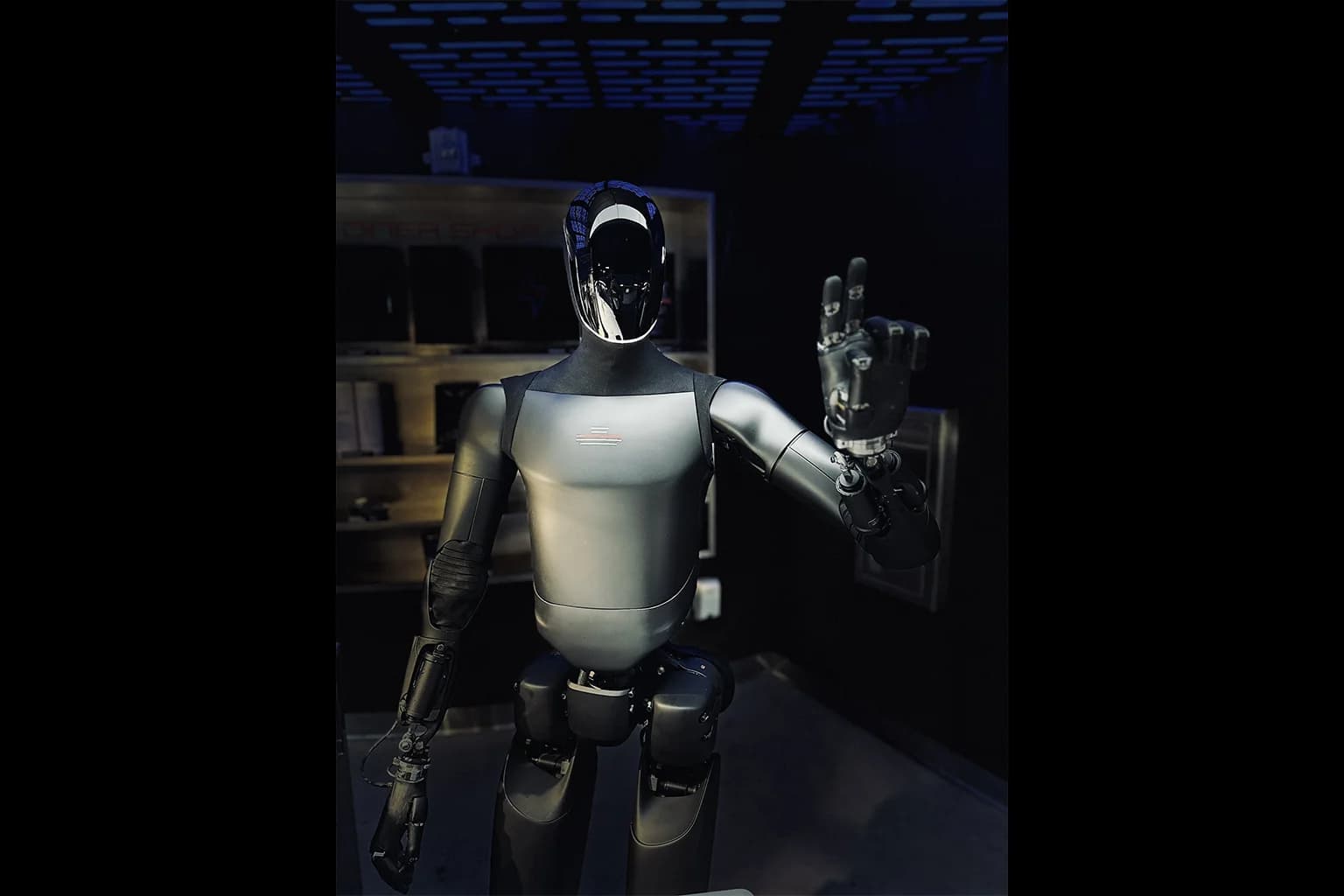
- Edge Inference Chips: Designed for high-volume deployment in Optimus robots and Tesla vehicles. Musk projects humanoid robot production could eventually reach 1 billion to 10 billion units per year, eclipsing the automotive market by a factor of 100.
- Space-Hardened Chips: Optimized for the "hostile environment" of orbit. These high-power chips are designed to tolerate high-energy ions and electron buildup. Interestingly, these chips are engineered to run hotter than terrestrial versions to minimize the mass of the radiators required for cooling in a vacuum.
This pivot toward space is driven by terrestrial power constraints. Musk argues that as AI demands scale, "NIMBY" (Not In My Backyard) opposition and aging electrical grids on Earth will make domestic expansion increasingly difficult. In contrast, space offers a "no-brainer" environment where solar power is five times more effective due to the lack of atmospheric attenuation.
Scaling the Kardashev Curve
Musk’s vision for the Terafab is explicitly tied to the Kardashev scale—a method of measuring a civilization's level of technological advancement based on the amount of energy it can use. He noted that humanity currently uses only a "tiny fraction" of the sun’s energy reaching Earth, roughly a trillionth of its total output.
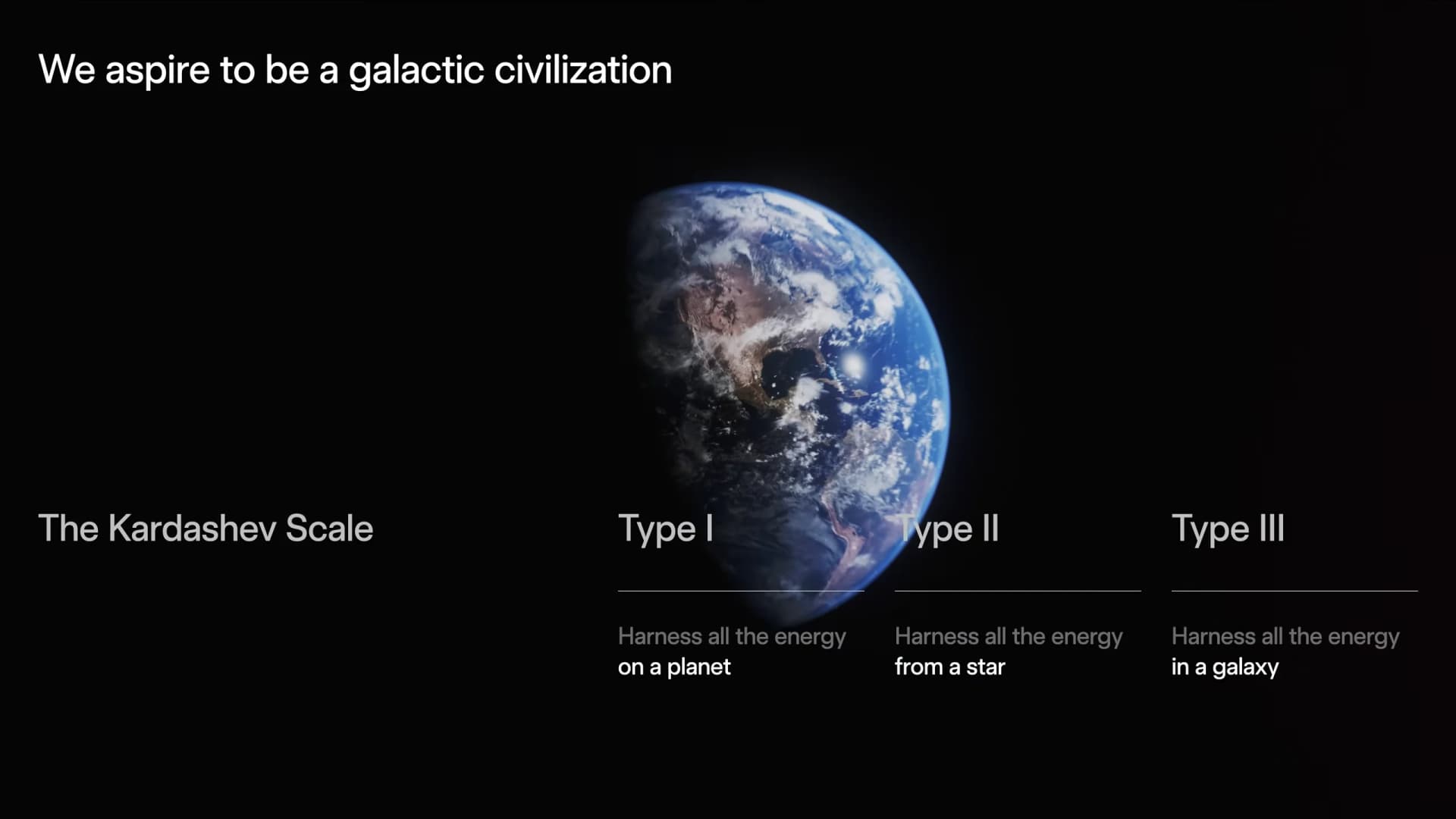
To move toward a "Type 1" civilization, Musk is leveraging the combined force of Tesla, xAI, and SpaceX. The roadmap relies on SpaceX’s Starship V3 and V4 to deliver 10 million tons of payload to orbit per year, enabling the construction of megawatt-scale solar AI satellites.
The $20 Billion Gamble
The financial stakes are unprecedented. Tesla’s capital expenditure for 2026 is forecast to exceed $20 billion, funding the retooling of the Fremont factory for a 1-million-unit Optimus line and the construction of the Austin Terafab.
While the rhetoric is focused on a "galactic" future, the immediate challenge remains grounded. Tesla is currently navigating an "agonizingly slow" production S-curve for its Gen 3 robot and is fighting a "brain drain" of specialized talent to rivals like Boston Dynamics and UMA. Whether the Terafab can produce the silicon needed to turn "science fiction into science fact" will likely determine if Musk’s vision of "Amazing Abundance" becomes a reality or remains an expensive aspiration.
Share this article
Read next
- Published on
- Reading time
- 3 min read
Musk Says Tesla Halved AI5 RAM to Secure Memory for Optimus Production
- Published on
- Reading time
- 5 min read
Tesla App Contains Optimus Gen 3 Renders—Here’s What They Show
- Published on
- Reading time
- 4 min read
Supply Chain Rumors Hint at Massive Optimus Order as Fremont Production Line Ramps Up
- Published on
- Reading time
- 3 min read
Finishing Touches: Tesla Misses Self-Imposed Q1 Deadline for Optimus Gen 3 Reveal
- Published on
- Reading time
- 3 min read
A 'Formula One' Pace: Tesla's Optimus Director Teases Gen 3 Prototype in New Recruitment Push
- Published on
- Reading time
- 5 min read
The "Infinite Money Glitch": Elon Musk Outlines the Roadmap to a Billion Robots
The weekly humanoid robotics briefing
One email a week: the launches, funding and research that mattered, with context from Humanoids Daily.
Read recent issues