- Published on
The Blueprint for a Bipedal Workforce: Kia Details Atlas Deployment Roadmap
One tap, and our reporting appears more often in your Google Top Stories. It makes a real difference to a small newsroom.

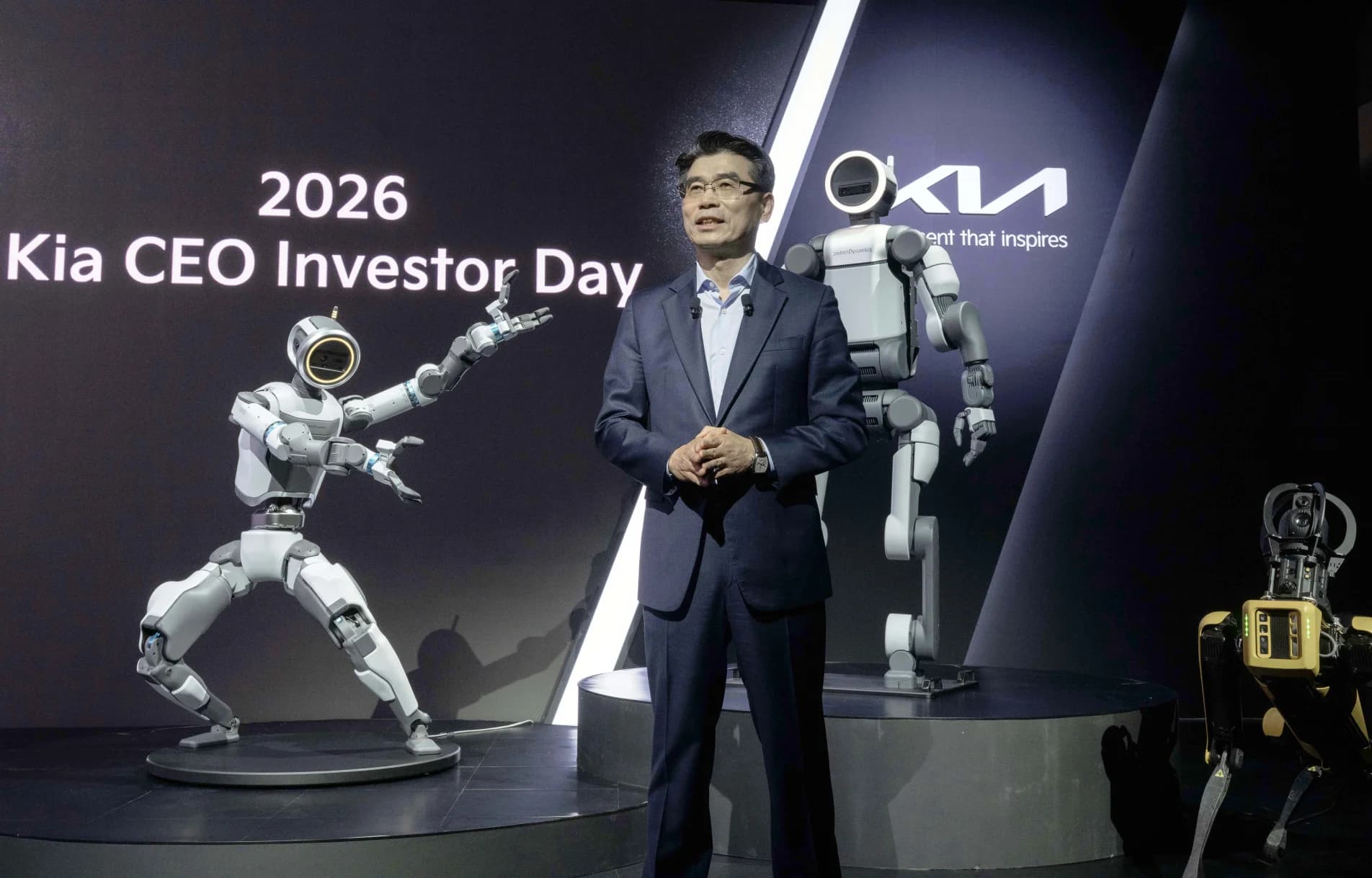
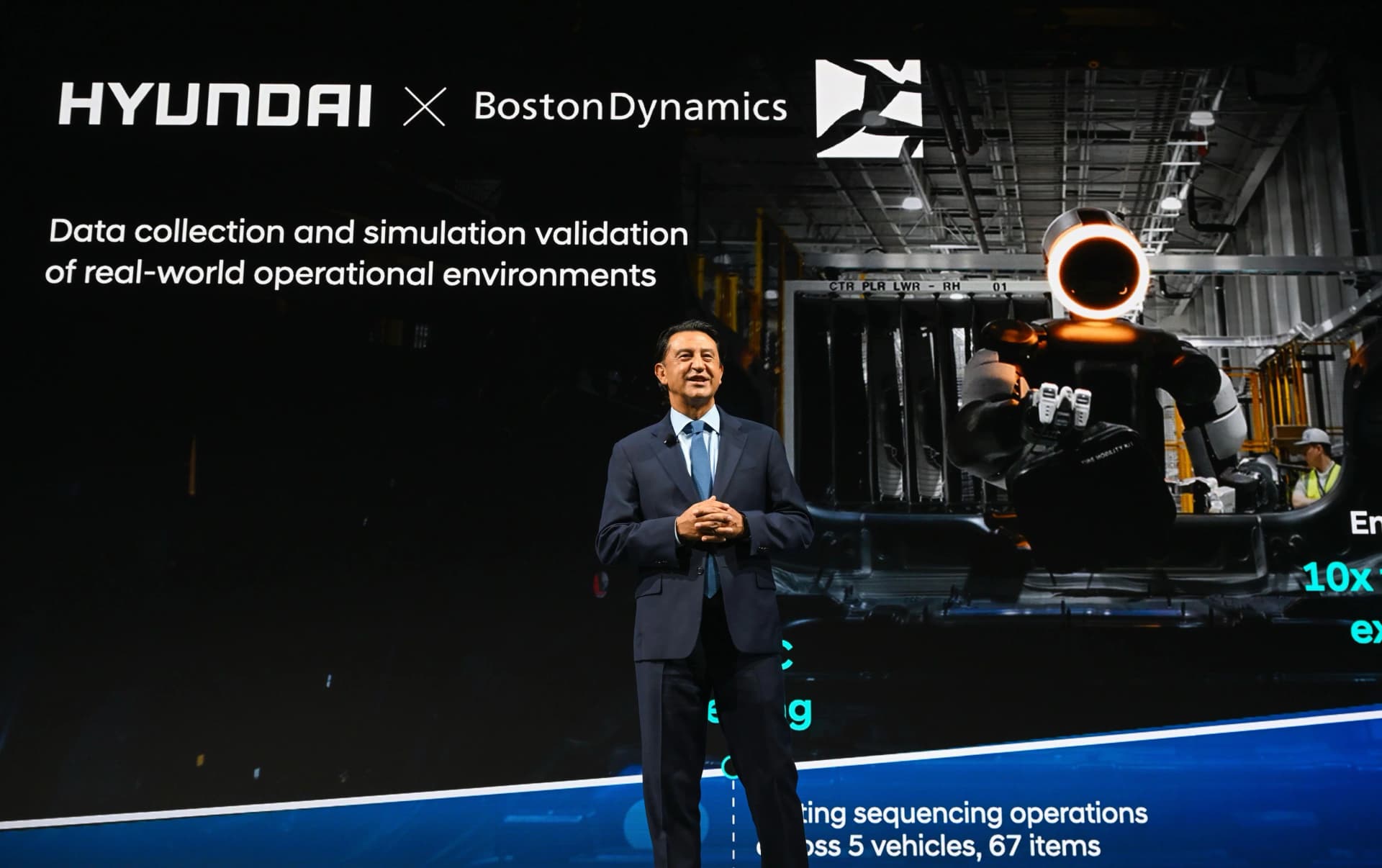
Kia Corporation is shifting its robotics strategy from experimental validation to industrial scale. At the company’s 2026 CEO Investor Day held in Seoul, South Korea, President and CEO Ho Sung Song identified robotics, alongside electric vehicles and autonomous driving, as a primary driver for Kia’s "fastest growth to date".
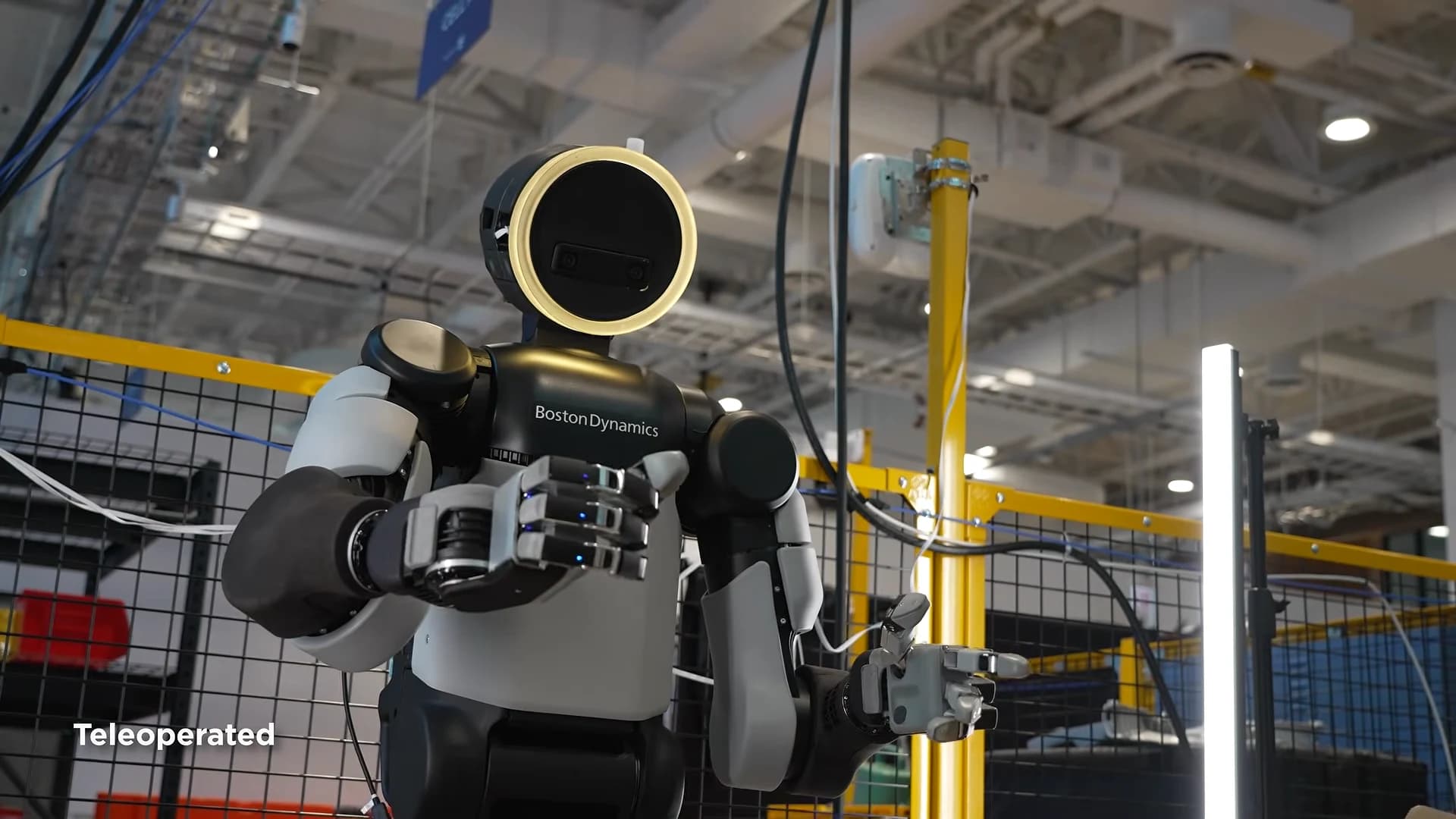
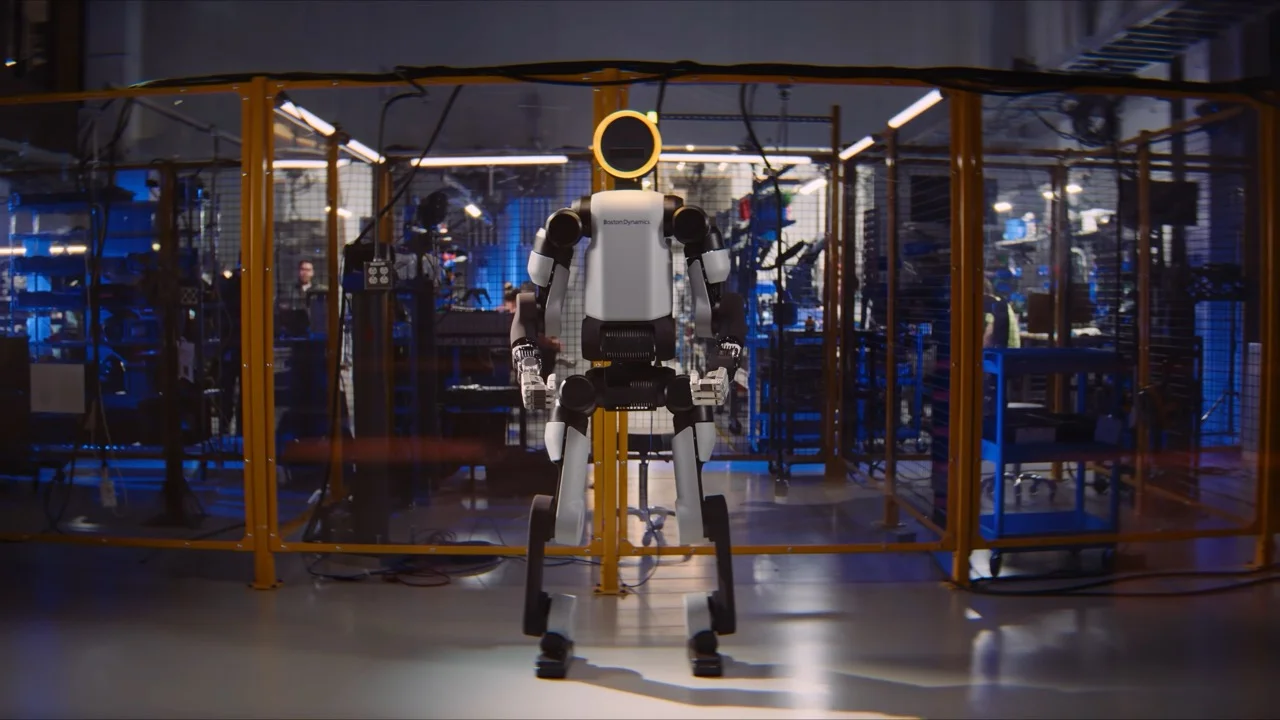
Central to this growth is a definitive timeline for the deployment of Boston Dynamics’ Atlas, marking the platform's official transition from a laboratory research project to a functional tool within the automotive supply chain.
The Road to HMGMA: 2028 and 2029
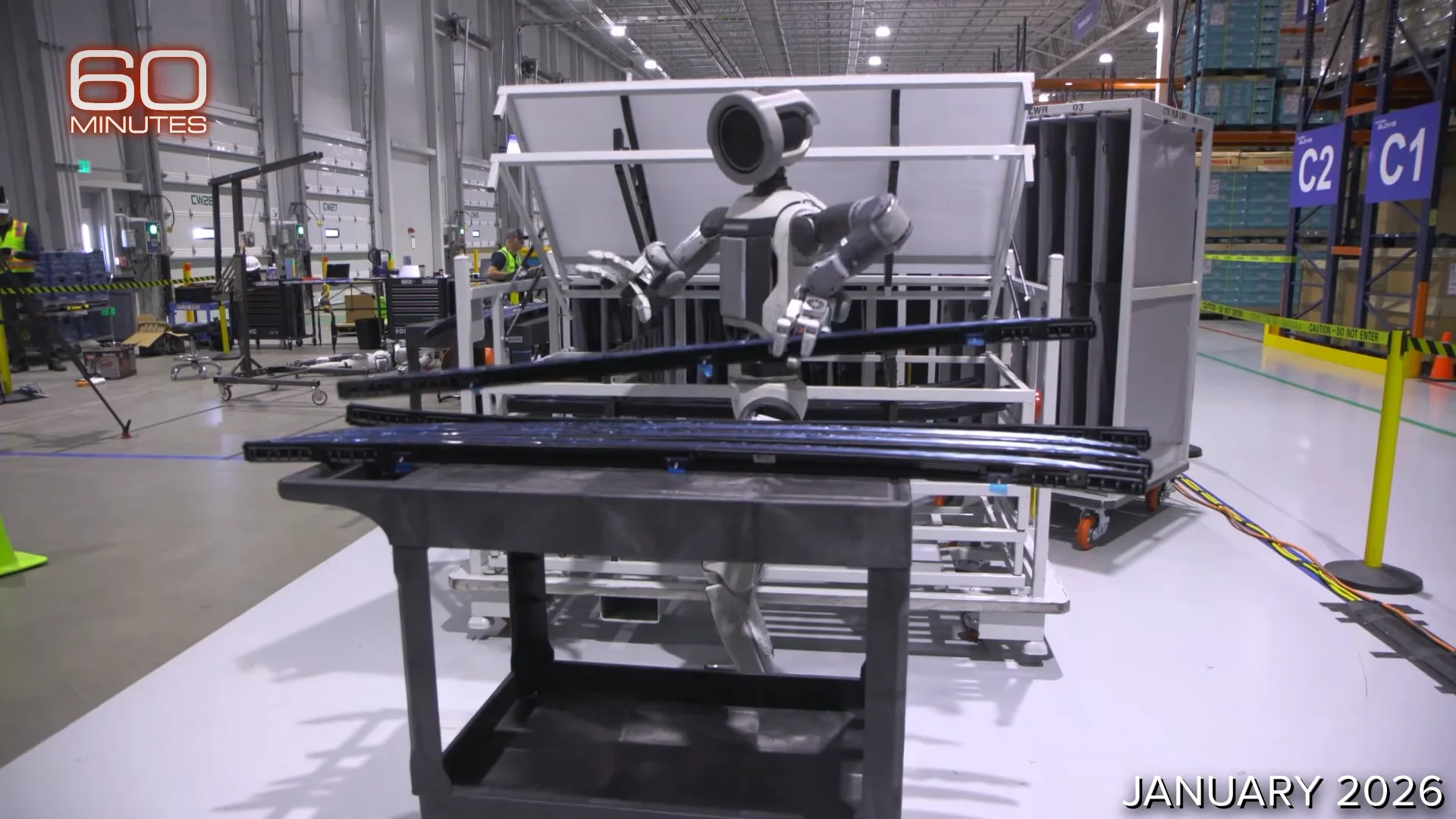
The centerpiece of Kia’s robotics roadmap is the full-scale deployment of the production-ready Atlas at the Hyundai Motor Group Metaplant America (HMGMA) in Georgia. Following initial field tests involving automotive roof racks, Kia plans to begin full-scale operations at HMGMA in 2028.
The rollout will expand to Kia AutoLand Georgia in the second half of 2029, supported by a new Software-Defined Factory (SDF) initiative designed to streamline the integration of humanoid hardware into existing manufacturing workflows. Kia intends to apply Atlas to 16 core manufacturing processes, initially focusing on high-value use cases that leverage the robot's modular design and 360-degree range of motion to enhance safety and productivity.
The weekly humanoid robotics briefing
One email a week: the launches, funding and research that mattered, with context from Humanoids Daily.
Read recent issuesLogistics Synergy: The PBV-Robot Ecosystem
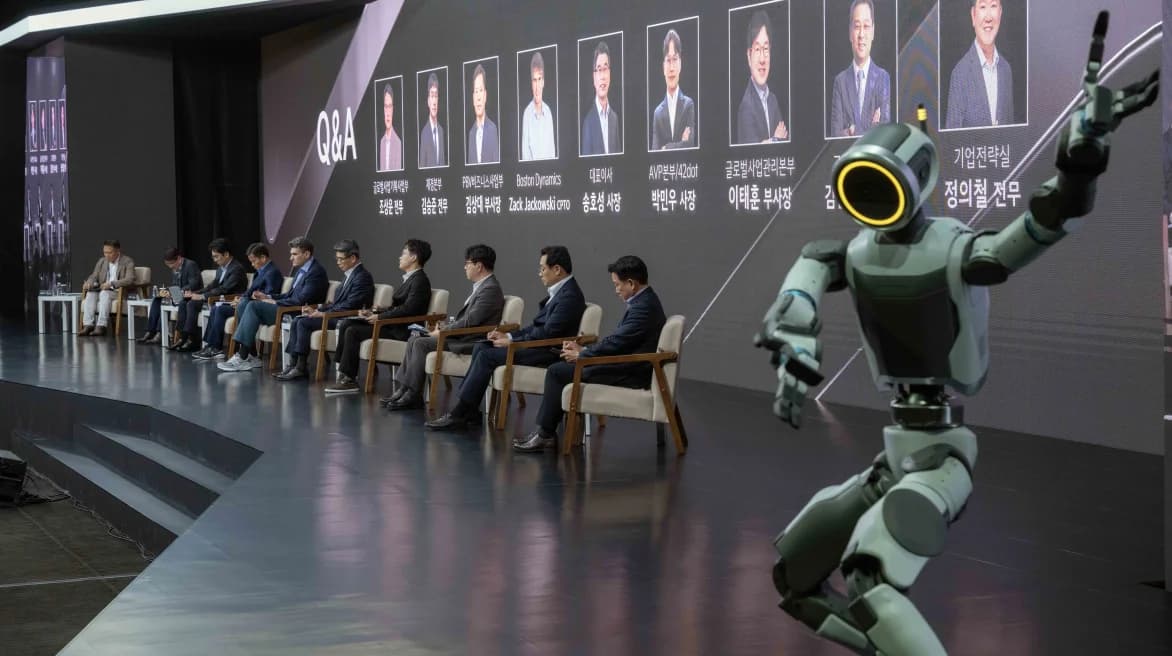
Kia’s strategy extends beyond the factory floor, envisioning a "last-mile" delivery market that integrates robotics with its Platform Beyond Vehicle (PBV) lineup. The company plans to introduce a full-stack logistics solution that combines the Stretch and Spot robots with its upcoming PV7 and PV9 electric vans.
- PV5 (2025): Launched last year as the foundation of the PBV ecosystem.
- PV7 (2027) & PV9 (2029): Will serve as the primary mobile hubs for robotic delivery.
By utilizing these vehicles as mobile base stations, Kia and Boston Dynamics aim to pioneer autonomous delivery services where robots handle the "last meter" of material transport. This mirrors a broader industry trend toward generalist droids as the solution for manufacturing complexity, where a single hardware platform can be reprogrammed for diverse tasks.
Investing in "Physical AI"
To support these goals, Kia has committed to a massive financial roadmap. The company plans to invest KRW 49 trillion (approx. $36 billion) over the next five years, with KRW 21 trillion specifically allocated to future businesses including robotics and autonomous driving.
A significant portion of this capital—over $500 million—is earmarked for AI infrastructure and talent. This includes strategic partnerships with Google DeepMind and NVIDIA to develop "Physical AI" and Vision-Language-Action (VLA) models. These models are intended to provide Atlas with the "common sense" physics required to generalize across different industrial environments rather than relying on rigid, pre-programmed trajectories.
Analysis: Graduation to Phase Two
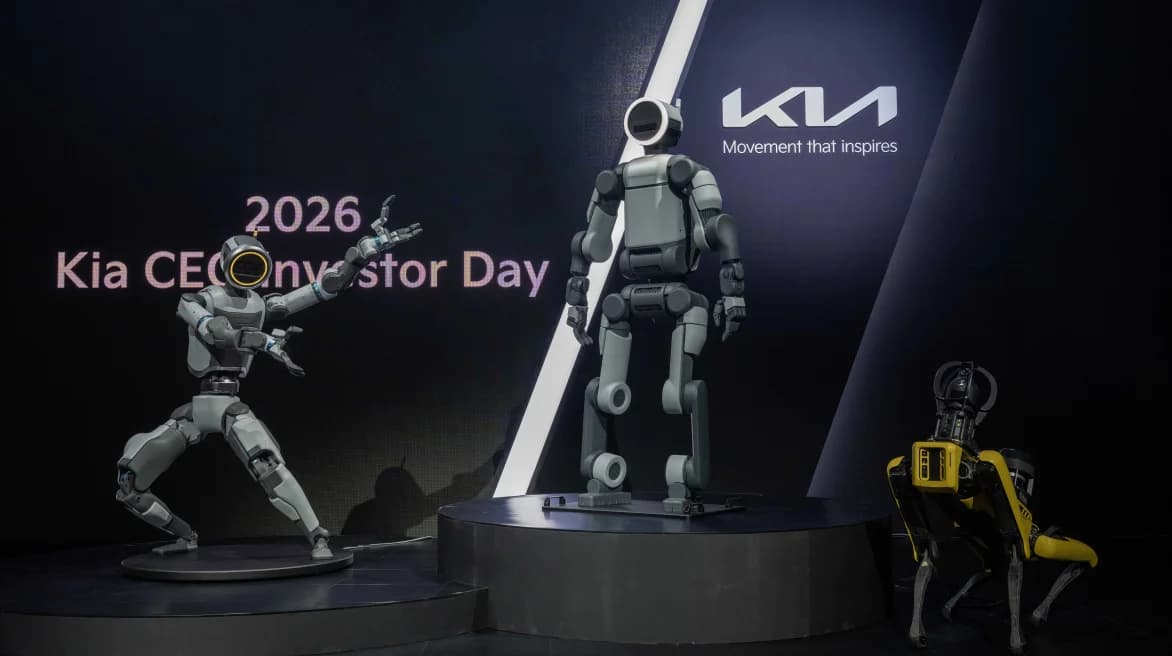
The 2026 roadmap reinforces the sentiment that the humanoid industry is moving past “Phase One” hardware validation and into a phase defined by product-market fit and sustained deployment.
By shunting complexity into high-performance actuators and a "System 1 / System 2" software architecture, Kia and Boston Dynamics are betting that Atlas can achieve the 99.9% uptime required for 24/7 manufacturing. While the 2028 mass-production target remains ambitious, the formalization of the Georgia Metaplant as a "data factory" suggests that the era of laboratory curiosity is officially over.
Share this article
Read next
- Published on
- Reading time
- 4 min read
Hyundai to Take Full Ownership of Boston Dynamics in $325 Million SoftBank Buyout
- Published on
- Reading time
- 4 min read
The Production Pivot: Leadership Exodus and Internal Pressure at Boston Dynamics
- Published on
- Reading time
- 7 min read
Hyundai Says Atlas Will Not Replace Workers — One Day After Settling a Strike Over Exactly That
- Published on
- Reading time
- 5 min read
Form as Function: Boston Dynamics Details the Industrial Design Logic Behind the Production Atlas
- Published on
- Reading time
- 5 min read
From Viral Clips to the Factory Floor: 60 Minutes Goes Inside Boston Dynamics’ Industrial Shift
- Published on
- Reading time
- 3 min read
End of an Era: Boston Dynamics CEO Robert Playter to Retire

The weekly humanoid robotics briefing
One email a week: the launches, funding and research that mattered, with context from Humanoids Daily.
Read recent issues