- Published on
Beyond the Backflip: Zachary Jackowski on Why Generalization is the Final Frontier for Atlas
One tap, and our reporting appears more often in your Google Top Stories. It makes a real difference to a small newsroom.
For decades, Boston Dynamics was defined by its "blue sky" research—a period characterized by high-stakes hydraulic experiments and viral parkour videos. But according to Zachary Jackowski, the head of the Atlas program, that era has officially been sunsetted in favor of a rigorous, data-driven push toward industrial scale.
In a recent episode of the Automated podcast with Brian Heater, Jackowski detailed the internal logic behind the transition from the research-heavy "R1" electric Atlas to the production-ready version unveiled at CES 2026. The conversation offered a sober look at the technical hurdles remaining as the company shifts from lab-controlled agility to the "bitter lesson" of real-world deployment.
Retiring the "Unbalanced Machine"
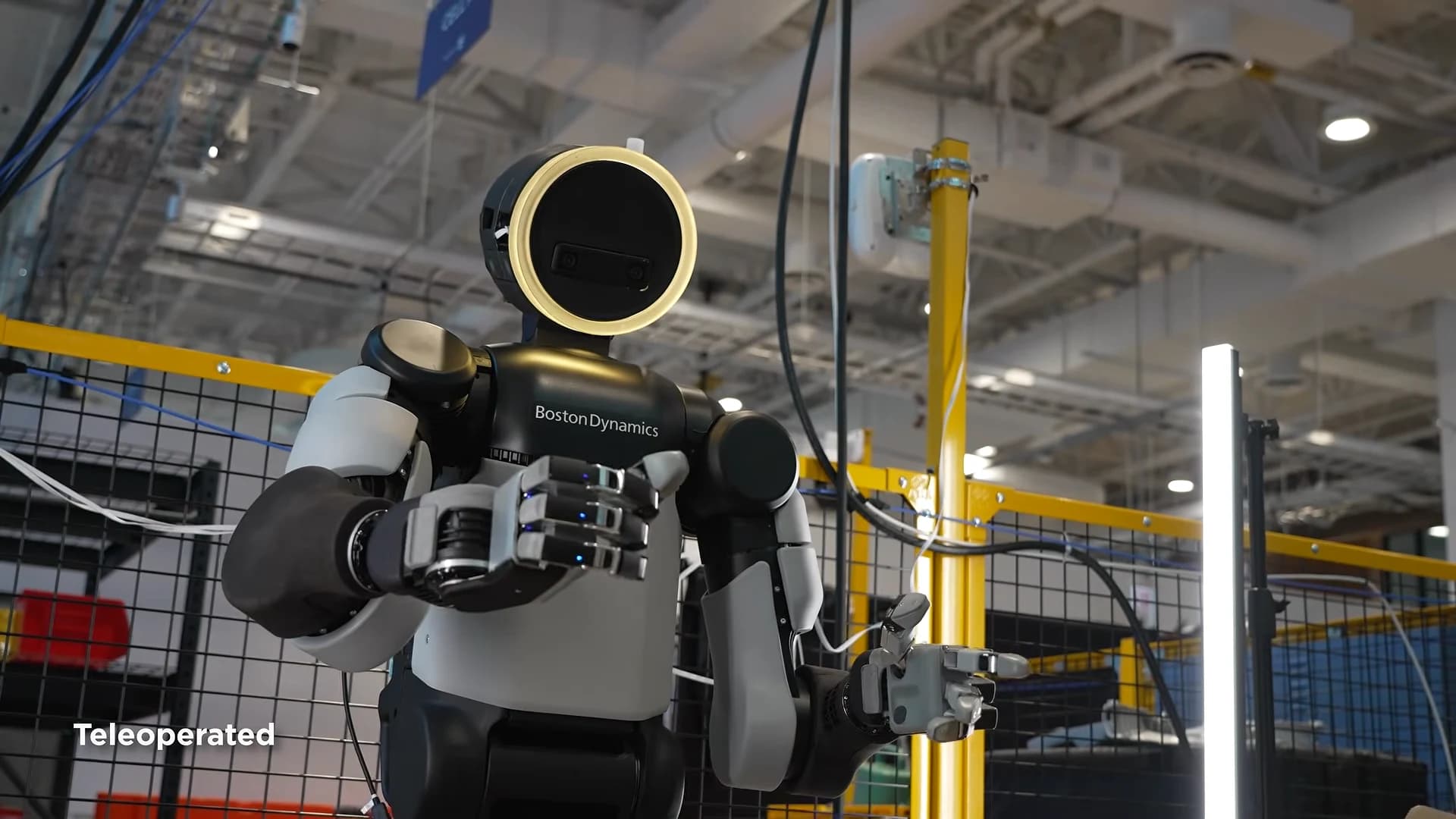
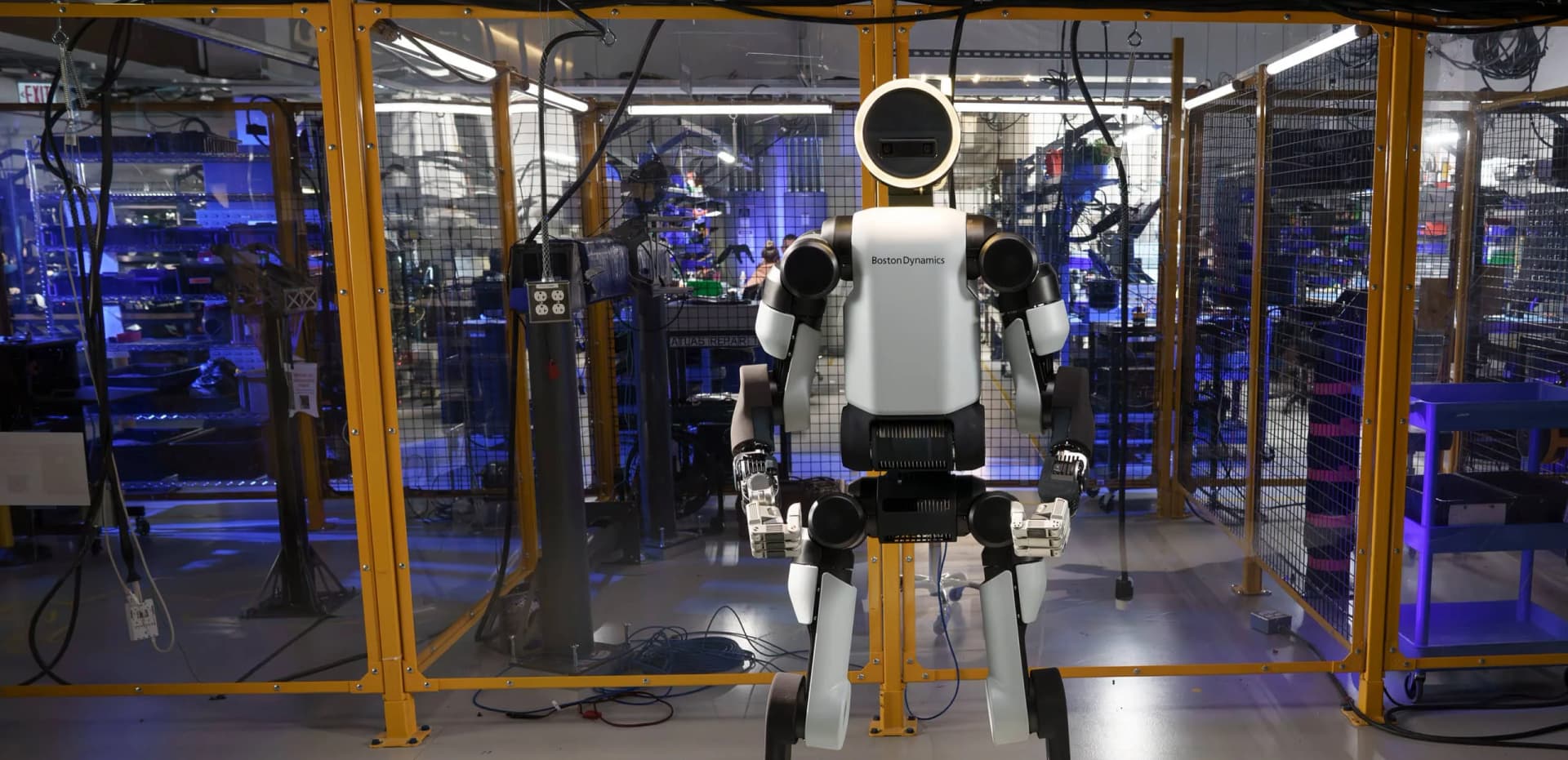
Perhaps the most significant revelation from the discussion was the definitive retirement of the R1 research platform. While the R1 was responsible for the viral "Run in the Sun" gymnastics, Jackowski characterized it as an "unbalanced machine."
"You can spend a lot of money and buy really nice materials... but they don't all play together perfectly well," Jackowski noted. The transition to the production model allowed for massive technical simplifications:
The weekly humanoid robotics briefing
One email a week: the launches, funding and research that mattered, with context from Humanoids Daily.
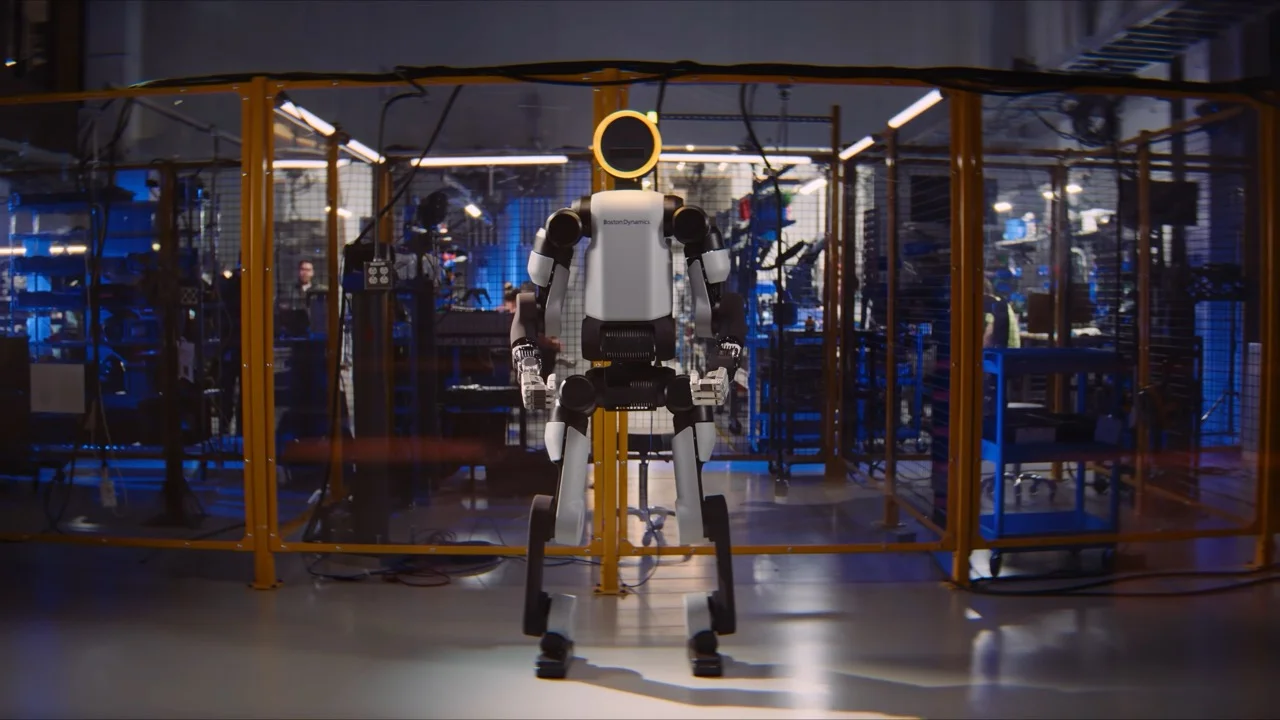
Read recent issues- Compute Consolidation: The R1 utilized three separate computers (two x86 units and a Jetson in the head). The production Atlas has consolidated this into a single NVIDIA Thor module, providing an "enormous jump" in compute power.
- Actuator Efficiency: By leveraging proprietary actuator technology, the team reduced the robot's architecture to just two unique motor designs.
- Reliability: The new units are described as more "repairable and predictable," essential for the Hyundai mandate of 24/7 uptime.
The Data Diversity Trap
While much of the industry is focused on the volume of data—often referred to as "brute force" collection—Jackowski argued that data diversity is the true bottleneck for generalization.
"If we deploy robots and just do automotive part sequencing, we are not going to produce the kind of generalization that we're hoping for," he explained. This philosophy mirrors the company's shift toward System 1 / System 2 architectures, where the robot must learn "common sense" physics rather than just repeating pre-programmed trajectories.
Jackowski suggested that the future of the Atlas "brain" lies in a shared backbone. Data collected by the quadruped Spot or the warehouse-focused Stretch can inform Atlas, and vice versa. "You should see a performance improvement from the introduction of that new data diversity," Jackowski said, hinting that a VLA (Vision-Language-Action) model trained on Stretch’s truck unloading could theoretically make Atlas a better factory worker.
Why the Home is Still a "No-Go" Zone
Despite the hype surrounding personal domestic assistants, Jackowski remains skeptical about humanoids entering the home in the near term. He characterized the production Atlas as "amazingly capable" but "slightly heavier than we would want for a home environment."
The primary obstacles are safety and regularity. In a factory, the environment is populated by trained adults who understand how to move around heavy machinery. In a home, "you've got kids running around; you've got pets." (Read about Figure CEO Brett Adcock's take on this here)
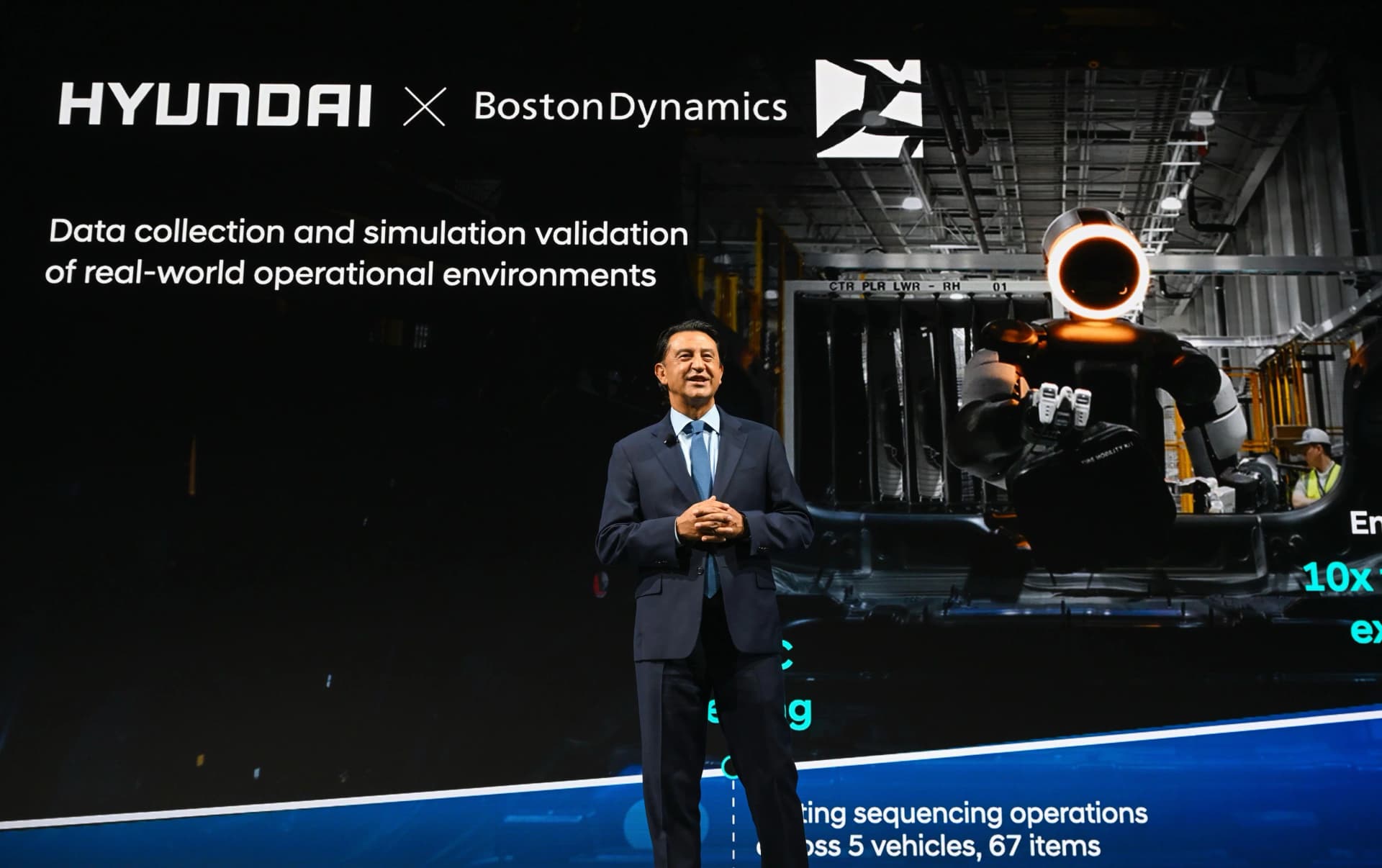
This reinforces Boston Dynamics’ current B2B strategy, focusing on “automotive volumes” within the controlled environments of Hyundai car plants before attempting to navigate the chaos of a living room.
Function Over Form: The "Alien" Aesthetic
The robot’s distinct, non-human appearance—often described as "alien"—is a direct result of safety-first engineering. Jackowski explained that the team prioritized "pinch safety," leading to the use of offset axes in the limbs. These offsets eliminate the traditional "scissors" effect behind knees and elbows where fingers could be crushed, while also permitting a 360-degree range of motion that exceeds human skeletal limits.
"We understand designing robots well enough to understand when we want to conform to a natural form... and we're totally comfortable with just going off and doing our own thing," Jackowski said.
As the company prepares to scale toward a production capacity of 30,000 units annually by 2028, the focus remains on treating the humanoid form as a software problem. For Jackowski and his team, the goal isn't just to make a robot that looks like a person, but to build a general-purpose tool that can finally survive the "kaleidoscope of complexity" found in the real world.
Watch the episode below:
Share this article
Read next
- Published on
- Reading time
- 7 min read
Hyundai Says Atlas Will Not Replace Workers — One Day After Settling a Strike Over Exactly That
- Published on
- Reading time
- 4 min read
The Production Pivot: Leadership Exodus and Internal Pressure at Boston Dynamics
- Published on
- Reading time
- 4 min read
The Blueprint for a Bipedal Workforce: Kia Details Atlas Deployment Roadmap
- Published on
- Reading time
- 5 min read
Form as Function: Boston Dynamics Details the Industrial Design Logic Behind the Production Atlas
- Published on
- Reading time
- 5 min read
From Viral Clips to the Factory Floor: 60 Minutes Goes Inside Boston Dynamics’ Industrial Shift
- Published on
- Reading time
- 3 min read
End of an Era: Boston Dynamics CEO Robert Playter to Retire
The weekly humanoid robotics briefing
One email a week: the launches, funding and research that mattered, with context from Humanoids Daily.
Read recent issues