- Published on
Form as Function: Boston Dynamics Details the Industrial Design Logic Behind the Production Atlas
One tap, and our reporting appears more often in your Google Top Stories. It makes a real difference to a small newsroom.
Supported by RoboStrategySupport for Humanoids Daily comes from RoboStrategy
Sponsored
Investing involves risk, including possible loss of principal. Read the prospectus before investing.
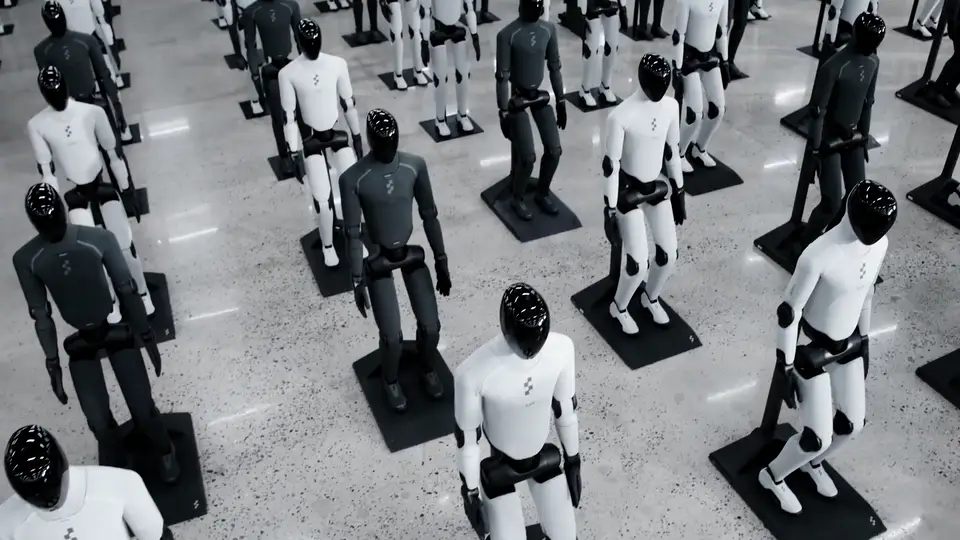
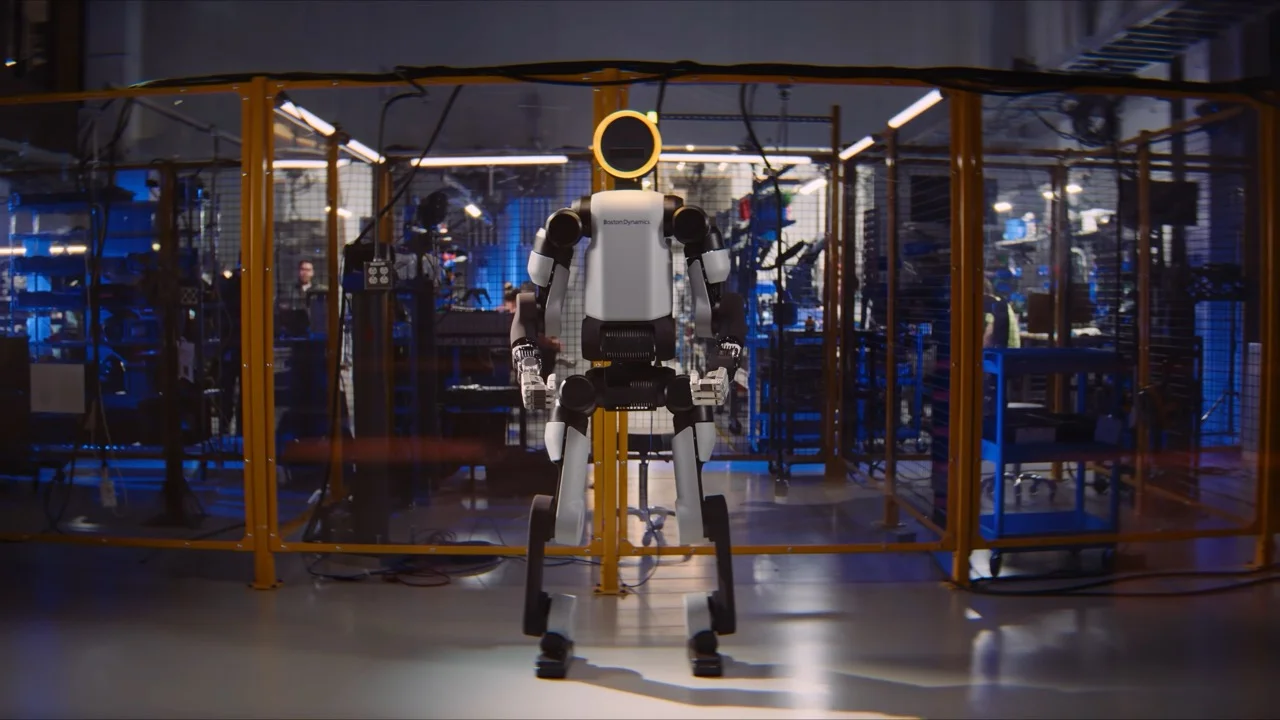
Boston Dynamics has pulled back the curtain on the hardware philosophy defining the production-ready version of its all-electric Atlas. In a recently released "Tech Talk" featuring hardware lead Chris Thorne, industrial designer Aaron Abroff, and compute lead James Cuseo, the company detailed how it moved past the "uncanny valley" to create a machine built for the rigors of high-volume manufacturing.
The discussion emphasizes a pivot from "Phase One" hardware validation to “Phase Two” product-market fit, focusing on a machine that prioritizes serviceability and 24/7 uptime over human-mimicry.
The Actuator Advantage and Modular Design
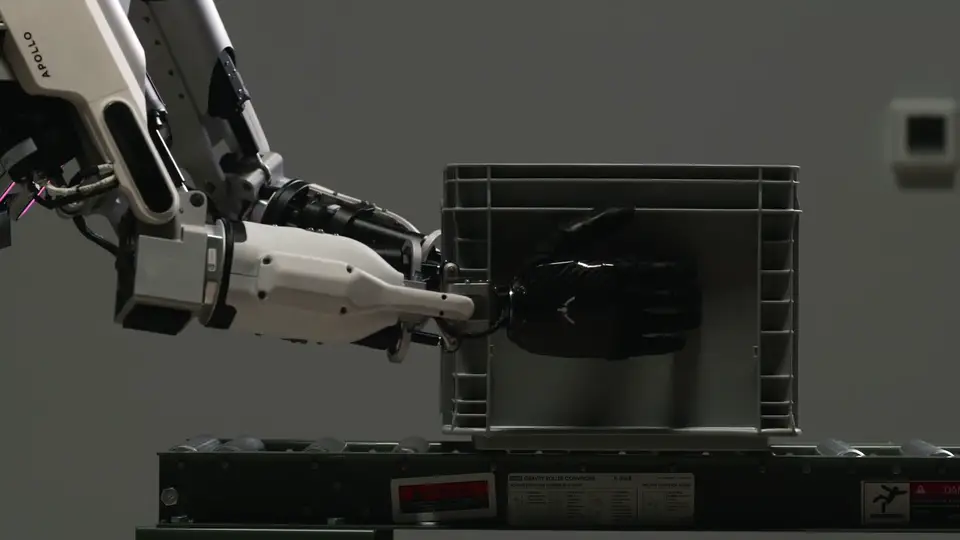
At the core of the new Atlas morphology is a proprietary actuator technology that Thorne claims is "two to five times more performant" than off-the-shelf alternatives. This power density allowed the engineering team to drastically simplify the robot’s BOM (Bill of Materials) through modularity.
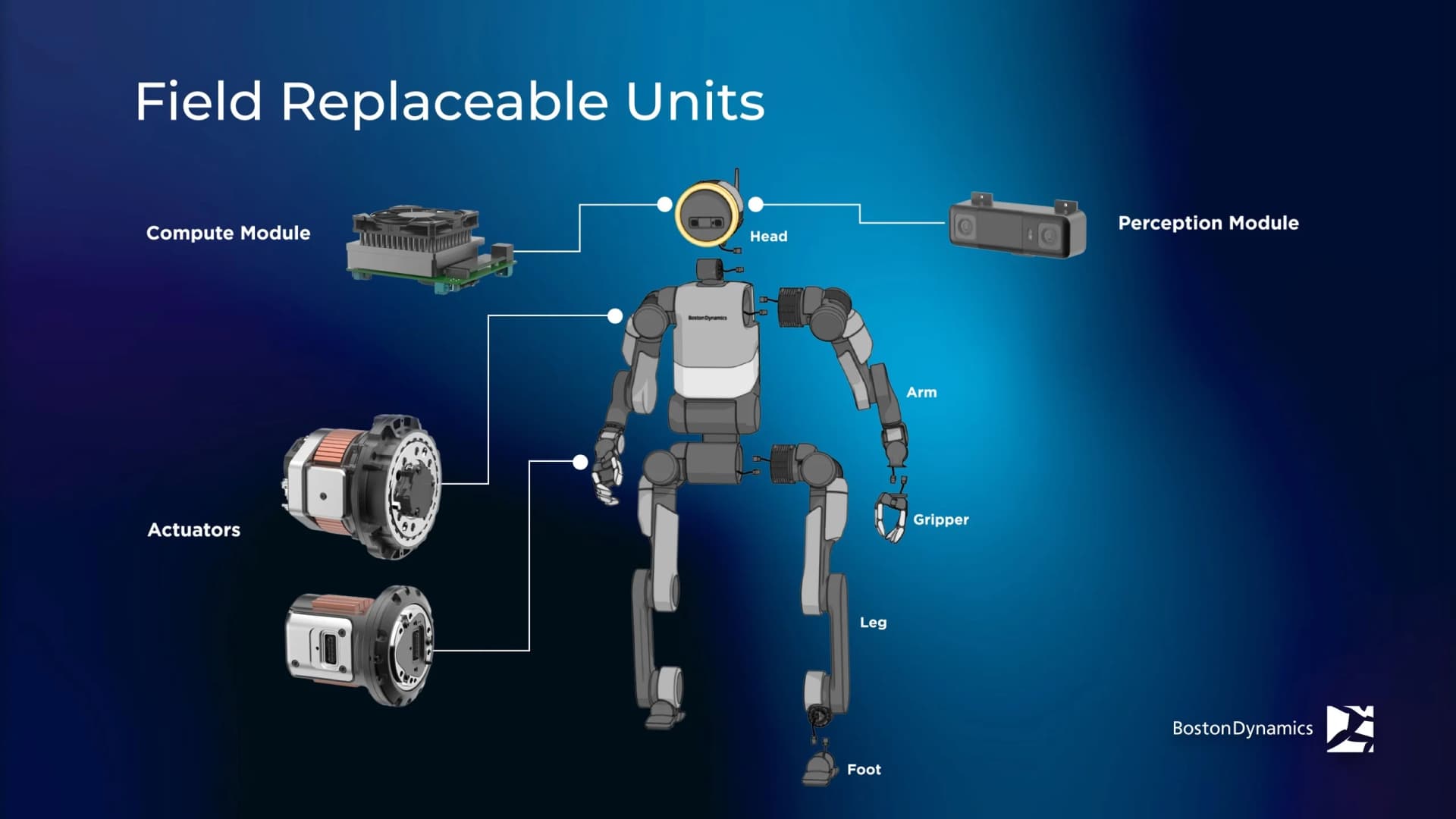
Unlike previous generations that required unique hardware for different limbs, the current Atlas uses the same actuators in its hips as it does in its ankles. This reuse allows a single spare limb to be populated on either side of the robot and permits a technician to swap a limb in the field in minutes. From a manufacturing perspective, this scale-oriented approach simplifies supply chains and accelerates the "learning" process for reliability testing.
The weekly humanoid robotics briefing
One email a week: the launches, funding and research that mattered, with context from Humanoids Daily.
Read recent issues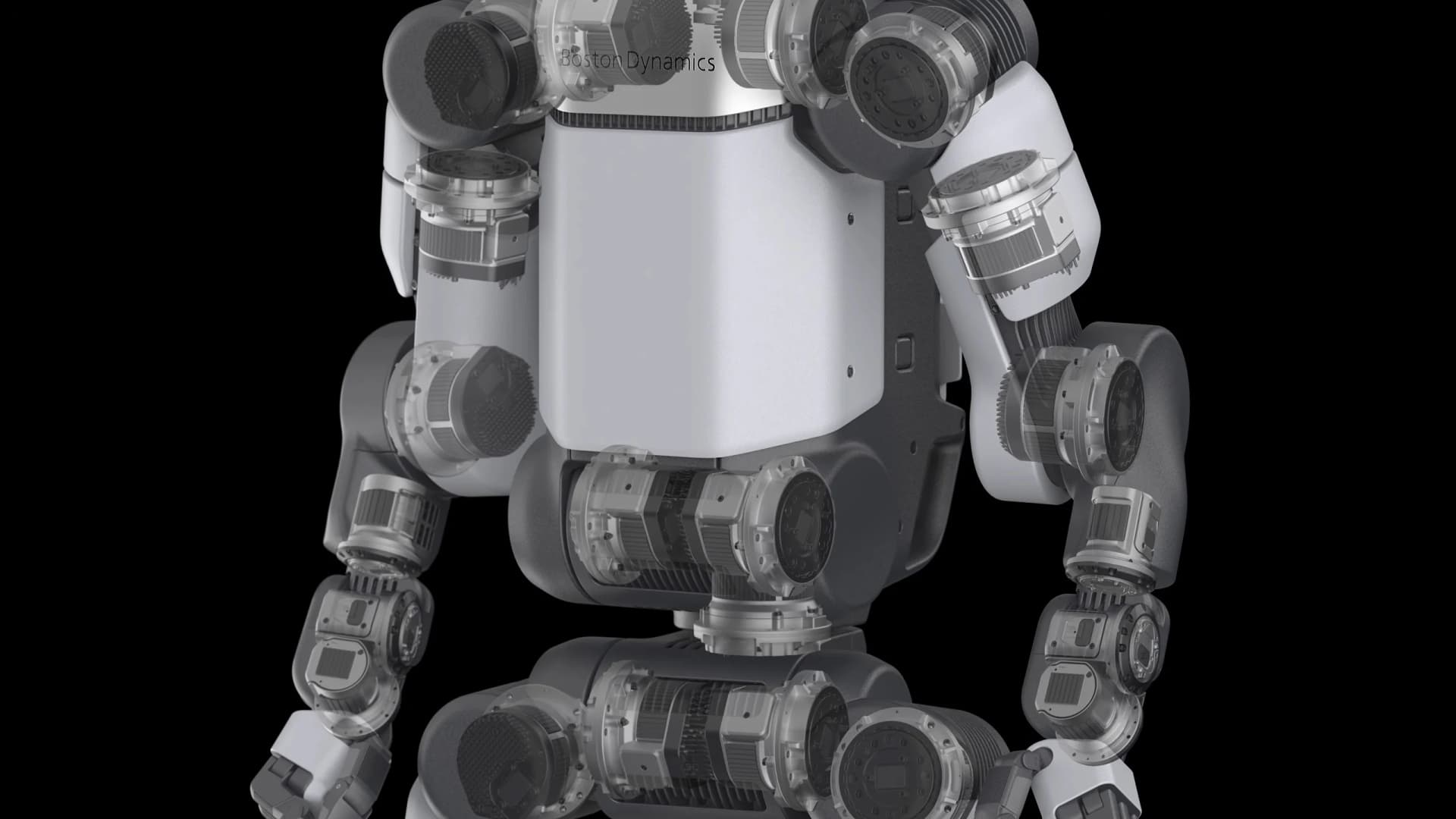
Cooling and Safety: Designing for the Factory Floor
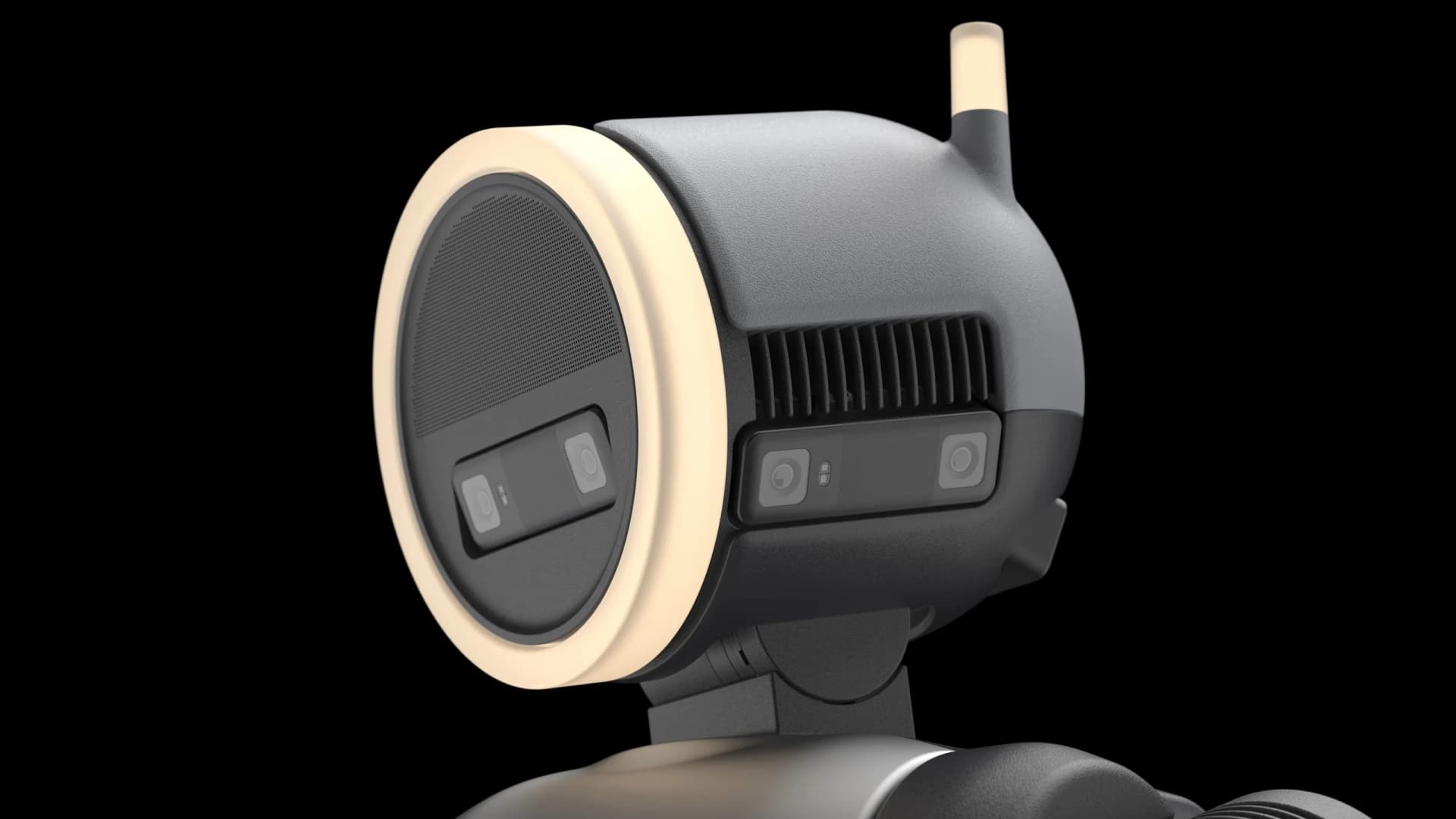
One of the more striking technical revelations is the robot’s thermal management. Despite the high torque generated by the electric motors, Atlas relies almost entirely on passive cooling.
- Integrated Fins: The cooling fins are integrated directly into the robot’s cosmetic cladding, serving as functional heat sinks.
- A Single Fan: There is only one fan in the entire robot, located in the head to cool the compute stack.
- Handling Safety: To ensure safe collaboration with humans, the team implemented "pinch safety" requirements, including a mandatory one-inch gap in joints like the neck, pelvis, and elbows.
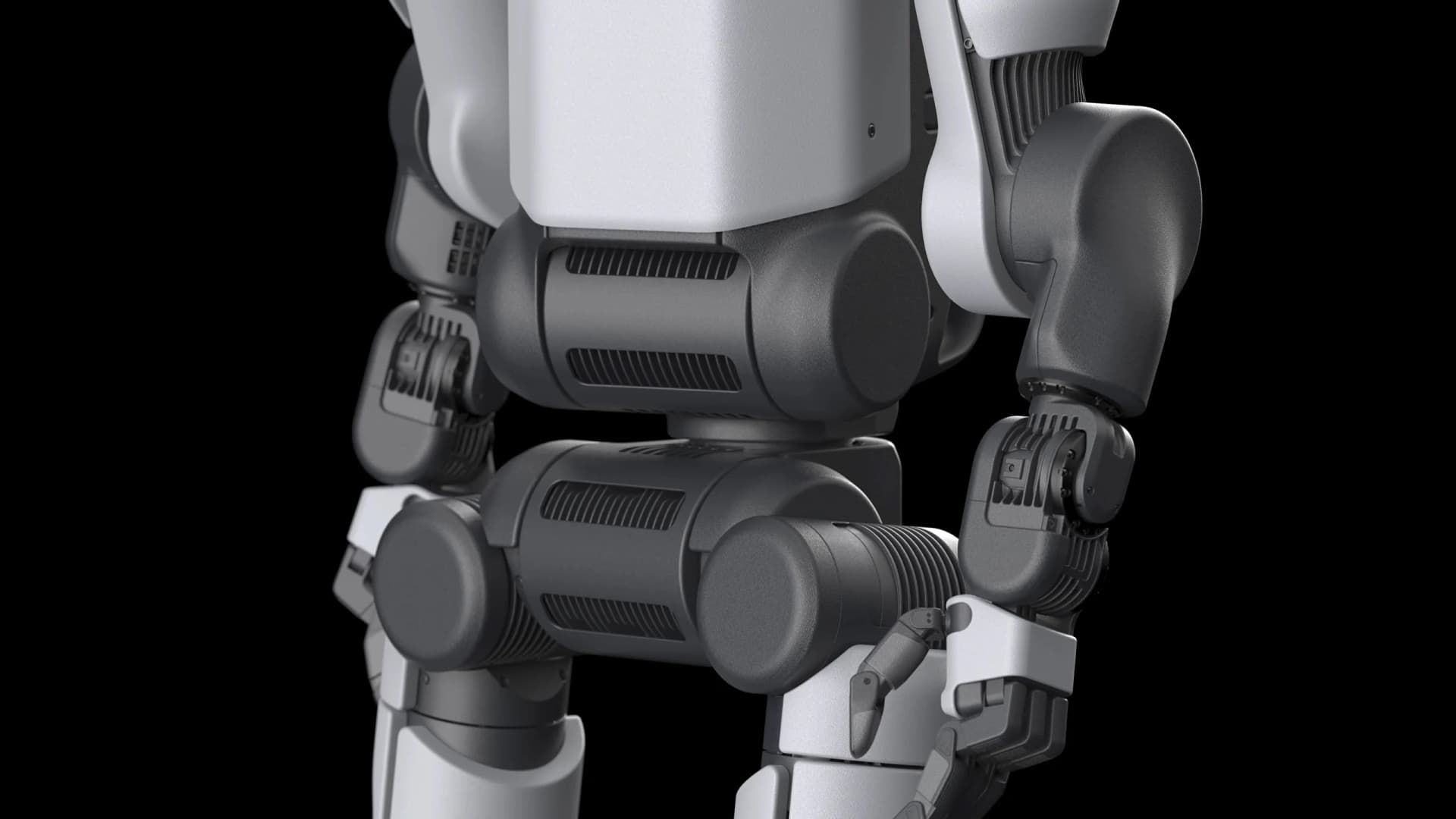
To accommodate these gaps and the continuous 360-degree range of motion, the robot utilizes offset links. These offsets give the legs and elbows their distinct "alien" appearance but allow Atlas to reverse its legs or rotate its torso 180 degrees without taking a step—a capability that increases efficiency in tight factory constraints.
The "Head" as a Desktop Computer
Compute Lead James Cuseo, who joined Boston Dynamics after 12 years at Apple, described the Atlas head as the most challenging computer he has ever worked on. The head is essentially a high-performance desktop computer encased in a mobile, waterproof, and impact-resistant shell.
- Robustness: The hardware must survive a two-meter fall onto the edge of a table—a common occurrence during the “bitter lesson” of reinforcement learning.
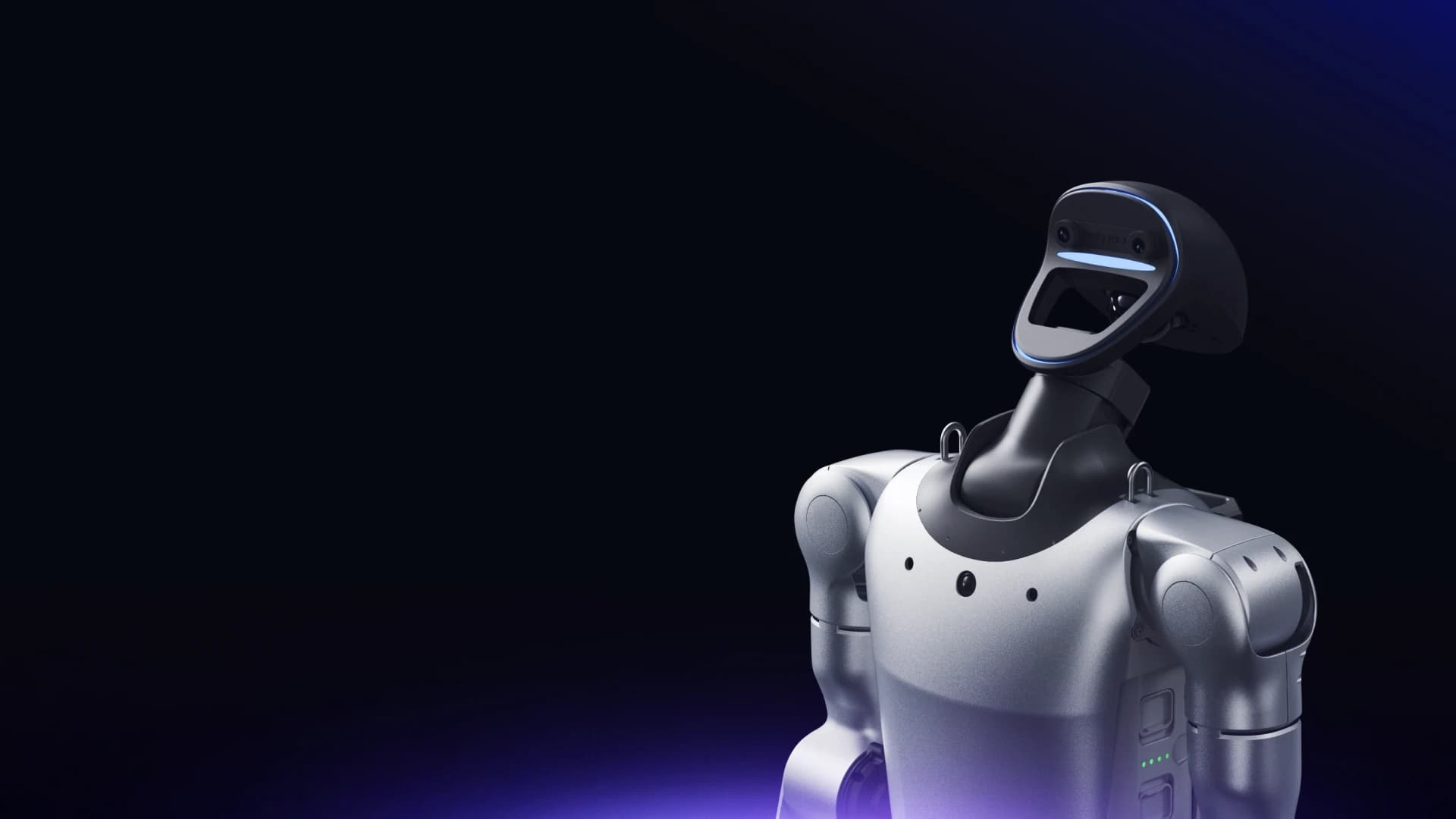
- UX Design: The head features a silicone light ring instead of a face. This avoids the uncanny valley while providing a "light-up icon" for human-robot interaction.
- The 10-Degree Nod: A dedicated neck pitch actuator allows for a "nod" gesture. While useful for social cues, its primary function is perception, enabling the cameras to see the robot’s own feet and the area immediately surrounding its base.
Building for the Hyundai Mandate
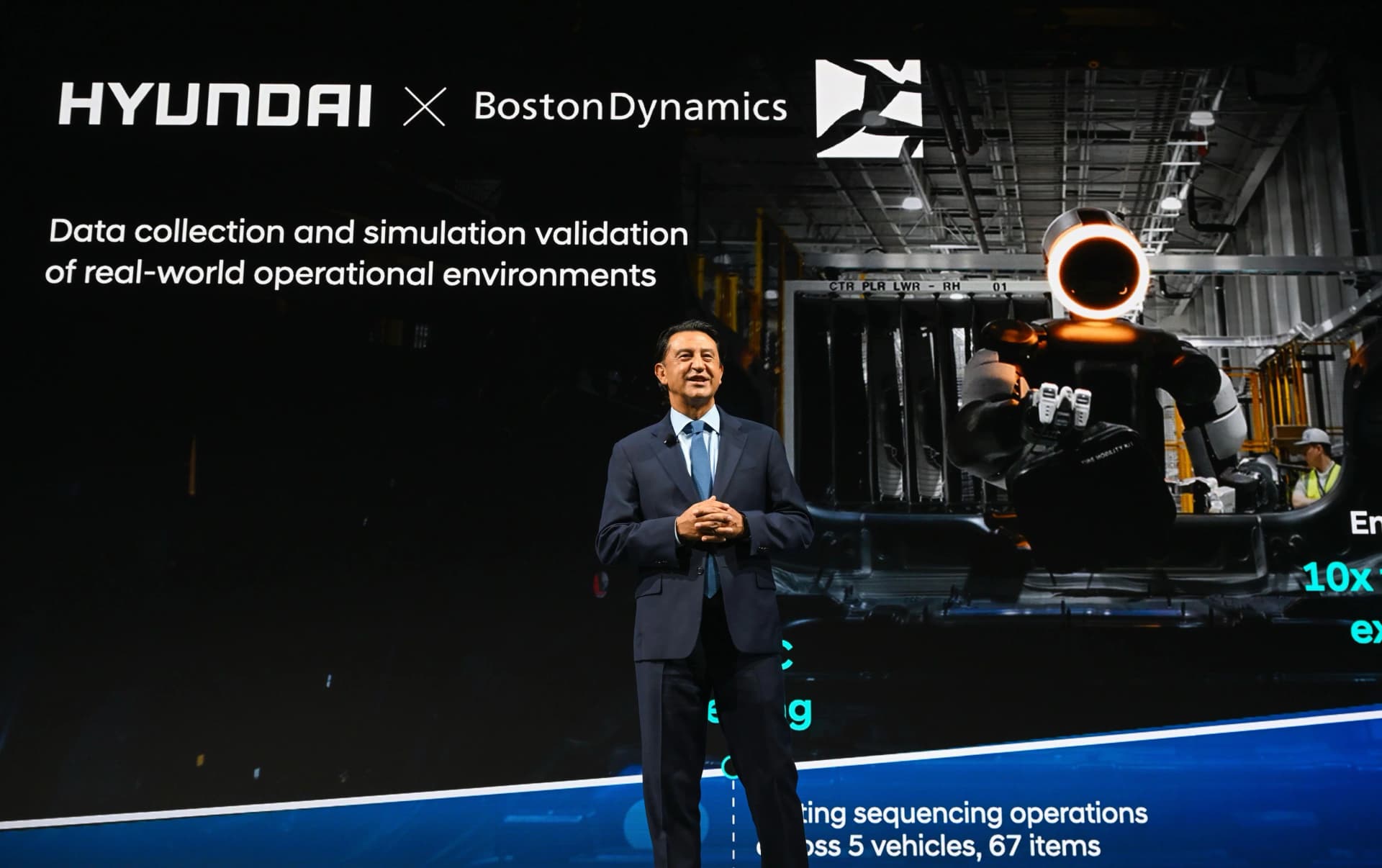
The push for 24/7 uptime is driven by the robot’s primary customer and owner, Hyundai Motor Group. For the humanoid to work in general assembly—where downtime is nonexistent—it must be able to swap its own batteries. The design team "leaned into" this requirement, placing dual self-swappable batteries prominently on the exterior so the robot can access them autonomously.
As the company prepares for deployments at Hyundai and Google DeepMind, the focus remains on treating the humanoid form as a software problem. By shunting complexity into high-performance actuators and modular hardware, Boston Dynamics aims to reach a production capacity of 30,000 units annually by 2028.
Watch the video below:
Share this article
Read next
- Published on
- Reading time
- 7 min read
Hyundai Says Atlas Will Not Replace Workers — One Day After Settling a Strike Over Exactly That
- Published on
- Reading time
- 4 min read
The Production Pivot: Leadership Exodus and Internal Pressure at Boston Dynamics
- Published on
- Reading time
- 4 min read
The Blueprint for a Bipedal Workforce: Kia Details Atlas Deployment Roadmap
- Published on
- Reading time
- 5 min read
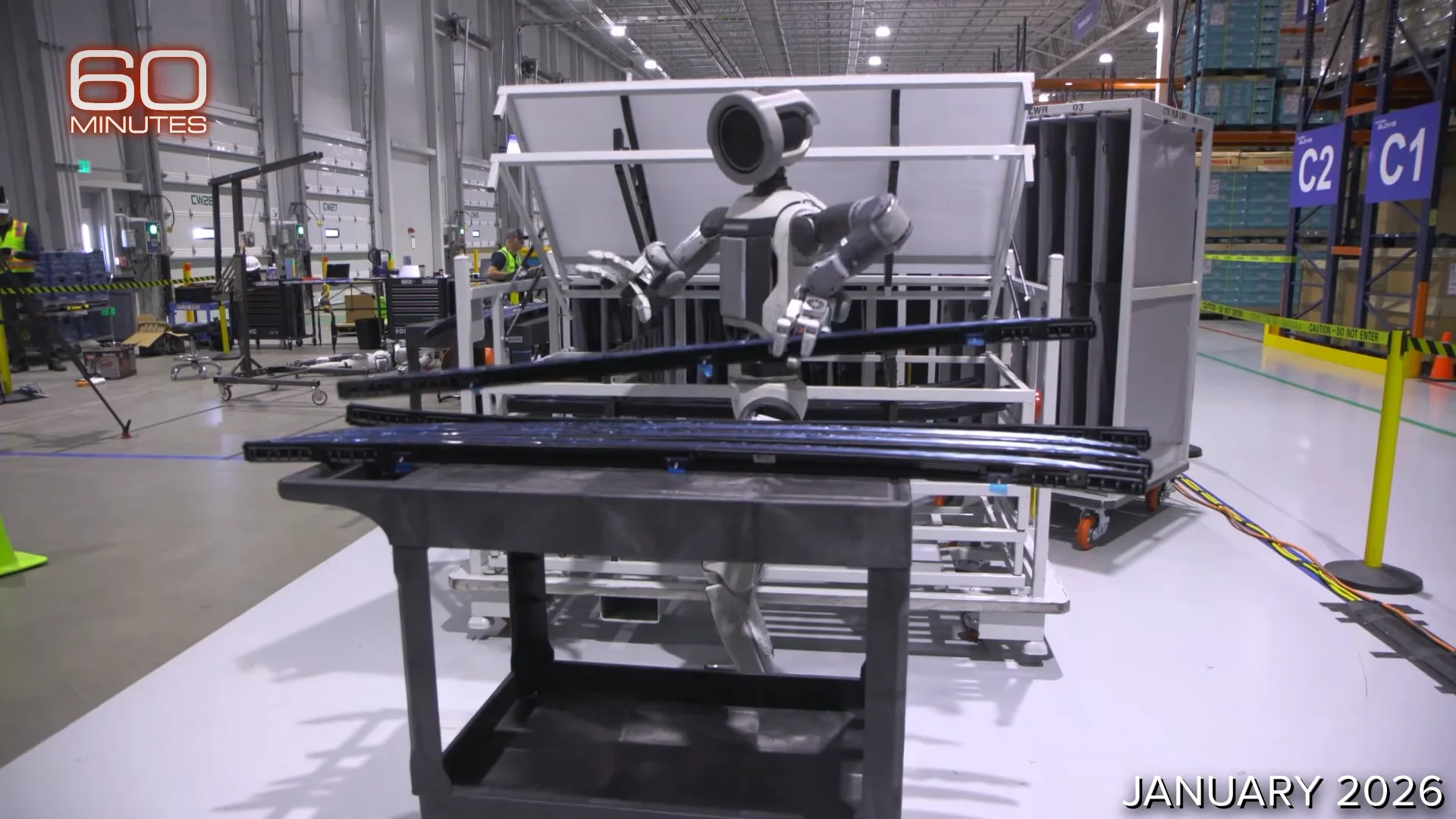
From Viral Clips to the Factory Floor: 60 Minutes Goes Inside Boston Dynamics’ Industrial Shift
- Published on
- Reading time
- 3 min read
End of an Era: Boston Dynamics CEO Robert Playter to Retire
- Published on
- Reading time
- 6 min read
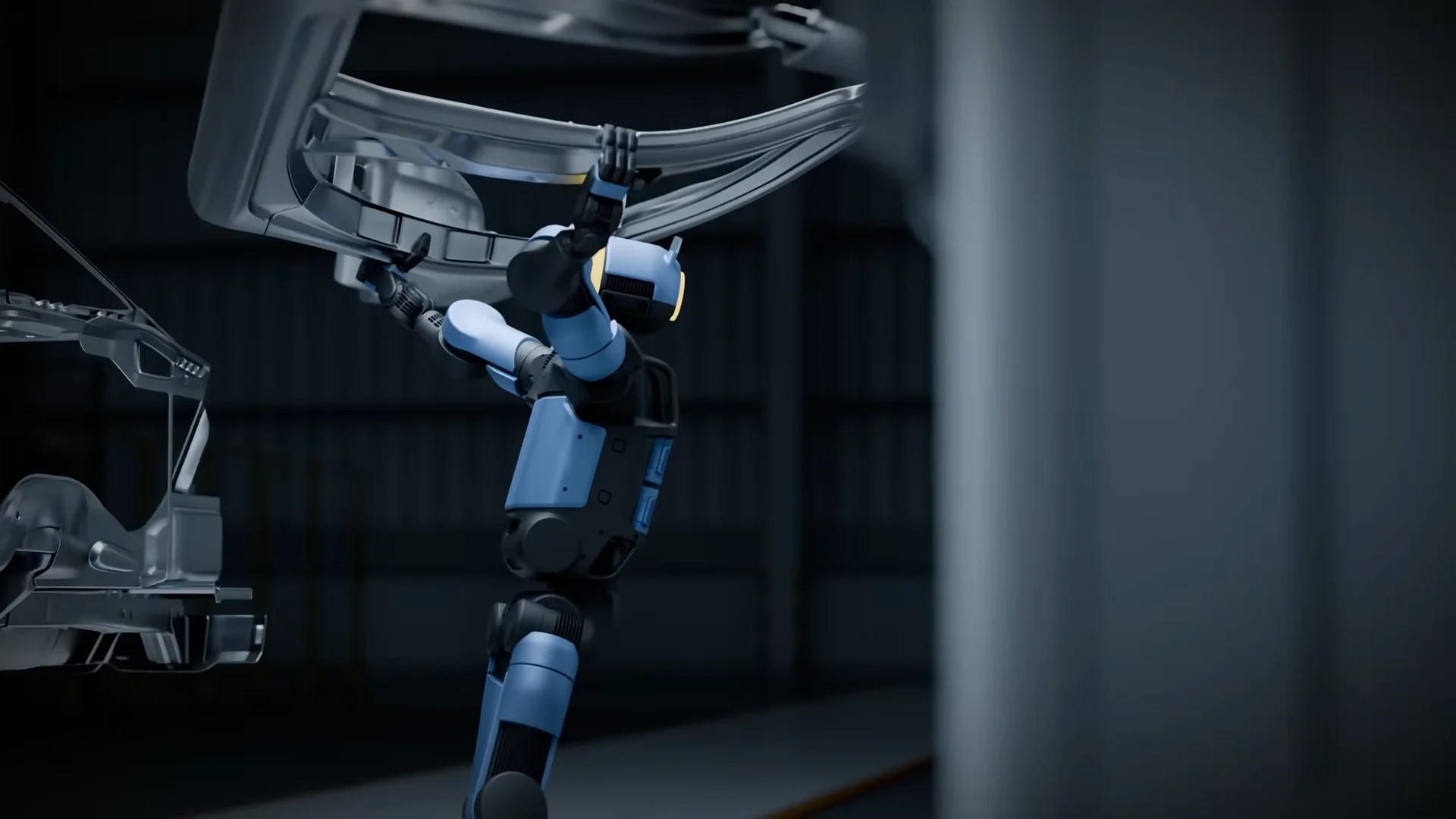
The Alien in the Factory: Boston Dynamics Launches Production-Ready Atlas at CES 2026
The weekly humanoid robotics briefing
One email a week: the launches, funding and research that mattered, with context from Humanoids Daily.
Read recent issues