- Published on
Sam Altman Confirms OpenAI "Will Definitely Do a Humanoid"
One tap, and our reporting appears more often in your Google Top Stories. It makes a real difference to a small newsroom.


Your guide
Rich Robinson
Jee Chee Ren · Executive tour
See China’s AI and robotics ecosystem first-hand.
Six days exploring AI, robotics and advanced manufacturing.
With Rich Robinson, Clinical Professor of Entrepreneurship at Peking University
Beijing · Guangzhou · Shenzhen
29 November–4 December 2026
Referral partnership · We earn a commission on referred bookings.
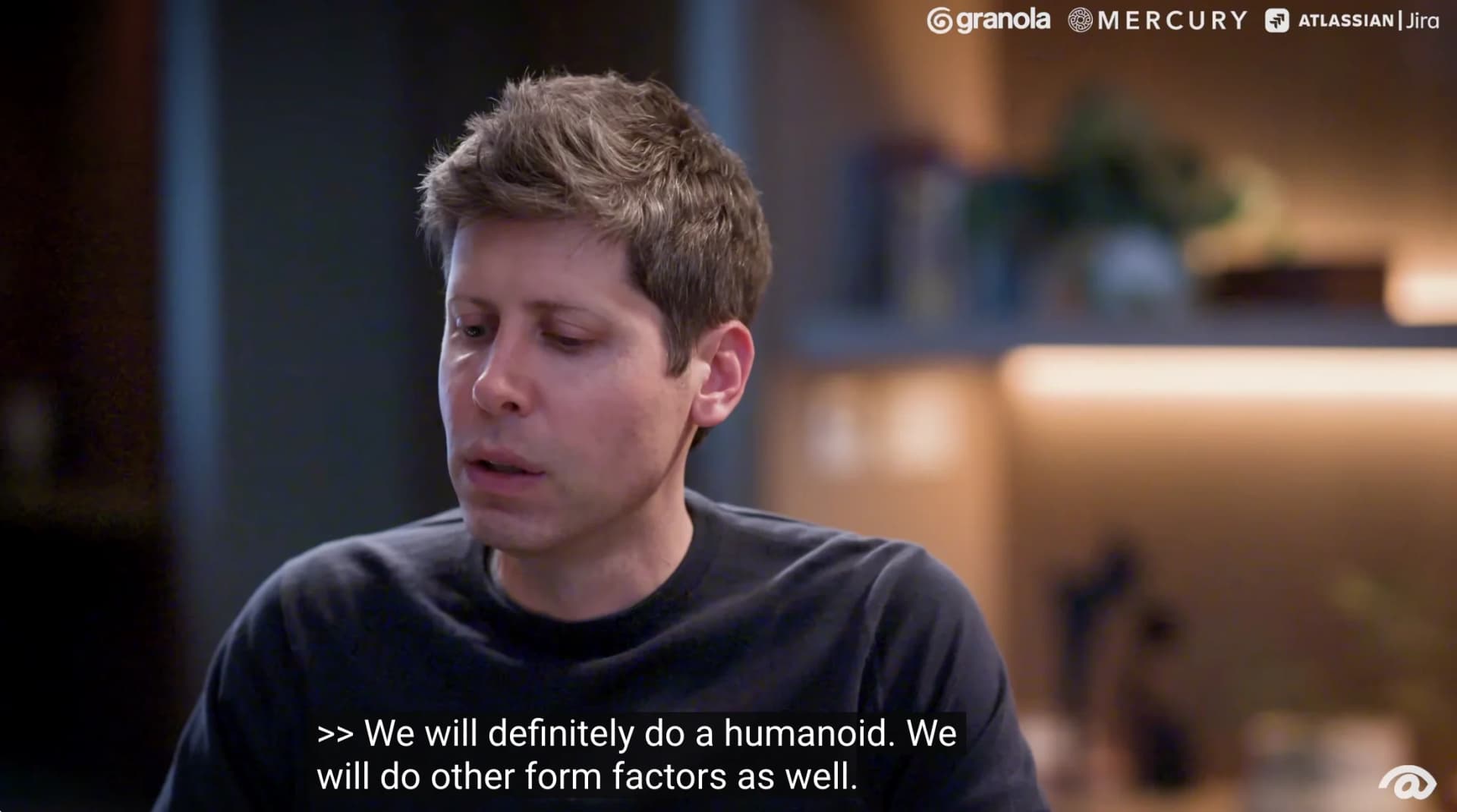
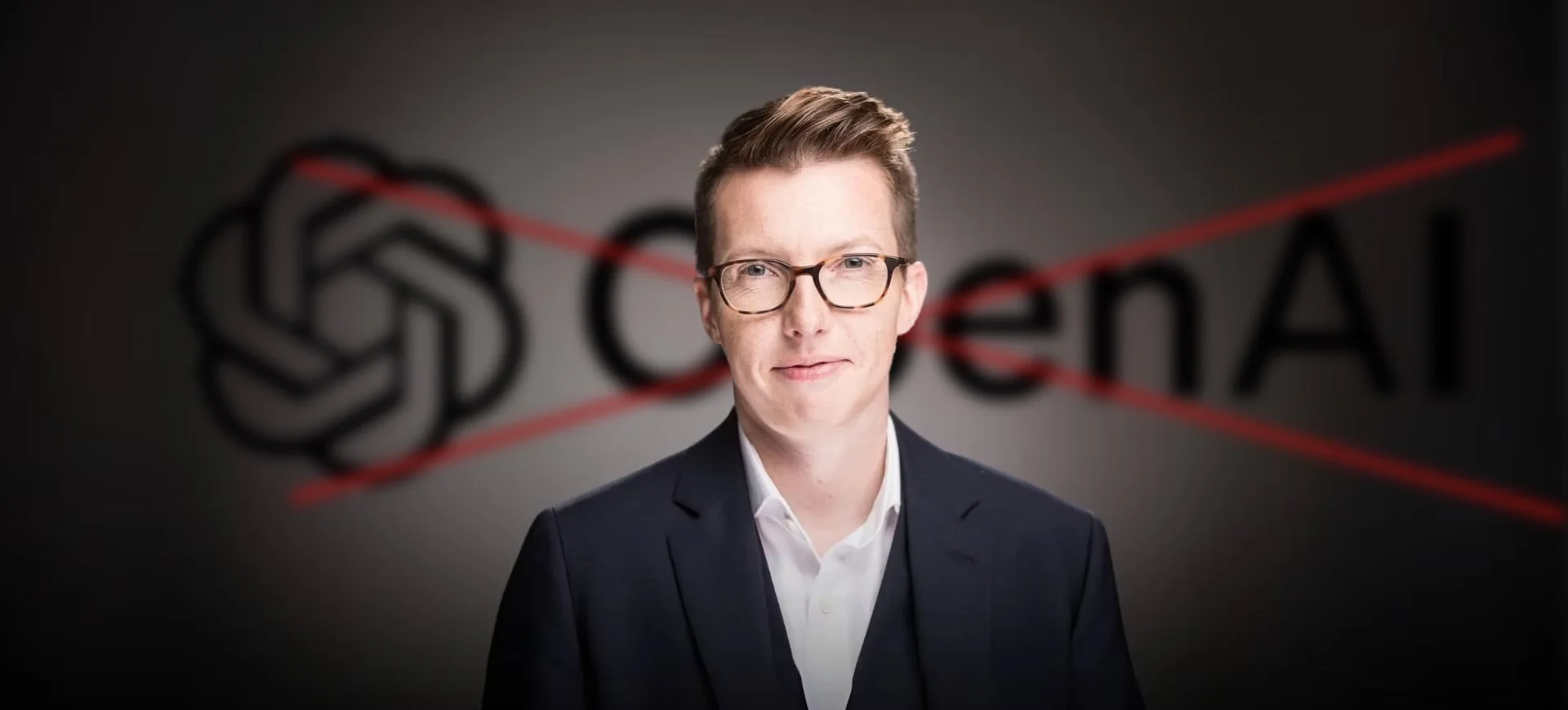
- OpenAI CEO Sam Altman has confirmed the company will "definitely" build its own humanoid robots, putting to rest speculation about whether its hardware roadmap was strictly focused on industrial or data center automation.
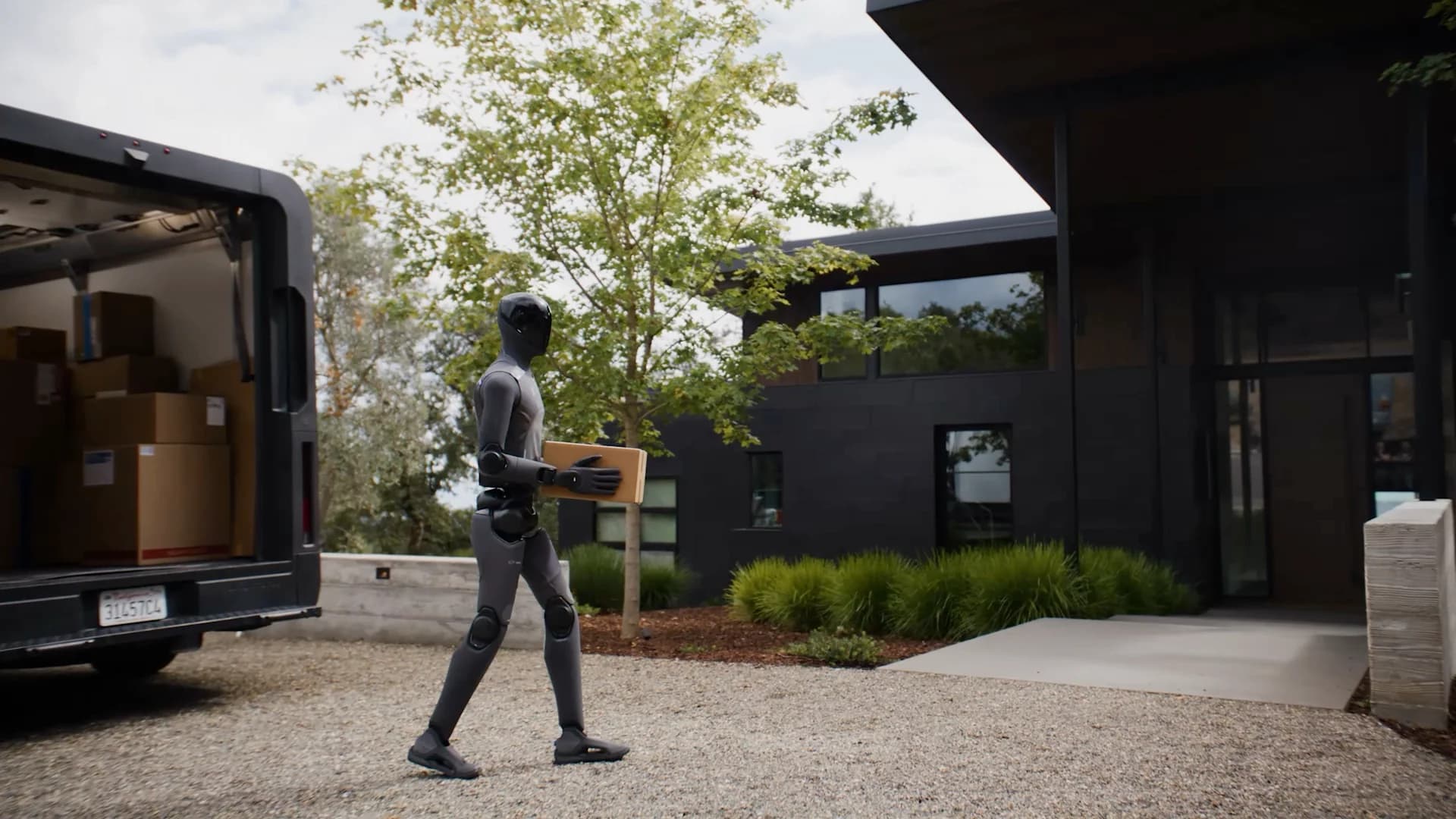
- Altman argued that matching human anatomy is essential because the physical world—from computer keyboards and doorways to heavy machinery and kitchens—was constructed for human bodies.
- While ubiquitous domestic humanoids remain Altman's long-term ideal, OpenAI's near-term focus remains centered on building industrial infrastructure and data center automation, alongside developing the underlying cognitive models.
- The confirmation follows OpenAI’s formal launch of an internal robotics division earlier this year, building on mechanical engineering hires and high-profile partnership breaks with humanoid startups like Figure.
When OpenAI launched a dedicated in-house robotics division earlier this year, job postings revealed the company was designing custom electromechanical actuators, simulation pipelines, and data collection fleets. Yet one crucial strategic question remained unanswered: would OpenAI build a bipedal humanoid of its own, or restrict its physical hardware to non-humanoid form factors suited for data centers and factory floors?
OpenAI CEO Sam Altman settled the question directly. In an interview on the Sources podcast, Altman unequivocally confirmed that OpenAI is developing a humanoid robot.
"We will definitely do a humanoid," Altman said when asked about the state of OpenAI's hardware efforts. "We will do other form factors as well."
Why Form Factor Follows Human Architecture
Altman’s rationale for embracing humanoid kinematics echoes an argument long championed across the robotics industry, yet rarely endorsed so directly by frontier AI labs: the built environment does not easily accommodate non-human designs.
The weekly humanoid robotics briefing
One email a week: the launches, funding and research that mattered, with context from Humanoids Daily.
Read recent issues"The world is very much designed for people," Altman explained. "So if you think about like the ability to open a door and type on a computer and drive a piece of equipment and, you know, clean a kitchen and whatever else, we've kind of built this world for people, and I want to make sure that we keep building this world for people. So matching that form factor seems good."
At the same time, Altman tempered the humanoid focus by noting that OpenAI will deploy purpose-built, non-anthropomorphic robots where human form offers no functional benefit—specifically within compute infrastructure.
"There will of course be data center robots that have like different form factors," Altman said, while underscoring that mechanical morphology remains subordinate to machine intelligence. "I think all of that is less important than really figuring out like the brain that makes the robot work."
Near-Term Utility vs. Long-Term Ubiquity
Asked whether OpenAI's humanoid ambition envisions an everyday personal companion for consumer households, Altman pushed back on near-term expectations.
"I don't think that's the most important first thing to do," Altman said, pointing toward industrial utility such as constructing and maintaining data centers and manufacturing additional machines. Nonetheless, he made clear that personal general-purpose robots remain the destination: "Someday. I think everyone should have a personal robot. Like I would love to have a personal robot that could like do the tasks that I don't want to do."
Altman also touched briefly on OpenAI’s secretive hardware collaboration with former Apple design chief Jony Ive. When asked when the public might see the first consumer device resulting from that partnership, Altman demurred with a terse: "Soonish."
Competing With Former Allies
Altman’s explicit commitment to humanoid hardware cements OpenAI’s transition from an enabler of third-party robotics ventures into a direct competitor.
Earlier this year, OpenAI formalized its hardware ambitions by establishing an internal robotics division under VP of Research Aditya Ramesh. The lab subsequently recruited mechanical talent spanning custom actuator design, sensor dynamics, and rapid prototyping following the departure of hardware executive Caitlin Kalinowski.
That internal buildup followed public divorces from early ecosystem partners. Figure CEO Brett Adcock previously pointed to OpenAI’s internal hardware aspirations as the breaking point that dissolved their partnership, claiming his team had to "fire" OpenAI because the AI lab lacked sufficient commitment to testing on physical embodiments. Figure has since doubled down on proprietary, end-to-end foundation models to power its own humanoid fleet.
OpenAI’s humanoid plans also introduce new wrinkles for 1X Technologies, the Norwegian-American robotics firm in which OpenAI was an early backer. SoftBank has recently been in talks to take a majority controlling stake in 1X at a $6 billion valuation—talks that follow reports that OpenAI previously explored acquiring 1X outright before opting to develop its own in-house systems.
The Engineering Frontier
Transitioning from state-of-the-art vision-language-action (VLA) models to commercially viable humanoid production lines presents acute challenges. Unlike purely software-driven API products, bipedal humanoid platforms demand tight physical co-design, extreme thermal management, resilient low-level actuator control, and costly physical validation loops.
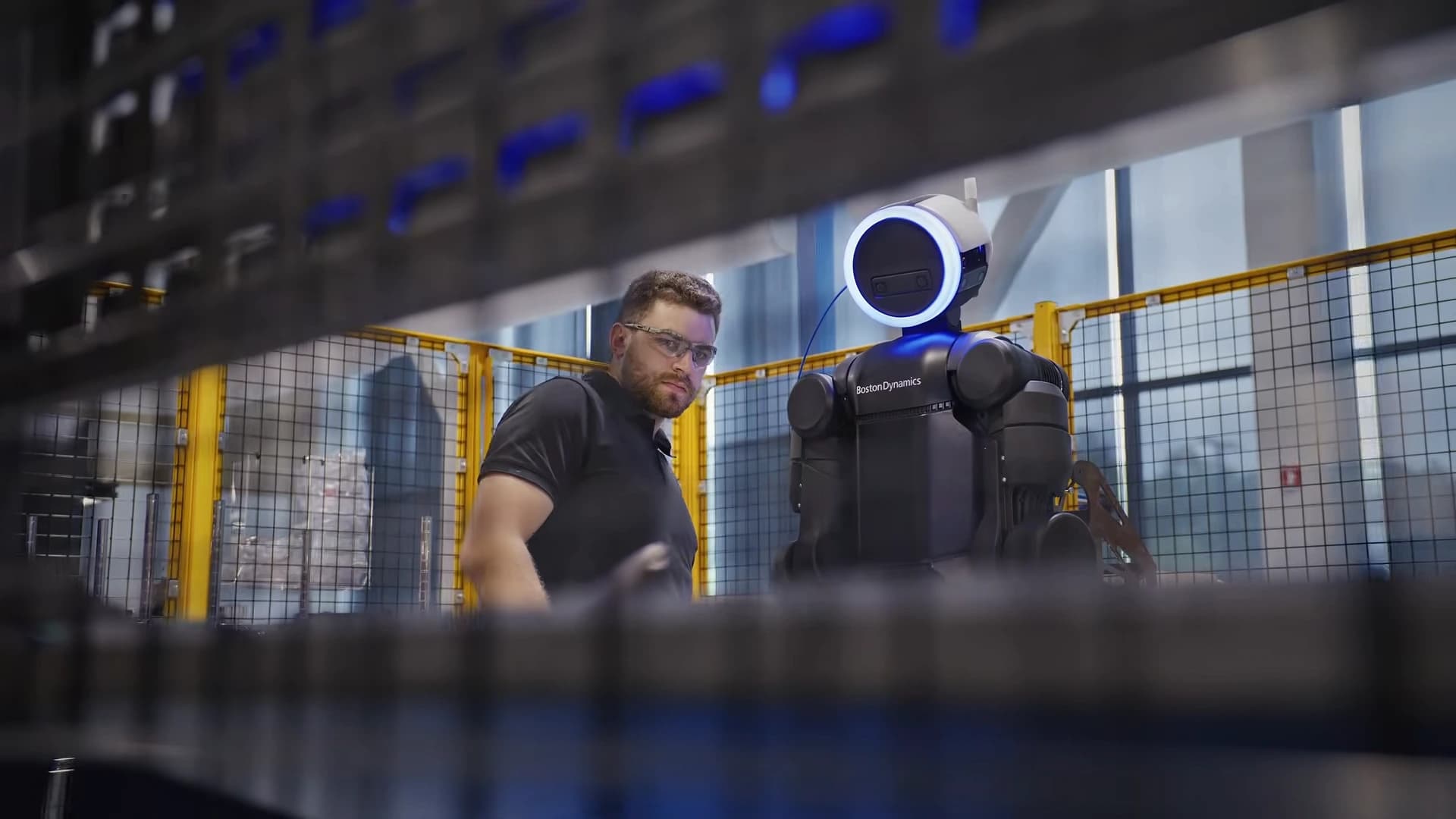
By confirming that OpenAI intends to build the mechanical bodies as well as the software "brain," Altman has placed OpenAI on a direct collision course with Tesla’s Optimus, Figure, and Boston Dynamics. Whether OpenAI's engineering resources can master mechanical production at scale with the same speed it applied to foundation models will be one of the most critical hardware tests in robotics over the coming years.
Watch the episode below:
Share this article
Read next
- Published on
- Reading time
- 4 min read
OpenAI Pivots Directly Into Hardware, Launching Internal Robotics Division
- Published on
- Reading time
- 8 min read
Hardware First, Brains Later? The Great American Humanoid Scale-Up of 2026
- Published on
- Reading time
- 4 min read
Figure CEO Brett Adcock Says Company ‘Will Not Teleoperate’ Robots, Drawing Contrast with 1X Strategy
- Published on
- Reading time
- 6 min read
OpenAI’s GPT-6 Astra Hits 95% on Physical Manipulation Benchmark, But Precision Tasks Expose Familiar Bottlenecks
- Published on
- Reading time
- 3 min read
OpenAI Hardware Leader Caitlin Kalinowski Resigns Over Pentagon Deal as Benjamin Bolte Joins
- Published on
- Reading time
- 10 min read
The Great Valuation Chasm: A 2025 Guide to the Humanoid Robotics Capital Race


The weekly humanoid robotics briefing
One email a week: the launches, funding and research that mattered, with context from Humanoids Daily.
Read recent issues