- Published on
EngineAI Releases Behind-the-Scenes Footage to Quell CGI Rumors
One tap, and our reporting appears more often in your Google Top Stories. It makes a real difference to a small newsroom.


Your guide
Rich Robinson
Jee Chee Ren · Executive tour
See China’s AI and robotics ecosystem first-hand.
Six days exploring AI, robotics and advanced manufacturing.
With Rich Robinson, Clinical Professor of Entrepreneurship at Peking University
Beijing · Guangzhou · Shenzhen
29 November–4 December 2026
Referral partnership · We earn a commission on referred bookings.
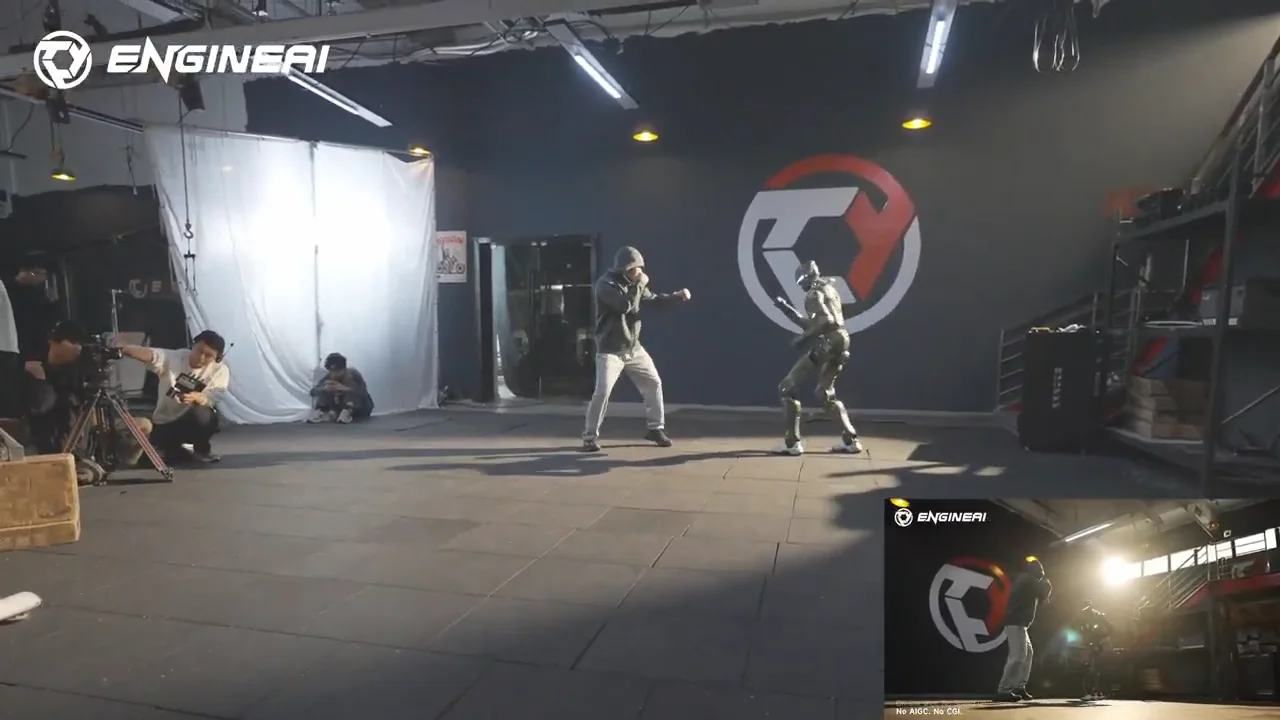
The day after officially lifting the curtain on its T800 humanoid with a stylized, action-movie inspired video, EngineAI has found itself fighting a battle common in the age of generative video: proving its robot is actually real.
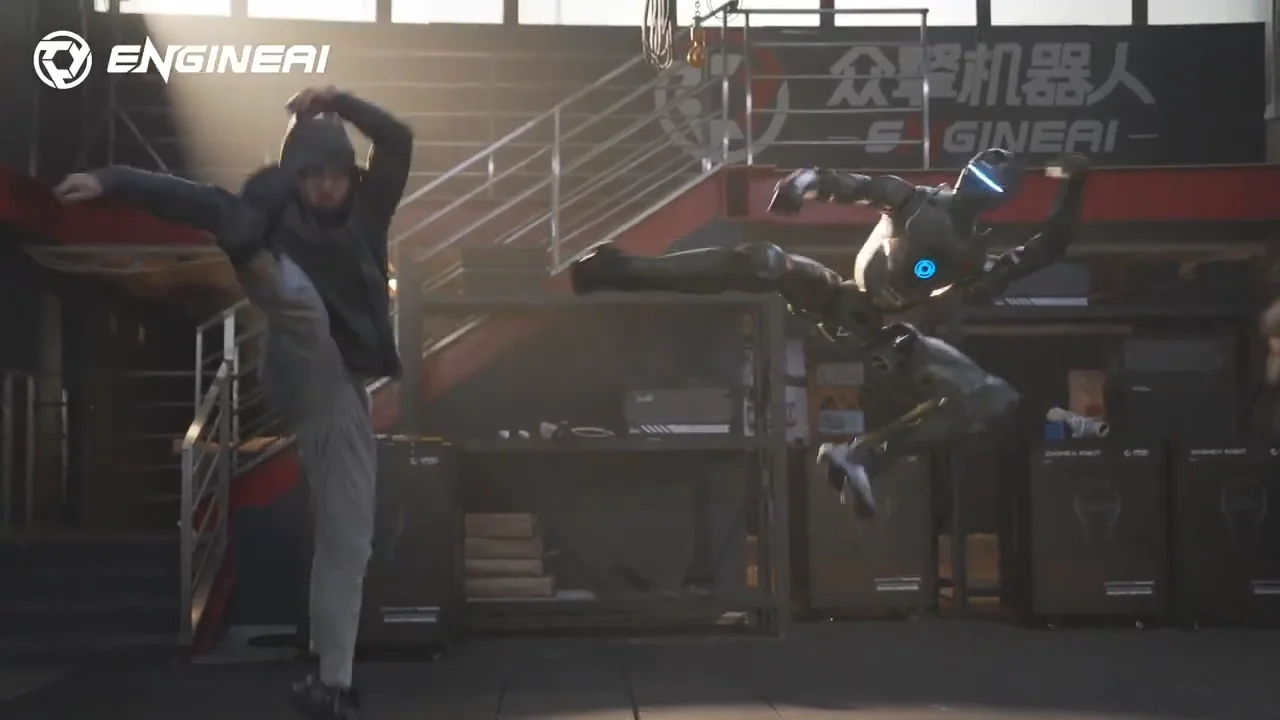
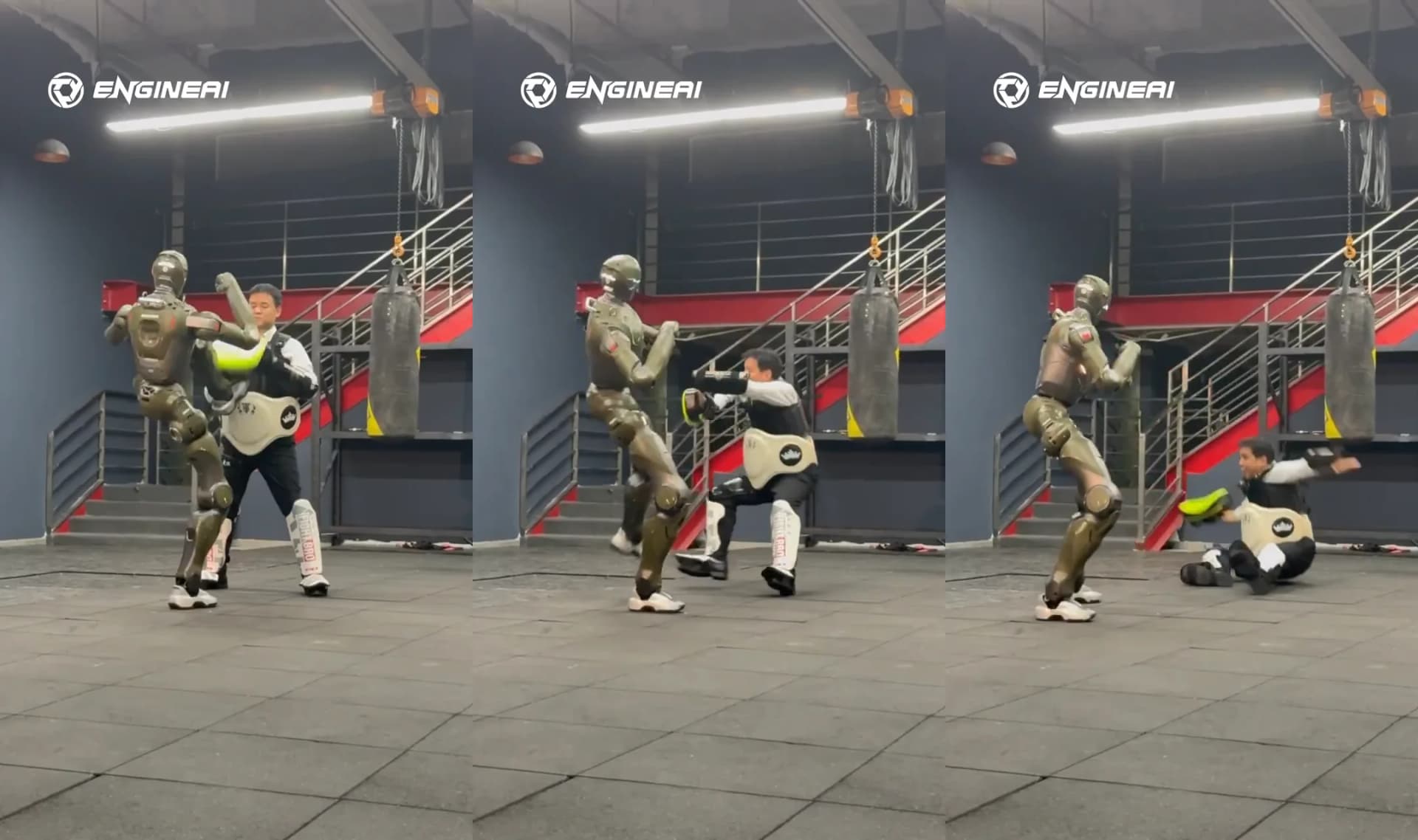
In response to social media skepticism claiming the T800’s fluid, dynamic movements were the result of CGI, the Shenzhen-based company released "behind-the-scenes" (BTS) footage today. The move highlights a growing tension in the humanoid sector, where the line between marketing spectacle and technical reality is becoming increasingly blurred.
"Setting the Record Straight"
The controversy stems from the original launch video, which featured the T800 kicking open doors and performing round kicks with a level of agility that many viewers found difficult to believe. While EngineAI explicitly claimed at the time that the performance utilized "no CGI, no AI, no video speed-up", the cinematic lighting and heavy post-processing led to accusations of visual effects trickery.
Today, the company addressed these doubts directly via X (formerly Twitter):
The weekly humanoid robotics briefing
One email a week: the launches, funding and research that mattered, with context from Humanoids Daily.
Read recent issues“EngineAI T800 BTS Footage: Setting the Record Straight on CGI Rumors #EngineAI #robotics #newtechnology #newproduct”
The new footage strips away the dramatic color grading and dramatic angles, showing the robot performing the feats in a raw, studio environment. The goal is to demonstrate that the robot's impressive specs—specifically its 450 N·m of joint torque and 29 degrees of freedom —are responsible for its movement, rather than a VFX artist.
The "Proof of Life" Trend
EngineAI is not the only major Chinese robotics firm forced to issue "proof of life" videos this month. The T800 controversy closely mirrors the debate surrounding Xpeng's AI Day 2025.
After Xpeng debuted its next-generation Iron robot with a surprisingly human-like gait, speculation ran rampant that the demonstration featured a human performer in a suit. Xpeng was ultimately forced to release follow-up videos showing the robot's mechanical skeleton and internal actuators to settle the debate.
While Xpeng had to prove its robot wasn't a human, EngineAI is having to prove its robot isn't a pixel. Both instances underscore the rapid advancement of humanoid motility; movements that were impossible two years ago are now becoming so fluid that they trigger skepticism.
2026: From Stunts to Scenarios
Alongside the BTS footage, EngineAI reiterated that the T800 is intended for more than just viral stunts. In a follow-up statement, the company outlined its roadmap for the immediate future:
“In 2026, the Zhongqing team will fully promote the scenario-based verification and large-scale deployment of the product, continuously unlocking diverse application scenarios such as industrial production, commercial services, and family companionship.”
This aligns with the company's "dual-track" strategy. While they continue to lean into entertainment—including an upcoming Robot Boxer competition on December 24th —they are simultaneously deploying hardware in pragmatic settings. The company has already placed robots as "Cyber Staff" in Shenzhen retail stores, proving a willingness to test their hardware in unstructured, human-centric environments.
The release of the BTS footage may settle the current CGI debate, but as EngineAI pushes toward its 2026 deployment goals, the scrutiny on its hardware's reliability—rather than just its reality—will likely only increase.
Share this article
Read next
- Published on
- Reading time
- 4 min read
Brawlers or Builders? EngineAI’s T800 Navigates the Split Between Factory Work and Combat Sports
- Published on
- Reading time
- 3 min read
EngineAI Secures $200 Million Series B as Manufacturing Giant Luxshare Joins the Cap Table
- Published on
- Reading time
- 4 min read
EngineAI Details URKL League: A $1.4 Million Gold Belt and the Future of Bipedal Brawling
- Published on
- Reading time
- 3 min read
Arena Ready: EngineAI Slates URKL Debut Following CES Launch and State Endorsement
- Published on
- Reading time
- 4 min read
EngineAI CEO Takes a Kick from T800 Robot to Settle CGI Debates
- Published on
- Reading time
- 4 min read
EngineAI T800 Pre-Orders Go Live at $25,000, Undercutting Competitors in a Heating Price War


The weekly humanoid robotics briefing
One email a week: the launches, funding and research that mattered, with context from Humanoids Daily.
Read recent issues