- Published on
AMD Agrees to Buy World Labs for $8.2 Billion, Bringing Spatial AI In-House
One tap, and our reporting appears more often in your Google Top Stories. It makes a real difference to a small newsroom.



- AMD has agreed to acquire World Labs in an all-stock transaction valued at approximately $8.2 billion, with closing expected by the end of 2026, subject to approvals.
- World Labs co-founder and CEO Fei-Fei Li will become AMD’s executive vice president and chief scientist, reporting to Lisa Su.
- World Labs develops spatial-intelligence models for generating and reconstructing 3D environments, with applications in robot simulation as well as creative tools.
- The deal expands AMD’s physical-AI interests beyond investments and hardware partnerships, including its existing relationship with Generative Bionics.
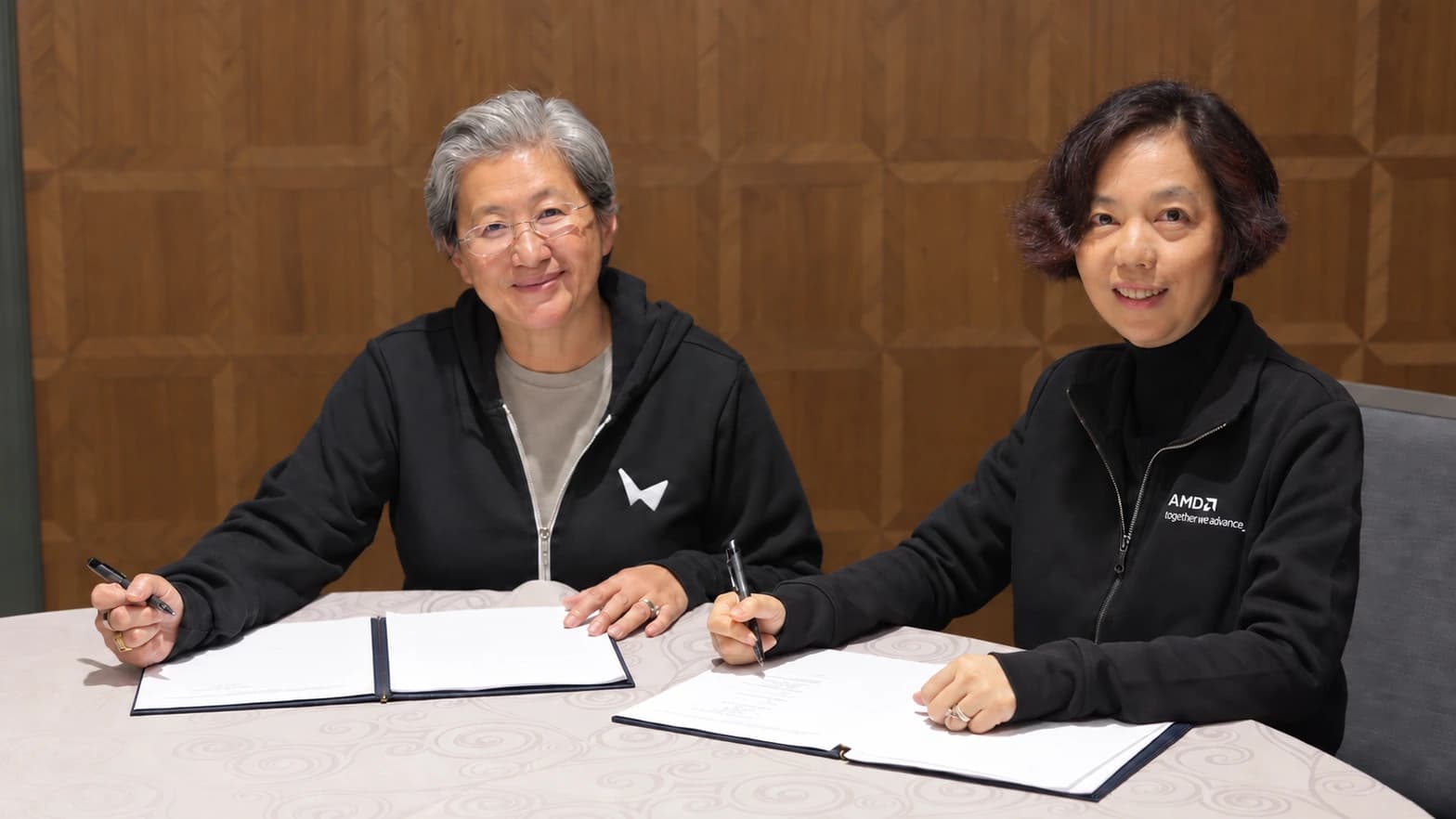
AMD has agreed to buy World Labs, the spatial-intelligence company led by Fei-Fei Li, in an all-stock deal worth approximately $8.2 billion. The agreement brings a major world-model developer into a chipmaker already supplying—and investing in—the physical-AI industry.
The companies announced the transaction on September 28. It is expected to close by the end of 2026, subject to regulatory approvals and customary conditions. The acquisition has therefore been agreed, rather than completed.
Following closing, Li will become AMD’s executive vice president and chief scientist, reporting to CEO Lisa Su. AMD says the team’s research will help inform its hardware, software and systems as AI workloads expand into robotics, simulation and other applications.
What World Labs builds
World Labs, founded in 2024, focuses on spatial intelligence: AI that can represent and generate the three-dimensional environments in which people and machines operate.
The weekly humanoid robotics briefing
One email a week: the launches, funding and research that mattered, with context from Humanoids Daily.
Read recent issuesFor readers more familiar with humanoid makers, its role is closer to building models and virtual environments that robots could learn from than building the robots themselves. Its work also serves creative applications, so robotics is one part of a broader business.
On September 1, World Labs introduced Atlas, a model combining text, images, video and 3D information. It can generate new views of scenes and reconstruct environments from images. The company says Atlas will underpin future versions of its Marble product and other offerings; its launch offered early access to selected partners.
The robotics examples are particularly relevant. World Labs describes reconstructing spaces from phone video, then generating the camera observations a simulated robot would receive while navigating them. For manipulation, it describes using recordings to help recreate interactions and vary objects, positions, lighting and backgrounds for training and testing.
These are tools for constructing and exploring simulated experience. They do not, on their own, establish how reliably a robot trained with that experience will perform on physical hardware.
Why “world model” needs explaining
As we explored in our world-model taxonomy feature, the same term covers several different approaches: predicting future states, generating simulated experience and representing the geometry of the world.
World Labs sits prominently in the spatial-intelligence part of that discussion. A useful way to understand the robotics opportunity is to separate three jobs: constructing an environment, predicting what might happen within it, and choosing actions that a real machine can execute. Progress on one can help the others, but the jobs are not interchangeable.
For a humanoid developer, a convincing virtual room is a starting point. The harder test is whether training or evaluation within it produces useful improvements when the robot encounters real objects, contact forces and unexpected changes.
An existing partnership becomes an acquisition
According to World Labs’ announcement, its technical collaboration with AMD began last year with model training and inference optimization on AMD GPUs. The company presents the deal as a way to scale its research and work more closely with the underlying hardware.
Justin Johnson and Ben Mildenhall will continue leading the World Labs team with Li as it joins AMD. The announcement also sets out an ambition for an open AI ecosystem spanning hardware, software, platforms and accessible models. It does not specify a release schedule or licensing terms for individual models.
The strategic logic is straightforward: bringing model researchers closer to chip and systems engineers could help each side understand what the other needs. Whether that translates into faster training, cheaper simulation or easier deployment will depend on the products and measured results that follow.
AMD’s existing connection to humanoids
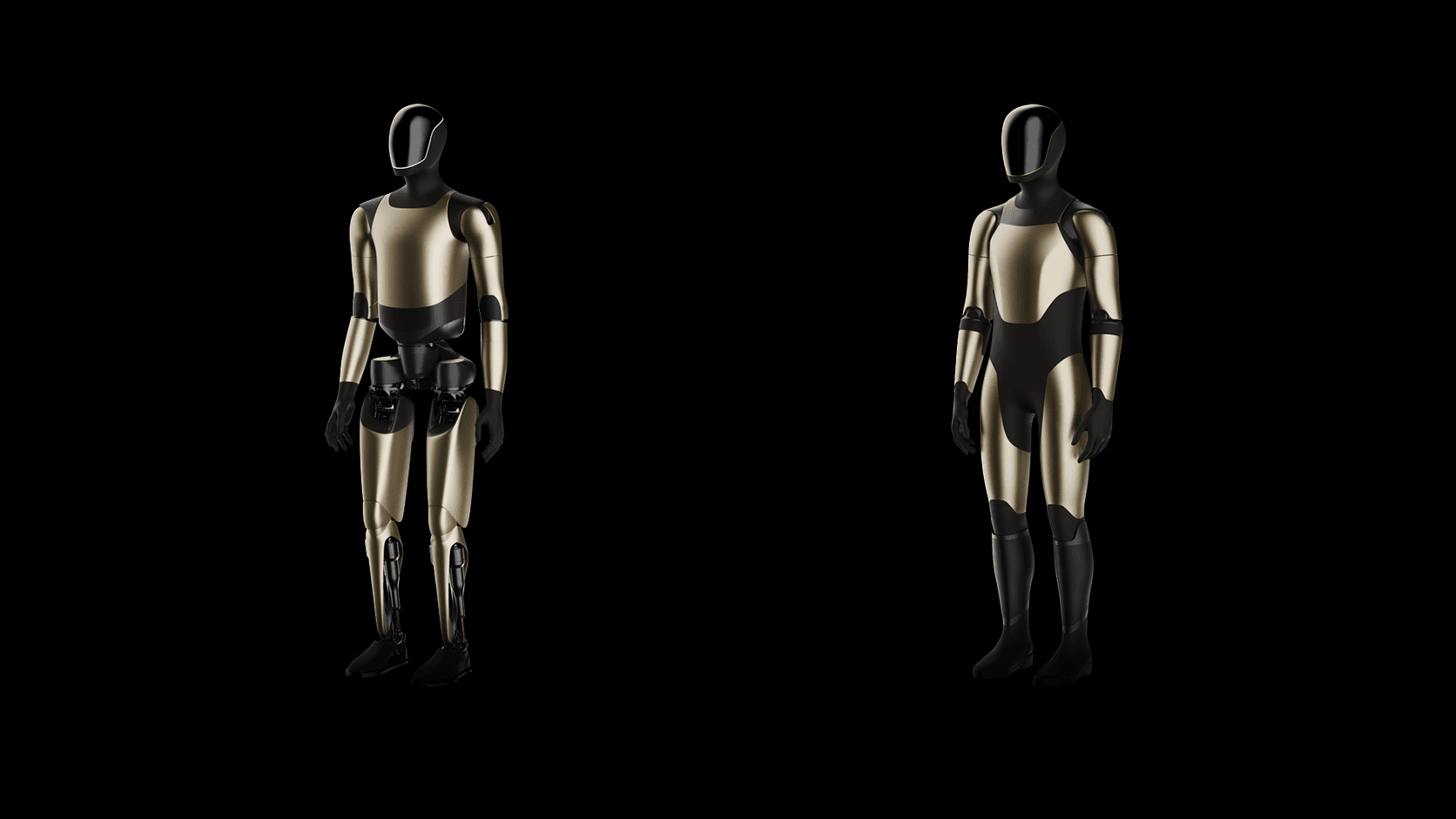
Humanoids Daily readers have already encountered AMD through Generative Bionics, the Italian humanoid developer spun out of the Italian Institute of Technology.
AMD Ventures participated in the company’s €70 million funding round. Our coverage of Generative Bionics’ Fincantieri partnership also described its use of AMD computing technology and the GENE.01 concept’s appearance during AMD’s CES keynote.
World Labs would add a different capability to that involvement: an internal research team developing models of spatial environments. Neither acquisition announcement sets out a World Labs–Generative Bionics integration, so that remains a potential connection rather than an announced project.
For robotics, the significance is that AMD is seeking a larger role in the models and development tools that create demand for compute. The practical payoff will be judged by what robot developers can build with them.
Share this article
Read next
- Published on
- Reading time
- 3 min read
Hasta La Vista, Figure 02: Adcock Teases a Terminator-Style Sendoff
- Published on
- Reading time
- 6 min read
Delta Intelligence Targets Energy and Infrastructure Beyond Its Household Robot Demo
- Published on
- Reading time
- 3 min read
Dyna Robotics Teases a New Robot Built for Real Work
- Published on
- Reading time
- 5 min read
Figure Joins NVIDIA’s Open Agent Safety Platform as Humanoid Deployment Approaches
- Published on
- Reading time
- 5 min read
Sharpa Launches D01 Robot, W02 Hand and AE01 Haptic Glove at IROS 2026
- Published on
- Reading time
- 5 min read
Niantic Spatial Launches Places Library With 100 Real Environments for Robot Training

The weekly humanoid robotics briefing
One email a week: the launches, funding and research that mattered, with context from Humanoids Daily.
Read recent issues