- Published on
Tesla Reportedly Builds Hundreds of Optimus Robots a Week
One tap, and our reporting appears more often in your Google Top Stories. It makes a real difference to a small newsroom.

Supported by RoboStrategySupport for Humanoids Daily comes from RoboStrategy
Sponsored
Investing involves risk, including possible loss of principal. Read the prospectus before investing.
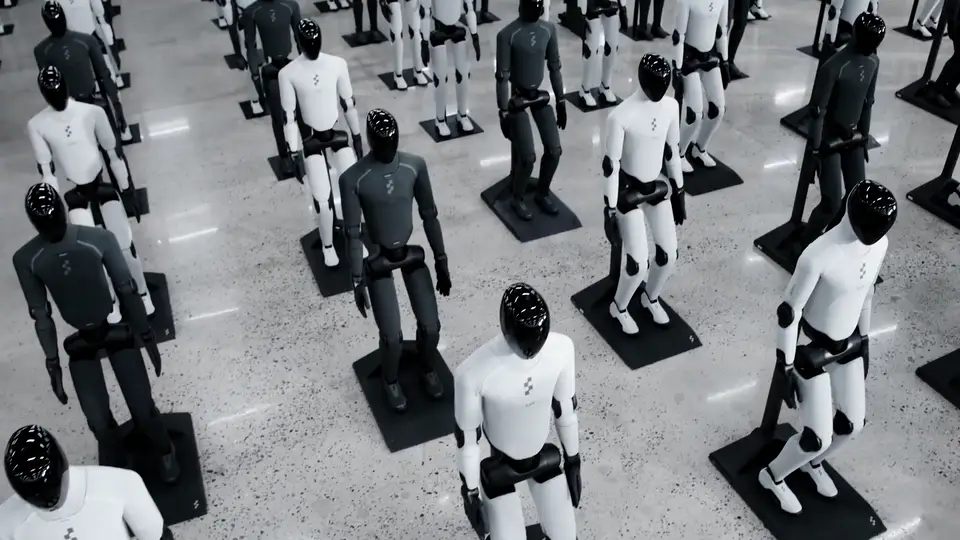
- Tesla built several hundred Optimus robots a week in August, up from a few dozen in the second quarter, according to The Information. Most are used internally for testing, training and data collection.
- The V3 machines now being manufactured reportedly differ from the eventual customer version, which still needs to meet tougher durability and reliability requirements.
- The report describes hand-assembly difficulties, sensor failures and inconsistent supplier quality, alongside AI that remains dependent on training for specific tasks.
- Tesla reportedly has more than 500,000 hours of training data and plans to lease robots to selected commercial customers as part of a fleet-learning strategy.
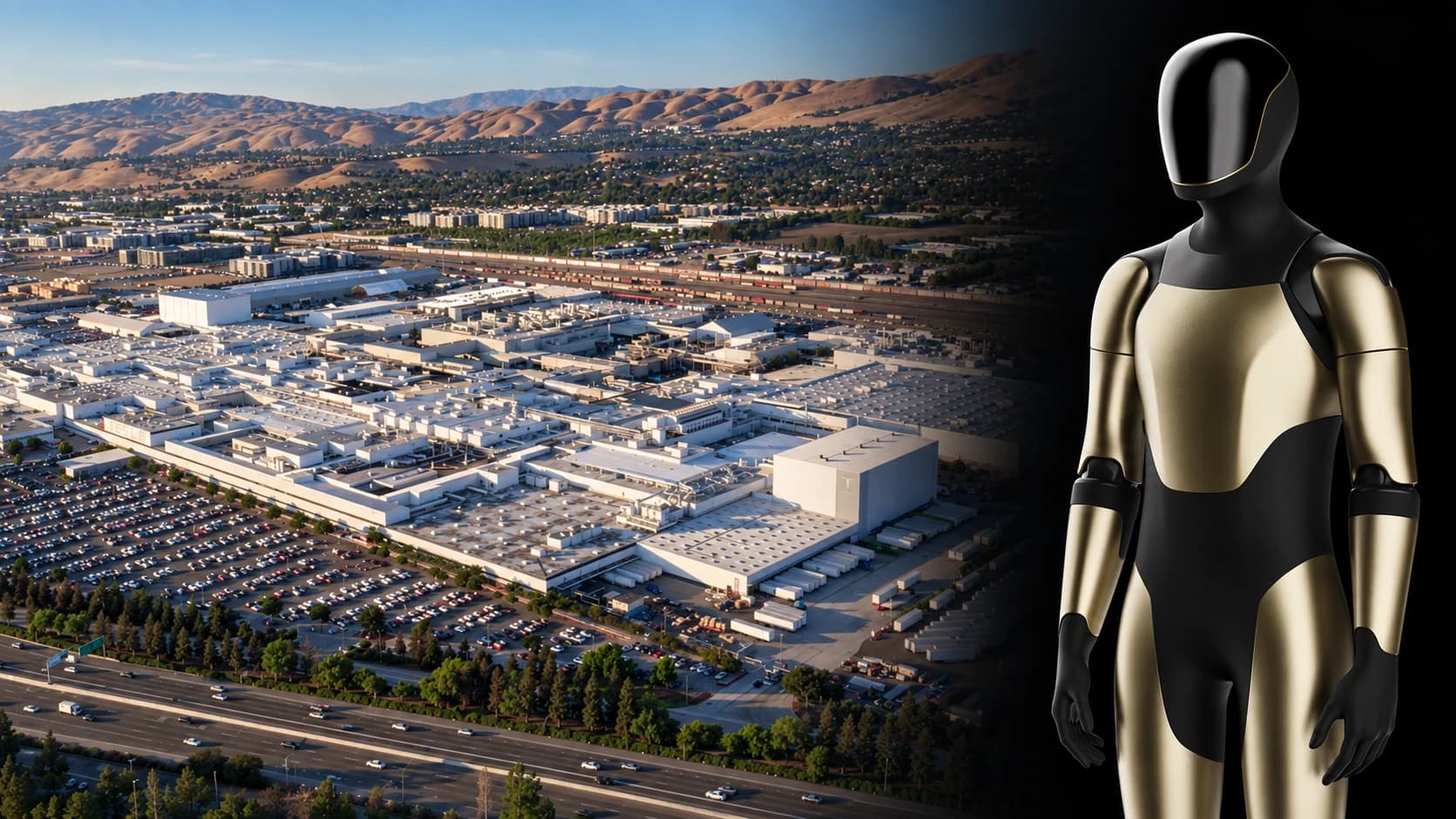
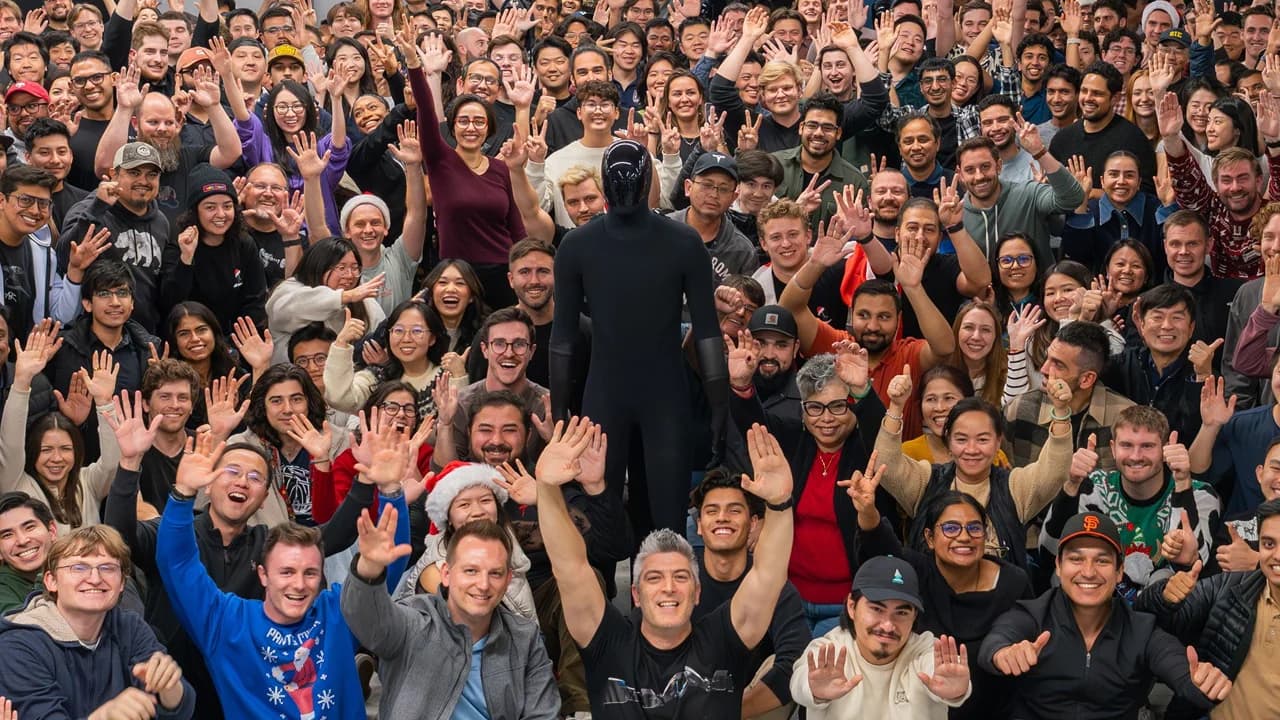
Tesla increased Optimus production roughly tenfold over recent months, according to The Information, but the machines leaving its factory are still part of a development program rather than a finished commercial product.
In a September 25 report, Qianer Liu and Grace Kay describe Tesla producing several hundred robots a week at Fremont in August, compared with a few dozen during small-batch production testing in the second quarter. Their account draws on people familiar with the project. Tesla did not respond to the publication’s request for comment.
More robots, but not yet the customer version
Managers reportedly want a continuous automated line capable of producing more than 1,000 robots per week by the end of 2026, with an eventual ambition of around 20,000 weekly. Those are capacity goals, not achieved output or customer deliveries.
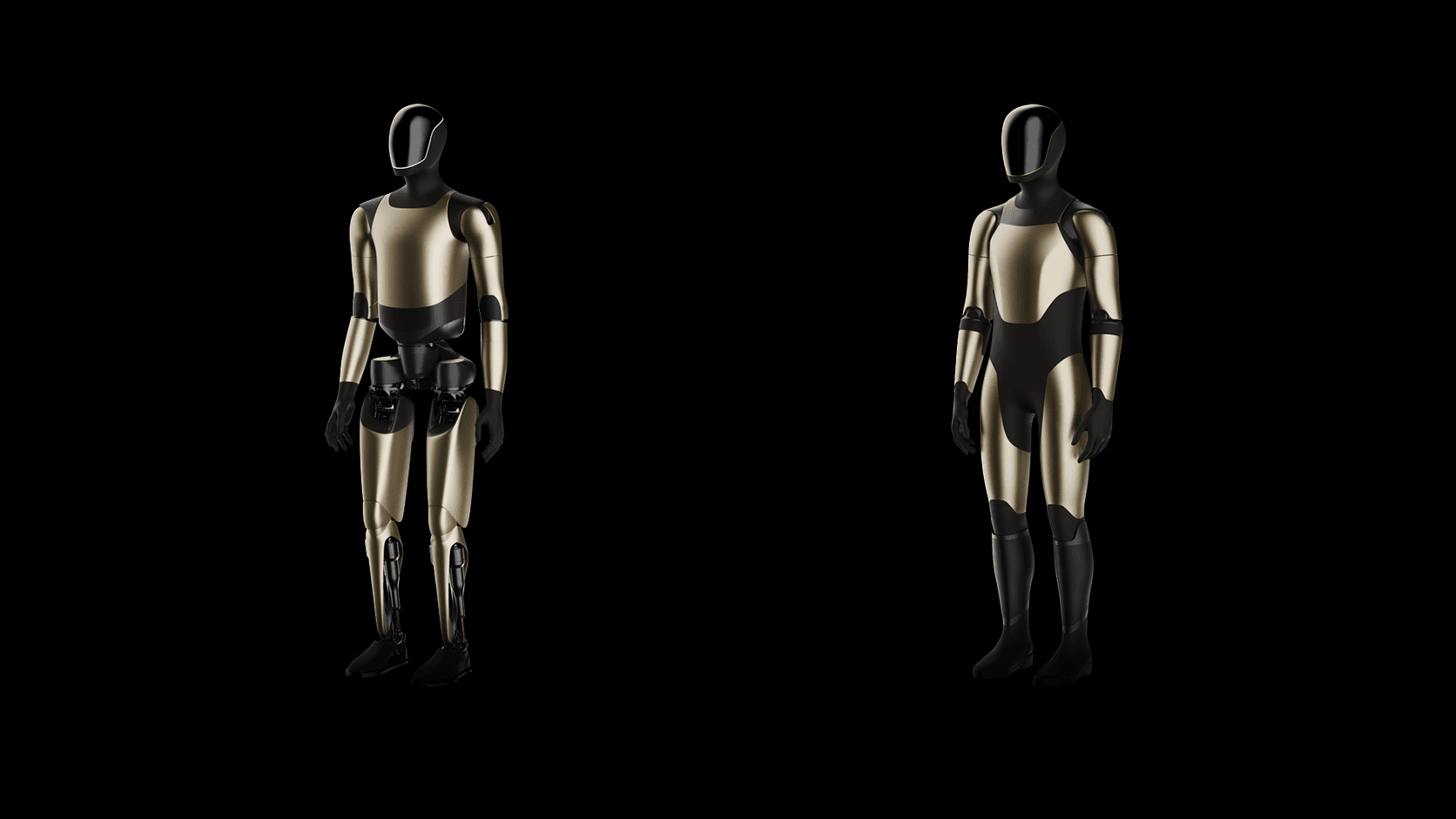
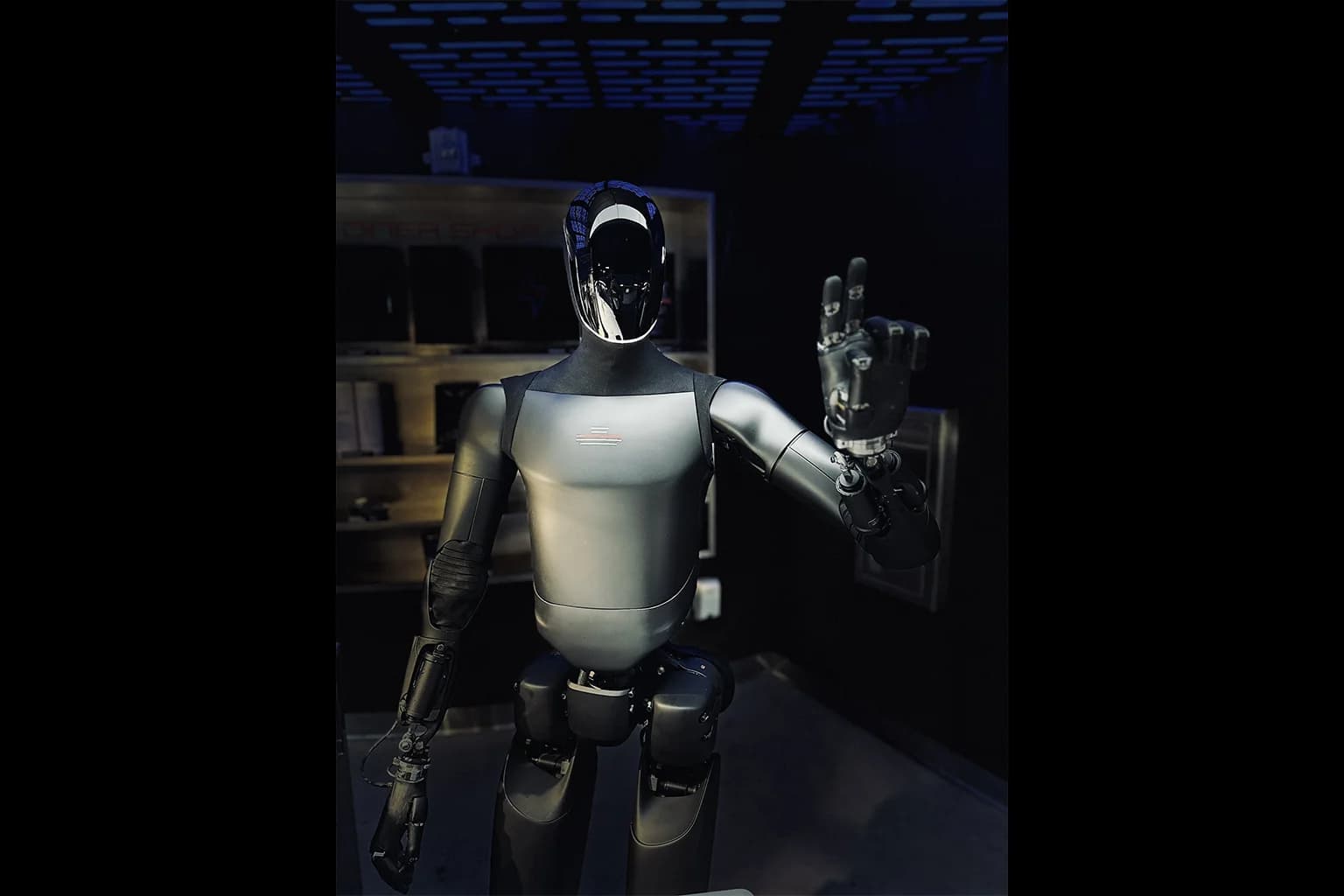
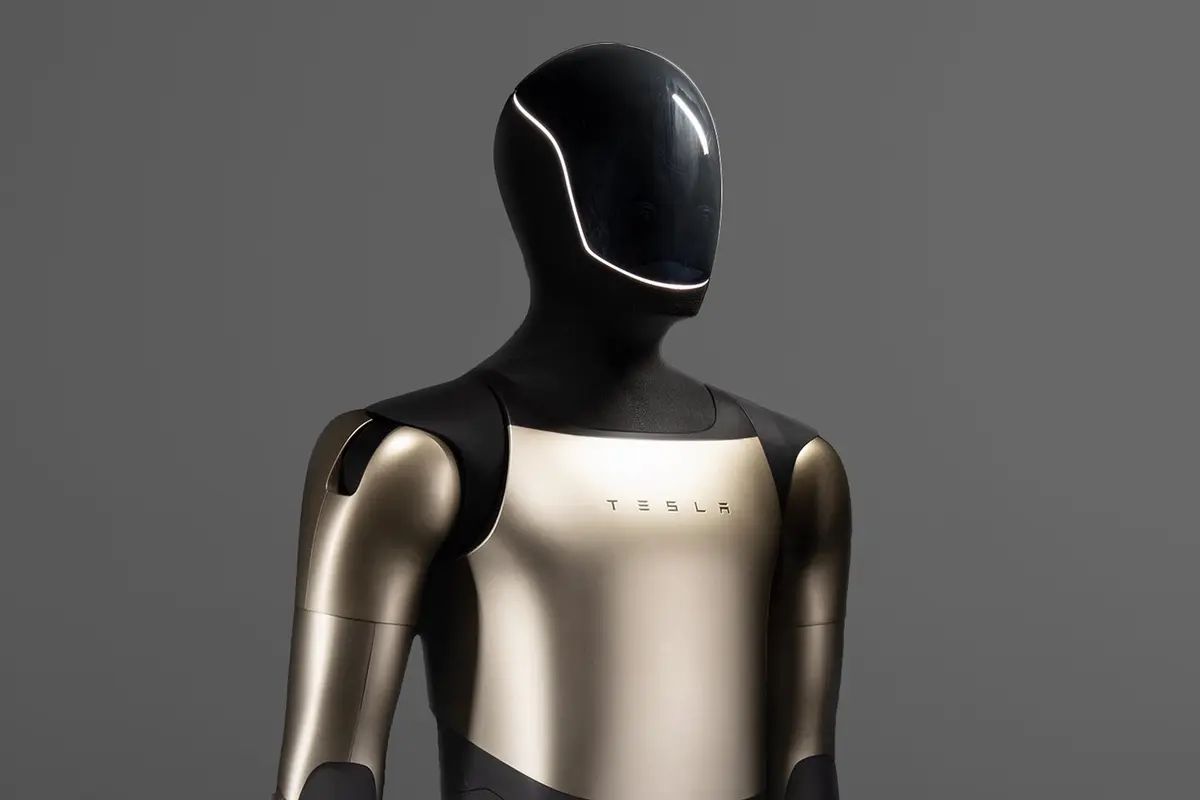
The Information identifies the machines currently being built as Optimus V3, describing a lighter design with more cameras and a more human-like appearance. However, its sources say this is not the exact version Tesla intends to commercialize. That version remains under development and must meet stricter durability and reliability thresholds.
The weekly humanoid robotics briefing
One email a week: the launches, funding and research that mattered, with context from Humanoids Daily.
Read recent issuesMost current units are reportedly used for testing, training and data collection. Those working in Tesla factories operate in controlled areas under close supervision, performing specific programmed tasks. The report distinguishes that execution from both general-purpose autonomy and remote control; supervision should not automatically be read as teleoperation.
Tesla’s initial commercial plan is reportedly to lease robots to selected companies with factories or warehouses resembling its own. Leasing would let Tesla recover, upgrade or refurbish machines, while customer deployments would contribute data to further training. The report does not announce signed leases or a confirmed delivery schedule.
Musk’s vision extends far beyond the factory
In a separate CGTN interview, Musk predicted at least a billion humanoid robots within ten years, describing that as an easy prediction and adding: “I’d say no later than 10 years.” He was discussing humanoids globally, not promising Tesla would manufacture a billion Optimus units.
Musk pictured personal robots helping with eldercare, childcare and tutoring, alongside businesses where one person directs hundreds or thousands of physical and digital machines. He argued that this could create an economy of abundance and what he calls “universal high income.” These were forecasts about technology and society, rather than demonstrated Optimus capabilities or a detailed account of how the gains would be distributed.
His productivity argument included robots working 168 hours a week. That describes continuous availability in his envisioned future, not measured Optimus uptime; charging, maintenance and intervention requirements still matter to actual operating hours.
The interview provides context for the ambition behind the program, not a response to The Information’s reporting. Turning that vision into useful machines depends on resolving the reliability, manufacturing and learning problems described below.
The hands expose the manufacturing challenge
The report describes alignment problems at stations assembling hands and joints and testing electronics. Some tooling reportedly becomes less reliable when the line runs faster, leaving more machines needing rework. The challenge is producing small, tightly fitted components consistently while the robot’s design continues to evolve.
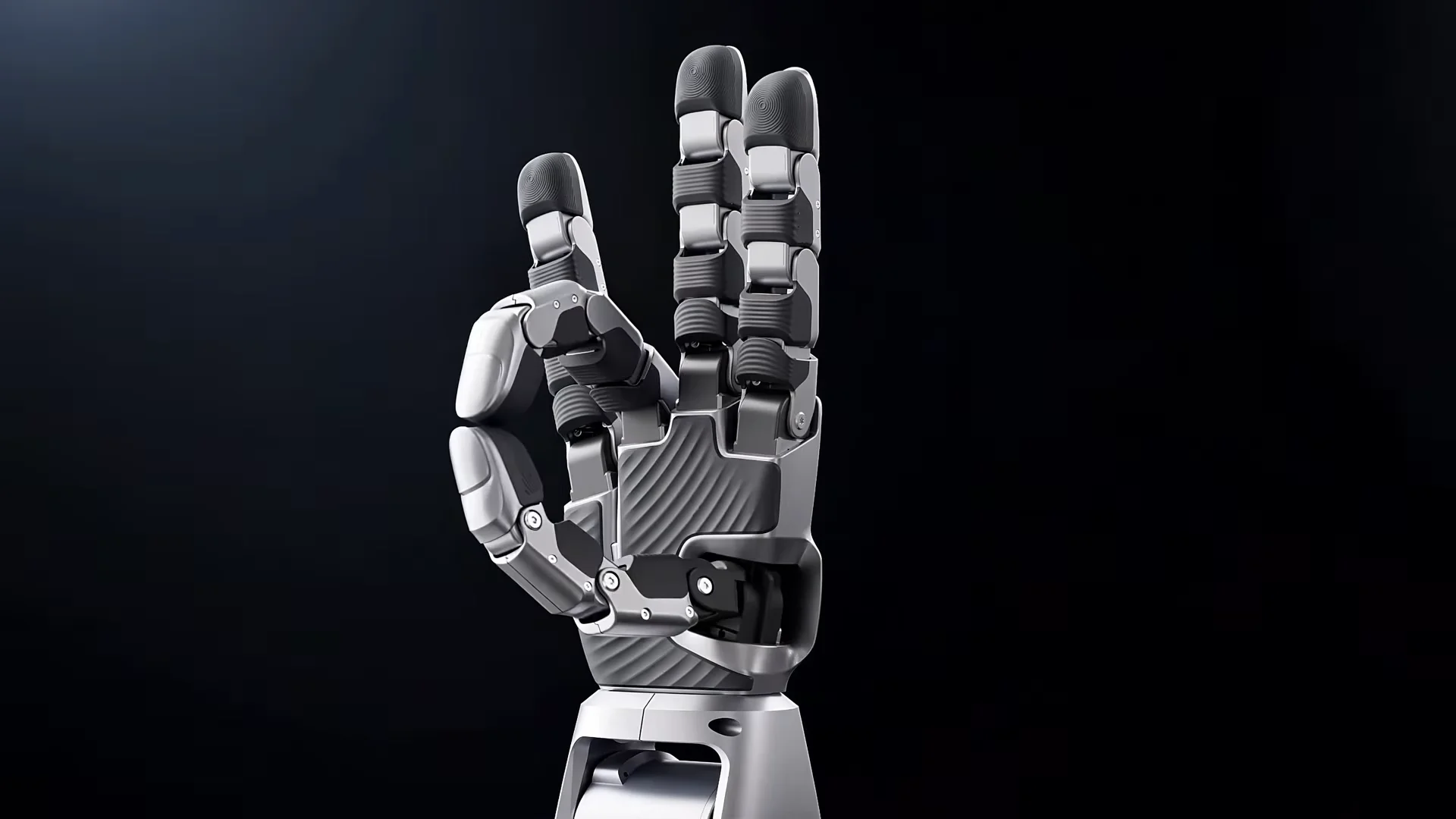
According to one source, each hand-and-forearm assembly contains more than 100 screws and other small components that currently require manual assembly. That is a combined component count, not a claim of more than 100 screws alone.
Touch-sensor durability is another reported issue. Tesla has developed a replaceable sensing glove that would allow the sensor layer to be changed without replacing the entire hand, with incorporation planned for 2027. This is a reported design response, not evidence that the durability problem has already been resolved.
Half a million hours of data—and more to collect
Three people familiar with the AI told The Information that Optimus cannot yet reliably handle a broad range of tasks and can behave unpredictably in unfamiliar situations. Tesla is reportedly developing a library of movements that can be combined for different jobs, although learning even basic tasks can still take days.
The publication reports more than 500,000 hours of training data, with an aim to double that by year-end. It does not provide a breakdown of unique tasks or demonstrate how that volume translates into improved performance.
The collection effort reportedly combines teleoperated demonstrations, motion-tracking equipment and recordings of people performing physical tasks. Tesla has shifted annotation personnel from self-driving work and established training hubs in Colorado, Arizona and Florida. According to the report, some factory workers objected to recording demonstrations for machines intended to replace their work; Tesla subsequently hired dedicated collectors, with much collection taking place away from active lines.
That adds context to our earlier coverage of reported Optimus data collection in Berlin, but does not independently verify that separate account. The strategic aim is a feedback loop: deployed robots generate data, training improves the software, and updates return to the fleet. Establishing that loop still requires reliable hardware and useful initial tasks.
Why supplier quality matters
The Information also reports that Tesla is qualifying new suppliers and encouraging some to establish factories outside China, offering larger orders as an incentive. Sources describe suppliers that can make successful prototypes but struggle to maintain consistency at higher volumes.
That puts renewed attention on the manufacturing question behind our coverage of Tesla’s reported supplier work in Ningbo: how to turn a functioning prototype into consistently built hardware.
In the earlier reporting, Tuopu described ongoing Tesla research and development cooperation on automotive and robotics projects. However, supplier representatives did not confirm the specific new audit round reported by Chinese media. That distinction still applies. Existing engineering relationships do not independently corroborate this latest account of Optimus output or quality problems.
The broader challenge extends beyond Tesla. Apptronik CEO Jeff Cardenas recently highlighted gaps in the U.S. gear supply base, alongside constraints on rare-earth materials used in motors. He said actuators can account for up to 60% of a robot’s bill of materials.
Cardenas was discussing his own industry assessment, not validating the Optimus report. His remarks nevertheless explain why component production deserves attention alongside advances in robot AI. A joint has to meet its specification repeatedly, across batches and operating cycles, for a fleet to be economical to support.
App images are a separate piece of evidence
The report also arrives after Humanoids Daily verified robot renders labeled _gen3 inside Tesla’s Android app.
Our comparison of four app builds dated the first appearance of those images to August 27, with higher-resolution versions arriving on September 5. That is direct evidence about files Tesla distributed in its software package. It does not establish the final physical design, production quantities or readiness for customer use.
Keeping those evidence types separate matters. A render can document planned presentation, a supplier relationship can establish engineering cooperation, and an output figure can describe manufacturing activity. None independently measures how reliably a robot performs a customer’s job.
For commercial deployment, useful evidence would include task completion rates, human interventions, uptime, maintenance requirements and customer acceptance. A robot repeatedly completing a narrow task can still have commercial value; it does not need to solve every household or factory job. But the cost of supervision and interruptions has to fit that particular application.
The next milestone worth watching, after the long-awaited official reveal of Gen 3, is therefore sustained work under defined conditions, alongside independently substantiated production and delivery figures. Those measures would make it possible to assess how much of Tesla’s manufacturing effort is translating into a usable product.
Share this article
Read next
- Published on
- Reading time
- 5 min read
Tesla App Contains Optimus Gen 3 Renders—Here’s What They Show
- Published on
- Reading time
- 4 min read
Supply Chain Rumors Hint at Massive Optimus Order as Fremont Production Line Ramps Up
- Published on
- Reading time
- 5 min read
The Terafab Manifesto: Tesla and Intel Join Forces to Power Musk’s "Galactic" AI Ambitions
- Published on
- Reading time
- 3 min read
Finishing Touches: Tesla Misses Self-Imposed Q1 Deadline for Optimus Gen 3 Reveal
- Published on
- Reading time
- 3 min read
A 'Formula One' Pace: Tesla's Optimus Director Teases Gen 3 Prototype in New Recruitment Push
- Published on
- Reading time
- 3 min read
Tesla Targets 1 Million Unit Optimus Production Line, V3 Prototype Set for Q1
The weekly humanoid robotics briefing
One email a week: the launches, funding and research that mattered, with context from Humanoids Daily.
Read recent issues