- Published on
South Korea Doubles Down on "Physical AI" with New Hyundai Innovation Hub and National Humanoid Council
One tap, and our reporting appears more often in your Google Top Stories. It makes a real difference to a small newsroom.


Your guide
Rich Robinson
Jee Chee Ren · Executive tour
See China’s AI and robotics ecosystem first-hand.
Six days exploring AI, robotics and advanced manufacturing.
With Rich Robinson, Clinical Professor of Entrepreneurship at Peking University
Beijing · Guangzhou · Shenzhen
29 November–4 December 2026
Referral partnership · We earn a commission on referred bookings.
South Korea is rapidly consolidating its position as a global epicenter for robotics and intelligent automation. In a pair of major announcements this week, the nation signaled a two-pronged approach to dominating the "Physical AI" market: a massive industrial investment from Hyundai Motor Group and a new government-led initiative to unify humanoid research into a single, cohesive national strategy.
Hyundai’s KRW 9 Trillion Bet on Saemangeum
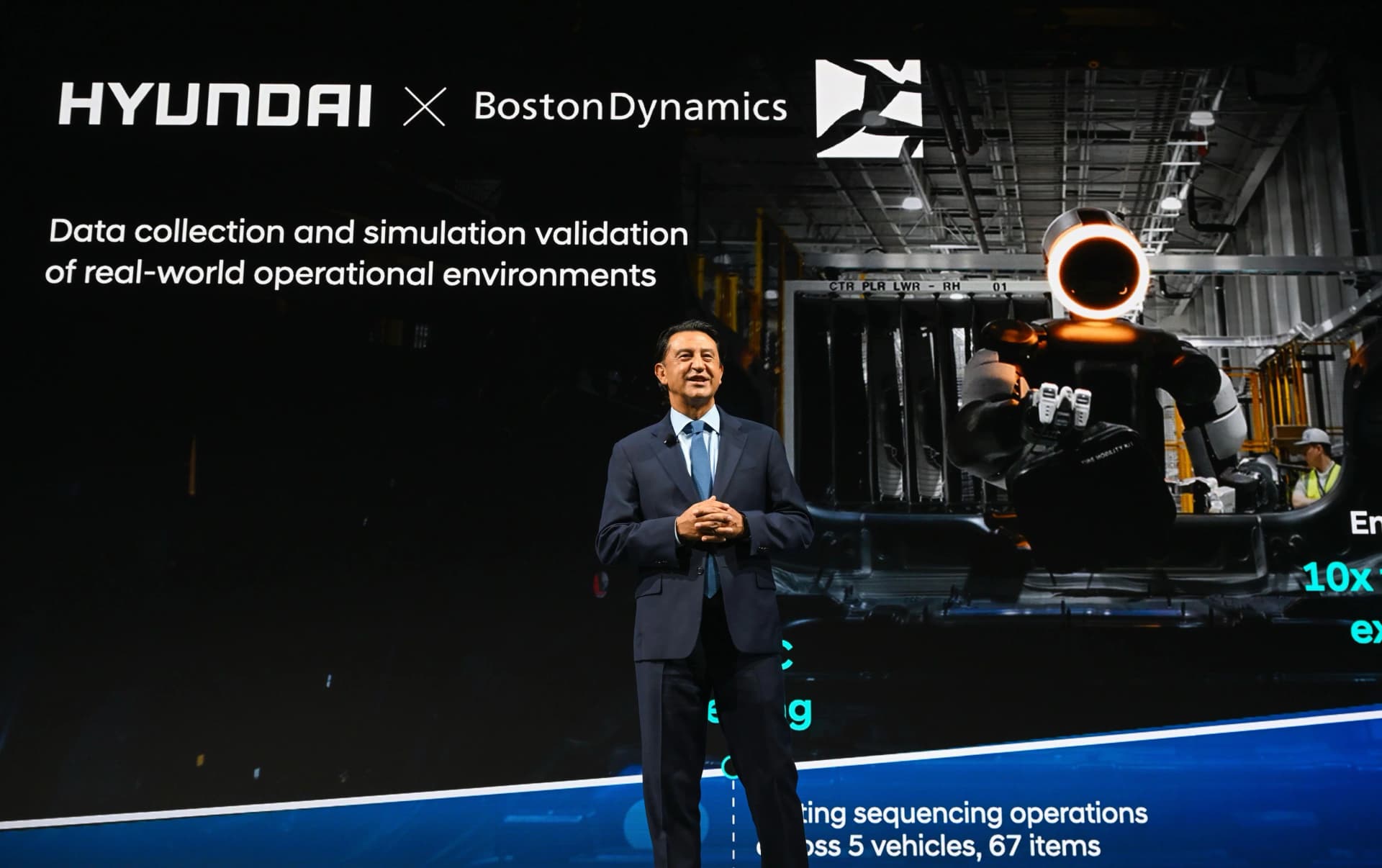
Hyundai Motor Group (HMG) has signed a Memorandum of Understanding (MOU) with the South Korean government and Jeonbuk State to establish a massive innovation hub in the Saemangeum area of Gunsan City. Beginning in 2026, the Group plans to invest approximately KRW 9 trillion ($6.7 billion) to construct a cutting-edge industrial complex focused on robotics, AI, and hydrogen energy.
The Saemangeum hub is a core component of Hyundai’s broader KRW 125.2 trillion investment plan through 2030. While the press release does not explicitly mention its subsidiary Boston Dynamics, the infrastructure being built is tailor-made for the next generation of humanoid machines.
The Five Pillars of the Innovation Hub
The investment is divided across five strategic areas designed to create a self-sustaining ecosystem for Physical AI:
The weekly humanoid robotics briefing
One email a week: the launches, funding and research that mattered, with context from Humanoids Daily.
Read recent issues| Investment Area | Amount (KRW) | Key Focus |
|---|---|---|
| AI Data Center | 5.8 trillion | Processing datasets for autonomous driving and robotics. |
| Solar Power Infrastructure | 1.3 trillion | Gigawatt-scale power for energy-intensive operations. |
| PEM Electrolyzer Plant | 1 trillion | Large-scale clean hydrogen production for the energy transition. |
| Robotics Manufacturing Cluster | 400 billion | In-house robot production and foundry services. |
| AI Hydrogen Smart City | 400 billion | Integrating robotics and AI into a living urban ecosystem. |
The Group expects to break ground on the AI data center and solar infrastructure in 2027, with the Robotics Manufacturing Cluster slated for construction in 2028. This cluster is expected to manufacture approximately 30,000 units annually, aligning with previously stated goals to ship automotive volumes of humanoids.
A "One-Team" National Strategy for Humanoids
While Hyundai builds the industrial hardware, the South Korean government is restructuring the nation’s intellectual capital. On February 27, 2026, the Ministry of Science and ICT (MSIT) launched the Government-funded Research Institute Humanoid Strategy Council.
The council’s primary mission is to end the "siloed" nature of research by consolidating capabilities from various national institutes into a "One-Team" system. This initiative falls under the "K-Moonshot" strategy, which designates humanoids and Physical AI as critical national missions.
Brain, Body, and Data
The council will focus on three core pillars:
- Brain (Intelligence): Developing the AI models required for complex task planning.
- Body (Hardware): Advancing the mechanical actuators and sensors needed for humanoid mobility.
- Data: Creating an integrated infrastructure to generate, share, and manage the massive datasets required for "zero-shot" learning—a technique previously highlighted by the RAI Institute and Boston Dynamics.
"To gain a first-mover advantage in global humanoid competition, it is paramount to break down silos between research institutes and consolidate capabilities," stated a spokesperson for the Ministry of Science and ICT.
Context: The Global Race for Supremacy
The timing of these Korean initiatives is no coincidence. The global humanoid market is currently a high-stakes race between the United States—led by private sector titans like Tesla and Figure—and China, which has designated "embodied AI" as a core national project.
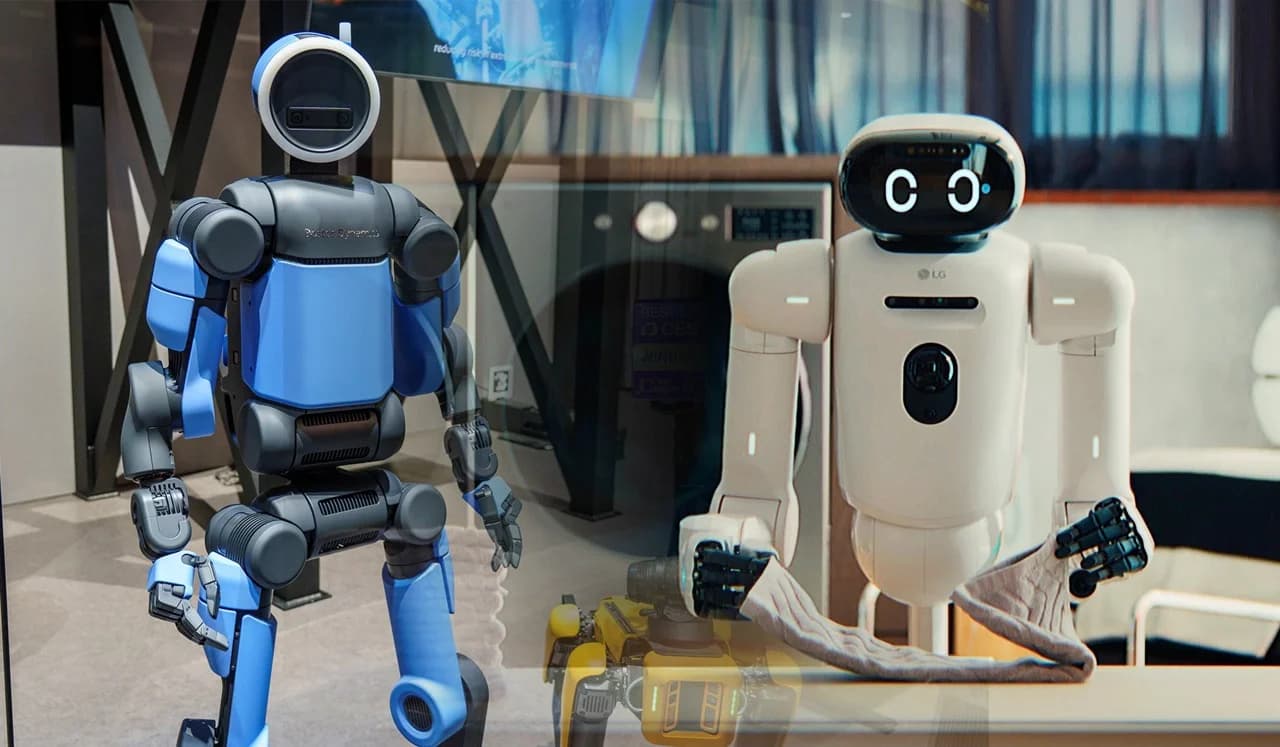
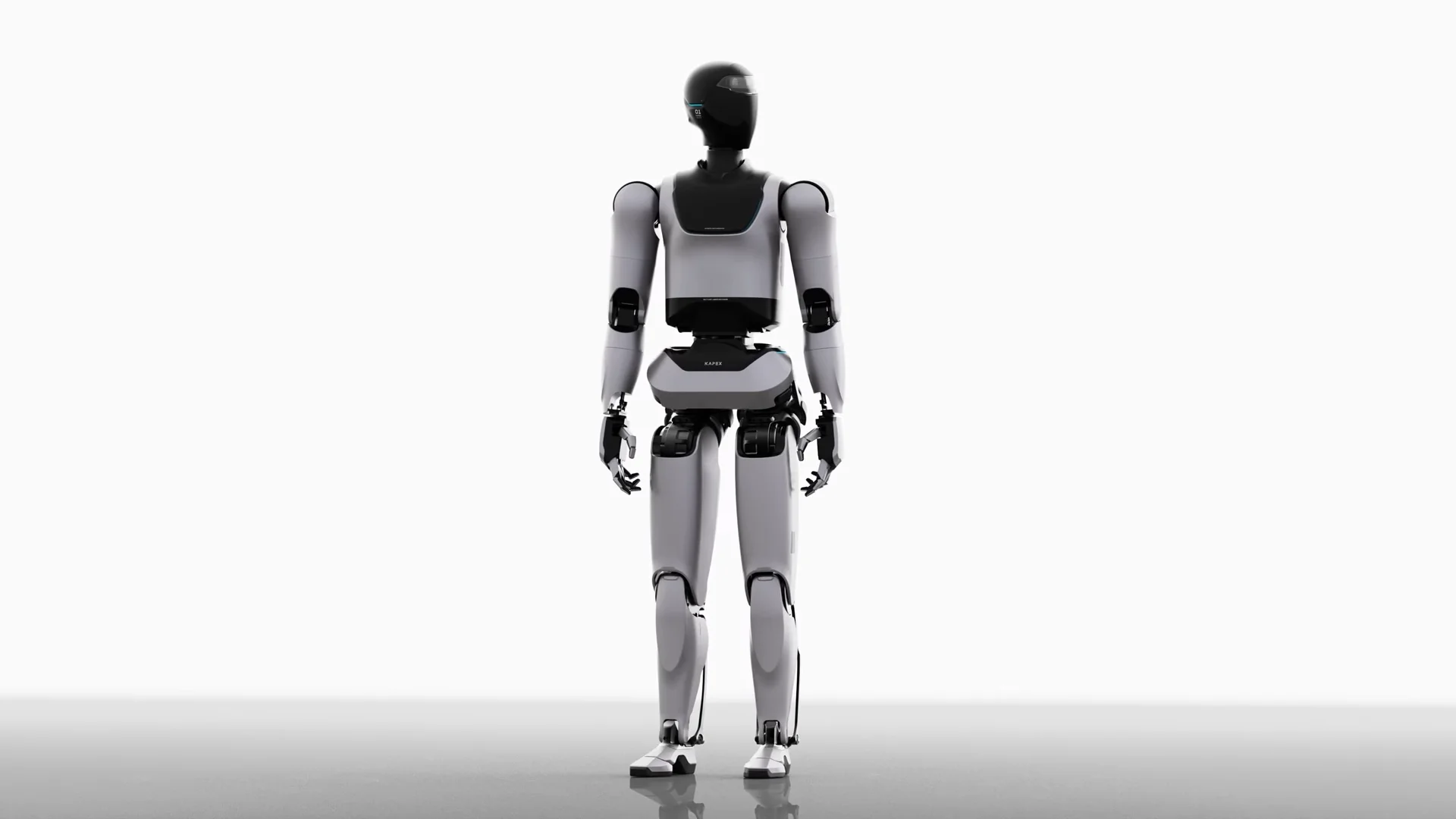
South Korea's strategy appears to be a hybrid of these two models. By leveraging the manufacturing might of conglomerates like Hyundai and LG—the latter of which is developing its own KAPEX humanoid platform—alongside government-coordinated research, Korea is attempting to bypass the "Phase One" hardware validation grind and move straight into mass-market deployment.
With mass production targets for humanoids set for as early as 2029 through the M.AX Alliance, the infrastructure in Saemangeum may soon become the world’s most significant testing ground for the future of human-robot collaboration.
Share this article
Read next
- Published on
- Reading time
- 4 min read
South Korea’s M.AX Alliance Taps Seoul National University to Build AI Models for Humanoids
- Published on
- Reading time
- 7 min read
Hyundai Says Atlas Will Not Replace Workers — One Day After Settling a Strike Over Exactly That
- Published on
- Reading time
- 4 min read
The Production Pivot: Leadership Exodus and Internal Pressure at Boston Dynamics
- Published on
- Reading time
- 4 min read
The Blueprint for a Bipedal Workforce: Kia Details Atlas Deployment Roadmap
- Published on
- Reading time
- 5 min read
Form as Function: Boston Dynamics Details the Industrial Design Logic Behind the Production Atlas
- Published on
- Reading time
- 5 min read
From Viral Clips to the Factory Floor: 60 Minutes Goes Inside Boston Dynamics’ Industrial Shift
The weekly humanoid robotics briefing
One email a week: the launches, funding and research that mattered, with context from Humanoids Daily.
Read recent issues