- Published on
Figure 03 Hits "Human Parity" in Package Sorting, Adcock Claims Sub-3-Second Throughput
One tap, and our reporting appears more often in your Google Top Stories. It makes a real difference to a small newsroom.

Supported by RoboStrategySupport for Humanoids Daily comes from RoboStrategy
Sponsored
Investing involves risk, including possible loss of principal. Read the prospectus before investing.
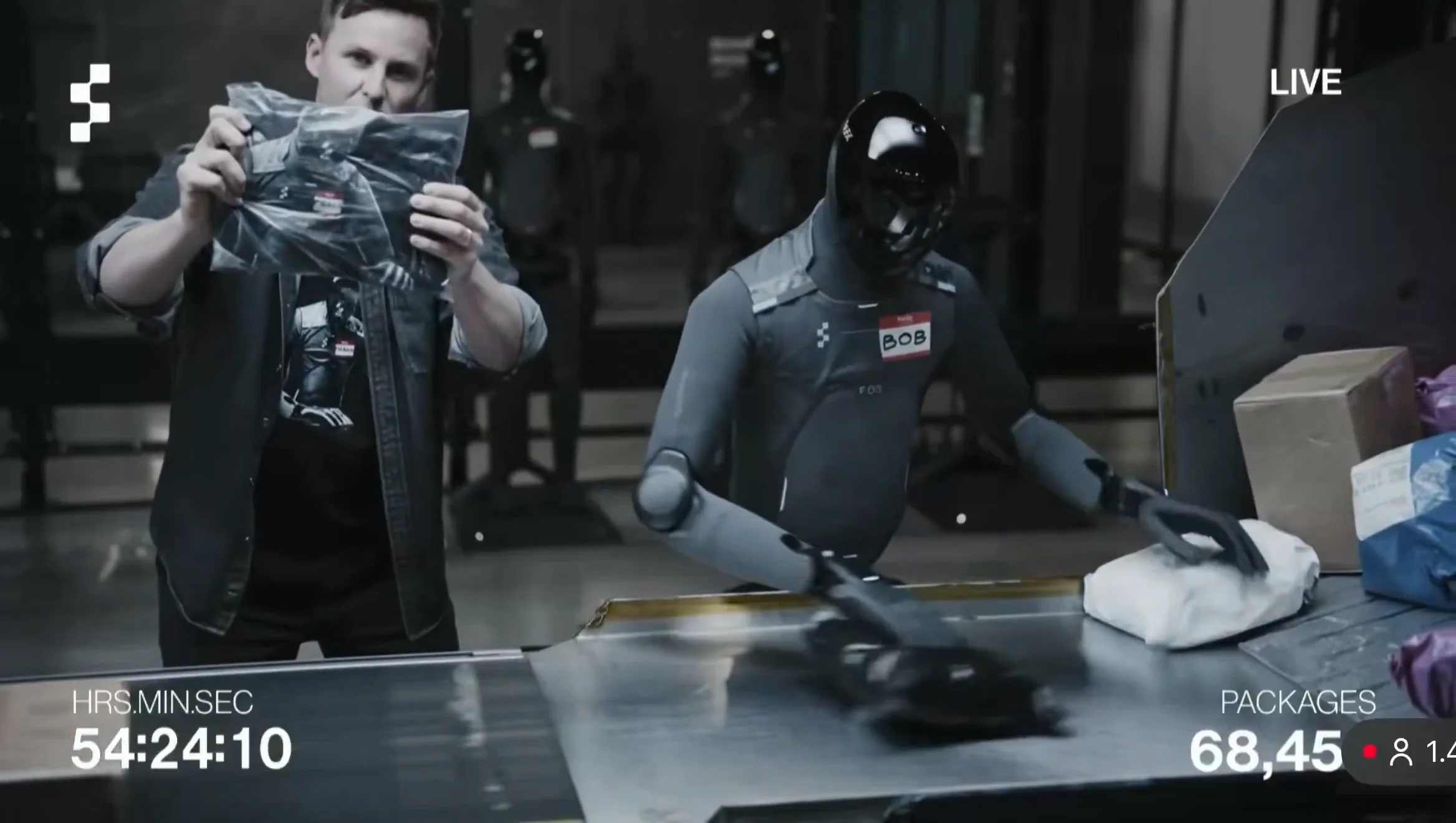
After Salesforce CEO Marc Benioff shared a candid video of the Figure 03 robot autonomously sorting packages, Figure CEO Brett Adcock has publicly quantified the machine's performance. According to Adcock, the newest iteration of the humanoid has effectively reached "human parity" in average shift throughput, operating at speeds under three seconds per package.
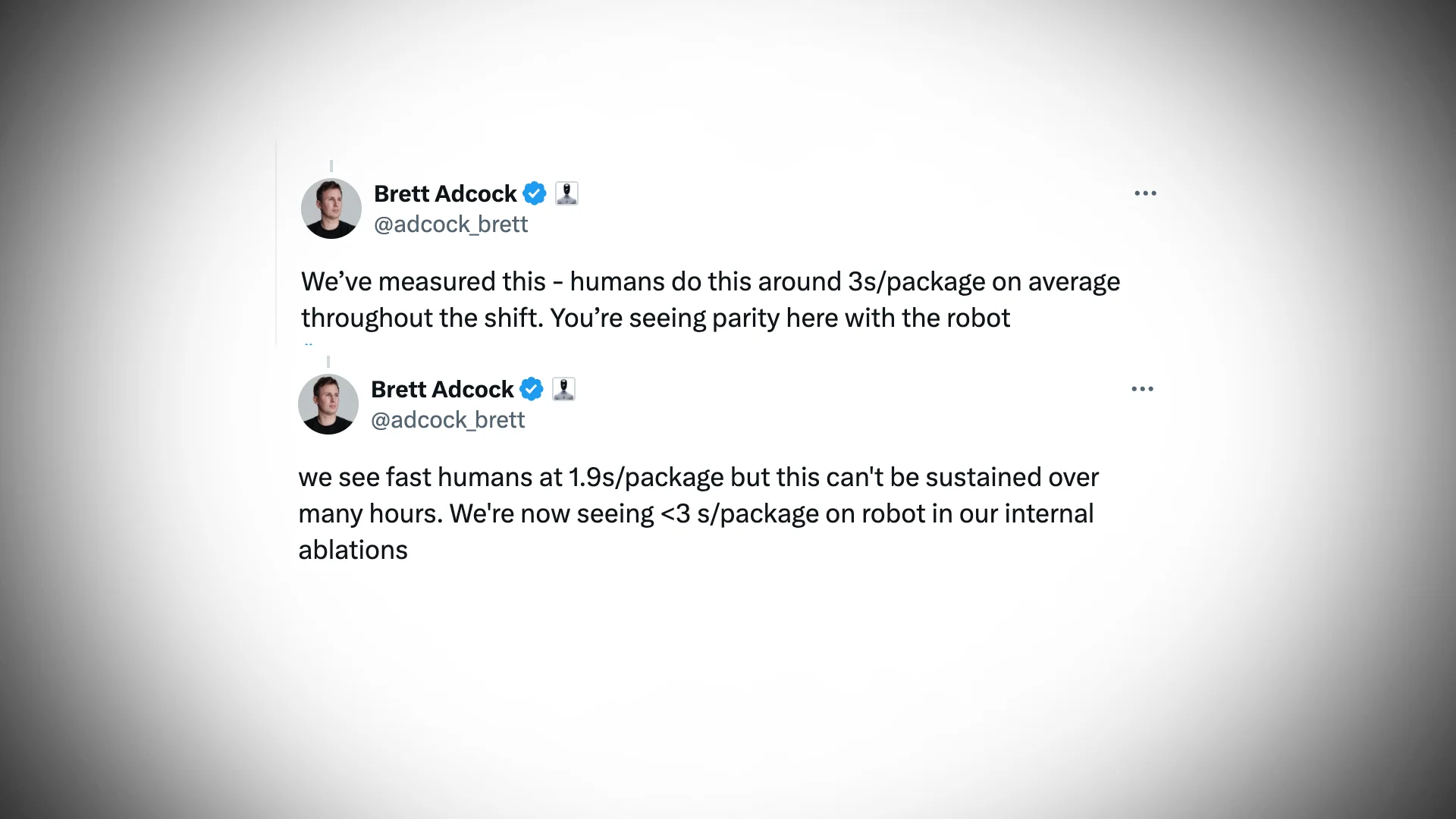
In a recent exchange on X (formerly Twitter) with robotics AI expert Chris Paxton, Adcock clarified the true speed capabilities of the hardware. While Paxton initially noted the speed in the Benioff video was "really good" but "not human speed," Adcock interjected with internal performance data.
"We’ve measured this - humans do this around 3s/package on average throughout the shift," Adcock stated. "You’re seeing parity here with the robot." Adcock elaborated that while peak human performance can hit a blistering 1.9 seconds per package, such a pace cannot be sustained over a multi-hour workday. In contrast, Figure's "internal ablations" show the Figure 03 operating consistently at <3 s/package.
Contextualizing the Speed Leap
This new metric represents a substantial leap in capability for the Sunnyvale-based company. The previous generation, the Figure 02, achieved an average throughput of approximately 4.05 seconds per package during its endurance-focused demonstrations. Shaving off over a full second per action crosses a critical threshold for industrial viability, particularly on logistics floors where precise throughput dictates profit margins.
The weekly humanoid robotics briefing
One email a week: the launches, funding and research that mattered, with context from Humanoids Daily.
Read recent issuesThe raw speed of the Figure 03, however, only paints part of the ROI picture. As another user in the discussion pointed out, humanoid robots do not inherently need to match peak human bursts if they can operate continuously without degradation. Figure has recently transitioned its Sunnyvale fleet to 24/7 "lights-out" autonomous operation. By utilizing autonomous battery tracking, swapping, and wireless inductive charging built into their feet, a fleet operating at 3 seconds per package around the clock quickly outpaces human shifts constrained by breaks, shift changes, and natural fatigue.
Driven by Helix 02
The cadence increases are largely attributed to the company's refactored software architecture. Operating on the Helix 02 AI system , the Figure 03 computes torque directly to control its more than 30 motors. This "pixels-to-torque" neural network approach entirely bypasses the rigid, hand-coded C++ motion planning that bottlenecked previous models.
This fundamental shift in architecture not only enables a faster, more natural physical rhythm but also provides the reactive intelligence required when the environment changes unexpectedly—such as when Benioff intentionally interfered with the robot's sorting workflow.
If Figure can maintain this sub-3-second throughput outside of tightly controlled internal tests and deploy it reliably across a mass-market fleet , the $39 billion startup may be closer than anticipated to solving the most stubborn barrier in warehouse automation: delivering a machine that is simultaneously as fast as a human and completely indefatigable.
Share this article
Read next
- Published on
- Reading time
- 6 min read
Figure CEO Brett Adcock Claims Humanoids Are Already Delivering ROI Amid Severe Labor Shortages
- Published on
- Reading time
- 4 min read
Stepping Up: Figure 03 Achieves Autonomous Ladder Climbing, Reigniting the Bipedal Debate
- Published on
- Reading time
- 4 min read
A Golden Milestone: Figure Manufactures Its 1,000th Figure 03 Humanoid
- Published on
- Reading time
- 4 min read
Figure AI Pops Champagne as Autonomous Marathon Crosses 200 Hours Without Hardware Failure
- Published on
- Reading time
- 5 min read
Man vs. Machine: Figure AI Intern Edges Out Humanoid Fleet in 10-Hour Sorting Challenge
- Published on
- Reading time
- 8 min read
Beyond the 60-Hour Mark: Figure AI’s Endurance Marathon Signals Playbook for Figure 4 and Supply Chain Independence


The weekly humanoid robotics briefing
One email a week: the launches, funding and research that mattered, with context from Humanoids Daily.
Read recent issues