- Published on
San Mateo County Moves to Regulate Humanoid Robots, Threatening Teleoperation Business Models
One tap, and our reporting appears more often in your Google Top Stories. It makes a real difference to a small newsroom.



- The San Mateo County Board of Supervisors has unanimously passed a resolution directing the creation of a comprehensive permitting process for commercial humanoid robots.
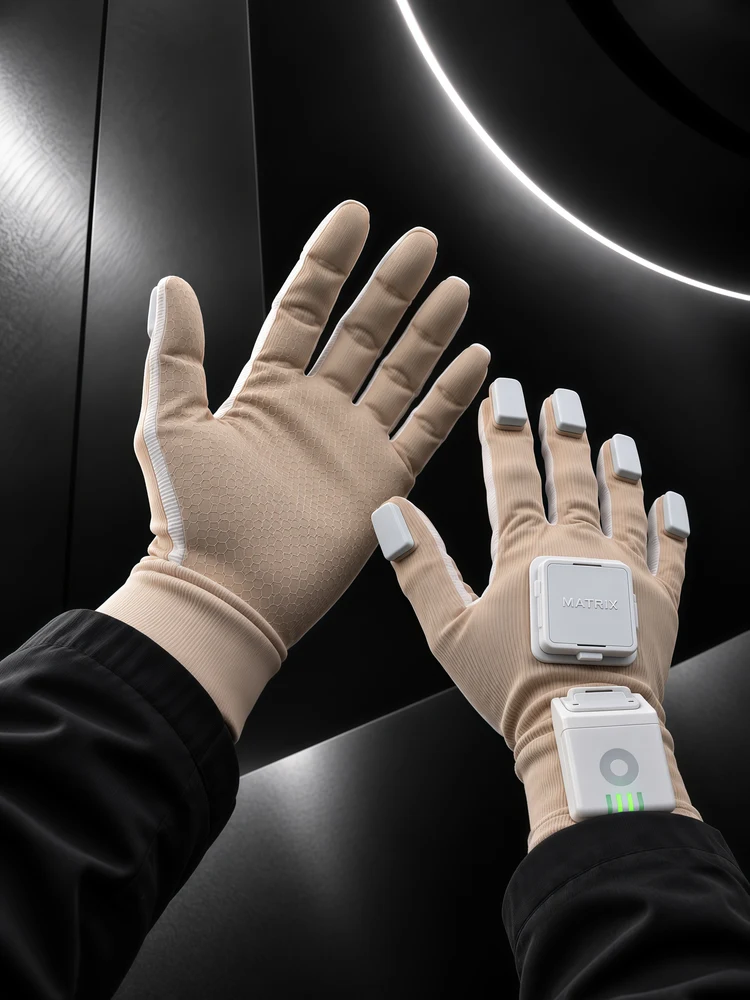
- The proposed ordinance would require humanoids to be "supervised at all times by a trained, on-site human," a mandate that directly challenges the remote-teleoperation business models deployed by startups like Tau Robotics.
- Businesses seeking permits must submit an "Economic Impact Assessment" and may be forced to pay into a "County Automation Impact Fee" retraining fund or provide mandated severance to displaced workers.
- To mitigate severe "thermal runaway" fire risks from high-capacity lithium-ion batteries, annual cost-recovery fees will fund specialized HazMat equipment for local first responders.
- The county will also require strict hardware vetting, demanding a clean manufacturer safety record free of active recalls or patterns of catastrophic failure.
While California lacks a comprehensive regulatory framework governing the commercial deployment of humanoid robots, local municipalities are moving aggressively to establish their own guardrails. On Tuesday, the San Mateo County Board of Supervisors unanimously approved a resolution that outlines one of the strictest proposed oversight mechanisms for physical AI in the United States.
Authored by Supervisor Ray Mueller, the resolution directs county legal and administrative staff to formally draft an ordinance regulating the use of "untethered, autonomous or semi-autonomous humanoid robots" in commercial environments. While initially framed as a basic safety and data-gathering exercise, the underlying text of the official PDF outlines severe operational constraints that could drastically alter the commercial viability of robotics startups in Silicon Valley.
The Teleoperation Roadblock
Perhaps the most disruptive element of the proposed ordinance is its approach to autonomy and supervision. Staff has been directed to consider requirements that any permitted robot "will be supervised at all times by a trained, on-site human".
This provision represents a massive roadblock for the current wave of humanoid service companies. Just north of the county line in San Francisco, companies like Tau Robotics are currently rolling out $30-per-hour humanoid cleaning services. These models rely heavily on human teleoperators working remotely to supervise and guide the machines through complex environments. Mandating a trained, on-site human supervisor effectively negates the labor-saving economics of these early commercial deployments, forcing operators to pay both for the hardware and a local human handler.
The weekly humanoid robotics briefing
One email a week: the launches, funding and research that mattered, with context from Humanoids Daily.
Read recent issues
Automation Impact Fees and Economic Friction
Beyond operational limitations, the resolution explicitly targets the economic friction of physical AI. Recognizing the threat of rapid worker displacement in the service sector, the county intends to hold businesses financially accountable for automation.
Under the proposed rules, companies must submit an Economic Impact Assessment detailing projected job losses before deploying a robot. Furthermore, applicants must certify they will mitigate these workforce impacts through direct action, such as redeploying affected workers, providing mandated severance, or paying into a newly established "County Automation Impact Fee" retraining fund. This heavy emphasis on labor protection quickly drew support from the San Mateo County Central Labor Council and AI safety advocates.
Hardware Vetting and "Thermal Runaway"
The resolution also establishes high barriers for hardware safety and public infrastructure integration. The board cited specific operational risks, including unpredictable physical interactions, emergency evacuation interference, and compliance with the Americans with Disabilities Act (ADA).
To prevent the deployment of experimentally unproven technologies, the county will require robots to possess accessible emergency "kill switches" and a clean manufacturer safety record free of active recalls. This stringent vetting comes at a complex time for the industry, which is already navigating sweeping FCC import bans on foreign hardware and a fragmented supply chain.
Fire hazards remain a primary catalyst for the legislation. Humanoid robots require massive lithium-ion battery packs that are prone to "thermal runaway"—a phenomenon causing rapid ignition and the emission of highly toxic gases. Because managing these fires exceeds standard structural firefighting capabilities, businesses will be required to pay an annual cost-recovery fee. These funds will be dedicated directly to purchasing specialized HazMat equipment and training for local first responders.
As the global industry pushes forward with tracking initiatives—such as China's recent launch of a national digital ID system for humanoids—San Mateo County's ordinance will serve as a critical domestic test case. By aggressively targeting the economic and operational foundations of early robot deployment, the county is signaling that the path to a humanoid workforce will be heavily taxed, strictly supervised, and heavily regulated.
Share this article
Read next
- Published on
- Reading time
- 4 min read
Matic Teases a Humanoid as It Looks Beyond Floor Cleaning
- Published on
- Reading time
- 4 min read
Boston Dynamics Takes a Drone Through Atlas Production in New Hiring Push
- Published on
- Reading time
- 4 min read
Chestnut Launches Aero Hand and Aero UMI, Pairing Dexterous Hardware With Its Data Collector
- Published on
- Reading time
- 4 min read
Dyna Reveals Taku Robot and Dyna-2.1 With an Hour-Long Autonomous Laundry Demo
- Published on
- Reading time
- 3 min read
Hasta La Vista, Figure 02: Adcock Teases a Terminator-Style Sendoff
- Published on
- Reading time
- 3 min read
Dyna Robotics Teases a New Robot Built for Real Work


The weekly humanoid robotics briefing
One email a week: the launches, funding and research that mattered, with context from Humanoids Daily.
Read recent issues