- Published on
Unitree Expands R1 Lineup with Dual-Arm Modular Platform Starting at $4,290
One tap, and our reporting appears more often in your Google Top Stories. It makes a real difference to a small newsroom.

- Unitree’s new Dual-Arm Humanoid Robot starts at $4,290, with a modular design similar to the R1 series.
- The hardware is available in four configurations—R1-A5, R1-A7, R1-A5-D, and R1-A7-D—offering a choice between fixed torsos and mobile wheeled bases.
- Technical specifications include a base computing power of 10 TOPS, 15–31 degrees of freedom (DOF), and optional NVIDIA Jetson Orin upgrades for high-performance AI processing.
- This release intensifies competition with AgiBot, which recently showcased its own G2 and G2 Air mobile manipulators for industrial use.
HANGZHOU, China — Just weeks after securing its position as the global leader in humanoid shipments, Unitree Robotics is broadening its product catalog with the launch of a new Dual-Arm Humanoid Robot platform. Starting at $4,290, the hardware represents an aggressive attempt to lower the barrier to entry for developers seeking to move into complex mobile manipulation.
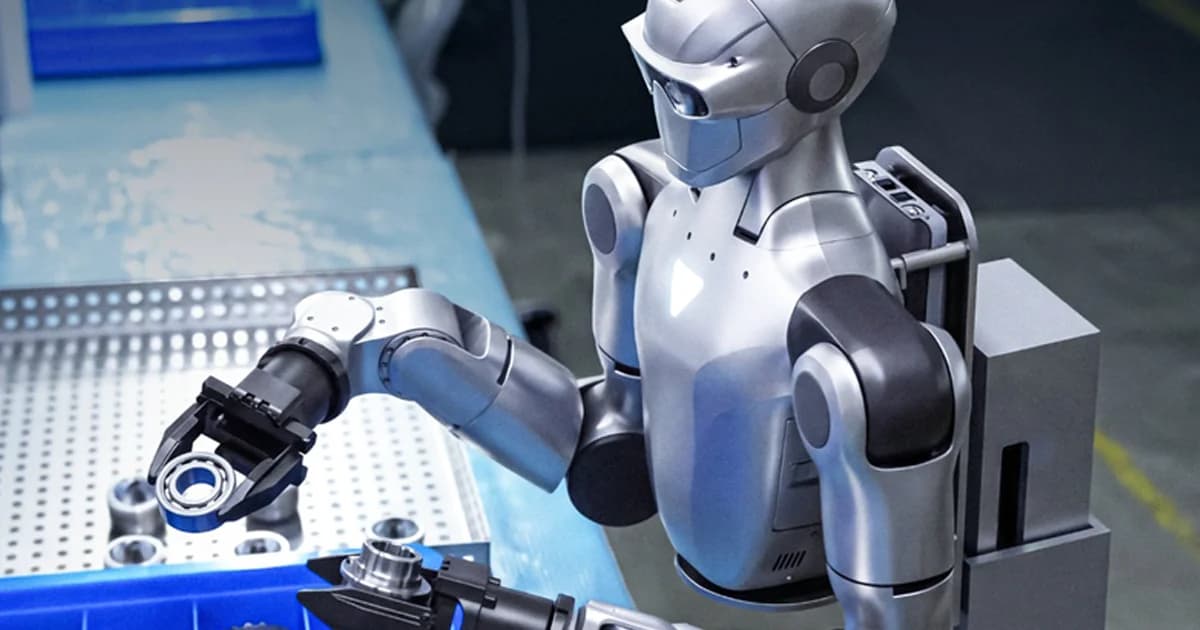
The announcement, made via social media, introduces a series of robots that share the aesthetic language of the R1 humanoid—recently named one of TIME’s Best Inventions—but prioritizes upper-body dexterity and mounting flexibility over high-dynamic athletic stunts.
A Modular Approach to Manipulation
The new series follows the design philosophy Unitree established with the G1-D wheeled version of its smaller G1 robot. By decoupling the "intelligence" of the dual-arm torso from the specific mode of locomotion, Unitree is offering customers two primary mounting types:
- Fixed Base: Standard R1-A5 and R1-A7 models designed for stationary benchtop work or integration into existing industrial setups.
- Mobile Base: The R1-A5-D and R1-A7-D variants, which utilize a differential drive wheeled chassis to provide stability and extended operational endurance.
The wheeled "D" models are significantly heavier—weighing approximately 30–32 kg compared to the 11–13 kg of the fixed versions—but offer a "raised size" of up to 1323 mm (approx. 4'4"). This mirrors the height-adjustable features seen in Unitree's previous industrial prototypes, designed to bridge the gap between floor-level tasks and overhead shelving.
Follow humanoid robotics without following every announcement.
Get the week’s most important launches, funding and research—and why they matter—in one email from Humanoids Daily.
Once a week. Unsubscribe anytime.
Read recent issuesTechnical Specifications: Arms, Eyes, and Ears
The platform is built around a set of high-performance internal rotor PMSM motors and a standardized sensor suite. Key technical highlights from the release documentation include:
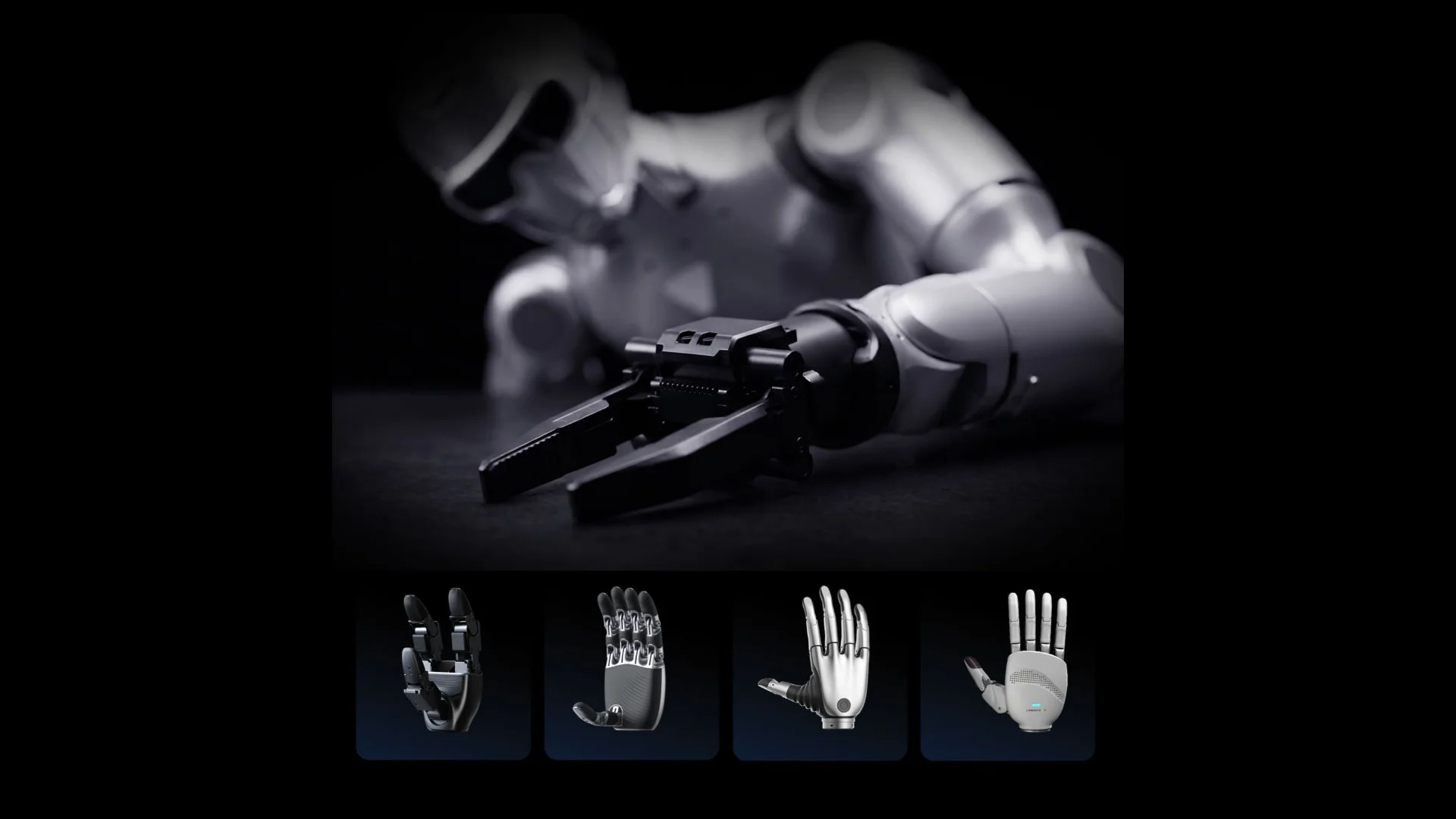
- Degrees of Freedom (DOF): Total DOF ranges from 15 to 31, depending on the configuration. Users can choose between 5-DOF or 7-DOF arms, with the option to equip various end-effectors, including three-finger grippers or five-finger dexterous hands.
- Computing Power: The standard head module provides 10 TOPS of computing power via an 8-core CPU. For more demanding "smarter task development," Unitree offers an optional NVIDIA Jetson Orin module capable of 40–100 TOPS.
- Perception & Interaction: The units come standard with binocular cameras and a depth map interface (544x448@10Hz), alongside a 4-array microphone and dual speakers for integrated voice interaction.
- Accuracy: Unitree claims an end-clamp accuracy of ±0.1 mm, a necessary benchmark for the precision assembly tasks the company has been piloting in its own factories.
| Feature | R1-A5 / A7 | R1-A5-D / A7-D |
|---|---|---|
| Weight | ~11kg / 13kg | ~30kg / 32kg |
| DOF per Arm | 5 or 7 | 5 or 7 |
| Base | Fixed / External Power | Wheeled / Li-ion Battery |
| Battery Life | N/A | Approx. 1.5h |
| Computing | 10 TOPS (Base) | 10 TOPS (Base) |
The Battle for the Developer's Workbench
The timing of this launch is surgically precise. As Unitree moves toward its reported $580 million IPO, it is facing stiff competition from Shanghai-based AgiBot, which has aggressively promoted its own wheeled variants, including the G2 and G2 Air.
While AgiBot is focusing on "Deployment Year One" and large-scale industrial line integration, Unitree appears to be doubling down on the "platform ecosystem" strategy. By pricing the dual-arm R1 starting at $4,290—effectively matching its domestic bipedal price point—Unitree is attempting to saturate the market with accessible hardware.
This strategy supports CEO Wang Xingxing’s vision of reaching a 20,000-unit shipment goal in 2026. For researchers, the dual-arm R1 offers a stable, low-risk environment to train the UnifoLM embodied AI models required to hit the industry's “80/80” reliability target.
Whether a 1.5-hour battery life on the mobile version is sufficient for "real work" remains a critical question, but at this price point, Unitree is making it increasingly difficult for researchers to ignore their hardware as the primary "shovels" for the ongoing AI gold rush.
Share this article
Follow humanoid robotics without following every announcement.
Get the week’s most important launches, funding and research—and why they matter—in one email from Humanoids Daily.
Once a week. Unsubscribe anytime.
Read recent issuesRead next
- Published on
- Reading time
- 8 min read
The Unitree G1 Is Becoming a Platform for American Robot Startups
- Published on
- Reading time
- 3 min read
Unitree’s H2-X Flips Off Cars in New Kung Fu “Guardian” Video
- Published on
- Reading time
- 3 min read
After Its Stock Surge, Unitree Warns Humanoid Commercialization Is Still in Its Early Days
- Published on
- Reading time
- 2 min read
Unitree Shares Jump 16% as China Pushes Robots Into Everyday Commerce
- Published on
- Reading time
- 3 min read
Unitree’s UniUni Lets Operators Choreograph Robot Teams With Natural Language
- Published on
- Reading time
- 3 min read
Unitree’s Wang Xingxing Says GPT-6 Tests Strengthen His Optimism for Embodied AI