- Published on
Samsung Backs Norwegian Motor Specialist Alva Industries in Push for Humanoid Hardware
One tap, and our reporting appears more often in your Google Top Stories. It makes a real difference to a small newsroom.


Your guide
Rich Robinson
Jee Chee Ren · Executive tour
See China’s AI and robotics ecosystem first-hand.
Six days exploring AI, robotics and advanced manufacturing.
With Rich Robinson, Clinical Professor of Entrepreneurship at Peking University
Beijing · Guangzhou · Shenzhen
29 November–4 December 2026
Referral partnership · We earn a commission on referred bookings.
Samsung Electro-Mechanics has made a strategic investment in Alva Industries, a Norwegian developer of high-performance electric motors, signaling a deepening focus on the hardware supply chain necessary to build competitive humanoid robots.
The investment, executed through Samsung Venture Investment via the SVIC 47 New Technology Investment Partnership, involves a "multi-million euro" stake in the Trondheim-based startup. While the exact figure was not disclosed, the move underscores Samsung's intent to secure access to next-generation actuators—specifically for robotic hands, where size, weight, and precision are critical bottlenecks.
This partnership aligns with the company's recently confirmed strategy to operate as both a "provider and customer" in the robotics space, moving beyond simple assembly to developing core component technologies in-house.
The Tech: Why FiberPrinting Matters
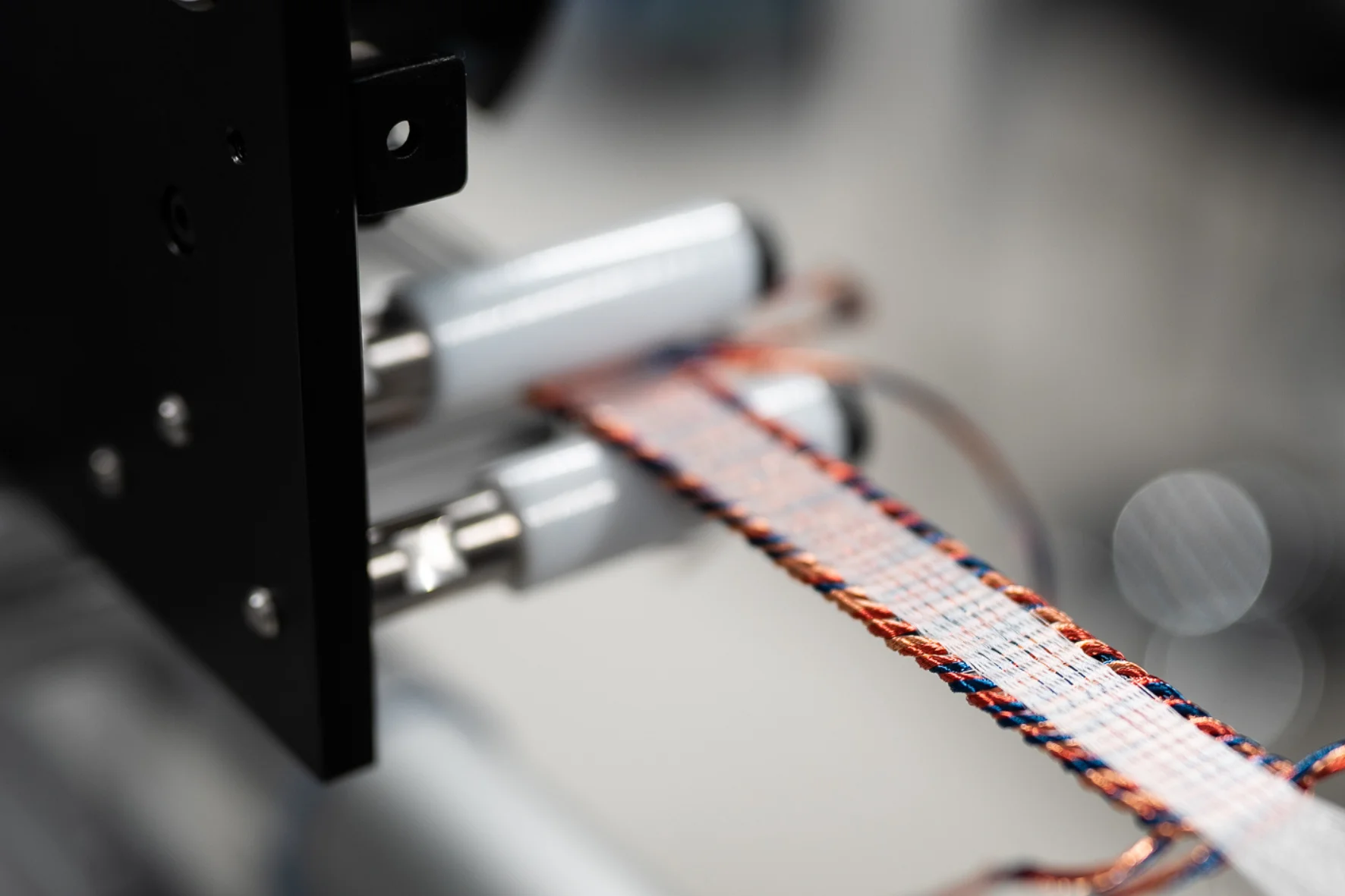
Alva Industries, founded in 2017, distinguishes itself with a patented process called FiberPrinting™. Unlike traditional motors that use heavy iron cores and wound copper wire, Alva "prints" metal or functional materials into fiber-like structures to create the motor's stator.
The weekly humanoid robotics briefing
One email a week: the launches, funding and research that mattered, with context from Humanoids Daily.
Read recent issuesThis results in "ironless" and "slotless" motors that address specific pain points in humanoid design:
- Weight Reduction: Alva’s motors eliminate the heavy iron core, significantly reducing mass. In humanoid robotics, every gram saved in the arms and hands reduces the power required by the rest of the body to move.
- Zero Cogging: Traditional motors often suffer from "cogging"—a jerky resistance felt at low speeds. Alva’s ironless design eliminates this, allowing for the smooth, high-fidelity movement required for fine manipulation in robotic hands.
- Torque Density: The company asserts its technology allows for high torque density in a compact form factor, enabling powerful movements without bulky housing.
Samsung Electro-Mechanics CEO Duckhyun Chang framed the technology as a building block for the company's future roadmap.
"We see Alva as one of the most promising motor technology companies in the robotics ecosystem," Chang said in a statement. "Alva’s FiberPrinting technology is a key competitive asset for next-generation robotic actuators, opening new possibilities in motor performance and design".
Targeting the "Hand" Problem
The specific focus of this collaboration appears to be robotic manipulation. The press release explicitly mentions that Samsung aims to strengthen access to technology "within areas such as robotic hands and humanoid platforms".
Building a human-like hand requires packing over a dozen actuators into a confined space while maintaining the strength to grasp heavy objects and the delicacy to handle fragile ones. By investing in Alva, Samsung is likely attempting to solve the packaging problem that plagues many current humanoid prototypes, which often feature bulky forearms to house the necessary motors.
Market data supports this focus. According to Intel Market Research, the global market for robotic hands is projected to surge from $108 million in 2024 to $696 million by 2032.
Strategic Independence vs. Exclusive Access
Crucially, Alva Industries emphasized that this investment does not constitute an exclusive capture by Samsung. Oliver Skisland, CEO of Alva, stated that the collaboration would not limit their work with "existing or future customers".
"Samsung’s investment is a strong endorsement of Alva’s technology and team," Skisland said. "We are on a mission to power a new generation of robots that are stronger, safer, and more reliable".
This suggests Samsung is taking an ecosystem approach—funding the supply chain it needs to exist, rather than walling it off entirely. It allows Alva to use the fresh capital to scale manufacturing capacity and expand its product offering as an "independent global supplier".
The Broader "Team Korea" Context
This investment follows a wave of coordinated activity within South Korea's industrial sector.
Just weeks ago, the Ministry of Trade, Industry and Energy announced the expansion of the M.AX Alliance, a coalition involving Samsung, Hyundai, and LG, tasked with standardizing AI models for physical manufacturing. While that alliance focuses on the "brain" and software infrastructure, the investment in Alva addresses the "body."
For Samsung, this vertical integration is essential. While competitors often rely on off-the-shelf components from third-party suppliers, Samsung’s history in smartphones and semiconductors suggests a preference for owning or deeply partnering with the creators of the entire stack.
This video from Alva Industries explains the "FiberPrinting" process in detail, visualizing how they weave copper to create the ironless stators mentioned in the article.
Share this article
Read next
- Published on
- Reading time
- 5 min read
Samsung Accelerates In-House Humanoid Development with Dedicated RX Unit and World Model AI
- Published on
- Reading time
- 4 min read
South Korea’s M.AX Alliance Taps Seoul National University to Build AI Models for Humanoids
- Published on
- Reading time
- 3 min read
Samsung Confirms Humanoid Robot Development, Touting "Provider and Customer" Strategy
- Published on
- Reading time
- 5 min read
Boston Dynamics Teases "Automotive Volumes" of Atlas in January Update
- Published on
- Reading time
- 4 min read
Schaeffler Unveils "All-in-One" Actuator for Humanoids, Targeting the Industry’s Supply Chain Bottleneck
- Published on
- Reading time
- 4 min read
Neura Robotics Moves Humanoid R&D to Zurich, Tapping into Europe’s "Robotics Valley"



The weekly humanoid robotics briefing
One email a week: the launches, funding and research that mattered, with context from Humanoids Daily.
Read recent issues