- Published on
Chestnut Launches Aero Hand and Aero UMI, Pairing Dexterous Hardware With Its Data Collector
One tap, and our reporting appears more often in your Google Top Stories. It makes a real difference to a small newsroom.

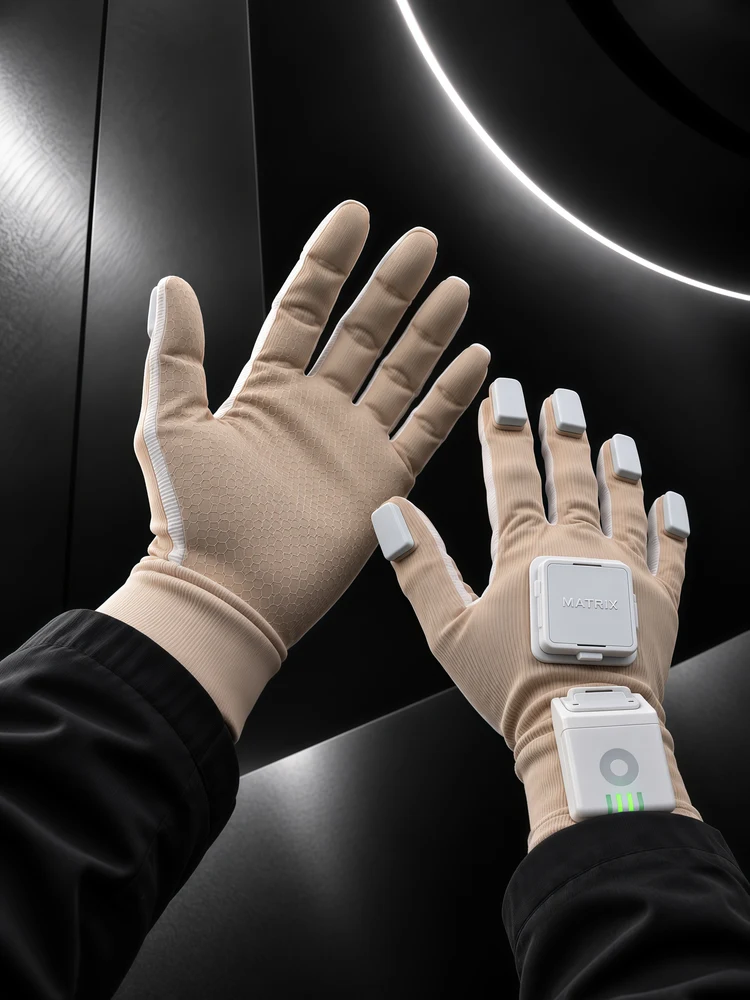
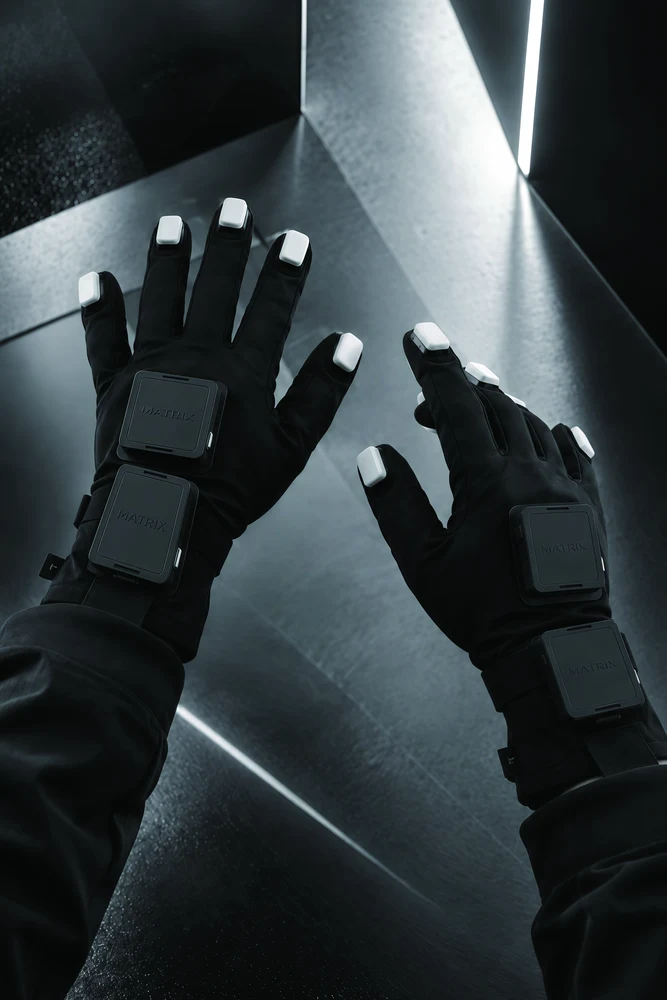

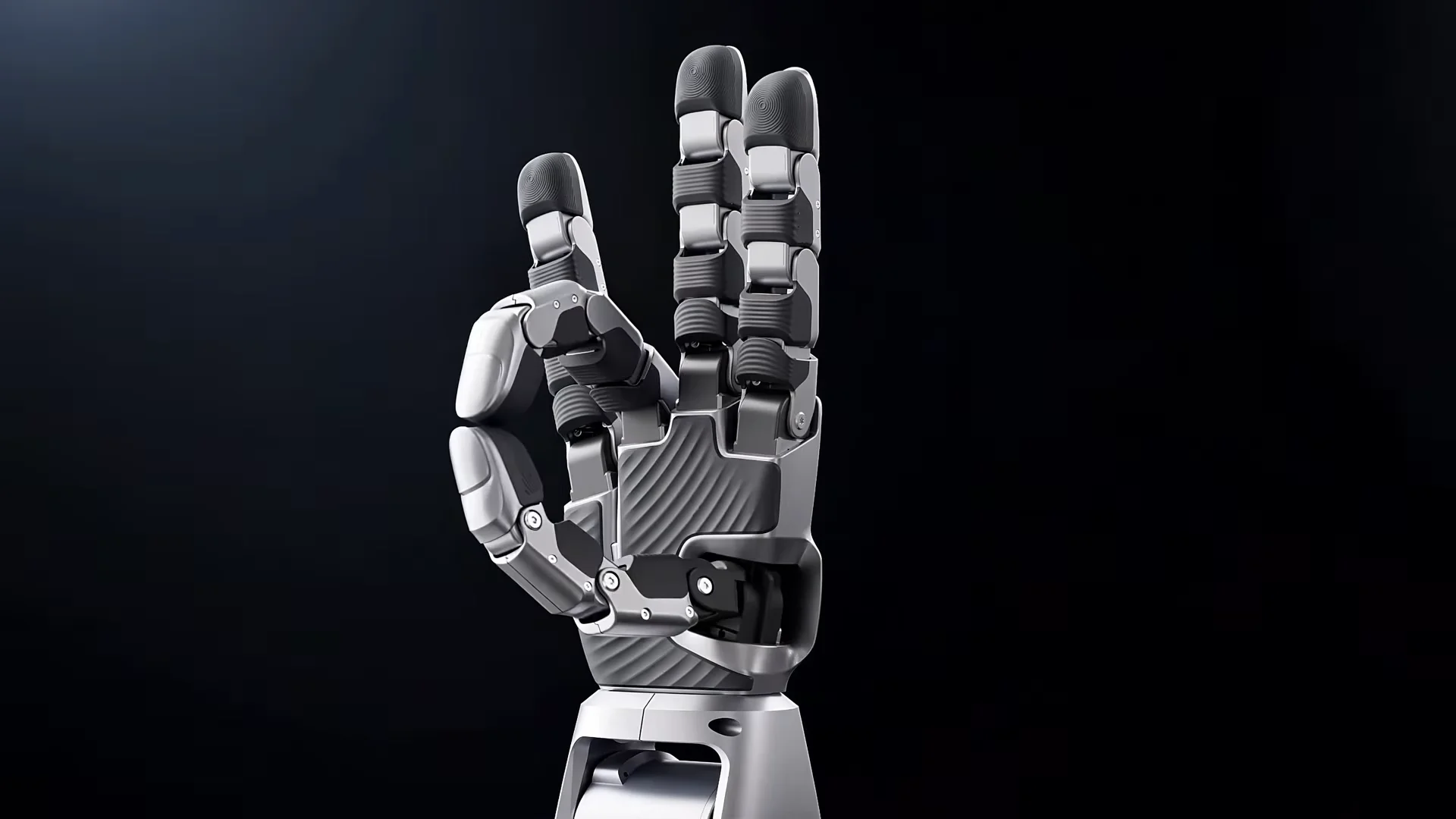
Chestnut Robotics has launched Aero Hand and Aero UMI at IROS 2026, pairing a dexterous robotic hand with a wearable system for recording demonstrations and controlling it remotely.
Co-founder and CEO Evan Tao announced the pair in a September 28 post, presenting the products as a single system: the operator wears the capture rig, and the robotic hand follows. The launch puts Chestnut alongside a growing group of companies designing the tools that teach robots together with the hardware that performs the work.
- Aero Hand and Aero UMI pair a robotic hand with a wearable demonstration and teleoperation interface.
- Chestnut lists 18 degrees of freedom for the hand and 0.1-degree joint measurement accuracy for the capture rig.
- The company’s central claim is that matching the two reduces the mismatch between training demonstrations and deployment hardware.
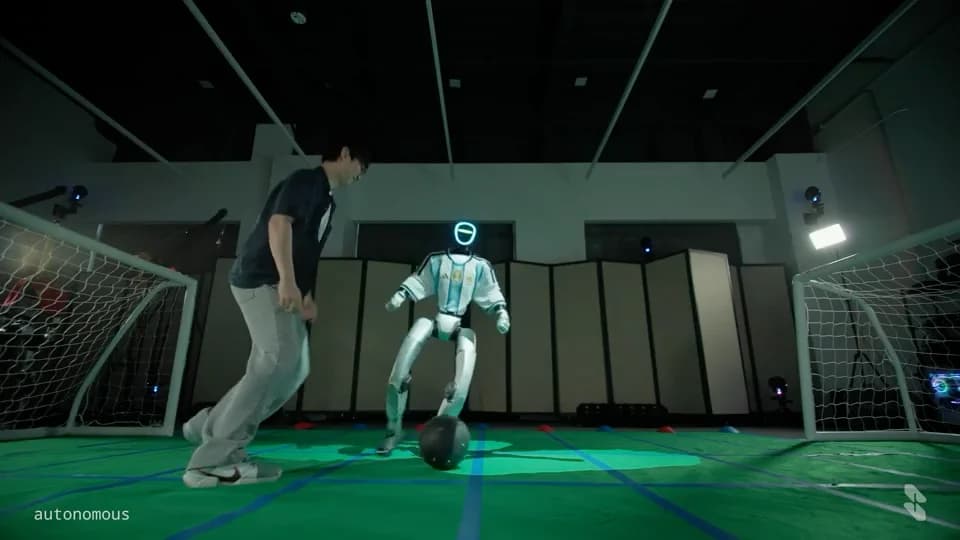
- The product page does not disclose pricing or delivery dates; the launch demonstration is presented as teleoperation.
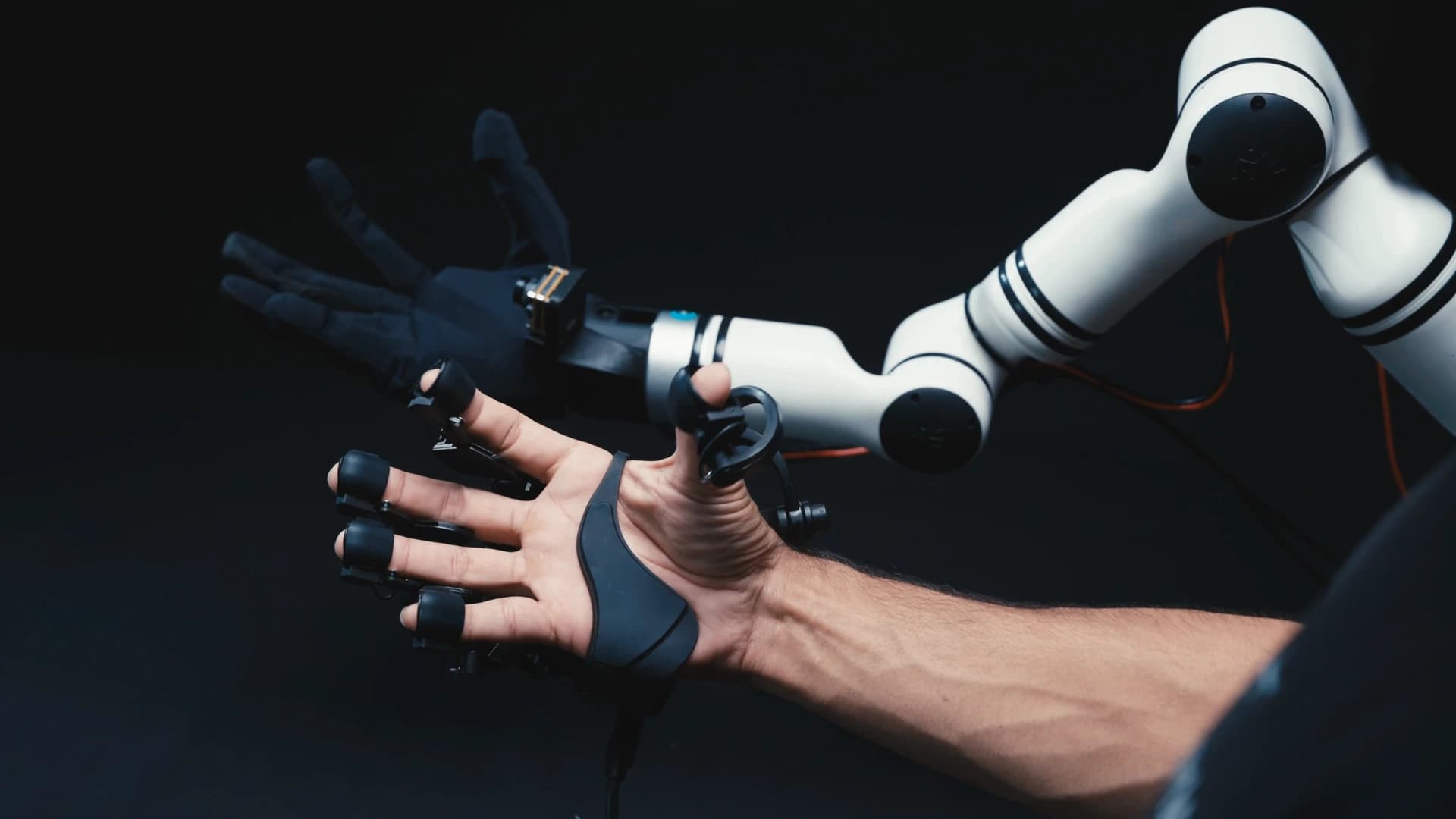
A hand and its teaching interface
The Aero System page describes a human-hand-sized design combining tendon, direct and linkage actuation, with a claimed lifetime above three million cycles. Aero UMI uses magnetic encoders and a matching URDF—the description of a robot’s links and joints—to capture motion for the hand.
Chestnut describes the pairing as having “zero embodiment gap,” citing matching morphology and tactile sensing. That is its design claim, rather than proof that demonstrations transfer without errors. The page provides no detailed lifetime-test protocol or autonomous task benchmark for the flagship pair.
The weekly humanoid robotics briefing
One email a week: the launches, funding and research that mattered, with context from Humanoids Daily.
Read recent issuesExtending the UMI idea to dexterous hands
Tao’s announcement thread explicitly references the Universal Manipulation Interface. The original UMI research used handheld grippers and cameras to collect demonstrations away from a robot, then train policies that could run on robotic arms. Its contribution included careful treatment of the data and control interface, rather than just a convenient recording device.
A dexterous hand makes that transfer problem more demanding. Opening and closing a parallel-jaw gripper involves fewer choices than coordinating several fingers around an object. A human demonstration can contain motions and contacts that the target robot cannot reproduce in the same way.
Designing the collector around the deployment hand is one way to reduce that mismatch. As we explored in our feature on the UMI effect, Sunday Robotics and X Square’s TwinDEX also connect their demonstration hardware to the machines that will use the resulting data. Chestnut’s launch adds another example of data collection shaping robot hardware from the outset.
A broader push at IROS
The announcement follows Sharpa’s IROS launch of its D01 robot, W02 hand and AE01 haptic glove. Both lineups connect manipulation hardware with human-operated teaching interfaces, although their mechanisms and specifications differ.
Chestnut’s company page frames reliable hands and transferable training data as interconnected problems. It identifies Tao as CEO, with experience at Tesla, Apple and ASML, and Joe Dong as CTO, with a background at Waymo and Xpeng.
For prospective users, the next useful evidence will be how quickly demonstrations collected with Aero UMI produce reliable autonomous behavior on Aero Hand, and how much correction is still needed. A responsive teleoperation demonstration can show that the interface works. The commercial test is what the robot can subsequently do on its own, and how consistently the hardware holds up under that workload.
Share this article
Read next
- Published on
- Reading time
- 4 min read
Dyna Reveals Taku Robot and Dyna-2.1 With an Hour-Long Autonomous Laundry Demo
- Published on
- Reading time
- 3 min read
Hasta La Vista, Figure 02: Adcock Teases a Terminator-Style Sendoff
- Published on
- Reading time
- 3 min read
Dyna Robotics Teases a New Robot Built for Real Work
- Published on
- Reading time
- 8 min read
Tesla Reportedly Builds Hundreds of Optimus Robots a Week
- Published on
- Reading time
- 5 min read
Feather launches a $30,000 wheeled humanoid for developers, announces $7.6M funding
- Published on
- Reading time
- 5 min read
Tesla App Contains Optimus Gen 3 Renders—Here’s What They Show
The weekly humanoid robotics briefing
One email a week: the launches, funding and research that mattered, with context from Humanoids Daily.
Read recent issues