- Published on
Hidden in Plain Sight: Syncere Unveils "Lume," the $1,499 Laundry-Folding Floor Lamp
One tap, and our reporting appears more often in your Google Top Stories. It makes a real difference to a small newsroom.

The "Ambient" Alternative to the Android
The race for the American living room has, until now, been a battle of form factors: the humanoid versus the high-end appliance. While firms like 1X Technologies and Figure bet on anthropomorphic companions and Sunday Robotics champions wheeled, "cutemaxxing" machines, a new contender from Palo Alto is betting on total invisibility.
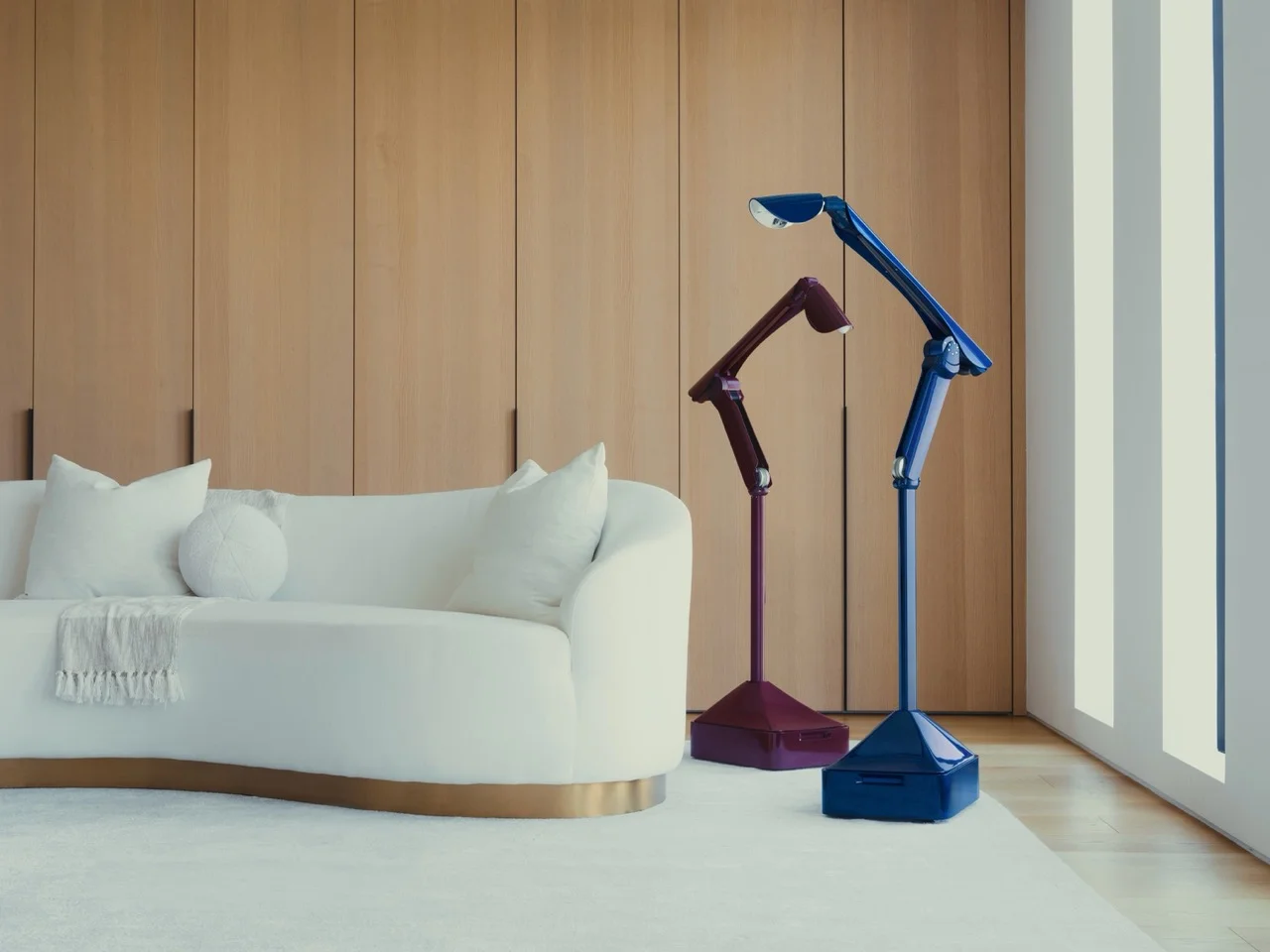
Syncere, a design-led robotics "atelier," officially unveiled Lume this week—a sculptural floor lamp that doubles as a sophisticated laundry-folding robot. By camouflaging a high-degree-of-freedom robotic arm within a common piece of furniture, Syncere aims to bypass the "Terminator vibe" that often hinders domestic robot adoption.
"A floor lamp quite naturally hides a robot arm in plain sight," founder and CEO Aaron Tan explained in a recently released documentary. "The goal actually is to be forgotten. That’s what great design is."
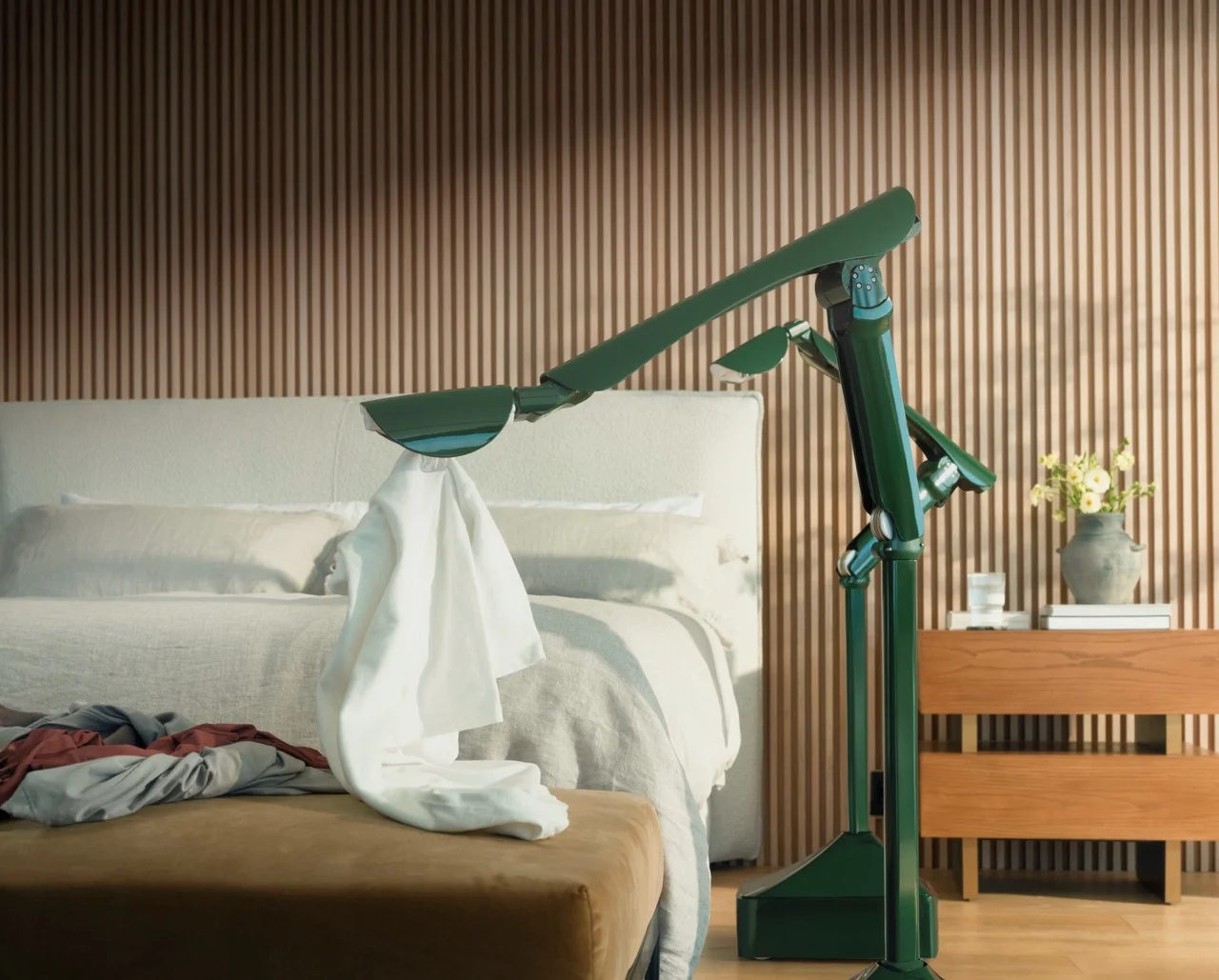
Design: Architecture Meets Actuators
Lume’s aesthetic is unapologetically high-end, featuring anodized aluminum and a high-gloss finish designed to emulate luxury automotive design. The technical breakthrough lies in its "weightless" architecture: by moving the heavy motors into the base, the team was able to slim the arm’s joints to a point where they are "unrecognizable as a motor."
The weekly humanoid robotics briefing
One email a week: the launches, funding and research that mattered, with context from Humanoids Daily.
Read recent issuesThe arm itself is concealed by a series of illuminating "leaves" or hoods, which allow the unit to function as both a task light and an ambient atmospheric source when not in use. This focus on "ambient robotics" reflects a tactical departure from stationary domestic units like the Isaac 0, which requires a dedicated 6' x 5' workspace. In contrast, Lume is designed to occupy the same footprint as a standard lamp.
The $1,499 Bet on Laundry
Syncere is positioning laundry folding as its "gateway chore." According to the company, Lume is designed to fold and sort laundry autonomously, allowing users to simply "dump laundry on the bed" and return to find it finished.
This brings a fresh challenge to the emerging laundry-folding market:
- The Price Gap: At $1,499, Lume is significantly more affordable than Weave Robotics’ $7,999 Isaac 0 or 1X’s $20,000 Neo.
- The Performance: Weave’s Isaac 0 takes 30 to 90 minutes to fold a load, Syncere claims its core algorithms—developed by a team with PhDs from Stanford and Berkeley—allow the robot to fold "even better than a human." Syncere did not, however, mention how long a load takes to fold.
Skepticism in the "Dark Matter" of Robotics
Despite the polished reveal and a private demo for tech luminaries like Jeff Bezos and Dario Amodei, Syncere faces the same "dark matter" challenges that plague the industry: the reactive intuition for forces and friction.
Handling "deformable" materials like textiles is notoriously difficult due to variability in fabric and shape. While competitors like Physical Intelligence use Vision-Language-Action (VLA) models and reinforcement learning to reduce human interventions, Syncere’s software strategy remains less transparent, focusing more on the "sincere connection" between human and machine than on raw parameter counts.
Furthermore, the $1,499 price point raises questions about hardware durability and torque-sensing capabilities. Achieving "impossible" packaging in a slender lamp form factor at a fraction of the cost of competitors is a bold claim that will be tested when units begin shipping this summer.
Availability and Shipping
Syncere has opened orders for two tiers:
- Standard: One Lume unit for $1,499, designed for "basic chores."
- Duet: A pair of Lumes for $2,499, which the company claims can coordinate for "advanced chores."
A $249 fully refundable deposit is required today, with the company promising a shipping window of 8-12 weeks. As the industry debates whether bipedal agility or passive stability will win the home, Syncere is betting that the most successful robot will be the one you don't even realize is there.
Watch the product launch "documentary" below:
Share this article
Read next
- Published on
- Reading time
- 7 min read
Agility's Investor Day: Digit 5 Launches at a $150,000 Bill of Materials, and Its $300M Order Unlocks Skill by Skill
- Published on
- Reading time
- 5 min read
Minerva Emerges From Stealth With $10M for Humanoids Built for Dangerous Work
- Published on
- Reading time
- 3 min read
Meta Job Listing Explicitly References Its Humanoid Robot Hardware
- Published on
- Reading time
- 2 min read
Agility CEO Peggy Johnson Joins Project Meridian, Bringing Humanoid Logistics Expertise to Defense Study
- Published on
- Reading time
- 3 min read
Tesla Optimus Plant Takes Shape in Texas, With Steel Structure Estimated at 40%
- Published on
- Reading time
- 3 min read
Musk Says Tesla Halved AI5 RAM to Secure Memory for Optimus Production


The weekly humanoid robotics briefing
One email a week: the launches, funding and research that mattered, with context from Humanoids Daily.
Read recent issues