- Published on
KAIST Humanoid v0.7: High-Speed Locomotion and the "Moonwalk" of Technical Independence
One tap, and our reporting appears more often in your Google Top Stories. It makes a real difference to a small newsroom.

Supported by RoboStrategySupport for Humanoids Daily comes from RoboStrategy
Sponsored

Investing involves risk, including possible loss of principal. Read the prospectus before investing.
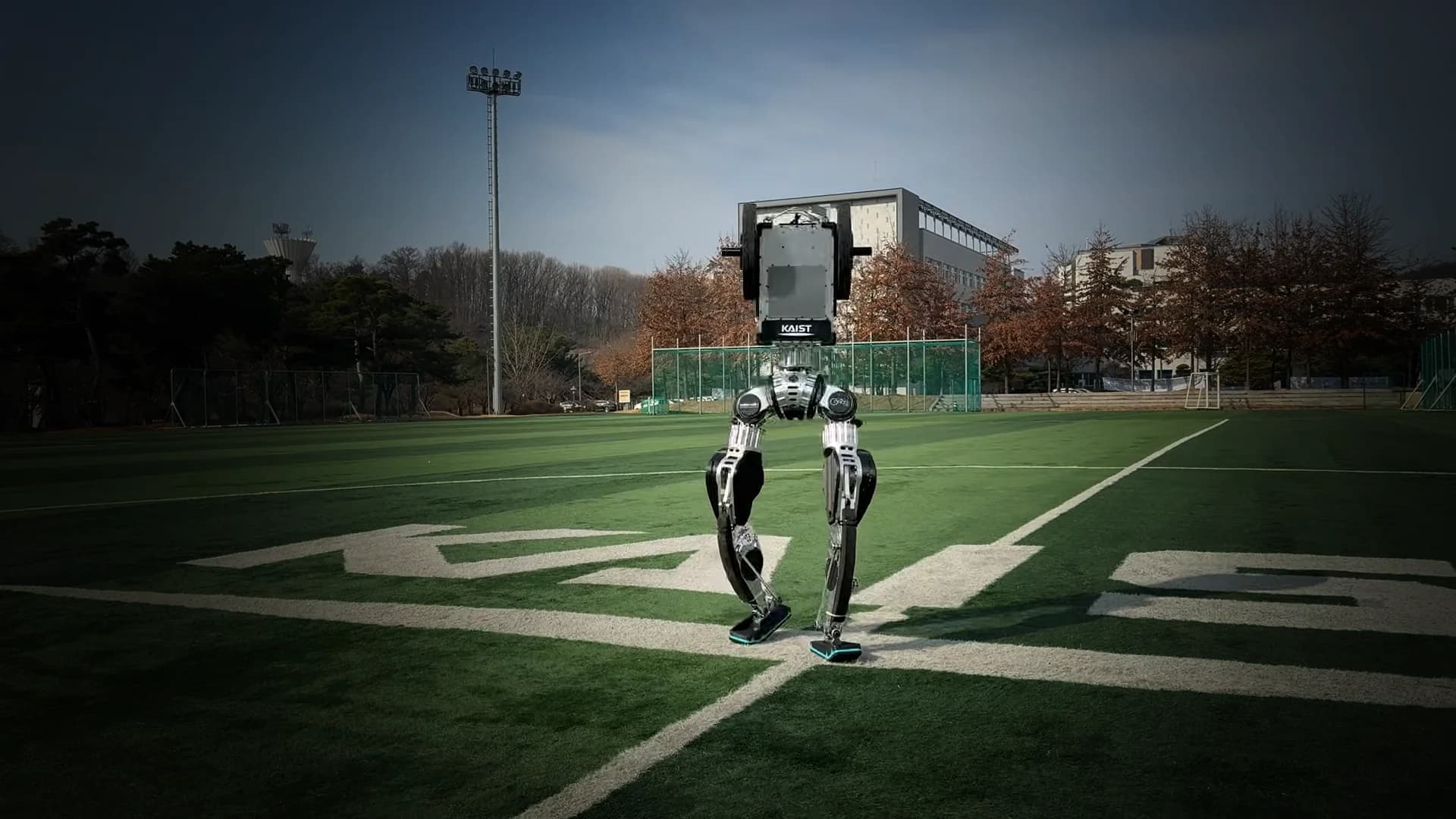
In an era saturated by viral clips of humanoids performing backflips, parkour, and choreographed dances, it is easy to succumb to "demo fatigue." The novelty of dynamic robotics has, for many, shifted from awe to expectation. Yet, it is worth remembering how remarkably recent the transition from plodding, quasi-static walking to high-speed agility actually was. Within this crowded field of high-performance machines, the Korea Advanced Institute of Science and Technology (KAIST) remains a formidable contender, recently stepping back into the spotlight with its latest iteration: the KAIST Humanoid v0.7.
Developed at the Dynamic Robot Control & Design Laboratory (DRCD Lab) under Professor Hae-Won Park, the v0.7 is a 75 kg platform designed to push the boundaries of "Physical AI." While its recent demonstrations include the obligatory flair—most notably a surprisingly fluid "Moonwalk"—the technical substance beneath the showmanship reveals a laboratory focused on closing the gap between lab-controlled agility and reliable, real-world utility. This project is a centerpiece of South Korea’s increasingly aggressive national humanoid strategy, aiming to prove that the nation can produce not just impressive video clips, but the foundational hardware and control policies required for industrial-scale deployment.
Technical Independence: The In-House Ecosystem
Under the direction of Professor Hae-Won Park, the DRCD Lab has pursued a strategy of "technical independence," choosing to design and manufacture core hardware—including motors, gearboxes, and motor drivers—in-house rather than using off-the-shelf industrial components. This system-wide optimization is critical for achieving the torque-density and power-to-weight ratios required for high-speed locomotion.
Mechatronic Synthesis and the 3K Paradigm
Central to the v0.7’s mechanical performance is its actuation architecture. The lab employs a Quasi-Direct Drive (QDD) concept, pairing high-torque motors with low gear ratios to maximize backdriveability and proprioceptive sensitivity.
The weekly humanoid robotics briefing
One email a week: the launches, funding and research that mattered, with context from Humanoids Daily.
Read recent issuesThe standout innovation is the custom 3K compound planetary gearbox (CPG). While traditional planetary systems often require multiple stages to achieve high gear ratios—increasing volume and weight—the 3K CPG provides high reduction within a compact, single-stage volume by using two sets of ring gears with slightly different tooth counts.
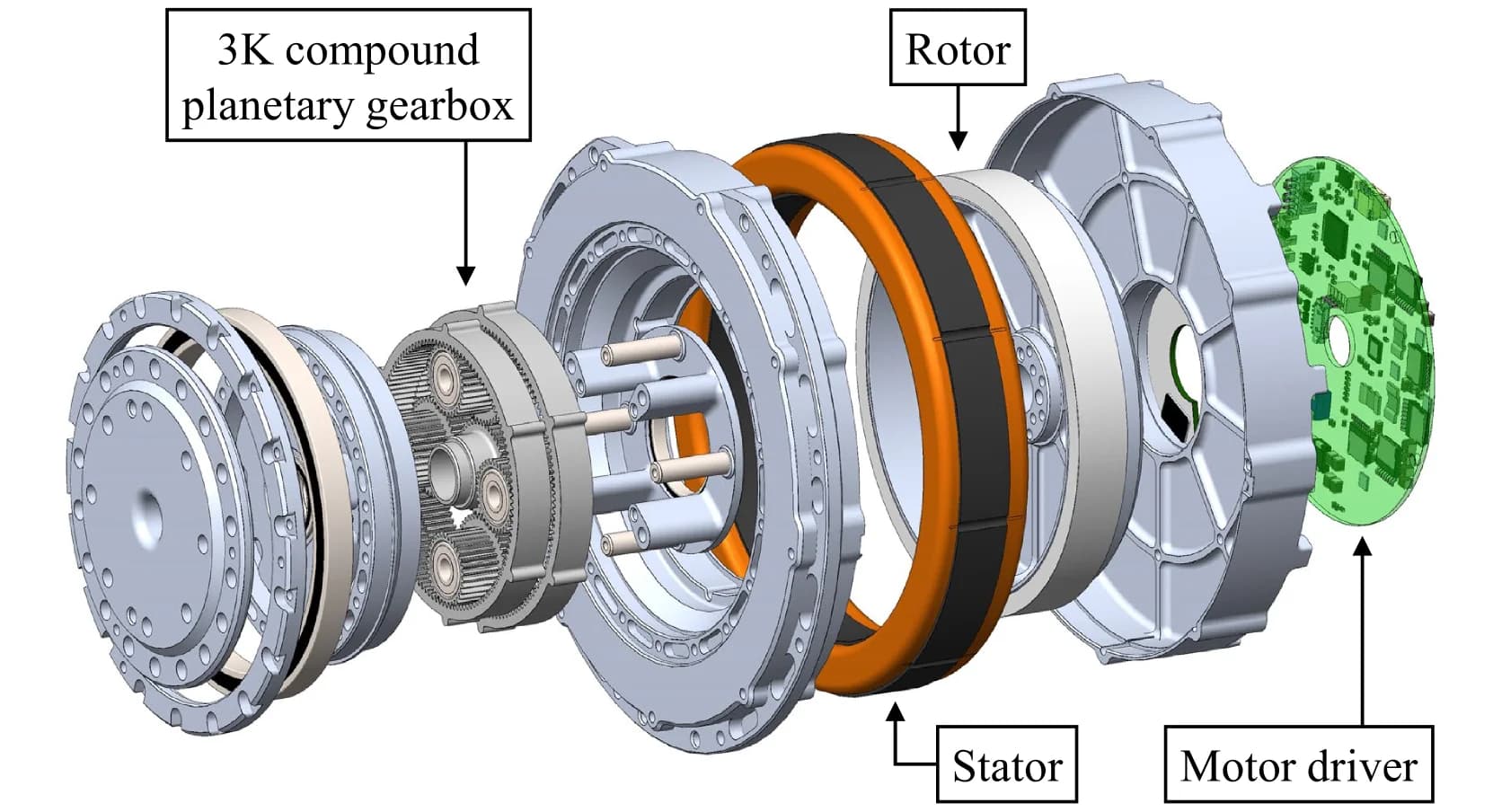
The design of these gearboxes involves Mixed-Integer Nonlinear Programming (MINLP) to optimize for specific joint requirements:
- D151 Actuator (Knee): Uses a 20:1 ratio 3K CPG to provide a peak torque of 320 Nm, essential for handling the high impact of running and jumping.
- D110A Actuator (Ankle): Uses an 8:1 single-stage planetary gearbox to provide 176 Nm, optimized for the rapid response times needed for balance.
The kinematic relationship of the 3K CPG is defined by the tooth counts of the sun gear (), planetary gears (), and ring gears (), ensuring the gear ratio () meets the robot’s dynamic needs while maintaining a large hollow shaft for clean internal cable routing.
Intelligence in Motion: DRL and Human Priors
The "smooth" behaviors seen in recent demonstrations, such as playing football or performing the Moonwalk, are the result of deep reinforcement learning (DRL) trained in simulation and transferred to hardware.
To avoid the jerky, non-natural movements common in "from-scratch" RL, the DRCD Lab uses human motion capture data to provide a behavioral "prior". This dual-reward structure—rewarding both stability and the mimicking of human motion patterns—results in a policy that possesses both the agility of a learned controller and the natural movement patterns of a biological system.
Bridging the Sim-to-Real Gap
A persistent hurdle in robotics is the discrepancy between simulation and reality. The DRCD Lab addresses this through Motor Operating Region (MOR) modeling. During training, the simulator enforces torque limits based on the real-world performance envelope of the D151 and D110A motors. This prevents the RL agent from learning "impossible" behaviors that the physical hardware cannot execute.
Furthermore, the lab utilizes Modular Residual Learning, a hybrid framework where a nominal model-based controller (like Model Predictive Control) handles base locomotion, while DRL-trained "residual modules" provide corrections for environmental uncertainties or model mismatches.
| Control Strategy | Core Mechanism | Advantage |
|---|---|---|
| Model-Based (MPC) | Physics-based optimization | Predictable and safe |
| End-to-End DRL | Neural network policy | Highly robust to complex terrain |
| Modular Residual Learning | Hybrid (MPC + DRL) | High efficiency and robust to parameter tuning |
Strategic Context and the National Race
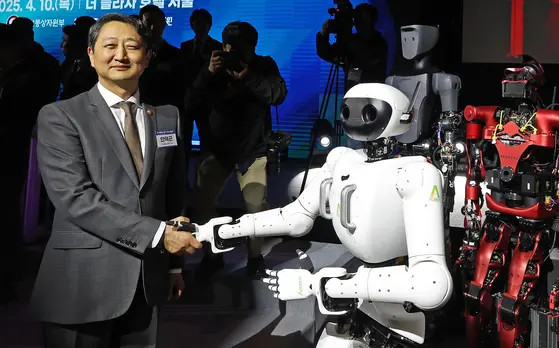
The development of the v0.7 aligns with South Korea's broader national humanoid strategy, which seeks to unify academic research and industrial manufacturing. This "One-Team" approach includes the recently launched K-Humanoid Alliance, where KAIST and Seoul National University collaborate with industrial giants like Hyundai and LG.
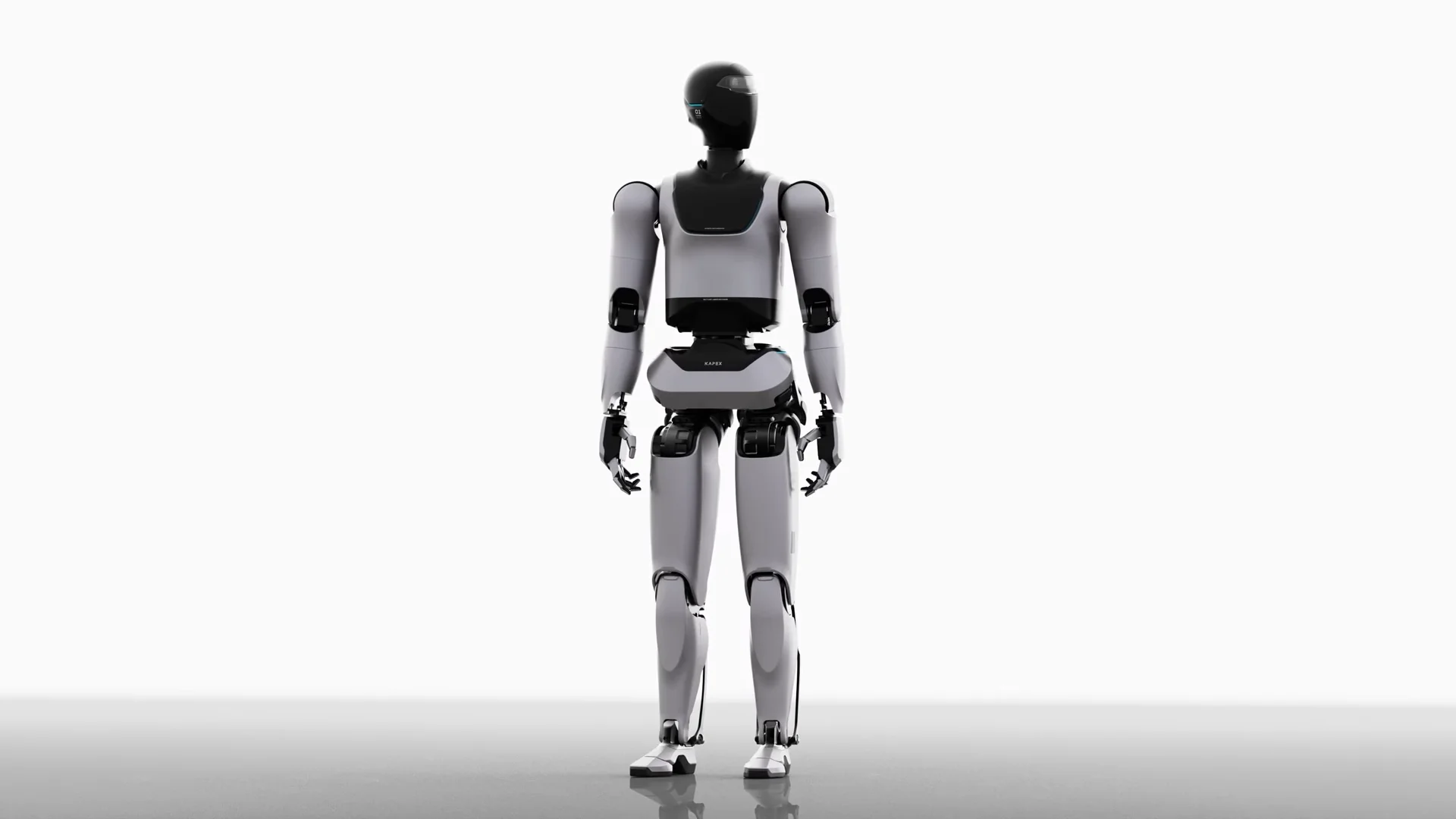
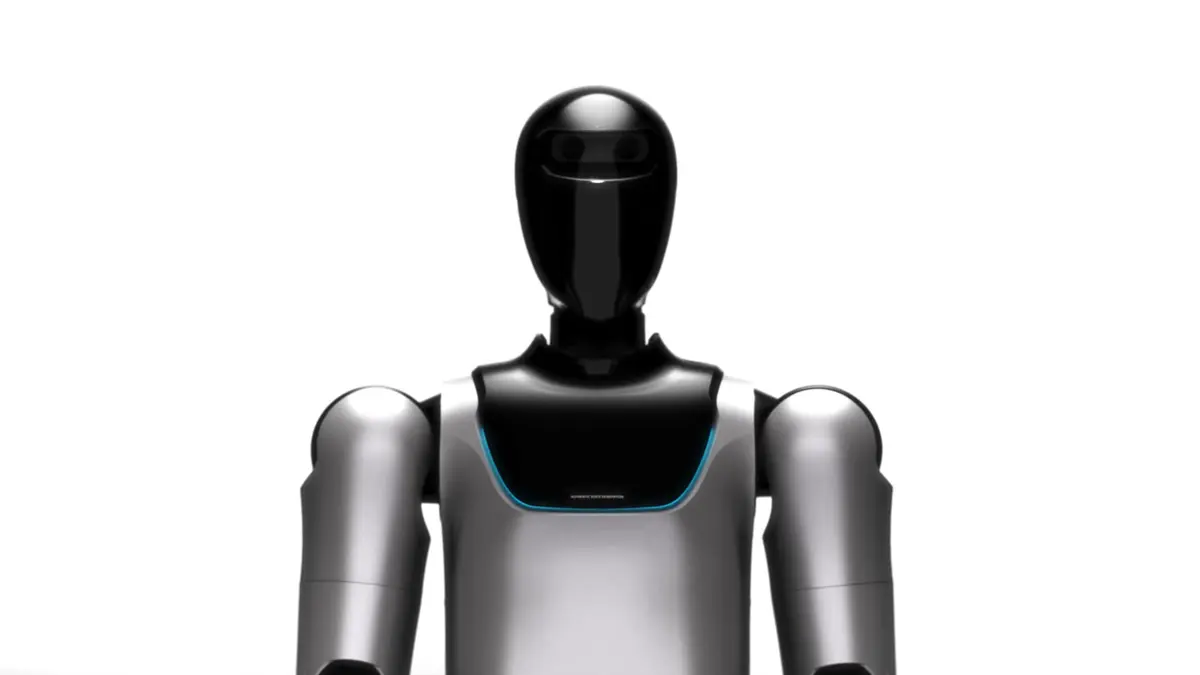
This strategic consolidation is fueled by a massive industrial investment from Hyundai—approximately $6.7 billion—to build a robotics and AI innovation hub in Saemangeum. While Hyundai works on mass-producing platforms like the Boston Dynamics Atlas, the M.AX Alliance and projects like LG's KAPEX platform are simultaneously developing the "brains" for these machines.
The Road Ahead: DynaFlow and Industrial Labor
The v0.7 is proving its readiness for the real world through "blind" proprioception—navigating debris-covered terrain without visual sensors by relying on high-fidelity state estimation. Looking forward, the DRCD Lab is developing the DynaFlow framework, which aims to generate physically consistent motions from state-only demonstrations. This would allow the KAIST humanoid to learn complex industrial tasks, such as opening doors or using tools, simply by observing human workers.
As South Korea targets mass production of humanoids by 2029, the KAIST v0.7 stands as a critical prototype, proving that technical independence in hardware design is a robust foundation for the future of Physical AI.
Watch the v0.7 below:
Share this article
Read next
- Published on
- Reading time
- 4 min read
South Korea’s M.AX Alliance Taps Seoul National University to Build AI Models for Humanoids
- Published on
- Reading time
- 3 min read
South Korea Challenges US and China with 'KAPEX' Humanoid Robot
- Published on
- Reading time
- 3 min read
CJ Logistics Partners with Rainbow Robotics to Develop AI-Powered Humanoids for Warehouse Tasks
- Published on
- Reading time
- 3 min read
South Korea Launches 'K-Humanoid Alliance' to Boost National Robotics Ambitions
- Published on
- Reading time
- 5 min read
CJ Logistics Puts ROBOTIS Dual-Arm "AI Worker" on Live Olive Young Fulfillment Lines
- Published on
- Reading time
- 4 min read
South Korea Commits KRW 2.3 Trillion to Build Full-Stack Humanoid Robotics Ecosystem by 2030


The weekly humanoid robotics briefing
One email a week: the launches, funding and research that mattered, with context from Humanoids Daily.
Read recent issues