- Published on
Global Humanoid Shipments Surge 272% in 1H 2026 as AGIBOT Overtakes Unitree
One tap, and our reporting appears more often in your Google Top Stories. It makes a real difference to a small newsroom.

Supported by RoboStrategySupport for Humanoids Daily comes from RoboStrategy
Sponsored


Investing involves risk, including possible loss of principal. Read the prospectus before investing.
- Global humanoid robot shipments reached approximately 19,100 units in the first half of 2026, marking a 272% year-over-year surge from 5,100 units.
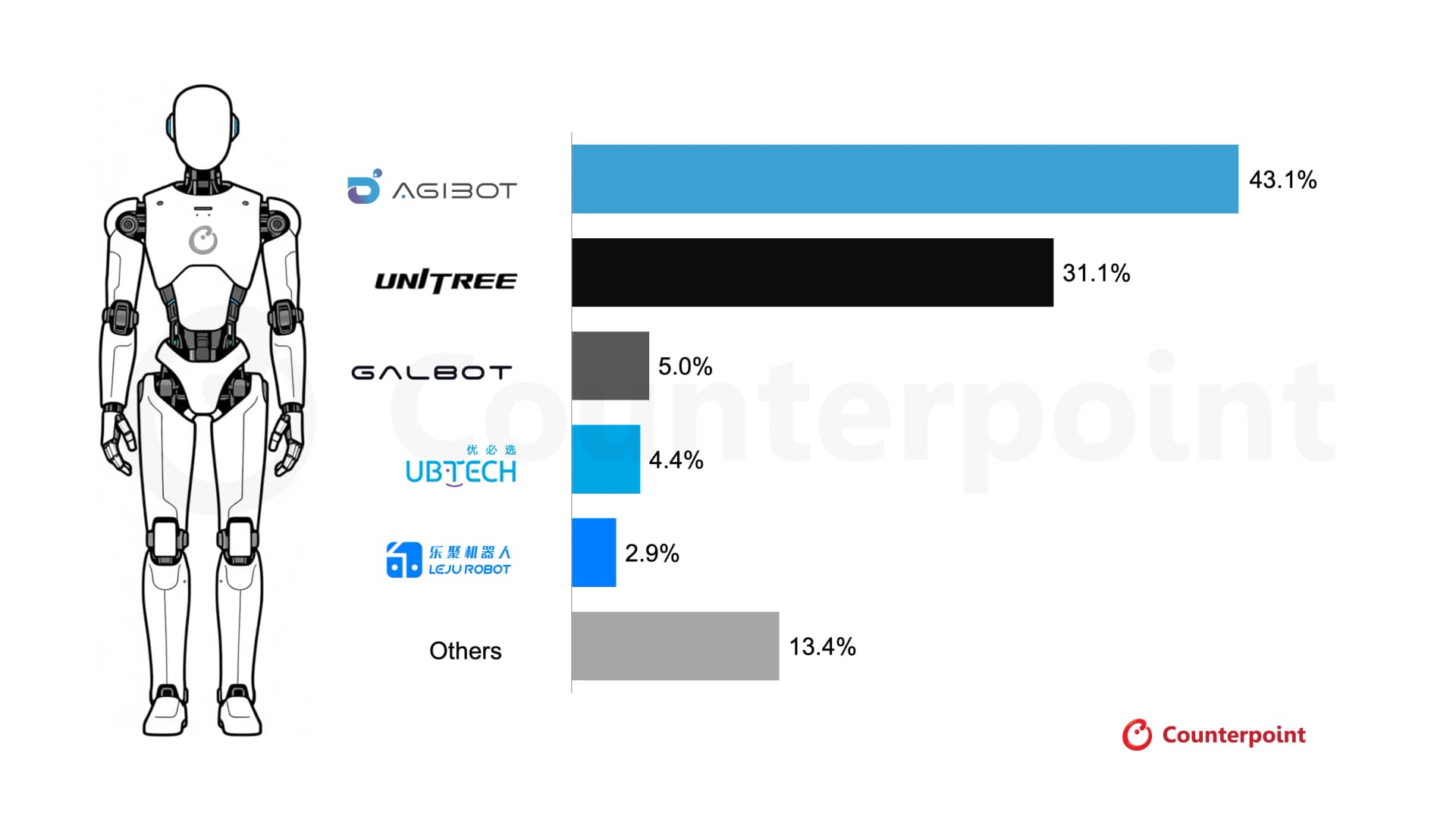
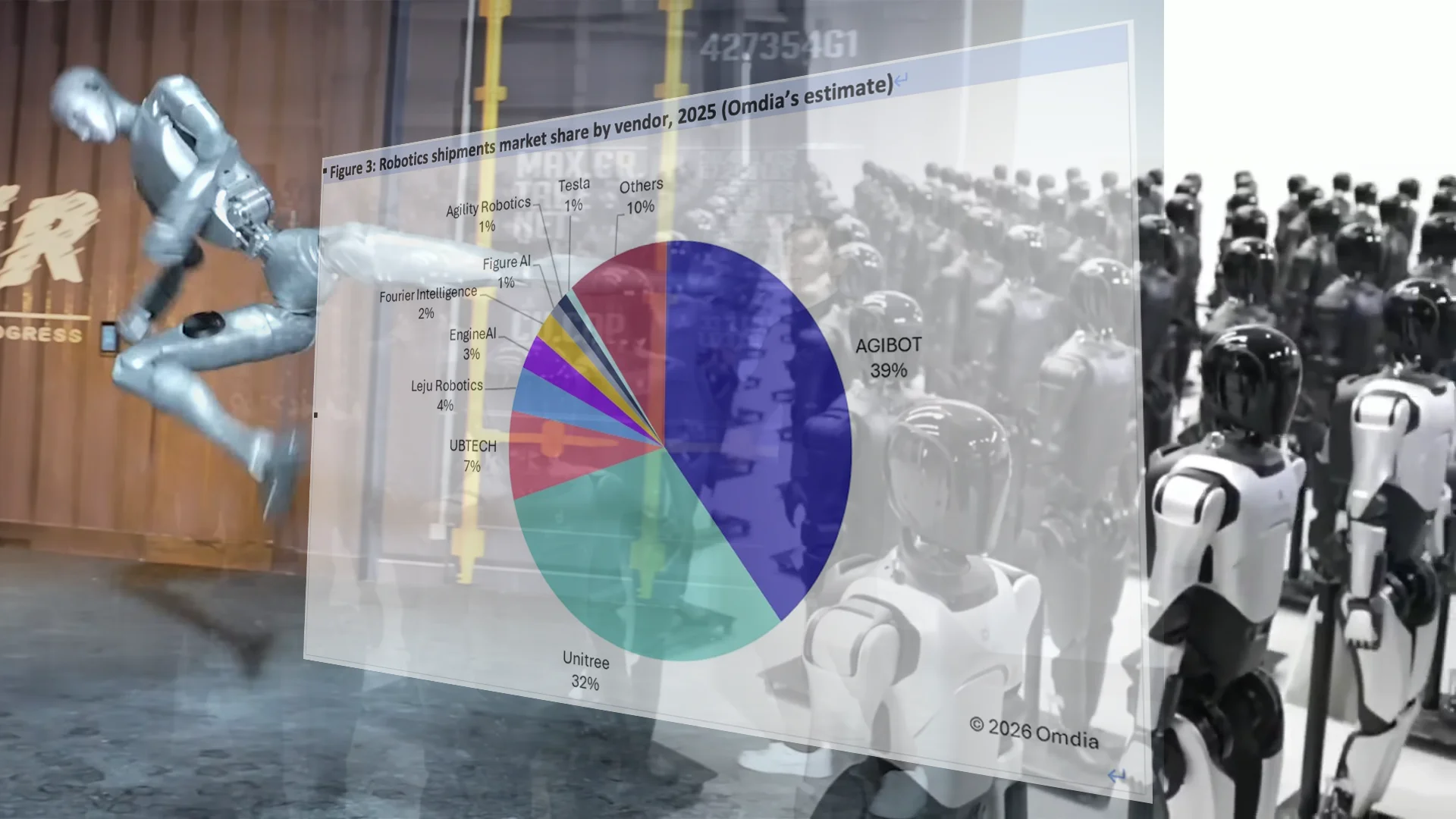
- AGIBOT seized the global lead with a 44% market share after producing its 15,000th unit, pushing former leader Unitree into second place.
- Chinese vendors accounted for over 97% of total shipments and 85% of global demand, though sweeping FCC import restrictions threaten future overseas expansion for these hardware leaders.
- Industrial and commercial deployments now represent over 70% of shipments, while general-purpose home-service humanoids remain at least five years away from mass-market scale.
- Full-year 2026 shipments are projected to approach 60,000 units, generating roughly $1.6 billion in market revenue.
Global humanoid robot shipments nearly quadrupled in the first half of 2026, signaling a definitive shift in the robotics industry from laboratory prototyping to scaled industrial deployment.
According to a new report from Smart Analytics Global (SAG), total shipments reached approximately 19,100 units between January and June of 2026, representing a massive 272% year-over-year increase. However, beneath the headline growth figures lies a significant shakeup in vendor rankings, overwhelming regional consolidation, and a looming geopolitical bottleneck.
AGIBOT Seizes the Crown
The most notable shift in the 1H 2026 data is the reshuffling of the market's top players. Shanghai-based AGIBOT has officially overtaken Unitree Robotics to become the world’s largest humanoid robot vendor.
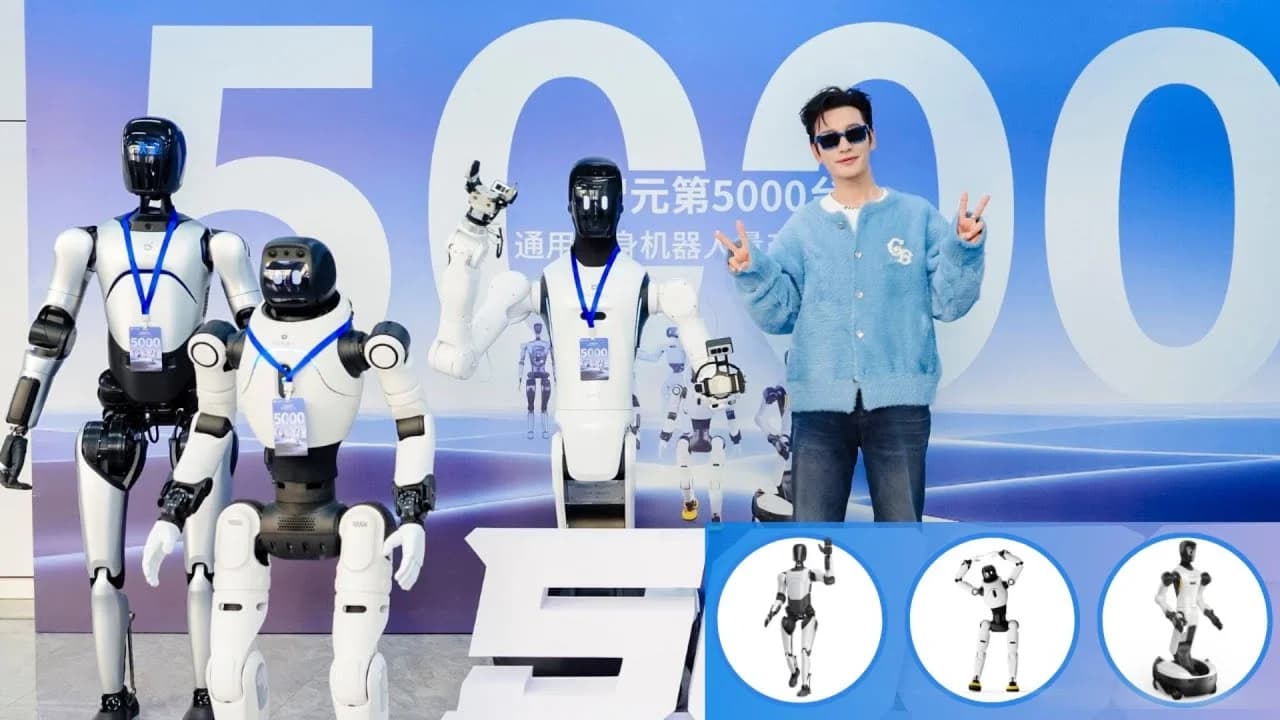
AGIBOT shipped approximately 8,400 units in the first half of the year—a 562% year-over-year surge—lifting its global market share to 44%. This rapid volume expansion aligns with the company's recent announcement that it had manufactured its 15,000th cumulative robot, driven by a diverse portfolio that includes full-size bipedal A-series, half-size bipedal X-series, and wheeled G-series platforms. The firm is aggressively pushing into international markets, with deployments already active in the UK and Germany.
The weekly humanoid robotics briefing
One email a week: the launches, funding and research that mattered, with context from Humanoids Daily.
Read recent issuesUnitree, despite delivering a formidable 170% year-over-year growth rate with roughly 5,900 units shipped, fell to second place with a 31% global share. Unitree's volume is largely supported by its G1 half-size bipedal model, which hit a cumulative manufacturing volume of 11,000 units by mid-2026. Even as Unitree capitalizes on its blockbuster STAR Market IPO and deepens its focus on AI model development, research, education, and performance applications still make up a meaningful portion of its deployments compared to AGIBOT's industrial focus.
Together, these two companies now control approximately 75% of the global humanoid market. The remainder of the top five was rounded out by Galbot (900 units), UBTECH (700 units), and Leju (600 units).
The Industrial Pivot
The surge in shipments is directly tied to a shift in how—and where—these machines are being used. SAG estimates that industrial and commercial applications accounted for more than 70% of humanoid shipments in 1H 2026, up from roughly 50% in the same period last year.
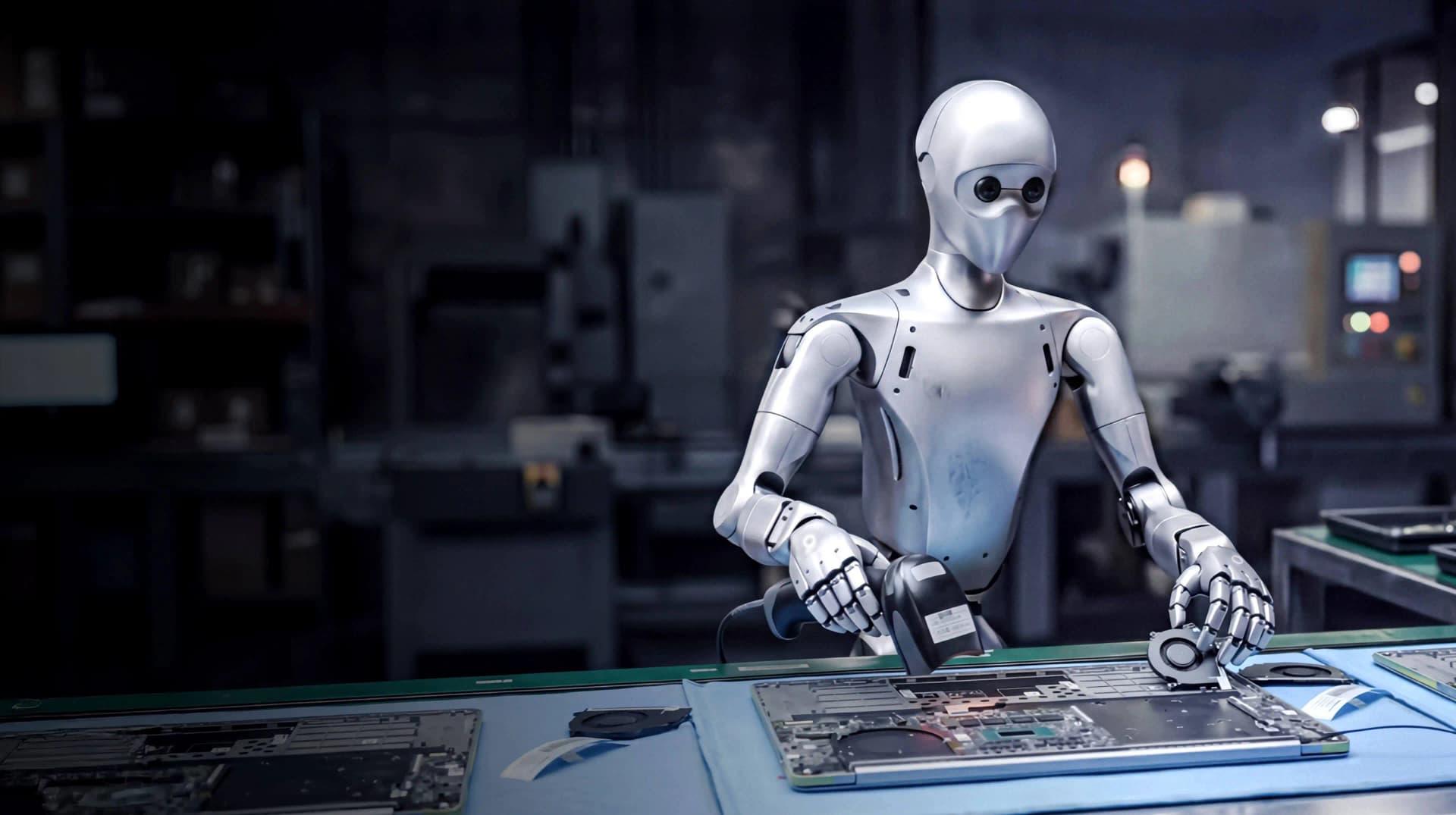
Manufacturing, warehousing, and logistics have become the primary path to commercialization. In these highly structured environments, humanoids can execute defined tasks and deliver measurable economic value. The data highlights a growing trend of "wheeled compromises" in structured workspaces: companies like Galbot and UBTECH are heavily leveraging wheeled designs over fully human-like bipedal locomotion to prioritize mobility, stability, and cost-efficiency.
Conversely, the dream of a generalized robotic butler remains distant. Despite optimistic predictions from Western executives like 1X CEO Bernt Børnich regarding an impending "hard takeoff", SAG maintains that broad home-service humanoids will not reach meaningful mass-market scale within the next five years due to the unpredictability of household environments.
China's Ecosystem and Geopolitical Headwinds
The geographic concentration of the humanoid industry is stark. Chinese vendors accounted for more than 97% of all global shipments in 1H 2026, while China itself represented over 85% of global demand.
This localized boom is fueled by government support, abundant startup funding, and a massive domestic manufacturing ecosystem that allows developers to rapidly iterate and test robots in real-world industrial settings. By comparison, Western firms are fighting to catch up in sheer volume. While companies like Figure celebrate producing their 1,000th unit, and startups like 1X and Humanoid spin up dedicated vertical factories and secure massive $152 million capital injections, Asian competitors are already delivering units by the thousands.
However, international expansion for these high-volume Chinese vendors is colliding with geopolitical reality. The report notes that recent sweeping U.S. FCC restrictions on foreign-made advanced robotic devices threaten to cut Chinese manufacturers off from mature overseas markets. These regulatory roadblocks, alongside ethical concerns surrounding emerging "ultra-bionic" companion robots, represent significant variables for the industry's next phase of growth.
A $1.6 Billion Horizon
Despite the friction of geopolitics and the reality that hardware scaling is currently outpacing underlying AI maturity, the financial trajectory of the sector is steep. SAG forecasts that global shipments will approach 60,000 units for the full year of 2026, generating approximately $1.6 billion in industry revenue.
Looking further ahead, the firm projects shipments will hit 500,000 units annually by 2030, with revenues climbing to nearly $3 billion as early as 2027. As the market expands, the competitive battleground is clearly moving away from viral demonstration videos and into the grueling arena of unit economics, supply chain resilience, and proven factory floor reliability.
Share this article
Read next
- Published on
- Reading time
- 6 min read
Global Humanoid Shipments Surpass 22,000 in H1 2026 as AGIBOT Leads and Form-Factor Debates Intensify
- Published on
- Reading time
- 4 min read
The Shipment Wars: AgiBot Claims Top Spot in Five Industry Sectors as Global Market Surges
- Published on
- Reading time
- 4 min read
The Great Numbers War: Unitree Claims Global Shipment Lead, Rebuts AgiBot's 'No. 1' Title
- Published on
- Reading time
- 4 min read
Rumored $13 Million Gala Bid Sparks Fears of a Humanoid Robotics ‘Bubble’ in China
- Published on
- Reading time
- 3 min read
AGIBOT Says A3 Ultra Is Going to Work in Hotels, Shops and Metro Inspection
- Published on
- Reading time
- 3 min read
Unitree Says It Won’t Become a Robot Integration Company


The weekly humanoid robotics briefing
One email a week: the launches, funding and research that mattered, with context from Humanoids Daily.
Read recent issues