- Published on
The GUARD Act: Bipartisan Bill Seeks to Ban Chinese Robots, Threatening the US Research Baseline
One tap, and our reporting appears more often in your Google Top Stories. It makes a real difference to a small newsroom.


Your guide
Rich Robinson
Jee Chee Ren · Executive tour
See China’s AI and robotics ecosystem first-hand.
Six days exploring AI, robotics and advanced manufacturing.
With Rich Robinson, Clinical Professor of Entrepreneurship at Peking University
Beijing · Guangzhou · Shenzhen
29 November–4 December 2026
Referral partnership · We earn a commission on referred bookings.
- U.S. lawmakers introduced the bipartisan GUARD Act of 2026 to evaluate and potentially ban Chinese-made humanoid and quadruped robots from entering the U.S. market.
- The legislation mandates a strict national security review of adversary-built robotics, automatically placing unreviewed platforms on the FCC’s Covered List after one year.
- A total import ban would severely disrupt the American robotics research ecosystem, which relies heavily on high-volume, accessible hardware from Chinese suppliers like Unitree.
- The bill arrives just days after NVIDIA and Sharpa standardized their new Isaac GR00T developer platform on Unitree’s H2 Plus chassis, exposing a deep entanglement between U.S. software and Chinese hardware.
- While domestic firms like Agility Robotics endorse the bill, American alternatives remain confined to closed corporate pilots rather than open, off-the-shelf commercial sales.
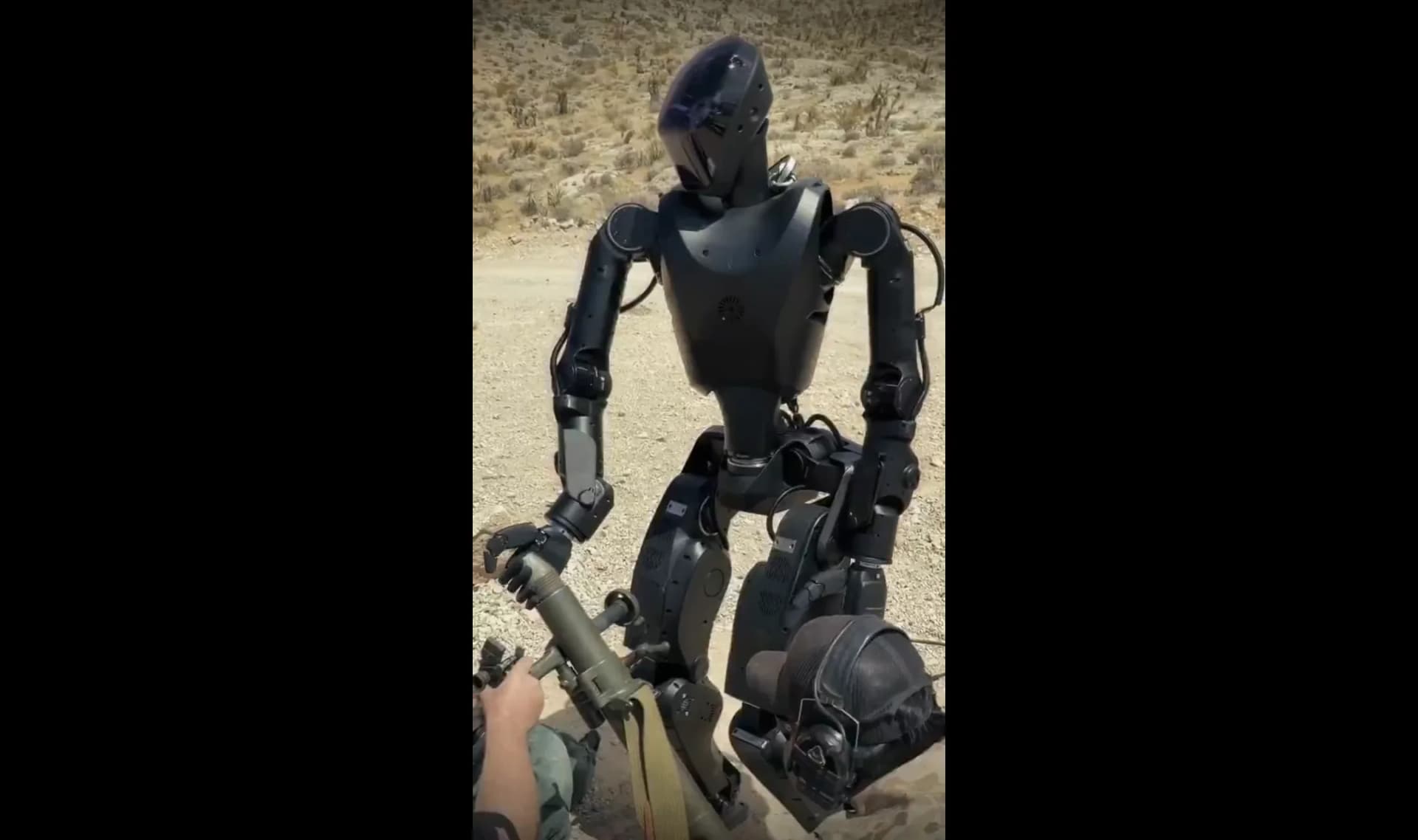
The geopolitical battle lines slicing through the artificial intelligence sector have officially extended into the physical world. On June 3, 2026, U.S. lawmakers introduced the Guarding the U.S. Against Adversarial Robotics Dominance (GUARD) Act, a bipartisan piece of legislation that could effectively halt the importation of Chinese-made humanoid and quadruped robots.
Spearheaded by Chairman John Moolenaar (R-MI) of the House Select Committee on China, alongside Rep. Jay Obernolte (R-CA) and Rep. Jennifer McClellan (D-VA), the bill marks a significant escalation from previous legislative efforts. While earlier proposals like the American Security Robotics Act focused primarily on restricting federal procurement, the GUARD Act aims for a broader commercial sweep by leveraging the Federal Communications Commission’s (FCC) Covered List to block high-risk machines from entering the United States entirely.
Expanding the Covered List to Embodied AI
The mechanics of the GUARD Act are unyielding. The legislation gives national security agencies exactly one year to review humanoid and quadruped platforms manufactured by foreign adversaries—specifically targeting China, Russia, Iran, and North Korea. Any robotic platform or control software determined to pose an "unacceptable risk" to national security will be handed over to the FCC for placement on its Covered List, banning its importation and operation within U.S. borders. Crucially, the bill includes a forcing mechanism: any adversary-produced robot that is not actively reviewed within the one-year window will be automatically added to the ban list.
Lawmakers have justified the sweeping measure by pointing to severe data security vulnerabilities and the structural nature of China's robotics industry. "Robots made by China are a threat to national security, critical infrastructure, and American workers," Chairman Moolenaar stated, citing concerns over hidden digital "backdoors" that could be exploited for espionage.
The weekly humanoid robotics briefing
One email a week: the launches, funding and research that mattered, with context from Humanoids Daily.
Read recent issuesThese anxieties are backed by an aggressive, multi-agency push that began in mid-2025. In a May 2025 letter sent by the Select Committee on the CCP to the Departments of Defense and Commerce, lawmakers explicitly warned of an undocumented remote access tunnel dubbed "CloudSail" pre-installed on Unitree platforms. The letter alleged that the default-enabled tunnel silently connected hardware back to servers in the PRC, allowing anyone with API access to bypass authentication barriers to stream sensor data or gain root access to the machines. We have previously written about Unitree security concerns here.
The Academic and Corporate Research Dilemma
While the bill aims to insulate U.S. infrastructure from foreign compromise, its immediate blowback will likely be absorbed by American research laboratories. Hangzhou-based Unitree Robotics has effectively become the default hardware provider for Western academic and corporate AI labs. Fueled by heavy state backing—including Hangzhou's $140 billion Sci-Tech Fund and targeted municipal subsidies—Unitree managed to ship over 5,500 humanoid units in 2025 alone, establishing a global volume lead that shattered Western production metrics.
By offering highly capable bipedal platforms like the G1 at a fraction of the cost of domestic prototypes, Chinese firms created an accessible hardware baseline that allowed American software engineers to focus strictly on training intelligence models.
The sudden friction between legislative intent and technical reality is best illustrated by a massive contradiction in timing. Just two days before the GUARD Act was introduced, Silicon Valley heavyweight NVIDIA stood on stage at GTC Taipei to unveil its landmark NVIDIA Isaac GR00T Reference Humanoid Robot. Built as a standardized developer kit to eliminate fragmented workflows in top-tier research institutes, the open-frontier platform couples NVIDIA's Blackwell-architecture compute with a physical chassis supplied entirely by Unitree's newly minted H2 Plus platform.
If the GUARD Act passes in its current form, the very hardware NVIDIA has standardized for the next generation of physical AI research could become illegal to import into the United States, throwing collaborative roadmaps into chaos.
Market Protections vs. Commercial Absence
Unsurprisingly, American humanoid developers are rallying behind the proposed restrictions. The GUARD Act has already secured public endorsements from domestic industry leaders, including Agility Robotics. "This legislation sends an important market signal as U.S. robotics companies continue investing in resilient supply chains, domestic manufacturing capabilities, and trusted technologies," said Agility CEO Peggy Johnson.
For American firms, a blanket ban on Chinese hardware removes an existential commercial threat. Lawmakers openly acknowledge that heavily subsidized Chinese humanoids risk bankrupting domestic startups before they can scale. Currently, U.S. companies operate at a massive capital and volume disadvantage; while Unitree is aggressively advancing toward a fast-tracked public listing on the STAR Market to raise up to $621 million for factories capable of pumping out 75,000 humanoids annually, major U.S. players are valued on venture metrics, with Agility holding a private valuation of roughly $2 billion.
However, the core issue for the American tech sector is that blocking Chinese imports will leave an immediate hardware vacuum. At present, none of the prominent American humanoid companies are selling their robots openly on the commercial market, at least not at scales comparable to that of the Chinese firms.
While Agility is ramping up operations at its Salem, Oregon "Robofab" facility, the company has maintained a strict enterprise-first, pragmatically throttled rollout strategy. Their signature Digit platform is currently restricted to closed corporate pilots—such as moving totes for Toyota and Schaeffler—rather than being available as an open, off-the-shelf research platform for universities.
If Congress moves swiftly to pass the GUARD Act, it will successfully close a perceived backdoor in the nation's physical supply chain. Yet, in doing so, it will force a difficult question upon the domestic tech industry: Can American AI researchers maintain their lead in robotic intelligence if the affordable hardware they use to train those brains is abruptly banned from the lab?
Share this article
Read next
- Published on
- Reading time
- 3 min read
Astribot Brings Its $18,000 T1 Robot to North America at IROS
- Published on
- Reading time
- 6 min read
From Stadiums to the Front Line: How China and the US Are Preparing Humanoids for Combat
- Published on
- Reading time
- 4 min read
Supply Chain Rumors Hint at Massive Optimus Order as Fremont Production Line Ramps Up
- Published on
- Reading time
- 5 min read
The FCC Bans Foreign Humanoids: Unpacking the Sweeping New Restrictions on Robotic Devices
- Published on
- Reading time
- 4 min read
The Imminent Embodied AI Ban: FCC to Target Chinese Humanoids
- Published on
- Reading time
- 6 min read
The Battle Over Chinese Humanoids: As Congress Debates the GUARD Act, Industry Divides Over National Security vs. Research Reality




The weekly humanoid robotics briefing
One email a week: the launches, funding and research that mattered, with context from Humanoids Daily.
Read recent issues