- Published on
From Stadiums to the Front Line: How China and the US Are Preparing Humanoids for Combat
One tap, and our reporting appears more often in your Google Top Stories. It makes a real difference to a small newsroom.


Your guide
Rich Robinson
Jee Chee Ren · Executive tour
See China’s AI and robotics ecosystem first-hand.
Six days exploring AI, robotics and advanced manufacturing.
With Rich Robinson, Clinical Professor of Entrepreneurship at Peking University
Beijing · Guangzhou · Shenzhen
29 November–4 December 2026
Referral partnership · We earn a commission on referred bookings.
- A Reuters review of over 100 military tenders, patents, and academic studies confirms the Chinese People’s Liberation Army (PLA) is actively researching humanoid robots for urban assault, infiltration, and remote sentry operations.
- Chinese state-owned defense giant Norinco has debuted the Fuxi teleoperated combat robot, while military universities model humanoids operating alongside soldiers to clear buildings within a 5-to-10-year timeline.
- Commercial dominance anchors Beijing's military robotics pipeline, with Chinese manufacturers accounting for an estimated 95% of global humanoid shipments in 2025.
- In the United States, San Francisco-based Foundation Robotics remains the lone prominent humanoid startup openly pursuing armed and dual-use battlefield applications, testing systems against real-world front-line demands in Ukraine.
- Across both superpowers, technical barriers such as energy density, thermal control, and severe field fragility suggest autonomous, weaponized infantry remains years away from reliable deployment.
Late last month in Beijing, bipedal humanoid robots dazzled international crowds at the 2nd World Humanoid Robot Games, where machines shattered human sprint benchmarks and showcased advanced manipulation skills. But behind the sporting spectacle, China’s defense establishment was watching with an entirely different objective in mind.
Just two days after the stadium lights dimmed, the PLA Daily, the official newspaper of China’s People's Liberation Army, urged military researchers to accelerate the pipeline transferring laboratory robotics into combat units. According to a detailed investigation by Reuters, that editorial directive reflects a deep, systematic push: an analysis of over 100 Chinese military procurement filings, academic studies, patents, and defense contractor documents reveals Beijing is actively planning for the battlefield deployment of humanoid machines.
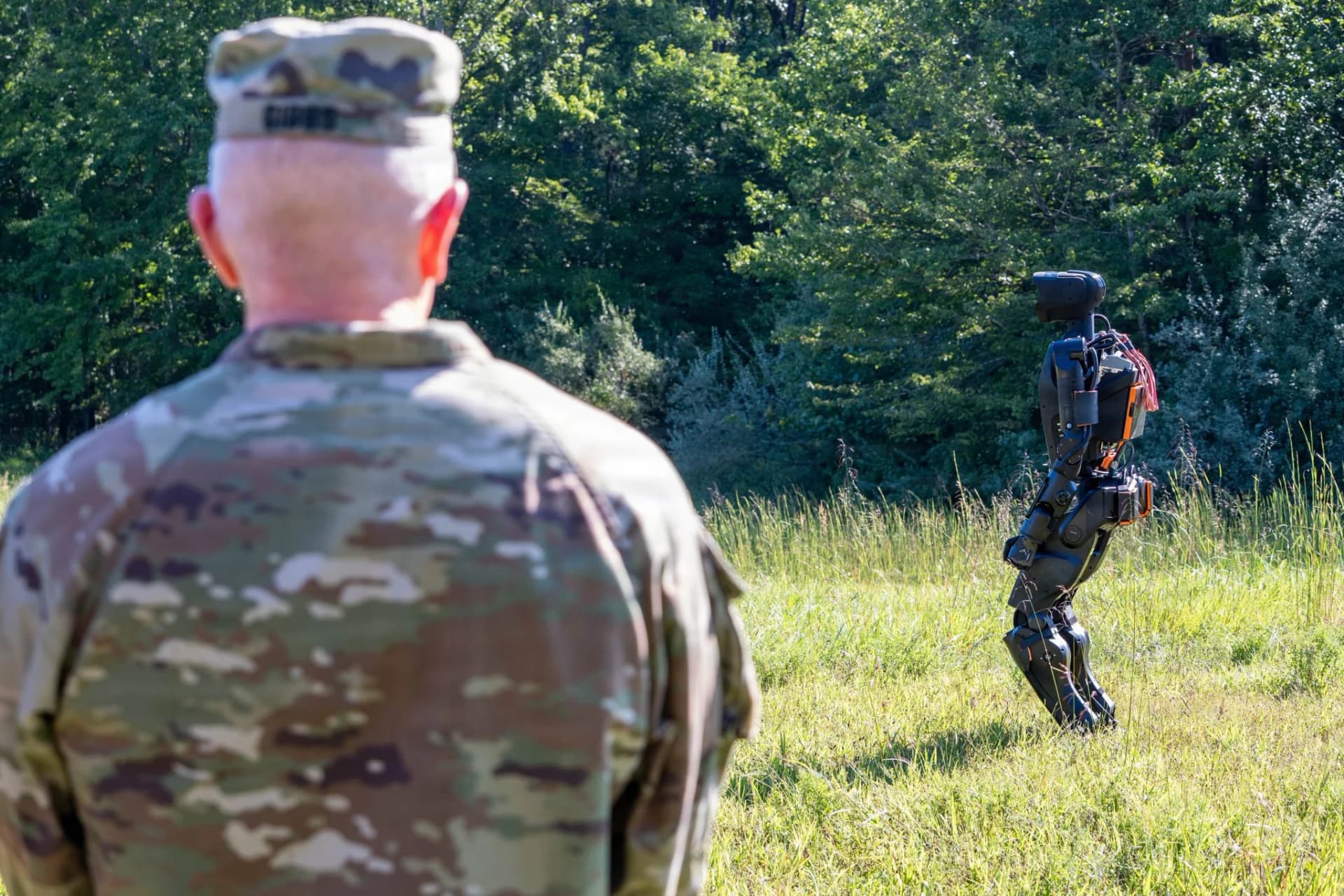
The records underscore a quiet transformation in military doctrine, one that mirrors lessons drawn from the conflict in Ukraine. As aerial drones and loitering munitions make routine logistics and front-line reconnaissance increasingly suicidal for infantry, military planners on both sides of the Pacific are sizing up bipedal robots as expendable combat assets.
Modeling the Robotic Urban Assault Force
Chinese research documents reviewed by Reuters demonstrate that the PLA’s interest has advanced beyond theoretical curiosity into operational mission design.
The weekly humanoid robotics briefing
One email a week: the launches, funding and research that mattered, with context from Humanoids Daily.
Read recent issuesIn an August 2025 paper from the National University of Defense Technology’s (NUDT) test center in Xi’an, researchers modeled a six-robot combat team composed of humanoids, quadruped robot dogs, and unmanned vehicles. Deployed alongside human infantry, these machines were simulated clearing multi-story buildings room by room in contested urban environments—an operational reality projected for practical deployment within five to ten years.
NUDT’s military exercises have also integrated humanoid platforms directly into tactical simulations. A June 2025 defense competition staged tests simulating behind-the-lines infiltration, where bipedal robots mapped unknown corridors, identified targets, and carried out automated security checkpoints.
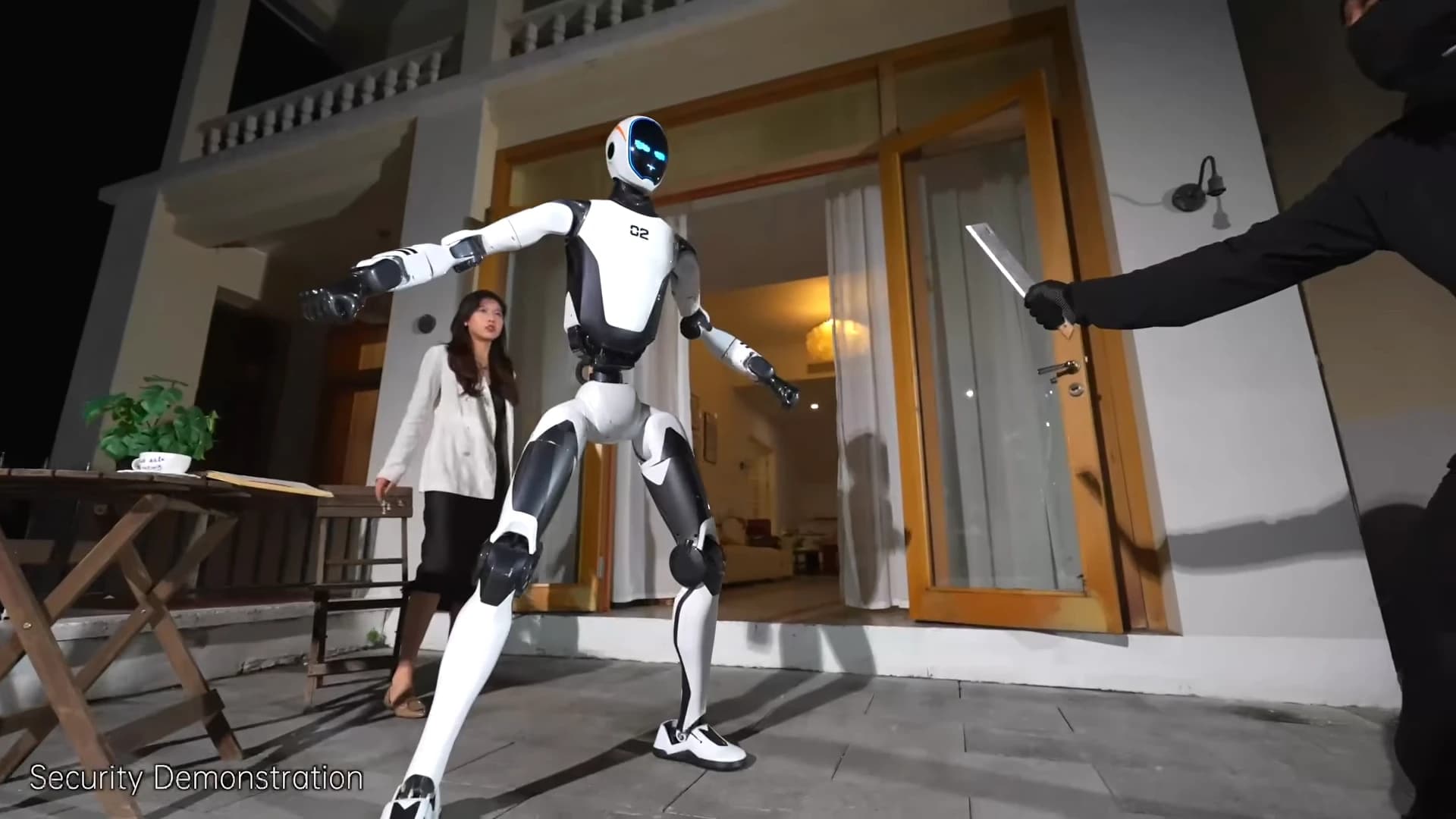
That tactical blueprint is already extending into China's state-backed defense industry. Defense conglomerate Norinco recently unveiled the "Fuxi," a full-scale humanoid platform intended for sentry, patrol, and reconnaissance operations. Critically, Norinco pairs Fuxi with a human-in-the-loop teleoperation system. By placing an operator behind a virtual link, the system sidesteps the complex decision-making latency of edge autonomy, making near-term battlefield integration practical.
This military transition leans heavily on domestic industrial scale. According to BofA Global Research data cited by Reuters, Chinese hardware manufacturers accounted for roughly 95% of worldwide humanoid shipments in 2025. Others estimate that number to be even higher. That domestic supply chain gives the PLA a ready baseline of high-torque motors, cycloidal reduction gears, and cheap structural materials that foreign adversaries struggle to match.
America’s Solitary Contender: Foundation
While China leverages state apparatus and commercial volume to lay the groundwork for military humanoids, the American defense landscape looks fundamentally different. Major US robotics firms—such as Boston Dynamics and Agility—have repeatedly pledged not to weaponize their bipedal machines.
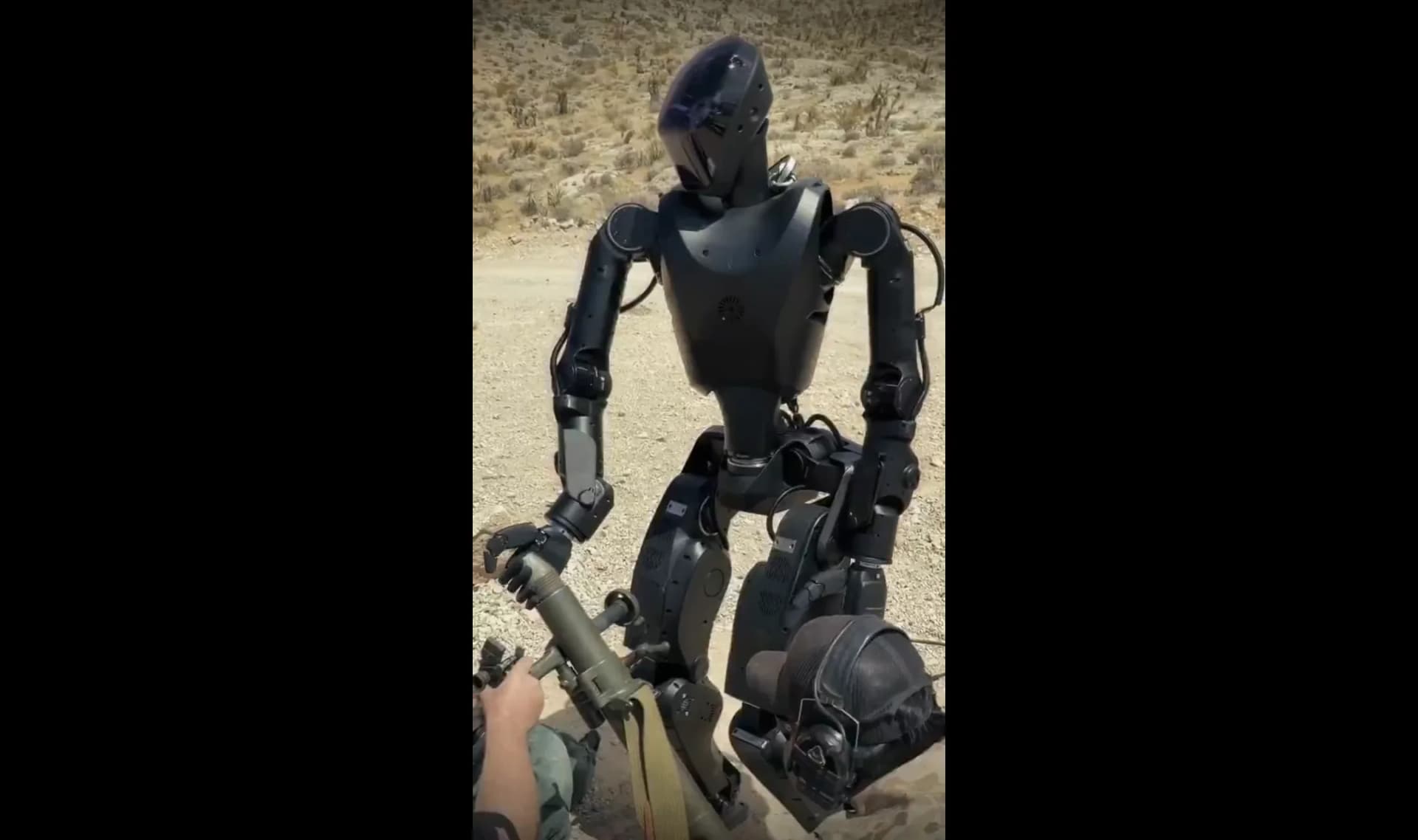
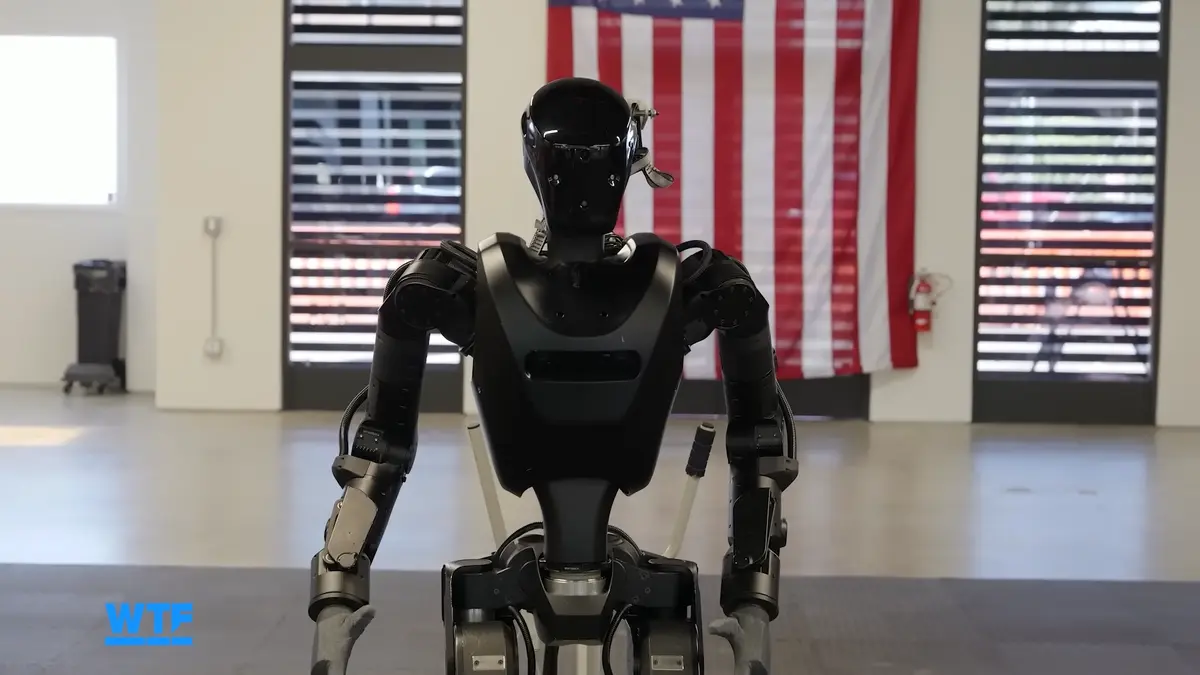
The primary US domestic exception is Foundation Robotics, a San Francisco-based startup that has openly embraced dual-use and militarized robotics from its inception. Co-founded by former Marine Mike LeBlanc and CEO Sankaet Pathak, Foundation has positioned its bipedal Phantom platform to serve as the front line’s "bullet sponge."
While the Pentagon launched an exploratory competition last year offering up to $1.25 million for militarized humanoid concepts, Foundation is already operating on tactical fringes. Pathak confirmed earlier this year that the company ran field trials in Ukraine, using Phantom units for dangerous supply-retrieval sorties where human runners face relentless drone targeting.
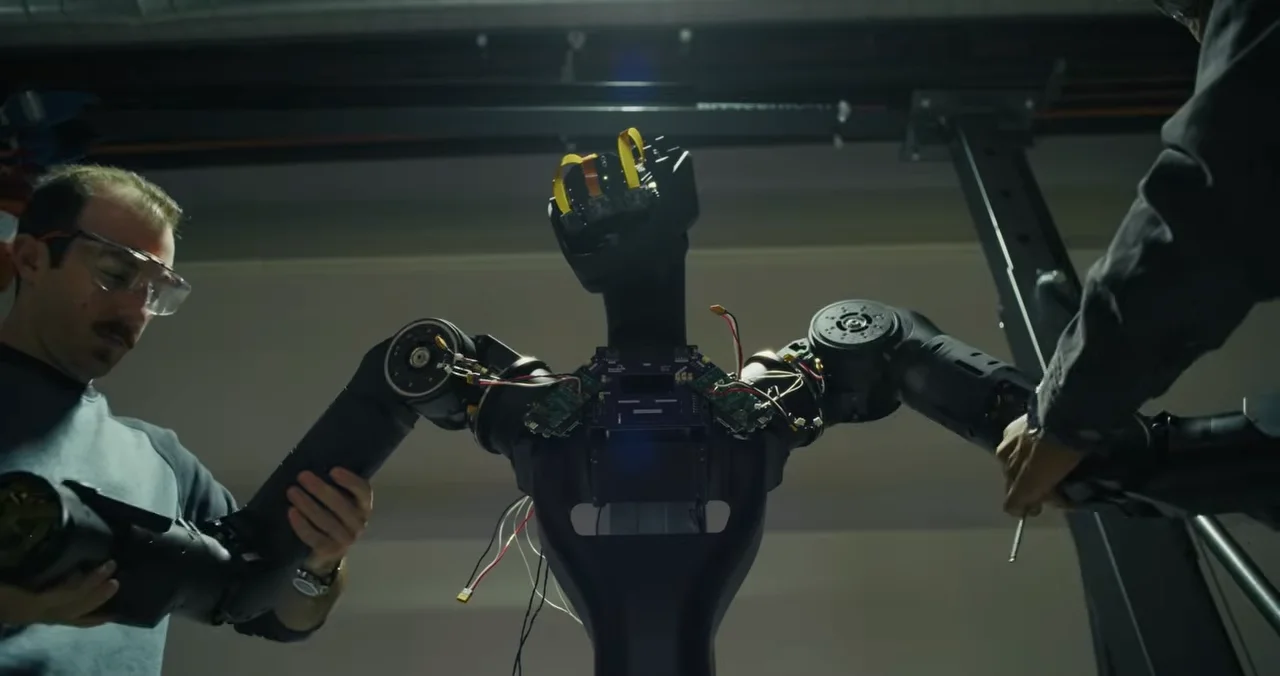
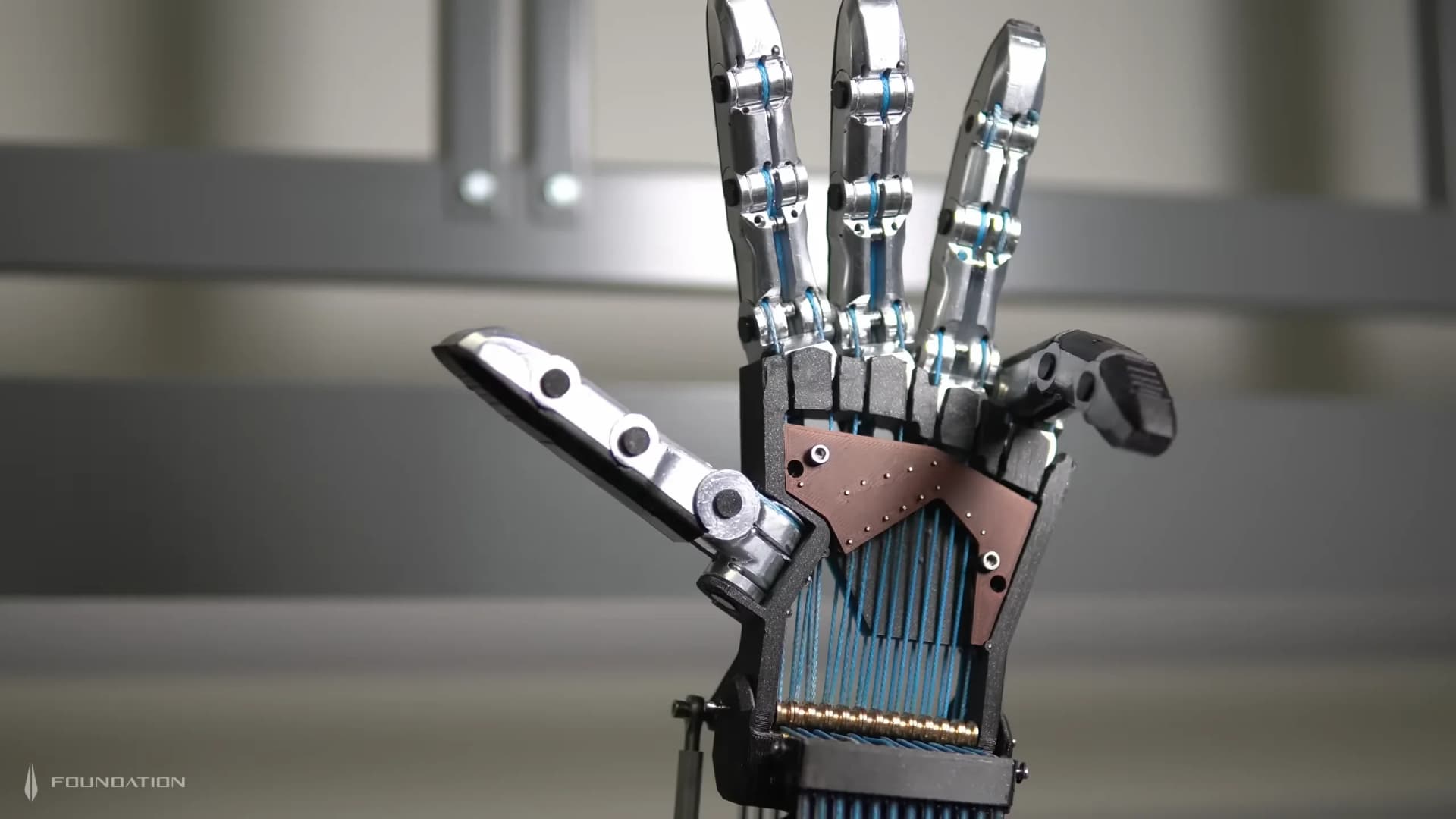
Foundation has also not shied away from the prospect of active lethality. Pathak has maintained that arming humanoids with firearms remains firmly on the table, explicitly framing weaponization as an unavoidable reaction to foreign military robotics development. To withstand that transition, Foundation has discarded delicate lab architectures, developing the ruggedized, 100-G-impact-tolerant "Phantom 2" and engineering complex bio-mimetic hands driven by internal forearm tendon actuators to operate standard tools and service weapons.
Yet Foundation faces steep hurdles of its own. Between the collapse of Pathak’s previous venture, Synapse, and high-profile hardware failures—including a Phantom unit collapsing during an office demonstration—the startup’s aggressive production targets and overall capabilities remain heavily scrutinized.
The Gulf Between Ambition and the Mud
Despite aggressive posturing on both sides, the operational reality of bipedal warfighters remains defined by physical bottlenecks.
As Carnegie Mellon University roboticists observed in the Reuters report, real-world battlefields present chaotic, unstructured conditions that quickly overwhelm contemporary mobility algorithms. Humanoid machines are notoriously power-hungry; bipedal locomotion drains high-discharge lithium packs in minutes when navigating debris, scaling obstacles, or hauling heavy tactical gear. For straightforward logistics, reconnaissance, and mine detection, tracked platforms and quadruped robot dogs remain substantially cheaper, more robust, and easier to manufacture at scale.
Then there is the legal and ethical friction. International humanitarian law requires strict distinction between combatants, surrendering fighters, and civilians—contextual nuances that computer vision models cannot reliably arbitrate under smoke, dynamic movement, and stress. Both the Pentagon and China's Ministry of Defense have publicly stated that autonomous weapons must maintain human accountability, reinforcing why early models like Norinco's Fuxi and Foundation's VR platforms lean entirely on teleoperation interfaces.
For now, the PLA has yet to field an operational biped with an active combat division, and Foundation’s production footprint remains small. But the trajectory is clear: the hardware powering entertainment, factory logistics, and athletic exhibitions is being quietly adapted for trench lines and urban ruins.
Share this article
Read next
- Published on
- Reading time
- 4 min read
"Peace Through Strength": Foundation CEO Showcases Phantom Robot on Fox Business
- Published on
- Reading time
- 5 min read
Watch: Inside Foundation’s Humanoid Factory and the Anatomy of a "War Machine"
- Published on
- Reading time
- 3 min read
CNET Goes Hands-On With Foundation's 'Phantom' Humanoid as CEO Discusses Arming Robots
- Published on
- Reading time
- 6 min read
Military Humanoids: Army Trials, New Entrants and the Gap Between Ambition and Deployment
- Published on
- Reading time
- 5 min read
The Great Dexterity Divide: Why Robotics Leaders Are Warring Over Tendon vs. Direct-Drive Hands
- Published on
- Reading time
- 5 min read
Foundation Robotics CEO Details Ukraine Pilot, "Super-Heavy" Phantom 2, and Rejection of Companion Bots


The weekly humanoid robotics briefing
One email a week: the launches, funding and research that mattered, with context from Humanoids Daily.
Read recent issues