- Published on
The Policy Is a Video: How Markov Robotics Runs Dexterous Manipulation on LTX-2.5
One tap, and our reporting appears more often in your Google Top Stories. It makes a real difference to a small newsroom.


Your guide
Rich Robinson
Jee Chee Ren · Executive tour
See China’s AI and robotics ecosystem first-hand.
Six days exploring AI, robotics and advanced manufacturing.
With Rich Robinson, Clinical Professor of Entrepreneurship at Peking University
Beijing · Guangzhou · Shenzhen
29 November–4 December 2026
Referral partnership · We earn a commission on referred bookings.
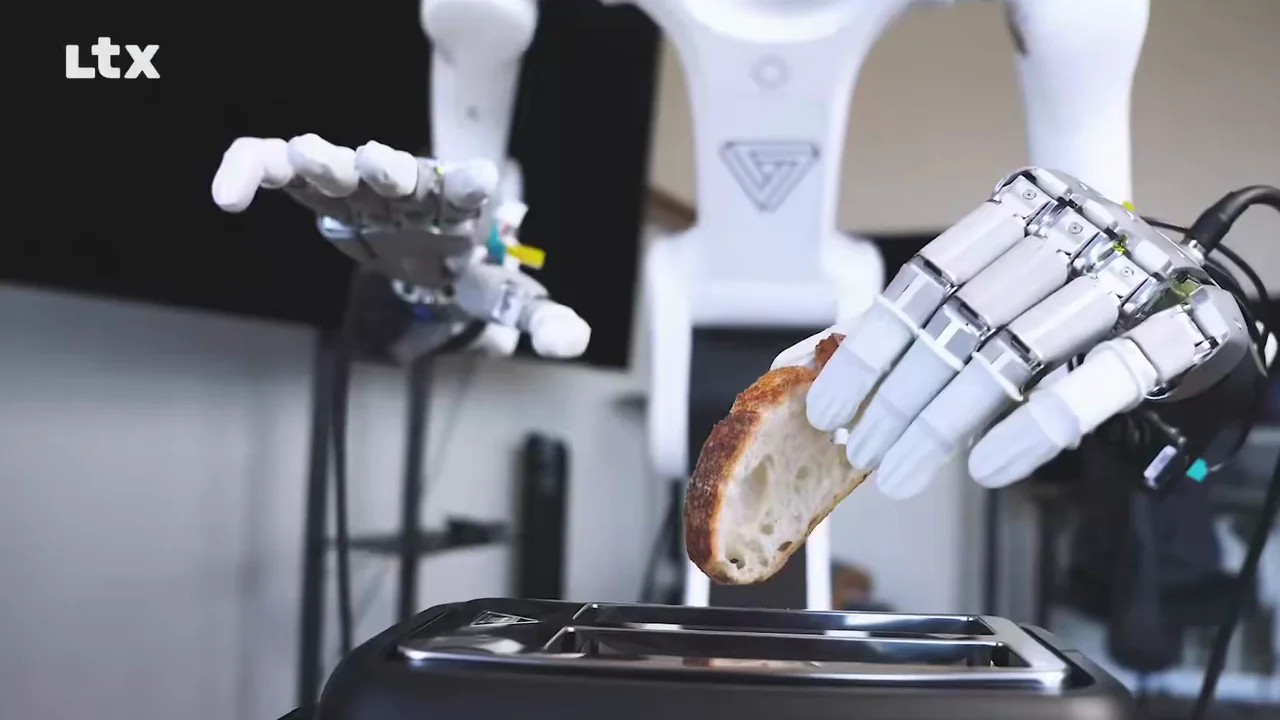
- LTX-2.5 launched on 11 August 2026 with open weights on Hugging Face, including a separate raw pretrained checkpoint — a 22B diffusion transformer with no supervised fine-tuning applied — released specifically as a base for teams adapting the model to their own domain.
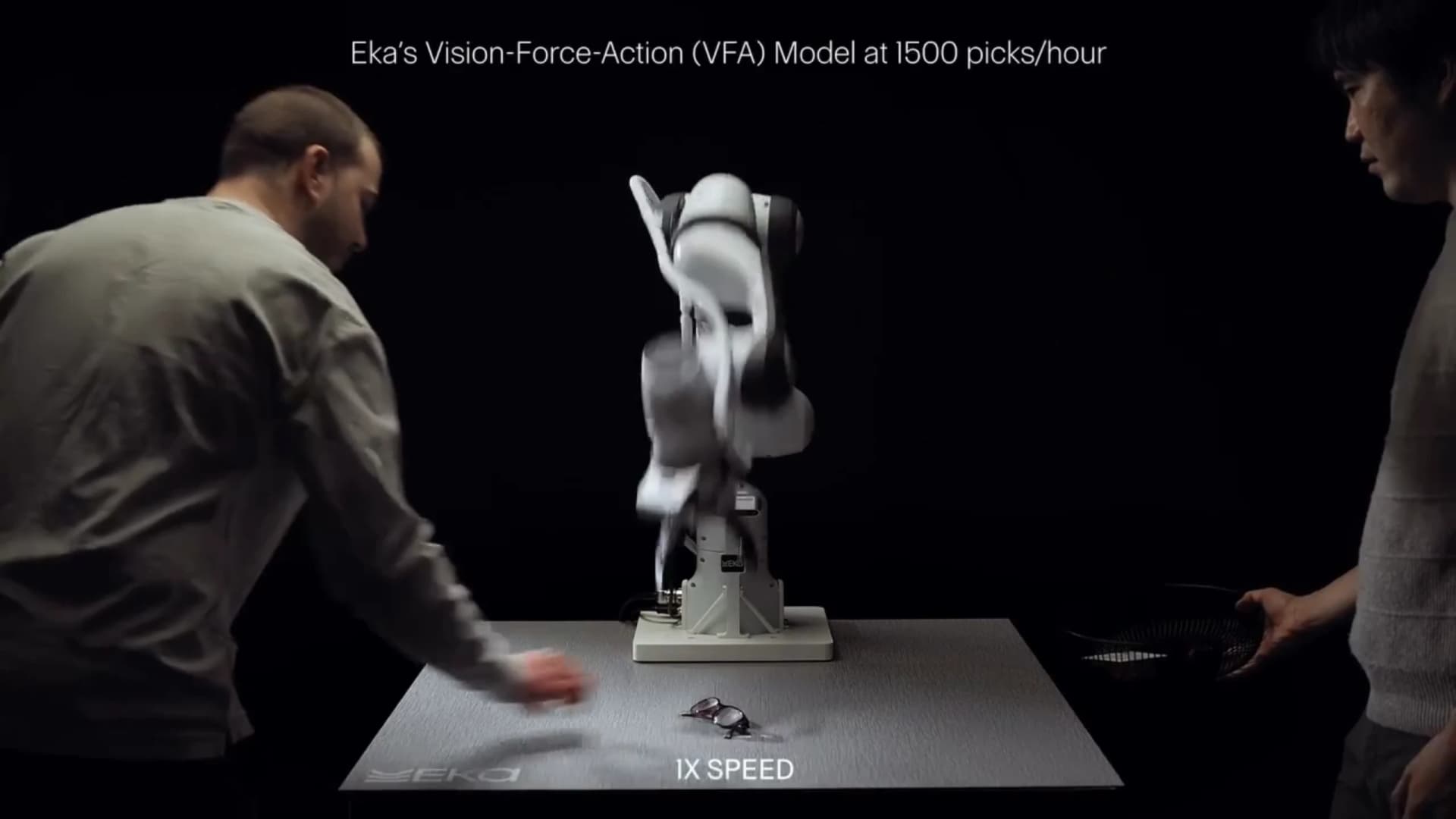
- San Francisco startup Markov Robotics uses the model as a manipulation policy: a head-mounted camera captures the scene, the model generates video of the task being completed, and the robot executes what the generated video implies.
- Markov evaluated open models as they were released and found LTX passed "by a wide margin," citing token efficiency — the model represents a given clip in fewer tokens, which is what makes closed-loop inference affordable on hardware the team owns.
- The commercial terms matter as much as the architecture: weights are free for organisations under $10M ARR, deployable on private infrastructure, with fine-tuning and redistribution rights — the conditions robotics teams need for world models that touch proprietary data.
- LTX has not published physical-AI benchmarks — no manipulation success rates, no closed-loop latency on robot-grade hardware. The pretrained checkpoint is a foundation rather than a robot policy: action decoding, safety validation and domain data remain the integrator's problem.
Dexterous hands keep getting better, and a large share of the industry's capital is still going into making them better. What has not kept pace is the software that decides what those hands should do next — in a kitchen the robot has never entered, holding an object it has never touched. Both tracks are live problems, and teams tend to work hardest on whichever one they believe binds first.
Markov Robotics has picked a side. "The biggest bottleneck in robotics right now is the policies," an engineer at the San Francisco company says in a case-study video published by LTX. "Hardware has come a long way."
That is a contestable diagnosis, and plenty of people building actuators and five-fingered hands would contest it. What makes Markov worth listening to is less the diagnosis than the treatment, which is unusually direct. The company, which is building toward what it calls zero-shot general-purpose dexterity, uses a video model as the policy itself.
A Policy That Looks Like a Video
The method inverts the usual pipeline. Rather than training an action model on teleoperation demonstrations and hoping it transfers, Markov starts from a model that already understands how objects behave when they are pushed, dropped, gripped and released.
The weekly humanoid robotics briefing
One email a week: the launches, funding and research that mattered, with context from Humanoids Daily.
Read recent issues"At deployment time, we go and we use the head cam on the robot, take a picture of the scene the robot sees, and generate a video of what we want done, and simply execute what that video says," the team explains.
The claimed payoff is that some of the physical knowledge is already in the weights rather than waiting to be collected demonstration by demonstration. "When it sees an object, it has a lot of priors from the world model on how hard the model needs to squeeze," the team says. "So if it picks up glass, it's going to do it delicately. Whereas if it's picking up, say, a rock, it'll squeeze and hold a bit harder."
That is a claim about what a model expects, not a measurement of a robot, and the grounding behind it is Markov's own. No video corpus contains grip force in newtons. Markov's description of its stack has the policy conditioning on "high-fidelity modalities such as pressure and proprioception" — sensor streams the company instrumented and gathered itself. What the video model supplies is the expectation of how a material ought to behave under contact.
Getting from that expectation to motion is the part Markov built, and it appears to have taken less work than the result suggests. Yoav HaCohen, who leads LTX-Video, says the company "fine-tuned LTX to predict robot action tokens alongside video tokens, driving real robots from the model's own predictions" — after what he describes as under an hour of fine-tuning. A small amount of adaptation sitting on top of a very large amount of pretraining is, in one sentence, the argument for starting from a world model at all.
The underlying bet — imagine the outcome, then act on it — is a different one from the vision-language-action lineage, and it is one a growing number of labs have now made — 1X has restructured around world models, NVIDIA has pushed Cosmos toward world-action modelling, and the field is still arguing about what the label even means. What separates Markov's version is not the thesis. It is that the model runs on their own machines.
Why the Token Budget Decides What Ships
A world model used as a policy has to run inside the control loop. That constraint is unforgiving in a way that offline video generation is not — a model that produces a beautiful ten-second clip in three minutes is useless to a robot that has to catch a falling bottle.
This is where Markov's selection criteria get specific. The team says it assessed open releases continuously against its own requirements.
"We look at every single model that comes out on Hugging Face that might even possibly be good for our use cases," the team says. "And LTX was the first that passed by a wide margin."
The stated reason is representational density rather than raw speed. "LTX turns videos into fewer tokens than any other model," the team says. "You give it the same amount of information and it just needs less computation. And no other model has taken that bet nearly to the same extent that LTX has."
That characteristic is architectural and long-standing in the LTX line. The original LTX-Video research moved the patchifying step out of the transformer and into the VAE, reporting a 1:192 compression ratio at 32×32×8 pixels per token — a deliberately aggressive latent space that lets the transformer run full spatiotemporal attention without the token count exploding. For a film pipeline that choice buys throughput. For a robot closing a loop against the physical world, it decides whether the approach is viable at all.
What LTX-2.5 Actually Shipped for Physical AI
The 11 August release is a strengthening of that foundation rather than a new product. Three parts of it are aimed squarely at teams doing physical AI work.
A raw pretrained checkpoint. Alongside the production weights, LTX published LTX-2.5-Pre-Trained: a 22B diffusion transformer delivered as a 43 GiB bundle with video VAE, audio VAE, vocoder and duration head, paired with a 12B Gemma 4 text encoder. Critically, it has not had the supervised fine-tuning and post-training applied to the main release. LTX describes it as intended for researchers and developers building specialised models, to be adapted with the LTX-2 Trainer rather than deployed directly.
That distinction is the point. A checkpoint post-trained toward cinematic output has been pulled hard toward a distribution of well-lit, well-composed footage. Egocentric manipulation data looks nothing like that: a wrist camera, motion blur, occlusion by the robot's own hand, and a viewpoint no cinematographer would choose. A base checkpoint moves toward that data more readily than one that has been taught what good film looks like.
A better distilled model. LTX pairs the base with an improved distilled variant, trained on a larger dataset with reinforcement learning post-training, aimed at making near-full quality economically deployable on hardware teams already run. LTX reports self-hosted generation of a ten-second 720p clip in 6.8 seconds on two NVIDIA GB200 superchips, and says the model runs down to consumer GPUs, on-premises servers and Macs.
Cleaner licensing. LTX says restrictive third-party dependencies have been removed or reduced, with the intent of shortening the path through enterprise legal, procurement and E&O review. For a robotics company whose fine-tuned derivative is a core asset, that review is not a formality.
Ownership as an Engineering Requirement
The commercial structure is inseparable from the technical case. LTX-2.5 weights are free for commercial and production use by organisations under $10M in annual recurring revenue, under the LTX-2.x Community License, with paid licensing above that threshold. Teams can fine-tune, deploy on their own infrastructure and build derivative models.
Atharva Gundawar, co-founder and CEO of Markov Robotics, ties that directly to whether the work is possible at all.
"Training robots means teaching them how the physical world actually behaves, not just what it looks like," Gundawar says. "LTX-2.5 is the open model that gets closest to that for us, and being able to run and fine-tune it on our own hardware is what makes it usable for real robotics work. We have not found another open model that does this for us the way this one does."
The team frames it more bluntly elsewhere in the video: "We built on open source because it's the only thing you can actually build on. Research freedom is very important, and you can get that a lot more with open source models."
The practical version of that argument is familiar to anyone who has tried to run a robot fleet against a metered endpoint. Head-cam frames from a customer site are data you may not be permitted to send anywhere. Latency budgets do not survive a round trip. And a policy whose weights you do not hold is a policy that can be deprecated out from under a product. LTX says models across the LTX family have now been downloaded more than 33 million times in total, and the company is explicit that the open-weights strategy is commercial rather than charitable — CEO Zeev Farbman has said the model is offered free below a revenue threshold precisely because so many use cases require direct access to the weights.
What Is Not Yet on the Table
The honest reading of this release is that it lowers the floor rather than finishing the job.
LTX has not published physical-AI benchmarks — no manipulation success rates, no action-prediction accuracy, no closed-loop latency figures on robot-grade hardware. The quality comparisons the company has released are vendor-commissioned, labelled preliminary, and measure human preference on cinematic video, which is not the axis that matters for a robot deciding grip force.
The pretrained checkpoint is a base model, not a robot policy. Turning it into one still requires action-conditioned data, a decoder from generated frames to joint commands, and the safety validation any physical deployment demands. Markov's results are Markov's, achieved with their own data and their own stack; the checkpoint is the starting line.
And the deeper question is unresolved across the whole category. Whether video prediction genuinely encodes the contact dynamics that dexterous manipulation depends on, or only their visual appearance, is exactly what teams are now spending large compute budgets to find out. Markov is betting it does. "We think that video already contains a lot of the physical reality that you need to understand in order to do any basic task," the team says.
Where to Start
For teams who want to test that bet on their own data, the material path is short: pull the weights, fine-tune the base on your domain, run it on hardware you control.
The production weights are at Lightricks/LTX-2.5 on Hugging Face; the raw base for fine-tuning is a separate repository, Lightricks/LTX-2.5-Pre-Trained. Inference code and the LTX-2 Trainer are in the official repository. Both repositories are gated: Hugging Face asks for contact details and acceptance of the terms before the download starts.
As one Markov engineer puts it: "The thing that is so exciting about world models is that it's the first time that we can see a path towards generalizable dexterity."
Share this article
Read next
- Published on
- Reading time
- 4 min read
Enact Raises $30M Pre-Seed to Give Factory Robots a Sense of Force
- Published on
- Reading time
- 3 min read
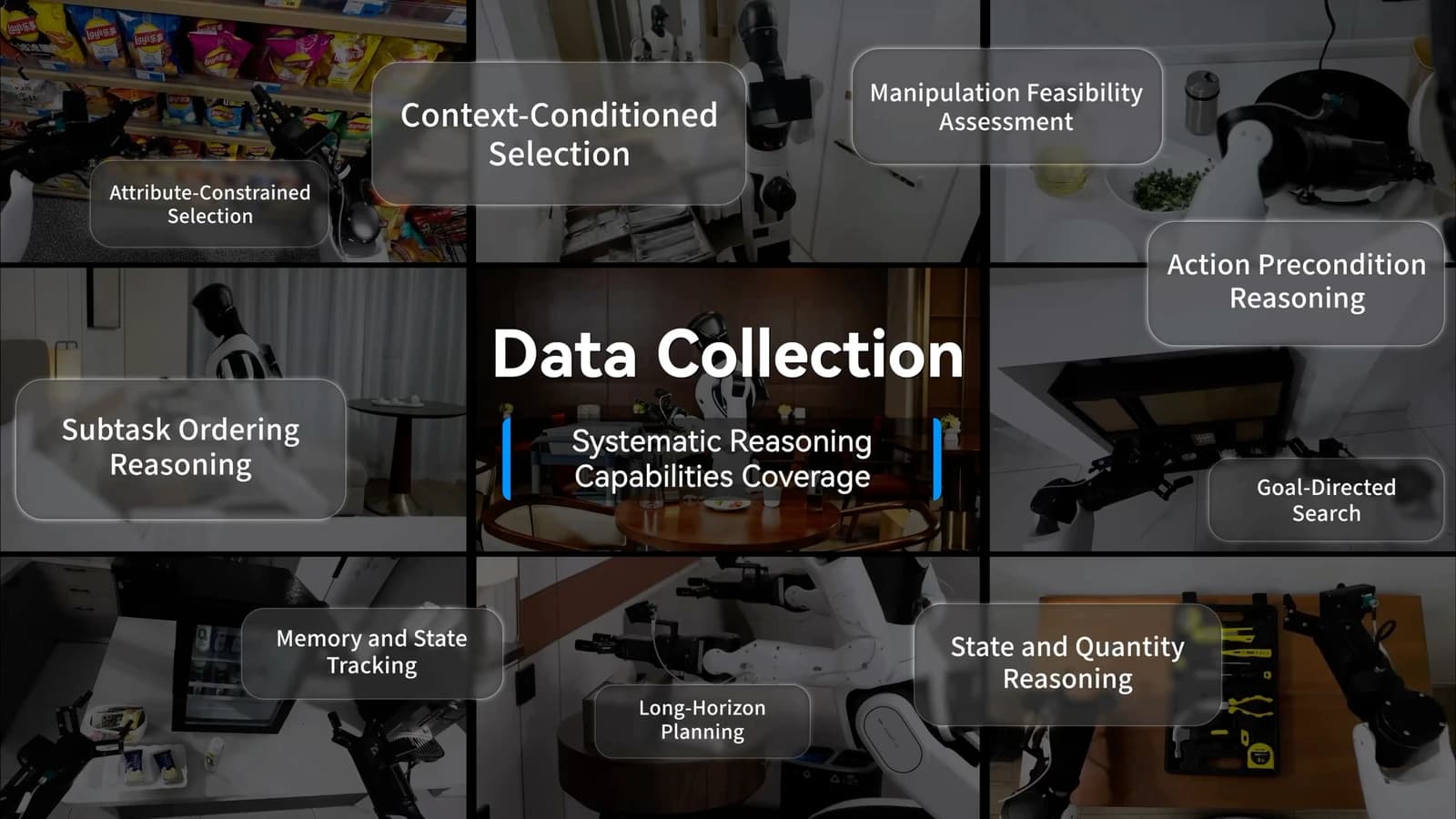
AGIBOT Releases Physical Reasoning Dataset to Connect Robot Decisions With Actions
- Published on
- Reading time
- 5 min read
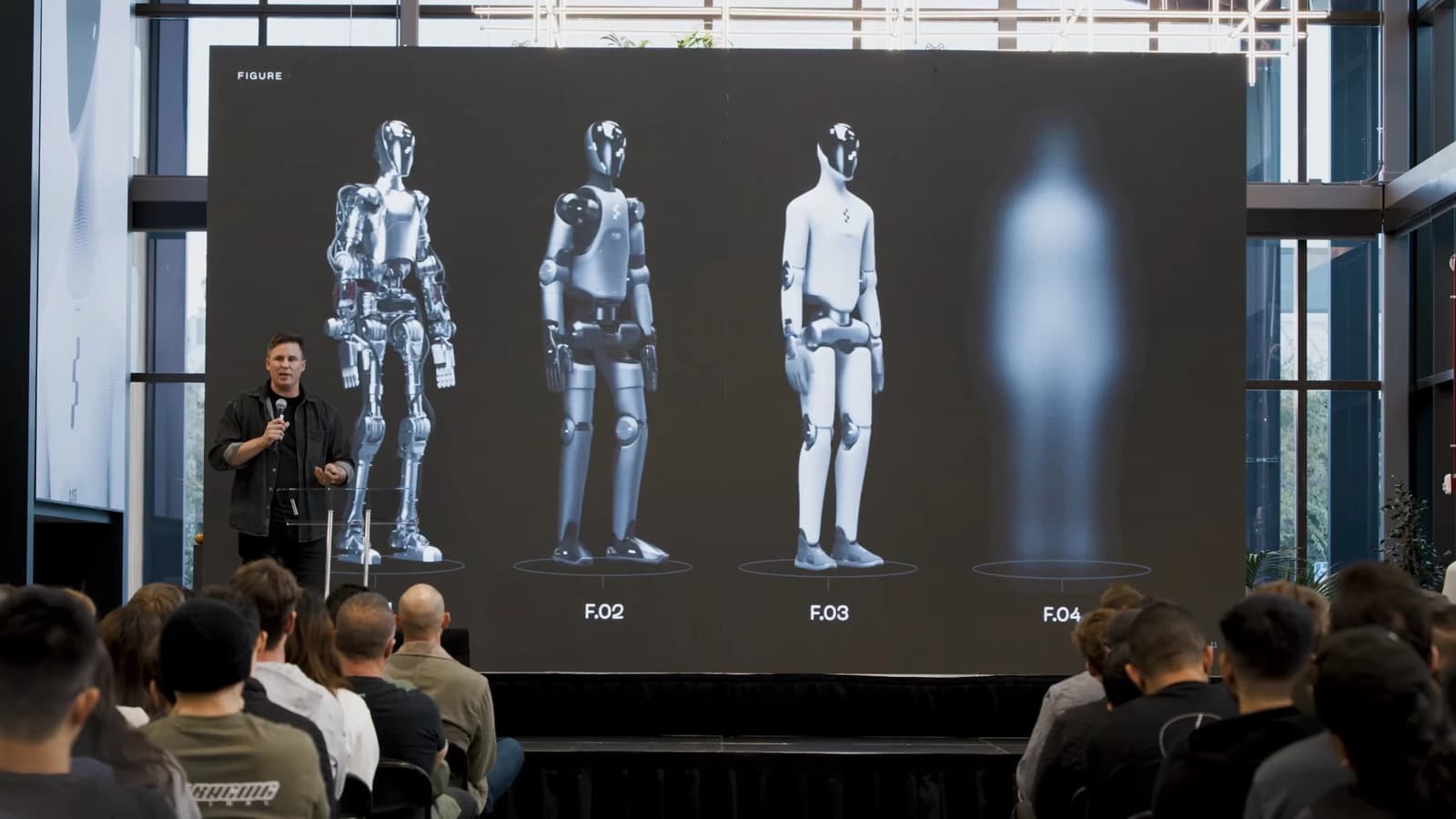
Figure 04 Reaches Design Lock as Adcock Details a Multibillion-Dollar AI Push
- Published on
- Reading time
- 2 min read
XPENG Shows IRON Switching Between Handshakes, Fist Bumps and High-Fives
- Published on
- Reading time
- 3 min read
NEURA Unveils Lighter 4NE1 Gen 4 as TUM RoboGym Opens in Munich
- Published on
- Reading time
- 6 min read
Tesla Begins Optimus Production in Fremont, Targets Customer Deliveries in Late 2027

The weekly humanoid robotics briefing
One email a week: the launches, funding and research that mattered, with context from Humanoids Daily.
Read recent issues