- Published on
XPENG’s IRON Remembers Car Buyers in New Interaction Demo
One tap, and our reporting appears more often in your Google Top Stories. It makes a real difference to a small newsroom.

Supported by RoboStrategySupport for Humanoids Daily comes from RoboStrategy
Sponsored
Investing involves risk, including possible loss of principal. Read the prospectus before investing.
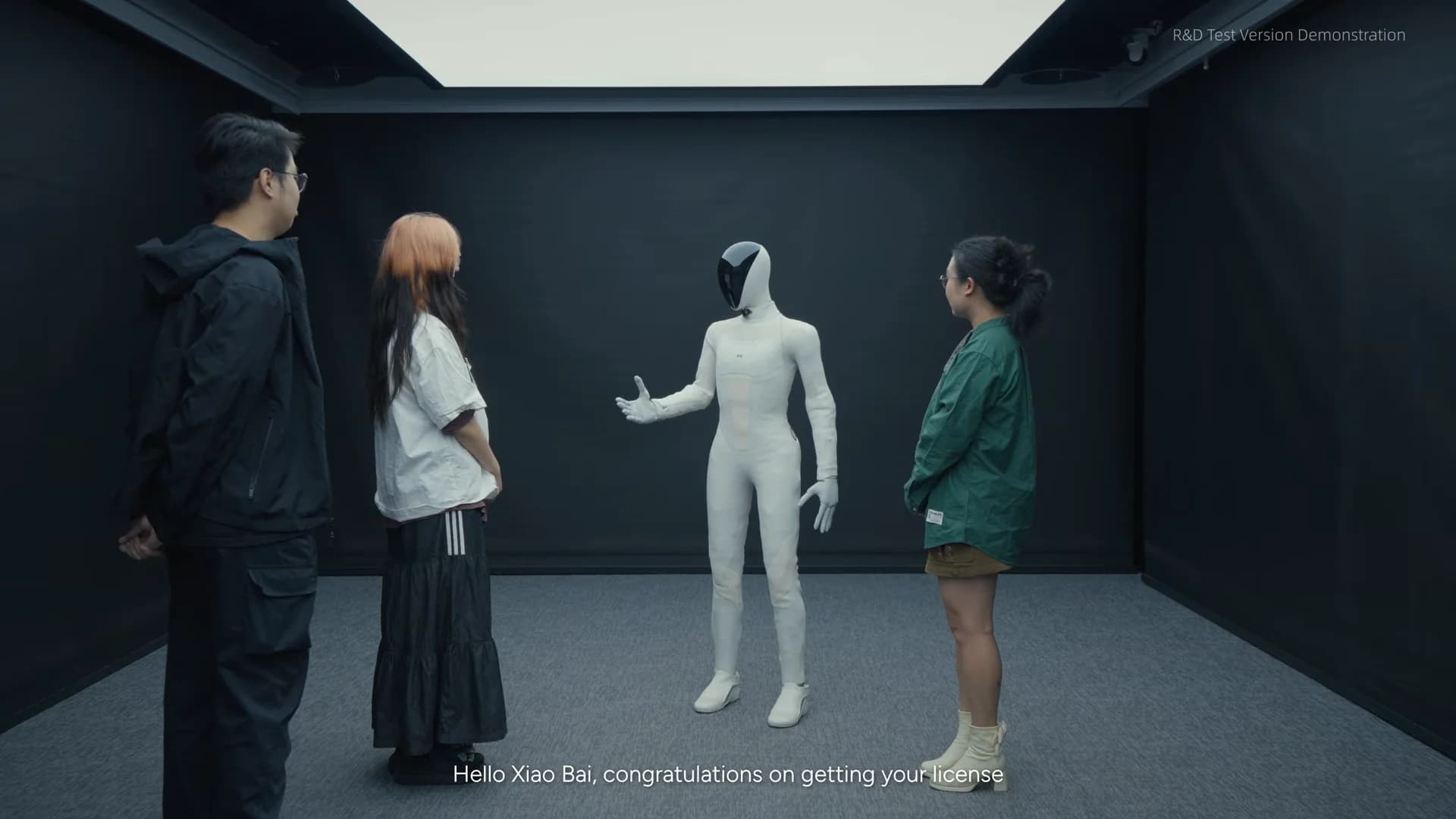
- XPENG’s latest IRON video demonstrates speaker tracking, language switching and recognition of three testers playing car buyers.
- The company says facial and voice features support persistent customer profiles, while three onboard Turing chips provide up to 2,250 TOPS of compute.
- The footage is labeled an R&D test version. It illustrates XPENG’s planned store-guide role, without establishing long-term memory accuracy or sustained customer-service reliability.
XPENG is showing how IRON might work as a showroom assistant: turning toward whoever is speaking, switching languages and remembering which car each visitor wants.
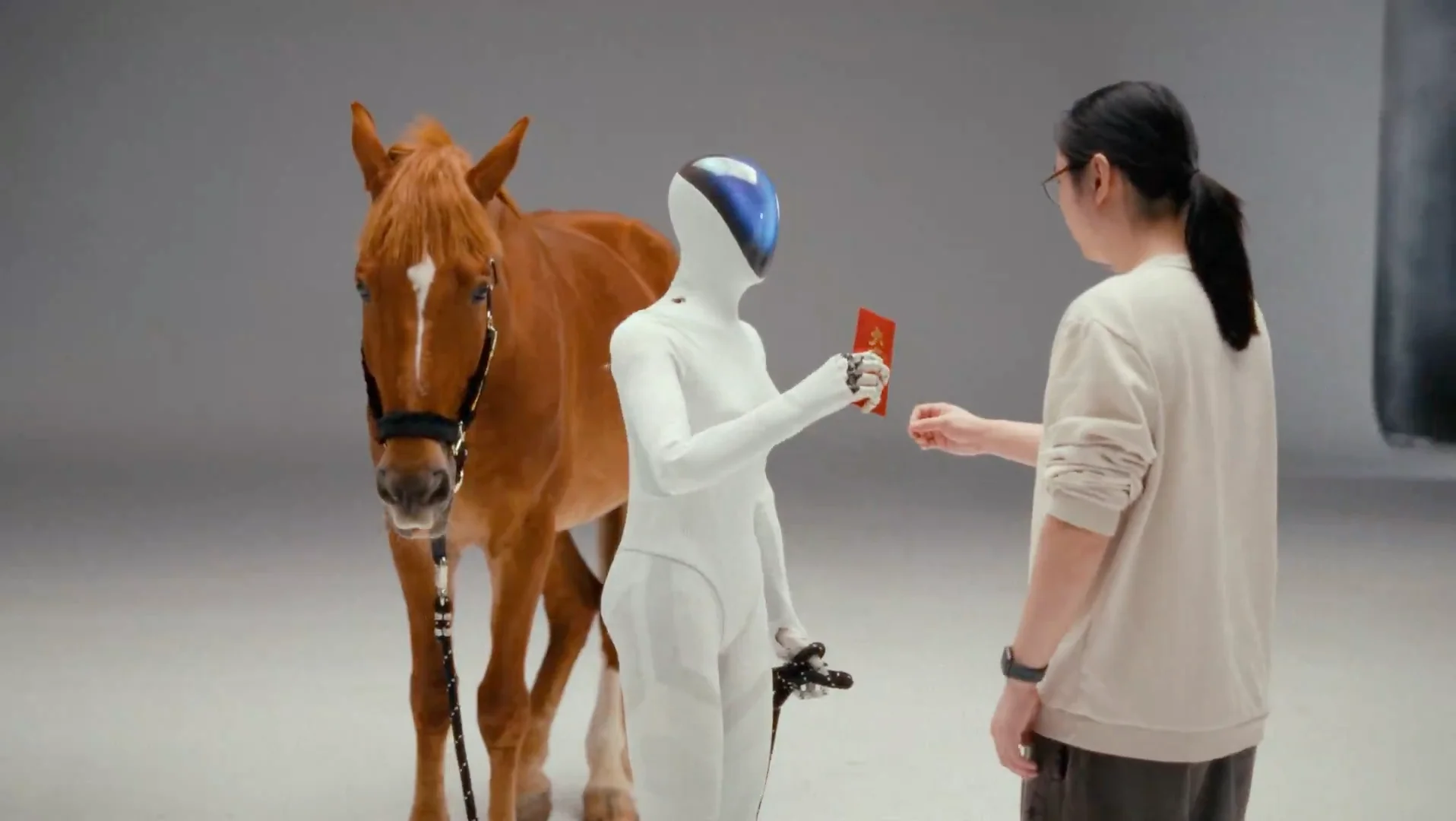
In a new XPENG Robotics Lab video, three testers play prospective customers with different needs, from a family vehicle for camping to a car suitable for a newly licensed driver. They move around, change outfits and ask follow-up questions, giving the company a setting to demonstrate how conversation and physical interaction fit together.
The footage carries an R&D Test Version Demonstration label. It is a company-produced presentation of selected interactions, rather than a published evaluation of an operational dealership robot.
Following the speaker takes more than a chatbot
One of the clearest physical behaviors is IRON’s orientation toward people as they change position. XPENG describes a coordinated response: small adjustments use the head, larger turns involve the waist, and broader changes bring the legs into play.
The weekly humanoid robotics briefing
One email a week: the launches, funding and research that mattered, with context from Humanoids Daily.
Read recent issuesAccording to the narration, a nine-microphone array helps locate sound, while visual recognition of lip movements helps identify the speaker. Motion control then coordinates the robot’s response.
That integration matters for a public-facing humanoid. Answering a question is only part of the interaction; the robot also needs to direct its attention and body toward the right person without awkward repositioning. The video offers examples of that behavior, but no measurements of tracking accuracy, response time or performance with overlapping speakers.
XPENG also presents language switching without a separate instruction to change modes. It attributes this to a multilingual foundation model, conversational post-training and balanced multilingual training data. The exchanges include Mandarin and English, but the presentation does not establish performance across a wider range of languages.
Remembering the customer behind the question
The identity test makes the intended sales role more concrete. One participant introduces himself using another tester’s nickname, and IRON corrects him while recalling his vehicle interest. The company says recognition holds when the three testers change positions and clothing.
XPENG describes a system that combines facial and voiceprint features with conversation history to create an individual memory profile, then updates that profile during later encounters.
The demonstration supports a narrower observation than the company’s suggestion of memory beyond human limits: IRON associates the three participants with information introduced during the test. It does not establish retention over weeks, accuracy across a large customer population or how mistaken identity would be handled. Nor does updating a customer profile necessarily mean the underlying AI model is retrained during conversation.
For a deployed store assistant, how those profiles are retained, corrected and managed would become part of the product’s operation. The video focuses on the interaction itself.
A store-guide role backed by onboard compute
XPENG names sales and store guidance among IRON’s intended first jobs. In the clip, the robot answers questions about vehicle suitability and makes recommendations based on the testers’ stated preferences.
The narration cites three locally deployed Turing AI chips delivering up to 2,250 TOPS, consistent with XPENG’s September 8 production-line announcement. It describes both local knowledge-base access and online retrieval, so onboard compute should not be read as evidence that every function operates offline. No measured conversational latency is supplied.
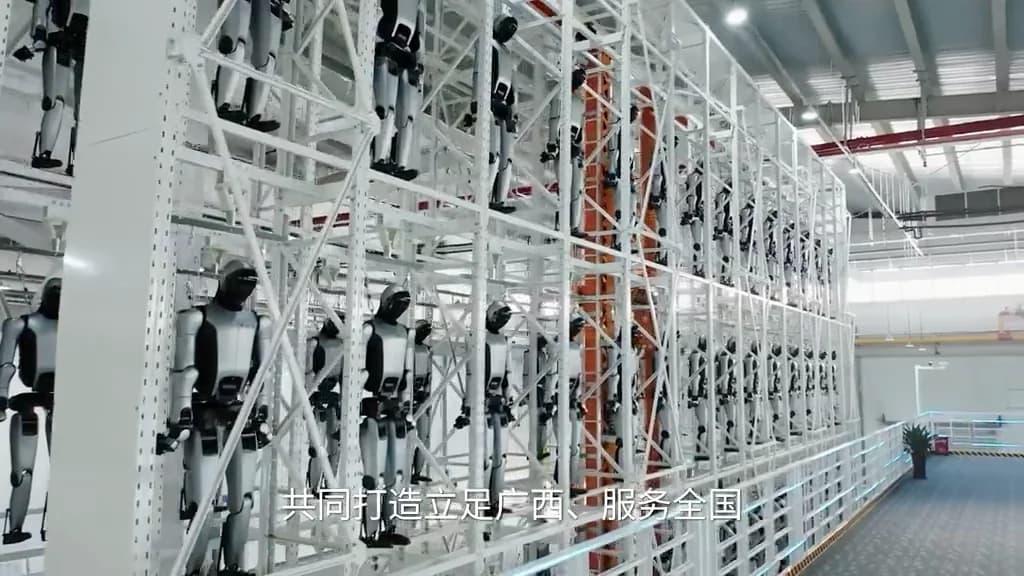
As covered in our report on IRON’s production-line milestone, XPENG is building the manufacturing side alongside its AI development. Its September release still targeted volume production by the end of 2026, initial commercial scenarios in its own stores and campuses, and market launch and deliveries in 2027. Those are company plans.
This update gives that proposed store role a more specific shape. It complements the manipulation research in our XPACE coverage, while addressing a different test: whether a humanoid can maintain useful, coherent interactions with several people. The next step is showing how consistently that behavior survives longer, less controlled encounters with real customers.
Share this article
Read next
- Published on
- Reading time
- 6 min read
Inside XPENG’s Bet on IRON: He Xiaopeng on Why the Hardest Path in Humanoid Robotics Is Never Crowded
- Published on
- Reading time
- 6 min read
XPENG Launches Mass Production of IRON Humanoid
- Published on
- Reading time
- 4 min read
XPENG Robotics Raises Over $900 Million at $6.3 Billion Valuation to Industrialize IRON Humanoid
- Published on
- Reading time
- 4 min read
XPENG's Head of Robotics Admits Hardware is 'Bottleneck' as 2026 Production Goal Looms
- Published on
- Reading time
- 4 min read
Xpeng to Break Ground on "Full-Chain" Humanoid Factory to Meet 2026 Production Goal
- Published on
- Reading time
- 3 min read
XPENG CEO Targets Late 2026 for Massive IRON Deployment

The weekly humanoid robotics briefing
One email a week: the launches, funding and research that mattered, with context from Humanoids Daily.
Read recent issues