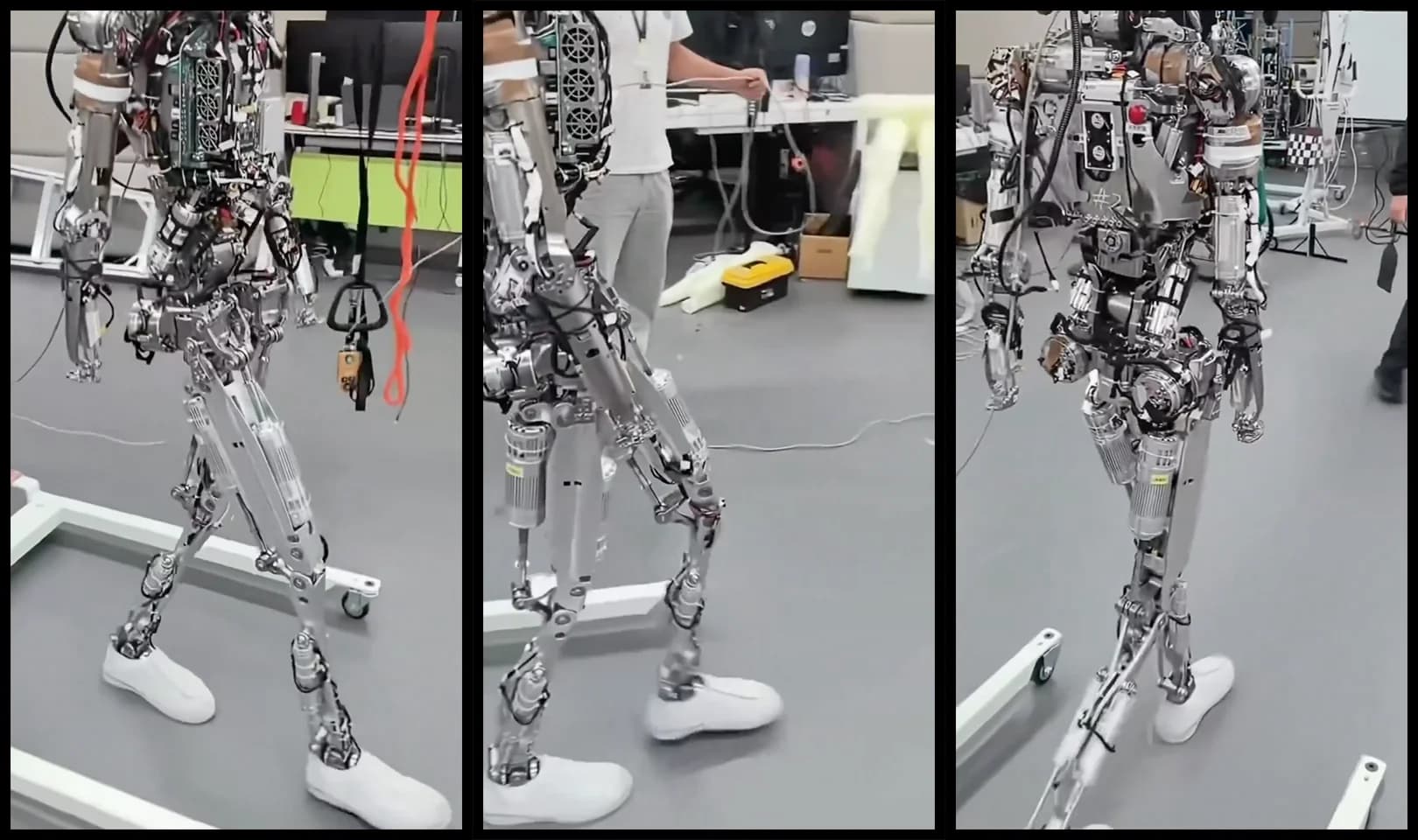
2024 · First-generation IRON
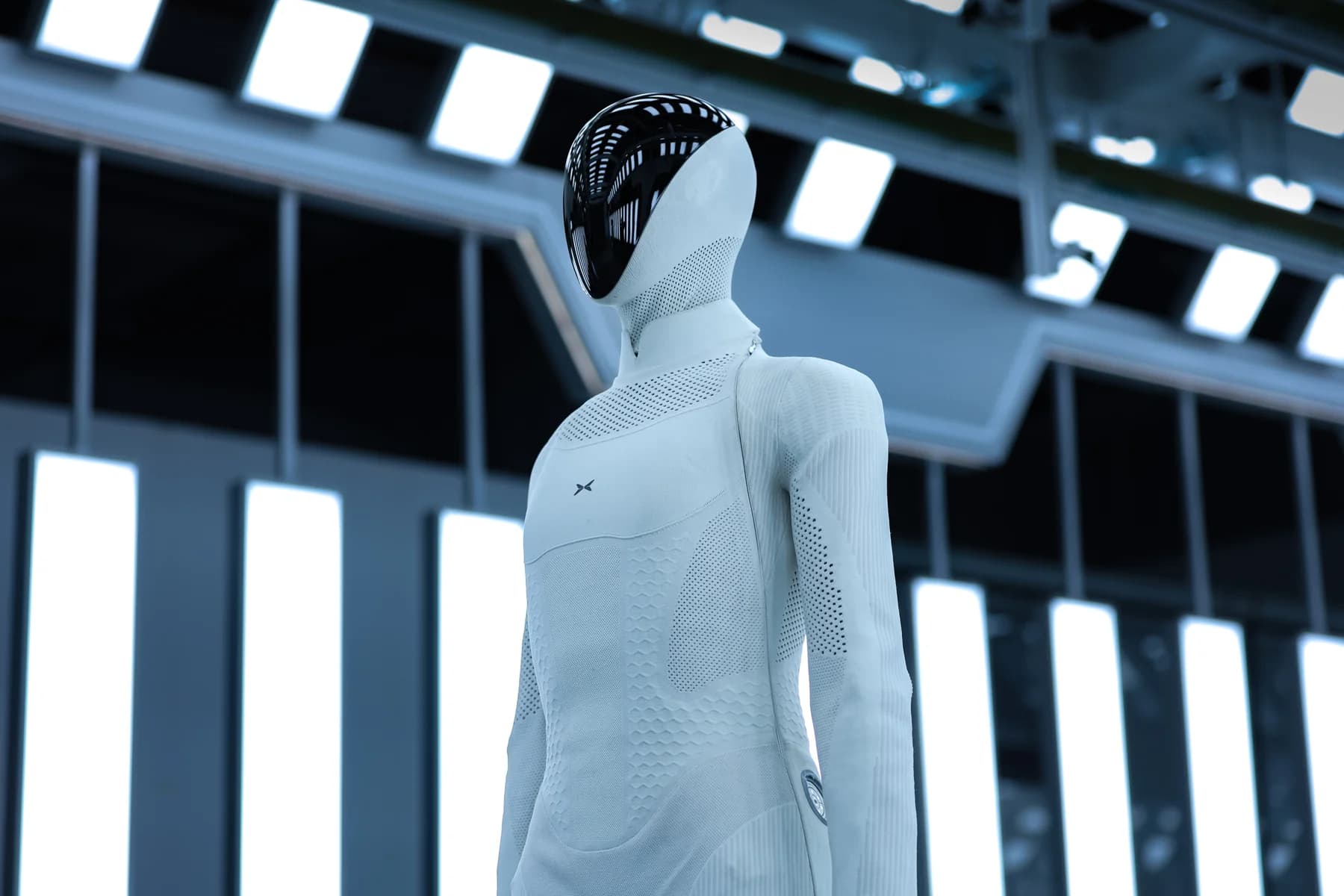
XPENG introduced its first IRON humanoid in 2024. It established the robot family that would later take on a much more human-like form.
Image: XPENG
The robot guide
IRON is XPENG’s humanoid robot, built on the electric-car maker’s work in AI and manufacturing. Its production line is now open. Here we follow the move from the fluid 2025 stage demo to the 2026 production design, the hardware changes along the way and what comes next for customers.
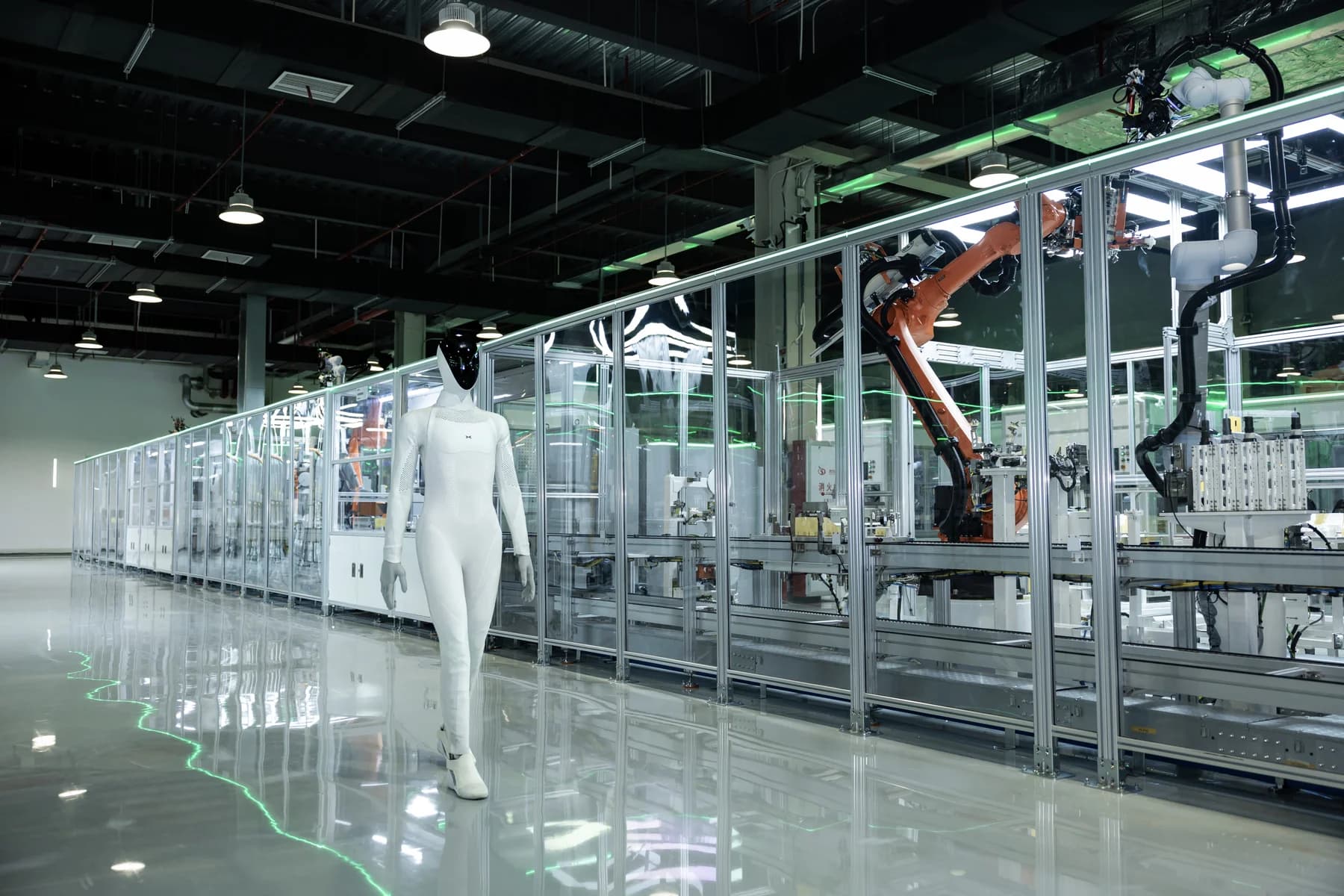
XPENG has moved IRON onto a dedicated manufacturing line. In its September 8, 2026 announcement, the company said a completed robot walked off the line autonomously. The next step is to turn that milestone into sustained production.
Now
Production line commissioned
Late 2026
Mass-production target
2027
Planned market launch and deliveries
The facility draws on XPENG’s experience making electric cars. The company says more than 80% of its core manufacturing processes are automated, with automotive-grade quality controls. That percentage describes the manufacturing process; it is not a measure of IRON’s task autonomy.
XPENG has not given a sustained output rate or a delivered fleet total in this release. Initial commercial rollouts are planned for its own stores and campuses, before deliveries in China and overseas markets in 2027.
XPENG · production-line commissioning, September 8, 2026 ↗Read our production-line launch coverage →In pictures
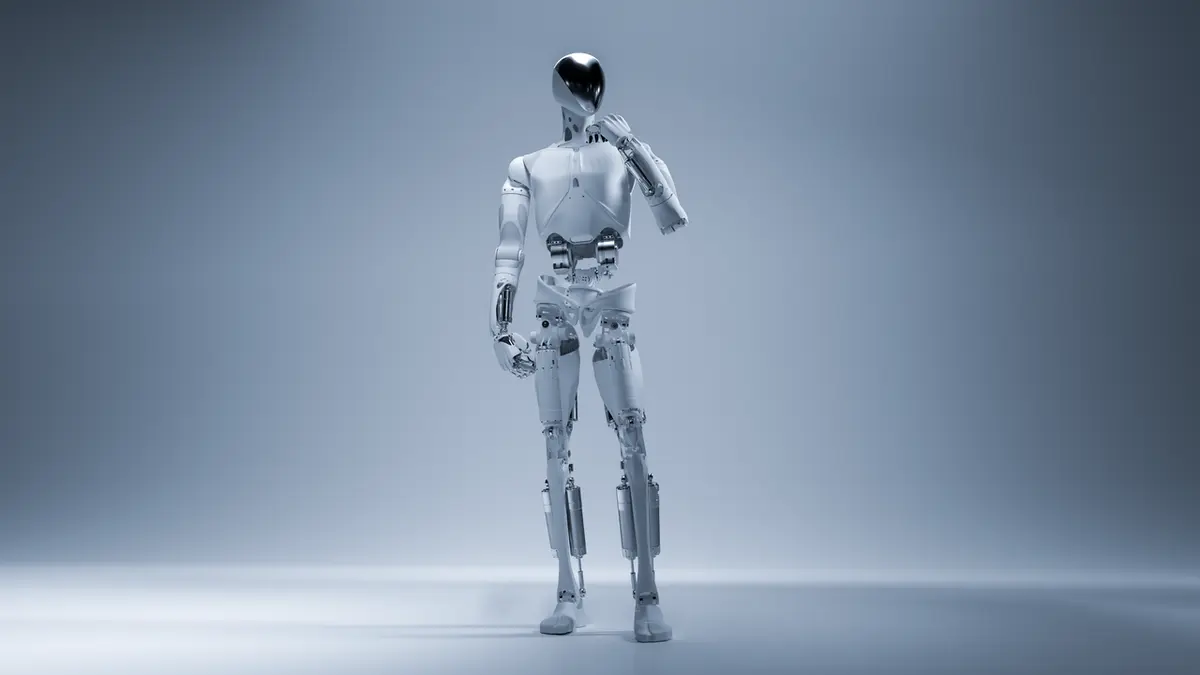
September 2026: the production-version IRON. Image: XPENG.
XPENG introduced its first IRON humanoid in 2024. It established the robot family that would later take on a much more human-like form.
Image: XPENG
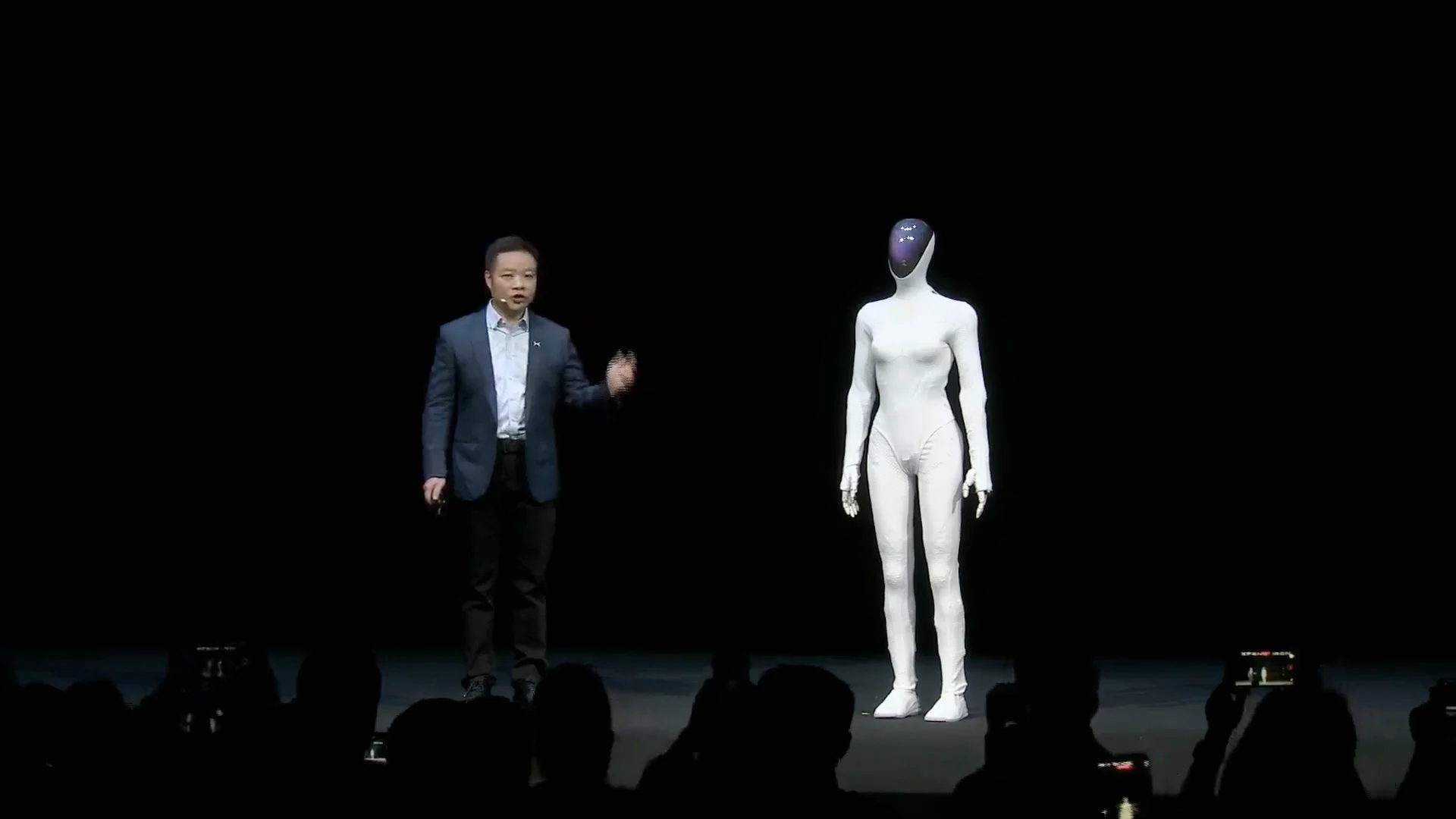
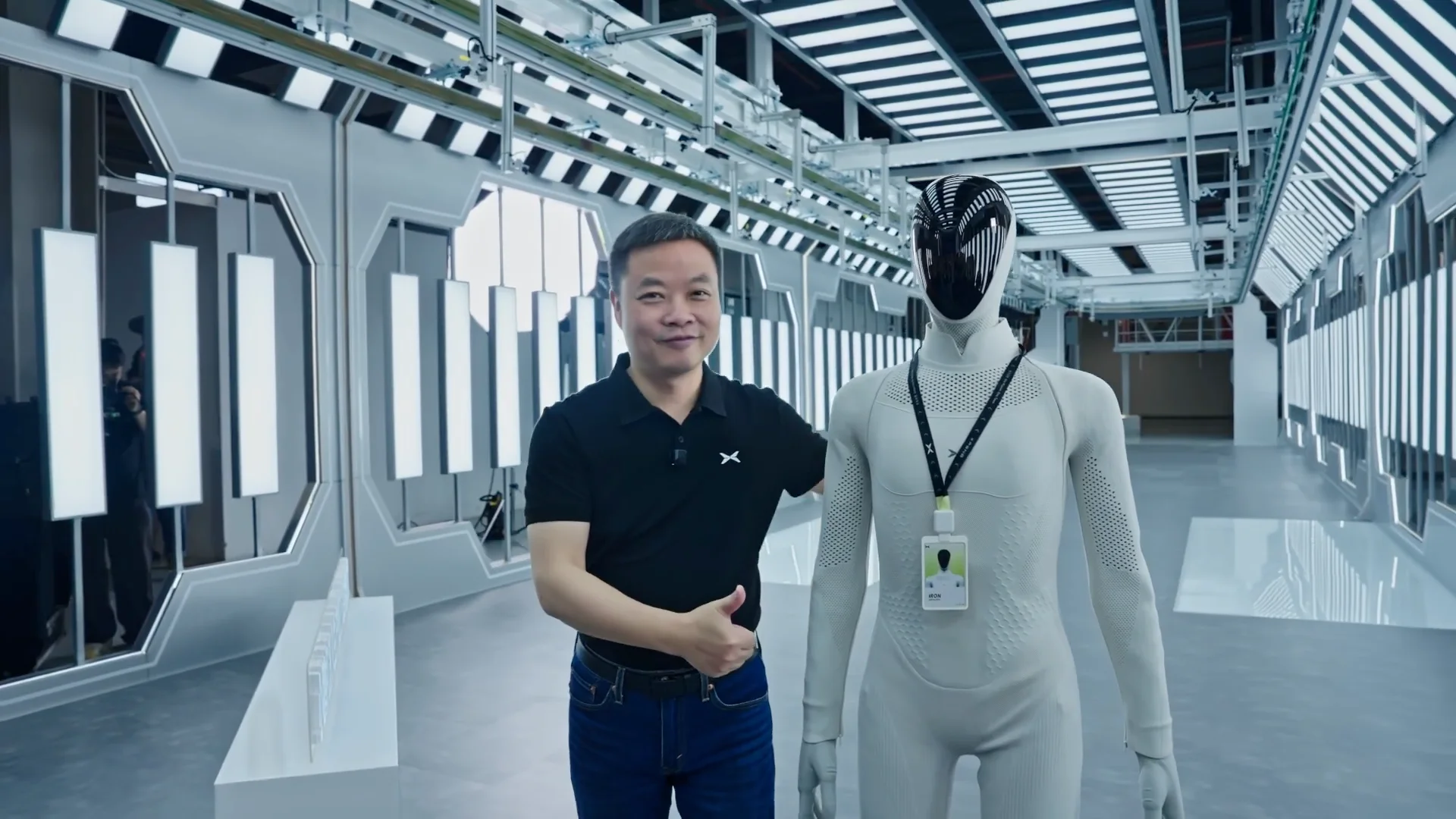
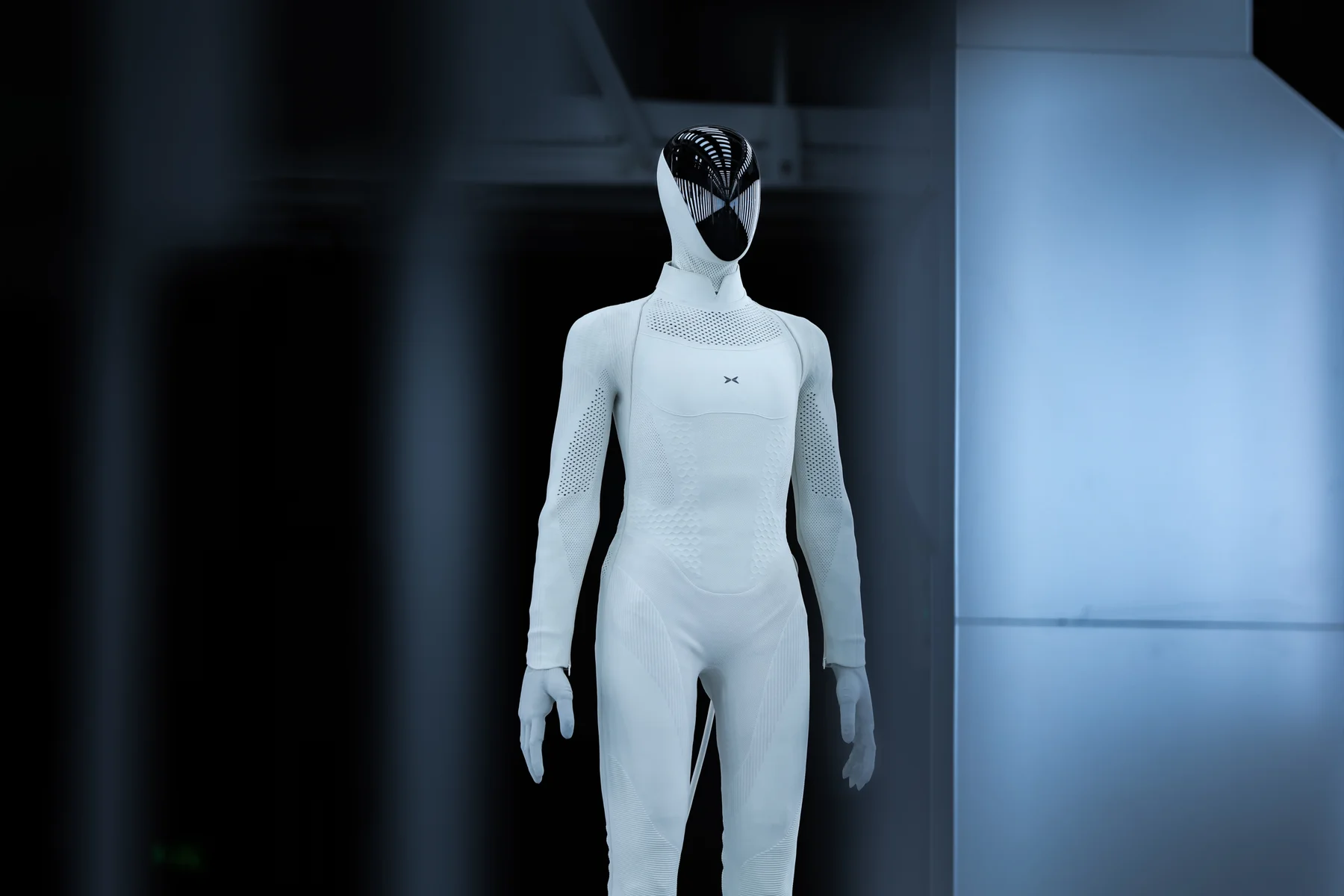
The new IRON made its public debut at AI Day with a slender silhouette, soft outer covering and a strikingly natural-looking walk. XPENG announced 82 degrees of freedom, including 22 in each hand.
Image: XPENG
The latest release specifies 76 degrees of freedom and 21 per hand. We treat this as a production revision of the next-generation IRON, rather than assigning it an unofficial generation number.
Image: XPENG
Degrees of freedom, or DoF, describe the independent movements a mechanism can make. The production specification has six fewer than the 2025 demonstration design: four fewer outside the hands, and one fewer in each hand.
| Movement | 2025 reveal | 2026 production |
|---|---|---|
| Total DoF | 82 | 76 |
| Body excluding hands | 38 | 34 |
| Each hand | 22 | 21 |
Totals include both hands. The body-only figures are calculated by subtracting the two hands from the published totals: 82 − 44 = 38 and 76 − 42 = 34. They are not additional DoF on top of the totals.
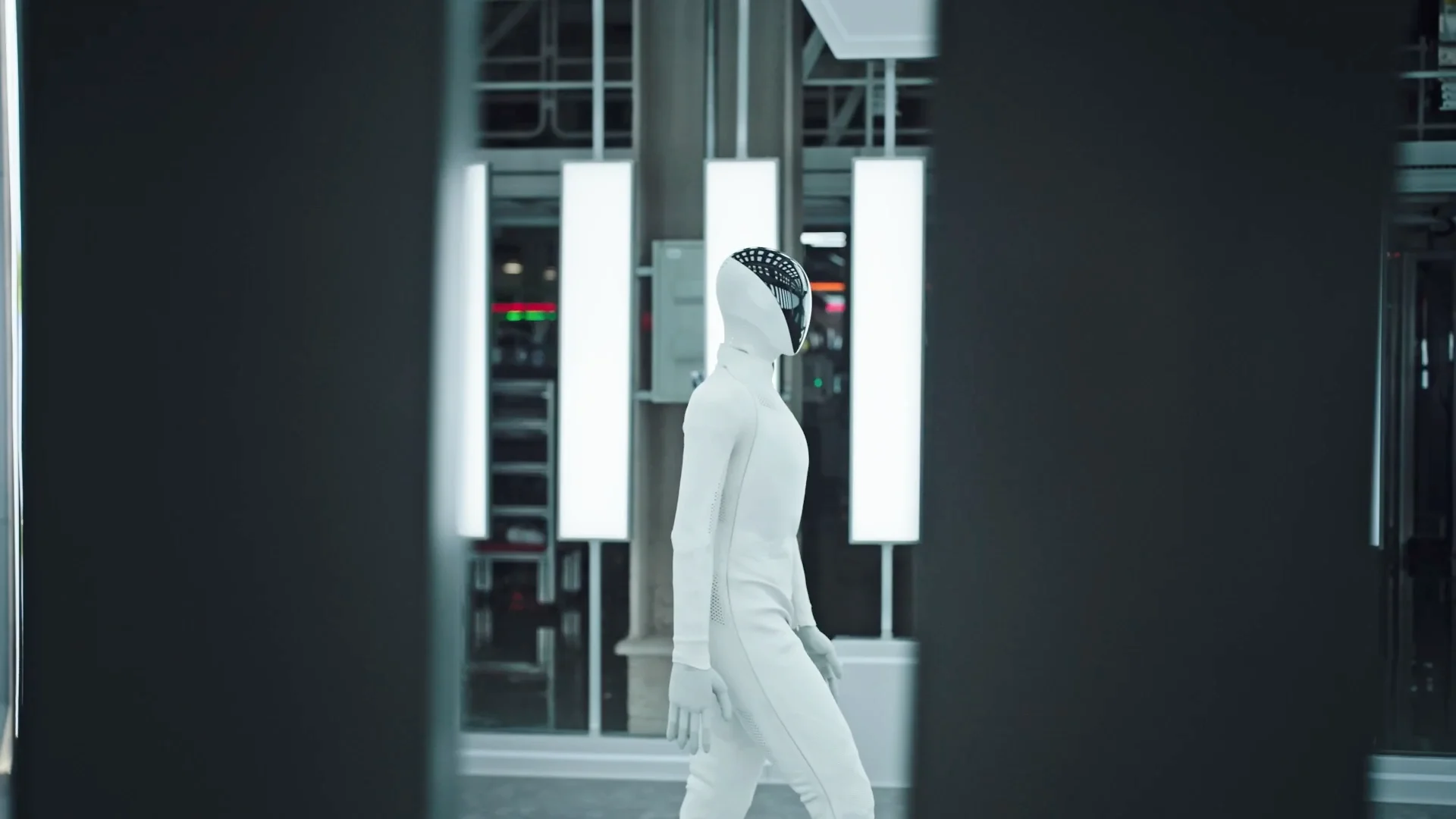
IRON’s November 2025 stage walk was so fluid that viewers questioned whether a person was inside the suit. XPENG followed up with footage exposing the mechanisms beneath the covering, including a walk with part of a leg uncovered.
See our reporting on the exposed hardware →The latest production-line walk looks less fluid than the 2025 stage demonstration. The hardware has also evolved, with a lower DoF count in the production specification. The clips alone do not tell us whether those changes account for the difference in gait.
From our May 2026 media tour
Humanoids Daily attended XPENG’s media tour in China in May 2026. Mi Liangchuan, its head of AI and robotics, described hardware reliability as the main development bottleneck at the time. The team was working through wiring and signal issues and exploring different approaches to its next-generation hands.
Since then, XPENG has settled on a production design and commissioned its manufacturing line. That is a significant step forward and suggests the team is confident it has addressed the main obstacles to production. We’ll follow reports on reliability as IRON reaches customers and begins everyday work.
Read our firsthand interview with Mi Liangchuan →Loading the walking demonstrations…
XPENG is developing IRON alongside its self-driving technology. The company builds its own Turing chips and physical AI models, aiming to reuse that foundation across vehicles and robots.
At the 2025 reveal, XPENG described three connected systems: VLT for task-level reasoning, VLA for actions, and VLM for understanding and interaction. During our May media tour, the company said IRON was running VLA 2.0, sharing its underlying architecture with the automotive program.
The production release specifies three Turing chips with up to 2,250 TOPS of effective compute. XPENG says its foundation model runs onboard and enables autonomous tasks without remote control. Local processing is intended to reduce latency and keep data on the robot.
XPENG describes the production-line walk as autonomous. Its planned store and campus deployments will give us a fuller picture of how those capabilities translate into everyday work.
XPENG · production-line commissioning, September 8, 2026 ↗Our reporting on the shared AI architecture →Not yet through a public consumer offer. XPENG plans a market launch and deliveries in China and overseas in 2027. Its September release does not announce a price, an ordering process or a country-by-country rollout.
XPENG’s own stores and campuses are the first planned commercial settings. The company has previously outlined customer-facing roles such as tours and shopping guidance. A robot built in a factory is not necessarily a robot being sold to work on a factory assembly line.
Homes remain part of XPENG’s longer-term ambition. The current launch schedule does not amount to an offer of a household robot, and the release does not set out purchase, lease or service-contract terms.
XPENG · production-line commissioning, September 8, 2026 ↗Inside He Xiaopeng’s long-term bet on IRON →Optimus is the closest strategic comparison: another electric-car maker applying its AI and manufacturing work to humanoids. Other useful comparisons depend on whether you are interested in commercial work or a future robot for the home.
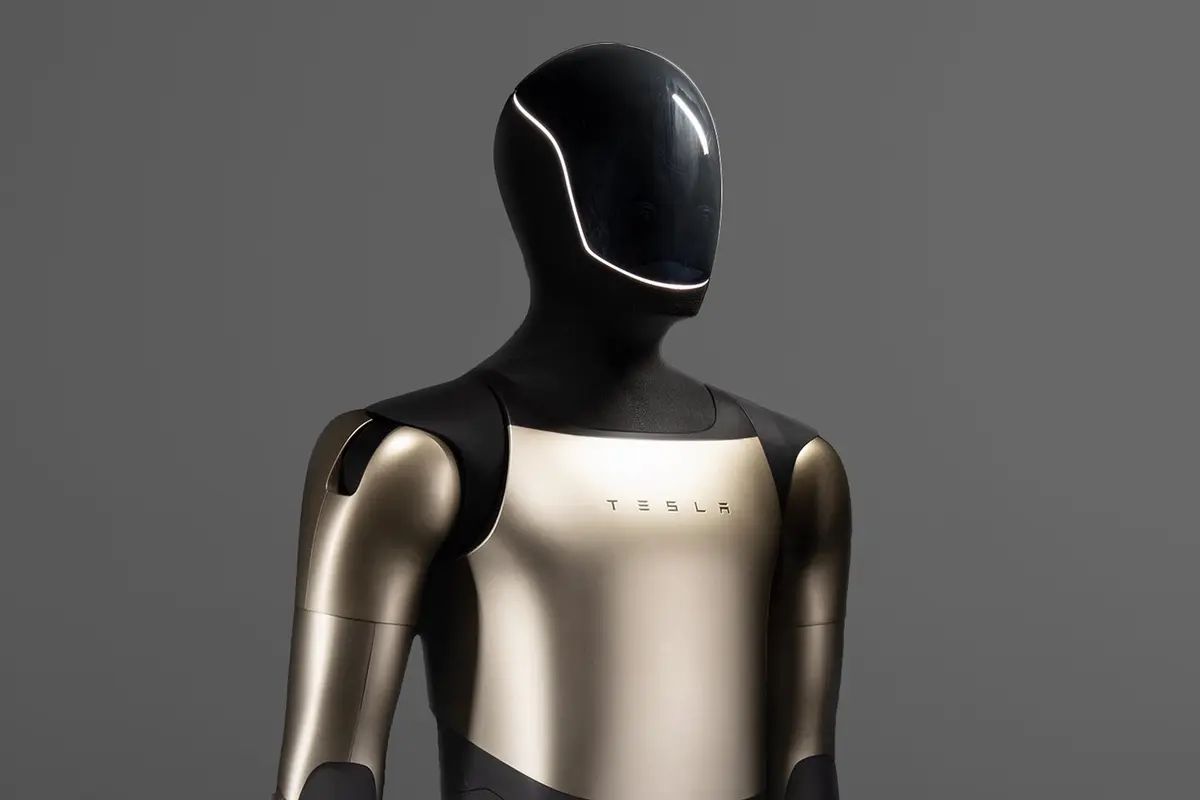
The automaker comparison: Tesla is also developing its own humanoid hardware and AI alongside its vehicle business.
Explore Tesla Optimus →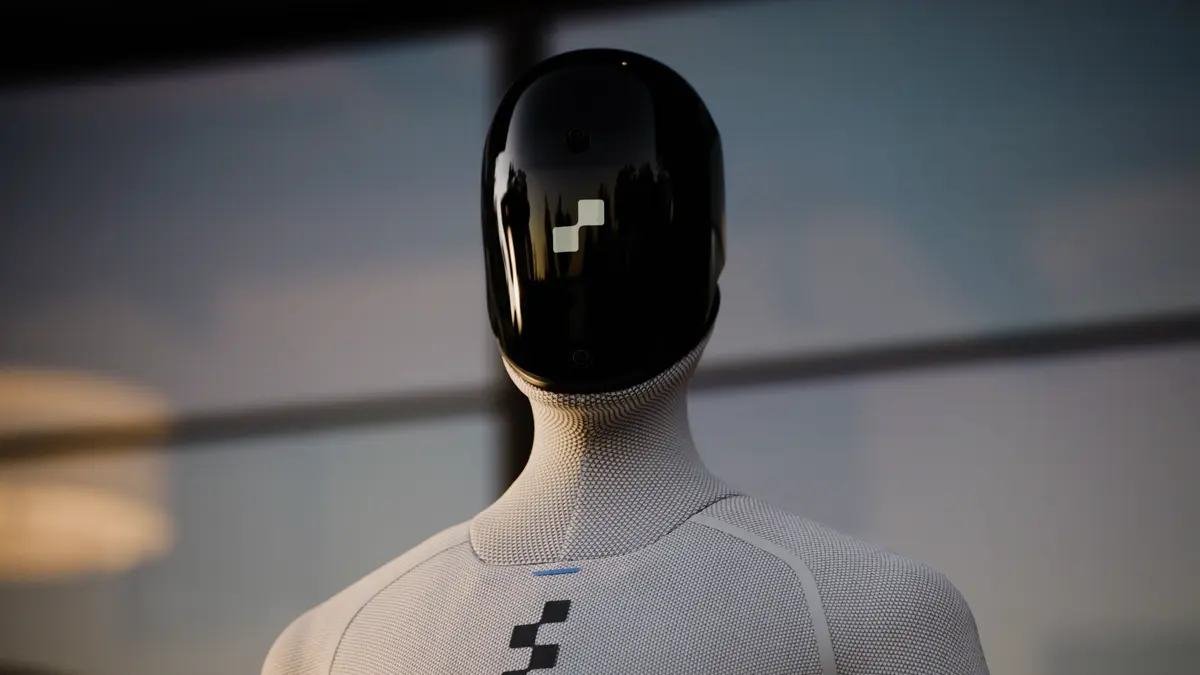
Compare IRON’s planned commercial rollout with Figure’s BMW work, Helix AI and evolving hardware.
Explore Figure robots →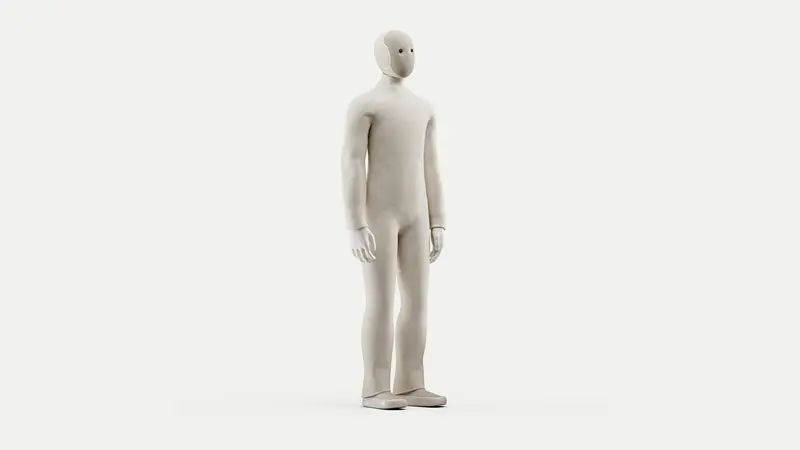
A useful comparison for the home: look at physical design, assistance and the role of human operators.
Explore 1X NEO →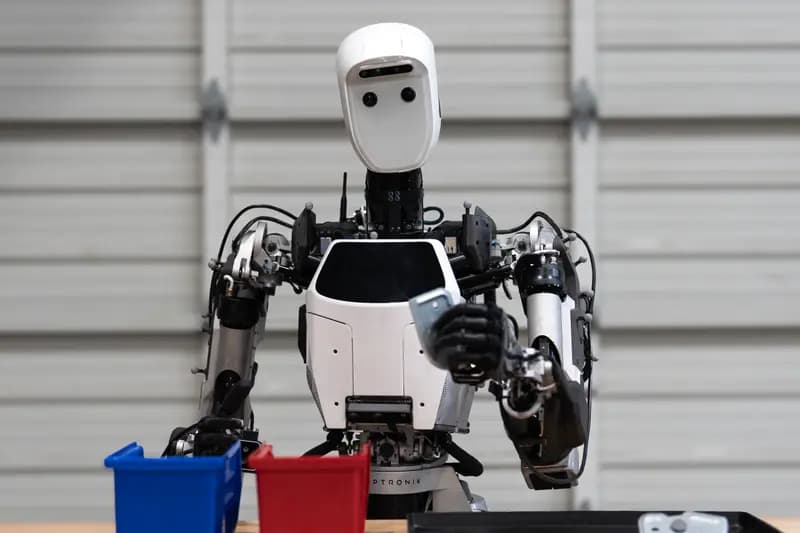
An industrial comparison, with a focus on manufacturing and logistics rather than customer-facing guidance.
Explore Apptronik Apollo →Reviewed September 13, 2026. Production specifications come from XPENG’s September press release; earlier reveal claims are kept separate. Our May interview provides firsthand reporting on reliability.
The 2025 AI Day stage walk, shared in our coverage of the reveal.
Humanoids Daily on X · November 5, 2025 ↗The production-line walk, shared in our launch coverage. These clips show different demonstrations, rather than a controlled comparison.
Humanoids Daily on X · September 8, 2026 ↗