- Published on
The Great Dexterity Divide: Why Robotics Leaders Are Warring Over Tendon vs. Direct-Drive Hands
One tap, and our reporting appears more often in your Google Top Stories. It makes a real difference to a small newsroom.

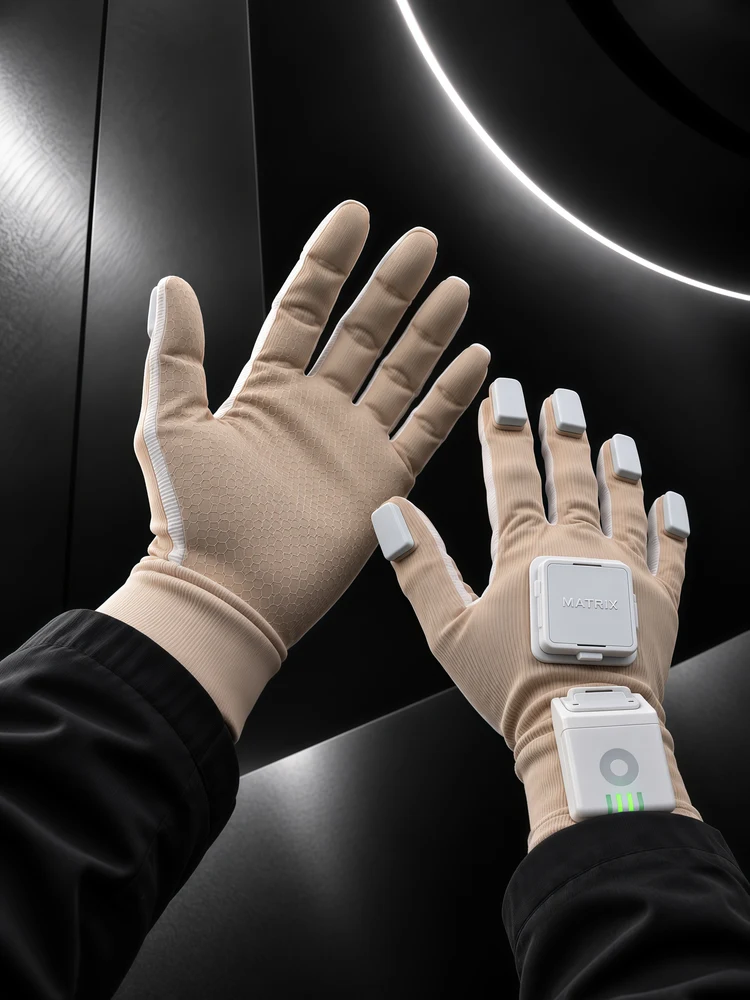
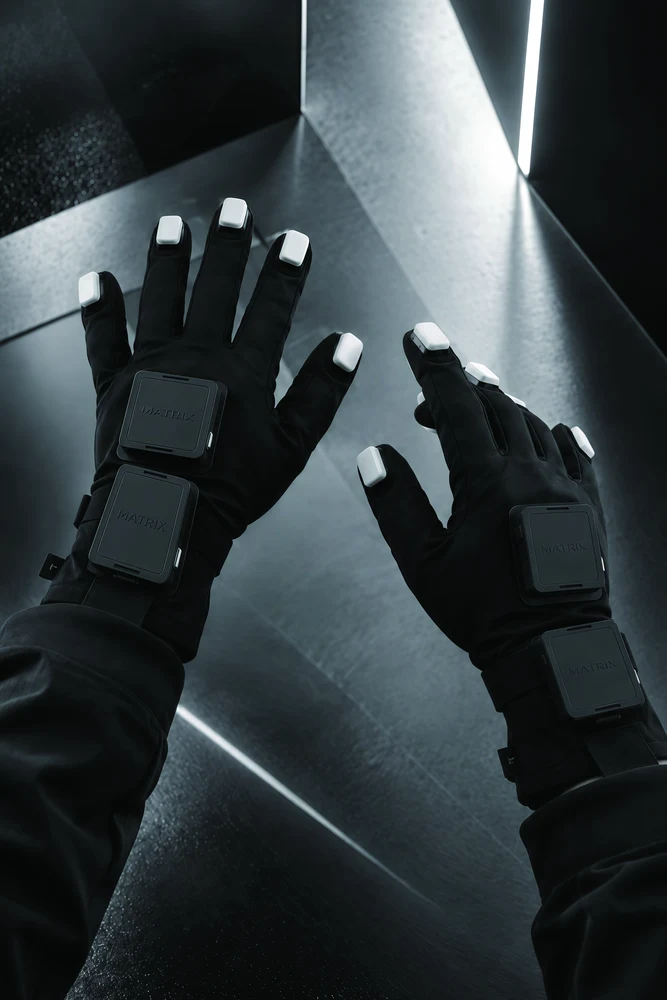

- Figure CEO Brett Adcock recently disavowed the company's early tendon-driven hand designs, calling them an "engineering mistake" and pivoting toward alternative architectures for their upcoming generation.
- Foundation's Andrea Esposito sharply critiqued Figure's implementation, arguing the failure was a "skills issue" related to poor routing and weak actuation, not a fundamental flaw of tendons.
- The industry remains deeply divided: companies like 1X and Tesla are doubling down on tendons for compliance, while Sharpa and Wuji Tech favor the high-precision predictability of direct-drive motors.
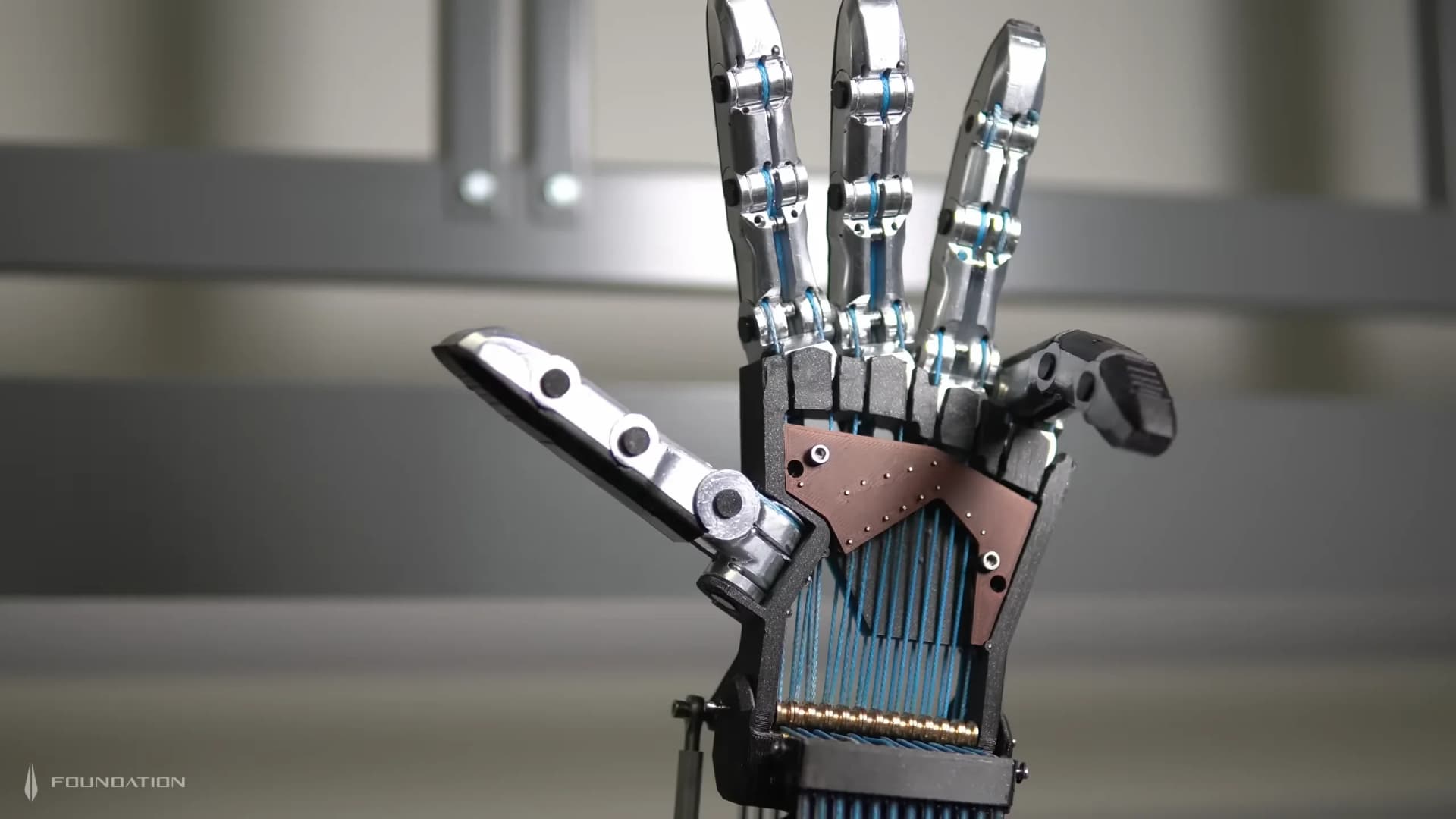
- Foundation demonstrated an open-loop, tendon-driven hand catching a baseball using TMR sensors for proprioception, though the company continues to face severe scrutiny over unverified commercial and military claims.
- Major players like AGILINK are hedging their bets, simultaneously developing both direct-drive and tendon-driven flagship hands to tackle the complexities of contact-rich manipulation.
The race to build a truly general-purpose humanoid robot has reached a critical bottleneck: the hand. As companies transition from solving bipedal locomotion to tackling fine, contact-rich manipulation, a fierce architectural divide has spilled into public view, pitting the advocates of biological mimicry against the champions of direct mechanical precision.
The debate ignited recently when Figure CEO Brett Adcock took to social media to publicly disavow the company’s early hardware strategy. Adcock revealed that the tendon-based hand built in 2022 for the F.01 robot was "one of the worst engineering decisions" he had made in the past four years. While tendons initially seemed appealing due to their biological inspiration and the ability to package actuators in the forearm, Adcock ultimately concluded that tendons represent a "complete local maximum."
Figure is now moving aggressively toward its 7th-generation hand, which promises human parity and introduces higher degrees of freedom, including advanced finger abduction and adduction.
The Rebuttal: "A Skills Issue"
Adcock’s blunt assessment did not go unanswered. Andrea Esposito, the mechanical design lead engineer working on tendon-driven hands for the defense-oriented startup Foundation, published a detailed teardown of Figure’s early design, characterizing the failure not as an architectural dead end, but as a "skills issue."
The weekly humanoid robotics briefing
One email a week: the launches, funding and research that mattered, with context from Humanoids Daily.
Read recent issuesEsposito pointed out that Figure’s early hand featured only 11 degrees of freedom (DOF)—a critically low number for a tendon-driven system—and utilized weak wrist yaw actuation driven by the same motors as the fingers. More importantly, he criticized Figure's use of Bowden tubes to route the tendons. These tubes induce significant friction, leading to poor controllability and frayed, unreliable strings.
Rather than abandoning the architecture, Esposito argued that Figure should have optimized tube friction, pointing to 1X, which successfully utilizes tendons to provide its NEO humanoid with inherent physical compliance and safety.
Direct-Drive vs. The Tendon Ceiling
Esposito’s critique also provided a broader taxonomy of the current dexterity landscape, highlighting the distinct trade-offs inherent in both direct-drive and tendon-based systems:
- Direct Drive (The Precision Route): By placing miniaturized motors directly in the finger joints, direct-drive systems eliminate tendon friction and offer unparalleled controllability. Companies like Sharpa have pushed this to mass production with 22-DOF vision-based tactile hands, while Wuji Tech has been praised by experts for building an "extremely robust" and highly predictable direct-drive platform. However, this approach faces a hard ceiling: finger volume is fixed, meaning miniaturized motors run dangerously close to their thermal and mechanical limits, capping their ultimate load capacity.
- Tendon Based (The Power Route): By housing the heavy actuators in the forearm, tendon systems can achieve human proportions while delivering far more power. The primary engineering hurdle remains friction. Foundation recently showcased a prototype addressing this by using Tunnel Magnetic Resistance (TMR) sensors to measure magnetic fields across joints. By utilizing a mathematical Jacobian matrix as a state estimator, the hand can successfully estimate joint positions from motor angles without relying on direct tactile feedback, operating with enough low-latency precision to catch a thrown baseball.
Hedging Bets in a Divided Industry
While startups wage war on social media, some of the industry's largest players are refusing to pick a single lane.
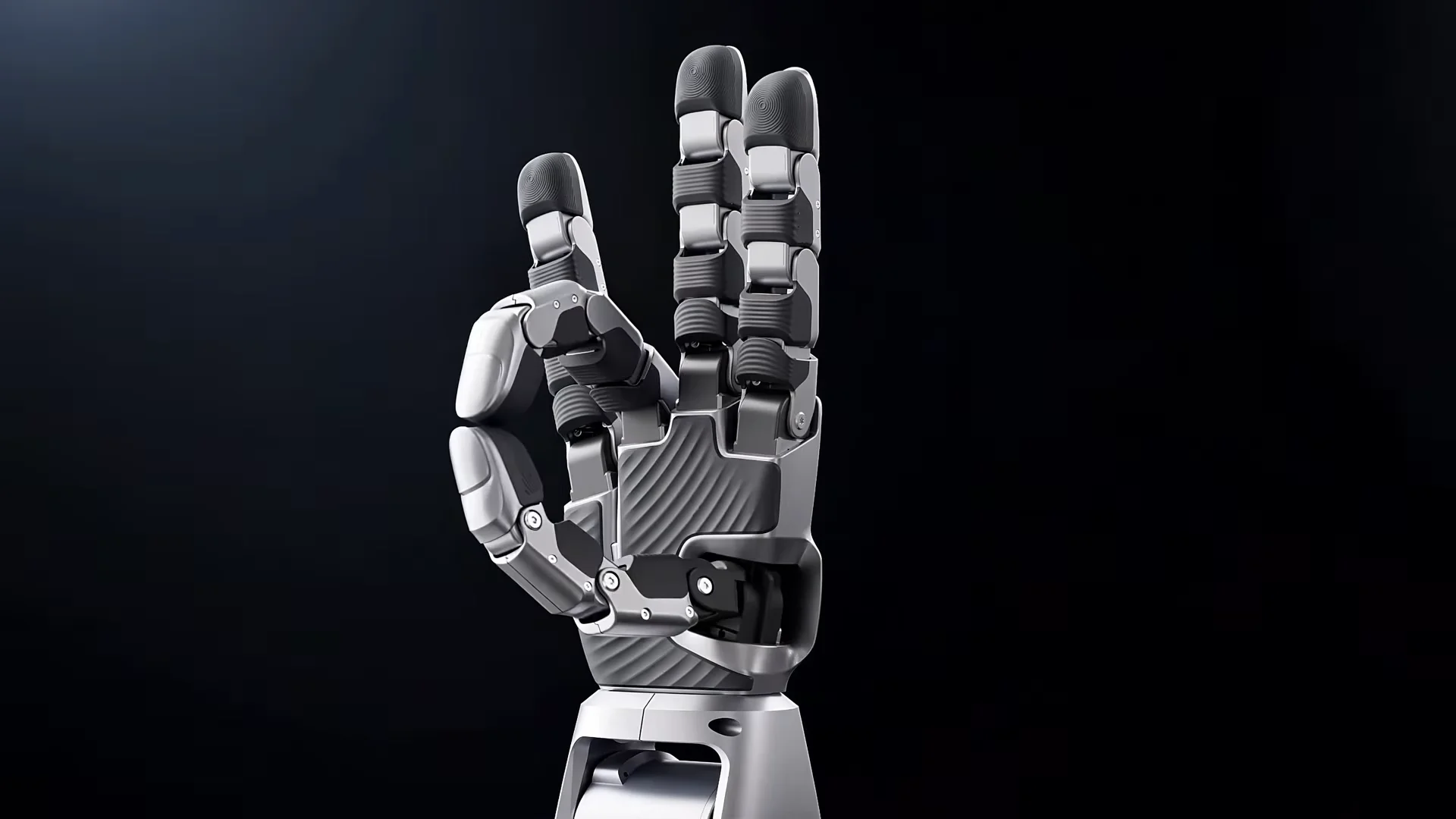
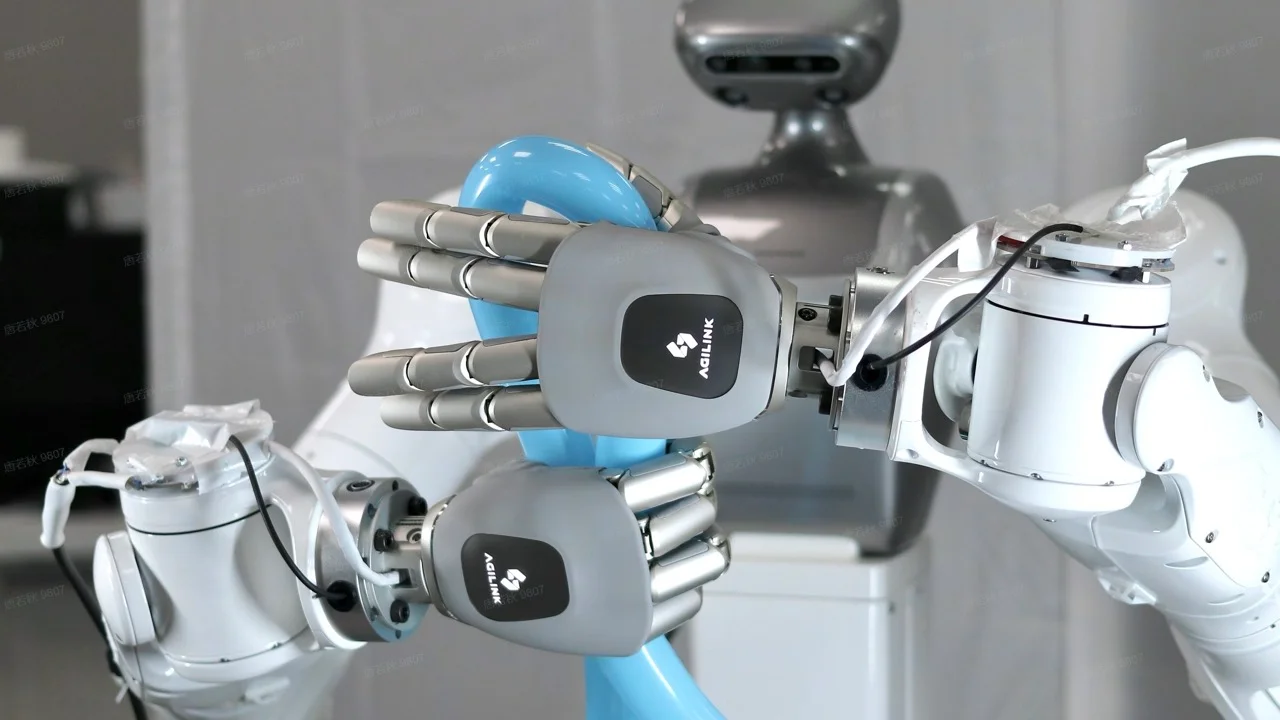
AGILINK, the high-volume hardware spin-off of AGIBOT, recently launched the OmniHand 3 Ultra-M, a flagship 20-DOF direct-drive hand designed specifically to solve the "contact problem" in complex environments. Yet, the company simultaneously produces the Ultra-T, a highly capable tendon-driven model, arguing that both architectures will push the industry forward.
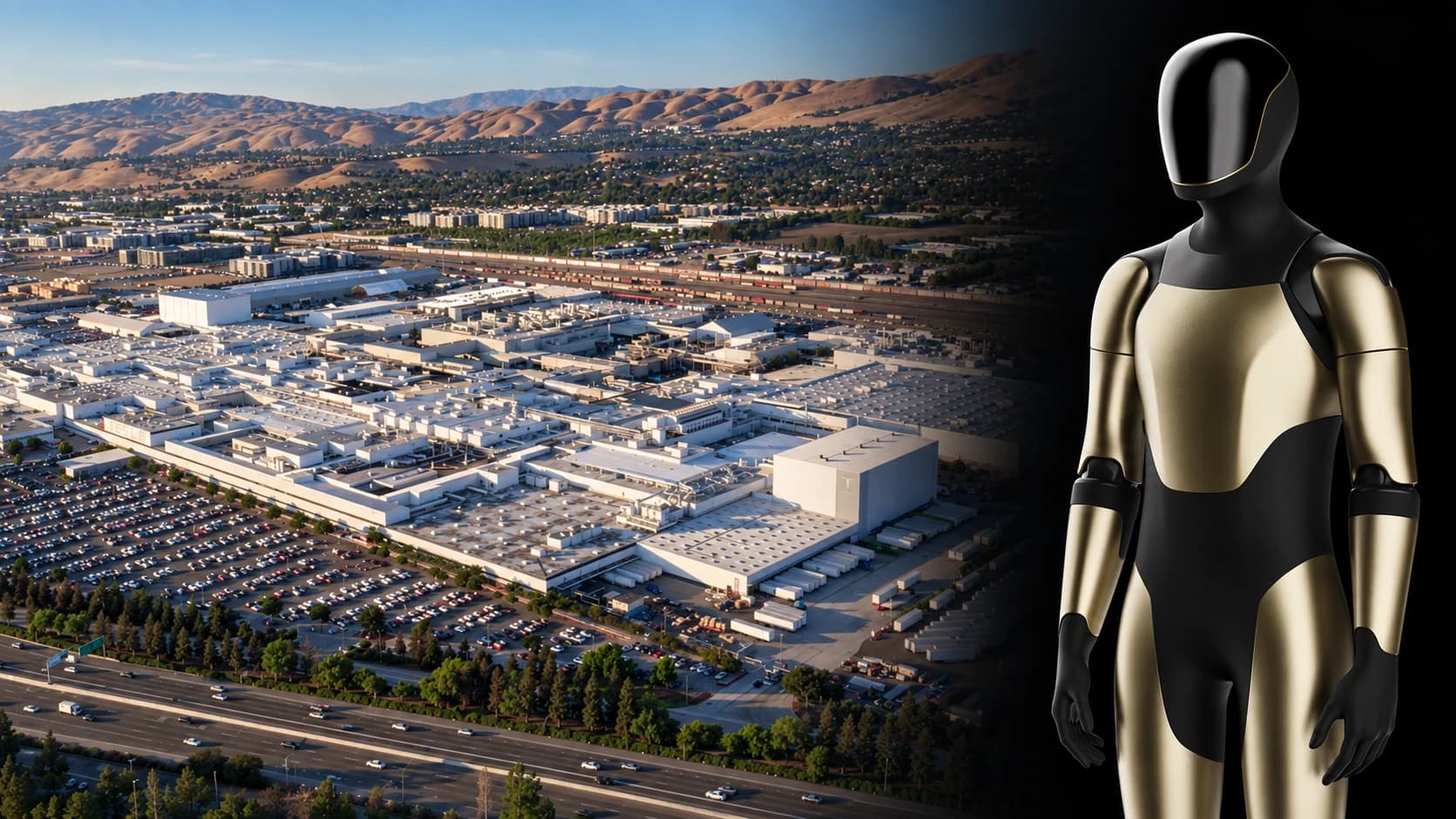
Meanwhile, Tesla continues to push the boundaries of tendon complexity. Elon Musk recently announced that the highly anticipated Optimus Gen 3 hand will feature 25 actuators, dwarfing the 17-actuator prototype previously shown to the public.
Grand Claims and Deep Skepticism
It is worth noting that while Foundation is currently serving as the vocal defender of tendon architecture, the startup itself is facing intense industry scrutiny.
Robotics blogger Mike Kalil recently published a sharp critique of the company and its CEO, Sankaet Pathak. Kalil pointed out that while Foundation has leaned heavily into military aesthetics and claimed to have sent robots for deployments in Ukraine, there is no independent proof of official battlefield integration. Furthermore, Kalil noted that federal databases show no evidence to support the company's claims on national television of securing a $24 million military contract, and he questioned the validity of their stated $100 million in contracted annual recurring revenue.
The public sparring over actuator placement proves that embodied AI is still searching for its standardized hardware foundation. Whether the future belongs to the raw power of tendons or the surgical precision of direct-drive motors, the path to true human-level dexterity remains the most difficult engineering challenge in robotics today.
Share this article
Read next
- Published on
- Reading time
- 3 min read
Video: Figure Offers First Look at 7th-Gen Hand Aiming for "Human Parity"
- Published on
- Reading time
- 5 min read
Humanoid Hype Check: Experts Urge Caution on Near-Term Robot Revolution
- Published on
- Reading time
- 6 min read
The "Final Boss" of Home Robotics: 1X Unveils Next-Gen Robotic Hands for NEO Alongside New CFO
- Published on
- Reading time
- 10 min read
The Contact Problem: How AGILINK’s New OmniHand 3 Ultra-M is Teaching Robots to Feel
- Published on
- Reading time
- 5 min read
Wuji Tech Teases Wuji Hand 2: High Engineering Ambitions Behind a CGI Veil
- Published on
- Reading time
- 3 min read
Sanctuary AI Achieves "Zero-Shot" Sim-to-Real Milestone for Hydraulic Dexterous Hands

The weekly humanoid robotics briefing
One email a week: the launches, funding and research that mattered, with context from Humanoids Daily.
Read recent issues