- Published on
KIST Chief Says Korea Can Join the US and China as a Humanoid Power
One tap, and our reporting appears more often in your Google Top Stories. It makes a real difference to a small newsroom.

Supported by RoboStrategySupport for Humanoids Daily comes from RoboStrategy
Sponsored

Investing involves risk, including possible loss of principal. Read the prospectus before investing.
- KIST president Oh Sang-rok says South Korea could join the US and China as a major AI humanoid power, if it chooses the right strategy.
- KIST’s approach combines KAPEX hardware, touch-aware AI and data collection, with demonstrations targeted by 2030.
- LG, Samsung and Hyundai/Boston Dynamics add corporate R&D, component supply chains and prospective factory customers to Korea’s ambitions.
- Europe’s industrial partnerships complicate a three-way framing: Korea is not the only contender building an alternative route to useful humanoids.
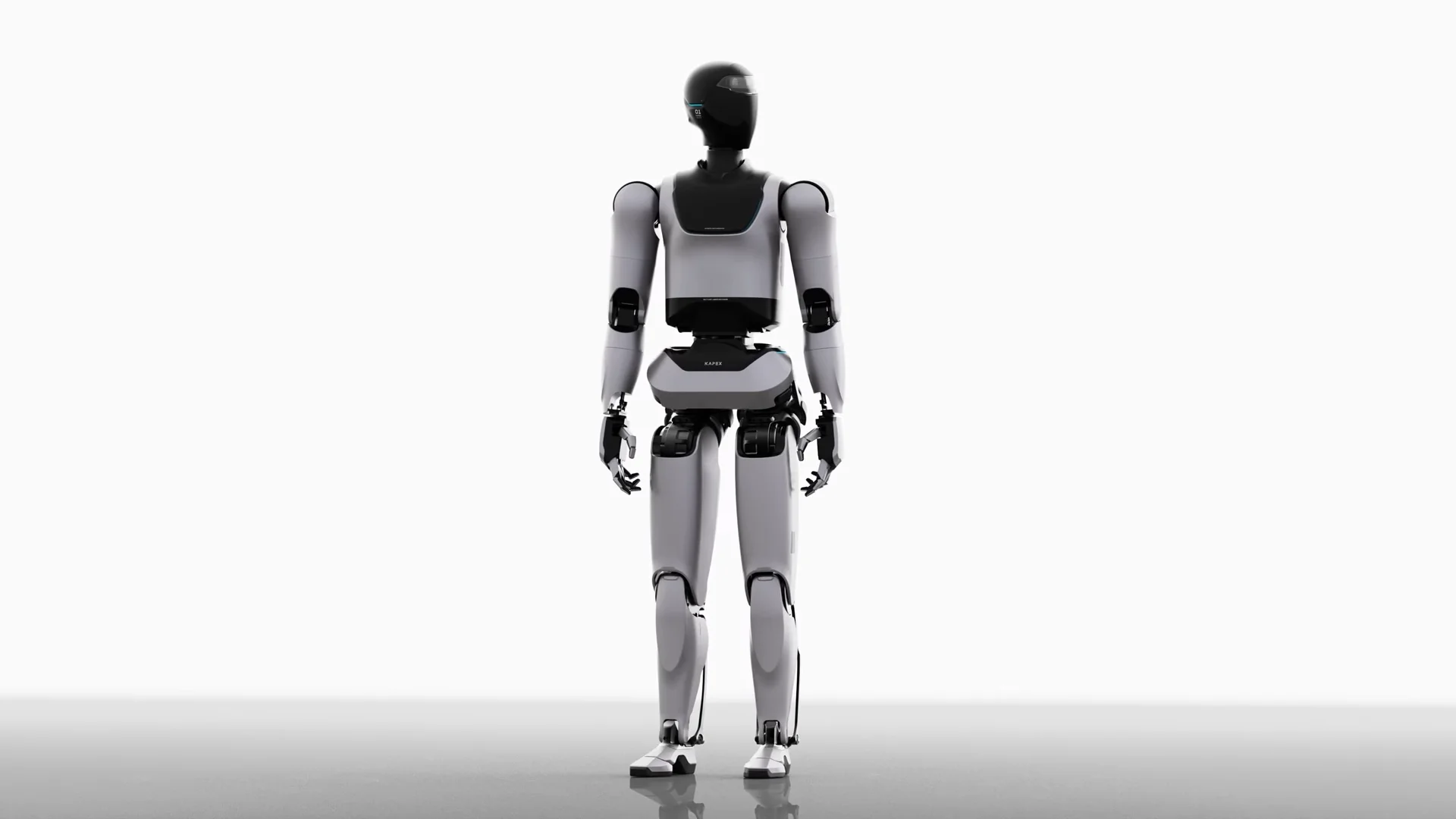
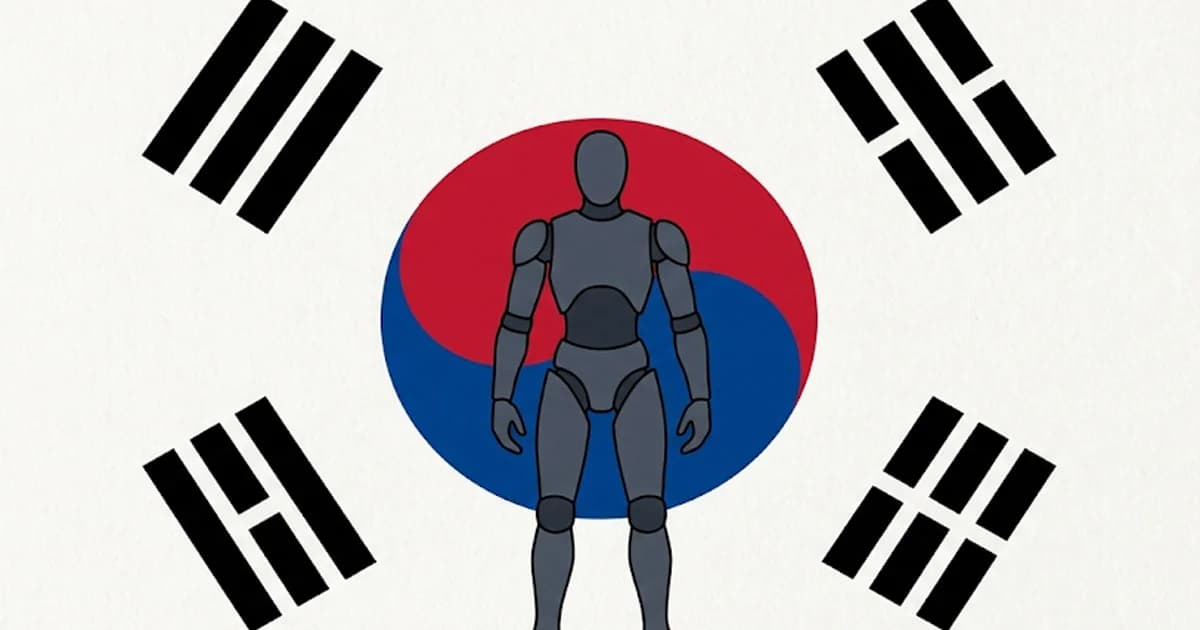
South Korea can become a third major force in AI humanoids alongside the United States and China, according to Oh Sang-rok, president of the Korea Institute of Science and Technology (KIST).
“If Korea formulates the right strategy, I believe a tripartite balance of power in AI humanoids is possible,” Oh said at KIST’s September 17 public research briefing in Seoul, according to DongA Science’s English-language report.
The important word is “if.” This is a strategic ambition, not a ranking of countries’ deployed robots or commercial performance. And the competition extends beyond the three countries in that framing.
KAPEX gives the ambition a technical direction
DongA Science reports that KIST is pursuing KAPEX hardware alongside a Vision-Haptic-Language-Action (VHLA) approach that adds touch to vision, language and action modeling. Data collection is another part of the plan, with demonstrations of robots working alongside people in industrial and everyday settings targeted by 2030.
The weekly humanoid robotics briefing
One email a week: the launches, funding and research that mattered, with context from Humanoids Daily.
Read recent issuesThe technical emphasis matters. Handling an object involves contact as well as recognizing its position. For a task such as inserting a component, useful feedback includes the forces acting on the hand and whether contact is proceeding as intended. KIST’s proposed direction addresses that part of manipulation; the announcement alone does not establish how reliably the system performs.
Our earlier KAPEX coverage described the collaboration between KIST and LG, including plans for tactile hands, domestic actuators and AI capabilities. Today’s remarks place that effort within a wider argument about Korea’s opportunity.
Research needs a route into industry
Korea has already outlined support beyond a single robot project. Its KRW 2.3 trillion humanoid ecosystem plan through 2030 includes component development, public procurement and training-data infrastructure, with a target to increase domestic sourcing of core components.
We also covered the national humanoid research council and Hyundai’s planned Saemangeum innovation hub. The council aims to coordinate research across institutions; Hyundai’s broader investment covers robotics, AI infrastructure and energy.
Together, these initiatives suggest a route from public research to suppliers and industrial users. Whether they deliver that connection will depend on execution: shared data that researchers can actually use, components that meet cost and reliability requirements, and customers willing to keep robots operating after a pilot ends.
LG, Samsung and Hyundai bring different assets
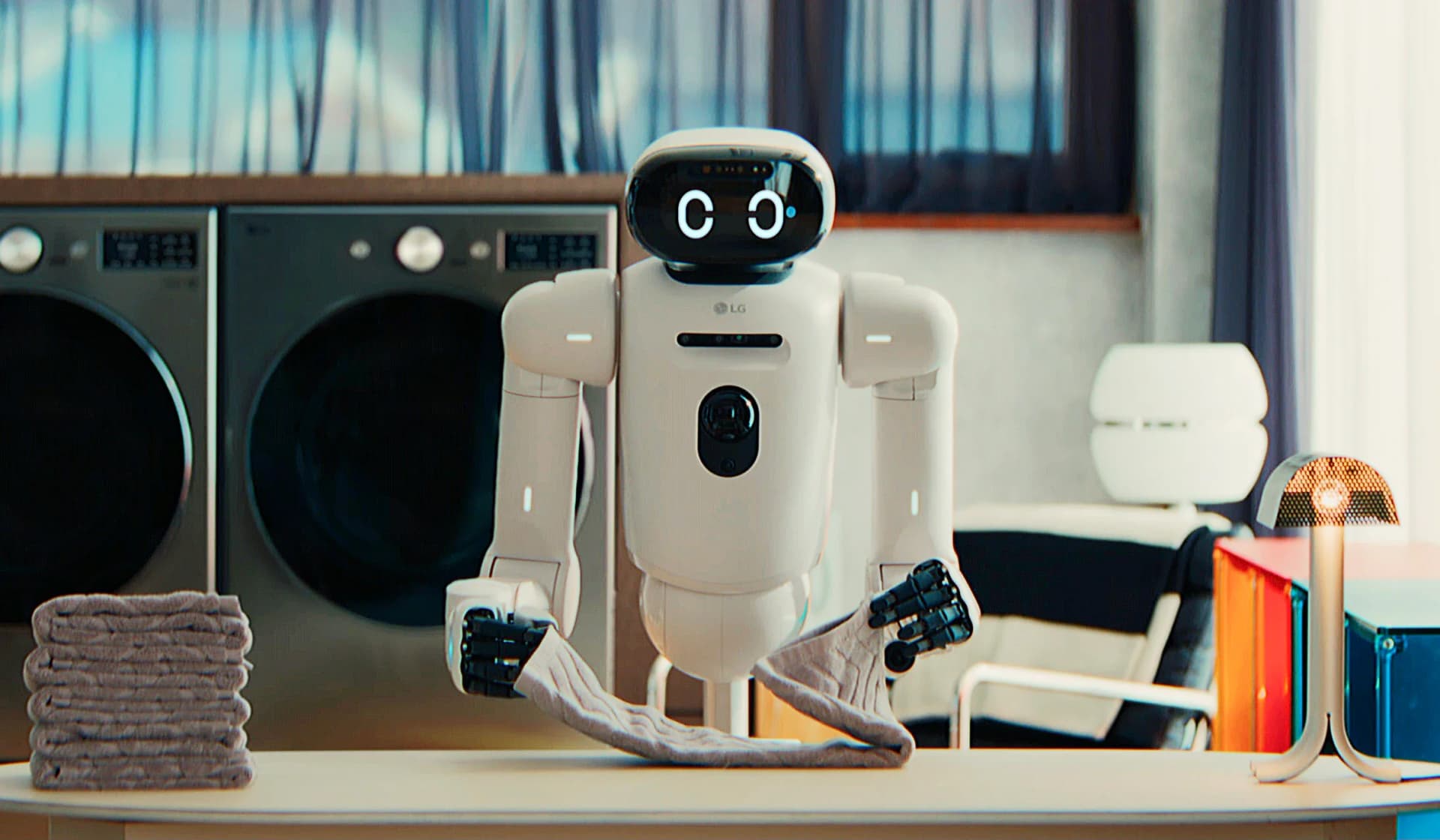
Korea’s corporate efforts give that strategy an industrial base. LG is targeting an early-2027 unveiling of a new bipedal humanoid built around NVIDIA Isaac GR00T and Jetson Thor, combining that technology with actuators, sensors and batteries from LG companies. The plan illustrates how domestic manufacturing capabilities can be paired with international AI infrastructure.
Samsung is pursuing its own humanoid development effort, alongside its investment in Rainbow Robotics. Our coverage described its dedicated Robotics eXperience unit and reporting on world-model AI and manufacturing-data collection at Gumi. Those reported development efforts should be distinguished from a publicly demonstrated, commercially validated humanoid product.
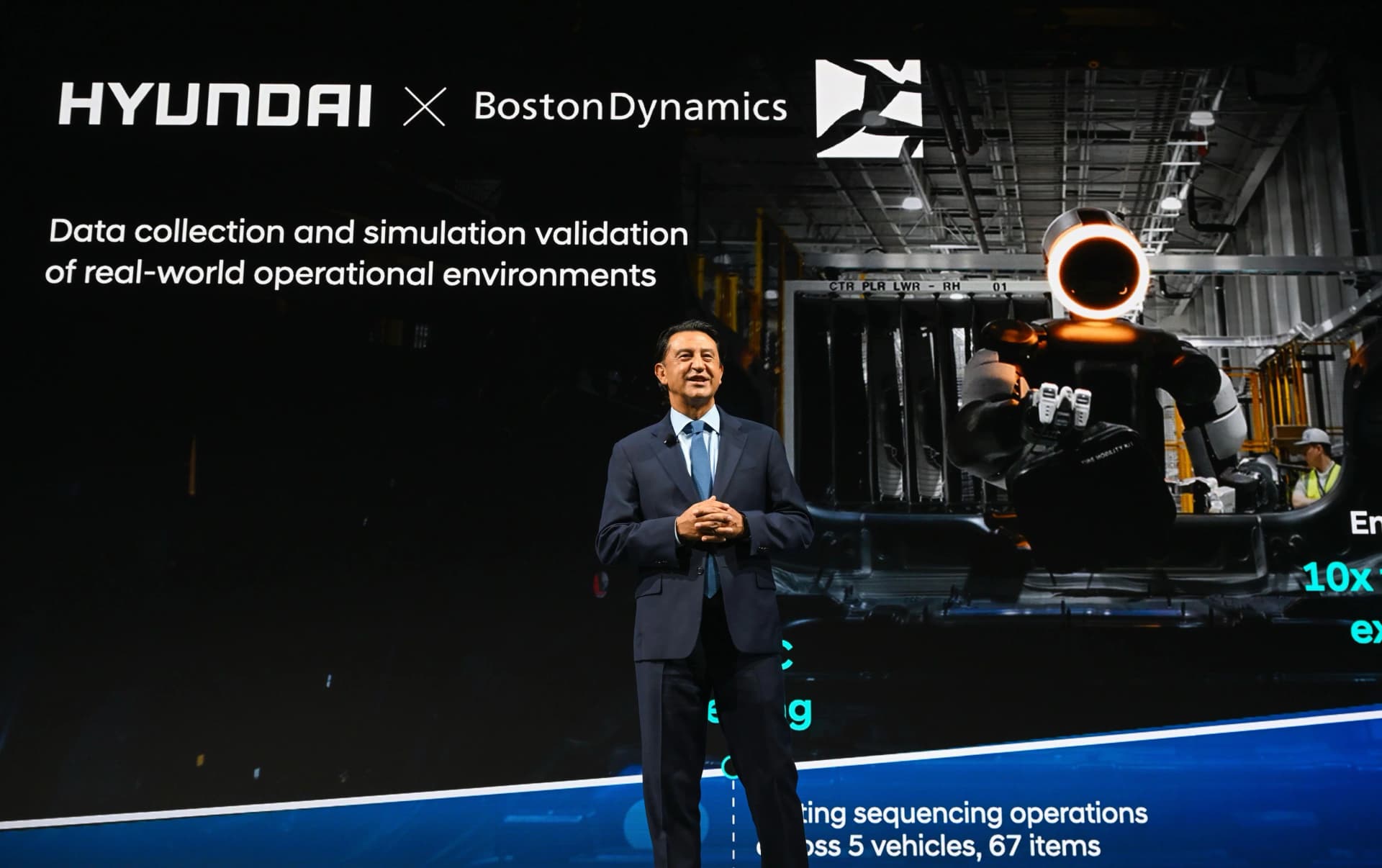
Hyundai has a different route through Boston Dynamics, the US-based developer of Atlas. Its published deployment roadmap targets parts-sequencing work from 2028 and more complex assembly by 2030. Hyundai contributes prospective factory demand and manufacturing resources, but Atlas also shows why national categories are imperfect: Korean ownership does not make Boston Dynamics’ American research and engineering base disappear.
These are parallel corporate programs, not evidence of a single shared Korean robot or AI stack. Their potential contribution is concrete: components, engineering teams, training environments and customers capable of testing whether humanoids can perform useful work.
Europe is pursuing its own route
A three-power model also leaves out the European companies building around established industrial customers. As our feature The Humanoids of Europe: Built by Their Customers documents, manufacturers including NEURA Robotics, Hexagon, Humanoid and Wandercraft are connecting robot development to buyers such as Schaeffler, BMW and Renault.
Schaeffler’s relationships illustrate the overlap: it is both a prospective robot operator and a component supplier. Renault’s work with Wandercraft links humanoid development to automotive tasks. These arrangements offer access to real workflows and engineering expertise, although deployment agreements and pilots should not be mistaken for completed rollouts.
Europe also has gaps. Our feature highlights reliance on American compute and a fragmented relationship between independent robotics AI developers and European hardware manufacturers. Industrial access provides an opportunity, not a guarantee of leadership.
The comparison makes Korea’s challenge clearer. Manufacturing experience and strong research institutions are valuable, but other contenders have those assets too. A lasting position will depend on converting them into robots that perform useful work consistently and economically.
Oh’s proposal identifies an opening in an unfinished market. How many major centers emerge will be decided by that practical test, rather than by a three-way geopolitical map.
Share this article
Read next
- Published on
- Reading time
- 3 min read
South Korea Challenges US and China with 'KAPEX' Humanoid Robot
- Published on
- Reading time
- 4 min read
The "One LG" Play: How the Korean Giant is Engineering a Humanoid Supply Chain
- Published on
- Reading time
- 4 min read
Samsung Backs Norwegian Motor Specialist Alva Industries in Push for Humanoid Hardware
- Published on
- Reading time
- 5 min read
CJ Logistics Puts ROBOTIS Dual-Arm "AI Worker" on Live Olive Young Fulfillment Lines
- Published on
- Reading time
- 4 min read
South Korea Commits KRW 2.3 Trillion to Build Full-Stack Humanoid Robotics Ecosystem by 2030
- Published on
- Reading time
- 7 min read
Hyundai Says Atlas Will Not Replace Workers — One Day After Settling a Strike Over Exactly That
The weekly humanoid robotics briefing
One email a week: the launches, funding and research that mattered, with context from Humanoids Daily.
Read recent issues