- Published on
Wuji Tech Teases Wuji Hand 2: High Engineering Ambitions Behind a CGI Veil

- Wuji Tech has released a new detailed CGI teaser video for the Wuji Hand 2, emphasizing internal mechanical upgrades and torque transparency.
- The new design claims a 20% increase in transmission efficiency and a back-drive torque reduced to 0.05 Nm, aiming for highly precise manipulation.
- Wuji appears to be doubling down on a direct-drive, current-based torque sensing approach rather than integrating physical tactile sensor arrays.
- The announcement arrives amidst massive competitive pressure, including today's high-profile unveiling of the NVIDIA Isaac GR00T reference platform featuring Sharpa's tactile hardware.
- Commercial details are currently sparse, with Wuji’s website offering only a "Contact Us" prompt without pricing or availability timelines.
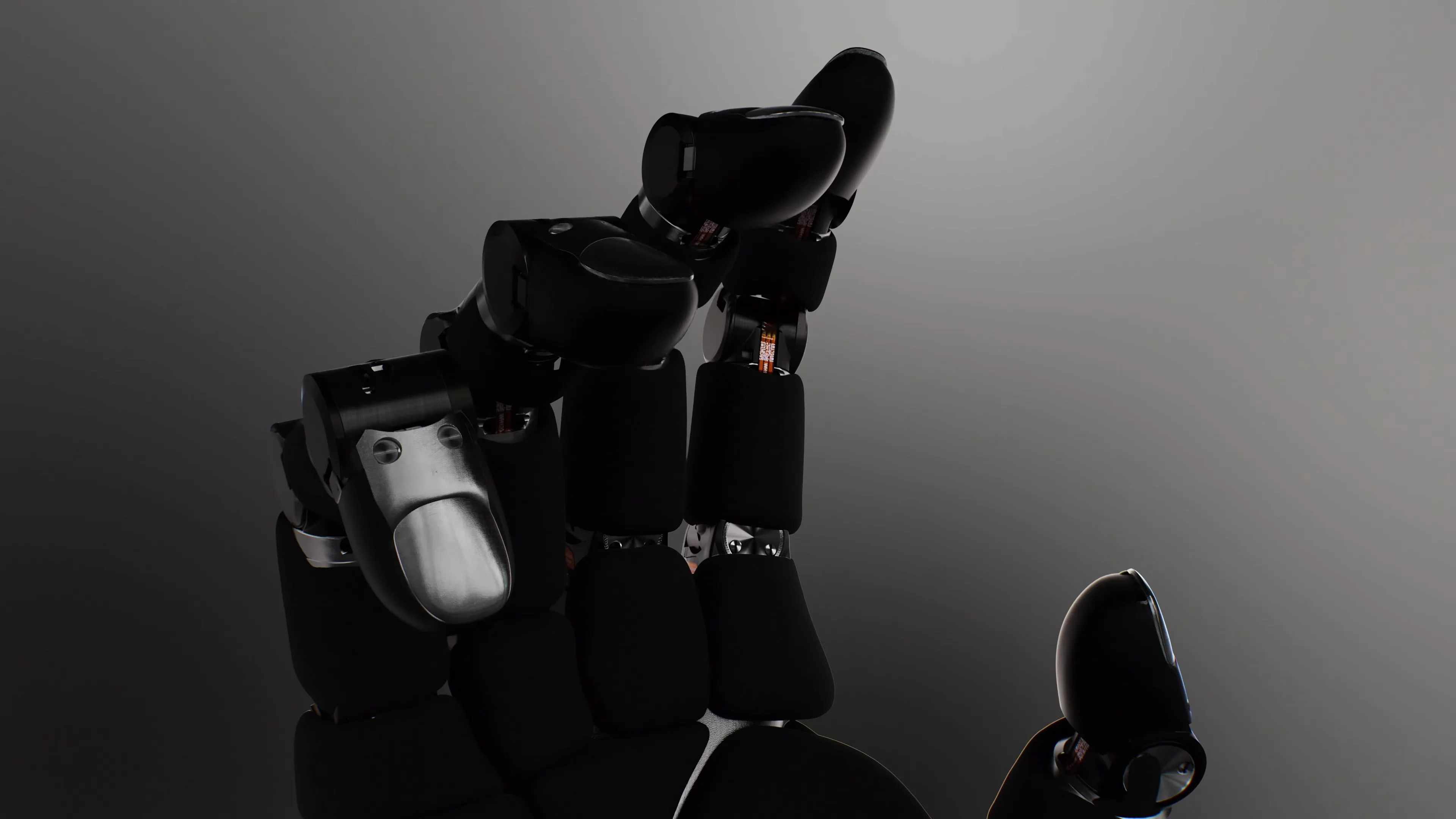
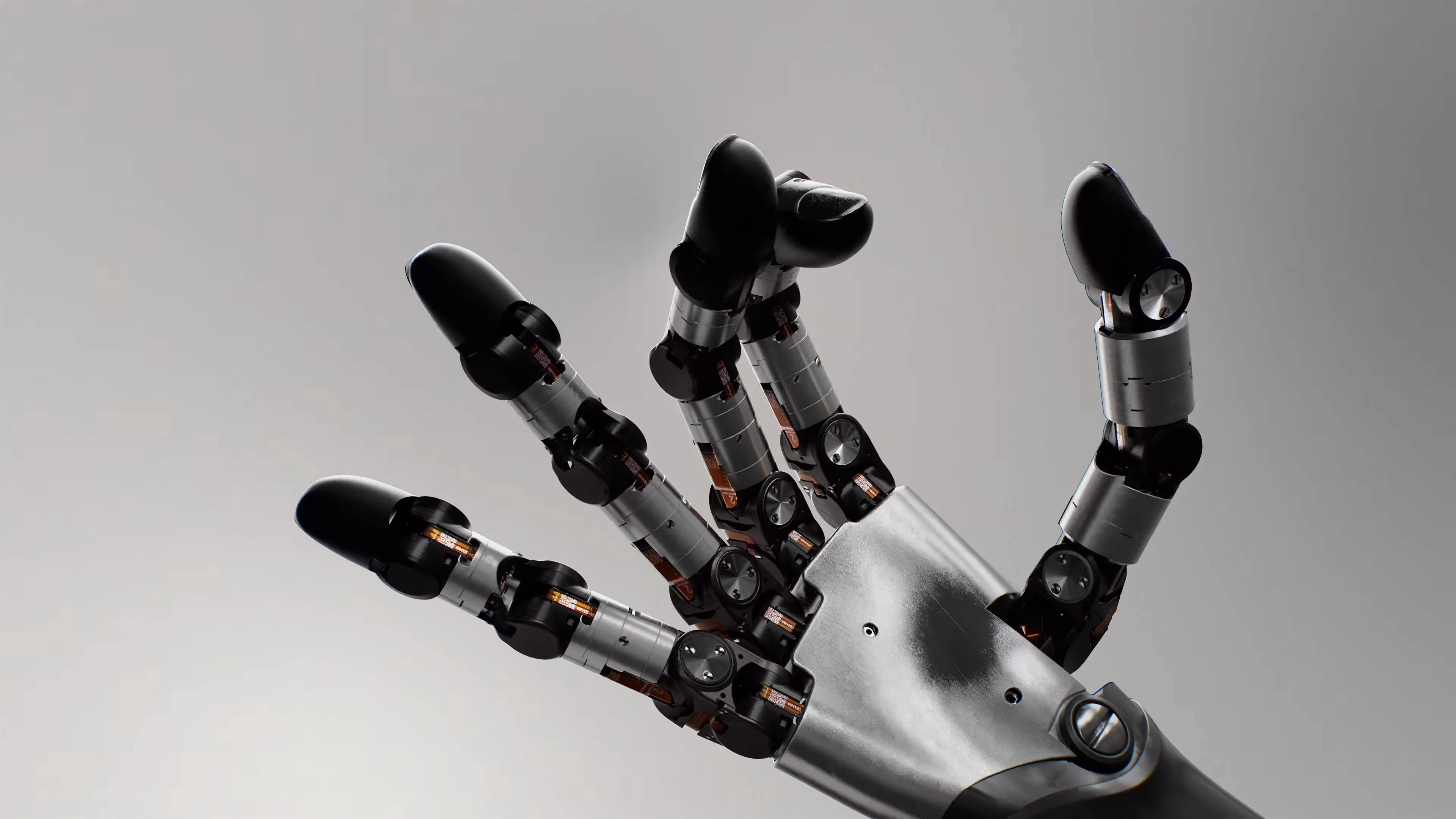
Shenzhen-based hardware developer Wuji Tech has offered a look at its next-generation end-effector, the Wuji Hand 2. Released via a highly polished, computer-generated teaser video, the announcement provides an intricate look at the internal engineering changes intended to push the boundaries of dextrous robotic manipulation.
Wuji Tech is no stranger to the high-performance hardware space. The company’s foundational technology previously served as the manufacturing baseline for Genesis AI’s proprietary hardware breakthroughs, and its initial platform gained traction among robotics researchers as a robust, tendon-free direct-drive contender. With the Wuji Hand 2, the company is aiming to refine this architecture, focusing heavily on mechanical efficiency and force feedback.
Refining the Direct-Drive Architecture
The core theme of the Wuji Hand 2 teaser is "torque transparency"—the ability of a robotic system to accurately perceive and react to external forces without the data being muffled by internal friction or mechanical resistance.
According to the video, Wuji has targeted several mechanical bottlenecks to achieve this:
- Transmission Efficiency: The Wuji Hand 2 claims a 20% increase in transmission efficiency over its predecessor. Wuji attributes this to tighter, more precise gear meshing and specialized "banner lubrication" designed to minimize friction and drag across the gear train.
- Minimal Backlash: The mechanical optimization reportedly ensures an uninterrupted travel of torque with a smooth start and minimal backlash, lowering the hand's back-drive torque to an impressive 0.05 Nm.
- Reduced Inertia: To shave off weight without compromising the structural integrity needed for heavy workloads, Wuji has adopted a custom alloy recipe for the hand's chassis. Combined with a lighter rotor, the redesigned motor is built specifically for a lower moment of inertia, enabling snappier, more responsive movements.
While the original Wuji Hand specifications established a highly capable baseline—weighing under 600 grams with 20 active degrees of freedom—the Hand 2 seeks to turn these raw mechanics into more delicate, human-like execution. Rather than relying on bulky external sensor suites, the Wuji Hand 2 "senses torque through current," using motor-level feedback to adapt to different geometries, masses, and material textures.
Still just a teaser
Wuji Tech's public-facing storefront remains sparse. The landing page features the teaser video and a prominent "Contact Us" button, but lacks any mention of an official launch timeline, detailed engineering data sheets, or commercial pricing.
This current-sensing approach also represents a distinct philosophical fork in the road for hand development. When experts reviewed the first-generation hardware, they noted a conspicuous absence of advanced tactile sensors in the base model. By doubling down on current-based torque sensing for the Wuji Hand 2, Wuji is betting that superior mechanical transparency can offset the need for the dense, vision-based tactile "skins" favored by some of its closest rivals.
A Highly Contentious Market
Wuji's teaser arrives at a time when the market for humanoid end-effectors is experiencing unprecedented acceleration and capital deployment. Standing still is not an option.
Just today, competitor Sharpa shook up the industry at NVIDIA GTC Taipei by partnering with Silicon Valley giant NVIDIA and Unitree Robotics to unveil the NVIDIA Isaac GR00T Reference Humanoid Robot. That platform bypasses current-only sensing, utilizing Sharpa’s Wave tactile hands which boast over 1,000 tactile pixels per fingertip to achieve contact-rich milestones like autonomous bimanual apple peeling.
Simultaneously, domestic rivals like AGIBOT's spin-off AGILINK have recently hit unicorn status with a valuation surpassing $1 billion, aggressively scaling a tiered hardware strategy that includes both tendon-driven models and its own upcoming direct-drive flagship, the OmniHand 3 Ultra-M.
Wuji Tech clearly possesses deep manufacturing expertise, and a 20% boost in efficiency alongside a 0.05 Nm back-drive torque would make the Wuji Hand 2 a highly competitive piece of research and industrial hardware. However, in an ecosystem increasingly dominated by massive ecosystem plays and billion-dollar valuations, Wuji will need to move past digital renders and get physical units into the hands of developers to prove it can maintain its grip on the market.
Comments
No comments yet. Be the first to share your thoughts!
Share this article
Stay Ahead in Humanoid Robotics
Get the latest developments, breakthroughs, and insights in humanoid robotics — delivered straight to your inbox.